Mood Changing Color Meanings do more than decorate our surroundings—they shape emotions, influence decisions, and affect how we experience the world. From calming blues to energizing reds, every color sends psychological signals that can alter mood, behavior, and even productivity.
While individual reactions vary based on culture, personal experiences, and context, researchers have found consistent patterns in how people perceive different colors.
Understanding mood changing color meanings can help you choose better colors for your home, workplace, wardrobe, branding, and everyday life. Whether you want to create a relaxing environment or boost motivation, color psychology offers practical insights.
Quick Answer:
Mood-changing colors influence emotions through psychological associations. Warm colors like red, orange, and yellow often increase energy and excitement, while cool colors like blue and green generally promote calmness, focus, and relaxation.
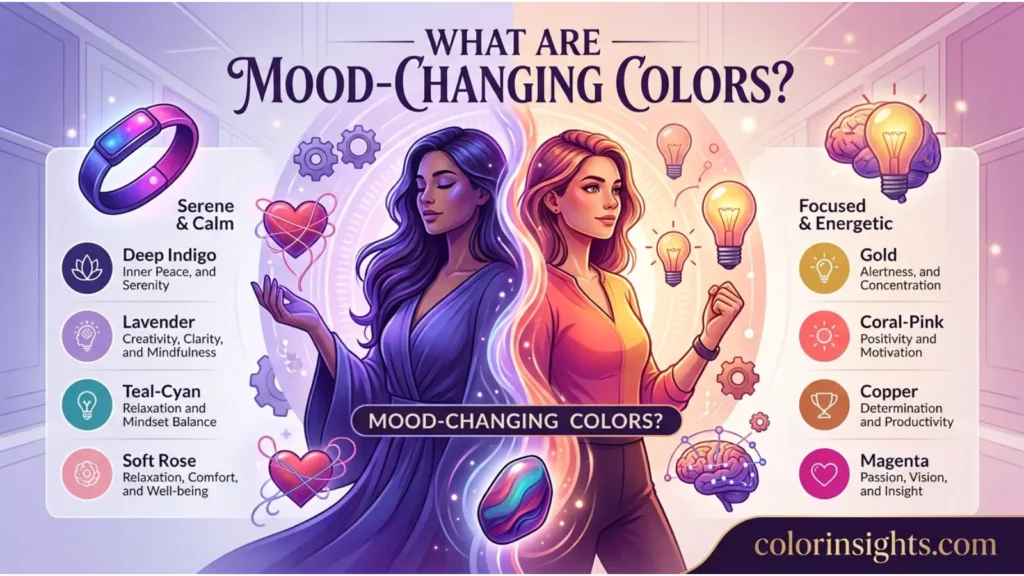
What Are Mood-Changing Colors?
Mood-changing colors are colors that evoke emotional and psychological responses. They can make people feel calm, energized, optimistic, creative, secure, or even anxious depending on the shade, intensity, surrounding colors, and cultural context.
Color psychology suggests that our brains quickly associate colors with past experiences, natural environments, and learned cultural meanings. Although no color produces exactly the same response in every person, many emotional reactions remain remarkably consistent across populations.
Some common factors that influence color perception include:
- Personal memories and experiences
- Cultural traditions and symbolism
- Age and lifestyle
- Lighting conditions
- Color combinations
- Saturation and brightness
For example, a bright yellow kitchen may feel cheerful and welcoming, while the same shade in a hospital room could become overstimulating after prolonged exposure.
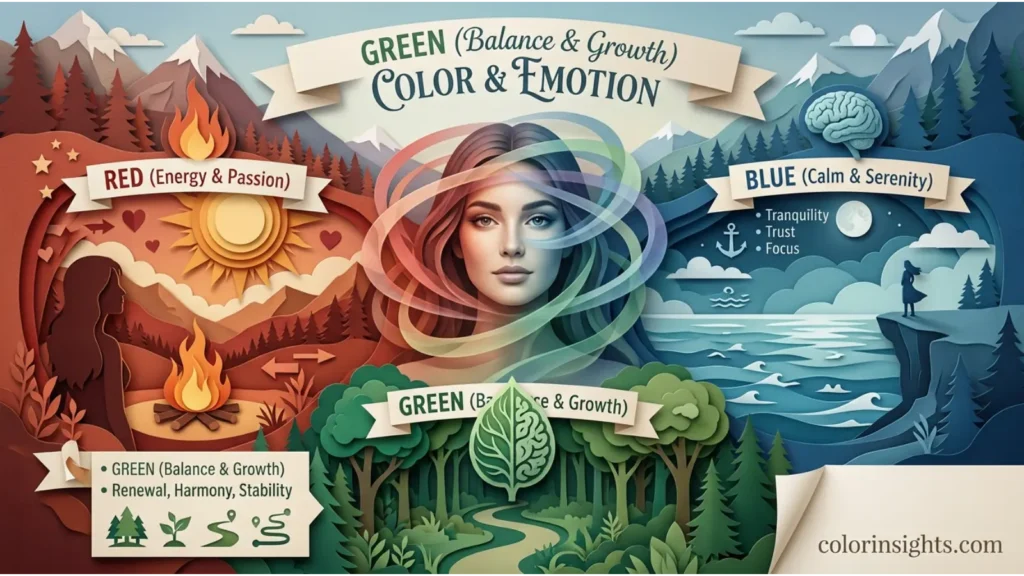
Psychology of Mood-Changing Colors
Color psychology studies how colors influence emotions, cognition, and behavior. Researchers generally agree that colors affect mood through emotional associations rather than direct biological effects alone.
Emotional Associations
People often associate colors with familiar experiences:
- Blue reminds many people of the sky and ocean.
- Green reflects forests, plants, and nature.
- Yellow resembles sunshine and warmth.
- Red recalls fire, passion, and urgency.
- White suggests cleanliness and simplicity.
These associations shape emotional expectations before we consciously process the environment.
Psychological Effects
Colors may influence:
- Attention and concentration
- Motivation
- Relaxation
- Appetite
- Creativity
- Confidence
- Stress levels
- Decision-making
For example, workplaces often use blue and green to encourage focus, while restaurants frequently incorporate red and orange to create energy and stimulate appetite.
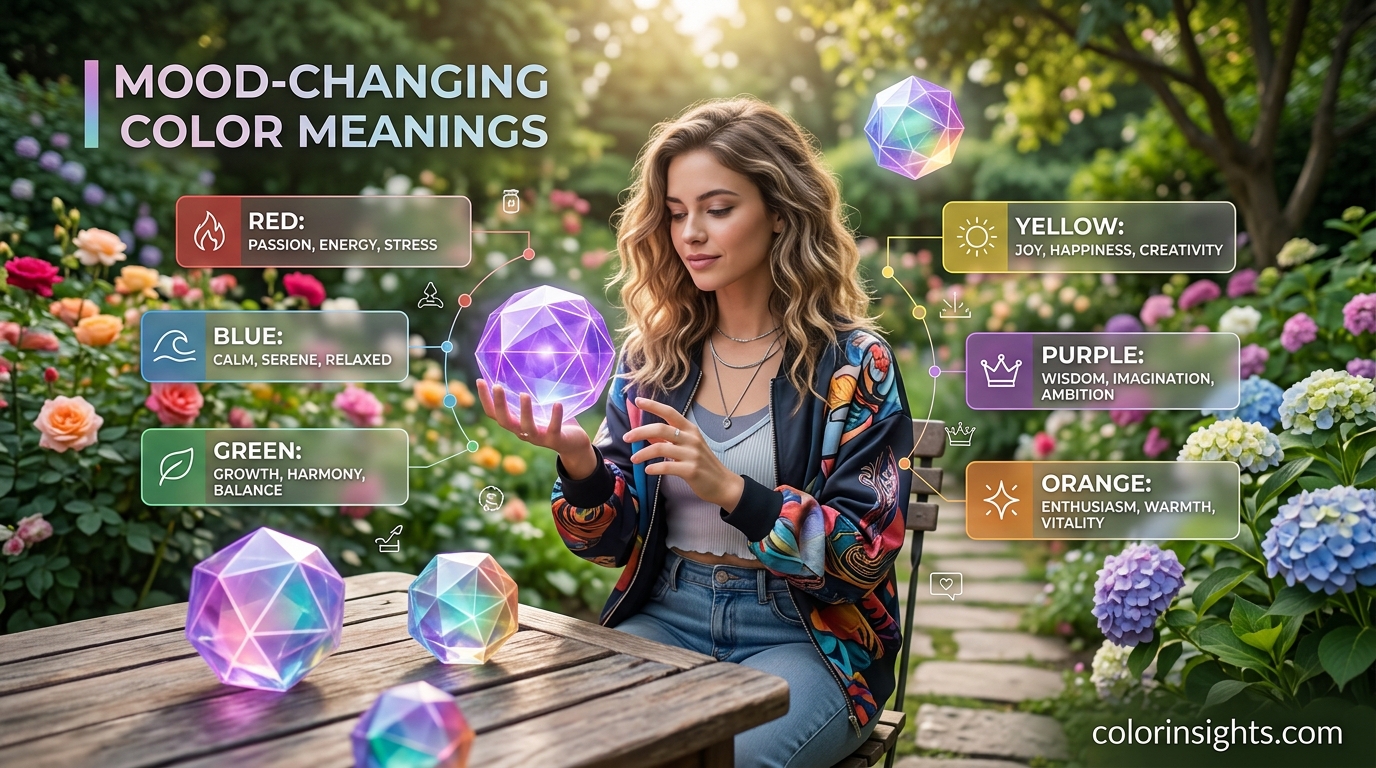
Mood Changing Color Meanings Chart
| Color | Common Emotional Effect | Typical Symbolism | Best Uses |
|---|---|---|---|
| Red | Energy, excitement | Passion, strength, courage | Sports, dining, promotions |
| Blue | Calmness, trust | Peace, stability, intelligence | Offices, healthcare, finance |
| Green | Balance, renewal | Growth, health, prosperity | Homes, wellness, education |
| Yellow | Happiness, optimism | Joy, creativity, hope | Kitchens, learning spaces |
| Orange | Enthusiasm, warmth | Confidence, friendliness | Gyms, entertainment, retail |
| Purple | Inspiration | Wisdom, luxury, imagination | Beauty, creativity, spirituality |
| Pink | Comfort, compassion | Love, kindness, nurturing | Bedrooms, healthcare |
| White | Simplicity | Purity, cleanliness, clarity | Minimalist interiors |
| Black | Authority | Sophistication, power | Luxury branding |
| Gray | Neutrality | Balance, professionalism | Corporate design |
| Brown | Security | Stability, reliability | Rustic interiors |
| Turquoise | Refreshment | Healing, communication | Spas and wellness spaces |
Individual Mood Changing Color Meanings
Red
Red is one of the strongest emotional colors. It raises excitement, attracts attention, and creates a sense of urgency. It often symbolizes love, courage, confidence, and determination, but excessive red may also increase tension or aggression.
Blue
Blue encourages relaxation and mental clarity. It represents trust, loyalty, intelligence, and emotional stability. Many healthcare providers and financial institutions use blue because it creates a dependable impression.
Green
Green symbolizes nature, renewal, growth, and balance. It helps many people feel refreshed and reduces visual fatigue. Green is widely used in wellness, environmental, and educational settings.
Yellow
Yellow communicates happiness, optimism, creativity, and curiosity. Moderate amounts create cheerful spaces, but very bright yellow can become overwhelming if overused.
Orange
Orange combines the excitement of red with the friendliness of yellow. It inspires enthusiasm, social interaction, confidence, and motivation while maintaining an approachable appearance.
Purple
Purple blends the calmness of blue with the energy of red. It often symbolizes wisdom, creativity, spirituality, luxury, and imagination.
Pink
Pink generally creates feelings of comfort, affection, kindness, and emotional warmth. Softer shades promote relaxation, while vibrant pink communicates energy and playfulness.
White
White reflects simplicity, cleanliness, openness, and new beginnings. Large amounts may also feel cold or clinical without warmer accent colors.
Black
Black symbolizes elegance, sophistication, authority, and mystery. In excess, it may appear intimidating or emotionally distant.
Gray
Gray creates balance and professionalism. However, excessive gray can sometimes appear dull or emotionally detached.
Brown
Brown communicates stability, dependability, comfort, and connection to nature. It often creates cozy and welcoming environments.
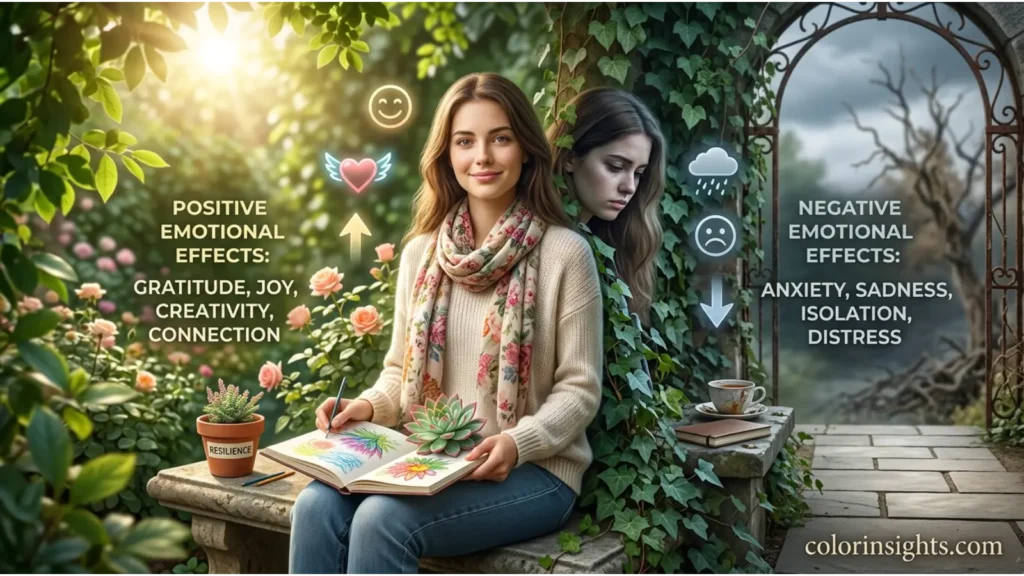
Positive and Negative Emotional Effects
Positive Meanings
Different colors encourage positive emotions in different situations.
- Red: Motivation, courage, determination
- Blue: Calmness, trust, reliability
- Green: Healing, balance, renewal
- Yellow: Joy, optimism, creativity
- Orange: Enthusiasm, friendliness
- Purple: Imagination, wisdom
- Pink: Compassion, comfort
- White: Purity, clarity
- Black: Confidence, sophistication
- Brown: Stability and warmth
For example, a wellness center may use green walls to create a peaceful atmosphere, while a fitness studio may incorporate orange to encourage energy.
Negative Meanings
Colors can also produce less desirable emotional responses.
- Too much red may increase stress or impatience.
- Dark blue may seem cold or distant.
- Excessive yellow can become visually tiring.
- Large amounts of black may create heaviness.
- Too much gray can reduce visual interest.
- Overuse of white may feel sterile or impersonal.
Successful design usually balances colors rather than relying heavily on one.
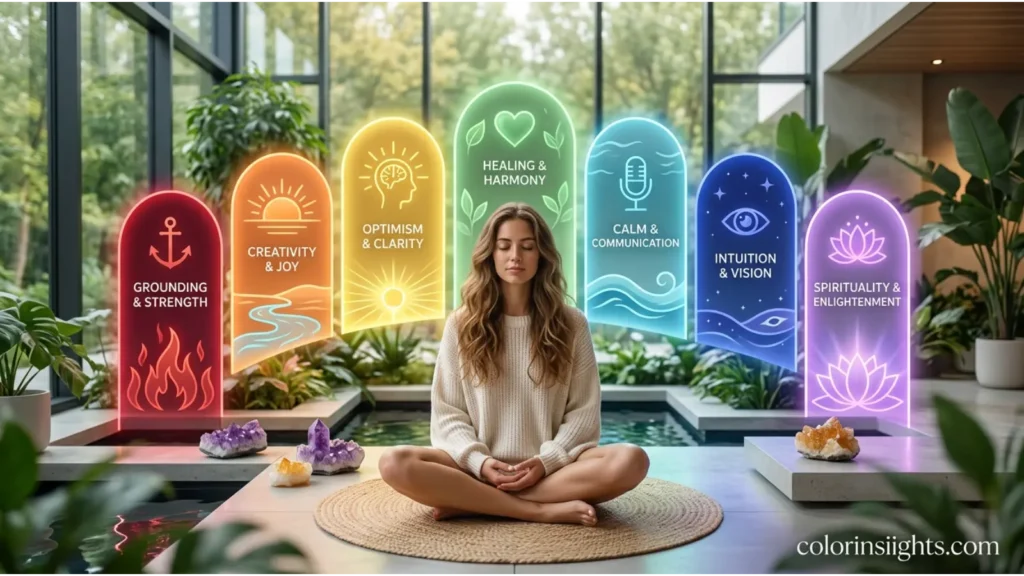
Spiritual Meaning of Mood-Changing Colors
Many spiritual traditions assign symbolic meanings to colors. Although interpretations differ among cultures and religions, several themes appear repeatedly.
- Red: Life force, courage, protection, strength
- Blue: Wisdom, faith, divine guidance, peace
- Green: Healing, growth, abundance, compassion
- Yellow: Enlightenment, hope, spiritual awareness
- Purple: Transformation, higher consciousness, intuition
- White: Purity, holiness, new beginnings
- Black: Reflection, mystery, inner transformation
- Gold: Divine wisdom, prosperity, achievement
These meanings often appear in meditation practices, sacred art, ceremonial clothing, and spiritual symbolism.
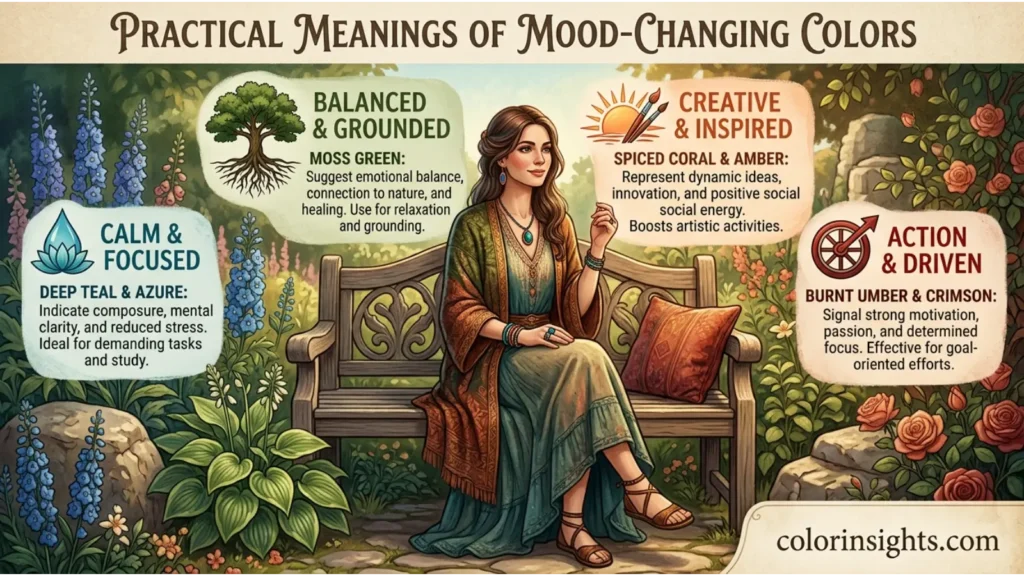
Practical Meanings of Mood-Changing Colors
Color meanings change depending on where and how they are used.
Feng Shui
In Feng Shui, colors support the balance of energy throughout a space.
- Wood Element: Green and brown encourage growth.
- Fire Element: Red, orange, and purple increase passion and motivation.
- Earth Element: Yellow and beige create stability.
- Metal Element: White and gray promote clarity.
- Water Element: Blue and black encourage wisdom and calm.
For balanced interiors, combine calming colors with energetic accents rather than relying on a single dominant shade.
Marketing
Brands carefully select colors because consumers often make quick judgments based on visual appearance.
Common marketing applications include:
- Blue builds trust and professionalism.
- Red encourages urgency during promotions.
- Green highlights sustainability and health.
- Yellow attracts attention.
- Black communicates luxury.
- Purple suggests creativity and premium quality.
Companies such as Facebook, LinkedIn, IBM, and PayPal prominently use blue to reinforce trust. Coca-Cola uses red to express excitement and energy, while Starbucks uses green to emphasize growth and freshness.
Design
Interior designers use color to shape the mood of a room.
Examples include:
- Blue bedrooms for relaxation
- Green offices for focus
- Yellow kitchens for warmth
- White minimalist interiors for openness
- Black accents for sophistication
Graphic designers and UX professionals also use color hierarchy to guide attention, improve readability, and strengthen brand recognition.
Fashion
Color influences how clothing is perceived.
Examples include:
- Black suits project authority.
- Blue clothing appears approachable and dependable.
- Red outfits communicate confidence.
- Green creates a fresh appearance.
- White clothing suggests simplicity and elegance.
- Purple accessories add creativity.
Season also matters. Bright colors are common during spring and summer, while deeper tones often dominate autumn and winter wardrobes.
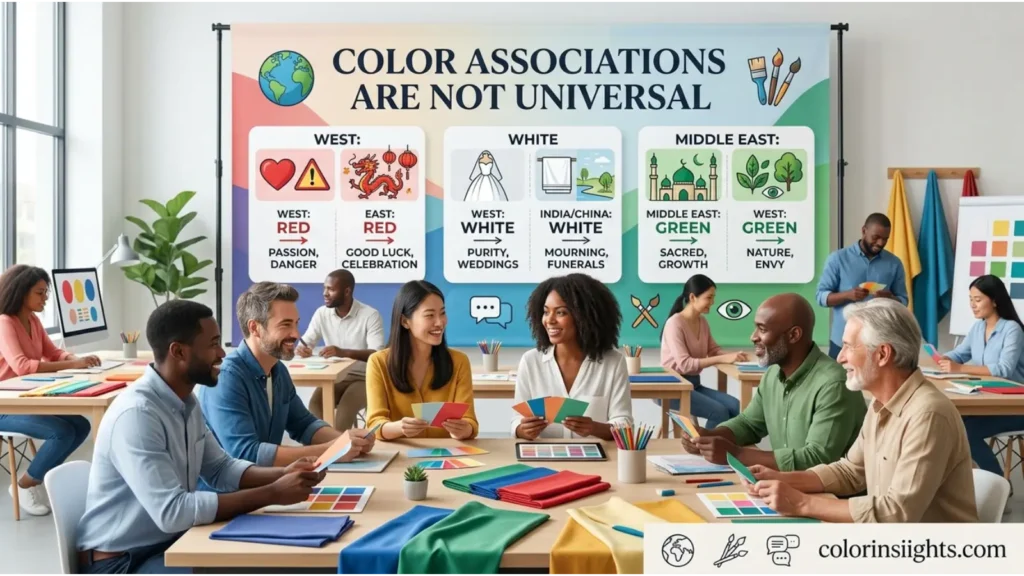
Color Associations Are Not Universal
Although many color meanings are widely recognized, they vary across cultures and historical periods.
Western Cultures
White often represents weddings and purity, while black commonly symbolizes mourning and formality. Blue is associated with trust, and green often reflects environmental awareness.
Eastern Cultures
In several East Asian traditions, red symbolizes luck, prosperity, and celebration. White may be associated with mourning in some cultural contexts rather than weddings.
Religious Traditions
Many religions assign symbolic meanings to colors.
White commonly represents holiness and purity. Purple is associated with royalty and spiritual devotion in Christianity. Saffron carries deep spiritual significance in Hinduism and Buddhism, while green holds important symbolism in Islam.
Historical Interpretations
Historically, purple dye was expensive, making purple a symbol of wealth and nobility. Gold represented divine authority, while black often reflected social status through elegant clothing.
Modern Global Interpretations
Global communication and digital media have blended many traditional meanings. Today, multinational brands often choose colors that work across diverse audiences while adapting campaigns to local cultural expectations.
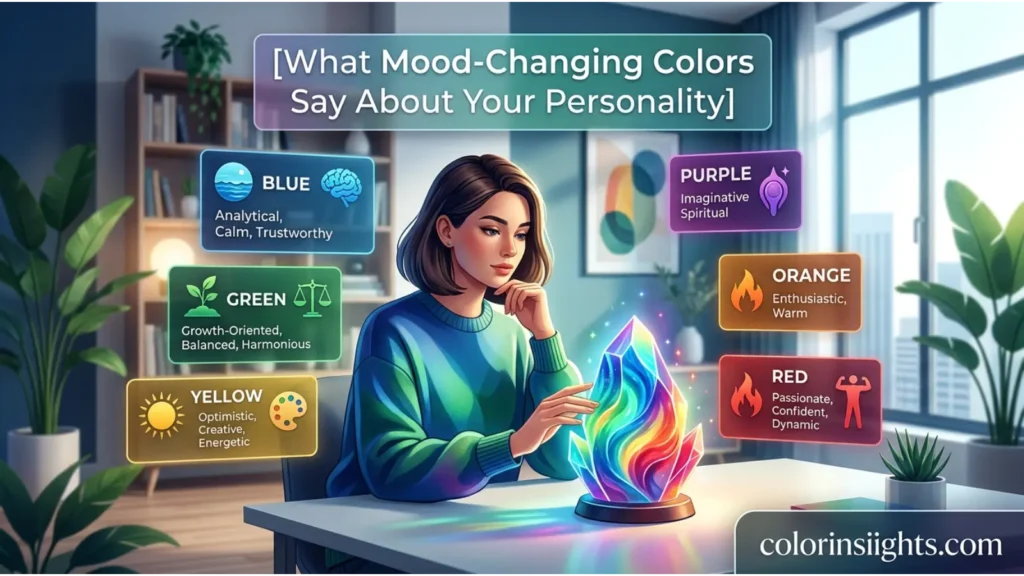
What Mood-Changing Colors Say About Your Personality
People often identify with certain colors because they reflect preferences, experiences, or aspirations. However, favorite colors do not scientifically determine personality.
Some commonly reported associations include:
- People drawn to blue may value stability and thoughtful communication.
- Green enthusiasts often appreciate nature, balance, and personal growth.
- Those who prefer red may enjoy action, competition, and confidence.
- Purple admirers frequently value creativity and imagination.
- Yellow lovers often appear optimistic and curious.
- Black enthusiasts may appreciate elegance, independence, and sophistication.
- White supporters often prefer organization and simplicity.
- Orange fans may enjoy social interaction and adventure.
Personality is shaped by genetics, upbringing, education, environment, and life experiences. Color preferences offer interesting clues but should never be viewed as definitive personality assessments.
FAQs
What are mood-changing colors?
Mood-changing colors are colors that influence emotions, behavior, and psychological responses through visual perception and learned associations.
Which color has the strongest emotional impact?
Red generally creates one of the strongest emotional responses because it attracts attention and communicates urgency, excitement, and passion.
What colors help reduce stress?
Blue, green, and soft earth tones are commonly associated with relaxation, emotional balance, and reduced mental fatigue.
Which colors improve productivity?
Blue often supports concentration, while green helps reduce eye strain during extended work sessions. Moderate yellow accents can encourage creativity.
What colors make people feel happy?
Yellow, orange, and warm shades of pink are frequently linked with optimism, enthusiasm, and positive energy.
What is the spiritual meaning of mood-changing colors?
Spiritually, colors symbolize qualities such as healing, wisdom, protection, transformation, hope, purity, and enlightenment depending on the tradition.
What colors work well together for balanced moods?
Blue and white create calmness, green and beige promote harmony, while yellow paired with gray adds cheerful contrast without becoming overwhelming.
Do colors affect purchasing decisions?
Yes. Color influences first impressions, brand recognition, perceived quality, and emotional responses, making it an important part of marketing and packaging strategies.
What does your favorite color say about you?
Favorite colors may reflect preferences and emotional tendencies, but they cannot accurately predict personality traits or behavior on their own.
Can room colors influence daily mood?
Yes. Wall colors, furniture, lighting, and decorative accents can collectively affect comfort, focus, relaxation, and overall emotional well-being.
Conclusion:
Mood-changing color meanings combine psychology, culture, design, and personal experience to explain why colors influence how we think and feel.
Warm colors generally encourage energy and enthusiasm, while cool colors promote calmness and balance.
Spiritual traditions, branding strategies, interior design, and fashion all demonstrate the practical power of color symbolism.
Although individual reactions vary, understanding these common color meanings allows you to create spaces, products, and personal styles that better support your goals, emotions, and everyday experiences.