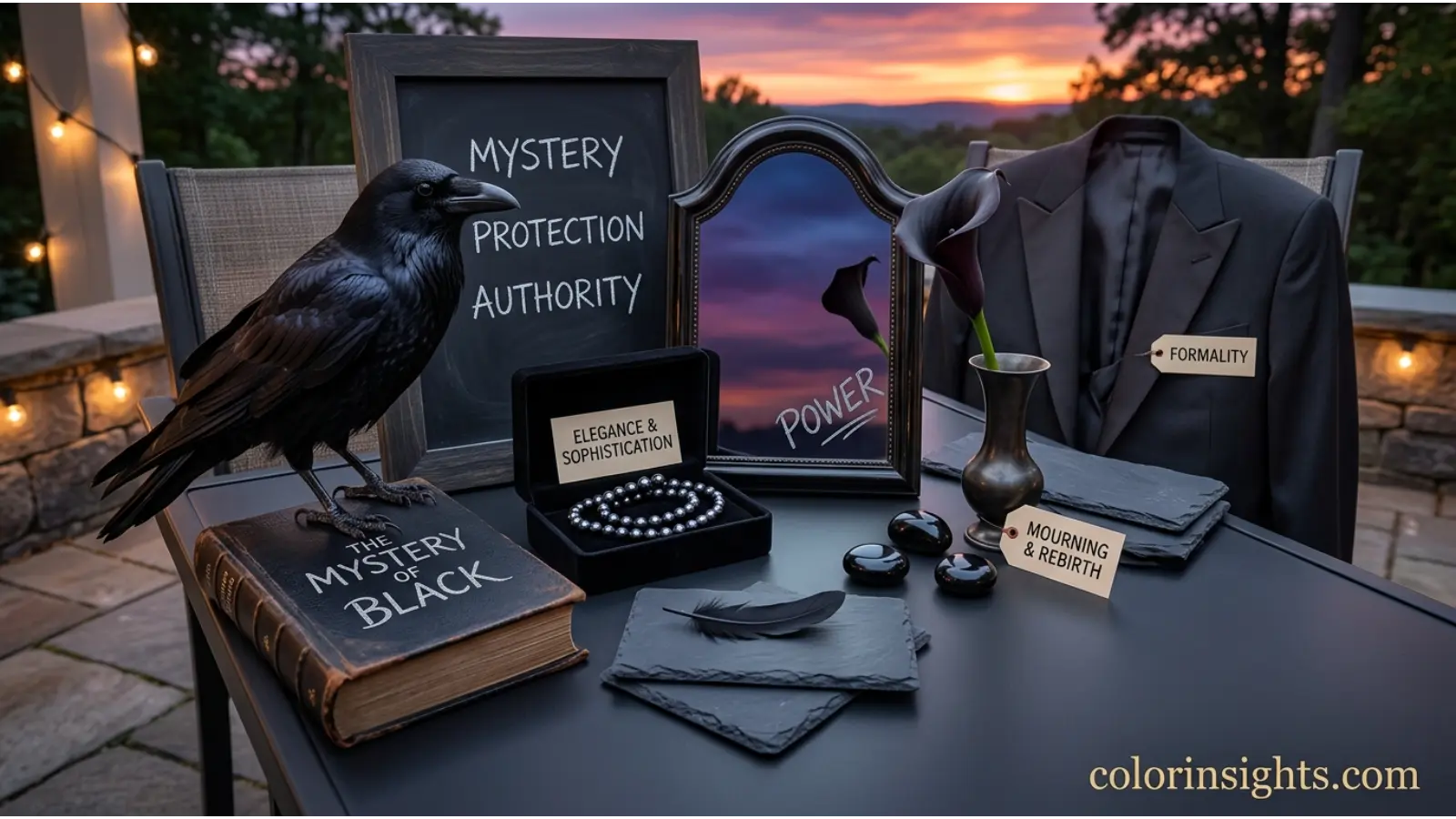
Black is one of the most powerful and emotionally complex colors in human culture. It represents strength, sophistication, mystery, authority, and protection, while also symbolizing grief, fear, secrecy, and the unknown in different contexts.
From luxury fashion and corporate branding to religious traditions and modern interior design, black carries diverse meanings that depend on culture, history, and personal experience.
Color psychology suggests that black influences perception by creating feelings of confidence, elegance, and seriousness. Understanding black symbolism helps explain why it remains one of the world’s most influential colors.
Quick Answer:
Black commonly symbolizes power, elegance, mystery, authority, protection, sophistication, and transformation, although it can also represent mourning, fear, isolation, and the unknown depending on cultural and situational context.
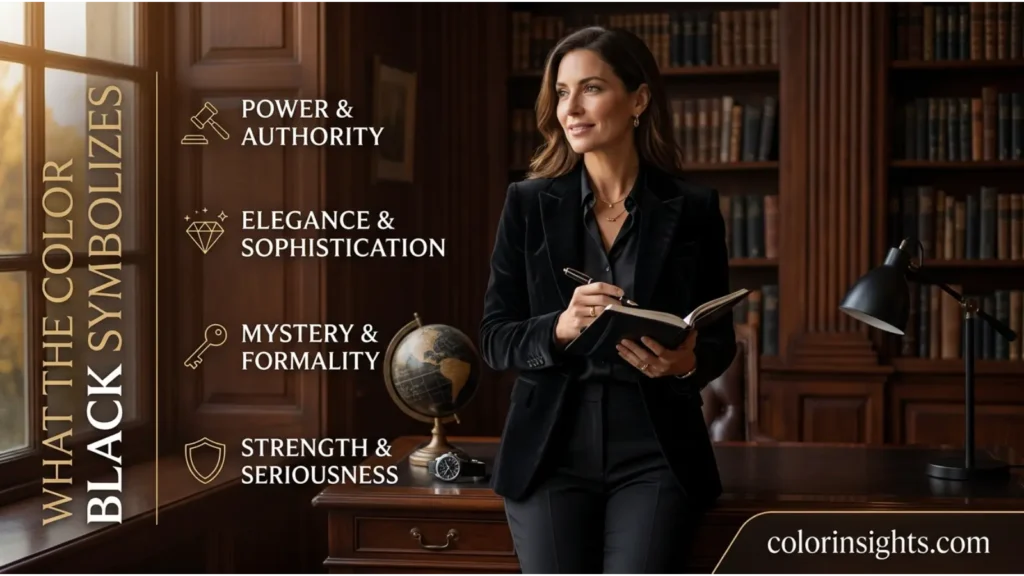
What Does the Color Black Symbolize?
Black symbolizes both endings and new beginnings, making it one of the most versatile colors in symbolism. It often represents authority, discipline, prestige, independence, and emotional strength. Because black absorbs light rather than reflecting it, many cultures associate it with mystery, hidden knowledge, and the unknown.
In everyday life, black conveys professionalism and timeless style. Business executives often wear black suits to project confidence and authority, while luxury brands use black to communicate exclusivity and premium quality.
At the same time, black can symbolize mourning and remembrance. In many Western countries, black clothing is traditionally worn at funerals as a sign of respect and grief. However, in other cultural traditions, black may also represent protection, fertility, or spiritual wisdom.
Overall, black symbolism changes depending on cultural traditions, historical background, and personal interpretation.
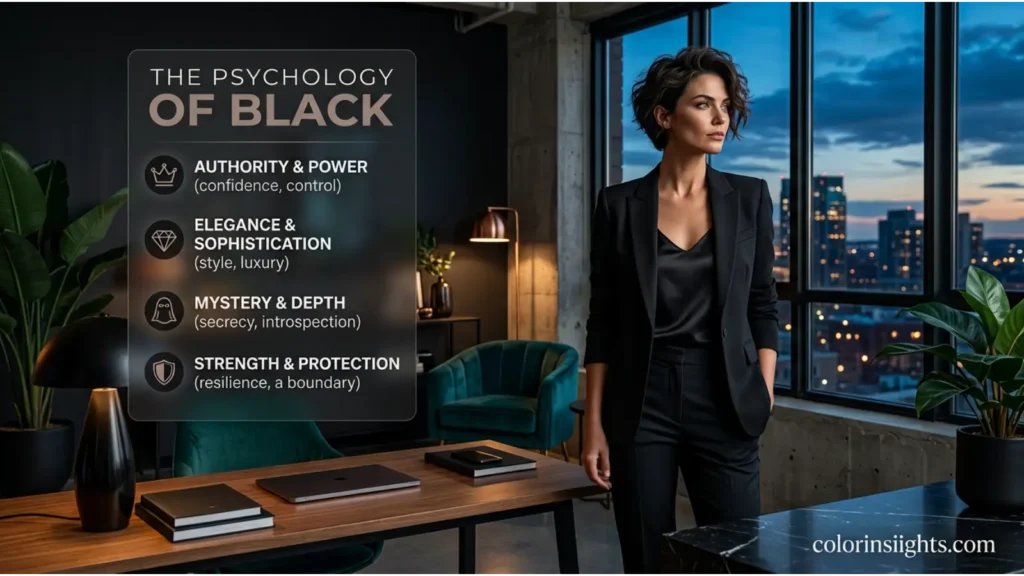
Psychological Characteristics of the Color Black
Color psychology views black as a color that influences emotions through perceptions of strength, sophistication, and control. People often associate black with confidence, seriousness, and emotional protection.
Emotional Associations
- Strength
- Authority
- Confidence
- Sophistication
- Mystery
- Independence
- Protection
- Control
Psychological Effects
Black creates visual weight and commands attention. It helps establish boundaries, making spaces or products appear more premium and exclusive. Because it absorbs light, it may also create feelings of privacy or emotional distance.
Positive Emotional Responses
- Increased confidence
- Greater sense of authority
- Elegance and refinement
- Emotional security
- Professionalism
- Self-discipline
- Stability
Negative Emotional Responses
- Sadness
- Fear
- Isolation
- Intimidation
- Emotional withdrawal
- Depression in excessive use
- Secrecy
Impact on Mood and Behavior
Black often encourages serious decision-making and formal behavior. It can help people feel more confident during important events, interviews, or presentations. However, excessive use of black in environments without lighter accents may make spaces feel restrictive or gloomy.
How People Typically React to Black
People commonly perceive black as:
- Elegant and luxurious
- Powerful and commanding
- Modern and minimalist
- Professional and trustworthy
- Mysterious and intriguing
- Formal and sophisticated

Spiritual Meaning of the Color Black
Spiritually, black represents far more than darkness. Many traditions view it as a color of protection, transformation, inner wisdom, and spiritual growth. Rather than symbolizing evil alone, black often represents the unknown where personal change begins.
Spiritual Symbolism
- Holiness: Some religious garments use black to symbolize humility and devotion.
- Wisdom: Black encourages introspection, meditation, and inner knowledge.
- Purity: Certain traditions interpret black as freedom from distractions rather than physical purity.
- Transformation: Black often symbolizes endings that create opportunities for renewal.
- Healing: Spiritual practices may associate black stones like black tourmaline or obsidian with grounding and emotional protection.
- Protection: Black is commonly believed to absorb negative energy and create spiritual boundaries.
- Power: It represents self-control, resilience, and determination.
- Enlightenment: Some philosophies view darkness as the beginning of spiritual awakening.
- New Beginnings: Endings represented by black often lead to fresh opportunities.
- Eternity: Black symbolizes the infinite universe and timeless existence.
Although interpretations differ among spiritual traditions, black frequently represents growth through reflection and resilience.
Positive and Negative Meanings of the Color Black
Positive Meanings
Black communicates many positive qualities when used appropriately.
Power:
Judges, executives, and leaders often wear black clothing to project authority.
Elegance:
The classic black evening dress and tuxedo remain timeless symbols of sophistication.
Protection:
Black uniforms and protective equipment often create a sense of security and strength.
Luxury:
Premium automobiles, watches, electronics, and fashion frequently use black packaging to increase perceived value.
Confidence:
Many people choose black clothing during interviews or presentations because it projects professionalism.
Independence:
Black often symbolizes self-reliance and personal discipline.
Mystery:
Entertainment, literature, and marketing use black to create curiosity and suspense.
Modern Simplicity:
Black supports clean, minimalist aesthetics in architecture and technology.
Negative Meanings
Like every color, black also carries negative symbolism.
Mourning:
Funeral clothing in many Western cultures traditionally uses black to express grief.
Fear:
Horror films often rely on darkness to create suspense and uncertainty.
Isolation:
Entirely black environments may appear emotionally distant.
Emotional Distance:
Wearing black constantly may sometimes create an impression of reserve or unapproachability.
Secrecy:
Black masks, uniforms, or hidden spaces often symbolize concealment.
Intimidation:
Excessive use in branding may make companies appear less welcoming.
Oppression:
Historically, black has occasionally represented authoritarian power.
Real-world meaning depends on context rather than the color itself.
Meanings of the Color Black
The meaning of black changes significantly across environments. In one situation it communicates luxury, while in another it represents remembrance or protection.
Feng Shui
In Feng Shui, black belongs primarily to the Water element.
- Element: Water
- Energy Symbolism: Wisdom, depth, career growth, life journey
- Best Rooms: Home office, meditation room, entryway, study
- Recommended Color Combinations: Black with white, gray, gold, silver, wood tones, or deep blue
- Decorating Tips: Use black as an accent instead of the dominant color to maintain balance. Pair it with natural materials to avoid creating a heavy atmosphere.
Marketing
Black is one of the strongest branding colors because it communicates exclusivity and premium quality.
Brands use black to create:
- Luxury branding
- Premium product positioning
- Professional image
- Timeless appeal
- Sophisticated packaging
Consumers often associate black products with durability, innovation, and prestige.
Famous brands that frequently use black include:
- Nike
- Chanel
- Prada
- Gucci
- Adidas
- Apple (for many premium product campaigns)
- Sony
Luxury perfumes, smartphones, automobiles, cosmetics, and watches commonly feature black packaging because it enhances perceived value.
Design
Black plays an essential role across multiple design disciplines.
Interior Design
- Creates dramatic focal points.
- Adds contrast to lighter spaces.
- Works well in modern, industrial, and minimalist interiors.
- Highlights artwork and architectural details.
Graphic Design
- Improves readability.
- Creates bold visual hierarchy.
- Adds sophistication to logos.
Web Design
- Enhances visual contrast.
- Supports premium branding.
- Makes product photography stand out.
User Experience
- Dark interfaces reduce visual clutter.
- Black backgrounds often emphasize multimedia content.
- Balanced contrast remains important for accessibility.
Minimalist Aesthetics
Black serves as a foundation for minimalist design because it removes unnecessary visual distractions while emphasizing simplicity and precision.
Fashion
Black remains one of the most versatile colors in fashion.
Clothing Symbolism
- Authority
- Elegance
- Confidence
- Sophistication
- Professionalism
Seasonal Use
Black works throughout the year but appears especially popular during autumn and winter collections.
Styling Effects
- Creates a slimming visual effect.
- Coordinates easily with nearly every color.
- Makes accessories more noticeable.
Personality Impressions
People wearing black are often perceived as:
- Confident
- Stylish
- Intelligent
- Serious
- Independent
Advantages
- Never goes out of style.
- Matches almost every wardrobe.
- Suitable for formal and casual occasions.
- Hides stains effectively.
Disadvantages
- May absorb heat during summer.
- Can appear overly formal in relaxed settings.
- Excessive black outfits may seem emotionally distant.
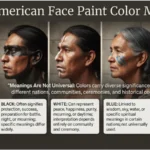
Color Associations Are Not Universal
Western Cultures
In much of North America and Europe, black commonly represents elegance, luxury, authority, mourning, and formal occasions. Funeral attire and business clothing frequently feature black for these reasons.
Eastern Cultures
Interpretations vary across Asia. In some traditions, black symbolizes knowledge, experience, water, and stability. Certain cultural practices also associate it with mystery or adversity, while others value it as a protective color.
Religious Traditions
Different religions interpret black uniquely. Christian clergy in some denominations wear black to symbolize humility and devotion. In Buddhism, black may represent ignorance that spiritual practice seeks to overcome. Some indigenous traditions use black for protection and connection with ancestral wisdom.
Historical Interpretations
Throughout history, black has represented nobility, authority, wealth, and social status because producing deep black dyes was once expensive. During other historical periods, it also became associated with mourning and solemnity.
Modern Global Interpretations
Today, globalization has expanded black’s meaning. It commonly symbolizes luxury fashion, modern technology, innovation, professionalism, and minimalist design while continuing to represent remembrance during memorial events.

What Black Says About Your Personality
People who prefer black are often described as valuing independence, control, sophistication, and privacy. However, color preferences alone cannot accurately determine personality because upbringing, culture, experiences, and individual differences all influence behavior.
Common personality tendencies include:
Strengths
- Self-disciplined
- Independent
- Determined
- Ambitious
- Reliable
- Confident
- Emotionally resilient
Weaknesses
- Reserved
- Perfectionistic
- Cautious
- Difficult to read
- Occasionally stubborn
Social Behavior
People attracted to black may enjoy meaningful conversations more than large social gatherings. They often value personal space and authenticity.
Work Style
They may prefer organized environments, high standards, strategic planning, and leadership opportunities. Black lovers often appreciate efficiency and professionalism.
Relationships
They frequently value loyalty, honesty, and long-term commitment. While they may seem emotionally guarded at first, they often build deep and dependable relationships over time.
Emotional Tendencies
Many people who favor black appreciate calm environments, personal reflection, and emotional stability. They may carefully process emotions before expressing them.
Remember that favorite colors reflect preferences rather than fixed personality traits. Human personality develops through genetics, life experiences, culture, education, and environment—not color choice alone.
FAQs
What defines black color?
Black is the darkest visible color, created by the complete absorption of visible light. It is widely associated with power, elegance, mystery, and authority.
What does black symbolize?
Black symbolizes strength, sophistication, protection, luxury, mystery, remembrance, and transformation. Its meaning varies across cultures and situations.
Why is black important?
Black is important because it communicates authority, professionalism, timeless style, and emotional depth. It is widely used in fashion, branding, technology, and design.
Is black a warm or cool color?
Black is generally considered a neutral color. Its perceived temperature depends on the surrounding colors and design context.
What emotions does black represent?
Black can represent confidence, elegance, control, mystery, grief, fear, privacy, resilience, and emotional strength.
What does black mean spiritually?
Spiritually, black often symbolizes protection, grounding, transformation, inner wisdom, self-reflection, and the beginning of personal growth.
What colors pair well with black?
Black pairs beautifully with white, gold, silver, gray, emerald green, navy blue, burgundy, blush pink, beige, and natural wood tones.
What does liking black say about a person?
People who prefer black are often viewed as confident, independent, disciplined, sophisticated, and private. However, favorite colors do not reliably predict personality.
Why do luxury brands use black?
Luxury brands use black because consumers often associate it with exclusivity, premium quality, sophistication, and timeless elegance.
Is black suitable for home interiors?
Yes. Black works well as an accent color or focal point in modern, industrial, and minimalist interiors when balanced with lighter shades and natural textures.
Conclusion:
Black is one of the most meaningful and influential colors in psychology, spirituality, design, and everyday life. It symbolizes authority, elegance, mystery, resilience, protection, and sophistication while also representing mourning, secrecy, and the unknown in certain contexts.
Its interpretation depends on cultural traditions, historical influences, and personal experiences rather than a single universal definition.
Whether used in branding, fashion, interior design, or spiritual practices, black remains a timeless color that communicates confidence, depth, and lasting visual impact.
Understanding the many meanings of black allows you to use it more intentionally in both personal expression and professional settings.