Flag color meanings Beach use colors to communicate important safety information about water conditions, hazards, and swimming restrictions. Lifeguards and beach authorities rely on these standardized flag colors to help visitors make informed decisions before entering the water.
While some flag systems vary slightly by country, most follow internationally recognized safety practices that use colors to indicate danger levels, marine life warnings, and designated swimming areas.
Understanding beach flag color meanings can significantly reduce the risk of accidents and improve beach safety for everyone.
Quick Answer:
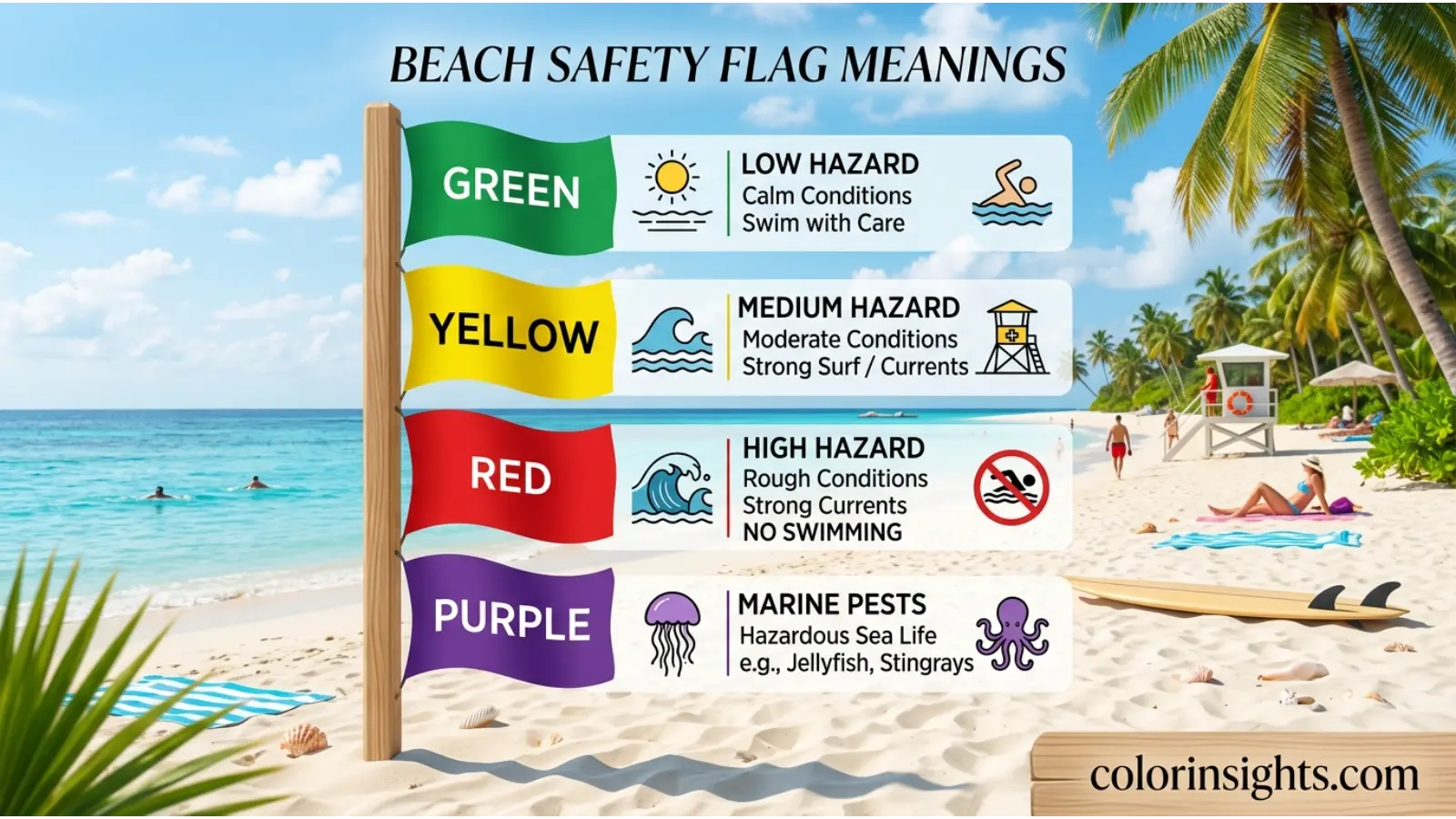
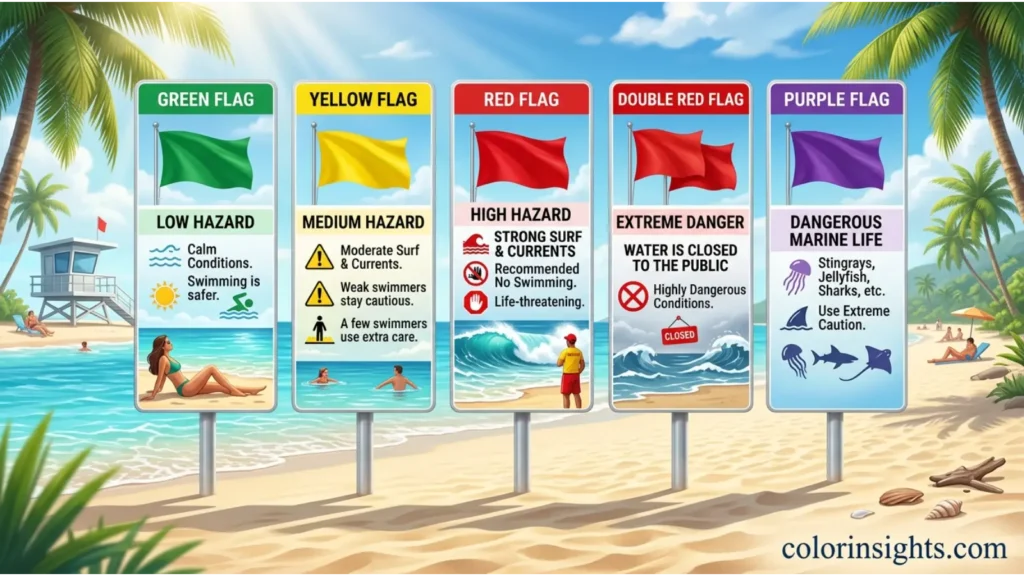
Beach flag colors indicate water safety conditions. Green means low hazard, yellow signals moderate caution, red warns of dangerous conditions, double red closes the water to swimmers, purple alerts visitors to dangerous marine life, and black-and-white flags identify surfing or watercraft zones.
What Does the Color Beach Flag Symbolize?
Beach flag colors symbolize different levels of safety, risk, and permitted activities in and around the water. Unlike decorative flags, beach safety flags communicate immediate information about environmental conditions such as waves, currents, weather, visibility, and marine hazards.
Each color serves a specific purpose:
- Green represents safe or low-risk swimming conditions.
- Yellow encourages caution due to moderate surf or currents.
- Red warns of dangerous water conditions.
- Double Red prohibits entering the water.
- Purple indicates potentially dangerous marine life.
- Black and White Checkered separates surfing and swimming zones.
- Orange Windsock (where used) warns of strong offshore winds affecting small watercraft.
Because beach conditions can change throughout the day, lifeguards may replace one flag with another as weather and tides shift.
Psychological Characteristics of the Color Beach Flag
Unlike traditional color psychology, beach flag colors are designed for rapid recognition rather than emotional expression. Their effectiveness depends on universal visual associations and quick decision-making.
Emotional Associations
- Green creates reassurance and confidence.
- Yellow encourages alertness and caution.
- Red immediately signals danger and urgency.
- Purple captures attention because it is uncommon in natural warning systems.
- Black and white create clear visual contrast for designated activity zones.
Psychological Effects
Beach flag colors influence behavior by helping people quickly evaluate risk.
- Green encourages recreation.
- Yellow promotes careful observation.
- Red discourages risky behavior.
- Double red creates a clear prohibition.
- Purple increases awareness of hidden hazards.
Positive Emotional Responses
- Feeling secure
- Confidence in beach management
- Awareness of safety
- Better decision-making
- Reduced uncertainty
Negative Emotional Responses
- Anxiety during hazardous conditions
- Hesitation before entering the water
- Increased vigilance
- Concern about weather or marine life
Impact on Mood and Behavior
People generally become more cautious when yellow or red flags are displayed. Green flags encourage recreational swimming, while double red flags significantly reduce water entry because they communicate an unmistakable safety restriction.
Spiritual Meaning of the Color Beach Flag
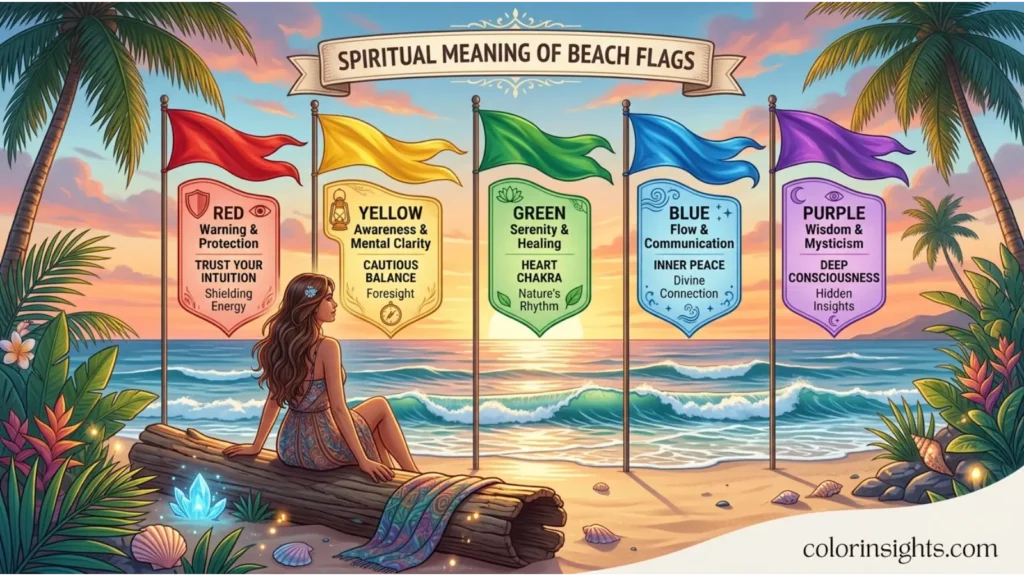
Beach flags are practical safety tools rather than spiritual symbols. However, the colors themselves have long-standing spiritual associations across cultures and religions.
- Green: renewal, healing, hope, growth, and protection.
- Yellow: wisdom, enlightenment, optimism, and awareness.
- Red: strength, courage, sacrifice, power, and life energy.
- Purple: spirituality, transformation, intuition, and higher awareness.
- Black and White: balance, duality, truth, and life’s opposing forces.
Additional symbolic meanings include:
- Holiness: Purple often represents sacred authority.
- Wisdom: Yellow symbolizes knowledge and understanding.
- Purity: White reflects cleanliness and honesty.
- Transformation: Green signifies renewal and personal growth.
- Healing: Green is widely associated with restoration.
- Protection: Red functions as a warning that protects life.
- Power: Red demonstrates authority and urgency.
- Enlightenment: Yellow encourages awareness.
- New Beginnings: Green represents fresh opportunities.
- Eternity: The continuous rhythm of the ocean often symbolizes the eternal cycle of life.
Although these meanings exist culturally, beach safety flags are intended primarily for public safety rather than religious symbolism.
Positive and Negative Meanings of the Color Beach Flag
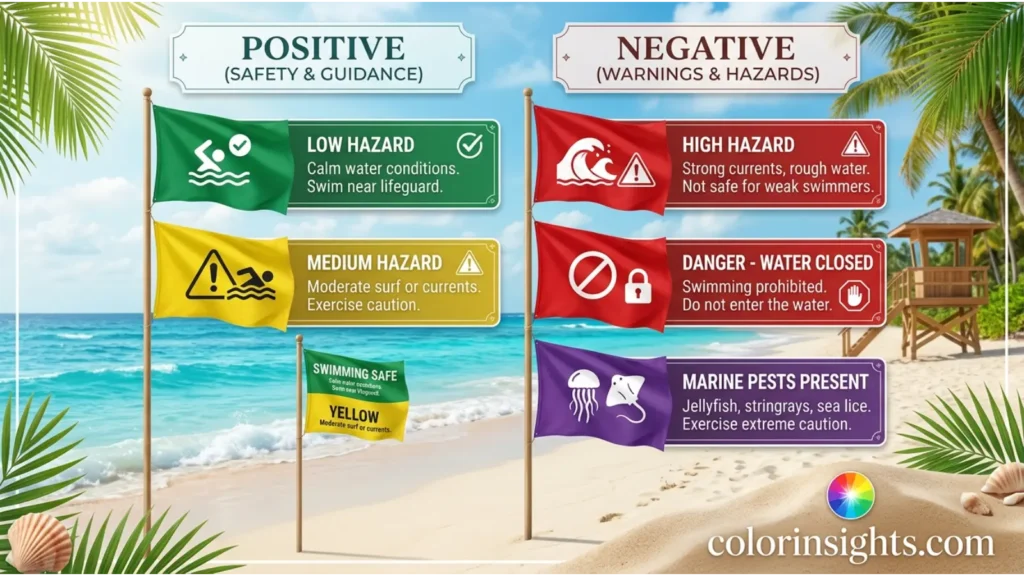
Positive Meanings
Beach flag colors promote safety, awareness, and responsible recreation.
- Safety: Green reassures visitors when water conditions are calm.
- Protection: Red prevents unnecessary risks during dangerous surf.
- Clarity: Color coding communicates information instantly.
- Preparedness: Visitors adjust activities according to conditions.
- Order: Designated surfing zones reduce collisions.
- Trust: Consistent flag systems build confidence in lifeguards.
- Balance: Flags help people enjoy the beach responsibly.
- Harmony: Organized beach activities create safer environments.
Example:
Families often choose to swim when green flags are flying because they indicate relatively safer conditions.
Negative Meanings
Some flag colors naturally represent restrictions or hazards.
- Danger: Red warns of rough surf or strong currents.
- Isolation: Double red prevents water access.
- Fear: Purple may create concern about jellyfish or sharks.
- Uncertainty: Yellow reminds visitors to remain cautious.
- Restriction: Activity zones limit where certain sports can occur.
- Disappointment: Water closures may interrupt vacation plans.
- Risk Awareness: Flags remind visitors that nature can change rapidly.
- Overconfidence: Ignoring flag warnings increases accident risk.
Example:
Tourists who ignore a red flag may unknowingly enter dangerous rip currents.
Meanings of the Color Beach Flag
Beach flag meanings depend entirely on context. The same color may represent different ideas in psychology, religion, or branding, but on beaches it serves a standardized safety purpose.
Feng Shui
Beach flag colors have broader Feng Shui associations.
- Green: Wood element that promotes growth and vitality.
- Yellow: Earth element that supports stability.
- Red: Fire element representing energy and passion.
- Purple: Fire element associated with prosperity.
- Black: Water element symbolizing depth and wisdom.
- White: Metal element representing clarity.
Best rooms: Living rooms, meditation spaces, home offices, and entrances depending on the desired energy.
Recommended combinations:
- Green and blue for tranquility.
- Yellow and beige for warmth.
- Red with neutral tones for balanced energy.
- Purple with gold for luxury.
Marketing
Color plays an essential role in branding and public communication.
Beach safety organizations use highly visible colors because they attract attention from long distances.
- Green communicates safety and permission.
- Yellow encourages caution.
- Red creates immediate urgency.
- Purple identifies uncommon hazards.
Famous brands also rely on these psychological effects:
- Coca-Cola uses red for excitement.
- McDonald’s combines red and yellow to stimulate attention.
- Whole Foods Market uses green to communicate health and nature.
- Yahoo uses purple to create uniqueness.
Design
Designers use these colors differently depending on purpose.
Interior Design
- Green creates relaxing spaces.
- Yellow brightens interiors.
- Red serves as an accent.
- Purple adds sophistication.
Graphic Design
Safety signage often follows the same visual hierarchy as beach flags because high-contrast colors improve visibility.
Web Design
Warning messages commonly use red, while success notifications often appear in green.
User Experience
Clear color coding reduces confusion and helps users make quick decisions.
Minimalist Design
Simple color palettes improve readability and communication.
Fashion
Beach flag colors also influence clothing symbolism.
Green
Represents freshness, balance, and environmental awareness.
Yellow
Creates cheerful summer outfits and attracts attention.
Red
Projects confidence, strength, and boldness.
Purple
Suggests creativity and luxury.
Advantages
- Easy visual impact.
- Strong personal expression.
- Seasonal flexibility.
Disadvantages
- Bright colors may dominate an outfit.
- Red may appear overly bold in formal settings.
- Yellow can overwhelm if overused.
For example, many beachwear collections combine bright yellows and greens to reflect outdoor energy and relaxation.
Color Associations Are Not Universal
Although beach safety systems are increasingly standardized, color meanings vary across cultures.
Western Cultures
In the United States and much of Europe, red generally represents danger, while green symbolizes safety and permission. These associations make beach flag systems intuitive for many visitors.
Eastern Cultures
In several Asian cultures, red often symbolizes luck, celebration, prosperity, and happiness rather than danger. Visitors may need to rely on local beach safety information instead of cultural expectations.
Religious Traditions
Religious symbolism differs considerably.
Green represents paradise in Islamic tradition.
Purple symbolizes royalty and spiritual preparation in Christianity.
Yellow often represents wisdom in Buddhism.
These meanings differ from beach safety communication.
Historical Interpretations
Historically, maritime communities used colored flags to communicate navigation, weather conditions, and emergencies long before modern beach safety programs developed standardized warning systems.
Modern Global Interpretations
Today, many beaches worldwide follow similar flag systems because consistent visual communication helps international travelers recognize hazards more easily. However, visitors should always read local beach signage since some regions use additional flags or modified warning systems.
What Beach Flag Says About Your Personality
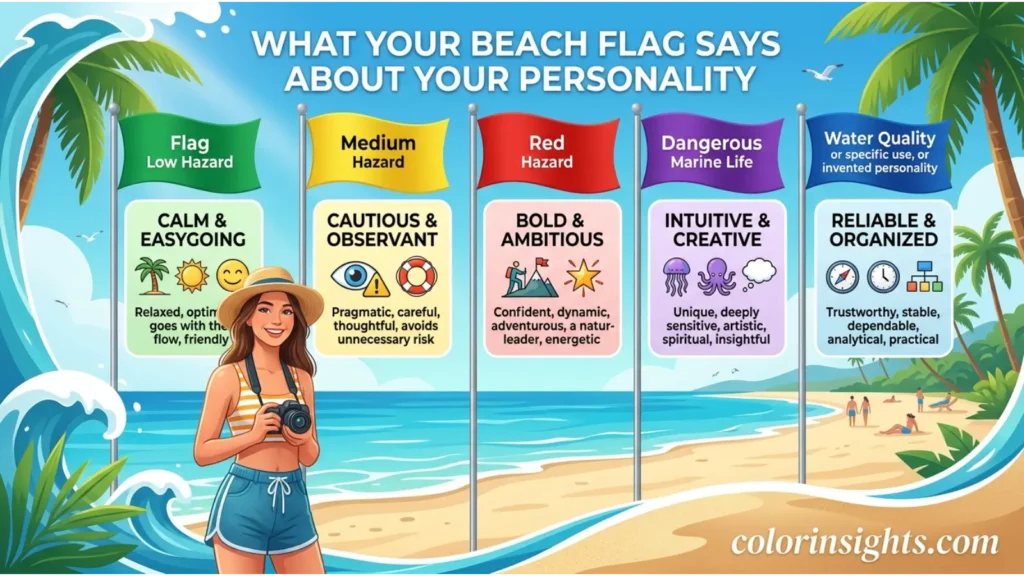
Preferring certain colors does not determine personality, but psychologists recognize that color preferences sometimes reflect temporary moods, experiences, or aesthetic tastes.
People drawn to green may appreciate nature, stability, and balance.
Those who favor yellow often enjoy optimism, learning, and social interaction.
People attracted to red may enjoy excitement, confidence, and energetic environments.
Individuals who like purple frequently appreciate creativity, imagination, and individuality.
Strengths
- Adaptable
- Observant
- Safety-conscious
- Responsible
- Curious
Weaknesses
- May become overly cautious
- Can worry about risks
- Sometimes avoid uncertainty
Social Behavior
Many people who appreciate safety-oriented environments tend to respect rules, cooperate well with others, and value shared responsibility.
Work Style
They often prefer organized systems, careful planning, and practical decision-making.
Relationships
These individuals may value trust, communication, and reliability.
Emotional Tendencies
They often seek stability while remaining aware that circumstances can change.
Remember, personality develops through genetics, upbringing, culture, education, and life experiences—not color preferences alone.
FAQs
What defines beach flag colors?
Beach flag colors are standardized visual signals that communicate swimming conditions, hazards, and permitted water activities.
What do beach flag colors symbolize?
They symbolize different levels of safety, caution, danger, marine life warnings, and activity zones.
Why are beach flag colors important?
They help reduce accidents by providing quick, easily understood safety information.
Is every beach flag system the same?
No. Most beaches follow similar international practices, but some countries and local authorities use additional flags or slight variations.
What emotions do beach flag colors represent?
Green suggests reassurance, yellow encourages caution, red signals urgency, and purple increases awareness of marine hazards.
What is the spiritual meaning of beach flag colors?
The colors themselves carry traditional spiritual symbolism such as healing, wisdom, courage, transformation, and protection, although beach flags primarily serve practical safety purposes.
What colors pair well with beach-themed designs?
Blue, green, sandy beige, white, turquoise, and coral create balanced coastal color palettes.
What does liking beach safety colors say about a person?
It may suggest an appreciation for nature, organization, safety, or outdoor recreation, but it does not accurately predict personality.
Which beach flag means no swimming?
A double red flag indicates that the water is closed to the public and swimming is prohibited.
What does a purple beach flag mean?
A purple flag warns of potentially dangerous marine life such as jellyfish or stingrays.
Conclusion
Beach flag color meanings provide a simple yet highly effective system for communicating water safety. Each color delivers immediate guidance about hazards, swimming conditions, and permitted activities, helping visitors make informed decisions before entering the ocean.
Although individual colors carry broader psychological, cultural, and spiritual symbolism, their purpose at the beach is practical: protecting lives through clear visual communication.
Learning these flag meanings allows beachgoers to enjoy coastal environments more safely while respecting changing weather, ocean conditions, and lifeguard instructions.