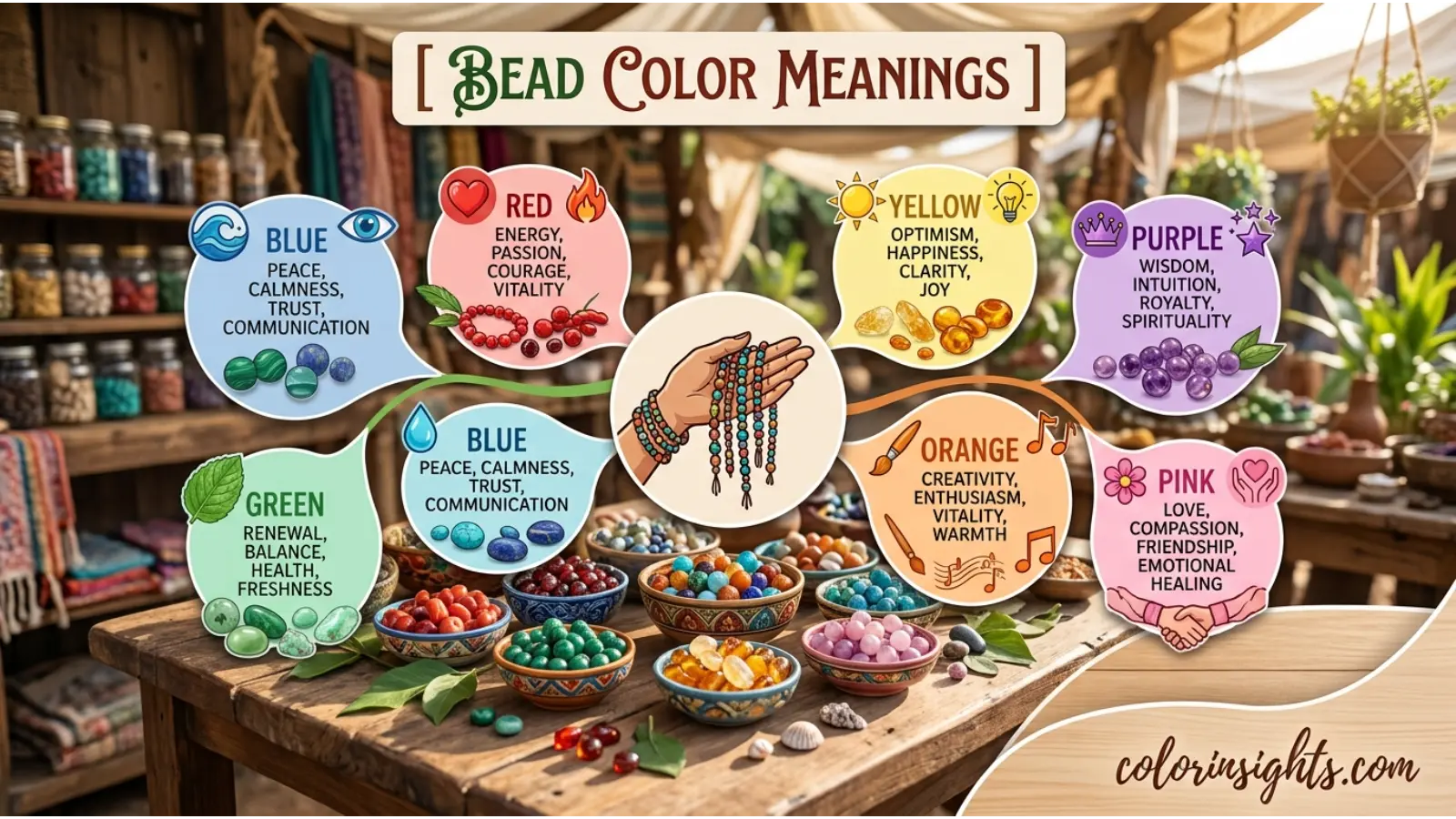
Bead color meanings have been used for thousands of years as decorative, spiritual, and cultural objects. Across different civilizations, the colors of beads have carried unique meanings, representing emotions, beliefs, protection, status, and personal identity.
Today, bead color meanings continue to influence jewelry design, fashion, meditation practices, and gift-giving. While interpretations vary across cultures and traditions, many bead colors share widely recognized symbolism rooted in psychology and historical customs.
Understanding these meanings can help you choose beads that reflect your personality, intentions, or style while appreciating the rich traditions behind their use.
Quick Answer:
Bead color meanings symbolize different emotions, values, and intentions. For example, red beads often represent passion and courage, blue beads symbolize peace and trust, green beads reflect growth and prosperity, white beads signify purity, and black beads are commonly associated with strength, protection, and sophistication.
What Do Bead Colors Symbolize?
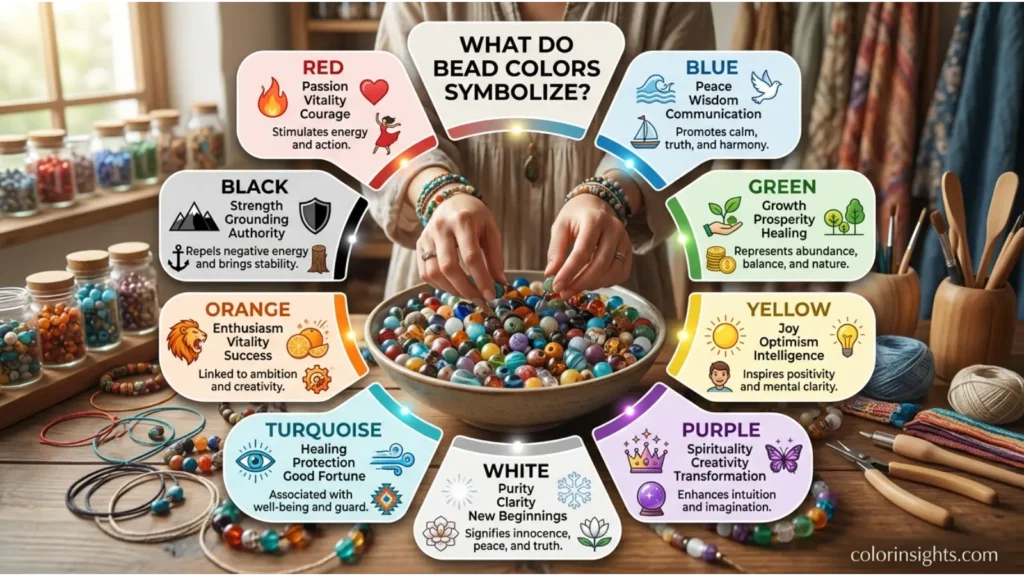
Bead colors symbolize a wide range of emotions, spiritual beliefs, cultural values, and personality traits. Although the exact meaning of a bead depends on its color, material, and cultural context, colored beads are often chosen to express feelings, intentions, or important life events.
For centuries, people have worn colored beads as protective talismans, symbols of faith, expressions of social status, and meaningful gifts. In many cultures, beads are believed to carry positive energy, attract good fortune, or provide spiritual protection. Modern jewelry designers also use bead colors strategically to create emotional connections and communicate specific themes.
Some common bead color symbolism includes:
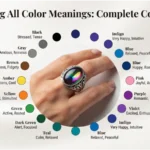
- Red: Passion, love, courage, confidence, and vitality.
- Blue: Calmness, wisdom, trust, communication, and loyalty.
- Green: Growth, renewal, prosperity, healing, and balance.
- Yellow: Happiness, creativity, optimism, and mental clarity.
- Orange: Enthusiasm, warmth, motivation, and adventure.
- Purple: Spirituality, imagination, luxury, and wisdom.
- Pink: Compassion, affection, kindness, and emotional healing.
- White: Purity, innocence, peace, and fresh beginnings.
- Black: Strength, protection, elegance, mystery, and resilience.
- Brown: Stability, reliability, grounding, and connection to nature.
- Gray: Neutrality, maturity, practicality, and balance.
- Gold: Success, abundance, achievement, and prosperity.
- Silver: Intuition, reflection, sophistication, and emotional clarity.
The meaning of bead colors is rarely fixed. Personal experiences, cultural traditions, and spiritual beliefs often influence how individuals interpret and use different colored beads.
Psychological Characteristics of Bead Colors
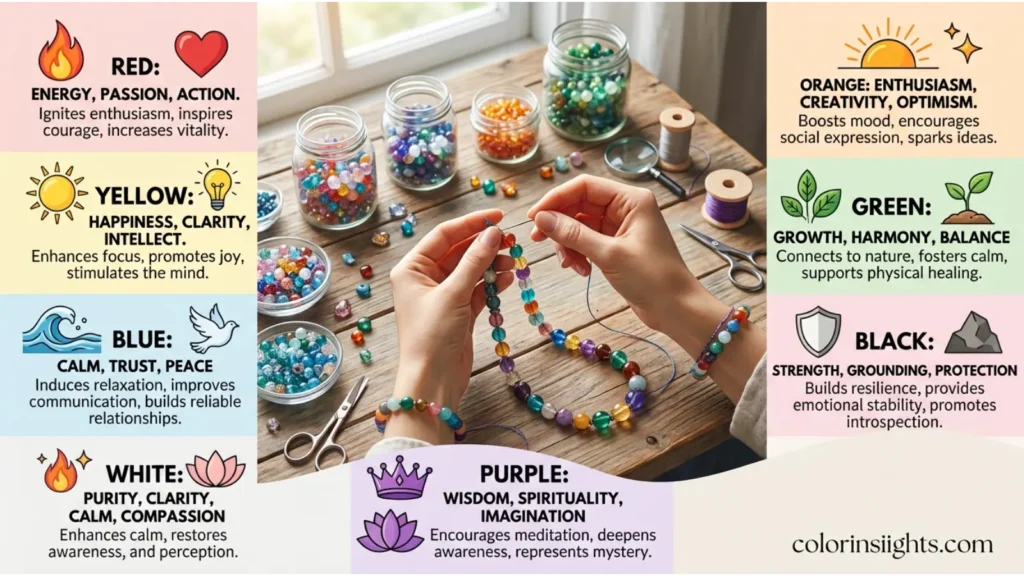
Color psychology suggests that colors can influence emotions, perceptions, and behavior. Because beads are often worn close to the body or used during meditation and prayer, their colors may reinforce certain emotional states or symbolic intentions.
Emotional Associations
Different bead colors evoke different emotional responses.
- Red beads encourage excitement, confidence, and determination.
- Blue beads promote calmness and emotional stability.
- Green beads inspire relaxation and personal growth.
- Yellow beads stimulate optimism and creativity.
- Purple beads encourage reflection and spiritual awareness.
- White beads create feelings of peace and simplicity.
- Black beads often communicate confidence and resilience.
These emotional associations explain why people frequently select bead colors that align with their mood or personal goals.
Psychological Effects
Bead colors can subtly influence how people think and feel.
- Warm colors like red, orange, and yellow may increase energy and motivation.
- Cool colors such as blue and green often reduce stress and promote concentration.
- Neutral colors like white, gray, and brown create feelings of stability and balance.
- Dark colors, especially black, can project authority, confidence, and sophistication.
Although these effects vary between individuals, color psychology suggests that repeated exposure to certain colors may influence emotional well-being.
Positive Emotional Responses
Many bead colors encourage positive psychological experiences.
- Confidence and courage
- Happiness and optimism
- Peace and relaxation
- Hope and renewal
- Creativity and inspiration
- Emotional balance
- Trust and security
- Self-expression
People often choose bead bracelets or necklaces to remind themselves of these positive qualities throughout the day.
Negative Emotional Responses
Certain bead colors may also carry less favorable associations depending on context.
- Red may symbolize anger or aggression.
- Black can represent grief or emotional distance.
- Gray may feel dull or indecisive.
- Yellow sometimes suggests anxiety or caution.
- White may appear cold or emotionally detached.
- Purple can occasionally be associated with melancholy or excessive idealism.
These interpretations are highly influenced by cultural beliefs and personal experiences.
Impact on Mood and Behavior
The colors of beads may affect mood by creating visual and emotional cues.
For example:
- Wearing blue beads before an important meeting may encourage calm communication.
- Green beads can create a sense of emotional balance during stressful situations.
- Yellow beads may help reinforce a positive mindset during creative projects.
- Red beads can increase feelings of motivation and determination during physical activities.
While scientific evidence regarding color effects varies, many people report that meaningful colors enhance mindfulness and emotional focus.
How People Typically React to Different Bead Colors
People often form immediate impressions based on bead color.
- Bright colors usually appear energetic and cheerful.
- Soft pastel beads often seem gentle and comforting.
- Dark-colored beads convey elegance and confidence.
- Neutral colors communicate simplicity and timeless style.
Because of these reactions, bead colors are widely used in jewelry, fashion, and personal accessories to create specific emotional impressions.
Spiritual Meaning of Bead Colors
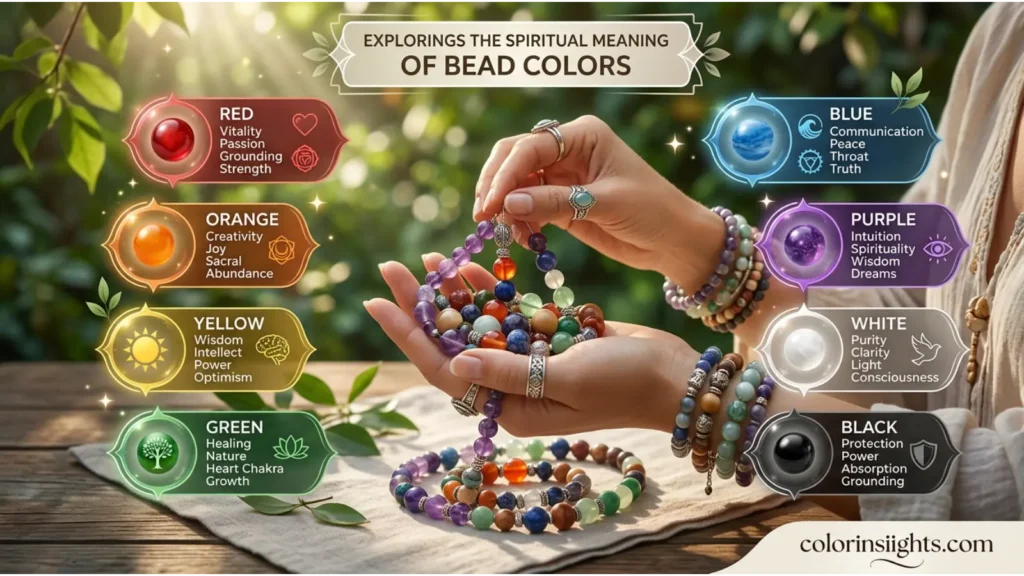
Across many spiritual traditions, bead colors are believed to carry symbolic energy that supports meditation, prayer, healing, and personal transformation. While interpretations vary between religions and belief systems, colored beads are commonly used to represent intentions, virtues, and stages of spiritual growth.
Common spiritual meanings include:
- Holiness: White beads often symbolize purity, sacredness, and devotion, making them popular in prayer beads and ceremonial jewelry.
- Wisdom: Blue and purple beads are frequently associated with inner knowledge, truth, and spiritual understanding.
- Purity: White beads represent innocence, moral clarity, and a fresh spiritual beginning.
- Transformation: Purple, green, and orange beads are often linked to personal growth, life changes, and self-discovery.
- Healing: Green beads symbolize emotional renewal, physical wellness, and harmony with nature. Blue beads may also represent emotional healing and inner peace.
- Protection: Black beads are widely believed to absorb negative energy and provide spiritual protection in many cultures.
- Power: Red and gold beads commonly represent strength, courage, leadership, and personal empowerment.
- Enlightenment: Purple, white, and gold beads are often connected with higher consciousness, wisdom, and spiritual awakening.
- New Beginnings: White and green beads symbolize renewal, hope, and the start of a new chapter in life.
- Eternity: Gold, silver, and white beads may represent timelessness, enduring faith, and the continuous cycle of life.
Many people wear bead bracelets, malas, or prayer necklaces as daily reminders of these spiritual values. However, spiritual interpretations are deeply personal and should be understood within the traditions from which they originate.
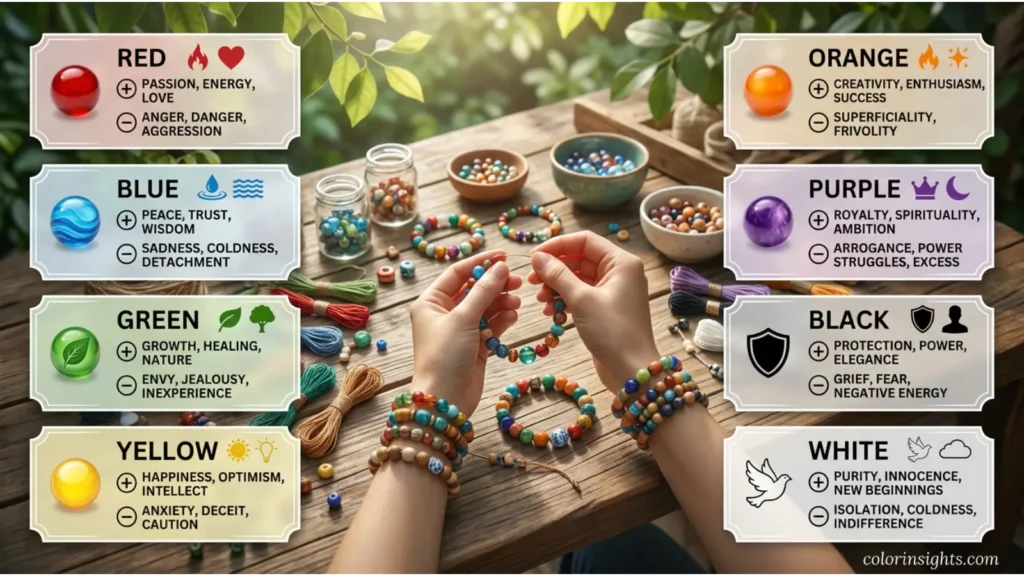
Positive and Negative Meanings of Bead Colors
The symbolism of bead colors includes both uplifting and challenging interpretations. A single color can communicate different messages depending on the setting, cultural background, and personal perspective.
Positive Meanings
Love and Compassion
Red and pink beads often symbolize affection, emotional warmth, and caring relationships. They are commonly exchanged as meaningful gifts between loved ones.
Peace and Serenity
Blue and white beads are associated with calmness, emotional balance, and inner peace. Meditation bracelets frequently feature these colors to encourage relaxation.
Growth and Renewal
Green beads represent personal development, healing, prosperity, and a strong connection to nature. They are often worn during periods of change or recovery.
Hope and Optimism
Yellow beads symbolize happiness, confidence, and positive thinking. Their bright appearance can inspire enthusiasm and encourage a hopeful outlook.
Wisdom and Spiritual Growth
Purple and blue beads often represent knowledge, intuition, and lifelong learning. They are popular choices for spiritual jewelry and reflective practices.
Strength and Protection
Black and red beads are widely associated with resilience, courage, and protection against negative influences. Many cultures use these colors in protective amulets.
Success and Prosperity
Gold beads symbolize achievement, abundance, confidence, and financial success. They are frequently incorporated into celebratory and ceremonial jewelry.
Balance and Harmony
Neutral colors such as brown, gray, and green represent stability, practicality, and emotional balance. They create a sense of grounding and reliability.
Negative Meanings
Anger and Aggression
Although red often symbolizes passion, it can also represent conflict or intense emotions. For example, bright red beads may feel overwhelming in situations that call for calmness.
Emotional Distance
Black or gray beads may sometimes appear reserved or unapproachable. In professional settings, an all-black beaded accessory might project authority but also emotional detachment.
Coldness and Sterility
White beads can symbolize cleanliness and simplicity, yet they may also feel clinical or impersonal when used without warmer accent colors.
Isolation
Dark-colored beads, particularly black and gray, are sometimes linked with solitude or introspection. While these qualities can support self-reflection, they may also suggest withdrawal from social interaction.
Anxiety or Caution
Yellow beads generally represent optimism, but very bright shades can also be associated with nervousness or warning signs, depending on the context.
Excessive Idealism
Purple beads often symbolize spirituality and imagination. However, they may also suggest unrealistic expectations or being overly focused on abstract ideas rather than practical action.
Materialism
Gold beads represent wealth and achievement, but when overused they can be interpreted as symbols of extravagance or excessive focus on status.
Boredom and Lack of Energy
Neutral bead colors such as gray or beige may appear understated and elegant, yet they can also seem uninspiring if not balanced with more vibrant colors.
Understanding both the positive and negative meanings of bead colors allows you to select jewelry and decorative items that best match your intentions, emotions, and personal style while respecting the diverse interpretations found around the world.
Meanings of Bead Colors
The meaning of bead colors changes depending on where and how they are used. A red bead in a spiritual bracelet may represent courage and life energy, while the same color in fashion jewelry may simply create a bold visual statement. Likewise, white beads can symbolize purity in religious traditions, elegance in bridal jewelry, or minimalism in modern design.
Context plays an important role in interpreting bead colors. Cultural traditions, religious beliefs, artistic styles, and personal experiences all influence their symbolism. Understanding these different contexts helps you select bead colors that best match your intentions, décor, clothing, or accessories.
Feng Shui
In Feng Shui, color is used to balance the flow of Qi (life energy) within a space. Bead decorations, crystal bead curtains, bracelets, and ornaments are often chosen according to the energy associated with their colors.
Associated Elements
Each bead color corresponds to one of the Five Feng Shui Elements.
- Red, Pink, Purple: Fire element
- Green, Brown: Wood element
- Yellow, Beige: Earth element
- White, Gray, Silver: Metal element
- Blue, Black: Water element
Selecting bead colors based on these elements is believed to support harmony and balance throughout the home.
Energy Symbolism
Different bead colors encourage different types of energy.
- Red beads promote vitality, passion, and success.
- Green beads encourage growth, healing, and abundance.
- Blue beads represent calmness, wisdom, and peaceful energy.
- White beads symbolize purity and clarity.
- Black beads provide grounding and protective energy.
- Gold beads attract prosperity and achievement.
Best Rooms
Choosing bead colors according to room function can create a balanced atmosphere.
- Living Room: Green, yellow, and earth-toned beads for harmony and family connection.
- Bedroom: Pink, white, and soft blue beads for love, relaxation, and emotional comfort.
- Home Office: Blue, green, or black beads for concentration, confidence, and productivity.
- Meditation Space: White, purple, and green beads to encourage spiritual reflection and inner peace.
- Entryway: Red or gold bead decorations are traditionally believed to welcome positive energy and good fortune.
Recommended Color Combinations
Popular Feng Shui bead combinations include:
- Red and gold for prosperity and celebration.
- Blue and white for peace and clarity.
- Green and brown for growth and natural balance.
- Black and silver for protection and stability.
- Purple and gold for wisdom and abundance.
Home Decorating Tips
Use bead colors thoughtfully rather than overwhelming a room with a single shade. Decorative bead curtains, hanging ornaments, or handcrafted bead artwork can introduce meaningful color accents while maintaining visual balance. Natural materials such as wood, glass, or gemstone beads also complement Feng Shui principles by strengthening the connection to nature.
Marketing
Color psychology plays a significant role in branding and product marketing. Although beads themselves are often sold as craft supplies or jewelry, their colors strongly influence consumer perception and purchasing decisions.
Branding Psychology
Brands use bead colors to communicate specific emotions.
- Red suggests excitement, confidence, and passion.
- Blue communicates trust, reliability, and professionalism.
- Green represents health, sustainability, and natural products.
- Purple conveys creativity, luxury, and imagination.
- Black projects sophistication and exclusivity.
- White reflects simplicity, cleanliness, and minimalism.
Jewelry companies often choose bead colors that align with the emotions they want customers to associate with their products.
Consumer Perception
Consumers frequently make purchasing decisions based on color before considering other product features. Bright bead colors attract attention, while neutral colors create timeless appeal.
For example:
- Colorful children’s bead kits often feature yellow, orange, and pink to communicate fun and creativity.
- Luxury gemstone bead collections commonly incorporate black, gold, silver, or deep purple to suggest elegance and premium quality.
Trust Signals
Blue, green, white, and silver are commonly used in branding because they create feelings of honesty, stability, and quality. These colors are especially popular among wellness, lifestyle, and handmade jewelry businesses.
Product Packaging
Packaging often reflects the emotional message of the beads inside.
Examples include:
- Green packaging for eco-friendly bead collections.
- Black packaging for luxury jewelry.
- White packaging for bridal accessories.
- Gold accents for premium gift sets.
Thoughtful packaging enhances perceived value while reinforcing brand identity.
Advertising Applications
Advertisers use bead colors to strengthen emotional storytelling.
Examples include:
- Red beads featured in Valentine’s Day campaigns.
- Green beads promoted during wellness or Earth Day events.
- Gold beads highlighted in holiday gift advertisements.
- White beads used in wedding and anniversary promotions.
Famous Brands That Commonly Use These Color Principles
Many well-known brands apply the same color psychology found in bead symbolism.
- Blue: IBM, Facebook, PayPal
- Red: Coca-Cola, Netflix, Target
- Green: Starbucks, Whole Foods Market
- Purple: Hallmark, Cadbury
- Black: Chanel, Nike
- White: Apple (minimalist product presentation)
Although these companies do not specifically market bead products, they demonstrate how color influences consumer trust, emotion, and brand recognition.
Design
Bead colors play an important role in both decorative and functional design. Designers carefully select bead colors to create visual harmony, emotional appeal, and artistic expression.
Interior Design
Beaded decorations can enhance different decorating styles.
- White beads create bright, minimalist spaces.
- Green beads complement natural and botanical interiors.
- Black beads add contrast and sophistication.
- Gold beads introduce warmth and luxury.
- Blue beads create peaceful coastal or spa-inspired rooms.
Decorative bead curtains, wall hangings, lamps, and handcrafted artwork are common interior applications.
Graphic Design
Graphic designers often use bead-inspired color palettes to communicate emotion.
Examples include:
- Bright beads for playful children’s graphics.
- Neutral bead tones for organic or handcrafted brands.
- Metallic colors for luxury branding.
- Pastel bead colors for wellness and beauty products.
Web Design
Color choices influence online user behavior.
- Blue improves trust.
- Green suggests environmental responsibility.
- White enhances readability.
- Black creates dramatic visual contrast.
- Gold highlights premium products.
Web designers often use bead-inspired accent colors to guide user attention without overwhelming the page.
User Experience (UX)
Thoughtful color selection improves usability.
For example:
- Soft bead colors reduce visual fatigue.
- High-contrast bead-inspired color schemes improve accessibility.
- Consistent color usage strengthens brand recognition.
Minimalist Aesthetics
Neutral bead colors such as white, gray, beige, black, and natural wood remain popular in minimalist design because they create clean, timeless environments. Small accents of colorful beads can add personality without disrupting simplicity.
Fashion
Bead colors are widely used in jewelry and accessories to express personality, celebrate traditions, and complement clothing styles.
Clothing Symbolism
Each bead color communicates different impressions.
- Red beads express confidence and passion.
- Blue beads suggest calmness and dependability.
- Green beads symbolize freshness and renewal.
- White beads reflect elegance and purity.
- Black beads communicate sophistication.
- Purple beads represent creativity and individuality.
- Gold beads suggest luxury and achievement.
Seasonal Use
Certain bead colors naturally suit different seasons.
- Spring: Green, pink, lavender, yellow.
- Summer: Turquoise, coral, white, bright blue.
- Autumn: Brown, orange, mustard, olive green.
- Winter: Black, silver, white, deep red, emerald green.
Seasonal colors help create cohesive and fashionable jewelry collections.
Styling Effects
Bead colors influence the overall appearance of an outfit.
Examples include:
- White pearl-like beads add timeless elegance to formal wear.
- Black beads complement professional business attire.
- Bright multicolored beads create playful casual looks.
- Gold beads elevate evening outfits.
- Earth-toned wooden beads pair naturally with bohemian fashion.
Layering different bead colors can also create unique visual interest while reflecting personal style.
Personality Impressions
People often form impressions based on bead color choices.
- Bright colors appear outgoing and energetic.
- Soft pastel beads suggest kindness and warmth.
- Dark colors communicate confidence and maturity.
- Natural wooden beads often reflect simplicity and appreciation for nature.
- Metallic beads convey sophistication and confidence.
These impressions are subjective but remain common in fashion psychology.
Advantages of Wearing Colored Beads
- Adds personal meaning to jewelry.
- Enhances self-expression.
- Coordinates easily with different outfits.
- Reflects cultural or spiritual traditions.
- Creates memorable fashion statements.
- Offers endless customization options.
Disadvantages of Wearing Colored Beads
- Strong colors may not match every outfit.
- Certain symbolic meanings may differ across cultures.
- Trendy color combinations may become outdated.
- Bright beads can dominate simple clothing styles if used excessively.
When chosen thoughtfully, bead colors provide both aesthetic beauty and personal significance, making them one of the most versatile elements in jewelry and fashion.
Color Associations Are Not Universal
Although many bead color meanings are widely recognized, color symbolism is not universal. Cultural traditions, historical events, religious beliefs, and personal experiences all shape how people interpret different colors. A bead color that represents celebration in one society may symbolize mourning or caution in another.
Western Cultures
In many Western countries, bead colors often reflect common color psychology and social traditions.
- White beads symbolize purity, weddings, innocence, and new beginnings.
- Black beads represent elegance, sophistication, authority, and sometimes mourning.
- Red beads are associated with love, romance, passion, courage, and excitement.
- Green beads commonly symbolize nature, prosperity, health, and renewal.
- Blue beads represent trust, loyalty, peace, and stability.
People frequently reflect these meanings in jewelry, fashion, interior design, and holiday celebrations. For example, brides often wear white beaded jewelry as an accessory, while people exchange red bead bracelets to symbolize affection or strength.
Eastern Cultures
Many Eastern cultures attach different symbolic meanings to bead colors.
- In countries such as China, people regard red beads as highly auspicious because they symbolize happiness, prosperity, celebration, and good fortune.
- Gold beads often represent wealth, success, and blessings.
- White beads may be associated with mourning or remembrance in several East Asian traditions rather than weddings.
- Green beads can symbolize health, harmony, and long life.
- People especially value jade-colored beads because jade has long represented wisdom, protection, and prosperity.
Different cultures assign unique meanings to bead colors, so readers should always consider their specific social and historical context.
Religious Traditions
Bead colors play meaningful roles in many faiths and spiritual practices.
In Christianity, white beads often symbolize purity and holiness, while purple may represent repentance, devotion, or spiritual preparation during certain religious seasons.
In Buddhism, prayer beads (malas) are used to support meditation. Different bead materials and colors may symbolize compassion, wisdom, mindfulness, or spiritual awakening.
In Hindu traditions, people often choose malas made from natural materials such as rudraksha seeds, sandalwood, or gemstones to support their spiritual intentions.
Colors like red, yellow, and orange frequently represent devotion, energy, and sacred knowledge.
In Islam, many people use prayer beads (misbaha or tasbih) for remembrance and devotion. They choose beads in many different colors, but many people respect green because it symbolizes paradise, renewal, and faith through its historical association.
Historical Interpretations
Throughout history, bead colors have reflected social status, trade, and cultural identity.
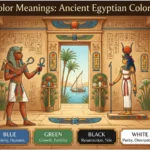
Ancient Egyptians used colorful glass and gemstone beads in jewelry and burial ornaments, believing certain colors offered protection in the afterlife.
Many African communities have long used bead colors to communicate age, marital status, leadership, achievements, and tribal identity. Specific meanings differ among ethnic groups, making color combinations deeply symbolic.
Native American beadwork frequently incorporates meaningful color patterns inspired by nature, spirituality, and storytelling.
European beadwork evolved through religious practices, royal fashion, and artistic movements, with pearls and white beads becoming enduring symbols of elegance and refinement.
Modern Global Interpretations
Today, globalization has blended many traditional color meanings while allowing individuals greater freedom to create their own interpretations.
People often choose bead colors based on:
- Personal goals
- Emotional preferences
- Fashion trends
- Spiritual practices
- Family traditions
- Cultural heritage
- Artistic creativity
As a result, bead color meanings have become both deeply personal and culturally diverse. While traditional symbolism provides valuable guidance, personal intention remains one of the most important factors in choosing meaningful bead colors.
What Bead Colors Say About Your Personality
People often choose bead colors that reflect their emotions, values, or personal style. While color psychology suggests that favorite colors may be linked to certain personality traits, there is no scientific evidence that color preferences can accurately determine someone’s personality. Instead, bead color choices should be viewed as forms of self-expression influenced by culture, experiences, fashion, and individual taste.
Below are some commonly associated personality traits based on preferred bead colors.
Red Beads
People who enjoy red beads are often perceived as energetic, confident, and passionate. They may enjoy taking initiative and embracing new challenges.
Strengths
- Courageous
- Determined
- Enthusiastic
- Ambitious
Weaknesses
- Can become impatient
- May be impulsive
- Sometimes competitive
Blue Beads
Blue bead lovers are often associated with calmness, honesty, and reliability. They usually value trust and meaningful relationships.
Strengths
- Loyal
- Dependable
- Thoughtful
- Emotionally balanced
Weaknesses
- May avoid conflict
- Can appear reserved
- Sometimes overthink situations
Green Beads
Those drawn to green beads often appreciate nature, learning, and personal growth. They usually value stability and harmony.
Strengths
- Patient
- Compassionate
- Practical
- Supportive
Weaknesses
- May resist sudden change
- Can become overly cautious
- Sometimes prioritize others over themselves
Yellow Beads
People who prefer yellow beads are frequently seen as optimistic, creative, and cheerful.
Strengths
- Positive
- Curious
- Innovative
- Friendly
Weaknesses
- Easily distracted
- May become restless
- Sometimes overly idealistic
Purple Beads
Purple bead enthusiasts are often viewed as imaginative, spiritual, and independent thinkers.
Strengths
- Creative
- Intuitive
- Open-minded
- Visionary
Weaknesses
- Can become overly sensitive
- May seem unconventional
- Sometimes lose focus on practical details
White Beads
People who prefer white beads often appreciate simplicity, honesty, and organization.
Strengths
- Fair-minded
- Organized
- Peaceful
- Reliable
Weaknesses
- May appear emotionally distant
- Can be perfectionistic
- Sometimes avoid uncertainty
Black Beads
Black bead lovers often value sophistication, confidence, and personal independence.
Strengths
- Strong-willed
- Self-confident
- Resilient
- Elegant
Weaknesses
- May seem reserved
- Can be private
- Sometimes misunderstood
Social Behavior
People naturally select bead colors that help express their identity.
For example:
- Bright-colored bead jewelry often communicates friendliness and enthusiasm.
- Neutral bead colors may project professionalism and reliability.
- Dark-colored beads frequently suggest confidence and maturity.
- Multicolored bead bracelets often reflect creativity and an outgoing personality.
Work Style
Color preferences may also influence personal style in professional settings.
- Red bead wearers may enjoy leadership roles.
- Blue bead lovers often excel in teamwork.
- Green bead enthusiasts typically value cooperation and steady progress.
- Black bead wearers may prefer structured environments and clear goals.
- Yellow bead lovers often thrive in creative careers.
These associations are broad observations rather than fixed personality indicators.
Relationships
Many people choose bead colors that represent qualities they value in relationships.
- Pink and red symbolize affection and emotional warmth.
- Blue represents loyalty and trust.
- Green reflects balance and long-term growth.
- White suggests honesty and sincerity.
- Purple symbolizes emotional depth and understanding.
Gifting jewelry with meaningful bead colors is a common way to express these values.
Emotional Tendencies
Favorite bead colors may also reflect temporary emotional needs rather than permanent personality traits.
Someone experiencing stress may naturally choose calming blue or green beads, while another person beginning a new chapter in life might prefer white beads to symbolize fresh beginnings.
Ultimately, bead color preferences are personal choices influenced by emotions, memories, culture, and aesthetics. They should not be used to judge or define someone’s character.
FAQs
What defines bead colors?
Bead colors refer to the various shades used in beads made from glass, gemstones, wood, clay, metal, crystal, acrylic, and other materials. Each color is commonly associated with particular symbolic, emotional, or cultural meanings.
What do bead colors symbolize?
Bead colors symbolize emotions, spiritual beliefs, personality traits, cultural traditions, and life experiences. For example, red often represents passion, blue symbolizes peace, green reflects growth, white signifies purity, and black represents protection or strength.
Why are bead colors important?
Bead colors help communicate personal expression, cultural identity, spiritual intentions, and artistic style. They are widely used in jewelry, fashion, meditation, ceremonies, and decorative arts to convey meaningful messages.
Are bead colors considered warm or cool colors?
Bead colors include both warm and cool tones.
- Warm colors: Red, orange, yellow, and gold.
- Cool colors: Blue, green, purple, silver, and some shades of gray.
Neutral colors such as white, black, brown, and beige can complement either group depending on the design.
What emotions do bead colors represent?
Different bead colors evoke different emotions.
- Red: Passion and confidence
- Blue: Calmness and trust
- Green: Balance and hope
- Yellow: Happiness and optimism
- Purple: Creativity and spirituality
- White: Peace and purity
- Black: Strength and sophistication
Emotional responses vary according to individual experiences and cultural traditions.
What is the spiritual meaning of bead colors?
Spiritually, bead colors often symbolize protection, healing, wisdom, enlightenment, transformation, love, and inner peace. Many prayer beads, meditation malas, and symbolic bracelets use specific colors to represent spiritual intentions or personal growth.
What colors pair well together in bead jewelry?
Popular bead color combinations include:
- Blue and white for a clean, peaceful look
- Black and gold for elegance
- Green and brown for natural style
- Purple and silver for sophistication
- Red and gold for celebration
- Pink and white for softness and romance
- Turquoise and coral for vibrant summer designs
The best combination depends on personal style and the desired symbolism.
What does liking certain bead colors say about a person?
People often choose bead colors that reflect their mood, values, or fashion preferences. While color psychology suggests some possible personality associations, favorite bead colors cannot accurately predict personality and should be viewed as one form of self-expression.
Do bead color meanings differ across cultures?
Yes. Color symbolism varies significantly around the world. For example, white commonly represents weddings and purity in many Western cultures but may symbolize mourning in parts of East Asia. Red often represents love in the West but prosperity and good fortune in Chinese traditions.
Can bead colors influence mood?
Many people believe bead colors can influence mood through color psychology. Cool colors such as blue and green may encourage relaxation, while warm colors like red and orange often promote energy and motivation. Individual responses, however, differ from person to person.
Conclusion
Bead color meanings combine centuries of cultural tradition, artistic expression, spiritual symbolism, and psychological interpretation.
Whether used in jewelry, meditation, home décor, fashion, or ceremonial practices, bead colors offer a meaningful way to communicate emotions, intentions, and personal identity.
Although many colors share widely recognized symbolism—such as red for passion, blue for peace, green for growth, white for purity, and black for protection—their meanings are never universal.
Historical traditions, religious beliefs, regional customs, and individual experiences all shape how bead colors are understood.