A tie color meanings more than a fashion accessory—it is a visual statement that communicates confidence, professionalism, personality, and style. The color of a tie can influence first impressions in business meetings, formal events, interviews, and social occasions.
While no tie color guarantees a particular outcome, colors often carry psychological and cultural associations that shape how others perceive the wearer.
Understanding tie color meanings helps you choose the right tie for different situations, whether your goal is to appear trustworthy, authoritative, approachable, or creative.
Quick Answer:
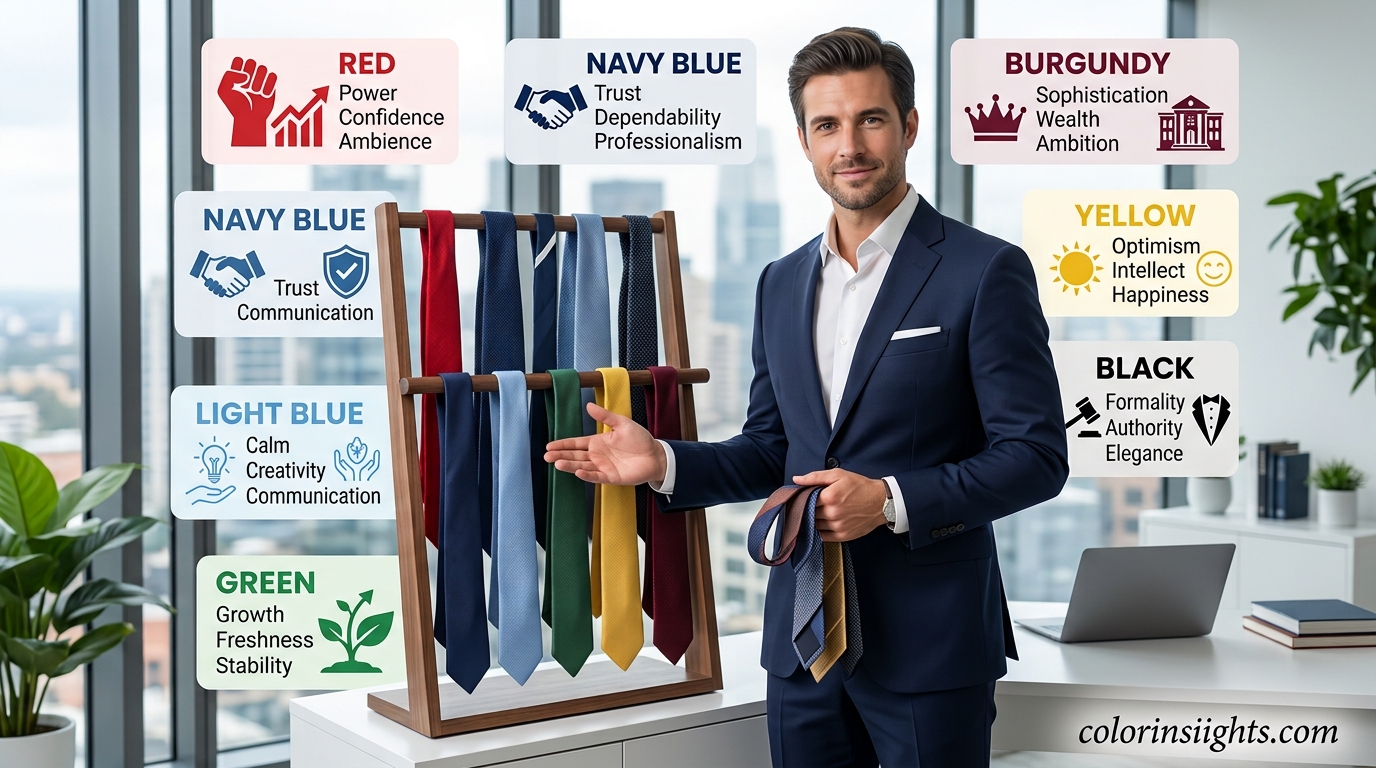
Tie color meanings reflect different emotions, personality traits, and social messages. For example, red ties often symbolize confidence and leadership, blue ties represent trust and reliability, black ties convey sophistication and authority, while green ties are associated with balance, growth, and prosperity.
What Do Tie Colors Symbolize?
Tie colors symbolize different qualities depending on their shade, cultural context, and the occasion. In professional environments, color psychology suggests that tie colors influence how people interpret confidence, credibility, friendliness, and competence. Although these associations are not universal, they remain widely recognized in business, fashion, and social settings.
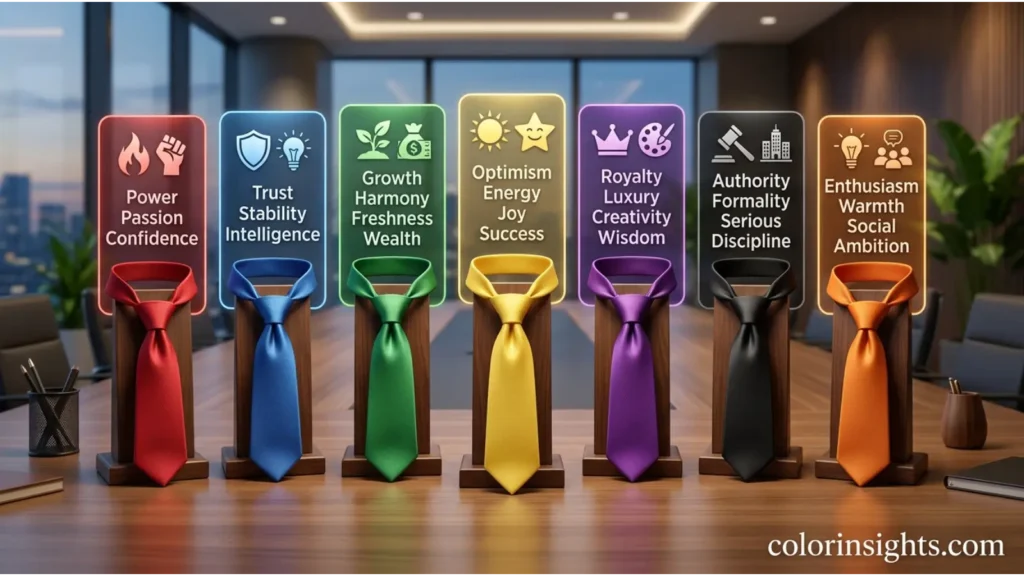
Here are some of the most common tie color meanings:
- Red: Confidence, passion, determination, leadership, and ambition.
- Blue: Trust, intelligence, loyalty, calmness, and professionalism.
- Black: Authority, elegance, power, sophistication, and formality.
- Gray: Balance, maturity, neutrality, and practicality.
- White: Simplicity, honesty, cleanliness, and new beginnings.
- Green: Growth, harmony, prosperity, renewal, and stability.
- Purple: Creativity, wisdom, luxury, and confidence.
- Yellow: Optimism, happiness, energy, and friendliness.
- Orange: Enthusiasm, innovation, warmth, and creativity.
- Pink: Compassion, kindness, confidence, and approachability.
- Brown: Dependability, stability, honesty, and resilience.
- Silver: Modernity, prestige, refinement, and innovation.
- Gold: Success, wealth, achievement, and prestige.
The meaning of a tie color also depends on factors such as industry, dress code, personal style, and cultural traditions. A bright red tie may project confidence during a business presentation, while a navy-blue tie may communicate reliability during a job interview.
Psychological Characteristics of Tie Colors
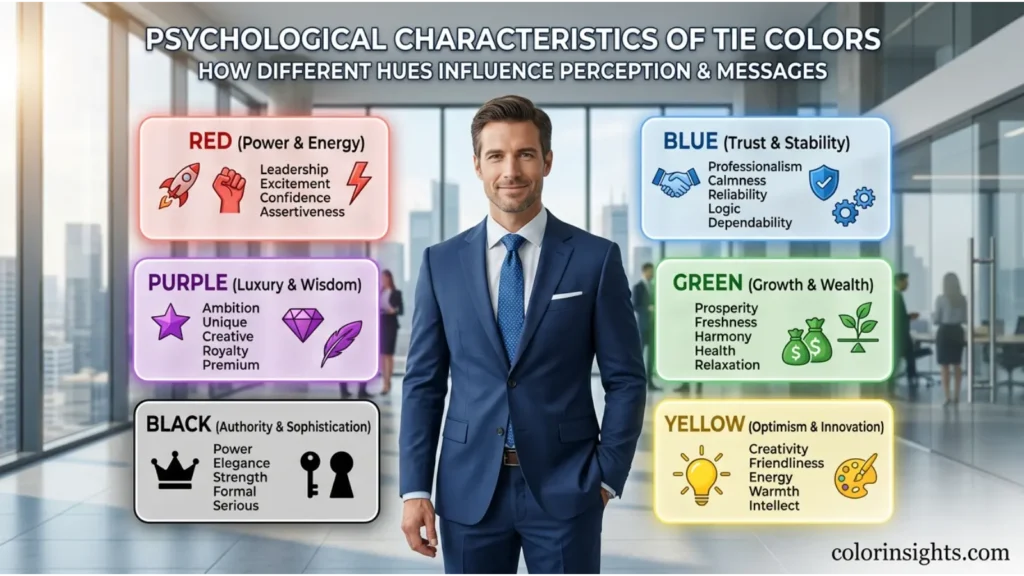
Color psychology suggests that colors influence emotional responses and first impressions. Because a tie is positioned near the face, its color naturally attracts attention and can subtly affect how others perceive the wearer.
Emotional Associations
Different tie colors trigger different emotional reactions.
- Red creates excitement, confidence, and determination.
- Blue promotes trust, calmness, and security.
- Green evokes harmony and emotional balance.
- Purple inspires creativity and sophistication.
- Black conveys seriousness and authority.
- Yellow communicates optimism and positivity.
- Gray suggests professionalism and neutrality.
- White represents honesty and simplicity.
These emotional associations explain why professionals often select tie colors based on the message they wish to communicate.
Psychological Effects
Tie colors can influence perceptions in both personal and professional settings.
- Warm colors often attract attention and increase perceived confidence.
- Cool colors create a calming and trustworthy impression.
- Neutral colors communicate stability and professionalism.
- Dark colors generally appear more authoritative.
- Bright colors can make the wearer seem energetic and approachable.
Although color alone does not determine people’s opinions, it contributes to overall visual communication.
Positive Emotional Responses
Certain tie colors encourage favorable impressions.
- Confidence and determination
- Trust and reliability
- Calmness and emotional stability
- Optimism and enthusiasm
- Creativity and innovation
- Professionalism and competence
- Elegance and sophistication
- Balance and harmony
For example, executives frequently wear navy-blue ties because they inspire confidence without appearing overly aggressive.
Negative Emotional Responses
Some tie colors may also create unintended impressions depending on context.
- Bright red may appear overly dominant.
- Black can seem intimidating or emotionally distant.
- Gray may appear conservative or uninspiring.
- Yellow can become distracting if too vibrant.
- White may seem overly formal or impractical.
- Purple can appear extravagant in conservative workplaces.
These responses depend on cultural expectations, workplace norms, and individual preferences.
Impact on Mood and Behavior
Color influences both the wearer and the observer.
Research in environmental and color psychology suggests that colors can affect mood, attention, and emotional perception. Wearing a favorite tie color may increase self-confidence, while observers often interpret colors through learned cultural associations.
Examples include:
- Blue ties help create a relaxed meeting atmosphere.
- Red ties encourage perceptions of leadership during presentations.
- Green ties support feelings of balance and cooperation.
- Gray ties reduce visual distraction in formal business settings.
How People Typically React to Different Tie Colors
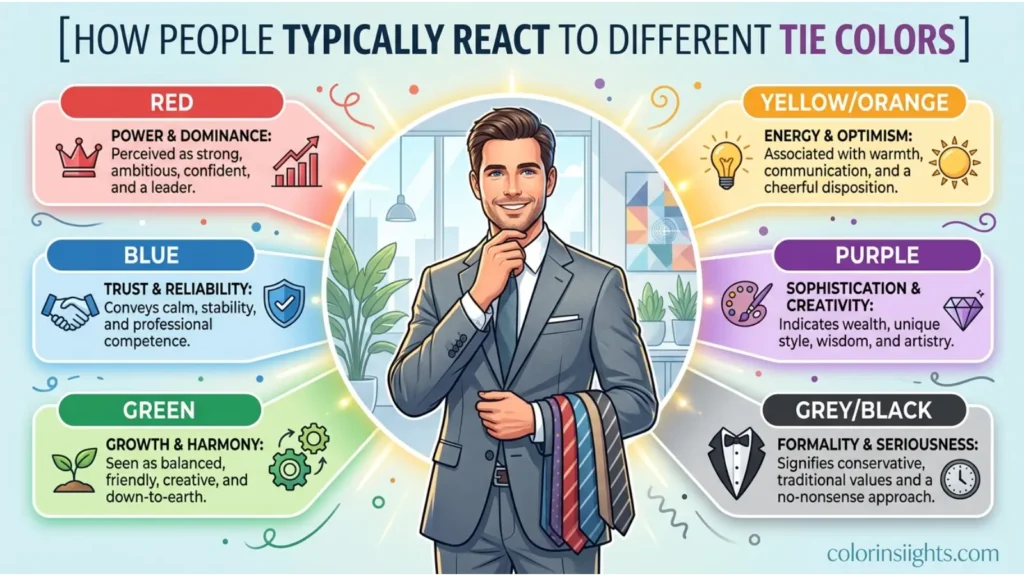
People often form impressions within seconds of meeting someone. Tie color contributes to these initial judgments.
Typical reactions include:
- Red: Strong, competitive, confident
- Blue: Honest, dependable, calm
- Black: Powerful, disciplined, elegant
- Green: Balanced, approachable, thoughtful
- Purple: Creative, ambitious, sophisticated
- Yellow: Friendly, energetic, optimistic
- Gray: Mature, practical, reserved
- Pink: Warm, compassionate, confident
- Brown: Reliable, grounded, trustworthy
- White: Clean, organized, professional
These impressions are influenced by clothing combinations, facial expressions, and overall presentation rather than tie color alone.
Spiritual Meaning of Tie Colors
Although ties themselves do not hold universal spiritual significance, the colors used in ties often reflect symbolic meanings found in religious traditions, meditation practices, and spiritual philosophies. These meanings vary across cultures but commonly represent inner qualities, virtues, and life experiences.
Holiness
- White ties symbolize purity, sacredness, and spiritual devotion.
- Gold ties may represent divine glory and higher purpose.
- Purple ties are associated with spiritual leadership in many religious traditions.
Wisdom
- Blue represents wisdom, knowledge, and thoughtful decision-making.
- Purple symbolizes insight, higher consciousness, and intellectual growth.
- Gray reflects maturity gained through experience.
Purity
- White remains the strongest symbol of innocence and moral clarity.
- Silver also represents clarity, honesty, and refined character.
Transformation
- Green symbolizes personal growth and renewal.
- Purple represents transformation through wisdom and self-discovery.
- Orange reflects change, motivation, and creative energy.
Healing
- Green is widely associated with emotional healing and restoration.
- Blue represents peace, calmness, and emotional recovery.
- White symbolizes cleansing and renewal.
Protection
- Black often symbolizes strength and resilience against challenges.
- Blue represents stability and emotional security.
- Brown symbolizes grounding and dependable support.
Power
- Red represents courage, determination, and personal strength.
- Black reflects authority and disciplined leadership.
- Gold symbolizes achievement and influence.
Enlightenment
- Purple represents higher awareness and spiritual insight.
- White symbolizes enlightenment and inner peace.
- Gold reflects wisdom and elevated understanding.
New Beginnings
- White symbolizes fresh starts and new opportunities.
- Green represents growth and positive change.
- Yellow reflects hope and optimism for the future.
Eternity
- Blue is often associated with the endless sky and lasting faith.
- Gold symbolizes timeless value and enduring success.
- White represents eternal peace in many spiritual traditions.
While these spiritual interpretations enrich the symbolism of tie colors, their meanings are largely cultural rather than universal.
Positive and Negative Meanings of Tie Colors
Tie colors communicate both strengths and potential drawbacks depending on the setting, shade, and overall outfit. The same color that projects confidence in one situation may seem overly bold or subdued in another.
Positive Meanings
Confidence
A red tie often symbolizes confidence, ambition, and decisive leadership. It is a popular choice for executives, public speakers, and professionals who want to project authority during presentations or negotiations.
Trust
Blue ties are widely associated with honesty, reliability, and professionalism. They are commonly worn during job interviews, client meetings, and corporate events to inspire confidence.
Balance
Gray and green ties represent stability, emotional balance, and sound judgment. These colors are suitable for workplaces that value cooperation and thoughtful decision-making.
Elegance
Black and silver ties symbolize sophistication, refinement, and timeless style. They are frequently chosen for formal occasions such as weddings, galas, and evening events.
Optimism
Yellow and orange ties convey enthusiasm, positivity, and creativity. They can brighten an outfit and create a friendly, approachable impression in less formal business or social settings.
Growth
Green ties symbolize renewal, prosperity, and progress. They are often selected by individuals who wish to communicate innovation, sustainability, or a forward-thinking mindset.
Negative Meanings
Aggression
A bright red tie may appear overly forceful or competitive in collaborative environments. For example, wearing a vivid red tie to a team-building workshop might unintentionally create an impression of dominance rather than cooperation.
Emotional Distance
Black ties can project authority, but they may also seem intimidating or emotionally reserved. In casual networking events, an all-black formal look might make the wearer appear less approachable.
Conservatism
Gray ties communicate professionalism, yet an entirely gray outfit may feel overly cautious or lacking in creativity. In industries that value innovation, such as advertising or design, this could create a less dynamic impression.
Excessive Formality
White ties are traditionally linked to highly formal occasions. Wearing a white tie to a casual office gathering may appear out of place and overly ceremonial.
Distraction
Bright yellow or orange ties attract attention, but if they are too vivid, they can distract from conversations or presentations. For instance, a neon yellow tie in a corporate boardroom may shift focus away from the speaker’s message.
Overstatement
Purple and gold ties symbolize luxury and success, yet in conservative workplaces they may be perceived as overly extravagant or attention-seeking if not balanced with neutral clothing.
These examples show that tie color meanings depend not only on symbolism but also on context, occasion, and the expectations of the people around you.
Meanings of Tie Colors
Tie color meanings change depending on the setting, purpose, and cultural expectations. The same color can communicate professionalism in one environment and creativity or celebration in another. Factors such as the shade of the tie, the suit and shirt combination, lighting, and the occasion all influence how the color is interpreted.
For example, a navy-blue tie paired with a charcoal suit projects trust and competence during a business meeting, while a burgundy tie may add warmth and confidence to a formal dinner outfit. Likewise, a pastel pink tie feels approachable at a spring wedding but may appear too casual for a courtroom or executive presentation.
Feng Shui
In Feng Shui, colors represent the five elements and influence the flow of energy (Qi). While ties are not traditionally discussed in Feng Shui, their colors can symbolically support certain intentions and complement personal or workplace energy.
Associated Elements
- Red: Fire element, representing passion and recognition.
- Blue and Black: Water element, symbolizing wisdom and career growth.
- Green: Wood element, associated with health, growth, and renewal.
- Yellow, Brown, and Gold: Earth element, representing stability and nourishment.
- White, Gray, and Silver: Metal element, symbolizing clarity, focus, and precision.
Energy Symbolism
- Red encourages motivation and confidence.
- Blue promotes calm communication and trust.
- Green supports personal growth and balance.
- White encourages mental clarity and organization.
- Gold symbolizes abundance and success.
Best Rooms
Tie colors may be selected to match the energy of different environments.
- Home office: Blue, gray, or green.
- Executive office: Navy, burgundy, or black.
- Meeting room: Blue or gray to encourage cooperation.
- Networking events: Red or yellow to create visibility and enthusiasm.
Recommended Color Combinations
- Navy blue with silver for professionalism.
- Green with gray for balance.
- Red with white for confidence and clarity.
- Purple with charcoal for creativity and sophistication.
- Brown with cream for warmth and dependability.
Home Decorating Tips
If you frequently work from home, coordinating your tie color with a calm workspace can reinforce a polished appearance during video meetings. Neutral backgrounds paired with blue, gray, or green ties often create a balanced and professional visual impression.
Marketing
Color plays a major role in branding psychology, and tie colors often mirror the values companies wish to communicate.
Branding Psychology
- Blue signals trust, reliability, and professionalism.
- Red attracts attention and conveys confidence.
- Green reflects sustainability, wellness, and growth.
- Black communicates luxury and exclusivity.
- Purple suggests creativity and premium quality.
Consumer Perception
Customers often form opinions within seconds. Professionals wearing blue or gray ties are frequently perceived as more trustworthy, while red ties may suggest strong leadership and decisive action.
Trust Signals
Financial institutions, law firms, healthcare organizations, and consulting firms commonly favor blue ties because they reinforce feelings of credibility and stability.
Product Packaging
The same psychological principles apply to product packaging:
- Green packaging suggests eco-friendly products.
- Black packaging implies premium quality.
- Gold accents communicate exclusivity.
- Blue packaging reinforces dependability.
Advertising Applications
Advertisers use color strategically to influence emotional responses. Sales campaigns often feature red to create urgency, while healthcare and technology advertisements commonly use blue to promote confidence and security.
Examples of Well-Known Brand Colors
Several globally recognized companies illustrate these principles:
- Blue: IBM, Ford Motor Company, PayPal
- Red: Coca-Cola, Netflix, Target
- Green: Starbucks
- Purple: Hallmark
- Black: Luxury brands such as Chanel and Prada frequently incorporate black into their visual identity to emphasize elegance.
Design
Tie color is an important design element because it acts as a focal point within an outfit. Designers use color contrast and harmony to create a polished appearance.
Interior Design
Professionals often coordinate tie colors with the tone of formal environments. Blue and gray ties complement modern office interiors, while green ties pair well with natural, biophilic spaces.
Graphic Design
Graphic designers understand that color communicates meaning instantly. This principle also applies to fashion accessories. A bright tie becomes a visual focal point, while neutral colors create balance.
Web Design
The psychology behind website color choices parallels tie color selection. Blue communicates trust, green supports wellness brands, and black reinforces premium positioning.
User Experience
In visual communication, excessive color can overwhelm users. Similarly, an overly bright tie may distract from a speaker’s message, while a balanced color palette supports clear communication.
Minimalist Aesthetics
Minimalist fashion often favors navy, black, gray, white, and muted earth tones. These colors remain timeless, versatile, and suitable for both professional and formal settings.
Fashion
Tie color significantly influences the overall impression of an outfit and helps express personality while respecting dress codes.
Clothing Symbolism
- Red communicates confidence and ambition.
- Blue represents professionalism and reliability.
- Green symbolizes balance and renewal.
- Purple conveys creativity and sophistication.
- Black expresses elegance and authority.
- Pink reflects warmth and approachability.
Seasonal Use
- Spring: Pastel blue, pink, lavender, and light green.
- Summer: Sky blue, yellow, and floral-inspired colors.
- Autumn: Burgundy, rust, olive green, and brown.
- Winter: Navy, black, charcoal, silver, and deep purple.
Styling Effects
A well-chosen tie creates contrast and draws attention toward the face. Matching tie color with pocket squares, watches, or shoes produces a cohesive appearance without looking overly coordinated.
Personality Impressions
Different colors create distinct first impressions:
- Navy suggests dependable leadership.
- Burgundy appears confident without being overpowering.
- Green feels approachable and balanced.
- Black projects seriousness.
- Pink communicates openness and confidence.
- Purple suggests originality and vision.
Advantages
- Enhances professional appearance.
- Reinforces personal branding.
- Creates memorable first impressions.
- Complements facial features and skin tones.
- Adds variety to formal wardrobes.
Disadvantages
- An inappropriate color may clash with the occasion.
- Extremely bright colors can distract from communication.
- Some colors may conflict with workplace dress expectations.
- Poor color combinations reduce visual harmony.
Practical Examples
- A navy tie is an excellent choice for a job interview.
- A burgundy tie works well for executive presentations.
- A black silk tie suits formal evening events.
- A green tie complements sustainability conferences.
- A pastel pink tie fits spring weddings and daytime celebrations.
Color Associations Are Not Universal
Although many tie color meanings are widely recognized, they are not interpreted identically across cultures, religions, or historical periods. Understanding these differences helps avoid assumptions and promotes more effective communication.
Western Cultures
In North America and much of Europe, tie colors often follow principles of color psychology and professional etiquette.
Blue is associated with trust, reliability, and competence, making it one of the most popular choices for business attire. Red symbolizes confidence, ambition, and leadership, while black conveys authority and sophistication. White generally represents purity and formality, especially at ceremonial occasions.
Eastern Cultures
Across many Asian cultures, color meanings may differ significantly.
Red is widely regarded as a symbol of happiness, prosperity, celebration, and good fortune. It is commonly worn during weddings, festivals, and important life events. Gold also symbolizes wealth and success, while white may be associated with mourning or remembrance in some traditions rather than celebration.
Because interpretations vary among countries such as China, Japan, India, and South Korea, it is helpful to consider local customs when selecting attire for international events.
Religious Traditions
Many religions assign symbolic meanings to colors.
- White often represents purity, peace, and holiness.
- Purple is associated with spiritual reflection, dignity, and devotion.
- Gold symbolizes divine glory, wisdom, and eternal value.
- Green holds special significance in several religious traditions as a symbol of life, mercy, and renewal.
These associations can influence clothing choices during religious ceremonies and formal observances.
Historical Interpretations
Historically, certain colors were available only to royalty or wealthy individuals because of the rarity and expense of producing dyes.
Purple became a symbol of nobility and prestige, while gold represented wealth and authority. Black evolved from a practical color into a symbol of elegance and formal dress, particularly during the nineteenth and twentieth centuries.
These historical traditions continue to influence modern fashion and professional attire.
Modern Global Interpretations
Today, globalization has made many color meanings more consistent across international business and media. Blue is widely recognized as trustworthy, black as sophisticated, and green as environmentally conscious.
However, cultural traditions still shape local interpretations. Professionals working in international environments benefit from considering both universal color psychology and regional customs when choosing tie colors.
In short, tie color symbolism provides useful guidance, but context, culture, and personal experience ultimately determine how a color is perceived.
What Tie Color Says About Your Personality
Many people believe that the colors they wear reflect aspects of their personality. While research in color psychology suggests that color preferences can influence first impressions and self-expression, there is no scientific evidence that a favorite tie color can accurately determine someone’s personality. Instead, tie colors should be viewed as one way people communicate style, mood, and personal identity.
Strengths
People who consistently choose certain tie colors may project the following strengths:
- Red: Confident, ambitious, decisive, and energetic.
- Blue: Trustworthy, dependable, calm, and organized.
- Black: Disciplined, authoritative, and sophisticated.
- Green: Balanced, patient, and growth-oriented.
- Purple: Creative, imaginative, and visionary.
- Gray: Practical, reliable, and professional.
- Brown: Honest, grounded, and dependable.
- Pink: Compassionate, approachable, and emotionally aware.
- Yellow: Optimistic, enthusiastic, and friendly.
These impressions often influence how colleagues, clients, and acquaintances perceive someone during first meetings.
Weaknesses
Every color can also create less favorable impressions when overused or worn in the wrong context.
- Red may appear aggressive or overly competitive.
- Black can seem intimidating or emotionally reserved.
- Gray may appear conservative or uninspiring.
- Yellow may look distracting or overly playful.
- Purple may seem extravagant in traditional workplaces.
- Brown may appear old-fashioned in highly modern environments.
- Pink may be incorrectly perceived as too casual in some formal settings.
These interpretations are subjective and depend on culture, profession, and personal preference.
Social Behavior
Tie colors often influence social perceptions rather than actual personality.
For example:
- People wearing blue ties are frequently viewed as approachable and trustworthy.
- Red ties often attract attention and may create an impression of confidence.
- Green ties can make the wearer appear calm and cooperative.
- Black ties usually communicate seriousness and professionalism.
These perceptions can affect first impressions, even though they do not define a person’s character.
Work Style
Different tie colors can reinforce various professional images.
- Blue supports collaboration, reliability, and careful decision-making.
- Red emphasizes leadership and determination.
- Gray reflects consistency and attention to detail.
- Black conveys authority and executive presence.
- Green suggests innovation, sustainability, and long-term thinking.
Professionals often choose tie colors strategically based on the audience and purpose of a meeting.
Relationships
Tie color may subtly influence how others interpret interpersonal qualities.
- Blue and green often create feelings of comfort and trust.
- Pink suggests kindness and empathy.
- Brown communicates loyalty and dependability.
- Purple reflects individuality and creativity.
- Red conveys passion and confidence.
Although these impressions may shape initial interactions, meaningful relationships depend on communication, shared values, and behavior rather than clothing color.
Emotional Tendencies
Color preferences sometimes reflect temporary moods or desired emotional states.
For instance:
- Someone preparing for an important presentation may choose a red tie to feel more confident.
- A professional attending a client meeting might select blue to reinforce trust.
- Green may be chosen during collaborative events to encourage harmony.
- Black is often preferred for formal occasions requiring authority and elegance.
Ultimately, tie color is a form of self-expression rather than a reliable measure of personality. Personal experiences, cultural background, and situational context all play a much greater role in shaping individual behavior.
FAQs
What defines a tie color?
A tie color refers to the dominant color of a necktie and the symbolic meanings commonly associated with it. Different colors can communicate professionalism, confidence, creativity, trust, or sophistication depending on the context.
What do tie colors symbolize?
Tie colors symbolize a wide range of qualities, including authority, trust, ambition, creativity, harmony, and optimism. The exact meaning depends on the specific color, the occasion, and cultural interpretations.
Why are tie colors important?
Tie colors help shape first impressions in business, formal events, interviews, and social gatherings. Choosing an appropriate color can reinforce professionalism, complement an outfit, and support the message a wearer wants to communicate.
Are tie color meanings universal?
No. While many color associations are widely recognized, meanings vary across cultures, religions, industries, and personal experiences. A color viewed positively in one culture may have a different interpretation in another.
Which tie color is best for a job interview?
Navy blue is one of the safest choices because it conveys trust, professionalism, and reliability. Gray and burgundy are also popular options for creating a polished and confident appearance.
Which tie color represents confidence?
Red is most commonly associated with confidence, leadership, determination, and ambition. It is often worn during presentations, negotiations, and leadership events.
What tie color is considered the most professional?
Blue, navy, gray, and burgundy are generally regarded as the most professional tie colors because they project competence, reliability, and maturity without appearing overly bold.
What colors pair well with different tie colors?
Classic combinations include:
- Navy tie with a white or light blue shirt.
- Burgundy tie with a white or light gray shirt.
- Green tie with a white or beige shirt.
- Black tie with a white shirt and black or charcoal suit.
- Gray tie with almost any neutral-colored suit.
These combinations create balanced and timeless formal outfits.
What does liking certain tie colors say about a person?
People may choose tie colors that reflect the image they wish to project, such as confidence, creativity, reliability, or approachability. However, color preference alone cannot accurately determine personality or behavior.
How should I choose the right tie color?
Consider the occasion, dress code, audience, and the message you want to communicate. Professional settings generally favor blue, gray, and burgundy, while weddings, celebrations, and creative industries allow for a wider range of colors.
Conclusion
Tie colors are a subtle yet powerful form of nonverbal communication. Whether you choose a bold red tie to express confidence, a navy-blue tie to inspire trust, a green tie to represent balance, or a black tie for timeless elegance, each color contributes to the impression you make.
Understanding tie color meanings can help you select attire that aligns with the occasion, complements your personal style, and supports your professional goals.
At the same time, it is important to remember that color symbolism is influenced by culture, context, and individual perception. No tie color has a fixed or universal meaning, and no single color can define a person’s character.
By combining color psychology with thoughtful styling and appropriate etiquette, you can use tie colors as an effective tool for confident and intentional self-presentation.