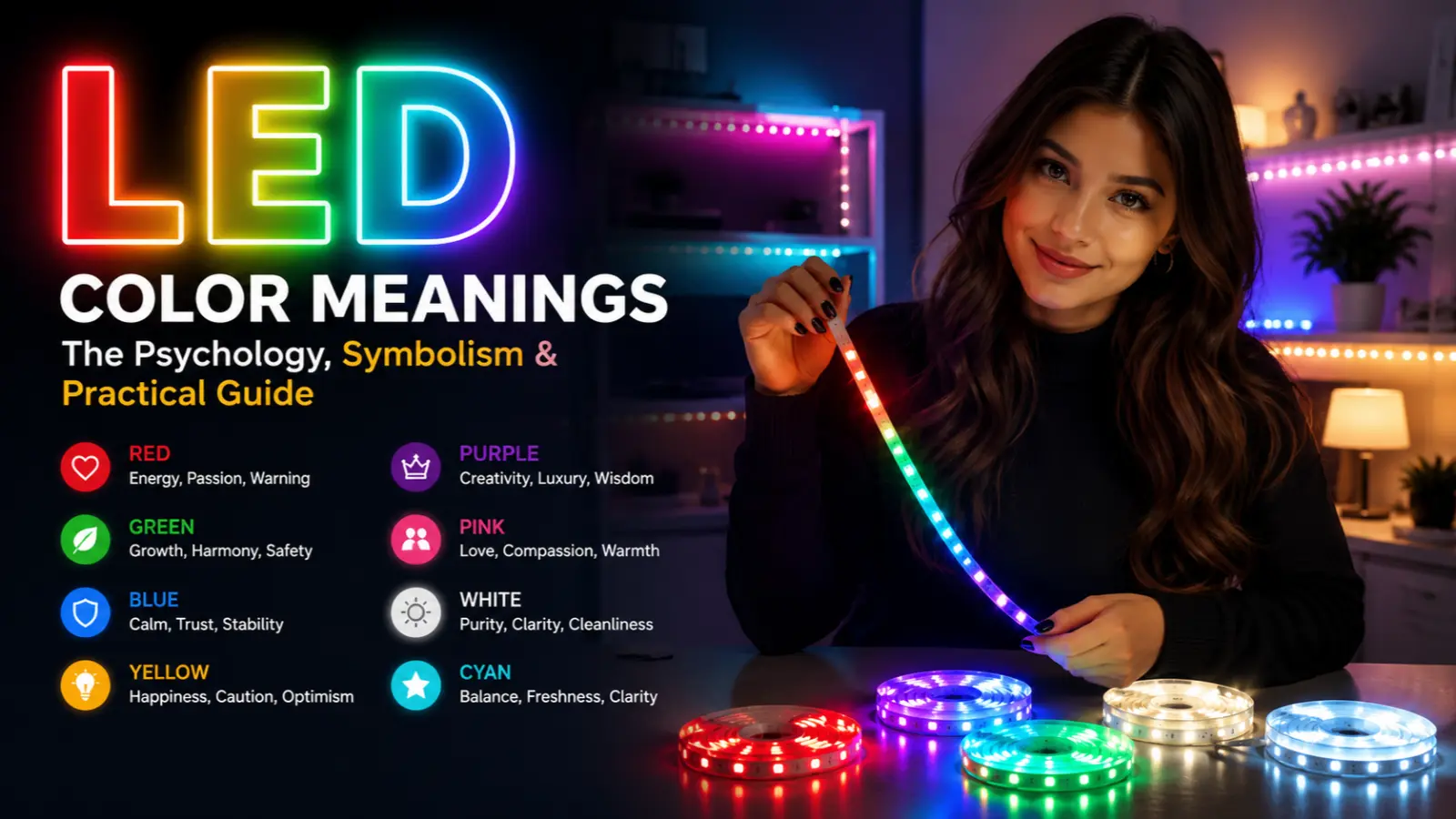
LED colors are more than simple visual indicators they communicate information, influence emotions, improve usability, and shape user experiences across homes, workplaces, vehicles, electronics, and public spaces.
From the calming glow of blue LEDs to the urgent warning of red lights, every LED color carries psychological, cultural, and practical meaning. Designers, engineers, marketers, and homeowners intentionally choose LED colors to create specific emotional responses and guide behavior.
Understanding LED color meanings helps you interpret signals correctly while making smarter choices for lighting, branding, decoration, and everyday communication.
Quick Answer:
LED color meanings vary by context, but generally red signals urgency, green represents safety or success, blue symbolizes trust and technology, yellow indicates caution, white conveys clarity, and purple reflects creativity and luxury.
What Does the Color LED Symbolize?
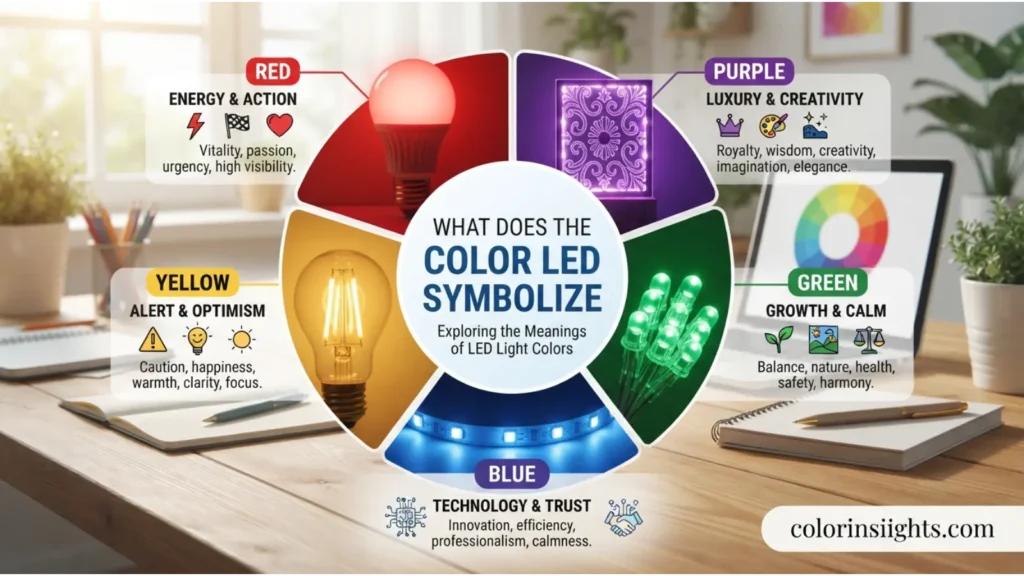
Unlike a single pigment color, LED color meaning refers to the symbolic meanings of different colored LED lights. LEDs are widely used because they instantly communicate messages through universally recognizable color signals.
Common LED color symbolism includes:
- Red: Danger, warning, power, passion, emergency
- Green: Safety, permission, health, success, sustainability
- Blue: Trust, intelligence, technology, calmness
- White: Purity, cleanliness, simplicity, visibility
- Yellow: Caution, optimism, attention, energy
- Orange: Warmth, creativity, enthusiasm
- Purple: Luxury, spirituality, imagination
- Pink: Compassion, affection, playfulness
- Cyan: Innovation, freshness, clarity
The symbolism of LED colors often combines principles from color psychology with practical communication. In traffic systems, electronics, hospitals, gaming devices, smart homes, and industrial equipment, LED colors provide immediate visual cues that reduce confusion and improve decision-making.
Psychological Characteristics of the Color LED
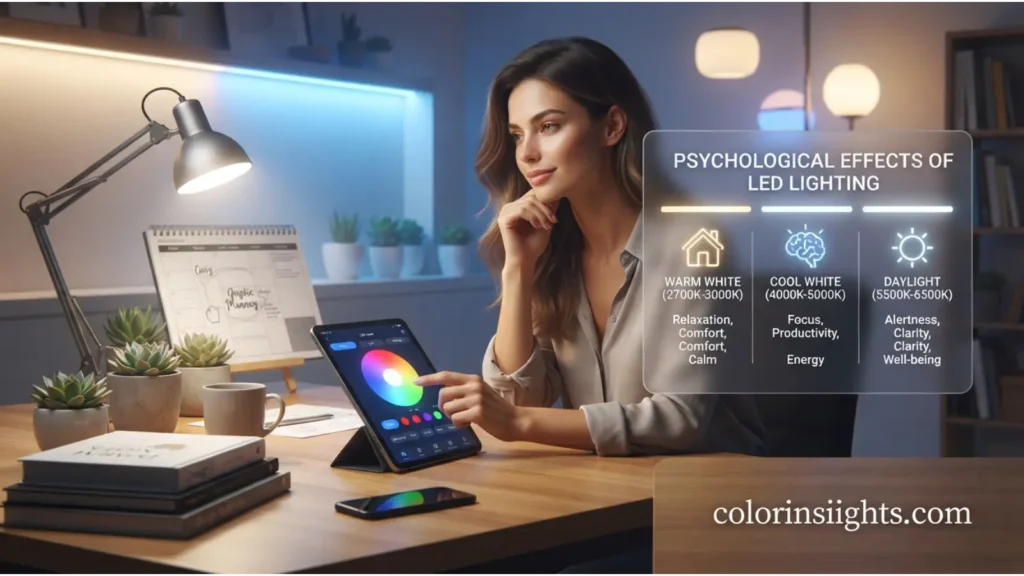
Color psychology explains that humans instinctively associate colors with emotions, experiences, and behaviors. LED lighting enhances these psychological effects because illuminated colors appear brighter and more attention-grabbing than painted surfaces.
Emotional Associations
- Red creates excitement, urgency, and alertness.
- Green promotes reassurance and balance.
- Blue encourages relaxation and trust.
- Yellow stimulates optimism and mental alertness.
- White provides feelings of cleanliness and openness.
- Purple inspires creativity and imagination.
Psychological Effects
LED lighting influences both mood and cognitive performance.
- Cool-colored LEDs may improve concentration.
- Warm LEDs create feelings of comfort.
- Bright white LEDs increase perceived visibility.
- Colored ambient lighting changes emotional atmosphere.
Positive Emotional Responses
- Confidence
- Security
- Comfort
- Relaxation
- Happiness
- Motivation
- Focus
- Creativity
Negative Emotional Responses
- Anxiety from excessive red lighting
- Fatigue from overly bright white LEDs
- Sadness from cold blue environments
- Stress caused by flashing warning lights
- Visual discomfort from poor lighting balance
Impact on Mood and Behavior
Different LED colors influence everyday behavior in noticeable ways.
- Blue LEDs encourage longer concentration.
- Warm white lighting promotes relaxation at home.
- Green indicators reassure users that systems are functioning properly.
- Red warning LEDs trigger immediate attention and faster reactions.
- Yellow signals encourage caution before taking action.
How People Typically React
People generally interpret LED colors quickly because they are repeatedly reinforced in daily life.
- Green feels safe.
- Red demands attention.
- Blue appears reliable.
- White feels clean.
- Yellow encourages awareness.
- Purple feels premium and artistic.
Spiritual Meaning of the Color LED
Although LEDs themselves are modern technology, the colors they emit often reflect long-standing spiritual symbolism found across cultures and religions.
- Holiness: White LED lighting represents sacredness and divine presence in many places of worship.
- Wisdom: Blue symbolizes knowledge, truth, and higher understanding.
- Purity: White continues to represent innocence, clarity, and moral cleanliness.
- Transformation: Purple and violet often symbolize personal growth and spiritual evolution.
- Healing: Green lighting is associated with restoration, nature, and emotional recovery.
- Protection: Blue is commonly viewed as a protective spiritual color.
- Power: Red represents strength, courage, and life force.
- Enlightenment: Gold-toned and white lighting often symbolize awakening and higher consciousness.
- New Beginnings: Soft green and white suggest renewal and fresh starts.
- Eternity: White light frequently represents infinity, timelessness, and spiritual continuity.
While these interpretations vary among traditions, LED lighting is increasingly used in meditation rooms, wellness centers, churches, and therapeutic environments because of its emotional and symbolic impact.
Positive and Negative Meanings of the Color LED
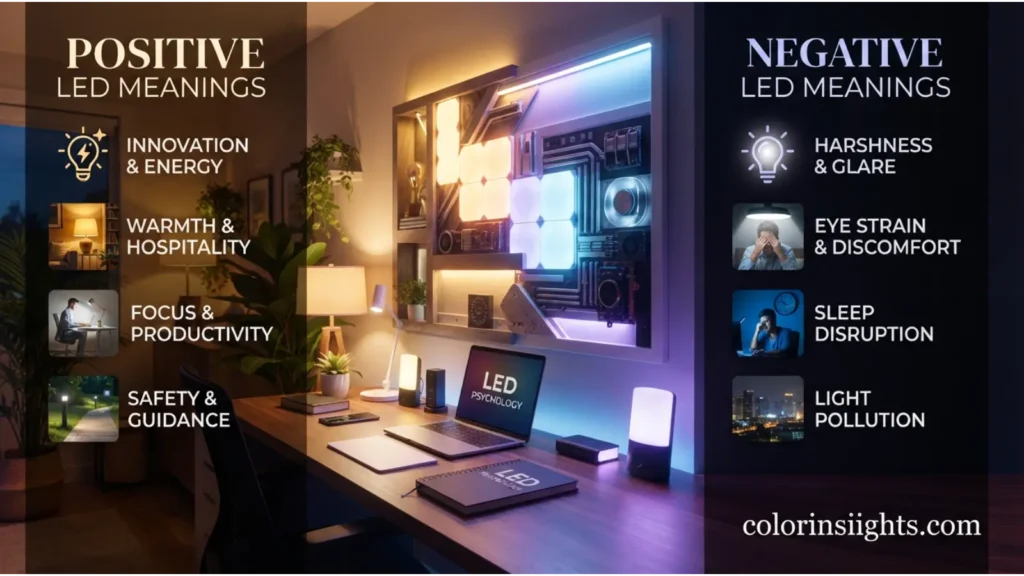
Positive Meanings
LED colors often communicate positive emotions and practical messages.
- Purity: White LEDs illuminate hospitals and laboratories because they suggest cleanliness.
- Peace: Soft blue lighting creates calm spaces for relaxation.
- Simplicity: Neutral white LEDs complement minimalist interiors.
- Clarity: Bright LEDs improve visibility and reduce confusion.
- Freshness: Cool white lighting enhances modern kitchens.
- Hope: Green indicators reassure users that systems operate correctly.
- Balance: Mixed warm and cool LEDs create comfortable environments.
- Harmony: Carefully designed lighting improves workplace comfort.
Real-World Examples
- Green power indicators on electronics.
- White LEDs in healthcare facilities.
- Blue ambient lighting in luxury vehicles.
- Warm white LEDs in living rooms.
Negative Meanings
LED colors may also communicate less desirable emotions depending on context.
- Emptiness: Excessive white lighting can feel impersonal.
- Isolation: Cool blue lighting may seem emotionally distant.
- Coldness: Bright white offices sometimes reduce warmth.
- Sterility: Hospitals often use white lighting for hygiene, but it may feel clinical.
- Boredom: Uniform lighting without variation lacks visual interest.
- Emotional Distance: Blue-heavy environments sometimes appear less welcoming.
- Perfectionism: Extremely bright, flawless lighting can create pressure for precision.
Real-World Examples
- Harsh office lighting causing eye strain.
- Flashing red alarms creating anxiety.
- Cold warehouse lighting reducing comfort.
- Overly blue lighting disrupting nighttime relaxation.
Meanings of the Color LED
The meaning of LED colors changes depending on where and how they are used. In technology, colors indicate device status. Architecture, they shape atmosphere. In marketing, they influence consumer perception. Understanding context is essential when interpreting LED color meanings.
Feng Shui
LED colors can complement Feng Shui principles when used thoughtfully.
Associated Elements
- Red – Fire
- Green – Wood
- Blue – Water
- White – Metal
- Yellow – Earth
Energy Symbolism
Each LED color supports different forms of energy, such as vitality, balance, creativity, or tranquility.
Best Rooms
- Warm white for living rooms
- Blue for meditation spaces
- Green for home offices
- Yellow for kitchens
- Soft white for bedrooms
Recommended Color Combinations
- White with wood tones
- Blue with gray
- Green with beige
- Warm white with natural textures
Home Decorating Tips
Use dimmable LEDs, avoid excessive brightness, and layer multiple lighting temperatures for balance.
Marketing
LED colors strongly influence branding and purchasing decisions.
Branding Psychology
- Blue builds trust.
- Red creates urgency.
- Green suggests sustainability.
- Purple signals luxury.
- White conveys simplicity.
Consumer Perception
Lighting changes how products appear, influencing buying behavior and perceived quality.
Trust Signals
Banks and technology companies frequently use blue lighting because consumers associate it with reliability.
Product Packaging
Retailers often use warm white LEDs to enhance product appearance.
Advertising Applications
Dynamic LED displays attract attention while reinforcing brand identity.
Famous Brands Using Similar Color Psychology
- Blue: Facebook, Intel, IBM
- Red: Coca-Cola, Netflix, YouTube
- Green: Starbucks, Spotify, Whole Foods
- Purple: Hallmark, Cadbury
- White and minimalist lighting: Apple stores
Design
LED lighting has transformed modern design.
Interior Design
Designers use layered LED lighting to create mood, improve comfort, and highlight architectural features.
Graphic Design
LED-inspired color palettes communicate innovation and digital sophistication.
Web Design
Bright accent colors improve navigation and highlight calls to action.
User Experience
Status LEDs provide immediate feedback on devices, making interfaces easier to understand.
Minimalist Aesthetics
Soft white LEDs enhance clean lines and uncluttered spaces without overwhelming the environment.
Fashion
LED technology has expanded into wearable fashion.
Clothing Symbolism
LED garments often symbolize innovation, creativity, and futuristic design.
Seasonal Use
- Warm LEDs suit autumn and winter events.
- Bright multicolor LEDs are popular during festivals and celebrations.
Styling Effects
LED accessories become statement pieces that attract attention.
Personality Impressions
People wearing LED fashion are often perceived as creative, adventurous, and confident.
Advantages
- Highly visible
- Unique appearance
- Excellent for performances
- Interactive styling
Disadvantages
- Requires batteries
- May not suit formal settings
- Can distract from traditional fashion aesthetics
Practical examples include illuminated sneakers, festival jackets, gaming accessories, and performance costumes.
Color Associations Are Not Universal
Although many LED color meanings appear universal, cultural traditions influence interpretation.
Western Cultures
Red often signals danger or romance, green means safety, and blue represents trust and professionalism. White commonly symbolizes weddings and purity.
Eastern Cultures
Red frequently represents prosperity, celebration, and happiness. White may symbolize mourning in several East Asian traditions. Gold often represents wealth and good fortune.
Religious Traditions
Christian symbolism commonly associates white with holiness and resurrection. Green holds special significance in Islam as a symbol of life and paradise. Purple is traditionally connected with repentance, royalty, and spiritual devotion in many Christian denominations.
Historical Interpretations
Historically, colored lights were unavailable, but symbolic meanings developed through art, clothing, flags, and ceremonies. Modern LEDs now reinforce many of these established associations through technology.
Modern Global Interpretations
Technology has standardized many LED signals worldwide. Green usually means “go,” red indicates warnings, and blue frequently represents digital innovation. However, local customs and industries may still influence interpretation.
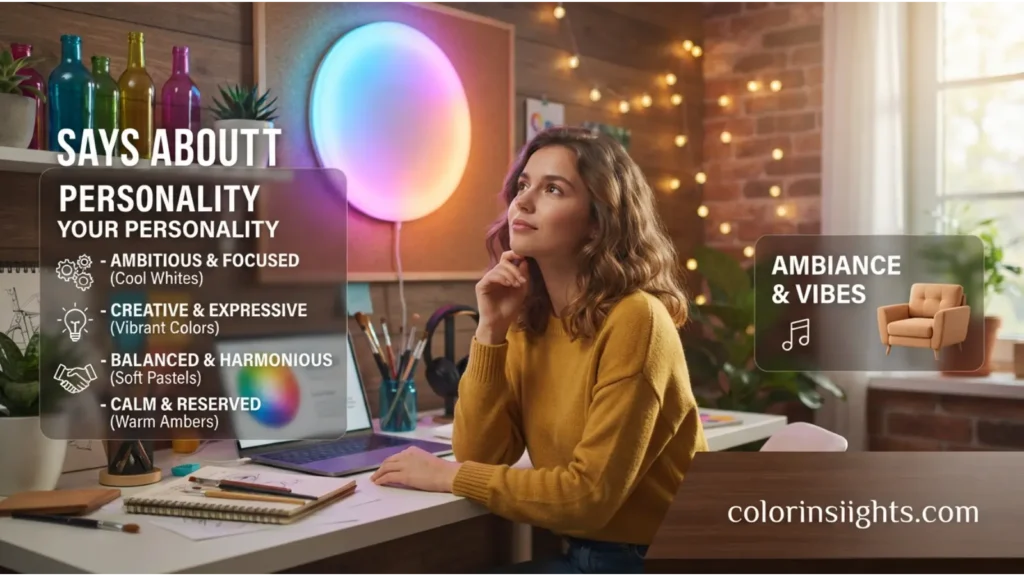
What LED Says About Your Personality
People sometimes choose LED colors that reflect their preferences, moods, or aesthetic tastes. However, favorite colors alone cannot accurately determine personality.
Those who prefer:
- Red LEDs may enjoy excitement, leadership, and action.
- Blue LEDs often appreciate stability, logic, and calm environments.
- Green LEDs may value balance, nature, and personal growth.
- White LEDs frequently prefer simplicity and organization.
- Purple LEDs often enjoy creativity and imagination.
- Yellow LEDs may be optimistic, energetic, and sociable.
Strengths
- Creativity
- Confidence
- Adaptability
- Practical thinking
- Emotional awareness
Weaknesses
- Overthinking
- Perfectionism
- Risk avoidance
- Impulsiveness
- Sensitivity to surroundings
Social Behavior
Preferred lighting environments may reflect comfort levels, but social behavior depends on many personal and environmental factors.
Work Style
Individuals attracted to cool lighting often prefer organized workspaces, while warmer lighting may appeal to collaborative and creative personalities.
Relationships
Lighting preferences sometimes influence home atmosphere, but healthy relationships rely on communication rather than color choices.
Emotional Tendencies
People often select LED colors that match or regulate their emotional state—for example, blue for relaxation or warm white for comfort.
FAQs:
What defines LED color?
LED color is the visible wavelength emitted by a light-emitting diode, with each color carrying practical, psychological, and symbolic meanings.
What does LED symbolize?
LED colors symbolize different messages, including safety, warning, trust, creativity, cleanliness, and emotional atmosphere depending on the color used.
Why are LED colors important?
They improve communication, influence emotions, enhance usability, and create memorable visual experiences in technology, homes, healthcare, and branding.
Is LED a warm or cool color?
LED is not a single color. LEDs can produce warm white, cool white, and virtually every visible color.
What emotions do LED colors represent?
Common emotional associations include calmness, excitement, safety, optimism, creativity, confidence, and comfort.
What is the spiritual meaning of LED colors?
Spiritually, LED colors often symbolize healing, wisdom, transformation, protection, enlightenment, and renewal depending on the color emitted.
What colors pair well with LED lighting?
Neutral whites, soft grays, natural wood tones, black accents, metallic finishes, and complementary colored lighting create balanced designs.
What does liking LED colors say about a person?
It may reflect aesthetic preferences or emotional needs, but favorite colors alone cannot reliably predict personality.
Which LED color is best for relaxation?
Warm white, soft amber, and gentle blue lighting are commonly chosen for calm, relaxing environments.
Which LED color improves focus?
Cool white and blue-enriched lighting are often used in offices and study spaces because they support alertness and concentration.
Conclusion
Understanding LED color meanings goes far beyond choosing attractive lighting. Every LED color influences perception, communicates information, and shapes emotional experiences in homes, workplaces, technology, healthcare, transportation, and branding. While some meanings—such as red for warning and green for safety—are widely recognized, cultural traditions and personal experiences also influence interpretation.
By combining insights from color psychology, design, spirituality, and practical applications, you can select LED colors that enhance communication, improve mood, strengthen visual identity, and create environments that are both functional and meaningful.