Color Heart emojis have become one of the most popular ways to express emotions in digital communication. While every heart represents affection, love, or care, each color heart meanings carries its own unique symbolism shaped by psychology, culture, and modern online communication.
From the passionate ❤️ Red Heart to the calming 💙 Blue Heart and the supportive 💚 Green Heart, different heart colors communicate different emotions, relationships, and intentions. Understanding these meanings helps you choose the right emoji for every situation and avoid misunderstandings.
Whether you’re texting friends, posting on social media, or sending a heartfelt message, knowing what each heart symbolizes makes your communication more meaningful.
Quick Answer:
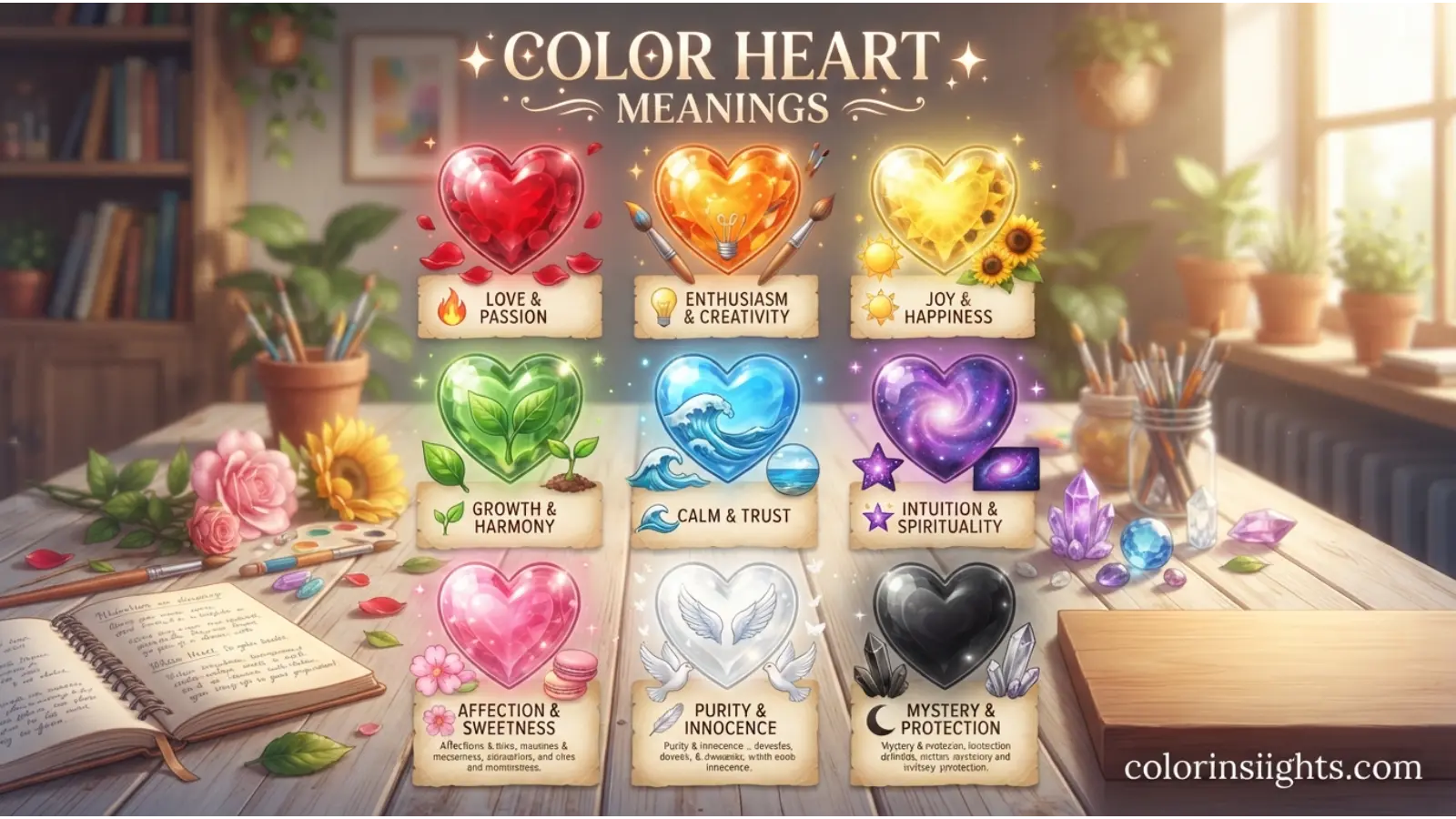
Every colored heart emoji has a unique meaning. Red symbolizes love, blue represents trust, yellow expresses friendship, green reflects growth, purple conveys compassion or luxury, black often symbolizes grief or dark humor, and white stands for purity and peace.
What Does the Color Heart Symbolize?
Unlike a single color, color heart meanings vary depending on the emoji’s shade. Each heart combines the universal symbolism of the heart—love, compassion, and connection—with the psychological associations of its color.
Common symbolism includes:
- ❤️ Love, romance, and deep affection
- 🩷 Gentle love, admiration, and kindness
- 🧡 Warmth, enthusiasm, and support
- 💛 Friendship, happiness, and optimism
- 💚 Growth, health, and renewal
- 💙 Trust, loyalty, and stability
- 🩵 Calmness, honesty, and serenity
- 💜 Compassion, creativity, and luxury
- 🤎 Stability, comfort, and reliability
- 🖤 Grief, elegance, and dark humor
- 🤍 Purity, peace, and sincerity
- ❤️🔥 Passion, desire, and excitement
- ❤️🩹 Healing, recovery, and emotional support
The intended meaning often depends on context, personal relationships, and cultural norms rather than the emoji alone.
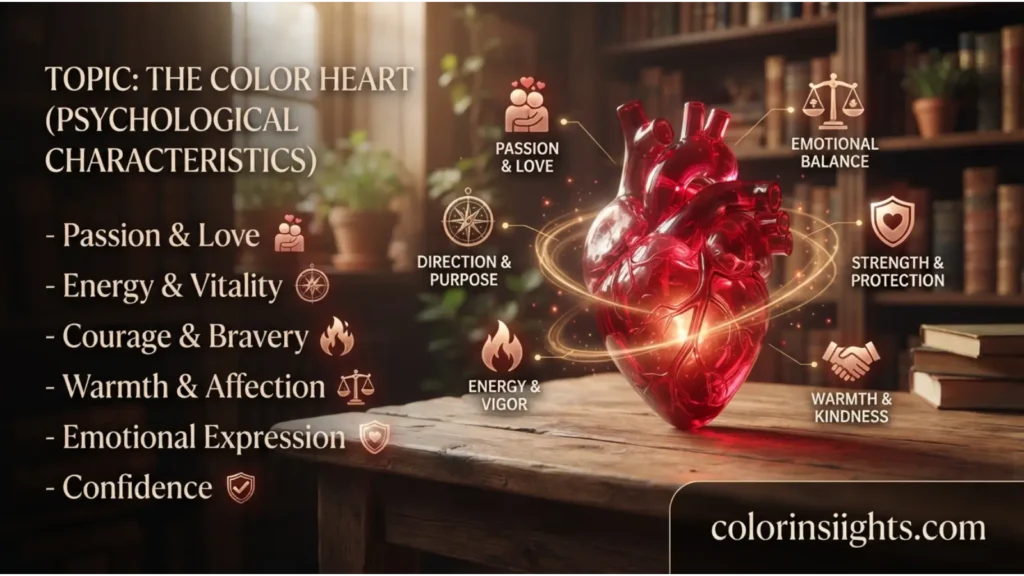
Psychological Characteristics of the Color Heart
Color psychology suggests that people naturally associate different colors with different emotions. Colored heart emojis borrow these emotional associations, making them powerful nonverbal communication tools.
Emotional Associations
- Red inspires passionate love.
- Blue promotes trust and security.
- Yellow encourages joy and friendship.
- Green symbolizes balance and hope.
- Purple reflects imagination and compassion.
- White conveys innocence and sincerity.
- Black communicates mystery, elegance, or mourning.
Psychological Effects
- Hearts increase perceived warmth in conversations.
- Bright colors create positive emotional responses.
- Cool-colored hearts often feel calming.
- Dark-colored hearts can communicate seriousness or irony.
Positive Emotional Responses
- Love
- Gratitude
- Kindness
- Trust
- Hope
- Comfort
- Encouragement
- Belonging
Negative Emotional Responses
- Jealousy (green in some contexts)
- Sadness (black heart)
- Emotional distance (white heart in certain conversations)
- Confusion when colors are interpreted differently
Impact on Mood and Behavior
- Heart emojis often make messages appear friendlier.
- They reduce the perceived harshness of written communication.
- Warm-colored hearts encourage emotional closeness.
- Cooler colors often create feelings of reassurance and calm.
Typical Reactions
People generally interpret heart colors based on both universal color psychology and current social media trends. However, meanings remain flexible and highly contextual.
Spiritual Meaning of the Color Heart
Spiritually, heart colors are often connected to emotional energy, compassion, healing, and personal growth. While interpretations vary across traditions, many align with the symbolism commonly associated with each color.
- ❤️ Red represents life force, courage, and unconditional love.
- 💛 Yellow symbolizes wisdom, optimism, and personal confidence.
- 💚 Green reflects healing, renewal, and harmony with nature.
- 💙 Blue represents truth, faith, protection, and inner peace.
- 💜 Purple symbolizes spiritual growth, enlightenment, and higher awareness.
- 🤍 White signifies purity, peace, divine guidance, and new beginnings.
- 🖤 Black can represent transformation, endings, and personal strength through adversity.
Many spiritual traditions view the heart itself as the center of compassion and emotional balance, making colored hearts meaningful symbols of inner growth and connection.
Positive and Negative Meanings of the Color Heart
Positive Meanings
Colored hearts often symbolize positive emotions and healthy relationships.
Examples include:
- Love and affection ❤️
- Friendship and happiness 💛
- Healing and growth 💚
- Loyalty and trust 💙
- Compassion and creativity 💜
- Peace and sincerity 🤍
- Stability and comfort 🤎
- Emotional recovery ❤️🩹
Real-world example:
Sending a blue heart after someone shares good news often communicates dependable support without romantic implications.
Negative Meanings
Although generally positive, some heart colors can carry less favorable meanings depending on context.
Examples include:
- Jealousy (green heart)
- Grief (black heart)
- Emotional distance (white heart)
- Sarcasm or irony (black heart)
- Mixed signals when heart colors are misunderstood
Real-world example:
A black heart may express mourning after a loss but could also be used humorously among close friends who enjoy dark humor.
Meanings of the Color Heart
The meaning of a heart emoji changes according to context, relationship, platform, and culture. A red heart between romantic partners often signals love, while a yellow heart between friends communicates loyalty and happiness.
Feng Shui
Although heart emojis are digital symbols, their colors correspond with traditional Feng Shui principles.
- Associated elements: Fire (red), Water (blue), Wood (green), Earth (brown and yellow), Metal (white)
- Energy symbolism: Balance, harmony, emotional connection
- Best rooms: Living rooms, bedrooms, meditation spaces depending on the chosen color
- Recommended color combinations: White with green, blue with white, red with gold
- Decorating tip: Match heart-inspired colors with the emotional atmosphere you wish to create.
Marketing
Brands carefully use color psychology to create emotional connections similar to those conveyed by colored hearts.
Applications include:
- Building trust through blue
- Creating excitement with red
- Promoting wellness using green
- Inspiring optimism with yellow
- Expressing elegance with black
Well-known examples include Coca-Cola (red), Facebook (blue), Starbucks (green), Tiffany & Co. (light blue), and Hallmark’s use of heart imagery to reinforce emotional connection.
Design
In design, heart colors influence visual communication.
They are commonly used in:
- Interior design for emotional atmosphere
- Graphic design for emotional storytelling
- Web design to guide user attention
- User experience interfaces for reactions and engagement
- Minimalist layouts using simple heart icons for warmth
Choosing the correct heart color helps reinforce the intended emotional message.
Fashion
Heart colors also inspire clothing and accessories.
Examples include:
- Red symbolizes confidence and romance.
- Pink creates a gentle, approachable appearance.
- Blue communicates professionalism.
- Green reflects nature and wellness.
- Black adds sophistication.
- White creates a clean, timeless style.
Advantages: Easy emotional expression through accessories.
Disadvantages: Color meanings vary, so interpretations may differ between audiences.
Color Associations Are Not Universal
Although many color heart meanings are widely recognized, interpretations differ across cultures.
Western Cultures
Red commonly represents romantic love, while yellow often symbolizes friendship. Black may represent mourning, whereas white is linked to weddings, peace, and innocence.
Eastern Cultures
In several East Asian traditions, red symbolizes prosperity, celebration, and good fortune rather than only romance. White may be associated with mourning in certain cultural contexts.
Religious Traditions
Christian symbolism often connects white with purity and divine grace, red with sacrifice and love, green with eternal life, and purple with spiritual reflection and repentance.
Historical Interpretations
Historically, colors carried social, political, and religious meanings. Purple was once associated with royalty because purple dyes were rare and expensive, while gold and yellow frequently represented wealth and honor.
Modern Global Interpretations
Social media has created new meanings. For example, the green heart is frequently associated with environmental awareness, while the light blue heart is increasingly used to express calmness, support, and gentle affection.
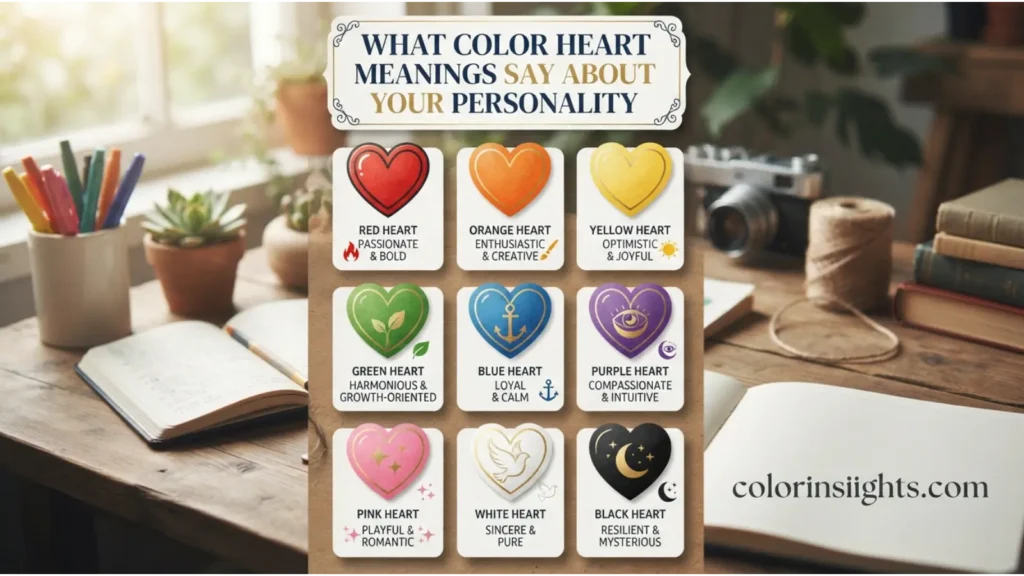
What Color Heart Meanings Say About Your Personality
People often associate favorite heart colors with personality traits. However, psychological research does not support the idea that color preferences alone can accurately determine personality.
Possible tendencies include:
Strengths
- Red: Passionate and energetic
- Blue: Loyal and dependable
- Green: Compassionate and balanced
- Yellow: Optimistic and friendly
- Purple: Creative and thoughtful
- White: Honest and peaceful
- Black: Independent and resilient
Weaknesses
- Overly emotional
- Reserved
- Perfectionistic
- Idealistic
- Sensitive to criticism
Social Behavior
Heart color preferences may reflect communication style. Warm colors often suggest openness, while cooler colors may indicate a calm and thoughtful personality.
Work Style
People drawn to blue may value organization and trust, while those favoring green often enjoy teamwork and steady progress.
Relationships
Different heart colors may express affection differently. Some people naturally communicate with red hearts, while others prefer blue or yellow hearts to express platonic care.
Emotional Tendencies
Heart color preferences can change with mood, life experiences, and personal relationships. They should be viewed as preferences rather than reliable personality indicators.
FAQs:
What defines color heart meanings?
Color heart meanings combine the universal symbolism of the heart with the emotional associations traditionally connected to each color.
What does the color heart symbolize?
Each heart color symbolizes different emotions, including love, friendship, trust, healing, compassion, or peace, depending on its color.
Why are color heart meanings important?
They help communicate emotions more accurately and add emotional nuance to digital conversations.
Is every heart color warm or cool?
No. Red, orange, and yellow are warm colors, while blue and green are cool. White, black, brown, and purple have their own symbolic qualities.
What emotions do colored hearts represent?
They can express love, friendship, trust, hope, gratitude, healing, sympathy, loyalty, creativity, and emotional support.
What is the spiritual meaning of color hearts?
Spiritually, colored hearts often symbolize compassion, healing, protection, transformation, purity, wisdom, and inner peace.
Which colors pair well with heart emojis?
Popular combinations include red and white, blue and white, green and yellow, purple and pink, and black with gold for elegant designs.
What does liking a particular heart color say about a person?
It may reflect personal preferences or communication style, but it does not reliably determine personality.
Which heart emoji is best for friendship?
The yellow heart is widely associated with friendship, happiness, and appreciation.
Which heart emoji is most romantic?
The classic red heart remains the strongest symbol of romantic love and deep affection.
Conclusion
Understanding color heart meanings allows you to communicate emotions with greater clarity and intention. While every heart emoji represents care and connection, each color adds a unique emotional layer shaped by psychology, spirituality, culture, and modern digital communication.
Whether expressing passionate love with a red heart, loyal friendship with a yellow heart, trust with a blue heart, or healing with a green or mending heart, choosing the right color helps your message feel more authentic.
Because meanings can vary across cultures and personal relationships, the surrounding context remains just as important as the emoji itself.