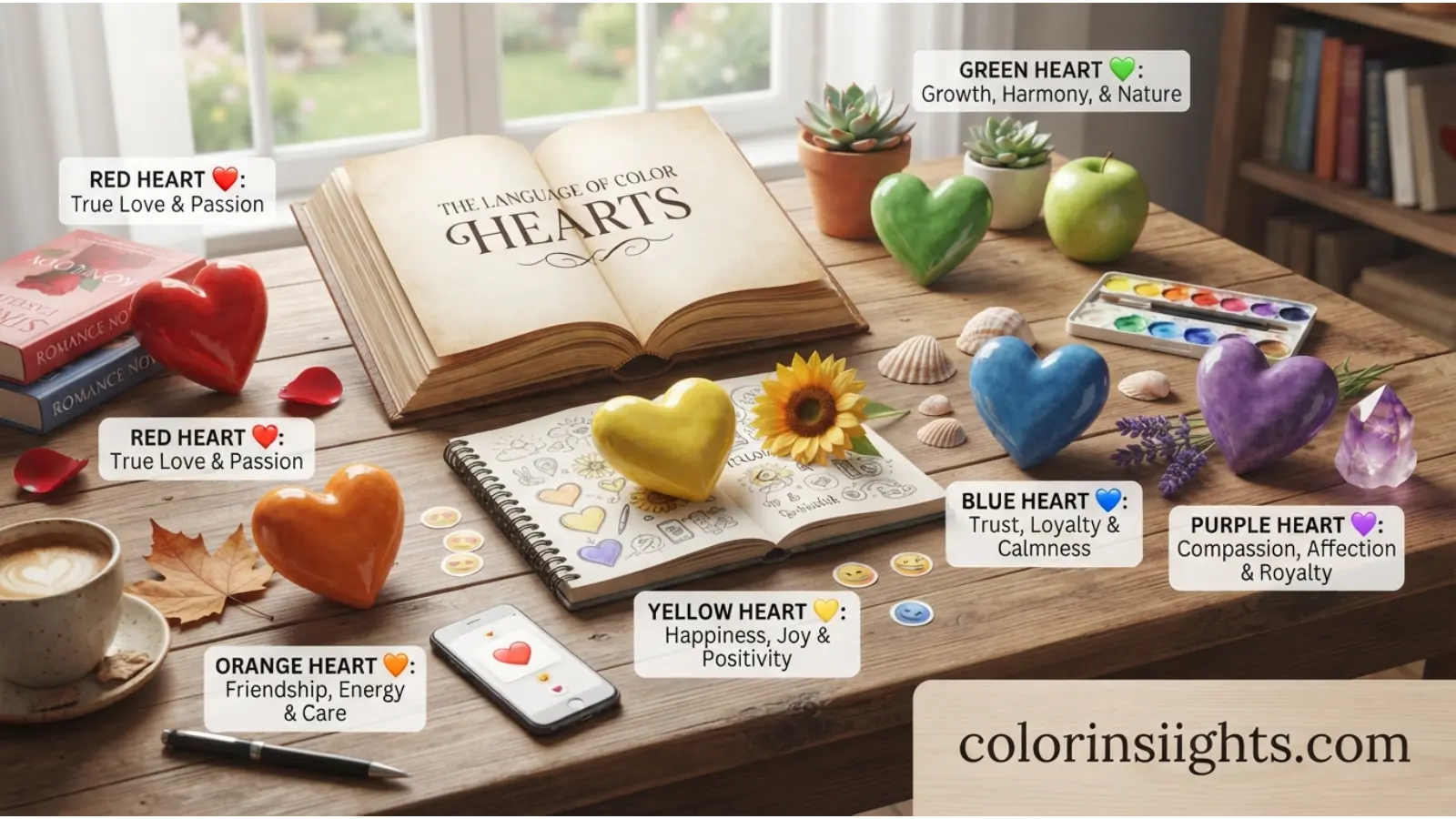
Heart emojis have become one of the most popular ways to express emotions in digital communication. While every heart emoji represents affection, love, or connection, each color carries its own unique symbolism and emotional meaning.
From the passionate ❤️ Red Heart to the peaceful 🤍 White Heart and the mysterious 🖤 Black Heart, these colorful symbols help people communicate feelings that words alone may not fully capture.
Understanding different color heart emoji meanings can improve your online conversations and help you choose the most appropriate emoji for every situation.
Quick Answer:
Different heart emoji colors symbolize different emotions, relationships, and intentions. Red represents romantic love, yellow symbolizes friendship, blue conveys trust, green reflects growth, black expresses grief or dark humor, white stands for purity, and other colors carry their own unique meanings depending on context and culture.
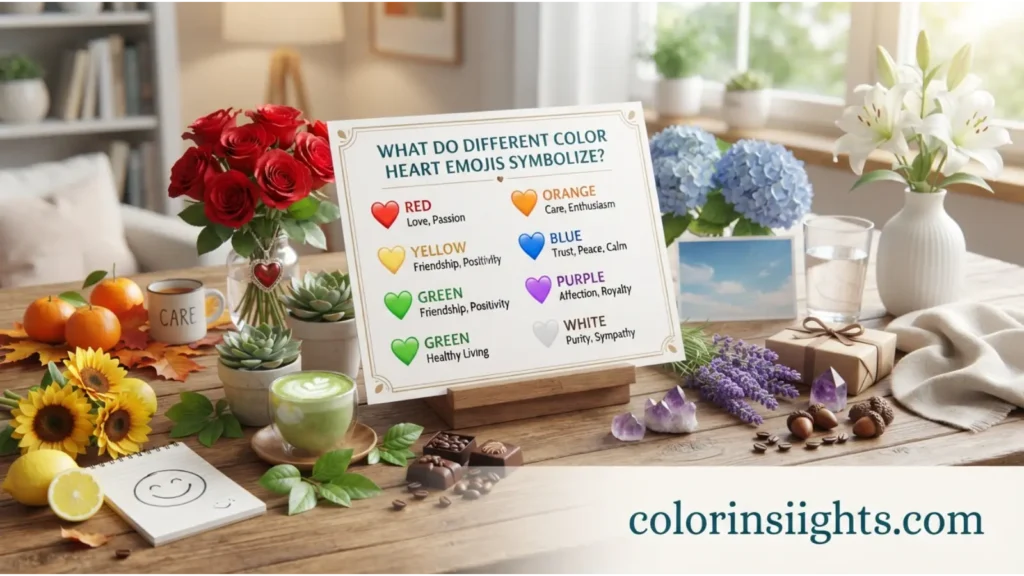
What Do Different Color Heart Emojis Symbolize?
Every heart emoji shares the universal theme of affection, but the color changes its emotional message. Color psychology suggests that people naturally associate colors with certain emotions, making heart emoji colors powerful tools for expressing feelings in text messages, social media posts, emails, and online communities.
Although there is no official universal dictionary for heart emoji meanings, common usage has developed through digital culture, allowing most users to recognize the emotional tone behind each colored heart.
Here are the most widely accepted meanings:
| Heart Emoji | Common Meaning |
|---|---|
| ❤️ Red Heart | Romantic love, passion, deep affection |
| 🩷 Pink Heart | Sweet love, kindness, admiration, compassion |
| 🧡 Orange Heart | Warmth, care, support, close friendship |
| 💛 Yellow Heart | Happiness, friendship, optimism, joy |
| 💚 Green Heart | Growth, health, nature, renewal, jealousy in some contexts |
| 🩵 Light Blue Heart | Calmness, hope, peace, sincerity |
| 💙 Blue Heart | Trust, loyalty, stability, friendship |
| 💜 Purple Heart | Compassion, creativity, luxury, admiration |
| 🤎 Brown Heart | Comfort, reliability, earthiness, family values |
| 🖤 Black Heart | Strength, sorrow, dark humor, individuality |
| 🩶 Grey Heart | Balance, maturity, neutrality, resilience |
| 🤍 White Heart | Purity, peace, innocence, remembrance |
Psychological Meaning of Different Heart Emoji Colors
Color psychology explains why different heart emojis evoke different emotional responses. The human brain naturally associates colors with experiences, emotions, and behaviors developed through both biology and culture.
Positive Emotional Associations
- ❤️ inspires love and emotional intimacy.
- 🩷 communicates gentle affection and appreciation.
- 🧡 expresses encouragement and emotional warmth.
- 💛 creates cheerful, optimistic feelings.
- 💚 represents renewal, healing, and personal growth.
- 🩵 promotes calmness and emotional clarity.
- 💙 encourages trust and loyalty.
- 💜 symbolizes imagination and compassion.
- 🤎 reflects security and dependability.
- 🖤 can represent confidence and individuality.
- 🩶 conveys emotional balance.
- 🤍 symbolizes peace and sincerity.
Possible Negative Associations
Context matters when interpreting heart emojis.
- ❤️ may appear overly romantic.
- 💛 can sometimes feel less emotionally intimate.
- 💚 occasionally symbolizes envy.
- 💙 may seem emotionally distant.
- 🖤 can suggest sadness or grief.
- 🩶 may appear emotionally neutral.
- 🤍 is sometimes associated with loss or remembrance.
Because emojis depend heavily on context, the relationship between sender and receiver often determines their intended meaning.
Spiritual and Symbolic Meaning of Heart Emoji Colors
Across many cultures and spiritual traditions, colors have symbolic significance that extends beyond everyday communication. Although heart emojis are modern digital symbols, many people associate their colors with traditional meanings.
- ❤️ represents unconditional love, courage, and life energy.
- 🩷 symbolizes compassion, emotional healing, and kindness.
- 🧡 reflects enthusiasm, creativity, and emotional resilience.
- 💛 represents wisdom, optimism, and personal confidence.
- 💚 symbolizes healing, abundance, renewal, and harmony with nature.
- 🩵 represents inner peace and emotional balance.
- 💙 reflects truth, faith, trust, and spiritual stability.
- 💜 symbolizes intuition, higher awareness, and transformation.
- 🤎 represents grounding, simplicity, and connection to the Earth.
- 🖤 often symbolizes endings, personal strength, and transformation after hardship.
- 🩶 reflects acceptance, wisdom, and emotional maturity.
- 🤍 symbolizes purity, hope, forgiveness, new beginnings, and spiritual peace.
These interpretations vary between traditions and should be viewed as symbolic rather than universally accepted beliefs.
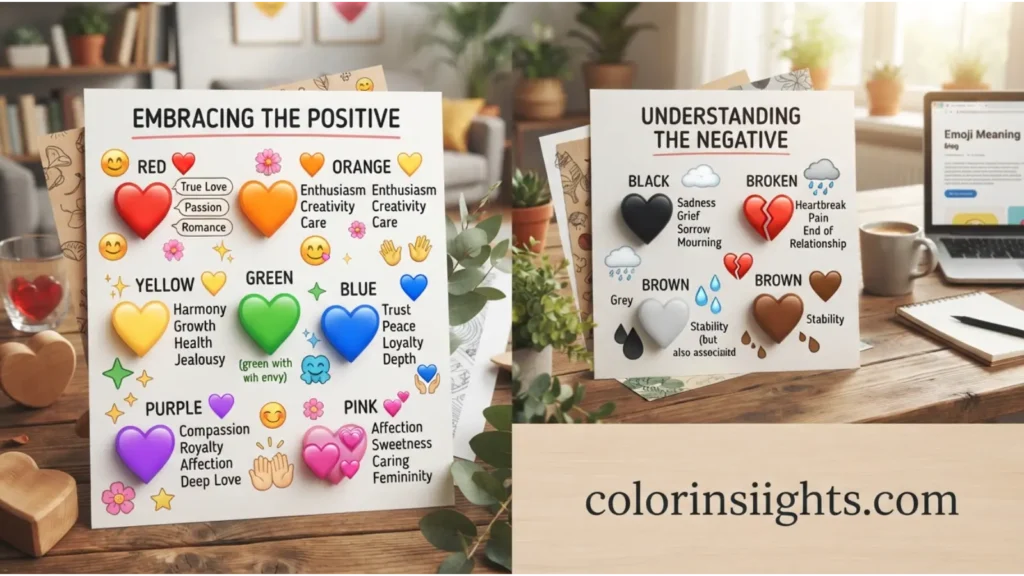
Positive and Negative Meanings of Heart Emoji Colors
Positive Meanings
Different heart emojis communicate positive emotions in different ways.
- ❤️ Deep romantic love and commitment.
- 🩷 Gentle affection and emotional support.
- 🧡 Warm friendship and encouragement.
- 💛 Joy, happiness, and positivity.
- 💚 Personal growth and healthy relationships.
- 🩵 Calmness and peaceful communication.
- 💙 Trustworthiness and loyalty.
- 💜 Creativity and admiration.
- 🤎 Stability and family values.
- 🖤 Confidence and individuality.
- 🩶 Emotional maturity.
- 🤍 Peace, sincerity, and hope.
For example, sending a 💙 to a longtime friend emphasizes trust, while a 💛 often celebrates friendship without romantic implications.
Negative Meanings
Heart emojis may also communicate unintended emotions.
- ❤️ may seem too intimate in professional conversations.
- 💚 may occasionally suggest jealousy.
- 🖤 is commonly used during mourning or emotional hardship.
- 🤍 often appears in memorial posts.
- 🩶 can feel emotionally detached.
- 💙 may appear formal compared to warmer-colored hearts.
Choosing the right heart depends on both the message and the audience.
Different Heart Emoji Meanings in Everyday Communication
The meaning of a heart emoji changes depending on where and how it is used.
Text Messaging
Friends often exchange 💛, 💙, 🩷, or 🧡 to express appreciation without romantic intent, while couples frequently use ❤️.
Social Media
Influencers and brands use colorful hearts to match visual themes, raise awareness campaigns, or reinforce brand identity.
Workplace Communication
Professional environments generally favor 💙, 🤍, or 💛 because they appear supportive without implying romance.
Awareness Campaigns
Colored hearts sometimes represent charitable causes, environmental initiatives, or health awareness movements, although meanings vary by campaign.
Heart Emoji Colors in Branding, Design, and Digital Culture
Color plays a powerful role in marketing and user experience, making heart emojis valuable visual communication tools.
Branding
Companies often choose heart colors that match their brand personality.
- ❤️ creates excitement and emotional engagement.
- 💙 builds trust and credibility.
- 💚 reinforces sustainability and wellness.
- 💜 suggests creativity and premium quality.
- 🤍 supports minimalist branding.
Graphic Design
Designers use heart emojis to create emotional emphasis in digital graphics, presentations, greeting cards, and promotional materials.
Social Media Marketing
Content creators use colorful hearts to improve engagement because emojis attract attention and make messages appear more relatable and visually appealing.
User Experience
Apps frequently use heart icons for favorites, likes, wellness tracking, and relationship features because hearts are universally recognized symbols of positive interaction.
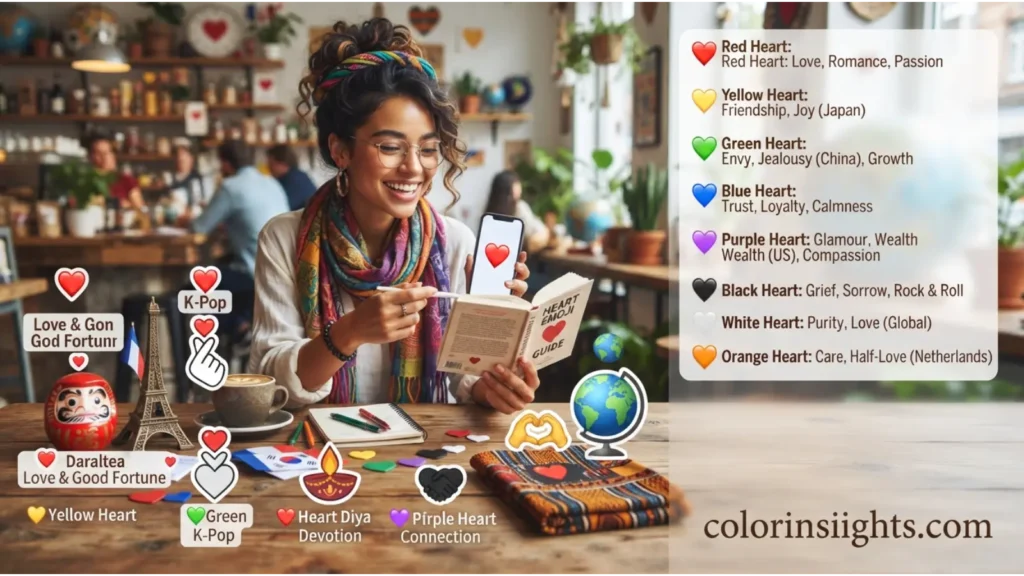
Different Heart Emoji Meanings Across Cultures
Although heart emojis are used worldwide, their meanings are not always identical.
Western Cultures
In North America and Europe, ❤️ strongly represents romantic love, while 💛 commonly symbolizes friendship. 🖤 may express gothic style, humor, or grief.
Eastern Cultures
In several Asian cultures, colors often carry additional symbolic meanings rooted in tradition. White may represent mourning in some countries, while red symbolizes celebration, prosperity, and happiness.
Religious Traditions
Many religions associate white with purity and peace, green with renewal and paradise, purple with spirituality, and red with sacrifice or devotion.
Historical Interpretations
For centuries, colors have represented different social values, emotions, and ceremonies. Modern emoji meanings often borrow from these long-established color associations while adapting them to digital communication.
What Different Heart Emoji Colors Say About Your Personality
Some people naturally prefer certain heart emoji colors because they reflect their mood, communication style, or personal aesthetic. While color psychology suggests that color preferences may reveal aspects of personality, they do not determine someone’s character with certainty. Personality is influenced by many factors, including experiences, culture, and individual values.
❤️ Red Heart
People who frequently use the red heart are often perceived as:
Strengths
- Passionate and affectionate
- Loyal and committed
- Confident in expressing emotions
Weaknesses
- Can appear overly emotional
- May become possessive in close relationships
Social Behavior
They value meaningful relationships and openly express appreciation for family, friends, and romantic partners.
Pink Heart
People who favor the pink heart are often seen as:
- Compassionate and caring
- Friendly and approachable
- Gentle communicators
- Emotionally supportive
- Optimistic and thoughtful
They enjoy building positive relationships and often express kindness through small gestures.
🧡 Orange Heart
Orange heart users typically value:
- Encouragement
- Warm friendships
- Creativity
- Enthusiasm
- Emotional balance
They often enjoy motivating others and maintaining positive social connections without excessive emotional intensity.
💛 Yellow Heart
Those who prefer the yellow heart usually appear:
- Cheerful
- Optimistic
- Outgoing
- Friendly
- Energetic
They enjoy making others smile and often become the positive influence within social groups.
💚 Green Heart
Green heart enthusiasts often appreciate:
- Nature
- Personal growth
- Wellness
- Environmental awareness
- Healthy lifestyles
They generally value balance, patience, and continuous self-improvement.
Light Blue Heart
People using the light blue heart frequently project:
- Calmness
- Honesty
- Emotional stability
- Peacefulness
- Reliability
They tend to avoid unnecessary conflict and communicate with empathy.
💙 Blue Heart
Blue heart users are commonly viewed as:
- Trustworthy
- Dependable
- Professional
- Loyal
- Respectful
They often build lasting friendships through consistency rather than dramatic emotional expression.
💜 Purple Heart
Purple heart lovers are often associated with:
- Creativity
- Imagination
- Compassion
- Wisdom
- Individuality
They usually appreciate artistic expression and enjoy thinking beyond conventional ideas.
🤎 Brown Heart
Those who prefer the brown heart often value:
- Simplicity
- Stability
- Family
- Practicality
- Authenticity
They are generally dependable individuals who appreciate comfort and meaningful relationships.
🖤 Black Heart
People who frequently use the black heart may be:
- Independent
- Confident
- Emotionally resilient
- Sarcastic
- Unique
Depending on the context, they may also enjoy dark humor, alternative aesthetics, or expressing strength during difficult times.
Grey Heart
Grey heart users often demonstrate:
- Emotional maturity
- Balance
- Patience
- Practical thinking
- Neutral perspectives
They typically avoid unnecessary drama and focus on logical decision-making.
🤍 White Heart
Those who choose the white heart often value:
- Peace
- Honesty
- Kindness
- Simplicity
- Compassion
They usually appreciate sincere relationships and prefer calm, respectful communication.
FAQs:
What do different color heart emojis mean?
Different heart emoji colors represent different emotions and relationships. While the ❤️ Red Heart symbolizes romantic love, 💛 often represents friendship, 💙 trust, 💚 growth, 🤍 peace, and 🖤 strength or grief, depending on the context.
Which heart emoji is best for friendship?
The 💛 Yellow Heart and 💙 Blue Heart are the most commonly used friendship emojis. Yellow emphasizes happiness and close friendship, while blue symbolizes loyalty and trust.
What does the ❤️ Red Heart symbolize?
The red heart represents deep love, romance, passion, commitment, and strong emotional affection. It remains the most universally recognized symbol of love.
What does the 🩷 Pink Heart mean?
The pink heart symbolizes gentle affection, kindness, admiration, compassion, and sweet emotional connections. It is commonly used to express warmth without the intensity of the red heart.
Why do people use the 🖤 Black Heart?
The black heart can represent individuality, confidence, resilience, dark humor, mourning, or emotional strength. Its meaning depends heavily on the conversation and relationship between users.
What does the 🤍 White Heart mean spiritually?
Spiritually, the white heart often represents purity, peace, hope, forgiveness, innocence, and new beginnings. It is also commonly used in remembrance messages.
Which heart emoji should I send to someone I like?
The ❤️ Red Heart is generally the strongest symbol of romantic love. If you want to express admiration or gentle affection without appearing overly intense, the 🩷 Pink Heart is often a suitable choice.
Can heart emoji meanings change?
Yes. The meaning of a heart emoji depends on context, culture, the relationship between the sender and receiver, and the platform where it is used. The same emoji may communicate different emotions in different situations.
Are heart emoji meanings universal?
No. Although many interpretations are widely accepted, different cultures, communities, and individuals may assign different meanings to heart emoji colors.
Do heart emoji colors reflect personality?
Color preferences may suggest certain personality tendencies, but they do not define a person’s character. They simply offer insight into communication styles, emotional preferences, and personal expression.
Conclusion
Understanding different color heart emoji meanings helps you communicate more clearly in today’s digital world. While every heart emoji expresses affection in some form, each color adds its own emotional nuance. The ❤️ Red Heart conveys passionate love, 💛 celebrates friendship, 💙 builds trust, 💚 represents growth, 💜 inspires creativity, 🤍 symbolizes peace, and 🖤 reflects strength or remembrance.
Remember that emoji meanings are shaped by context, culture, and personal relationships. Choosing the right heart emoji can make your messages feel more thoughtful, authentic, and emotionally appropriate. Whether you’re chatting with friends, expressing gratitude, supporting a loved one, or sharing content on social media, understanding the symbolism behind each heart color allows you to communicate with greater confidence and intention.