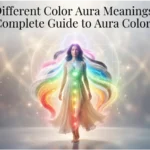
Aura colors often reveal symbolic insights into emotional balance, mental clarity, and spiritual wellbeing through the luminous energy layers that surround the human body. Rooted in ancient metaphysical traditions and popularized through modern holistic practices, aura interpretation connects color symbolism with personality and inner states.
While contemporary science does not measure auras as physical light, the framework remains influential in psychology, design, and spirituality for self reflection. Understanding different aura color meanings helps readers decode these energetic messages with greater awareness.
Quick Answer:
Red reflects power and grounding, yellow shows intellect and optimism, green indicates healing and compassion, blue signals calm communication, purple reveals intuition, and white denotes purity and protection.
What Do Different Aura Colors Symbolize?
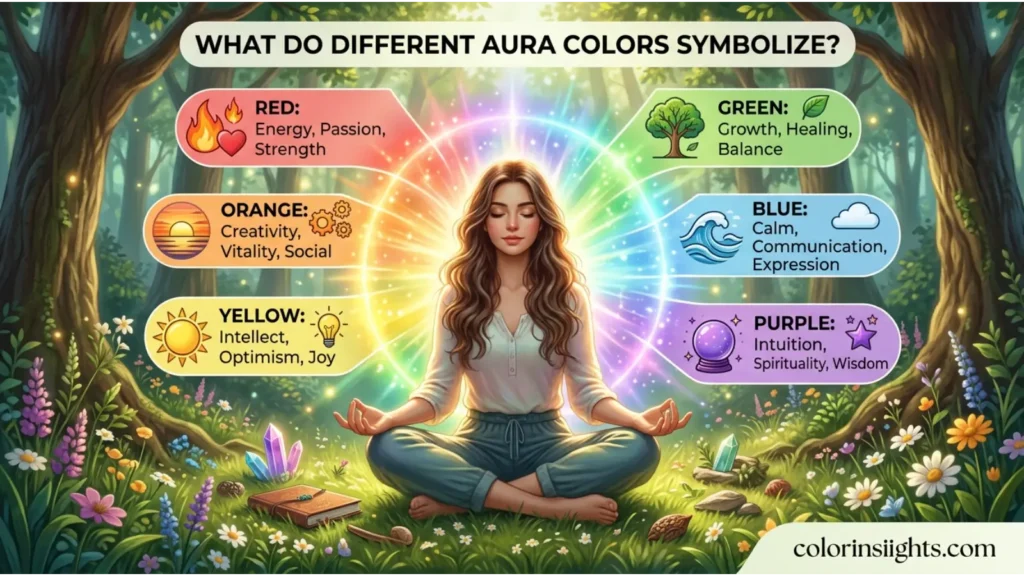
What does the color of an aura symbolize is a foundational question for anyone exploring energy fields. In most modern systems, aura color meaning is not random. Each hue represents a dominant frequency that corresponds to a chakra, an emotional pattern, and a behavioral tendency. Learning what the color aura symbolizes provides a shared vocabulary for discussing inner experience.
The complete spectrum of aura color meanings includes core hues and rare variations:
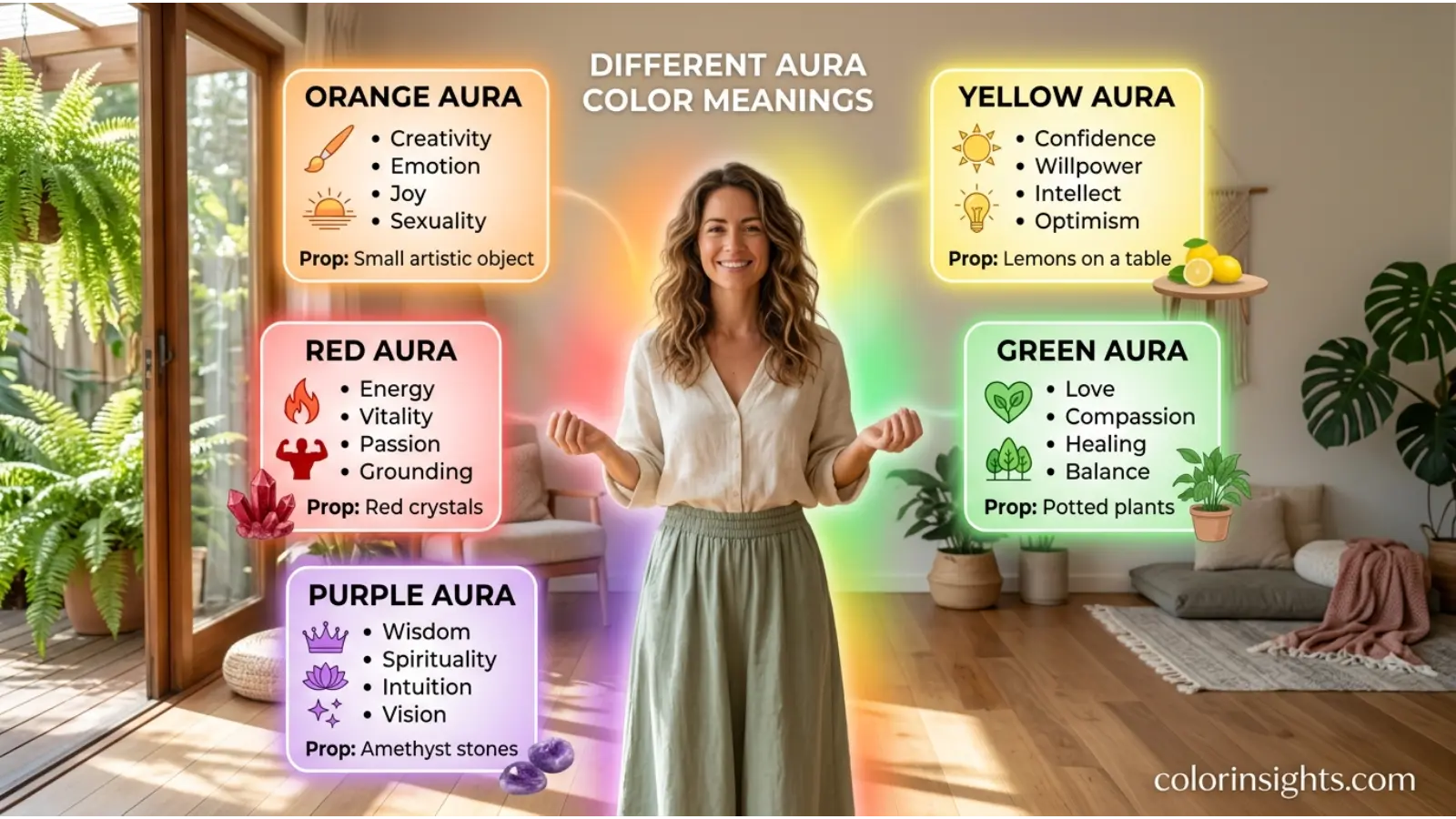
- Red Aura:
- Symbolizes vitality, courage, physical strength, and grounding in the material world. Bright red suggests healthy life force, while dark red suggests intense willpower or unresolved anger.
- Orange Aura:
- Symbolizes creativity, sociability, adventure, and emotional freedom. It is linked to the sacral chakra and expressive joy.
- Yellow Aura:
- Symbolizes intellect, confidence, optimism, and personal power. Clear yellow often appears around focused thinkers and cheerful leaders.
- Green Aura:
- Symbolizes growth, balance, compassion, and healing. As the heart chakra color, it reflects love for nature and for others.
- Blue Aura:
- ymbolizes truth, communication, loyalty, and inner peace. Light blue suggests clarity, while deep royal blue suggests depth and spiritual devotion.
- Indigo Aura:
- Symbolizes deep intuition, sensitivity, and visionary thought. Often associated with highly perceptive individuals.
- Violet and Purple Aura:
- Symbolizes wisdom, spiritual connection, transformation, and imagination. Violet is often seen around teachers and humanitarians.
- Pink Aura:
- Symbolizes unconditional love, tenderness, romance, and nurturing care.
- White, Gold, and Silver Auras:
- Symbolize purity, divine protection, enlightenment, and high spiritual development. These are considered rare and advanced frequencies.
- Brown, Gray, and Black Auras:
- Symbolize energetic fatigue, grounding needs, or blocked flow rather than moral failure. They indicate areas calling for rest, boundaries, or clearing.
A bright, clear aura generally reflects balanced energy, while a cloudy or spotted aura indicates stress or transition in that area of life.
Psychological Characteristics of Aura Colors
The psychology of aura colors borrows heavily from color psychology, the scientific study of how hue influences perception, mood, and decision making. Although not everyone can visually perceive auras, people still experience powerful psychological associations with colors.
- Warm aura colors such as red, orange, and yellow often create emotional associations with extroversion, enthusiasm, and energy. Cool aura colors such as blue, green, and violet often represent introversion, calmness, and reflection.
- Psychological effects: Red can increase feelings of alertness and urgency. Blue tends to lower heart rate perception and promote trust. Yellow is associated with mental stimulation and improved recall of details.
- Positive emotional responses: People report feeling uplifted by yellow aura imagery, soothed by green and blue, inspired by violet, and comforted by pink. These responses align with research on color preference and affect.
- Murky red can trigger perceptions of irritability, dull yellow may evoke self-doubt, and gray overlays can suggest emotional exhaustion. People develop these responses through learned associations and cultural conditioning.
- Impact on mood and behavior: Clear and saturated aura visuals encourage approach behavior and social openness. Pale or muddy visuals encourage withdrawal, introspection, or the need for restoration.
- How people typically react to the color: When hearing aura descriptions, individuals often experience a recognition effect. If a description matches current goals or struggles, it feels personally accurate, which increases memorability and motivation for self care.
Understanding these psychological characteristics helps separate metaphorical insight from literal diagnosis, keeping aura interpretation grounded and useful.
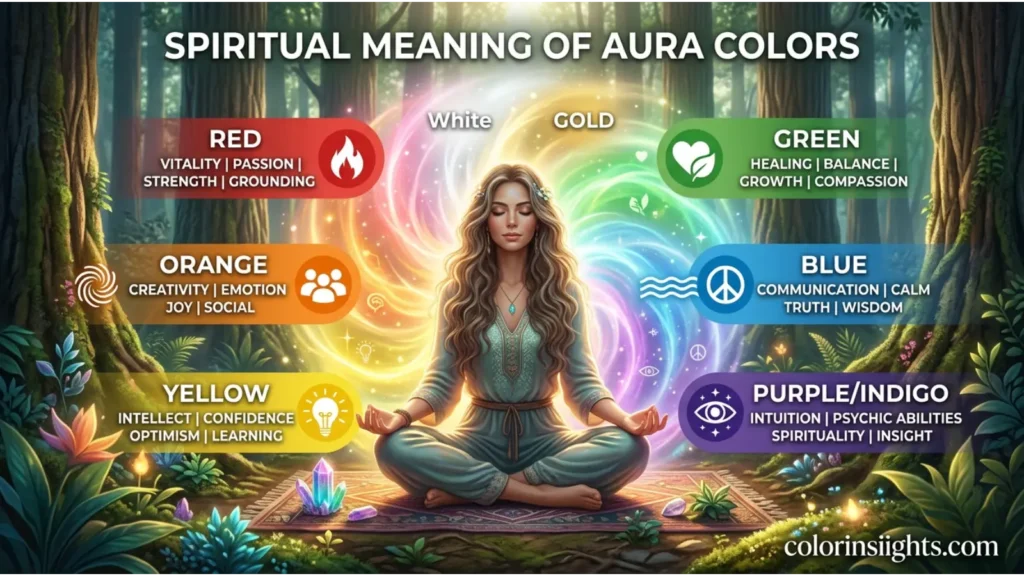
Spiritual Meaning of Aura Colors
The spiritual meaning of aura colors is central to metaphysical traditions that view humans as energetic as well as physical beings. In these systems, each aura layer corresponds to a level of consciousness.
- Holiness: White and luminous gold auras represent holiness, divine alignment, and spiritual integrity. Meditation masters and spiritual teachers often describe these auras in their accounts.
- Wisdom: Deep indigo and violet reflect wisdom beyond logic, access to inner knowing, and connection to the crown and third eye centers.
- Purity: Clear white and crystal auras signify purity of intention, energetic cleanliness, and transparent communication with higher self.
- Transformation: Orange and violet often appear together during major transformation, indicating the release of old identity and the birth of new perspective.
- Healing: Emerald green is the primary healing aura, associated with the heart chakra and the capacity to restore equilibrium in self and others.
- Protection: Deep blue, white, and gold create protective shields that maintain boundaries and preserve energetic health.
- Power: Red and magenta denote personal power, grounded manifestation, and the ability to turn intention into action.
- Enlightenment: Violet, white, and rainbow auras represent enlightenment, unity consciousness, and expanded awareness.
- New beginnings: Pastel green, peach, and light pink suggest forgiveness, renewal, and readiness for new beginnings after challenge.
- Eternity: Some people interpret gold and deep indigo as representing soul-level memory, a connection to eternity, and awareness that extends beyond a single lifetime.
People should approach these spiritual interpretations with respect and curiosity, recognizing that practices and personal experiences shape how meanings evolve.
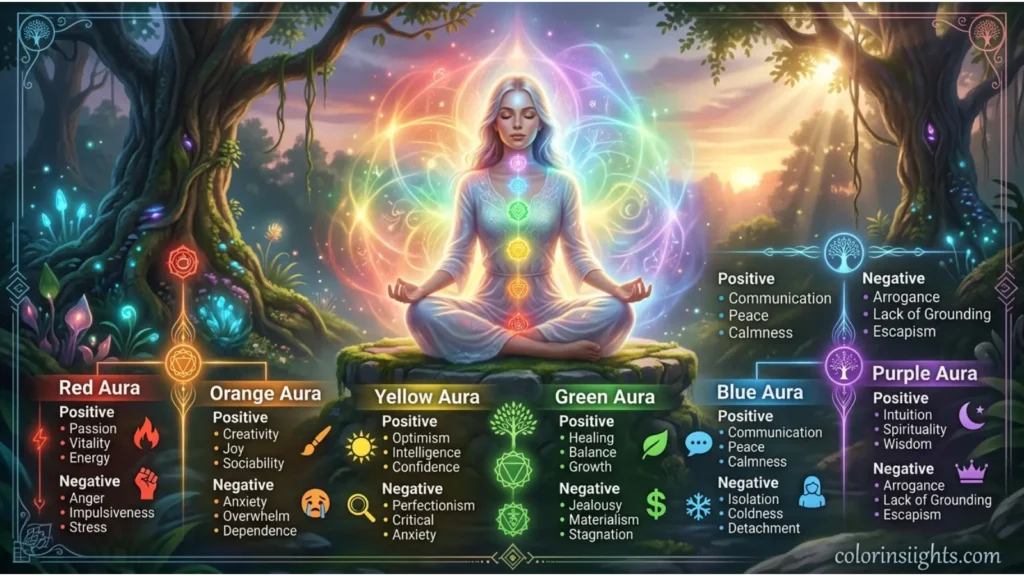
Positive and Negative Meanings of Aura Colors
Every aura color holds a spectrum from balanced to imbalanced expression. Clarity and luminosity determine whether the meaning leans positive or signals a need for support.
Positive Meanings
Positive aura symbolism reflects clear, vibrant, and evenly distributed color.
- Purity: A bright white aura suggests sincerity and clear purpose. Example is a person who radiates calm clarity during conflict resolution.
- Peace: Soft blue and lavender convey deep peace and regulated breathing, often noticed in skilled communicators and meditators.
- Simplicity: A clear light aura indicates simplicity of thought and ability to prioritize without distraction.
- Clarity: Vivid yellow shows mental clarity, articulate speech, and confident decision making.
- Freshness: Spring green reflects freshness, curiosity, and openness to growth, common in students and nature lovers.
- Hope: Pink and peach signal hope, affection, and gentle optimism that uplifts group morale.
- Balance: True green indicates balance between giving and receiving, logic and emotion, often found in natural mediators.
- Harmony: Turquoise blends communication and compassion, suggesting harmonious relationships and empathetic listening.
Negative Meanings
Negative meanings do not imply character flaws. They point to temporary energetic congestion.
- Emptiness: A washed out or thin aura may be read as emptiness or depletion after prolonged stress or burnout, signaling need for rest.
- Isolation: Gray veils around otherwise bright colors suggest isolation, reluctance to share feelings, or social fatigue.
- Coldness: Dull steel blue can be interpreted as coldness or guarded communication when trust feels unsafe.
- Sterility: An overly stark white without warmth may indicate perfectionism or disconnection from bodily needs and emotions.
- Boredom: Muddy yellow or flat brown often reflects mental boredom, routine stagnation, or lack of creative outlet.
- Emotional distance: Cloudy green or smoky pink may point to unresolved heartache and protective distancing after disappointment.
- Perfectionism: An intense, rigid violet can signal overthinking, high self expectations, and pressure to achieve spiritual ideals quickly.
Real world examples include a vibrant red aura before a race showing healthy adrenaline, versus a murky red after chronic frustration showing need for grounding movement.
Meanings of Aura Colors Across Modern Contexts
Aura color meaning changes with context. Beyond personal readings, these meanings now influence lifestyle, wellness, and creative industries, making aura symbolism relevant even for those who approach it metaphorically.
Feng Shui
In Feng Shui, aura inspired colors are used to adjust Qi flow in a home or workspace.
- Associated element: Red and orange align with Fire, green with Wood, yellow and earthy brown with Earth, white and metallics with Metal, blue and black with Water.
- Energy symbolism: Green supports family harmony and growth, blue supports wisdom and career flow, red activates recognition and vitality.
- Best rooms: Soft green for living room to encourage connection, light blue for bedroom for restful calm, warm yellow for office or study to aid focus, pink for bedroom corners related to love.
- Recommended color combinations: Green with warm brown for grounded vitality, blue with white for clarity and openness, pink with gold for affectionate abundance.
- Home decorating tips: Use aura colors as intentional accents through textiles, artwork, plants, or crystals. Keep tones clear and luminous rather than dark or muddy, and allow natural light to enhance vibrancy.
Marketing
Aura color psychology is widely used in wellness branding and product storytelling.
- Branding psychology: Purple suggests intuition and luxury, green suggests natural healing, blue suggests trust and calm, pink suggests nurturing care.
- Consumer perception: Soft gradients and halo effects create perceptions of authenticity, mindfulness, and emotional intelligence, which appeal to values driven consumers.
- Trust signals: Blue and white palettes establish trust and purity, especially for skincare, supplements, and meditation tools.
- Product packaging: Aura imagery appears on incense boxes, journals, crystal kits, and clean beauty lines to signal holistic benefits.
- Advertising applications: Brands such as Sephora in wellness collections, Lululemon in mindfulness campaigns, and energy drink brands using chakra palettes leverage aura color symbolism to create emotional connection.
Design
Aura palettes enrich visual communication across design disciplines.
- Interior design: Designers use aura inspired palettes to set mood. Turquoise for spa like calm, golden tones for inspiring entryways, sage green for balanced workspaces.
- Graphic design: Glowing gradients, blurred halos, and ethereal light leaks are popular in aura portraits, event posters, and music covers.
- Web design: Wellness sites use pastel aura gradients to reduce cognitive load and increase perceived warmth, improving time on page.
- User experience: Calming aura tones in meditation and journaling apps improve emotional comfort and retention, while vibrant accents guide attention without harsh contrast.
- Minimalist aesthetics: A single luminous aura hue on a neutral background conveys focus and modern spiritual sophistication, ideal for personal brands.
Fashion
Wearing aura colors is a form of intentional nonverbal communication.
- Clothing symbolism: Red conveys confidence and leadership, yellow suggests intellectual energy and optimism, green signals approachability and balance, black can signal protection and strong boundaries.
- Seasonal use: Coral, yellow, and turquoise dominate spring and summer collections for their uplifting quality, while deep indigo, burgundy, and forest green anchor fall and winter wardrobes.
- Styling effects: Monochromatic dressing in one aura tone elongates the silhouette and projects cohesion, while contrasting warm and cool aura colors energizes an outfit.
- Personality impressions: People wearing vibrant aura colors are often perceived as expressive and approachable, while soft neutrals suggest calm discretion and thoughtfulness.
- Advantages and disadvantages: Advantage is mood enhancement and alignment with intention. Disadvantage is potential overstatement in conservative settings or color clash with skin undertone. Practical example is choosing emerald green for a collaborative meeting to project calm competence and empathy.
Color Associations Are Not Universal
Color associations are not universal, and aura interpretations are especially culturally situated. Understanding variation prevents overgeneralization and respects diverse worldviews.
Western cultures:
In the United States and Europe, white auras are viewed positively as angelic and pure, while black is often stigmatized. Red is celebrated as passion and vitality. Marketing and media reinforce these links.
Eastern cultures:
Many South Asian traditions, saffron and gold signify sacred knowledge and renunciation. In Chinese culture, red symbolizes good fortune and life force, aligning closely with red aura vitality. In Japan, purple has long been associated with nobility and spiritual depth.
Religious traditions:
Christianity often links blue and white to holiness and devotion. Hinduism maps aura colors closely to the seven chakras, each with specific mantras and deities. Buddhism describes clear light and rainbow body as signs of realization, paralleling white and multicolor aura enlightenment.
Historical interpretations:
Ancient Egyptians associated green with rebirth and blue with divinity. Medieval mystics described saints with golden halos, a visual precursor to gold aura descriptions. Victorian spiritualism popularized systematic aura charts.
Modern global interpretations:
With social media and aura photography apps, a shared global aesthetic has emerged. Yet individual readers still assign nuanced meanings based on training, intuition, and client feedback, confirming that aura color symbolism is interpretive and evolving.
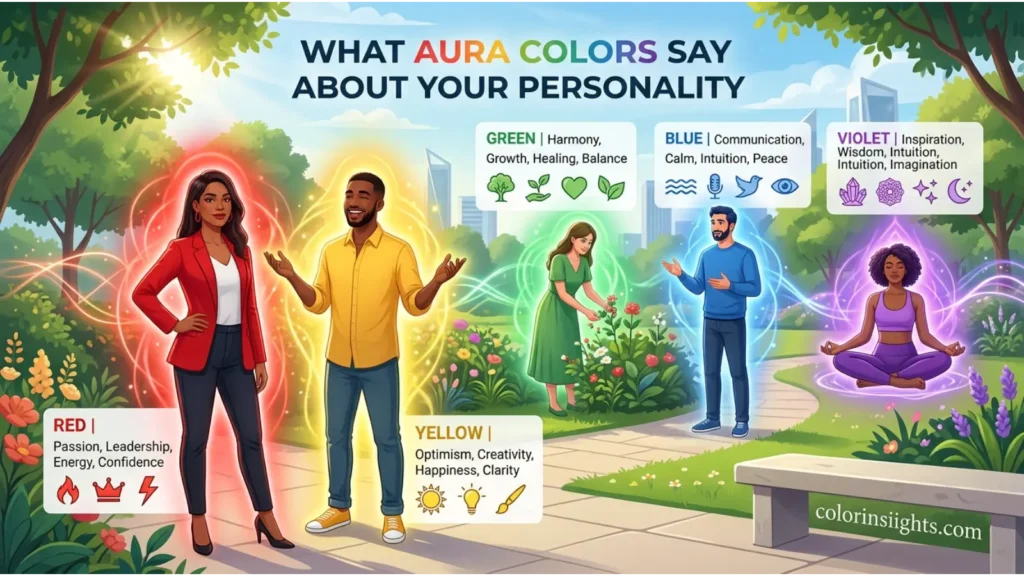
What Aura Colors Say About Your Personality
Interest in what aura colors say about your personality reflects a desire for self understanding. These descriptions are archetypal tools, not fixed labels.
- Strengths: Red types show determination and resilience under pressure. Orange types bring creativity and enthusiasm. Yellow types offer logical clarity and optimism. Green types demonstrate compassion and dependability. Blue types provide honesty and calm. Violet types contribute vision and inspired imagination.
- Weaknesses: Red may struggle with impulsivity, orange with restlessness, yellow with overanalysis, green with overgiving, blue with avoiding confrontation, violet with feeling misunderstood.
- Social behavior: Warm aura personalities tend to initiate and energize groups, cool aura personalities tend to listen and stabilize, pink and green types often mediate and nurture.
- Work style: Red excels in action oriented roles requiring stamina, yellow in analytical and entrepreneurial work, green in caregiving, counseling, and environmental work, blue in teaching, writing, and communication, indigo and violet in strategy, design, and spiritual guidance.
- Relationships: Pink and green value deep emotional bonding and loyalty, blue values clear communication and trust, yellow values intellectual compatibility and shared growth, red values presence and physical affection.
- Emotional tendencies: Bright clear auras are often described alongside regulated emotions and resilience, while cloudy tones accompany temporary stress or transition. Personality is fluid, and aura preferences shift with life experience. Color preference offers insight but does not determine destiny.
Frequently Asked Questions
1. What defines an aura color?
An aura color is defined as the dominant hue perceived in a person’s subtle energy field, believed to reflect current physical, emotional, mental, and spiritual conditions.
2. What does aura color symbolize?
Aura color symbolizes energetic qualities and current life themes.
3. Why is aura color meaning important?
It is important as a reflective framework that encourages self awareness, emotional literacy, and intentional living, especially in wellness and creative practices.
4. Is aura color warm or cool?
Auras include both warm and cool frequencies.
5. What emotions do aura colors represent?
Red represents courage and passion, orange represents joy, yellow represents optimism, green represents compassion, blue represents tranquility, purple represents insight, and white represents peace.
6. What does aura color mean spiritually?
Spiritually, aura colors connect to chakra energy, soul lessons, and higher consciousness, indicating alignment, growth edges, or areas ready for healing.
7. What colors pair well with aura readings for décor?
Soft neutrals like warm white, light beige, and pale gray pair well with aura tones, allowing the energetic hue to remain focal without visual clutter.
8. What does liking a specific aura color say about a person?
Liking a specific aura color may suggest resonance with its qualities, such as preference for blue indicating valuing honesty and calm, but it reflects affinity not fixed identity.
9. Can your aura color change over time?
Yes, outer layers of the aura are described as dynamic and responsive to mood, health, and environment, while a core tone may remain relatively stable.
10. How should I use aura color meanings in daily life?
Use them as prompts for reflection, intention setting, and environment design. Choose clothing, décor, and mindfulness practices that support the energy you wish to cultivate.
Conclusion
Different aura color meanings offer a rich and accessible language for exploring inner life. From the grounded vitality of red and the creative spark of orange to the intellectual brightness of yellow, the healing compassion of green, the truthful calm of blue, and the visionary wisdom of violet and white, each hue illuminates a facet of human experience. Applied thoughtfully across Feng Shui, marketing, design, and fashion, these meanings bridge spiritual insight and practical creativity. While cultural lenses shape interpretation and scientific evidence remains limited, approaching aura color symbolism with curiosity, critical thinking, and self compassion transforms it into a valuable tool for personal growth and mindful living.