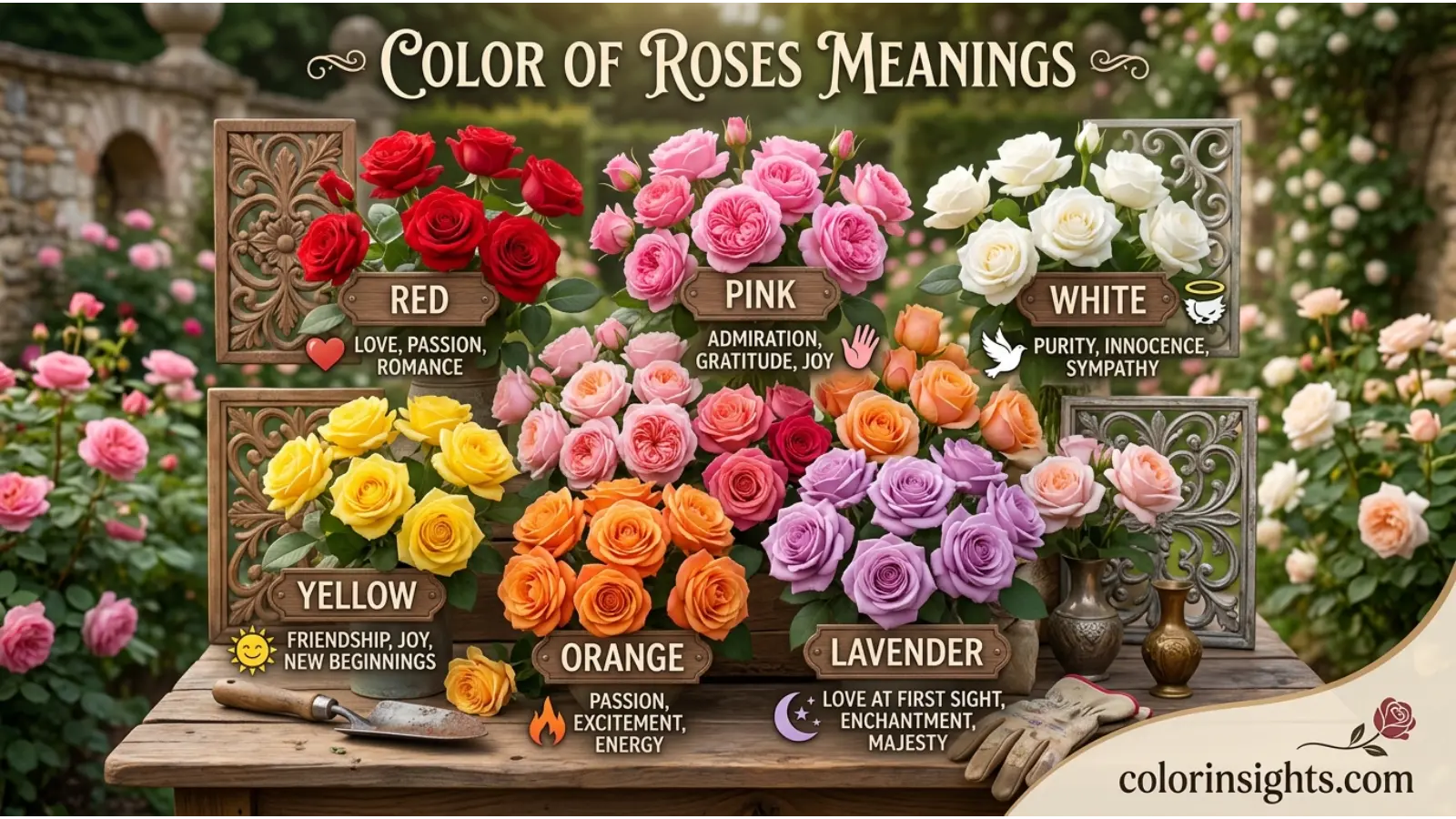
The color of a rose communicates a message before a single word is spoken. Across cultures and generations, people have used different rose colors to express love, friendship, gratitude, remembrance, celebration, sympathy, and admiration.
While flowers carry natural beauty, their colors shape the emotions and meanings people associate with them. From romantic red roses to peaceful white blooms and cheerful yellow varieties, each shade creates a unique emotional impression.
Understanding the meaning behind rose colors helps you choose the right flowers for gifts, ceremonies, home décor, and personal expression.
Quick Answer:
Every rose color has a symbolic meaning. Red represents love, white symbolizes purity, yellow expresses friendship, pink conveys gratitude, orange shows enthusiasm, lavender reflects enchantment, and black or deep burgundy often represents farewell or mystery.
What Does the Color of Roses Symbolize?
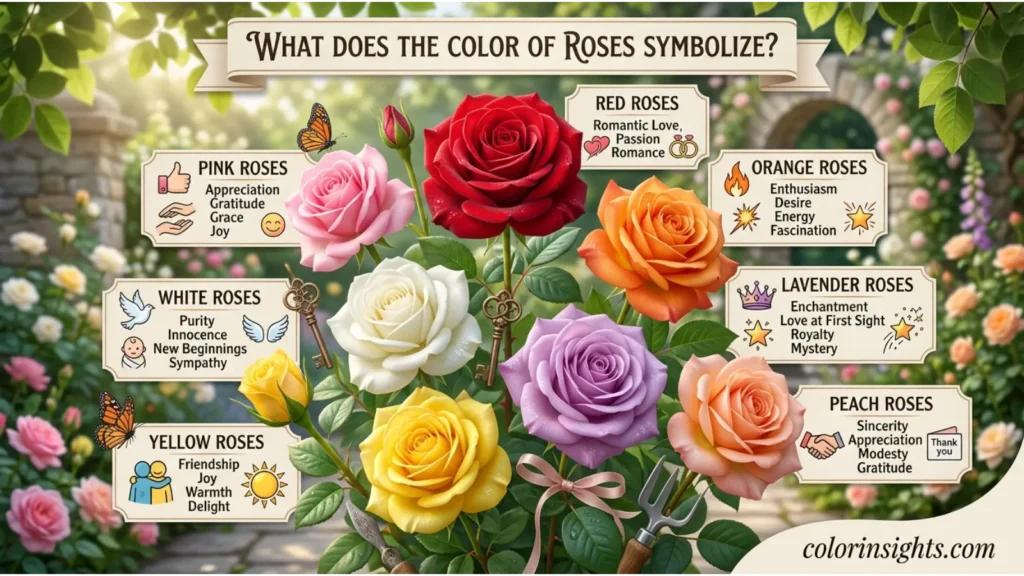
The color of roses symbolizes different emotions, intentions, and life events. Rather than the flower itself changing meaning, its color influences how people interpret the message.
Here are the most recognized rose color meanings:
- Red: Romantic love, passion, courage, and deep commitment.
- White: Purity, innocence, peace, respect, and remembrance.
- Pink: Gratitude, admiration, appreciation, elegance, and gentle affection.
- Yellow: Friendship, happiness, optimism, joy, and encouragement.
- Orange: Enthusiasm, excitement, desire, confidence, and success.
- Lavender: Enchantment, fascination, uniqueness, and love at first sight.
- Peach: Sincerity, appreciation, modesty, and gratitude.
- Cream: Thoughtfulness, charm, and lasting affection.
- Blue (Dyed Roses): Mystery, imagination, dreams, and the impossible.
- Green: Renewal, prosperity, balance, fertility, and fresh beginnings.
- Black or Very Dark Burgundy: Farewell, transformation, mystery, endings, and rebirth.
The symbolism may vary depending on the occasion, culture, and personal interpretation, but these meanings remain widely recognized around the world.
Psychological Characteristics of the Color of Roses
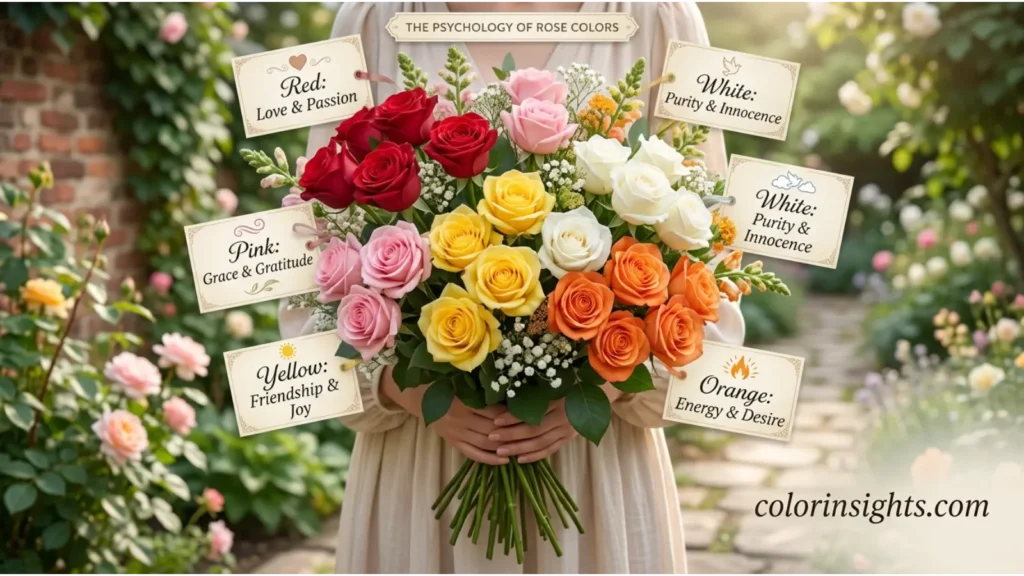
Color psychology explains that people respond emotionally to rose colors because colors influence mood, memory, and perception. Different rose colors trigger different psychological reactions.
Emotional Associations
- Red creates excitement, passion, and emotional intensity.
- White promotes calmness and emotional clarity.
- Pink evokes kindness and compassion.
- Yellow encourages optimism and social connection.
- Orange stimulates confidence and motivation.
- Lavender inspires imagination and curiosity.
Psychological Effects
- Bright colors energize people.
- Soft pastel shades reduce stress.
- Deep colors increase emotional depth.
- Warm colors encourage interaction.
- Cool-colored roses promote relaxation.
Positive Emotional Responses
- Love
- Trust
- Appreciation
- Joy
- Comfort
- Hope
- Gratitude
- Confidence
Negative Emotional Responses
- Jealousy (yellow in some traditions)
- Sadness (white at funerals)
- Heartbreak (dark roses)
- Emotional intensity (red)
- Loneliness (blue symbolism)
Impact on Mood and Behavior
Receiving colorful roses often increases feelings of happiness and appreciation. Warm-colored bouquets encourage conversation and celebration, while lighter shades create peaceful environments. Floral colors are commonly used to influence the atmosphere at weddings, hospitals, hotels, and events.
Typical Human Reactions
People generally interpret rose colors quickly because they are deeply rooted in cultural traditions. Even individuals unfamiliar with flower symbolism often associate red with romance and white with peace.
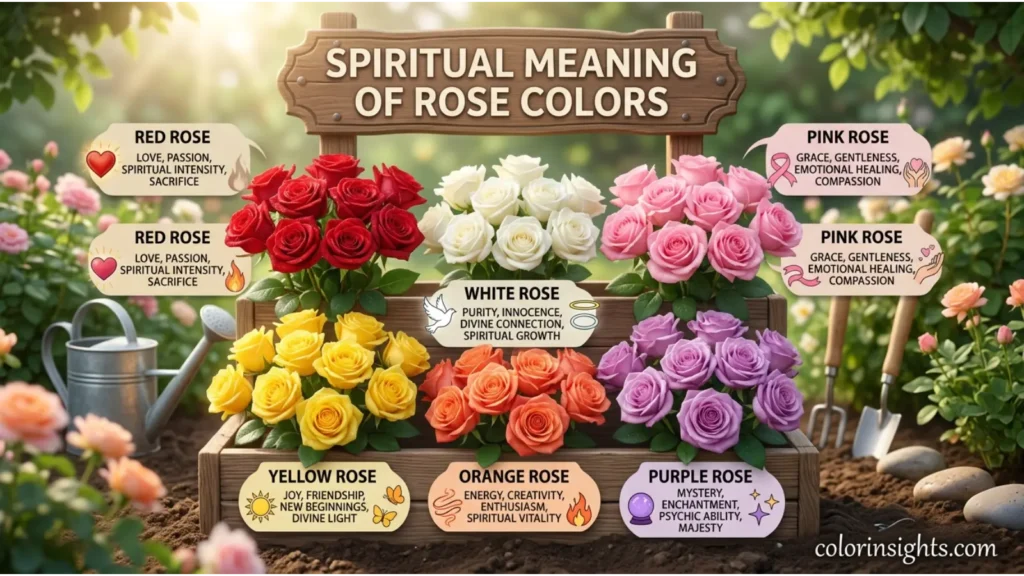
Spiritual Meaning of the Color of Roses
Many spiritual traditions connect rose colors with inner growth, divine love, healing, and transformation.
- Holiness: White roses symbolize holiness, sacredness, and divine grace.
- Wisdom: Purple and lavender roses represent spiritual insight and higher understanding.
- Purity: White roses reflect innocence and moral integrity.
- Transformation: Dark roses symbolize endings that lead to personal growth.
- Healing: Pink and green roses represent emotional healing and renewal.
- Protection: White flowers are commonly associated with spiritual protection and blessings.
- Power: Red roses symbolize courage, strength, and life energy.
- Enlightenment: Lavender roses encourage spiritual awakening and self-discovery.
- New Beginnings: Green and white roses represent fresh starts, weddings, and new chapters.
- Eternity: White roses frequently symbolize everlasting love and eternal remembrance.
In meditation, ceremonies, and religious celebrations, rose colors often reinforce emotional and spiritual intentions.
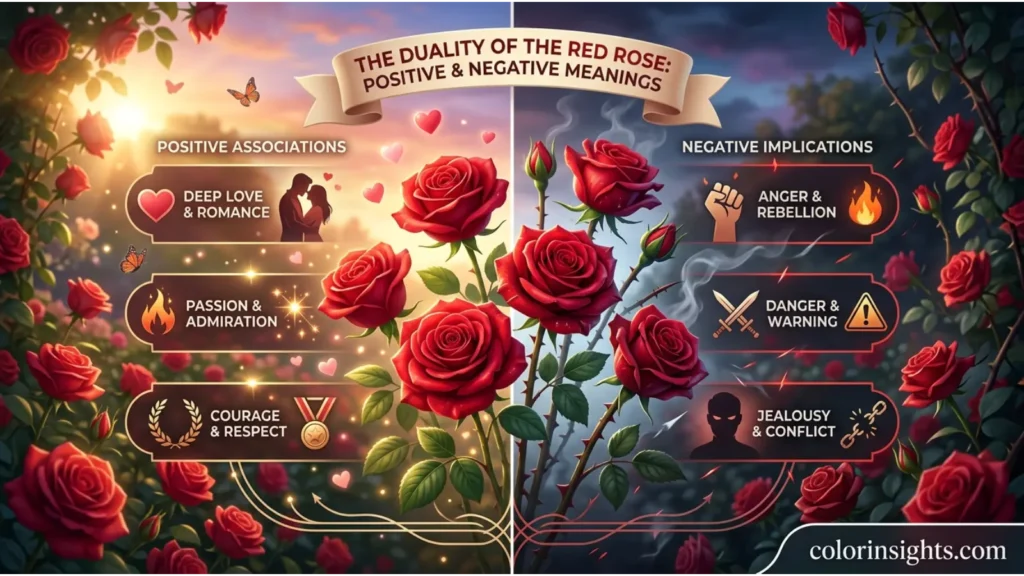
Positive and Negative Meanings of the Color of Roses
Positive Meanings
Love: Red roses remain the universal symbol of romantic love and lifelong commitment.
Peace: White roses bring calmness and comfort during weddings and memorial services.
Friendship: Yellow roses celebrate supportive relationships without romantic intentions.
Gratitude: Pink roses express sincere appreciation after birthdays, graduations, or acts of kindness.
Freshness: Green roses symbolize growth, renewal, and healthy beginnings.
Hope: Peach and cream roses inspire optimism during recovery or major life changes.
Balance: Lavender roses represent emotional harmony and creativity.
Harmony: Mixed-color bouquets celebrate unity among family, friends, and communities.
Negative Meanings
Emptiness: White roses may symbolize absence after loss during funerals.
Isolation: Blue roses sometimes represent unattainable dreams or emotional distance.
Coldness: Very pale floral arrangements can appear formal rather than warm.
Sterility: Excessive white decorations may feel clinical in some environments.
Boredom: Using only neutral-colored flowers may reduce visual excitement.
Emotional Distance: Cream roses can occasionally communicate reserved emotions instead of passion.
Perfectionism: Highly formal floral arrangements may appear overly controlled or impersonal.
These meanings depend heavily on cultural context and the occasion.
Meanings of the Color of Roses
Rose color meanings change depending on where and how the flowers are used. The same red rose may represent romance on Valentine’s Day, respect on Memorial Day, or celebration at an anniversary.
Feng Shui
In Feng Shui, flower colors influence the flow of positive energy.
- Associated element: Depends on the rose color. Red relates to Fire, white to Metal, green to Wood, and yellow to Earth.
- Energy symbolism: Roses encourage harmony, love, prosperity, and emotional balance.
- Best rooms: Living rooms, bedrooms, entryways, and meditation spaces.
- Recommended color combinations: Red with white for balance, pink with cream for harmony, yellow with green for abundance.
- Decorating tips: Use fresh roses in clean vases, avoid wilted flowers, and match rose colors to the room’s desired energy.
Marketing
Businesses use floral colors to reinforce emotional branding.
- Branding psychology: Red attracts attention and conveys passion, while pink communicates care and compassion.
- Consumer perception: Bright floral colors make products appear cheerful and memorable.
- Trust signals: White suggests cleanliness and honesty.
- Product packaging: Beauty, skincare, fragrance, greeting cards, and luxury gift brands frequently use rose-inspired colors.
- Advertising: Valentine’s Day campaigns rely heavily on red and pink, while Mother’s Day promotions often feature pastel roses.
Famous brands such as Hallmark, Interflora, Teleflora, L’Oréal Paris, and Dove frequently incorporate floral-inspired color palettes in seasonal campaigns.
Design
Rose colors play an important role across creative industries.
- Interior design: Soft pink and cream create welcoming spaces, while red serves as an accent color.
- Graphic design: Rose-inspired palettes communicate elegance and warmth.
- Web design: Gentle floral colors improve readability and emotional appeal for lifestyle websites.
- User experience: Soft colors reduce visual fatigue and create inviting interfaces.
- Minimalist aesthetics: White and blush roses complement modern, clean interiors without overwhelming the design.
Fashion
Rose colors influence clothing choices and personal style.
- Clothing symbolism: Red represents confidence, white symbolizes sophistication, and pink suggests kindness.
- Seasonal use: Pastels dominate spring, bright roses appear in summer, while burgundy and deep red are popular during autumn and winter.
- Styling effects: Floral shades soften bold outfits and add elegance.
- Personality impressions: People often perceive rose-colored clothing as approachable, stylish, or romantic.
- Advantages: Easy to coordinate, emotionally expressive, and suitable for celebrations.
- Disadvantages: Some bright shades may not fit formal business settings.
For example, a blush pink dress suits weddings, while deep red accessories add confidence to professional attire.
Color Associations Are Not Universal
Western Cultures
In many Western countries, red roses symbolize romantic love, white roses represent weddings and sympathy, and yellow roses celebrate friendship.
Eastern Cultures
In parts of Asia, red also symbolizes prosperity, celebration, and good fortune. White flowers may carry stronger associations with mourning than with weddings.
Religious Traditions
Christian traditions often associate white roses with purity and the Virgin Mary, while red roses can symbolize sacrifice and divine love. Other spiritual traditions may interpret flower colors through themes of balance, renewal, or enlightenment.
Historical Interpretations
During the Victorian era, people used floriography—the language of flowers—to communicate emotions that social customs discouraged expressing openly. Rose color meanings became highly structured and symbolic.
Modern Global Interpretations
Today, globalization and social media have standardized many rose color meanings. However, personal experiences, family traditions, and local customs still influence how individuals interpret different colors.
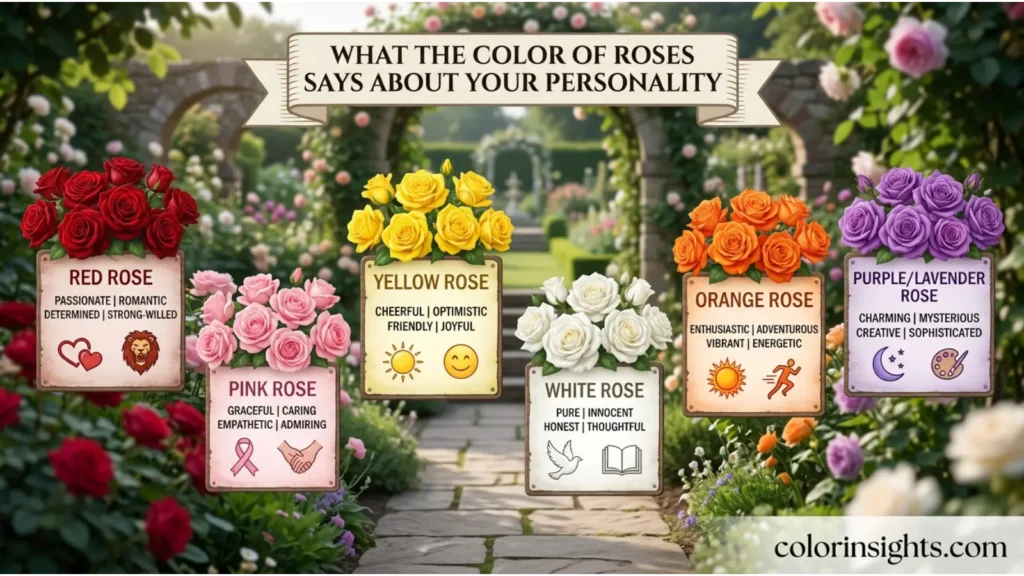
What the Color of Roses Says About Your Personality
Although favorite colors cannot accurately determine personality, psychologists acknowledge that color preferences may reflect emotional tendencies, cultural influences, and aesthetic tastes.
People who prefer certain rose colors are often associated with these characteristics:
Red Rose Lovers
- Passionate
- Determined
- Confident
- Emotionally expressive
White Rose Lovers
- Peaceful
- Honest
- Organized
- Reflective
Pink Rose Lovers
- Compassionate
- Friendly
- Caring
- Supportive
Yellow Rose Lovers
- Optimistic
- Social
- Cheerful
- Encouraging
Orange Rose Lovers
- Adventurous
- Energetic
- Creative
- Ambitious
Lavender Rose Lovers
- Imaginative
- Curious
- Individualistic
- Spiritually minded
Strengths
- Emotional awareness
- Creativity
- Empathy
- Loyalty
- Appreciation for beauty
Weaknesses
- Emotional sensitivity
- Idealism
- Occasional perfectionism
- Overthinking relationships
Social Behavior
People attracted to warm rose colors often enjoy active social lives, while those preferring softer shades may value deeper one-on-one connections.
Work Style
Rose-color enthusiasts frequently appreciate collaboration, creativity, and meaningful work environments.
Relationships
Many value trust, emotional expression, kindness, and long-term commitment.
Emotional Tendencies
Color preferences often mirror temporary moods, personal experiences, and cultural influences rather than permanent personality traits. They should never be considered scientific personality tests.
FAQs
What defines the color of roses meaning?
It refers to the symbolic message communicated by different rose colors, such as love, friendship, gratitude, peace, or remembrance.
What does the color of roses symbolize?
Rose colors symbolize emotions, relationships, celebrations, healing, remembrance, and personal expression.
Why is the color of roses important?
Choosing the right rose color helps communicate feelings more accurately during important occasions.
Is the color of roses warm or cool?
It depends on the specific color. Red, orange, and yellow are warm, while white, lavender, blue, and some pink shades feel cooler.
What emotions does the color of roses represent?
Rose colors can represent love, joy, hope, admiration, compassion, peace, excitement, mystery, or sympathy.
What is the spiritual meaning of the color of roses?
Spiritually, rose colors represent divine love, purity, healing, transformation, wisdom, protection, and renewal.
What colors pair well with rose colors?
White, cream, green, gold, blush pink, burgundy, and soft gray complement many rose-inspired color palettes.
What does liking the color of roses say about a person?
People who enjoy rose colors often appreciate beauty, relationships, creativity, and emotional expression, although color preference alone cannot determine personality.
Which rose color is best for friendship?
Yellow roses traditionally symbolize friendship, happiness, encouragement, and appreciation.
Which rose color represents eternal love?
White and deep red roses commonly symbolize everlasting love, loyalty, and lifelong commitment.
Conclusion
The color of roses carries powerful symbolic meaning that extends far beyond appearance. Whether expressing romance through red roses, gratitude with pink blooms, friendship with yellow flowers, or peace through white arrangements, each color communicates a unique emotional message.
Psychology, spirituality, cultural traditions, design, marketing, and fashion all demonstrate how rose colors influence perception and behavior. While interpretations vary across cultures and individuals, understanding these meanings helps you choose roses thoughtfully for every occasion, creating more meaningful personal connections and memorable experiences.