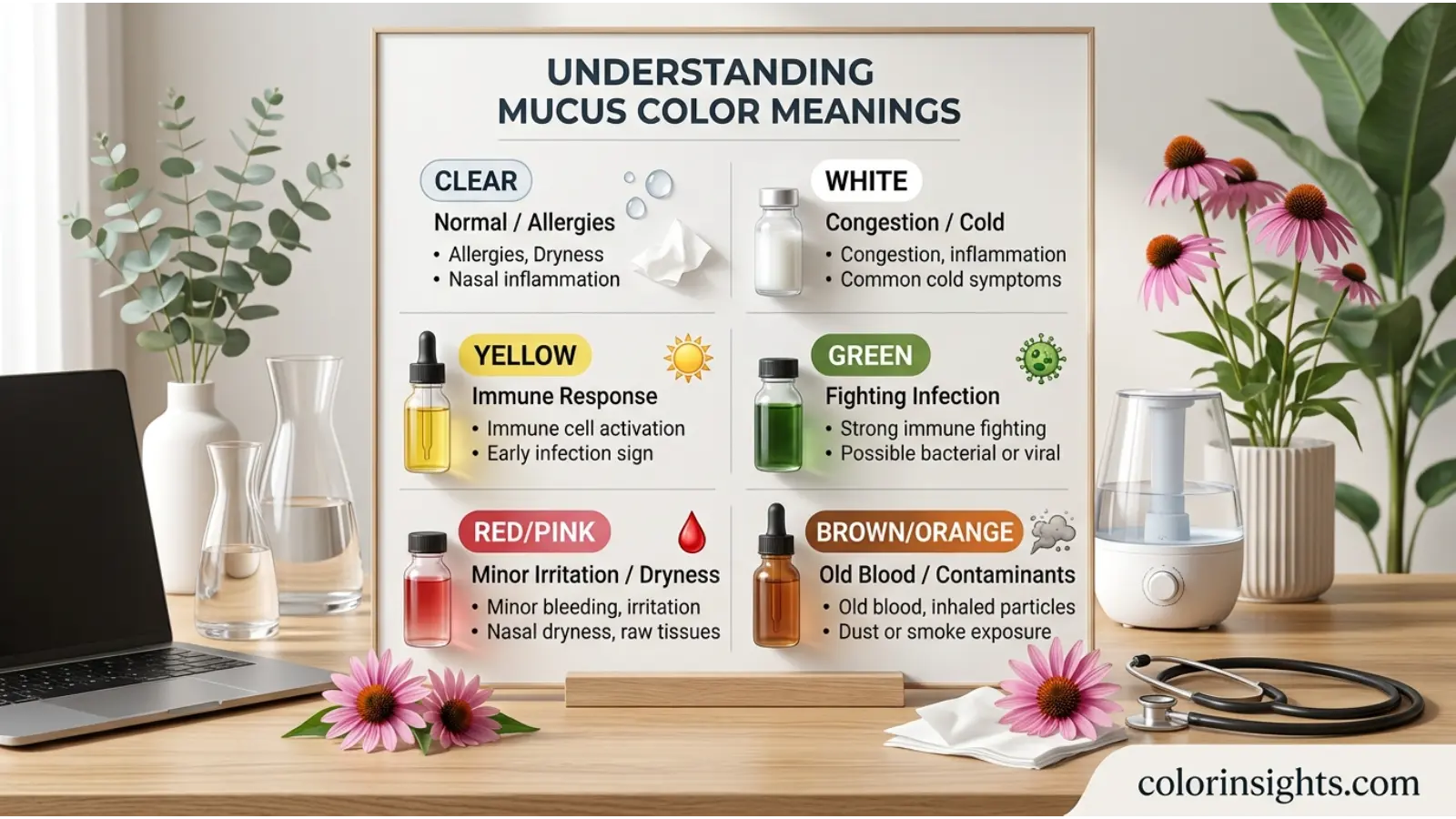
Mucus is a natural substance produced by the body’s mucous membranes to protect and lubricate the nose, throat, lungs, and other organs. Although it is often overlooked, the color of mucus can provide useful clues about your health.
Changes in mucus color may result from allergies, viral infections, bacterial infections, environmental irritants, dehydration, or, in some cases, more serious medical conditions.
While mucus color alone cannot diagnose an illness, understanding what different shades may indicate can help you recognize when symptoms are normal and when it’s time to seek medical advice.
Quick Answer:
Different mucus colors can reflect changes in your body’s immune response. Clear mucus is generally normal, white may indicate congestion, yellow and green often suggest an active immune response to an infection, while red, brown, black, or pink mucus may signal irritation, bleeding, pollution exposure, or an underlying health condition that requires medical evaluation.
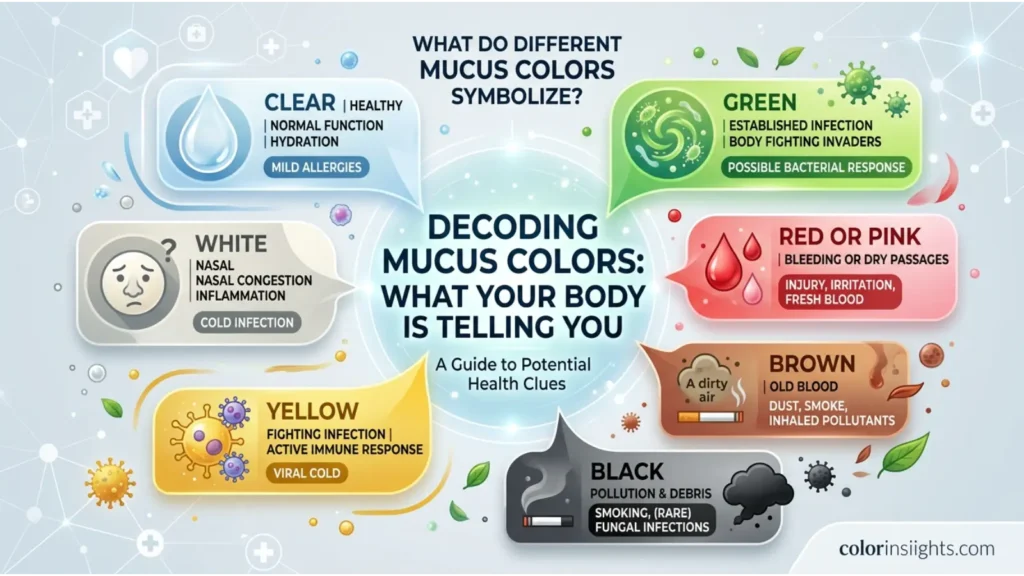
What Do Different Mucus Colors Symbolize?
Mucus color serves as a visual indicator of what may be happening inside your respiratory system. The body’s immune response, hydration level, environmental exposure, and underlying medical conditions can all influence mucus appearance.
Although many people associate certain colors with specific illnesses, healthcare professionals emphasize that mucus color should always be interpreted alongside symptoms such as fever, congestion, coughing, facial pain, difficulty breathing, and the duration of illness.
Here is what the most common mucus colors generally symbolize:
- Clear: Healthy mucus production or allergy-related drainage.
- White: Nasal swelling, congestion, or early stages of a cold.
- Yellow: Increased immune activity as white blood cells fight infection.
- Green: A concentrated immune response, often during viral or bacterial respiratory infections.
- Pink or Red: Blood mixed with mucus due to irritated or damaged blood vessels.
- Brown: Dried blood, smoke exposure, dirt, or environmental pollutants.
- Black: Heavy smoke exposure, fungal infections (rare), or inhaled dust such as coal particles.
- Orange: A mixture of yellow mucus and small amounts of blood, sometimes caused by irritation.
While these color changes can offer helpful clues, they are not definitive diagnostic tools. Persistent symptoms or unusual mucus colors should always be evaluated by a healthcare professional.
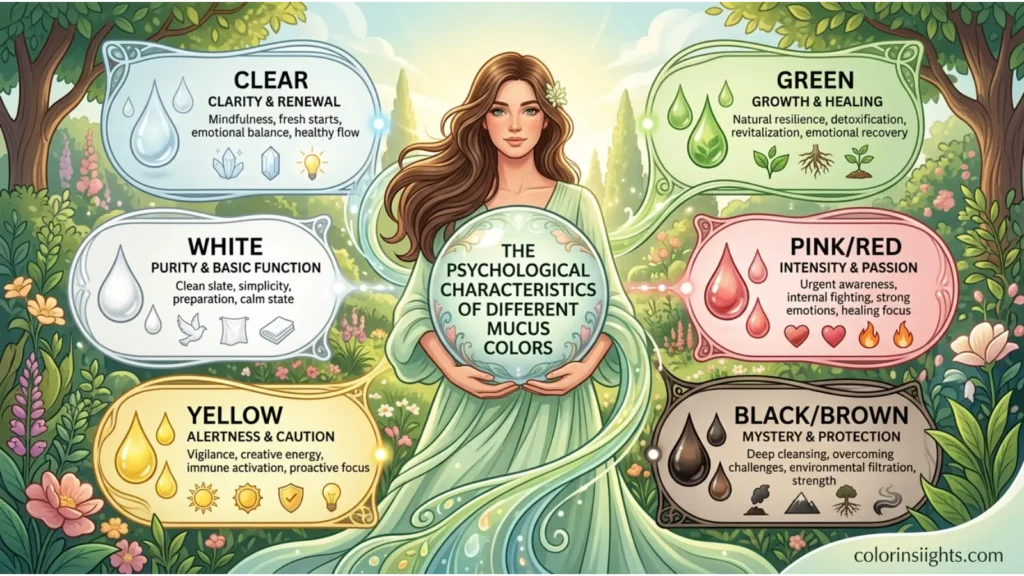
Psychological Characteristics of Different Mucus Colors
Unlike decorative or symbolic colors, mucus colors do not carry established psychological meanings. Instead, they often influence how people emotionally respond to illness and changes in their health.
Emotional Associations
People commonly associate mucus colors with the following emotional reactions:
- Clear mucus often provides reassurance because it is considered normal.
- White mucus may create mild concern during the beginning of a cold.
- Yellow mucus frequently signals that the body is actively fighting an illness.
- Green mucus often causes worry because many people believe it always indicates a bacterial infection, although this is not always true.
- Red or black mucus tends to produce greater anxiety because these colors may suggest bleeding or significant environmental exposure.
Psychological Effects
Changes in mucus color can influence how individuals perceive their health.
- Increased awareness of illness.
- Greater attention to hygiene and self-care.
- Motivation to rest and stay hydrated.
- Anxiety when symptoms persist or worsen.
- Reassurance after symptoms improve and mucus returns to its normal appearance.
Positive Emotional Responses
- Encourages early monitoring of symptoms.
- Promotes timely medical consultation when necessary.
- Helps individuals recognize recovery as mucus gradually clears.
- Supports better health awareness.
Negative Emotional Responses
- Fear of serious illness.
- Stress caused by visible blood in mucus.
- Misconceptions that every green or yellow discharge requires antibiotics.
- Health-related anxiety fueled by misinformation online.
Impact on Mood and Behavior
Mucus color often influences personal decisions during illness.
- Many people increase fluid intake after noticing thicker mucus.
- Individuals may avoid work or school when mucus changes are accompanied by fever.
- Some seek medical care earlier after observing persistent discolored mucus.
- Parents frequently monitor mucus color in children as one indicator of illness progression.
Healthcare providers recommend evaluating mucus color together with other symptoms rather than relying on color alone to determine the cause of an illness.
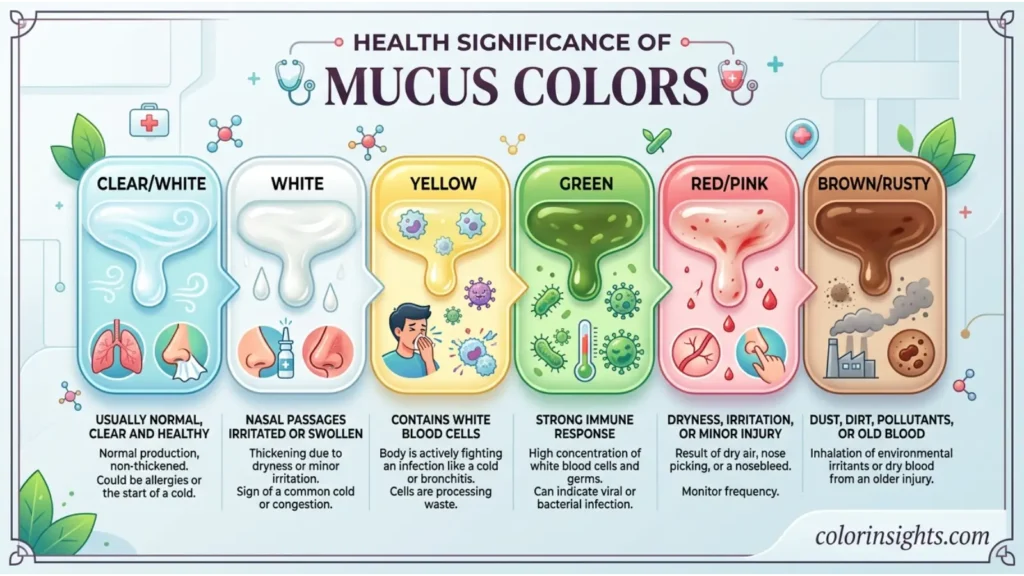
Health Significance of Different Mucus Colors
Although mucus colors are not spiritual symbols, they carry important medical significance by reflecting how the body responds to infections, allergies, and environmental factors.
Clear Mucus
Clear mucus is generally considered healthy and serves several protective functions.
- Moisturizes nasal passages.
- Traps dust, allergens, and germs.
- Supports normal respiratory function.
- Common during allergies or exposure to cold weather.
White Mucus
White mucus often develops when nasal tissues become swollen.
- May indicate early viral infections.
- Frequently occurs with nasal congestion.
- Can result from dehydration.
- Usually improves with hydration and recovery.
Yellow Mucus
Yellow mucus typically appears as immune cells accumulate while fighting infection.
- Common during viral respiratory illnesses.
- Indicates an active immune response.
- Often develops after several days of congestion.
- Does not automatically mean antibiotics are needed.
Green Mucus
Green mucus develops when enzymes released by white blood cells become concentrated.
- Often appears during later stages of respiratory infections.
- May occur with both viral and bacterial illnesses.
- Can accompany sinus infections or bronchitis.
- Should be evaluated if symptoms are severe or last longer than 10 days.
Pink or Red Mucus
Small streaks of blood usually result from irritated nasal tissues.
- Dry indoor air.
- Frequent nose blowing.
- Minor nosebleeds.
- Inflamed nasal passages.
Heavy or persistent bleeding requires prompt medical evaluation.
Brown Mucus
Brown mucus may contain dried blood or inhaled particles.
- Smoke exposure.
- Dust or pollution.
- Previous nasal bleeding.
- Certain workplace exposures.
Black Mucus
Black mucus is uncommon and should not be ignored.
Possible causes include:
- Heavy smoking.
- Coal or industrial dust exposure.
- Rare fungal infections.
- Significant environmental pollution.
Medical evaluation is recommended if black mucus appears without an obvious environmental explanation.
Orange Mucus
Orange mucus often results from a mixture of yellow mucus and small amounts of blood.
Possible causes include:
- Nasal irritation.
- Dry sinuses.
- Healing respiratory infections.
- Mild inflammation.
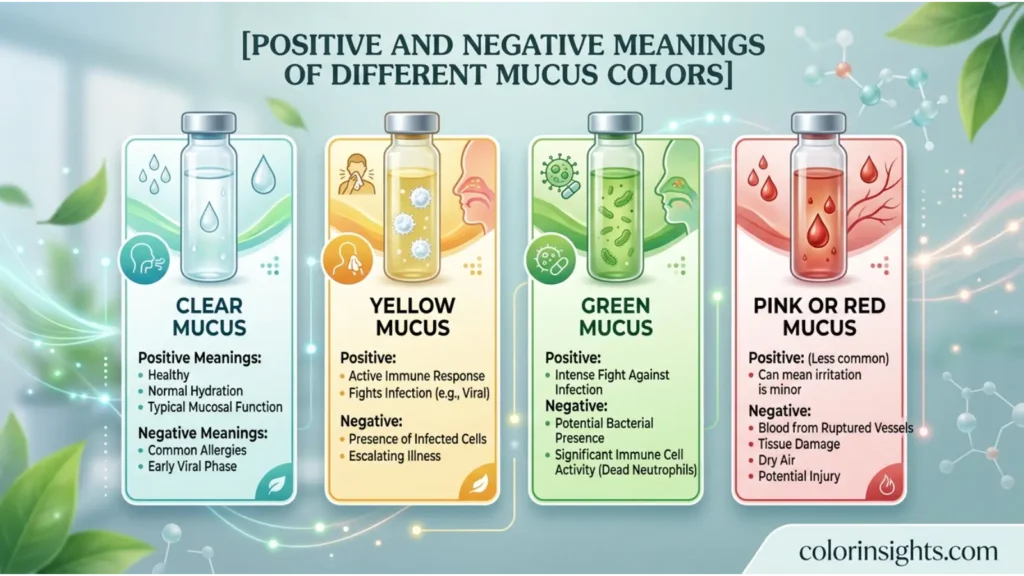
Positive and Negative Meanings of Different Colors
The meaning of mucus color should always be interpreted from a medical perspective rather than as a symbolic color. Each shade may reflect a different stage of your body’s response to infection, irritation, or environmental exposure. Understanding both the reassuring and concerning aspects of mucus color can help you decide whether home care is appropriate or if medical attention is needed.
Positive Meanings
Certain mucus colors can indicate that your body’s natural defense mechanisms are working effectively.
Clear Mucus – Healthy Protection
Clear mucus is a normal part of the body’s defense system. It keeps the nasal passages moist while trapping dust, pollen, bacteria, and viruses before they reach deeper parts of the respiratory tract.
Example:
During allergy season, increased clear mucus helps flush allergens from the nose.
Yellow Mucus – Active Immune Response
Yellow mucus often means that white blood cells are responding to an infection. This color change can be a normal part of recovery from a viral illness.
Example:
A person with a common cold may notice yellow mucus after several days as the immune system fights the virus.
Green Mucus – Concentrated Defense Cells
Green mucus develops when immune cells and their enzymes become concentrated in thick mucus. While it may occur during bacterial infections, it is also common in viral illnesses.
Example:
Someone recovering from sinus congestion may briefly experience green mucus before symptoms gradually improve.
Returning to Clear Mucus – Recovery
As inflammation decreases and mucus production returns to normal, the color often becomes clear again. This generally indicates that the respiratory system is healing.
Negative Meanings
Some mucus colors may suggest irritation, environmental exposure, or conditions that deserve closer attention.
White Mucus – Congestion
White mucus commonly develops when swollen nasal tissues slow mucus drainage. Although usually not serious, it may signal worsening congestion.
Example:
Early stages of a cold often produce thick white mucus along with a stuffy nose.
Red or Pink Mucus – Blood in the Airways
Small streaks of blood usually result from dry nasal passages, forceful nose blowing, or irritation. However, repeated or heavy bleeding should always be evaluated by a healthcare professional.
Example:
Dry winter air can cause tiny blood vessels inside the nose to break, producing pink mucus.
Brown Mucus – Old Blood or Environmental Irritants
Brown mucus may contain dried blood, smoke particles, or dust that has been trapped in the airways.
Example:
Construction workers or people exposed to heavy pollution may occasionally notice brown mucus after inhaling airborne particles.
Black Mucus – Unusual Exposure or Medical Conditions
Black mucus is uncommon and may result from heavy smoking, coal dust exposure, or, in rare cases, certain fungal infections. Persistent black mucus requires prompt medical evaluation.
Example:
Long-term exposure to industrial dust may darken mucus due to trapped particles.
Meanings of Different Mucus Colors
The meaning of mucus color changes depending on your overall health, symptoms, environment, and medical history. While color provides useful clues, healthcare professionals evaluate it alongside fever, facial pain, coughing, breathing difficulties, allergies, hydration, and symptom duration.
Clear Mucus Meaning
Clear mucus is considered normal and healthy. It lubricates the respiratory tract and captures dust, allergens, bacteria, and viruses before they can enter the lungs.
Common causes include:
- Healthy respiratory function
- Seasonal allergies
- Cold weather
- Mild viral infections
- Exposure to irritants
White Mucus Meaning
White mucus often appears when nasal passages become swollen and inflamed, slowing mucus flow.
Common causes include:
- Common cold
- Sinus congestion
- Mild dehydration
- Early respiratory infections
Yellow Mucus Meaning
Yellow mucus indicates that immune cells are actively responding to inflammation or infection.
Common causes include:
- Viral infections
- Recovery phase of a cold
- Sinus inflammation
- Mild respiratory infections
Green Mucus Meaning
Green mucus develops when white blood cells release enzymes while fighting infection. Contrary to popular belief, green mucus alone does not prove that a bacterial infection is present.
Common causes include:
- Viral sinus infections
- Bacterial sinus infections
- Bronchitis
- Prolonged respiratory illnesses
Pink or Red Mucus Meaning
Blood mixed with mucus may appear pink or red.
Common causes include:
- Dry nasal passages
- Frequent nose blowing
- Minor nosebleeds
- Inflamed nasal tissues
Medical evaluation is recommended if bleeding is heavy, recurrent, or accompanied by coughing up blood.
Brown Mucus Meaning
Brown mucus usually contains dried blood or environmental particles.
Common causes include:
- Smoking
- Dust exposure
- Air pollution
- Previous nosebleeds
Black Mucus Meaning
Black mucus is rare but important to investigate.
Possible causes include:
- Heavy smoking
- Coal dust exposure
- Industrial pollutants
- Rare fungal infections
Orange Mucus Meaning
Orange mucus often results from yellow mucus mixed with small amounts of blood caused by irritated nasal tissues.
Possible causes include:
- Healing respiratory infections
- Dry nasal passages
- Minor bleeding
- Sinus irritation
Factors That Affect Mucus Color
Several factors influence mucus color beyond infection alone.
Hydration
Adequate hydration keeps mucus thin and clear. Dehydration can make mucus appear thicker and lighter in color.
Immune Response
As white blood cells fight infection, enzymes released by these cells can change mucus from clear to yellow or green.
Environmental Exposure
Smoke, pollution, dust, chemicals, and allergens can alter mucus color and consistency.
Nasal Irritation
Frequent nose blowing, dry indoor air, allergies, and inflammation can introduce small amounts of blood into mucus.
Smoking
Tobacco smoke damages the airways and increases mucus production. Smokers are more likely to notice brown or black mucus because inhaled particles become trapped in respiratory secretions.
Chronic Medical Conditions
Certain health conditions may affect mucus production, including:
- Chronic sinusitis
- Asthma
- Chronic obstructive pulmonary disease (COPD)
- Cystic fibrosis
- Respiratory fungal infections
When Should You See a Doctor?
Most changes in mucus color improve as the underlying illness resolves. However, medical evaluation is recommended if you experience:
- Green or yellow mucus lasting longer than 10–14 days.
- High fever or worsening facial pain.
- Persistent coughing with thick mucus.
- Significant amounts of blood in mucus.
- Black mucus without known smoke or dust exposure.
- Difficulty breathing, chest pain, or wheezing.
- Symptoms that repeatedly return or continue to worsen.
Prompt medical assessment can help identify whether the cause is viral, bacterial, allergic, environmental, or related to another underlying condition.
FAQs
What defines different mucus colors?
Different mucus colors are changes in the appearance of nasal or respiratory mucus caused by factors such as hydration, allergies, viral infections, bacterial infections, environmental irritants, or bleeding. While color can offer helpful clues, it cannot diagnose a medical condition on its own.
What do different mucus colors symbolize?
From a medical perspective, mucus colors reflect changes in your body’s immune response or environmental exposure rather than symbolic meanings. For example, clear mucus is generally normal, while yellow or green mucus often indicates that the immune system is actively responding to inflammation or infection.
Why are different mucus colors important?
Monitoring mucus color can help you recognize changes in your respiratory health. When combined with other symptoms—such as fever, facial pain, cough, or shortness of breath—it may help determine whether home care is sufficient or if medical evaluation is needed.
Is green mucus always a bacterial infection?
No. Green mucus is commonly associated with an active immune response and can occur during both viral and bacterial infections. Healthcare providers consider the duration and severity of symptoms rather than mucus color alone when deciding whether antibiotics may be appropriate.
What does clear mucus mean?
Clear mucus is usually a sign of healthy mucus production. It keeps the respiratory tract moist and traps dust, allergens, bacteria, and viruses. It is also common during seasonal allergies or exposure to cold air.
What does yellow mucus indicate?
Yellow mucus often appears when white blood cells are fighting an infection. It commonly develops during viral respiratory illnesses and may simply indicate that the body’s immune system is working as expected.
When should I worry about red, brown, or black mucus?
Small streaks of blood may result from dry air or frequent nose blowing. However, persistent red mucus, coughing up blood, unexplained brown mucus, or black mucus should be evaluated by a healthcare professional, especially if accompanied by difficulty breathing, chest pain, or prolonged illness.
Can dehydration change mucus color?
Yes. Dehydration can make mucus thicker, stickier, and more difficult to clear. Drinking enough fluids helps maintain normal mucus consistency and supports healthy respiratory function.
Can allergies change mucus color?
Yes. Allergies most commonly produce clear, watery mucus. However, prolonged inflammation or secondary infections may occasionally cause mucus to become white, yellow, or even green.
How can I keep mucus healthy?
You can support healthy mucus production by:
- Drinking plenty of water.
- Using a humidifier if indoor air is dry.
- Avoiding cigarette smoke and environmental pollutants.
- Managing seasonal allergies.
- Washing your hands to reduce the risk of respiratory infections.
- Seeking medical advice if symptoms persist or worsen.
Conclusion
Mucus is an essential part of your body’s natural defense system, and changes in its color can provide useful information about your respiratory health.
Clear mucus is generally considered normal, while white, yellow, and green mucus often reflect different stages of congestion or the immune response to infection.
Red, brown, and black mucus are less common and may result from irritation, bleeding, environmental exposure, or underlying medical conditions that warrant further evaluation.
Although mucus color can offer valuable clues, it should never be used as the sole indicator of illness. Paying attention to accompanying symptoms, their severity, and how long they last provides a much more accurate picture of your health.
If mucus changes are persistent, severe, or accompanied by high fever, breathing difficulties, or significant bleeding, consulting a healthcare professional is the safest course of action.










 Welcome to The colorinsiights.com