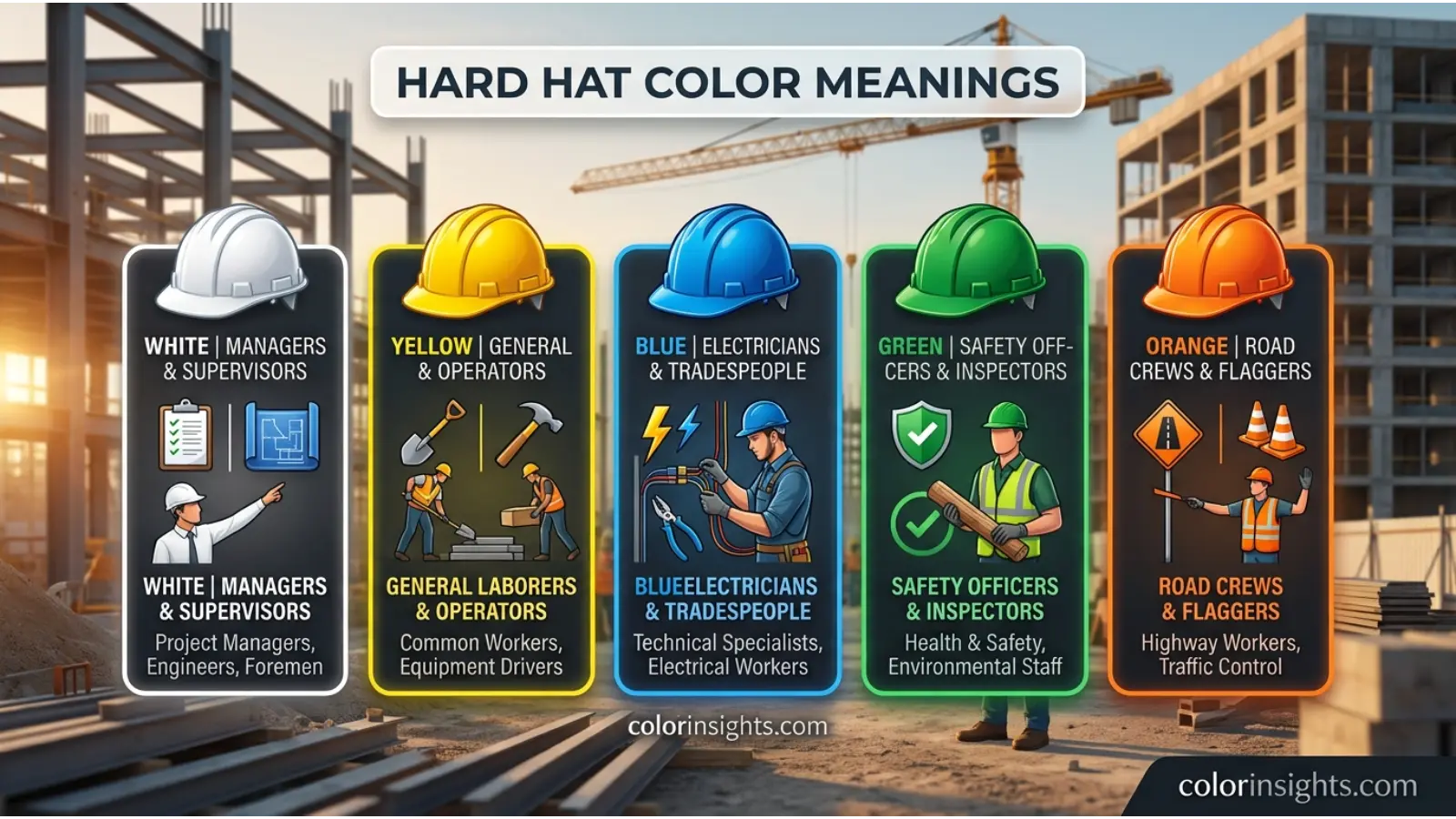
Hard hat color meanings are an important part of workplace safety, helping workers quickly identify roles, responsibilities, and authorization levels on construction sites, industrial facilities, and manufacturing plants.
Although there is no universal legal standard requiring specific hard hat colors, many companies follow widely accepted industry conventions to improve communication and reduce workplace risks.
Different colors can represent supervisors, engineers, electricians, visitors, apprentices, or general laborers. Understanding these color meanings helps improve safety, coordination, and emergency response while reducing confusion in busy work environments.
Quick Answer:
Hard hat colors primarily symbolize a worker’s role, level of authority, training, or job function rather than personality or emotion. While color assignments vary by company, several color meanings are commonly recognized across the construction and industrial sectors.
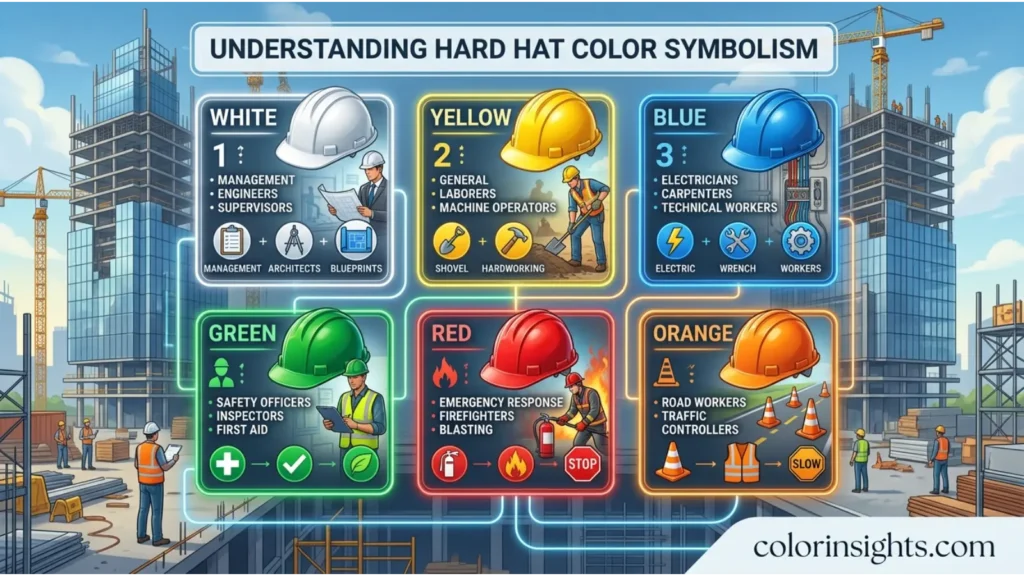
What Does the Color Hard Hat Symbolize?
Unlike traditional color symbolism, hard hat colors are designed for practical communication rather than emotional expression. Their primary purpose is to make identification quick and efficient in potentially hazardous environments.
Different hard hat colors help workers instantly recognize:
- Job responsibilities
- Safety authority
- Experience level
- Trade specialization
- Visitor status
- Emergency response personnel
- Supervisory roles
Common industry interpretations include:
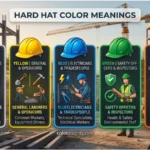
| Hard Hat Color | Common Meaning |
|---|---|
| White | Supervisors, engineers, architects, managers |
| Yellow | General laborers, earth-moving operators |
| Blue | Electricians, carpenters, technical operators |
| Green | Safety officers, first aid personnel, trainees |
| Orange | Road crews, signaling personnel, visitors in some workplaces |
| Red | Fire marshals, emergency teams, firefighters |
| Brown | Welders or workers handling high-heat operations |
| Gray | Site visitors or specialized workers (varies) |
| Pink | Temporary replacement after safety violations or lost helmets (company-specific) |
Because OSHA does not mandate color assignments, employers may customize these meanings to fit operational needs.
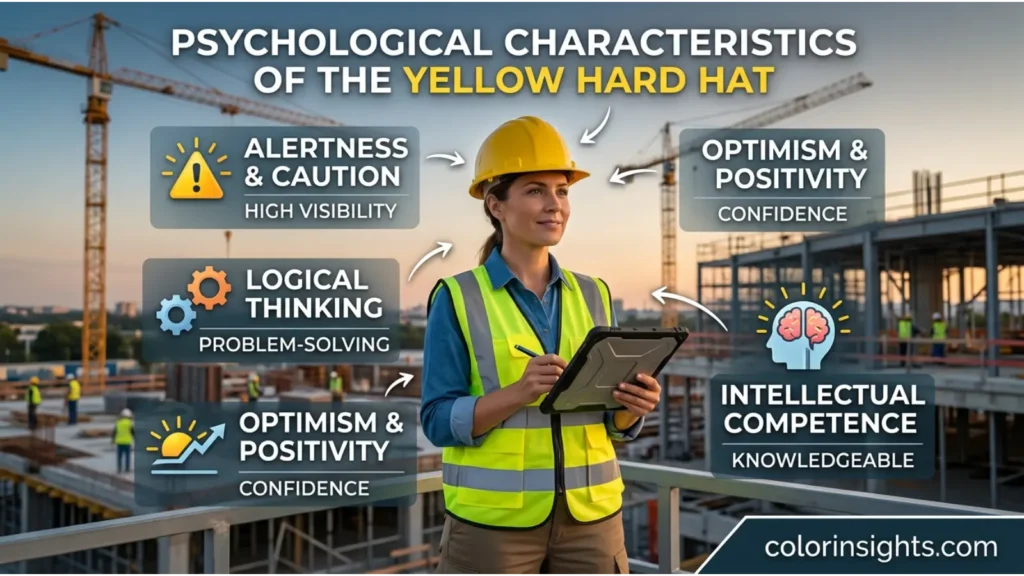
Psychological Characteristics of the Color Hard Hat
Hard hat colors influence how workers perceive authority, responsibility, and safety. In industrial psychology, highly visible colors improve recognition speed, reduce cognitive delays, and support safer decision-making.
Emotional Associations
Depending on the color, workers may associate hard hats with:
- Leadership
- Experience
- Safety
- Technical expertise
- Caution
- Authority
- Protection
- Responsibility
Psychological Effects
Color-coded helmets can:
- Improve workplace organization
- Reduce confusion
- Increase confidence during emergencies
- Encourage accountability
- Strengthen team coordination
Positive Emotional Responses
- Greater trust in supervisors
- Faster identification of qualified personnel
- Improved teamwork
- Increased workplace confidence
- Better safety awareness
Negative Emotional Responses
- Incorrect assumptions when color systems differ
- Overreliance on color rather than credentials
- Potential confusion for new employees
- Miscommunication between contractors using different systems
Impact on Mood and Behavior
Color coding promotes orderly behavior because workers quickly recognize authority figures and specialists. It also reduces hesitation when seeking assistance during emergencies.
Typical Reactions
People generally interpret brightly colored hard hats as indicators of specific expertise, responsibility, or caution, making communication more efficient on active job sites.

Spiritual Meaning of the Color Hard Hat
Hard hat colors are not traditionally associated with spiritual symbolism because they serve occupational rather than religious purposes. However, the individual colors used on helmets often carry broader symbolic meanings across spiritual traditions.
Depending on the helmet color, symbolism may include:
- Protection: Represents physical safety and preservation of life.
- Wisdom: White helmets often symbolize knowledge and experience.
- Power: Red and orange suggest courage and decisive action.
- Healing: Green may represent health, first aid, and recovery.
- Transformation: Yellow can symbolize learning and professional growth.
- Purity: White commonly reflects integrity and ethical leadership.
- Enlightenment: Bright colors improve awareness and visibility.
- New Beginnings: Green helmets are frequently assigned to trainees.
- Holiness: White has religious associations with purity in many faiths.
- Eternity: Neutral colors like white often symbolize continuity and stability.
These symbolic interpretations come from broader cultural color traditions rather than workplace safety regulations.
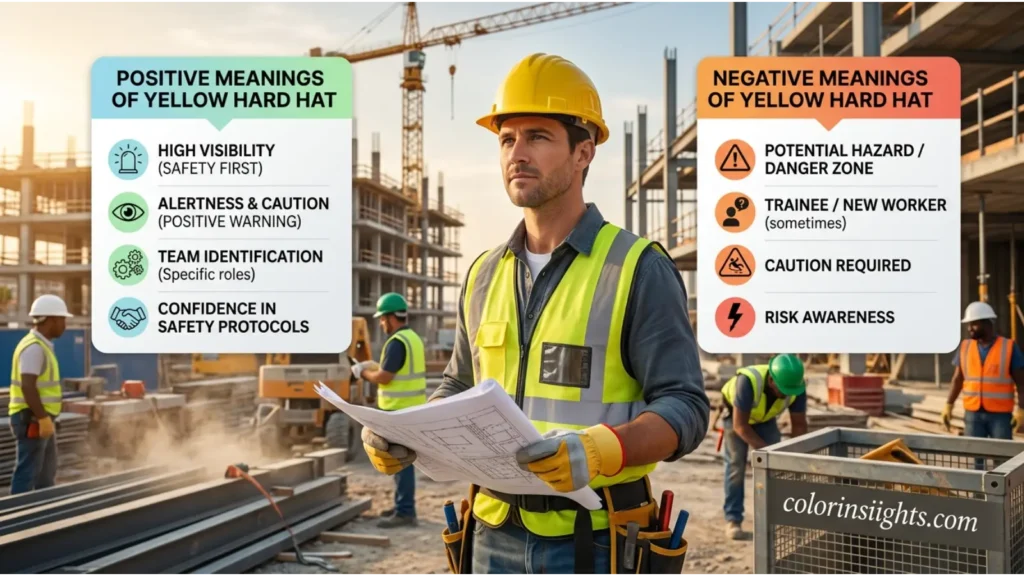
Positive and Negative Meanings of the Color Hard Hat
Positive Meanings
Hard hat colors contribute to safer and more organized workplaces.
Improved Safety
Workers quickly recognize supervisors, first responders, and specialists during emergencies.
Example:
A green hard hat allows injured employees to quickly locate a certified first-aid responder.
Better Communication
Visual identification reduces delays in asking questions or reporting hazards.
Professional Organization
Color coding supports structured workflows on large construction projects.
Leadership Recognition
White helmets often identify experienced professionals responsible for overseeing operations.
Faster Emergency Response
Emergency personnel become easier to identify in crowded environments.
Accountability
Specific colors make job responsibilities immediately visible.
Training Support
New employees wearing designated colors receive appropriate supervision.
Workplace Efficiency
Teams spend less time identifying the right person for specialized tasks.
Negative Meanings
Although beneficial, hard hat colors have certain limitations.
Confusion
Different companies use different color systems.
Example:
A blue hard hat may indicate an electrician on one site but a supervisor on another.
False Assumptions
Workers may incorrectly judge someone’s qualifications based solely on helmet color.
Isolation
Trainees wearing unique helmet colors may feel singled out.
Overdependence
Employees may rely on color instead of verifying credentials.
Miscommunication
Contractors from different organizations may interpret colors differently.
Limited Standardization
No single international color code exists.
Temporary Stigma
Pink hard hats, used by some companies as temporary replacements, may unintentionally embarrass workers.
Administrative Challenges
Maintaining consistent color assignments requires ongoing management.
Meanings of the Color Hard Hat
Hard hat color meanings depend entirely on organizational policies, industry practices, and workplace environments. While many companies adopt similar conventions, there is no legally mandated universal color chart. Understanding site-specific safety policies remains essential.
Feng Shui
Hard hats themselves are not part of traditional Feng Shui, but their colors correspond to the Five Elements.
- White: Metal element; clarity and precision.
- Green: Wood element; growth and development.
- Red: Fire element; energy and action.
- Yellow: Earth element; stability and support.
- Blue: Water element; knowledge and adaptability.
Best workplace environments include organized industrial spaces where visibility enhances safety.
Recommended combinations include white with blue for professionalism or yellow with orange for high visibility.
Marketing
Manufacturers use hard hat colors strategically to communicate safety and professionalism.
Branding benefits include:
- Strong safety messaging
- Instant product recognition
- Enhanced trust
- Easy product categorization
- Better shelf visibility
Many leading safety equipment brands such as MSA Safety, Honeywell, 3M, Bullard, and Pyramex offer helmets in multiple colors to match workplace role identification systems.
Design
Industrial designers select helmet colors based on visibility and usability.
Applications include:
- Interior industrial environments
- Construction planning
- Safety signage
- Graphic safety manuals
- Equipment labeling
- Digital workplace management systems
High-contrast color combinations improve user experience and reduce identification errors.
Fashion
Hard hats are protective equipment rather than fashion accessories, but their colors still influence perception.
Color choices may communicate:
- Leadership
- Experience
- Technical specialization
- Safety responsibility
- Professional credibility
Advantages include improved recognition and workplace identity.
Disadvantages include occasional stereotyping when workers are judged solely by helmet color rather than qualifications.
Color Associations Are Not Universal
Hard hat color meanings vary considerably across industries and countries.
Western Cultures
In North America and much of Europe, white commonly identifies managers or engineers, while yellow often represents general construction workers. These conventions emphasize operational efficiency rather than symbolic meaning.
Eastern Cultures
Many Asian construction firms use similar systems but frequently adapt colors to local practices or company policies. In some regions, white may emphasize seniority, while green identifies new workers.
Religious Traditions
The colors themselves often have religious symbolism outside the workplace. White represents purity in Christianity, yellow has sacred associations in Buddhism, green is respected in Islam, and red symbolizes celebration in many Hindu traditions. These meanings are generally unrelated to hard hat assignments.
Historical Interpretations
Early construction projects often issued identical helmets to every worker. As projects became larger and more complex, color coding evolved as an efficient identification system.
Modern Global Interpretations
Today, multinational companies frequently establish standardized internal color systems while providing orientation materials so contractors understand local assignments before entering a job site.

What Hard Hat Says About Your Personality
A hard hat color does not determine personality because employees usually receive helmets according to their job roles rather than personal preferences.
However, people may associate certain workplace roles with common professional characteristics.
Strengths
Workers in leadership positions may demonstrate:
- Responsibility
- Organization
- Technical competence
- Reliability
- Calm decision-making
- Problem-solving skills
Weaknesses
Some roles may involve:
- High stress
- Heavy responsibility
- Long decision-making hours
- Increased accountability
- Pressure during emergencies
Social Behavior
Construction professionals often value:
- Teamwork
- Clear communication
- Mutual trust
- Respect for procedures
- Practical problem solving
Work Style
Successful workers commonly demonstrate:
- Attention to detail
- Safety awareness
- Discipline
- Reliability
- Efficiency
- Adaptability
Relationships
Strong workplace relationships rely on:
- Cooperation
- Respect
- Accountability
- Shared responsibility
- Open communication
Emotional Tendencies
Safety professionals often remain calm under pressure while supervisors balance productivity with worker protection.
It is important to remember that helmet color reflects assigned responsibilities—not personality traits or individual character.
FAQs
What defines hard hat color meanings?
Hard hat color meanings are workplace identification systems that help distinguish workers by role, authority, trade, or safety responsibilities.
What do hard hat colors symbolize?
They primarily symbolize job function, training level, supervisory authority, and specialized responsibilities rather than personal characteristics.
Why are hard hat colors important?
They improve communication, speed emergency response, reduce confusion, and strengthen workplace safety.
Is there an official OSHA hard hat color standard?
No. OSHA requires protective helmets where hazards exist but does not require specific helmet colors. Employers establish their own color systems.
What emotions do hard hat colors represent?
Their psychological impact depends on the individual color, but in workplaces they mainly communicate trust, responsibility, visibility, and organization.
What is the spiritual meaning of hard hat colors?
The helmets themselves have no spiritual meaning, although individual colors may carry traditional symbolism such as protection, wisdom, courage, or growth.
Which hard hat color is usually worn by supervisors?
White is commonly worn by supervisors, engineers, architects, and site managers, although practices differ between organizations.
What colors pair well in workplace safety systems?
High-contrast combinations such as white and blue, yellow and orange, or green and white improve visibility and role identification.
What does liking a particular hard hat color say about a person?
Very little. Most workers do not choose their helmet color; it is assigned according to company policy and job responsibilities.
Can hard hat color meanings vary between companies?
Yes. Color assignments differ widely, making it essential to follow each site’s safety orientation and posted guidelines.
Conclusion:
Hard hat color meanings play a practical role in workplace safety by helping identify responsibilities, authority levels, and specialized skills at a glance.
Although no universal standard exists, commonly accepted color conventions improve communication, emergency response, and operational efficiency across construction, manufacturing, and industrial environments.
Understanding these color meanings allows workers, supervisors, and visitors to navigate job sites more safely while recognizing that helmet colors represent organizational roles rather than personality, status, or personal beliefs.
Always refer to your employer’s specific color policy, as assignments may differ between companies and projects.







 Welcome to The colorinsiights.com