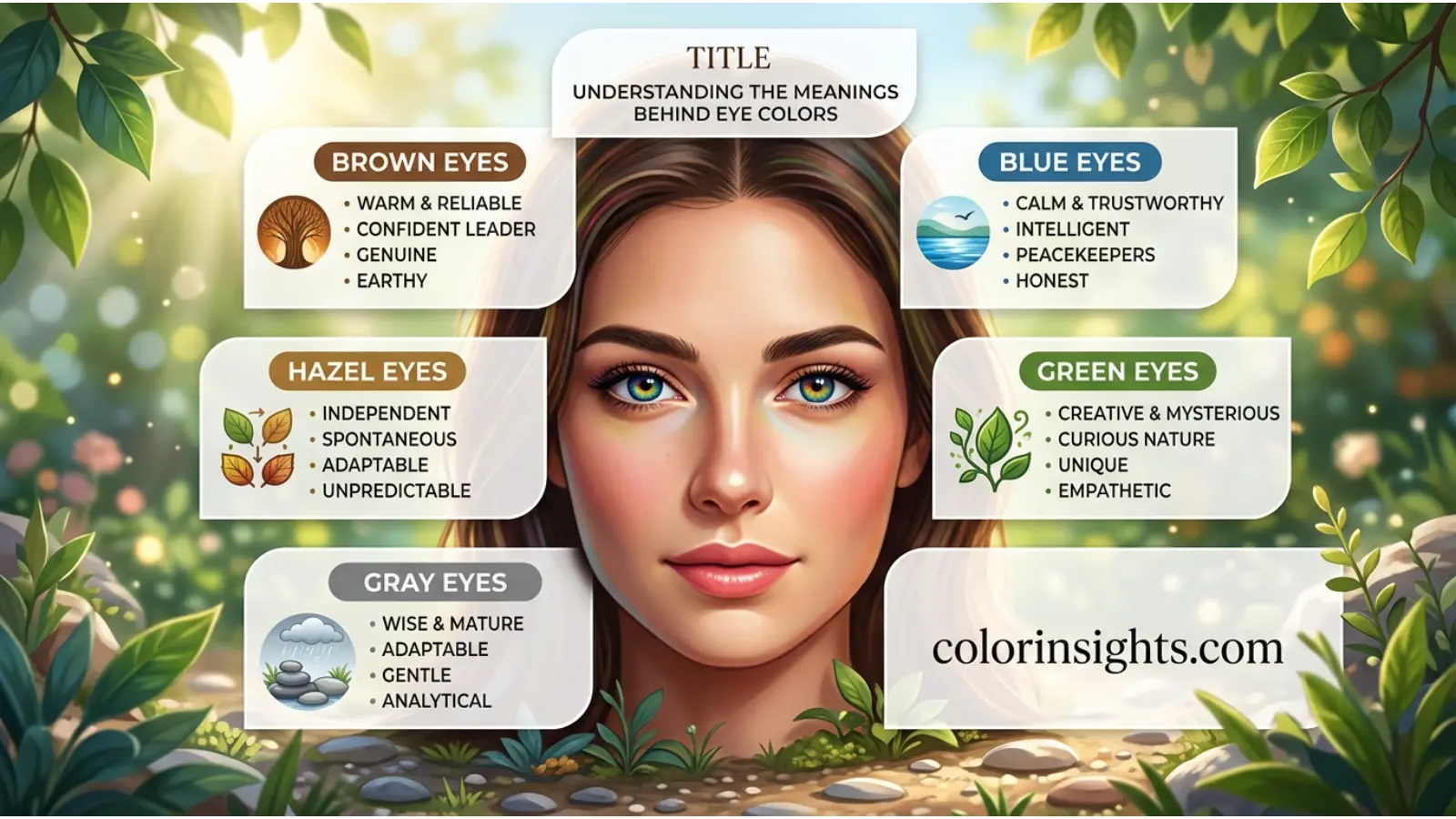
Eye color has fascinated people for centuries, inspiring myths, cultural traditions, scientific research, and personality theories. While genetics determine eye color, many cultures have associated different eye shades with symbolic meanings, emotional qualities, and spiritual significance.
From the warmth of brown eyes to the mystery of gray eyes, each eye color has developed its own set of interpretations over time. Although these meanings are largely based on cultural beliefs rather than scientific proof, they continue to influence art, literature, fashion, and everyday perceptions.
Understanding eye color meanings offers valuable insight into symbolism, psychology, and human behavior without suggesting that eye color alone defines a person’s character.
Quick Answer:
Eye color meanings symbolize different personality traits, emotions, and spiritual qualities. Brown eyes often represent stability and trust, blue eyes symbolize calmness and honesty, green eyes reflect growth and mystery, hazel eyes suggest adaptability, gray eyes indicate wisdom, and amber eyes are commonly associated with confidence and individuality.
What Do Eye Colors Symbolize?
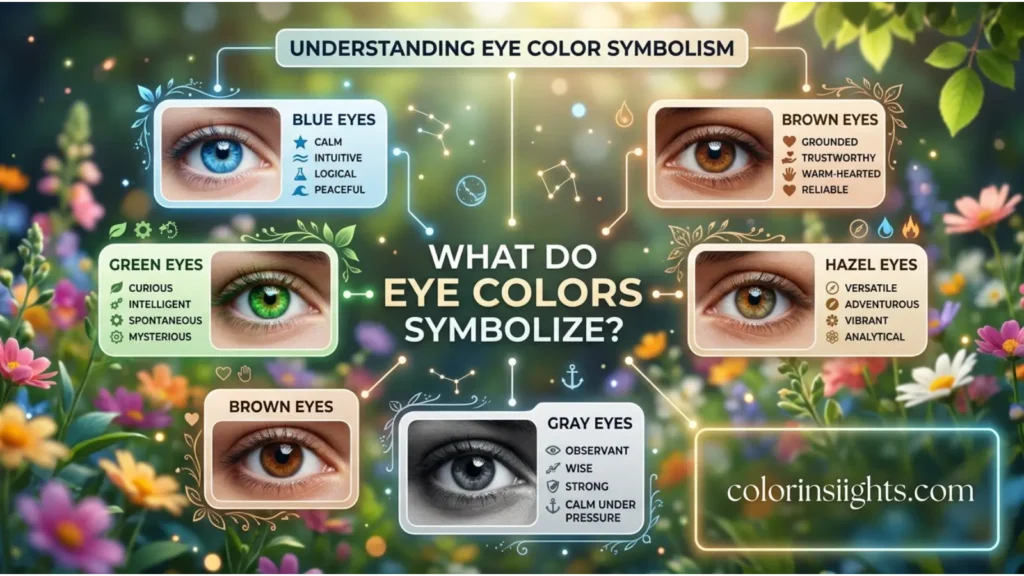
Eye color symbolism varies across cultures, historical periods, and personal beliefs. Rather than having one universal meaning, each eye color carries unique symbolic associations that have developed through folklore, psychology, and social perception.
Some of the most widely recognized symbolic meanings include:
- Brown eyes: Trust, stability, warmth, dependability, kindness, and resilience.
- Blue eyes: Peace, honesty, intelligence, serenity, and openness.
- Green eyes: Nature, mystery, creativity, balance, growth, and curiosity.
- Hazel eyes: Adaptability, versatility, confidence, and independence.
- Gray eyes: Wisdom, neutrality, emotional balance, maturity, and insight.
- Amber eyes: Courage, energy, uniqueness, determination, and confidence.
- Dark or nearly black eyes: Authority, depth, strength, passion, and mystery.
These interpretations are symbolic rather than scientific. Genetics, environment, upbringing, education, and life experiences all influence human personality, while eye color alone does not determine it..
Psychological Characteristics of Eye Colors
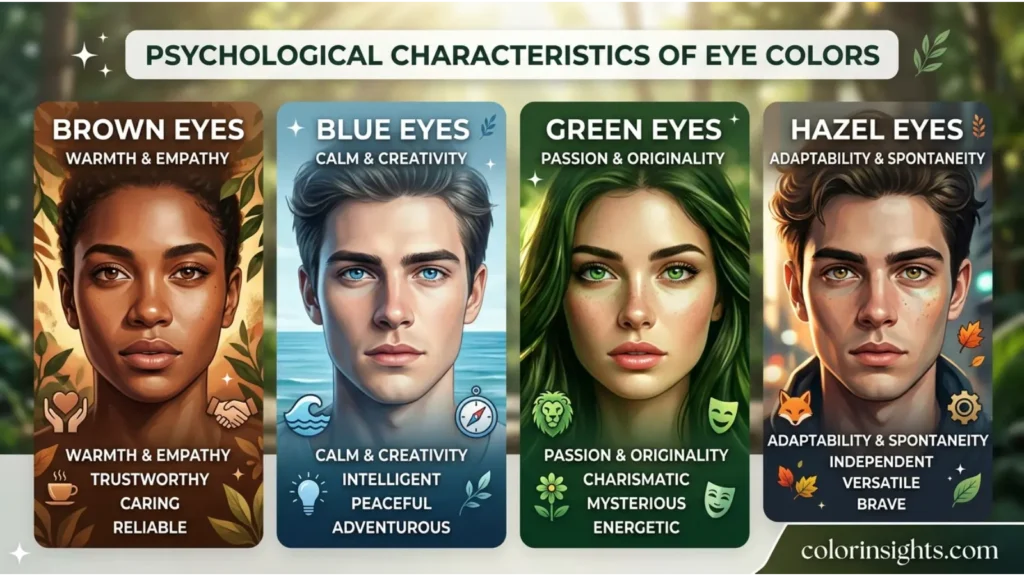
Color psychology primarily studies how colors influence emotions and behavior. Although eye color psychology is less established as a scientific field, many researchers have explored how people perceive individuals based on different eye colors.
Emotional Associations
Different eye colors often create different first impressions.
- Many people see brown eyes as a symbol of warmth and reliability.
- Blue eyes often appear calm, approachable, and peaceful.
- People often view green eyes as mysterious and imaginative.
- Hazel eyes suggest flexibility and spontaneity.
- Gray eyes often convey intelligence and emotional control.
- Amber eyes may appear energetic, bold, and adventurous.
Social experiences, cultural stereotypes, and visual appearance influence these perceptions rather than proven personality differences.
Psychological Effects
Eye color can subtly affect how people perceive others during first impressions.
For example:
- Dark-colored eyes may communicate confidence and authority.
- Light-colored eyes often appear gentle and friendly.
- Rare eye colors frequently attract attention and curiosity.
- Contrasting eye colors can increase perceived uniqueness.
Studies in social psychology suggest that physical appearance influences first impressions, although these impressions may not accurately reflect personality.
Positive Emotional Responses
People often associate different eye colors with positive emotions such as:
- Trust
- Calmness
- Compassion
- Confidence
- Creativity
- Intelligence
- Optimism
- Warmth
- Curiosity
- Emotional balance
These responses are often shaped by cultural narratives, media representation, and personal experiences.
Negative Emotional Responses
Certain eye colors may also carry negative stereotypes.
Examples include:
- Brown eyes may sometimes be unfairly perceived as overly serious.
- Blue eyes may be viewed as emotionally distant.
- Green eyes have historically been associated with jealousy or unpredictability.
- Gray eyes can appear cold or detached.
- Dark eyes may be interpreted as intimidating or mysterious.
These assumptions are subjective and should not be considered accurate descriptions of individuals.
Impact on Mood and Behavior
Eye color itself does not directly influence mood or behavior. However, people’s perceptions of eye color can affect social interactions.
For example:
- Individuals with lighter eyes may receive comments about appearing approachable.
- People with darker eyes may be perceived as more confident during interviews.
- Rare eye colors often become conversation starters.
These social reactions can shape interpersonal experiences without determining personality.
How People Typically React to Different Eye Colors
Common reactions include:
- Admiration for rare eye colors.
- Feelings of trust toward warm brown eyes.
- Curiosity about green or amber eyes.
- Calmness associated with blue eyes.
- Respect for the composed appearance of gray eyes.
Again, these reactions reflect perception rather than scientific fact.
Spiritual Meaning of Eye Colors
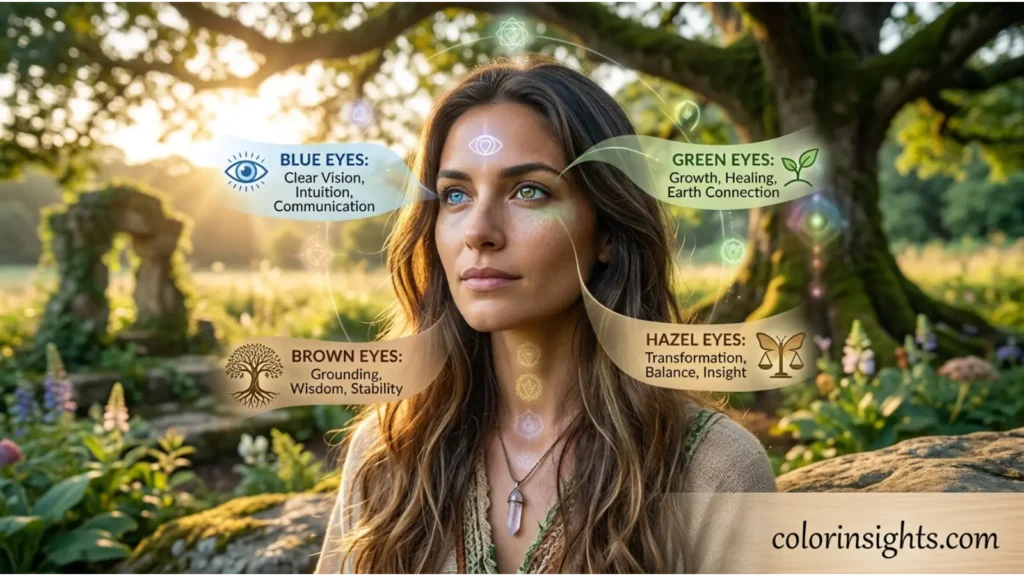
Throughout history, eye colors have been connected with spirituality, intuition, divine protection, and symbolic energy. Many traditions interpret eye colors as representations of inner qualities rather than physical characteristics.
Holiness
Some spiritual traditions associate bright, clear eyes with purity of intention and moral integrity.
- Blue eyes often symbolize innocence and peace.
- Brown eyes may represent humility and grounded faith.
- Gray eyes can symbolize spiritual maturity.
Wisdom
Wisdom is frequently connected with eye colors that appear calm and observant.
- Gray eyes often represent thoughtful decision-making.
- Brown eyes symbolize practical wisdom.
- Hazel eyes may reflect balanced judgment.
Purity
Purity is more closely linked to clarity than to a specific eye color.
Many traditions associate:
- Blue eyes with innocence.
- Light gray eyes with honesty.
- Bright hazel eyes with sincerity.
Transformation
Transformation represents personal growth and life change.
Symbolically:
- Green eyes represent renewal.
- Hazel eyes symbolize adaptability.
- Amber eyes suggest courage during change.
Healing
Healing symbolism often reflects emotional resilience.
Examples include:
- Green eyes representing nature and restoration.
- Brown eyes symbolizing emotional stability.
- Blue eyes suggesting inner peace.
Protection
Various folklore traditions believe eye colors can symbolize protective qualities.
- Brown eyes often represent dependability.
- Dark eyes symbolize strength.
- Gray eyes reflect emotional resilience.
Power
Power is frequently linked with confidence and determination.
Common symbolic interpretations include:
- Amber eyes representing leadership.
- Dark brown eyes symbolizing authority.
- Black-appearing eyes suggesting inner strength.
Enlightenment
Spiritual enlightenment is associated with awareness and understanding.
Many symbolic systems connect:
- Gray eyes with wisdom.
- Blue eyes with spiritual clarity.
- Green eyes with balance between emotion and intellect.
New Beginnings
New beginnings often relate to growth and opportunity.
- Green eyes symbolize fresh starts.
- Hazel eyes represent flexibility.
- Amber eyes encourage embracing change.
Eternity
Some cultures associate timelessness with enduring eye colors.
Examples include:
- Brown eyes representing lasting family traditions.
- Gray eyes symbolizing ancient wisdom.
- Blue eyes reflecting the vastness of the sky.
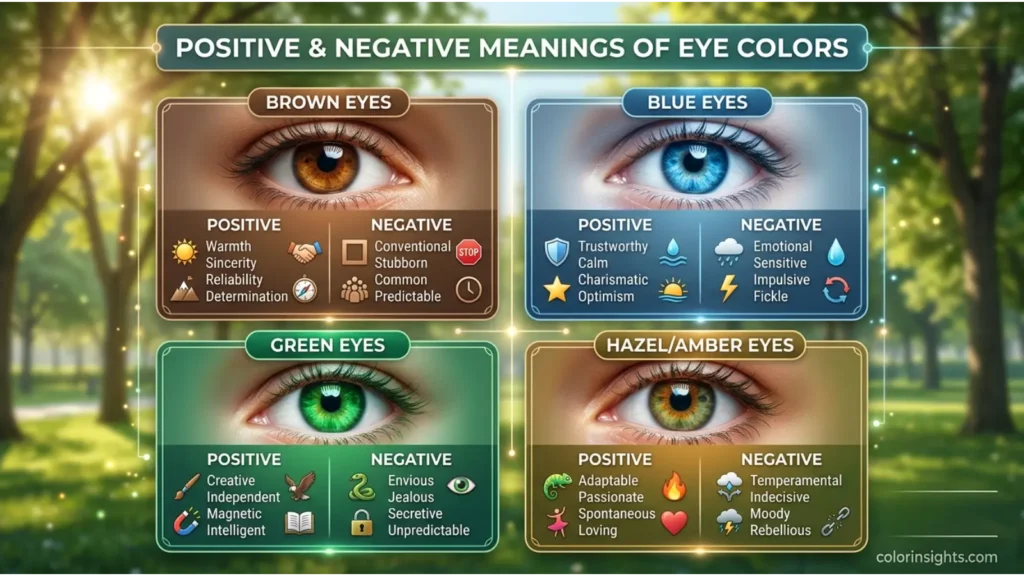
Positive and Negative Meanings of Eye Colors
Every eye color carries both positive and negative symbolic interpretations depending on cultural context and personal perspective.
Positive Meanings
Brown Eyes
Brown eyes are often associated with:
- Trustworthiness
- Loyalty
- Warmth
- Stability
- Compassion
- Dependability
Example:
Teachers, healthcare professionals, and community leaders with brown eyes are often perceived as approachable and reliable.
Blue Eyes
Blue eyes commonly symbolize:
- Peace
- Calmness
- Honesty
- Clarity
- Openness
- Optimism
Example:
Blue-eyed characters in literature are frequently portrayed as sincere, thoughtful, or heroic.
Green Eyes
Green eyes represent:
- Growth
- Creativity
- Curiosity
- Balance
- Renewal
- Individuality
Example:
Artists and fictional characters with green eyes are often depicted as imaginative or adventurous.
Hazel Eyes
Hazel eyes symbolize:
- Adaptability
- Confidence
- Versatility
- Independence
- Flexibility
Example:
Entrepreneurs and innovators are sometimes described as having the adaptable qualities symbolized by hazel eyes.
Gray Eyes
Gray eyes often reflect:
- Wisdom
- Emotional balance
- Intelligence
- Neutrality
- Patience
Example:
Older mentors in novels are frequently illustrated with gray eyes to emphasize experience and insight.
Amber Eyes
Amber eyes symbolize:
- Courage
- Determination
- Confidence
- Passion
- Energy
Example:
Fictional leaders or explorers with amber eyes often represent bravery and resilience.
Negative Meanings
Brown Eyes
Negative stereotypes include:
- Being overly cautious
- Resistant to change
- Too serious
Example:
A dependable employee may sometimes be mistakenly viewed as lacking creativity simply because of stereotypes.
Blue Eyes
Negative symbolism may include:
- Emotional distance
- Naivety
- Fragility
Example:
Calm personalities can sometimes be misunderstood as detached or unexpressive.
Green Eyes
Historically, green eyes have been linked with:
- Jealousy
- Envy
- Unpredictability
Example:
The phrase “green-eyed with envy” illustrates this long-standing symbolic association.
Hazel Eyes
Hazel eyes may occasionally symbolize:
- Indecisiveness
- Restlessness
- Complexity
Example:
Someone who adapts quickly may be unfairly viewed as inconsistent.
Gray Eyes
Gray eyes sometimes represent:
- Emotional reserve
- Isolation
- Coldness
Example:
A quiet personality may be mistaken for being unfriendly.
Amber Eyes
Negative interpretations include:
- Impulsiveness
- Overconfidence
- Aggression
Example:
Strong confidence may occasionally be misread as arrogance.
Meanings of Eye Colors
Eye color meanings extend beyond symbolism and personality theories. Different eye colors also influence perceptions in design, fashion, branding, photography, and even cultural storytelling. While eye color itself is not used in the same way as decorative colors, its symbolic associations often inspire creative decisions and shape first impressions.
Feng Shui
Although traditional Feng Shui focuses on colors used in living spaces rather than natural eye colors, the symbolism associated with different eye colors can be connected to the Five Elements and their energies.
Associated Elements
- Brown eyes: Earth element, representing stability, nourishment, and grounding.
- Blue eyes: Water element, symbolizing wisdom, adaptability, and calmness.
- Green eyes: Wood element, associated with growth, vitality, and renewal.
- Gray eyes: Metal element, reflecting precision, clarity, and organization.
- Amber eyes: Fire element, representing passion, motivation, and transformation.
Energy Symbolism
Each eye color is believed to reflect a symbolic energy.
- Brown encourages security and dependable relationships.
- Blue promotes peaceful communication and emotional balance.
- Green inspires creativity and personal growth.
- Gray supports thoughtful decision-making.
- Amber motivates confidence and leadership.
Best Rooms
If you’re inspired by the symbolism of eye colors, consider these spaces:
- Brown-inspired palettes: Living rooms, family rooms, and home offices.
- Blue-inspired palettes: Bedrooms, meditation rooms, and bathrooms.
- Green-inspired palettes: Home offices, kitchens, and reading areas.
- Gray-inspired palettes: Workspaces and modern living rooms.
- Amber-inspired palettes: Dining rooms, creative studios, and entertainment spaces.
Recommended Color Combinations
- Brown with cream, beige, olive, and soft gold.
- Blue with white, gray, navy, and silver.
- Green with earthy brown, ivory, and natural wood tones.
- Gray with white, charcoal, black, and muted blue.
- Amber with deep brown, bronze, burgundy, and warm neutrals.
Home Decorating Tips
Choose décor inspired by the emotional qualities you want to encourage. Earthy browns create welcoming spaces, soft blues encourage relaxation, greens connect interiors with nature, grays add sophistication, and amber accents bring warmth and energy.
Marketing
Although businesses rarely market products based specifically on eye color, the symbolic meanings associated with eye-inspired colors influence branding, advertising, and consumer perception.
Branding Psychology
Brands often use colors that evoke emotional responses similar to those associated with eye colors.
- Brown communicates reliability and authenticity.
- Blue builds trust and professionalism.
- Green emphasizes sustainability and health.
- Gray conveys sophistication and innovation.
- Amber adds warmth and enthusiasm.
Consumer Perception
Consumers often associate these color families with specific qualities:
- Blue inspires confidence.
- Brown suggests dependability.
- Green reflects environmental awareness.
- Gray signals premium quality.
- Amber attracts attention without being overly aggressive.
Trust Signals
Blue and brown are especially effective for creating trust in industries such as:
- Banking
- Healthcare
- Technology
- Education
- Insurance
Product Packaging
Eye color-inspired palettes are commonly used for:
- Organic products (green and brown)
- Luxury electronics (gray)
- Wellness products (blue and green)
- Coffee and chocolate packaging (brown)
- Premium beverages (amber and gold)
Advertising Applications
Advertisers use these colors to reinforce emotional messaging.
Examples include:
- Blue backgrounds to communicate reliability.
- Green visuals for environmentally friendly campaigns.
- Brown tones for handcrafted or natural products.
- Gray for modern technology.
- Amber highlights for calls to action and seasonal promotions.
Famous Brands
Several globally recognized brands use colors associated with common eye color symbolism:
- Blue: Facebook, Intel, PayPal, Ford.
- Brown: UPS, Hershey’s, M&M’s (brown packaging elements).
- Green: Starbucks, Spotify, Whole Foods Market, Animal Planet.
- Gray/Silver: Apple, Mercedes-Benz, Wikipedia.
- Amber/Gold: McDonald’s (golden arches), National Geographic.
These companies use color psychology to strengthen brand recognition and communicate specific values.
Design
Eye color symbolism also influences visual design by inspiring harmonious palettes and emotional experiences.
Interior Design
Designers often incorporate eye-inspired colors to create different atmospheres.
- Brown interiors feel warm and welcoming.
- Blue spaces encourage relaxation.
- Green rooms promote balance and freshness.
- Gray interiors provide elegance and flexibility.
- Amber accents create energy and visual interest.
Graphic Design
Graphic designers use these color families to guide attention and establish mood.
Examples include:
- Blue for corporate presentations.
- Green for environmental campaigns.
- Brown for artisanal branding.
- Gray for minimalist layouts.
- Amber for promotional banners and highlights.
Web Design
Color choices influence user perception and engagement.
- Blue increases perceived trust.
- Green supports health and sustainability websites.
- Brown suits outdoor and handcrafted brands.
- Gray complements clean, modern interfaces.
- Amber buttons can draw attention to important actions.
User Experience (UX)
In user experience design, balanced color combinations improve readability and usability.
For example:
- Neutral gray backgrounds reduce visual fatigue.
- Blue navigation elements promote familiarity.
- Green confirmation messages indicate success.
- Amber notifications effectively communicate warnings without appearing overly alarming.
Minimalist Aesthetics
Modern minimalist designs often combine:
- White
- Gray
- Brown wood textures
- Soft blue accents
- Natural green plants
This combination creates clean, calming, and functional environments.
Fashion
Eye color often influences clothing choices because certain shades can enhance natural features.
Clothing Symbolism
Different colors can complement eye color while expressing personal style.
- Brown eyes pair beautifully with warm earth tones.
- Blue eyes stand out against navy, charcoal, and rich jewel tones.
- Green eyes are enhanced by purple, burgundy, and forest green.
- Hazel eyes work well with olive, bronze, and mustard.
- Gray eyes are complemented by cool blues, black, and silver.
- Amber eyes shine alongside warm oranges, copper, and chocolate brown.
Seasonal Use
Fashion experts often recommend:
- Spring: Soft greens and warm neutrals.
- Summer: Cool blues and crisp whites.
- Autumn: Browns, olive greens, and amber shades.
- Winter: Gray, black, navy, and rich jewel tones.
Styling Effects
Strategic color choices can:
- Make eye color appear brighter.
- Create stronger facial contrast.
- Draw attention to the eyes.
- Complement skin tone and hair color.
Personality Impressions
People may associate certain fashion choices with symbolic qualities.
For example:
- Earth tones often suggest dependability.
- Blue outfits appear calm and professional.
- Green clothing may communicate creativity.
- Gray conveys sophistication.
- Amber accents project confidence.
Advantages
- Enhances natural eye color.
- Creates balanced outfits.
- Improves visual harmony.
- Supports personal branding.
Disadvantages
- Excessive matching can reduce contrast.
- Very bright shades may overpower natural features.
- Trends may not suit every complexion or personal style.
Color Associations Are Not Universal
Eye color meanings differ across cultures, religions, historical periods, and individual experiences. These interpretations should be viewed as symbolic traditions rather than universal truths.
Western Cultures
In many Western societies, blue eyes have long been associated with honesty, innocence, and calmness, while brown eyes often symbolize warmth, loyalty, and reliability. Green eyes are frequently linked with mystery and individuality, although historical folklore sometimes connected them with jealousy. Gray eyes are commonly viewed as thoughtful and composed, while hazel eyes are admired for their uniqueness and versatility.
Eastern Cultures
In many Eastern cultures, personality is generally considered to be shaped more by character and actions than physical traits. However, eye color symbolism may still appear in literature, folklore, and modern media. As the most prevalent eye color worldwide, brown eyes are commonly linked to stability, warmth, and dependability, while lighter eye colors are often regarded as unique or uncommon in many cultures.
Religious Traditions
Most major religions do not assign moral value to eye color itself. Instead, spiritual teachings emphasize inner character over physical appearance. Symbolic interpretations found in folklore often associate clear eyes with honesty, wisdom, and spiritual awareness rather than favoring any particular eye color.
Historical Interpretations
Throughout history, eye colors have inspired legends and superstitions.
- Green eyes were sometimes associated with magic or intuition.
- Blue eyes became symbols of nobility in some European traditions.
- Brown eyes were often linked with resilience and practical wisdom.
- Gray eyes occasionally represented age, knowledge, and experience.
These beliefs were shaped by cultural narratives rather than scientific evidence.
Modern Global Interpretations
Today, eye color is celebrated as a natural aspect of human diversity. Advances in genetics have shown that eye color results from variations in melanin and inherited genes, not personality or destiny. While symbolic meanings remain popular in self-discovery content, they should be appreciated as cultural traditions and creative interpretations rather than factual predictors of behavior.
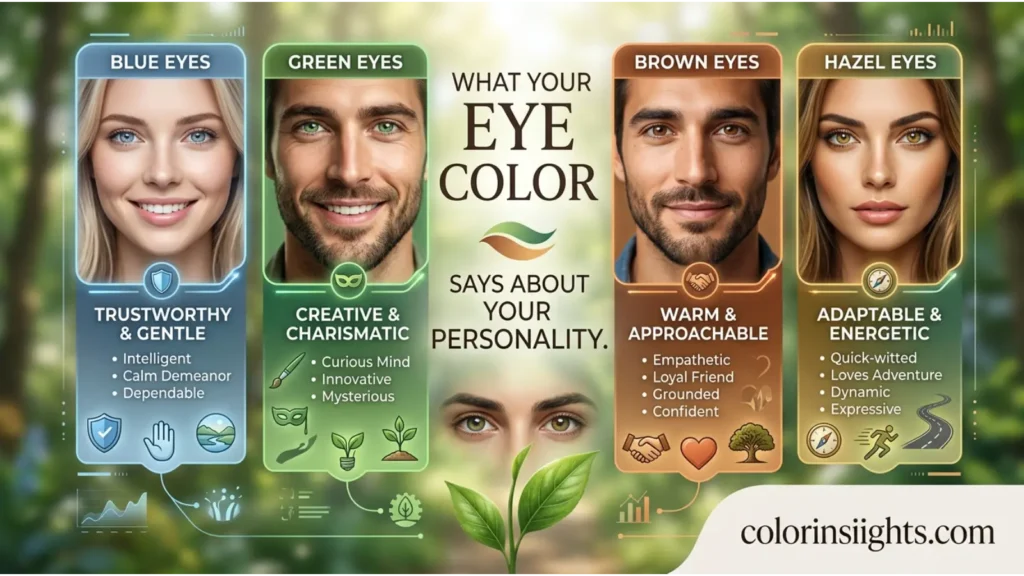
What Eye Color Says About Your Personality
Many personality theories suggest that people may identify with symbolic qualities associated with their eye color. However, there is no scientific evidence proving that eye color determines personality. Individual traits are influenced by genetics, upbringing, environment, education, and life experiences.
Still, these symbolic associations remain popular because they encourage self-reflection and storytelling.
Strengths
People often associate different eye colors with strengths such as:
- Brown: Loyal, dependable, compassionate.
- Blue: Calm, optimistic, approachable.
- Green: Creative, curious, independent.
- Hazel: Adaptable, energetic, confident.
- Gray: Wise, analytical, balanced.
- Amber: Courageous, determined, charismatic.
Weaknesses
Symbolic weaknesses may include:
- Brown: Overly cautious.
- Blue: Emotionally reserved.
- Green: Restless or unpredictable.
- Hazel: Indecisive.
- Gray: Detached.
- Amber: Impulsive.
These are cultural stereotypes and should not be used to judge individuals.
Social Behavior
People may perceive those with:
- Brown eyes as trustworthy and approachable.
- Blue eyes as friendly and sincere.
- Green eyes as intriguing and unique.
- Hazel eyes as outgoing and adaptable.
- Gray eyes as composed and thoughtful.
- Amber eyes as confident and adventurous.
Work Style
Symbolic work preferences often include:
- Brown: Reliable team members.
- Blue: Collaborative communicators.
- Green: Creative problem-solvers.
- Hazel: Flexible multitaskers.
- Gray: Strategic planners.
- Amber: Motivated leaders.
Relationships
Eye color symbolism sometimes extends to relationships.
- Brown eyes are associated with loyalty.
- Blue eyes with honesty.
- Green eyes with passion.
- Hazel eyes with spontaneity.
- Gray eyes with emotional maturity.
- Amber eyes with enthusiasm.
Healthy relationships depend on communication, trust, and mutual respect—not eye color.
Emotional Tendencies
Symbolically, people may associate:
- Brown with emotional stability.
- Blue with serenity.
- Green with curiosity.
- Hazel with flexibility.
- Gray with self-control.
- Amber with passion.
These interpretations are cultural beliefs rather than scientifically established facts.
FAQs
What defines eye color?
Eye color is determined primarily by genetics and the amount and distribution of melanin in the iris. Common eye colors include brown, blue, green, hazel, gray, and amber.
What do eye colors symbolize?
Eye colors symbolize different personality traits and emotions in many cultures. Brown often represents trust, blue symbolizes calmness, green reflects growth, hazel suggests adaptability, gray represents wisdom, and amber symbolizes confidence.
Why are eye color meanings important?
Eye color meanings provide insight into cultural traditions, symbolism, literature, and psychology. They help explain how different societies have interpreted physical appearance throughout history.
Are eye color meanings scientifically proven?
No. There is no scientific evidence that eye color determines personality or behavior. Most meanings are symbolic, cultural, or based on popular psychology.
Are blue eyes considered warm or cool?
Blue eyes are generally associated with cool colors and symbolize calmness, peace, and emotional clarity.
What emotions do different eye colors represent?
Brown often represents warmth and security, blue suggests tranquility, green symbolizes curiosity and renewal, gray reflects balance, hazel conveys flexibility, and amber expresses confidence and energy.
What is the spiritual meaning of eye colors?
Spiritually, eye colors may symbolize wisdom, protection, healing, growth, transformation, and inner awareness. These interpretations vary among cultures and spiritual traditions.
What colors pair well with different eye colors?
Earth tones enhance brown eyes, jewel tones complement blue eyes, purples highlight green eyes, olive and bronze suit hazel eyes, silver flatters gray eyes, and warm oranges enhance amber eyes.
What does liking certain eye colors say about a person?
A preference for certain eye colors may reflect aesthetic tastes or symbolic interests, but it does not reliably indicate personality or character.
Which eye color is the rarest?
Green and amber eyes are among the rarest naturally occurring eye colors worldwide, though their prevalence varies by geographic region and ancestry.
Conclusion:
Eye color meanings have fascinated people for generations, blending science, symbolism, culture, and psychology into a rich area of human curiosity.
While genetics determine the color of our eyes, societies around the world have assigned symbolic meanings to different shades, associating them with qualities such as trust, wisdom, creativity, confidence, and emotional balance.
These interpretations enrich literature, art, fashion, and personal expression, but they should not be viewed as scientific measures of personality.
Appreciating eye color meanings as cultural traditions rather than fixed truths allows us to celebrate the diversity and individuality that make every person unique.










 Welcome to The colorinsiights.com