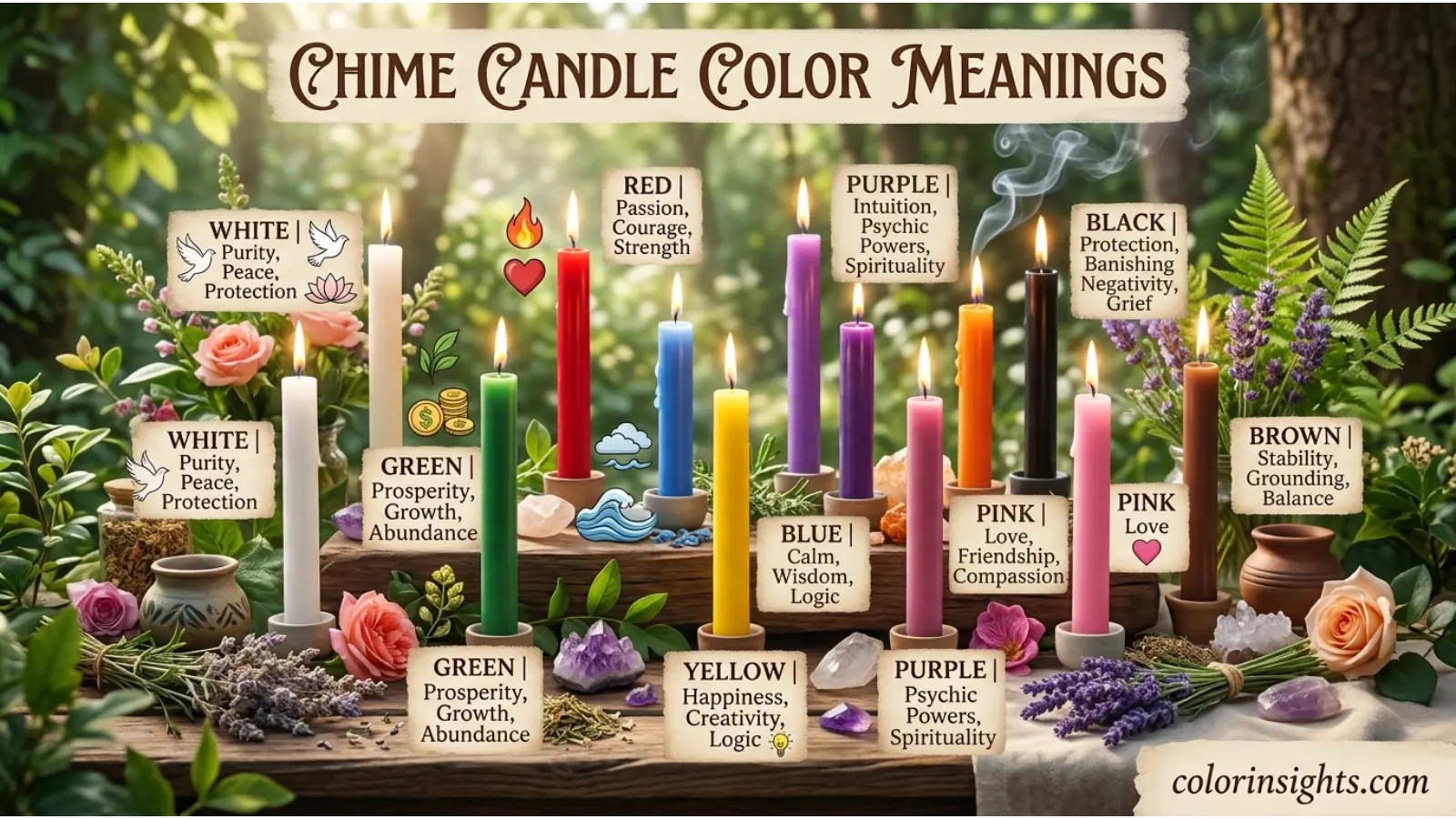
Chime candles are small ritual candles commonly used in meditation, manifestation, prayer, spell work, energy cleansing, and spiritual ceremonies. While the candle itself represents light, intention, and transformation, its color adds another layer of symbolic meaning.
Different chime candle colors are believed to attract specific energies, emotions, and intentions, making color selection an important part of many spiritual and mindfulness practices.
Although interpretations vary across traditions and cultures, color symbolism provides a useful framework for choosing a candle that aligns with your goals.
Whether you’re seeking love, protection, prosperity, healing, or clarity, understanding chime candle color meanings can help you create more intentional rituals.
Quick Answer:
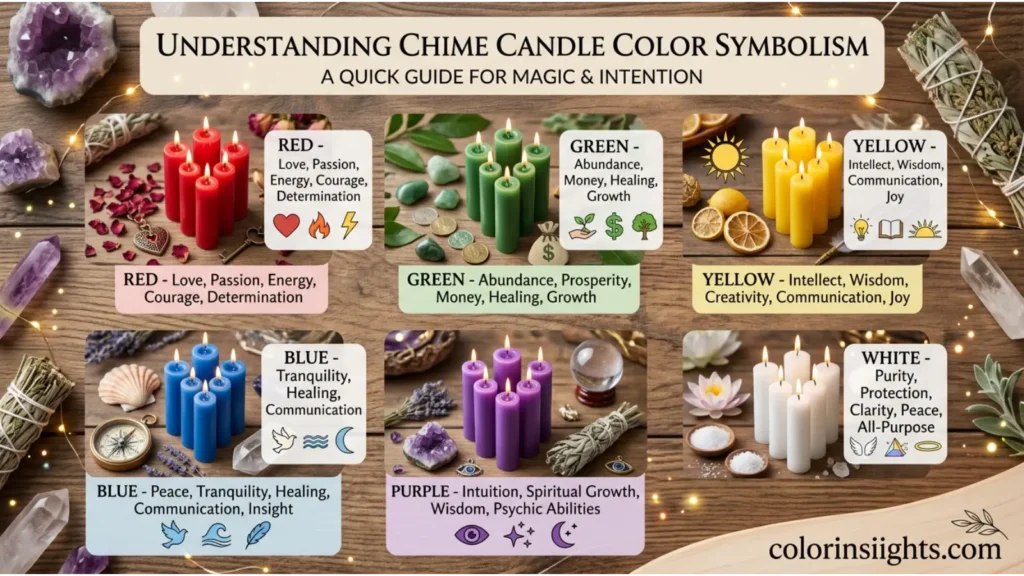
Chime candle color meanings represent different intentions and energies. For example, white symbolizes purity and protection, red represents passion and courage, green attracts prosperity and growth, blue encourages peace and healing, while black is often associated with protection, banishing negativity, and transformation.
What Do Chime Candle Colors Symbolize?
Chime candle colors symbolize the intention, emotional energy, and spiritual focus behind a ritual or meditation practice. Rather than changing the physical properties of the candle, each color acts as a symbolic reminder of a person’s goals and mindset.
Many spiritual traditions use color symbolism to support:
- Love and relationships
- Protection from negative influences
- Emotional healing
- Prosperity and abundance
- Wisdom and knowledge
- Courage and confidence
- Inner peace
- Spiritual growth
- New beginnings
- Personal transformation
The meaning of each color depends on cultural traditions, personal beliefs, and the purpose of the ritual.
Psychological Characteristics of Chime Candle Colors
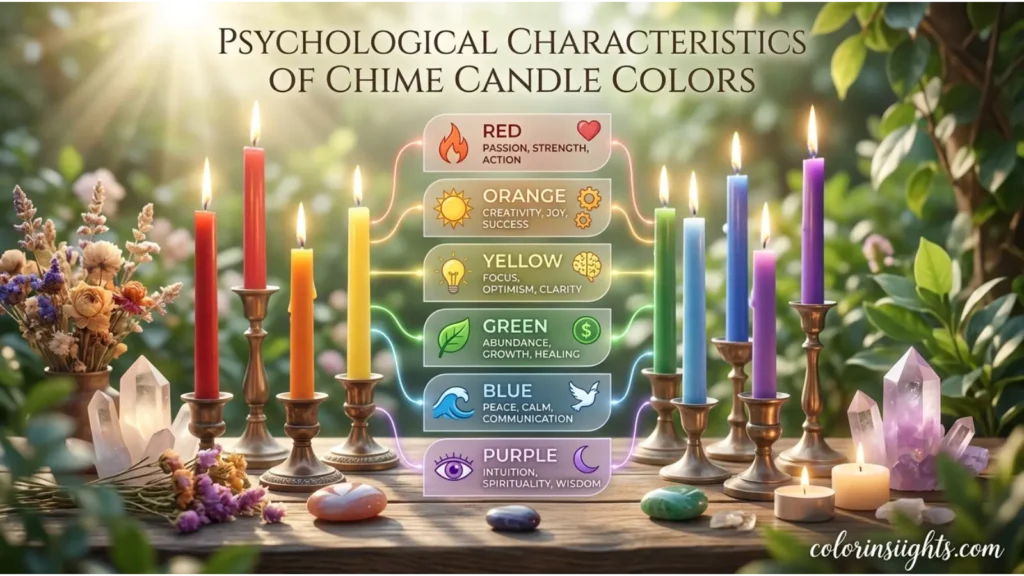
Color psychology suggests that colors influence emotions, perceptions, and behavior. Although scientific evidence varies depending on context, many people naturally associate certain colors with specific feelings.
Emotional Associations
Different chime candle colors commonly evoke:
- White – calmness, clarity, innocence
- Red – excitement, passion, motivation
- Blue – trust, relaxation, emotional stability
- Green – balance, renewal, prosperity
- Yellow – optimism, creativity, confidence
- Purple – wisdom, spirituality, intuition
- Pink – compassion, affection, emotional healing
- Orange – enthusiasm, success, vitality
- Black – protection, mystery, strength
- Brown – grounding, security, stability
Psychological Effects
Using different candle colors during meditation or reflection may encourage:
- Greater focus
- Emotional awareness
- Mindfulness
- Positive visualization
- Goal-oriented thinking
- Stress reduction
Positive Emotional Responses
People often associate chime candle colors with:
- Hope
- Peace
- Motivation
- Love
- Gratitude
- Confidence
- Healing
- Inspiration
Negative Emotional Responses
Certain colors may also trigger less desirable emotions depending on personal experiences.
Examples include:
- Red may increase tension or impatience.
- Black can feel intimidating or heavy.
- Yellow may become overstimulating.
- Blue sometimes feels emotionally distant.
- Gray may evoke sadness or uncertainty.
Impact on Mood and Behavior
Color can subtly influence how people approach meditation, prayer, journaling, or relaxation.
For example:
- Blue promotes slower breathing and relaxation.
- Green encourages emotional balance.
- Red increases energy and determination.
- White creates a sense of simplicity and clarity.
Spiritual Meaning of Chime Candle Colors
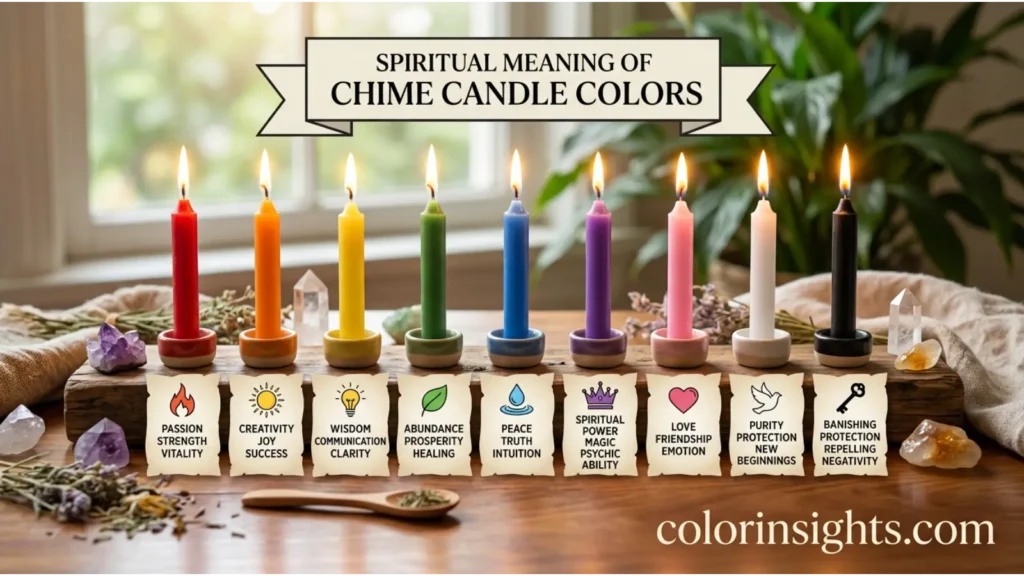
Spiritually, candle colors represent symbolic intentions rather than guaranteed outcomes. Their meanings differ among religious, cultural, and metaphysical traditions.
Common spiritual associations include:
- Holiness: White symbolizes purity and sacred intentions.
- Wisdom: Purple represents higher understanding and spiritual insight.
- Purity: White reflects cleansing and innocence.
- Transformation: Black and purple often symbolize personal growth and change.
- Healing: Blue and green are associated with physical and emotional restoration.
- Protection: Black and white are commonly used for spiritual protection.
- Power: Red signifies strength, courage, and determination.
- Enlightenment: Gold, white, and purple symbolize spiritual awareness.
- New Beginnings: Green and white represent renewal and fresh opportunities.
- Eternity: White is frequently connected with everlasting peace and spiritual continuity.
Many practitioners choose candle colors based on intention rather than strict rules.
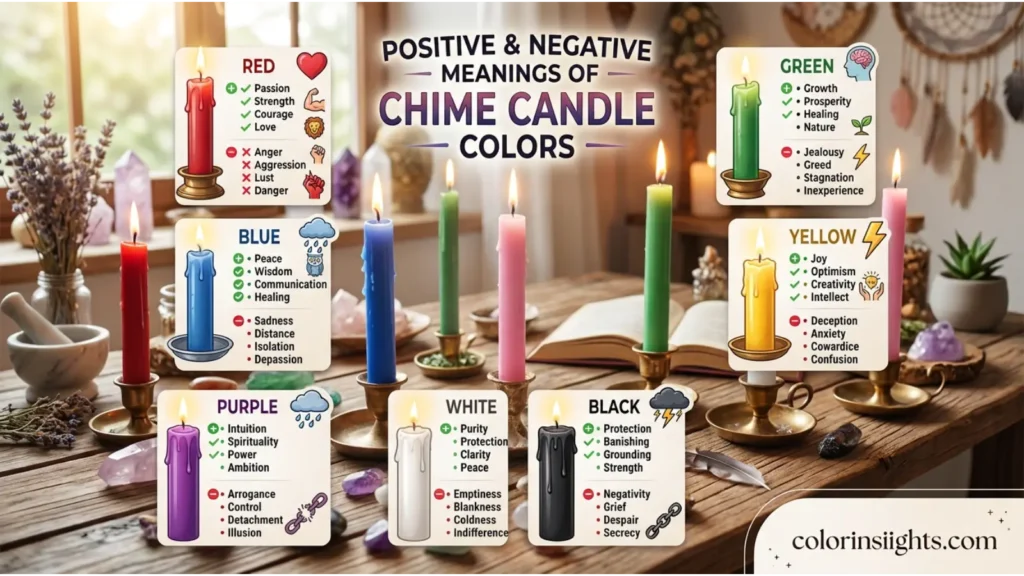
Positive and Negative Meanings of Chime Candle Colors
Positive Meanings
Different colors carry encouraging symbolic meanings.
- White: purity, peace, honesty, protection
- Red: courage, love, passion, determination
- Green: abundance, growth, fertility, prosperity
- Blue: trust, wisdom, healing, calmness
- Yellow: happiness, optimism, intelligence
- Purple: intuition, spirituality, creativity
- Pink: kindness, affection, emotional healing
- Orange: motivation, confidence, success
- Black: resilience, protection, transformation
Real-World Examples
- Lighting a green candle while setting financial goals symbolizes growth.
- A blue candle during meditation encourages relaxation.
- White candles are commonly used in memorials and prayer services.
Negative Meanings
Colors may also represent challenges depending on context.
- White: emotional emptiness or isolation
- Red: anger or impulsiveness
- Blue: sadness or emotional distance
- Yellow: anxiety or nervousness
- Green: jealousy or greed
- Purple: arrogance or excessive idealism
- Black: fear, grief, or uncertainty
Real-World Examples
- Red lighting may increase emotional intensity during stressful situations.
- Excessive black décor can create a heavy atmosphere.
- Too much yellow may become visually overwhelming.
Meanings of Chime Candle Colors
The meaning of a chime candle color changes depending on its purpose, setting, and cultural interpretation. A white candle used during prayer carries different symbolism than the same candle used in minimalist home décor.
Feng Shui
In Feng Shui, candle colors influence the flow of symbolic energy.
- Associated elements
- Red: Fire
- Green: Wood
- Blue: Water
- Yellow: Earth
- White: Metal
- Energy symbolism
- Supports balance and intentional energy flow.
- Best rooms
- Living room
- Meditation space
- Home office
- Entryway
- Bedroom (using calming colors)
- Recommended color combinations
- White and gold
- Blue and white
- Green and brown
- Purple and silver
- Red and gold
- Home decorating tips
- Use candle colors that complement the room’s purpose rather than overwhelm it.
Marketing
Although chime candles are often sold for spiritual use, color plays a significant role in marketing.
Branding Psychology
Manufacturers use colors to communicate:
- Relaxation
- Luxury
- Healing
- Energy
- Protection
Consumer Perception
Customers often associate:
- White with purity
- Green with natural products
- Purple with premium spirituality
- Black with sophistication
- Blue with calmness
Trust Signals
Natural packaging, muted colors, and consistent symbolism help create credibility.
Product Packaging
Many candle brands organize products by color according to intended uses, making shopping easier.
Advertising Applications
Advertisements frequently use calming imagery alongside candle colors to reinforce emotional associations.
Design
Color selection significantly affects visual design.
Interior Design
Chime candles can serve as decorative accents while reinforcing the room’s mood.
Graphic Design
Color-coded candle imagery helps communicate themes quickly.
Web Design
Many spiritual websites use soft blues, greens, and whites to create calming digital experiences.
User Experience
Clear color organization improves navigation for online candle collections.
Minimalist Aesthetics
Neutral candles like white, ivory, beige, and gray complement modern minimalist interiors.
Fashion
Although chime candles themselves are decorative items, their color symbolism often influences fashion choices.
Clothing Symbolism
People sometimes wear colors that reflect similar intentions.
Examples include:
- White for simplicity.
- Red for confidence.
- Blue for professionalism.
- Green for balance.
- Purple for creativity.
Seasonal Use
- Spring: Green, pink
- Summer: Yellow, orange
- Autumn: Brown, red
- Winter: White, blue, silver
Styling Effects
Color coordination creates visual harmony between clothing and decorative accessories.
Personality Impressions
Observers may perceive different colors as calm, energetic, creative, or sophisticated.
Advantages
- Expresses personality
- Creates visual consistency
- Enhances mood
Disadvantages
- Cultural meanings vary.
- Individual interpretations differ.

Color Associations Are Not Universal
Western Cultures
In many Western countries, white symbolizes weddings and purity, black represents mourning, green signifies luck and prosperity, and red often conveys passion or celebration.
Eastern Cultures
Several Eastern traditions associate red with good fortune, prosperity, and happiness, while white may symbolize mourning in certain regions.
Religious Traditions
Different faiths use candle colors differently.
For example:
- White often symbolizes holiness.
- Purple may represent reflection or spiritual preparation.
- Red can symbolize sacrifice, devotion, or divine love.
Historical Interpretations
Historically, candle colors were often determined by available dyes and local traditions. Over time, standardized symbolic meanings became more common through spiritual literature and modern metaphysical practices.
Modern Global Interpretations
Today, online communities have blended many traditions, resulting in broadly recognized meanings for common candle colors while still encouraging personal interpretation.
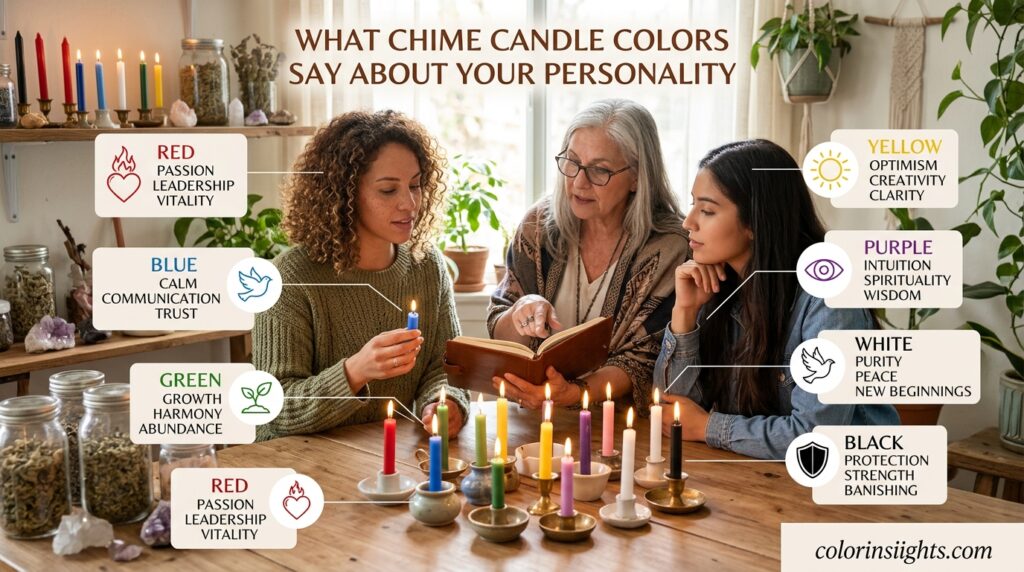
What Chime Candle Colors Say About Your Personality
Some people feel naturally drawn to particular candle colors. While color preferences can reflect temporary moods or aesthetic tastes, they do not determine personality with certainty.
Common associations include:
Strengths
People attracted to certain colors may value:
- Compassion
- Creativity
- Confidence
- Stability
- Curiosity
- Optimism
- Spiritual growth
Weaknesses
Possible tendencies include:
- Overthinking
- Perfectionism
- Emotional sensitivity
- Impatience
- Excessive caution
Social Behavior
Color preferences may reflect communication styles, such as warmth, calmness, enthusiasm, or independence.
Work Style
Individuals may prefer structured, creative, collaborative, or analytical environments depending on personal values rather than color alone.
Relationships
Many people choose candle colors to represent affection, trust, forgiveness, or commitment during meaningful occasions.
Emotional Tendencies
Favorite colors sometimes align with current emotional needs, such as seeking peace, motivation, healing, or personal growth.
FAQs
What defines chime candle colors?
Chime candle colors are small ritual candle colors chosen to symbolize different intentions, emotions, or spiritual goals during meditation, prayer, manifestation, or ceremonial practices.
What do chime candle colors symbolize?
They commonly symbolize love, protection, healing, abundance, wisdom, courage, peace, and transformation depending on the chosen color.
Why are chime candle colors important?
They help people express intentions, create meaningful rituals, and establish an atmosphere that supports reflection and mindfulness.
Are chime candle colors warm or cool?
There is no single temperature classification because chime candles come in many colors. Red, orange, and yellow are warm colors, while blue, green, and purple are generally cool.
What emotions do chime candle colors represent?
Different colors represent emotions such as love, hope, confidence, tranquility, gratitude, joy, resilience, and emotional healing.
What is the spiritual meaning of chime candle colors?
Spiritually, they represent symbolic intentions like protection, purification, prosperity, transformation, enlightenment, and personal growth.
What colors pair well with chime candles?
Popular combinations include:
- White and gold
- Blue and silver
- Green and brown
- Purple and white
- Red and black
- Pink and white
What does liking certain chime candle colors say about a person?
A preference for particular colors may reflect personal tastes, emotional needs, or symbolic interests, but it cannot accurately predict personality.
Which chime candle color is best for protection?
Many traditions associate black and white candles with protection, purification, and removing negative influences.
Which chime candle color represents prosperity?
Green is widely associated with financial abundance, growth, opportunity, and success.
Conclusion:
Chime candle color meanings provide a symbolic way to focus intentions, emotions, and spiritual practices. Across meditation, prayer, manifestation, home décor, and mindfulness rituals, different colors represent themes such as healing, love, protection, wisdom, prosperity, and transformation.
While many interpretations are widely recognized, their meanings ultimately depend on cultural traditions, personal-beliefs, and individual experiences.
Understanding the symbolism behind each color allows you to choose chime candles more intentionally, creating rituals and environments that reflect your goals while appreciating the rich psychological and cultural significance of color.







 Welcome to The colorinsiights.com