fortune cat color meanings, also known as Maneki-neko or lucky cats, are popular Japanese symbols of good fortune, prosperity, happiness, and protection. Their colors carry different symbolic meanings, making each figurine meaningful for particular intentions. Some colors represent wealth and business success, while others symbolize love, health, peace, and protection from negative energy.
People commonly display these charming cats in homes, offices, restaurants, and shops to express hopes for good luck. Understanding fortune cat color meanings can help you choose a figurine that reflects your personal goals and cultural interests.
Quick answer:
Fortune cat colors traditionally symbolize different forms of luck, including money, health, love, success, happiness, and protection.
What Do Fortune Cat Colors Symbolize?
The Japanese lucky cat, or Maneki-neko, represents an invitation to good fortune. Its raised paw traditionally welcomes customers, wealth, visitors, or positive opportunities. The figurine originated in Japan and has become a recognizable good-luck symbol in many countries.
Fortune cat colors add another layer of meaning to this traditional symbol. Although interpretations vary among sellers, regions, and modern spiritual practices, several common associations appear in popular Maneki-neko traditions.
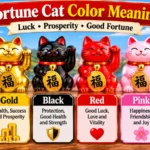
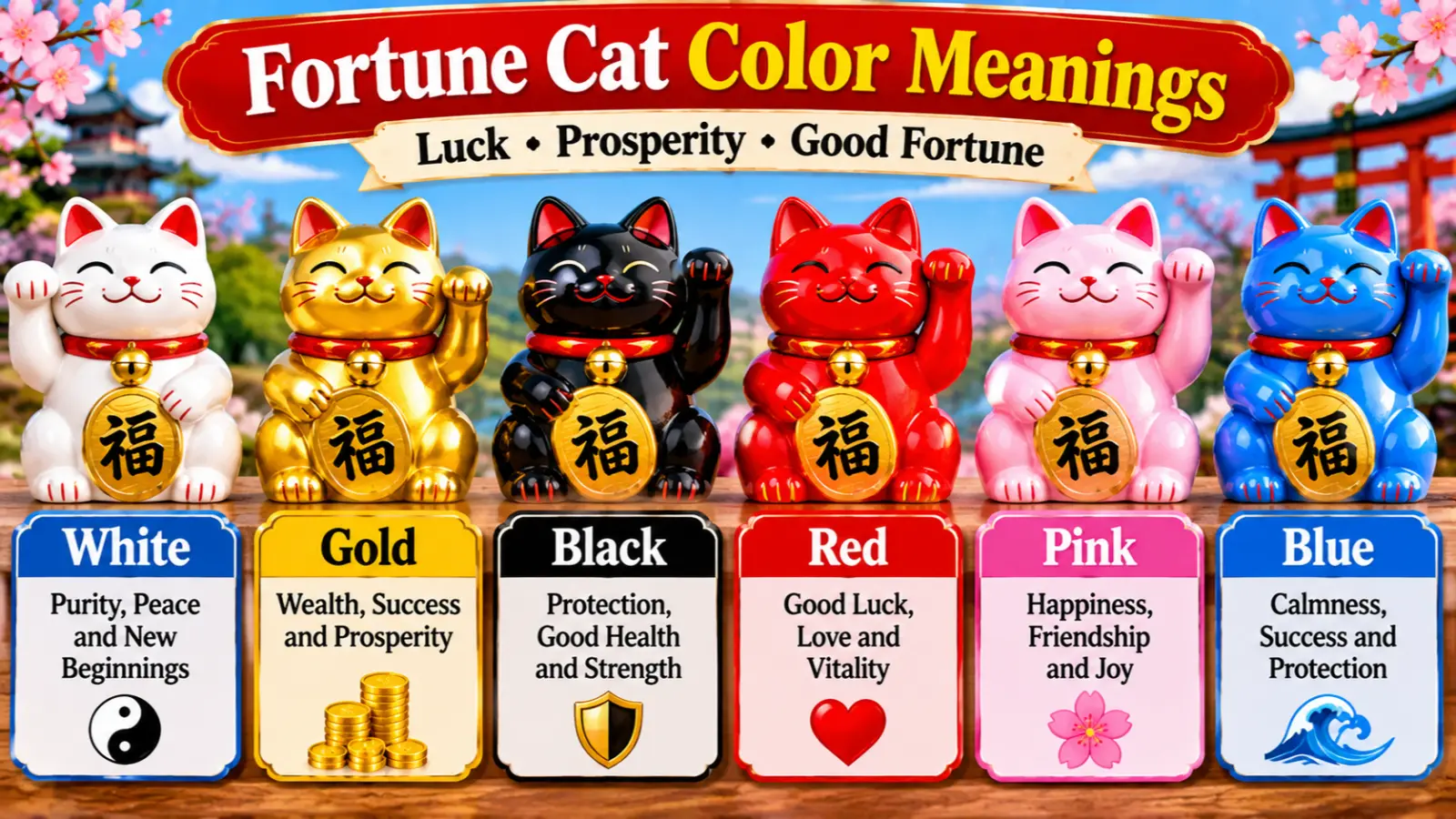
Here are some widely recognized fortune cat color meanings:
- White: Purity, happiness, positive energy, and good fortune.
- Gold: Wealth, financial prosperity, abundance, and business success.
- Black: Protection, safety, and the removal of negative influences.
- Red: Health, courage, vitality, and protection.
- Pink: Love, romance, affection, and emotional happiness.
- Green: Education, personal growth, family well-being, and good health.
- Blue: Success, wisdom, career progress, and academic achievement.
- Yellow: Stability, good relationships, and financial security.
- Purple: Creativity, ambition, spiritual development, and dignity.
- Silver: Elegance, success, prosperity, and modern good fortune.
These associations offer a useful guide, but they do not represent a single universal Japanese color system. The design, setting, and cultural background of a fortune cat also influence its interpretation.
Psychological Characteristics of Fortune Cat Colors
Color psychology examines how people respond to colors and how visual associations influence emotions, preferences, and behavior. In fortune cat designs, color choices communicate particular wishes and intentions.
Unlike ordinary color psychology, Maneki-neko symbolism combines traditional Japanese good-luck beliefs with modern decorative and spiritual interpretations. A gold lucky cat, for example, communicates prosperity, while a pink one expresses affection and romantic hopes.
Emotional Associations
Each fortune cat color creates a different emotional impression:
- White: Creates associations with peace, innocence, cleanliness, and optimism.
- Gold: Suggests confidence, achievement, luxury, and financial ambition.
- Black: Communicates strength, mystery, security, and personal protection.
- Red: Represents energy, courage, passion, and vitality.
- Pink: Encourages associations with affection, kindness, romance, and warmth.
- Green: Suggests renewal, growth, balance, and learning.
- Blue: Communicates calmness, intelligence, reliability, and ambition.
- Yellow: Creates feelings of friendliness, optimism, and happiness.
- Purple: Suggests imagination, dignity, creativity, and spiritual awareness.
- Silver: Communicates sophistication, elegance, and modernity.
Psychological Effects
The colors of lucky cats can influence how people interpret their decorative surroundings. Warm colors such as red, yellow, and gold often attract attention and communicate energy or excitement.
Cool colors such as blue and green generally create calmer visual impressions. White can make a space appear brighter, while black can introduce contrast and a sense of visual strength.
However, these responses depend on personal experiences, cultural backgrounds, lighting, and surrounding colors. A fortune cat does not produce guaranteed psychological or financial effects.
Positive Emotional Responses
People may associate fortune cat colors with encouraging emotions, including:
- Hope for financial improvement.
- Confidence when starting a business.
- Happiness during new beginnings.
- Affection and emotional connection.
- Motivation to achieve educational goals.
- Comfort through symbolic protection.
- Optimism about family health and relationships.
Negative Emotional Responses
Some colors may also create less favorable impressions in particular settings.
- Black: May appear intimidating or overly serious to some people.
- Red: Can suggest aggression, danger, or excessive intensity.
- Gold: May communicate extravagance or excessive materialism.
- White: Can sometimes appear emotionally distant or overly formal.
- Purple: May seem mysterious, dramatic, or difficult to approach.
- Yellow: Bright shades can feel visually overwhelming.
These reactions do not define the traditional meaning of a lucky cat. They simply demonstrate how color perception changes with context.
Impact on Mood and Behavior
A fortune cat often serves as a visual reminder of personal goals. Someone opening a new business might choose a gold figurine as a symbol of financial ambition. A student might select a green or blue cat to represent academic progress.
These objects can encourage positive thinking and create a meaningful connection with personal aspirations. However, the figurine itself cannot guarantee success, prevent illness, or change financial circumstances.
Spiritual Meaning of Fortune Cat Colors
The spiritual meaning of fortune cat colors comes from Japanese folk traditions, popular symbolism, and modern interpretations of luck and protection. Many people display Maneki-neko as auspicious objects that express wishes for a healthier, happier, and more prosperous life.
Although Maneki-neko does not belong to one universal religious doctrine, its symbolism connects with several spiritual themes.
- Holiness: White lucky cats represent purity, peace, and positive intentions. Their appearance can remind people of spiritual cleanliness and harmony.
- Wisdom: Blue fortune cats symbolize knowledge, thoughtful decisions, and academic achievement. People often associate them with learning and intellectual development.
- Purity: White represents innocence, sincerity, and a fresh outlook. It can express a desire for a peaceful home and positive relationships.
- Transformation: Purple and gold cats can symbolize personal development, ambition, and positive life changes.
- Healing: Red lucky cats traditionally represent protection from illness and wishes for good health. They symbolize vitality rather than medical healing.
- Protection: Black Maneki-neko represents protection against misfortune, harmful influences, and negative energy.
- Power: Gold and red communicate confidence, strength, prosperity, and determination.
- Enlightenment: Purple and white can symbolize spiritual awareness, reflection, and a search for deeper understanding.
- New Beginnings: White, green, and gold cats can represent fresh opportunities, personal growth, and successful transitions.
- Eternity: Silver and white may symbolize continuity, lasting happiness, and enduring positive intentions in modern decorative interpretations.
For many collectors and admirers, a lucky cat represents more than a decorative object. It expresses hope, gratitude, and the desire to welcome positive experiences.
Positive and Negative Meanings of Fortune Cat Colors
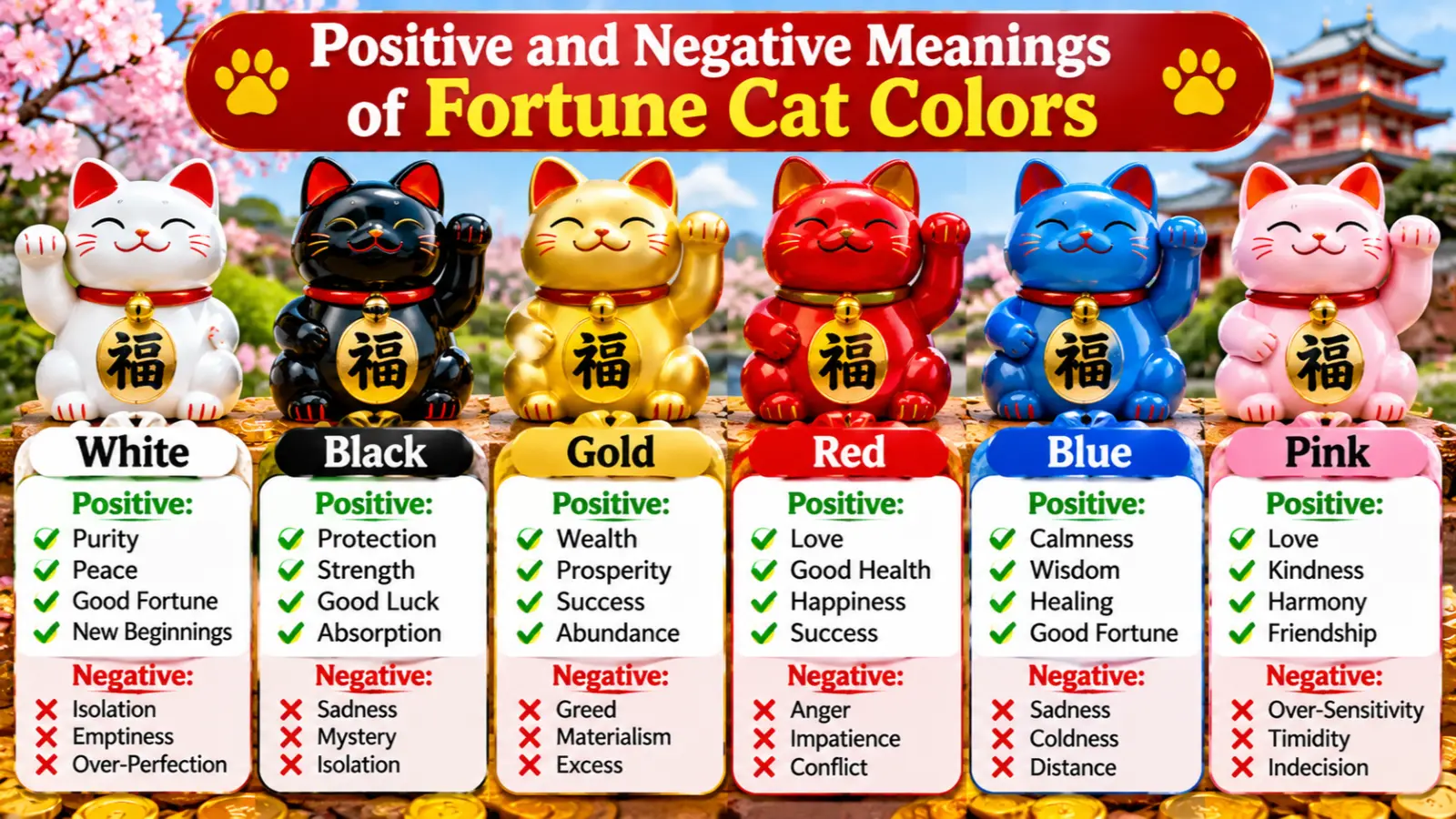
Fortune cat colors generally communicate positive wishes. However, their visual and symbolic associations can change according to cultural background, personal beliefs, and decorative context.
Positive Meanings
The following positive meanings explain why people choose different Maneki-neko colors.
1. Wealth and Prosperity
Gold lucky cats represent financial abundance, business opportunities, and material success. Shop owners often choose them to express hopes for increasing customers and improving business performance.
2. Happiness and Good Fortune
White fortune cats symbolize happiness, purity, and general good luck. They make popular decorative choices for homes and workplaces.
3. Protection and Safety
Black lucky cats represent protection from misfortune and negative influences. People may display them to express wishes for personal safety and family security.
4. Health and Vitality
Red fortune cats communicate strength, health, and protection against illness. They represent the hope for a healthy and energetic life.
5. Love and Relationships
Pink Maneki-neko symbolizes romance, affection, and emotional connection. People sometimes choose pink cats when celebrating relationships or hoping to find a partner.
6. Education and Personal Growth
Green lucky cats traditionally represent academic success and achievement. They can serve as symbolic gifts for students, graduates, and people pursuing new qualifications.
7. Wisdom and Success
Blue fortune cats represent intelligence, knowledge, safety, and professional progress. Their meaning makes them suitable for educational and career-related gifts.
8. Harmony and Good Relationships
Yellow lucky cats symbolize friendship, positive connections, and harmonious relationships. They express the hope for cooperation and understanding.
Negative Meanings
Fortune cat colors do not traditionally represent evil or bad luck simply because of their appearance. However, some visual interpretations may create less positive impressions.
1. Materialism
Gold symbolizes prosperity, but excessive gold decoration can suggest an overwhelming focus on wealth and possessions. For example, a heavily decorated gold figurine may look extravagant in a minimalist home.
2. Mystery and Intimidation
Black symbolizes protection, but some people associate it with darkness, mystery, or fear. A black fortune cat may therefore feel less welcoming in certain decorative settings.
3. Excessive Intensity
Red represents health and vitality, but large amounts of bright red can create an energetic or visually intense atmosphere.
4. Emotional Sensitivity
Pink symbolizes love and affection. However, some people may interpret excessive pink decoration as overly romantic or sentimental.
5. Overstimulation
Yellow communicates happiness and friendliness, but very bright yellow can become distracting when used excessively.
6. Excessive Ambition
Gold and purple may communicate success, power, and ambition. In certain contexts, these colors can suggest status-seeking or excessive self-importance.
7. Emotional Distance
Blue can represent wisdom and reliability, but dark blue may appear formal or reserved in some environments.
8. Overly Decorative Appearance
Silver and metallic colors can create an elegant impression. However, too many reflective decorations may make a space feel visually crowded.
These examples describe possible design and emotional impressions, not traditional warnings about fortune cat colors.
Meanings of Fortune Cat Colors
The meaning of a Maneki-neko depends on several details, including its color, raised paw, accessories, placement, and cultural interpretation. Understanding these features helps people select a lucky cat that matches their intentions.
1. White Fortune Cat Meaning
Maneki Neko – White (Size 3) – nanao kimono
Symbolism: Purity, happiness, innocence, and general good fortune.
White is the traditional color associated with many Maneki-neko designs. It represents positive intentions and happiness. People commonly choose white cats for home decoration, housewarming gifts, and general wishes for good luck.
2. Gold Fortune Cat Meaning
Χρυσή Γάτα Καλωσορίσματος – Feng Shui Welcome Cat 18cm | Magichole.gr
Symbolism: Wealth, financial success, abundance, and prosperity.
Gold is especially popular among business owners and entrepreneurs. Its metallic appearance communicates financial ambition and material achievement. It also makes a thoughtful decorative gift for someone opening a new business.
3. Black Fortune Cat Meaning
Japanisches Glückliches manekineko katze Sparschwein, PROTECT, schwarz
Symbolism: Protection, safety, and defense against misfortune.
Black Maneki-neko represents protection from harmful influences and bad luck. People may choose it for personal spaces, homes, or workplaces when they want to express wishes for security.
4. Red Fortune Cat Meaning
常滑焼 招き猫 梅月 赤小判猫(右手)10号高さ:33cm<病気平癒 疫病除け> : 虹八 kohya – 通販 – Yahoo!ショッピング
Symbolism: Health, vitality, courage, and protection from illness.
Red lucky cats express wishes for physical well-being and a healthy life. Their bright appearance also communicates strength, enthusiasm, and determination.
5. Pink Fortune Cat Meaning
恋愛運がアップするピンクのハートの招き猫 – 島根の招き猫工房
Symbolism: Love, romance, affection, and relationships.
Pink Maneki-neko appeals to people who want to celebrate love and emotional connection. It can represent romantic relationships, friendship, kindness, and harmony between partners.
6. Green Fortune Cat Meaning
为什么招财猫有那么多颜色?举左手和右手的寓意又不同?原来不是所有的招财猫都能招财!
Symbolism: Education, academic achievement, growth, and family well-being.
Green cats commonly symbolize learning and educational success. Students may choose them before examinations, while families may display them as symbols of development and well-being.
7. Blue Fortune Cat Meaning
Symbolism: Wisdom, academic success, safety, and professional achievement.
Blue Maneki-neko can represent intelligence, concentration, and thoughtful decisions. Students, professionals, and people pursuing career goals may appreciate its symbolism.
8. Yellow Fortune Cat Meaning
Maneki Neko – Yellow (Size 3) – nanao kimono
Symbolism: Good relationships, friendship, happiness, and stability.
Yellow lucky cats communicate warmth and positive social connections. Some popular color guides also associate yellow with financial security and prosperity.
9. Purple Fortune Cat Meaning
Lucky Cat Violet – Donkey Products
Symbolism: Creativity, dignity, ambition, and spiritual growth.
Purple is a modern decorative variation with associations that extend beyond the most established lucky cat traditions. It can represent imagination, self-development, and personal achievement.
10. Silver Fortune Cat Meaning
Lucky Cat Shiny Silver „Nova“ – Cosmic Edition in Classic & Mini – Donkey Products
Symbolism: Elegance, prosperity, sophistication, and lasting success.
Silver Maneki-neko offers a contemporary interpretation of good fortune. Its reflective appearance makes it popular in modern interiors, offices, and decorative collections.
11. Calico Fortune Cat Meaning
(預購)日本正版瀨戶陶坊 藥師窯 超Q 三花貓/阿橘橘貓/賓士貓 陶瓷招財貓擺飾 | 蝦皮購物
Symbolism: General good fortune, happiness, and prosperity.
The traditional calico Maneki-neko combines white, black, and orange markings. This three-color design remains one of the best-known lucky cat styles and has a strong connection with Japanese folk tradition. Japan Tourism Agency,Japan Tourism Agency+1
Feng Shui and Fortune Cat Colors
Although Maneki-neko comes from Japanese tradition, modern decorative practices often combine lucky cat symbolism with Chinese feng shui ideas.
Feng shui uses the five-element system: Wood, Fire, Earth, Metal, and Water. People associate particular colors with these elements.
| Fortune cat color | Feng Shui association | Symbolic intention |
|---|---|---|
| Green | Wood | Growth and renewal |
| Red | Fire | Energy and recognition |
| Yellow | Earth | Stability and balance |
| White and silver | Metal | Clarity and organization |
| Black and blue | Water | Wisdom and opportunities |
| Gold | Modern wealth symbolism | Prosperity and abundance |
Best rooms and placements:
- Entrance: Place a lucky cat near the entrance to create a welcoming atmosphere.
- Living room: Display a white or calico cat as a symbol of happiness and harmony.
- Office: Choose gold or blue to express financial and professional ambitions.
- Study room: Green and blue cats represent learning and academic progress.
- Bedroom: Pink can symbolize affection and relationship harmony.
For decoration, combine gold with white for an elegant appearance, green with natural wood for a refreshing atmosphere, or red with neutral shades for visual balance.
These are modern decorative suggestions rather than universal feng shui placement rules.
Marketing and Fortune Cat Colors
Maneki-neko has become a recognizable decorative symbol in retail, hospitality, and gift markets. Businesses use lucky cat designs to communicate hospitality, optimism, prosperity, and cultural identity.
Branding Psychology
Brands and retailers may use fortune cat colors to communicate different values:
- Gold suggests luxury, financial success, and abundance.
- White communicates cleanliness and simplicity.
- Red attracts attention and communicates energy.
- Black creates an impression of sophistication and protection.
- Green represents growth and freshness.
- Pink communicates warmth and affection.
Consumer Perception
Color influences how consumers interpret a product’s appearance. A gold lucky cat may appeal to someone purchasing a business-opening gift, while a pink version may attract shoppers looking for a romantic present.
Trust Signals
Traditional Maneki-neko designs can communicate hospitality and welcoming intentions. Their familiar raised-paw gesture makes them recognizable to many customers.
However, a decorative symbol cannot independently establish a company’s reliability or product quality.
Product Packaging
Manufacturers often use different packaging colors to reinforce the intended meaning of a lucky cat.
For example:
- Gold packaging suits prosperity-themed gifts.
- Red packaging works well for celebration and health-related symbolism.
- Pink packaging complements romantic gifts.
- White packaging creates a clean, traditional appearance.
Advertising Applications
Gift shops, Japanese restaurants, souvenir stores, and online retailers may feature Maneki-neko in advertisements. Seasonal campaigns, business-opening promotions, and Japanese cultural celebrations provide opportunities to showcase different lucky cat designs.
Popular Japanese businesses and brands such as Sanrio and Daiso help illustrate the broader commercial appeal of Japanese-inspired characters and decorative products. However, they should not be described as using Maneki-neko as a universal brand identity.
Design and Fortune Cat Colors
Fortune cat colors contribute to interior decoration, graphic design, digital illustrations, and product aesthetics. Designers can use their symbolic associations to create attractive and meaningful visual experiences.
Interior Design
Maneki-neko figurines can complement several decorating styles.
- Modern interiors: Silver, white, and gold create a polished appearance.
- Traditional interiors: White calico cats complement Japanese-inspired decorations.
- Minimalist interiors: A single white or black figurine creates a simple focal point.
- Colorful interiors: Red, pink, green, and yellow add personality and visual interest.
Graphic Design
Designers use lucky cat illustrations in posters, greeting cards, calendars, and promotional materials. Gold and red work particularly well for prosperity-themed graphics, while pink and white suit romantic or celebratory designs.
Web Design
Online gift stores may use fortune cat illustrations to create culturally inspired product pages. Clear product photography, readable text, and accessible color contrast remain more important than symbolic color choices alone.
User Experience
Color can help organize product categories on e-commerce websites. For example, retailers may group gold cats under prosperity gifts, pink cats under love-themed gifts, and green cats under education-related gifts.
Designers should also use descriptive labels rather than relying on color alone. This improves accessibility for visitors with color-vision deficiencies.
Minimalist Aesthetics
A simple white, black, or silver Maneki-neko can complement minimalist decoration. Clean shapes, limited accessories, and neutral backgrounds allow the raised paw and facial expression to become the main visual features.
Fashion and Fortune Cat Colors
Although lucky cats primarily appear as figurines, their symbolism also influences clothing, accessories, jewelry, and Japanese-inspired fashion.
Clothing Symbolism
Fortune cat prints and accessories can express cultural appreciation, optimism, and playful personal style.
- Gold represents prosperity and ambition.
- Black communicates confidence and sophistication.
- White suggests simplicity and purity.
- Red communicates energy and courage.
- Pink represents affection and romance.
- Green symbolizes growth and renewal.
- Blue suggests intelligence and calmness.
Seasonal Use
Different fortune cat colors complement seasonal fashion choices.
- Spring: Pink and green reflect renewal, romance, and growth.
- Summer: White, blue, and yellow create fresh, bright combinations.
- Fall: Gold, orange, and darker shades complement warm seasonal styling.
- Winter: Silver, black, white, and red create festive and elegant looks.
Styling Effects
A lucky cat pendant, printed shirt, handbag charm, or small accessory can introduce Japanese-inspired symbolism into everyday clothing.
For example, a gold Maneki-neko pendant can complement neutral outfits, while a pink cat accessory can add a playful touch to casual clothing.
Personality Impressions
People may interpret fortune cat-inspired fashion in different ways:
- Gold suggests ambition and confidence.
- Black suggests independence and sophistication.
- Pink suggests friendliness and romantic expression.
- Green suggests a connection with growth and nature.
- Blue suggests thoughtfulness and intelligence.
These impressions describe common visual associations rather than reliable personality assessments.
Advantages and Disadvantages
Advantages:
- Adds cultural symbolism to personal style.
- Offers colorful and recognizable designs.
- Provides meaningful gift options.
- Complements casual and creative outfits.
- Allows people to express personal interests.
Disadvantages:
- Some designs may appear overly decorative.
- Certain color combinations may clash with existing outfits.
- Large character prints may not suit formal settings.
- Cultural symbols can lose context when used without understanding their background.
Color Associations Are Not Universal
Fortune cat color meanings do not follow one fixed interpretation across every country or tradition. Japanese folk beliefs, Chinese-inspired decorative practices, modern spiritual interpretations, and international gift markets have all influenced how people understand these figurines.
Western Cultures
In the United States and other Western countries, Maneki-neko commonly appears in Japanese restaurants, Asian gift shops, homes, and business spaces.
Gold generally communicates wealth, while black suggests protection and white represents happiness. Pink and red often express love, health, and positive intentions.
Many Western consumers also view lucky cats as collectible objects or decorative souvenirs rather than religious symbols.
Eastern Cultures
In Japan, the Maneki-neko represents good fortune and hospitality. Traditional calico cats remain particularly recognizable.
Japanese businesses often display lucky cats near entrances because the raised paw symbolizes an invitation. The left paw traditionally attracts people or customers, while the right paw attracts wealth and good fortune. Japan Tourism Agency,Japan Tourism Agency+1
Chinese-inspired interpretations also influence the popularity of gold and other colorful lucky cat designs, especially in shops and restaurants.
Religious Traditions
Maneki-neko does not represent a universal religious doctrine. Its meaning connects more closely with Japanese folk customs and auspicious objects.
Some people place lucky cats in spiritual or meditation spaces as reminders of gratitude, protection, and prosperity. Others simply appreciate their decorative and cultural significance.
It is important to distinguish these personal spiritual interpretations from established religious teachings.
Historical Interpretations
The history of Maneki-neko dates back to Japan’s Edo period. Although several origin legends exist, historians generally associate its development with Japanese popular culture during the nineteenth century.
Traditional figurines often featured white, black, and orange calico markings. Later designs introduced additional colors and decorative variations. SFO Museum+2
Modern Global Interpretations
Today, manufacturers offer Maneki-neko in many colors, materials, and styles. Gold, pink, blue, green, and silver designs have expanded the traditional symbolism into modern gift culture.
People now choose these figurines for business openings, birthdays, graduations, housewarming celebrations, and personal collections.
What Fortune Cat Colors Say About Your Personality
Choosing a particular fortune cat color may reflect your interests, personal goals, or the qualities you appreciate. However, color preferences cannot accurately determine someone’s personality.
The following traits represent common symbolic interpretations rather than scientifically established personality categories.
White Fortune Cat Lovers
People who prefer white lucky cats may appreciate simplicity, peace, cleanliness, and harmony.
Possible strengths:
- Organized thinking.
- Appreciation for balance.
- Positive outlook.
- Preference for peaceful environments.
Possible weaknesses:
- High expectations.
- Perfectionist tendencies.
- Discomfort with disorder.
Gold Fortune Cat Lovers
Gold attracts people who appreciate achievement, ambition, and financial independence.
Possible strengths:
- Goal-oriented thinking.
- Confidence.
- Motivation.
- Interest in professional growth.
Possible weaknesses:
- Excessive ambition.
- Materialistic tendencies.
- Strong focus on external success.
Black Fortune Cat Lovers
Black lucky cat enthusiasts may appreciate independence, personal boundaries, and security.
Possible strengths:
- Self-confidence.
- Independence.
- Determination.
- Practical thinking.
Possible weaknesses:
- Reserved communication.
- Difficulty trusting others.
- Preference for control.
Red Fortune Cat Lovers
People who choose red may appreciate energy, enthusiasm, and bold expression.
Possible strengths:
- Courage.
- Passion.
- Initiative.
- Strong motivation.
Possible weaknesses:
- Impatience.
- Impulsiveness.
- Excessive intensity.
Pink Fortune Cat Lovers
Pink preferences may reflect an appreciation for romance, kindness, and emotional connection.
Possible strengths:
- Compassion.
- Warm communication.
- Affection.
- Relationship awareness.
Possible weaknesses:
- Emotional sensitivity.
- Idealistic expectations.
- Difficulty establishing boundaries.
Green Fortune Cat Lovers
Green may appeal to people who value learning, renewal, and personal development.
Possible strengths:
- Patience.
- Adaptability.
- Curiosity.
- Growth-oriented thinking.
Possible weaknesses:
- Overthinking.
- Resistance to sudden changes.
- Excessive caution.
Blue Fortune Cat Lovers
People who prefer blue may appreciate knowledge, stability, and thoughtful decision-making.
Possible strengths:
- Analytical thinking.
- Reliability.
- Calm communication.
- Intellectual curiosity.
Possible weaknesses:
- Emotional reserve.
- Excessive caution.
- Difficulty expressing feelings.
Yellow and Purple Fortune Cat Lovers
Yellow may appeal to people who value optimism, friendship, and social harmony. Purple may attract those who appreciate creativity, individuality, and self-expression.
Neither preference establishes a particular personality type. Personal experiences, values, and individual circumstances influence personality far more than a decorative color choice.
Frequently Asked Questions
1. What do fortune cat colors mean?
Fortune cat colors represent different types of good fortune. White symbolizes happiness, gold represents wealth, black offers symbolic protection, red represents health, pink symbolizes love, and green represents academic success.
2. What is the luckiest fortune cat color?
Gold is commonly associated with financial prosperity and business success. White represents general good fortune, while traditional calico cats also have a strong reputation as lucky symbols.
3. What does a gold fortune cat symbolize?
A gold Maneki-neko symbolizes wealth, abundance, financial opportunities, and business prosperity. People often display it in shops, offices, and homes to express hopes for financial success.
4. What does a black fortune cat mean?
A black fortune cat represents protection, safety, and defense against bad luck or negative influences. Some people choose it as a symbolic guardian for their homes.
5. What does a white fortune cat represent?
White Maneki-neko symbolizes purity, happiness, peace, and general good fortune. It is one of the most recognizable traditional lucky cat designs.
6. What does a pink fortune cat mean?
Pink fortune cats symbolize romance, love, affection, and positive relationships. They make popular gifts for people celebrating romantic milestones or expressing appreciation.
7. What does a red fortune cat symbolize?
Red Maneki-neko represents health, vitality, courage, and protection against illness. People choose it to express wishes for physical well-being and a healthy life.
8. What does a green fortune cat mean?
Green fortune cats traditionally symbolize academic success and educational achievement. They can also represent personal growth, renewal, and family well-being.
9. What does a blue fortune cat symbolize?
Blue Maneki-neko represents wisdom, safety, learning, and success. Students and professionals may choose it as a symbolic reminder of their educational and career goals.
10. What is the difference between a left-paw and right-paw fortune cat?
A left-paw Maneki-neko traditionally invites people and customers, making it popular among shop owners. A right-paw Maneki-neko attracts wealth and good fortune. Some figurines raise both paws to symbolize combined blessings or protection. Japan Tourism Agency,Japan Tourism Agency+2
11. Where should you place a fortune cat?
Many people place Maneki-neko near shop entrances, reception desks, cash registers, or home entryways. These visible locations reflect its traditional welcoming gesture. You can also display one on a desk, shelf, or living room table.
12. Can you give someone a fortune cat as a gift?
Yes. Fortune cats make popular gifts for birthdays, graduations, business openings, housewarming celebrations, and other special occasions. Choose a color that reflects the recipient’s wishes, such as gold for prosperity or pink for love.
Conclusion
Fortune cat color meanings combine Japanese cultural traditions, symbolic beliefs, and modern interpretations of good luck. Each color communicates a different intention, from the financial prosperity of gold to the protection of black, the happiness of white, and the romantic symbolism of pink. Green and blue represent educational achievement, wisdom, and personal growth, while red expresses health and vitality. Understanding these meanings can help you choose a Maneki-neko that reflects your goals, personal interests, or gift-giving intentions. Although lucky cats cannot guarantee wealth, health, or success, they remain meaningful symbols of hope, hospitality, and positive aspirations.