candle meanings color have played an important role in spiritual practices, religious ceremonies, meditation, and everyday life for centuries. Beyond providing light and creating atmosphere, different candle colors carry symbolic meanings that reflect emotions, intentions, and personal beliefs.
From white candles associated with purity and peace to red candles connected with passion and strength, each shade represents a different type of energy in candle traditions. Understanding candle meanings by color can help people choose candles for rituals, reflection, home decoration, and personal intentions.
Quick Answer:
Candle colors symbolize different intentions, including love, protection, healing, prosperity, peace, wisdom, and spiritual growth.
What Do Candle Colors Symbolize?
Candle colors symbolize different emotions, spiritual intentions, and personal goals. In traditional candle practices, people select specific colors to represent what they hope to attract, strengthen, release, or reflect upon.
The symbolism often comes from cultural traditions, religious practices, color psychology, and modern spiritual beliefs. Although interpretations vary, many candle traditions associate particular colors with recognizable themes.
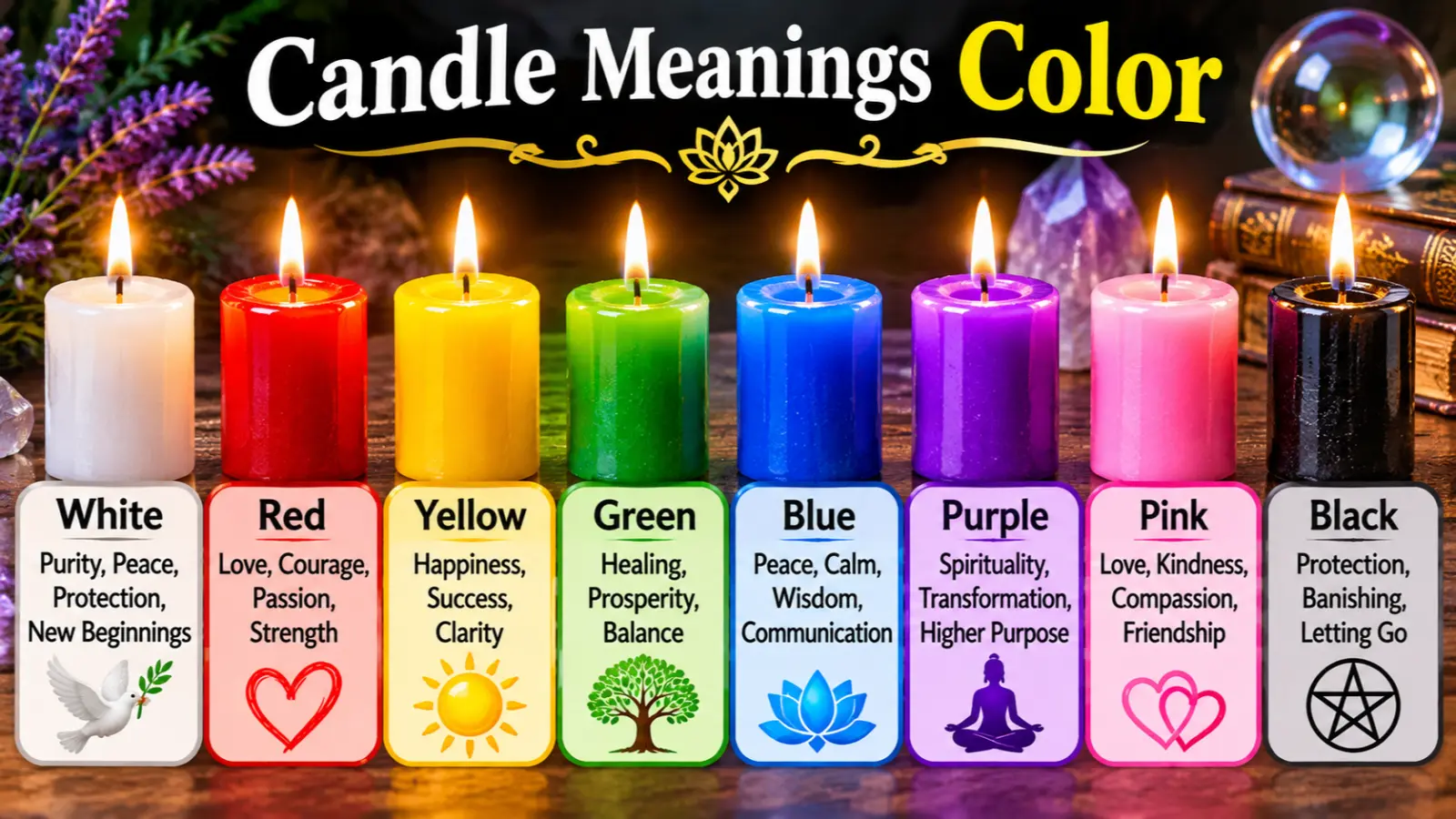
Here are some common candle color meanings:
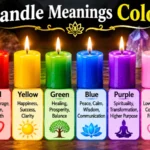
| Candle Color | Common Symbolism |
|---|---|
| White | Purity, peace, protection, and new beginnings |
| Red | Love, passion, courage, and strength |
| Pink | Romance, compassion, friendship, and kindness |
| Blue | Calmness, communication, wisdom, and healing |
| Green | Money, prosperity, growth, and abundance |
| Yellow | Happiness, intelligence, confidence, and creativity |
| Purple | Spirituality, wisdom, intuition, and transformation |
| Black | Protection, endings, grounding, and releasing negativity |
| Orange | Motivation, enthusiasm, success, and creativity |
| Brown | Stability, security, nature, and grounding |
| Gold | Wealth, achievement, confidence, and success |
| Silver | Intuition, reflection, feminine energy, and lunar symbolism |
These meanings offer symbolic guidance rather than guaranteed results. A candle’s meaning depends on the intention, tradition, and personal interpretation behind its use.
Psychological Characteristics of Candle Colors
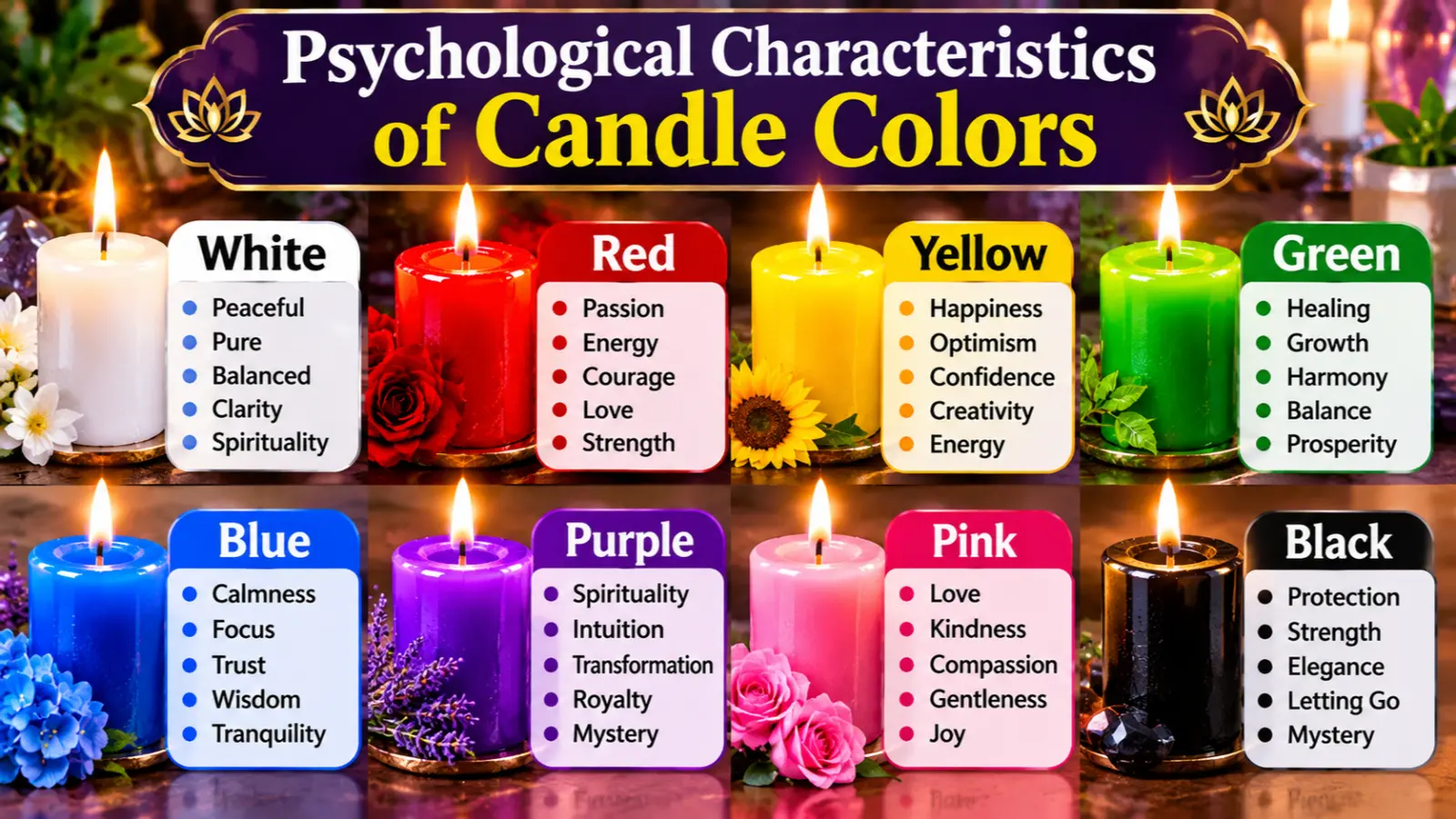
Color psychology explores how colors influence human perception, emotional associations, and behavior. Candlelight adds another dimension because its soft glow can create a relaxing atmosphere and influence how people experience a space.
Different candle colors can communicate different emotional messages.
Emotional Associations
- White: Often creates associations with cleanliness, simplicity, peace, and freshness.
- Red: Represents excitement, passion, determination, and intensity.
- Pink: Suggests affection, tenderness, compassion, and emotional warmth.
- Blue: Connects with calmness, stability, trust, and relaxation.
- Green: Represents nature, renewal, balance, and personal growth.
- Yellow: Suggests optimism, happiness, energy, and mental stimulation.
- Purple: Connects with imagination, mystery, creativity, and spirituality.
- Black: Can communicate sophistication, authority, mystery, and seriousness.
- Orange: Represents enthusiasm, friendliness, excitement, and motivation.
Psychological Effects
Candle colors can influence the atmosphere people associate with a room or activity.
For example, blue candles may complement a relaxing evening, while yellow and orange candles can create a brighter and more energetic visual environment.
Red candles can introduce a sense of warmth and intensity. Green candles may create associations with nature and balance.
However, color alone does not determine emotional responses. Personal experiences, cultural backgrounds, lighting conditions, and individual preferences also influence perception.
Positive Emotional Responses
Depending on the shade and context, candle colors may encourage associations with:
- Comfort and emotional warmth.
- Hope and optimism.
- Confidence and motivation.
- Peace and relaxation.
- Love and compassion.
- Creativity and inspiration.
- Stability and security.
Negative Emotional Responses
Some colors can also create less comfortable impressions:
- Excessive red may feel overwhelming or aggressive.
- Dark blue may appear distant or melancholic.
- Black may suggest mystery, grief, or uncertainty.
- Bright yellow may feel visually intense.
- Purple may appear mysterious or emotionally distant.
- White may sometimes feel cold or overly clinical.
Impact on Mood and Behavior
People often use colored candles to support particular moods and activities.
A blue candle may complement meditation, while a green candle can provide a natural decorative atmosphere. Pink candles often suit romantic settings, and orange candles can add warmth to social gatherings.
The combination of color, fragrance, candlelight, and environment creates the overall experience.
Spiritual Meaning of Candle Colors
The spiritual meaning of candle colors varies across religious traditions, folk practices, and modern candle rituals. Many people use colored candles as symbolic representations of their intentions, prayers, and personal goals.
Here are some widely recognized spiritual associations.
- Holiness: White candles often represent divine light, sacredness, and spiritual cleanliness.
- Wisdom: Purple candles commonly symbolize spiritual understanding, intuition, and higher knowledge.
- Purity: White candles represent innocence, sincerity, and a fresh spiritual beginning.
- Transformation: Black and purple candles may symbolize personal change, releasing old habits, and spiritual development.
- Healing: Blue and green candles often represent emotional balance, renewal, and restoration.
- Protection: Black, white, and blue candles appear in various traditions associated with spiritual protection.
- Power: Red and gold candles symbolize strength, courage, authority, and determination.
- Enlightenment: Purple, white, and gold candles connect with spiritual awareness and higher consciousness.
- New Beginnings: White, green, and yellow candles represent renewal, opportunity, and positive change.
- Eternity: White and gold candles can symbolize everlasting light, divine presence, and continuity.
These interpretations reflect spiritual symbolism rather than scientifically established supernatural effects.
Positive and Negative Meanings of Candle Colors
Colored candles carry both positive and negative associations. The same color may communicate different messages depending on its shade, cultural background, and purpose.
Positive Meanings
Candle colors often represent encouraging ideas and intentions.
- Purity: White candles symbolize innocence, sincerity, and spiritual cleanliness. People often choose them for prayer, weddings, and peaceful meditation.
- Peace: Blue and white candles create associations with calmness and harmony. They work well in relaxing spaces.
- Simplicity: White candles represent minimalism and clarity. Their neutral appearance complements almost any decoration.
- Clarity: Yellow and white candles symbolize clear thinking, awareness, and understanding.
- Freshness: Green and white candles represent renewal, nature, and new opportunities.
- Hope: Yellow candles communicate optimism, while green candles symbolize growth and possibility.
- Balance: Green and blue candles connect with emotional stability and harmony.
- Harmony: Pink, green, and white candles represent compassion, cooperation, and peaceful relationships.
Negative Meanings
Some candle colors also carry challenging symbolic associations.
- Emptiness: White candles may sometimes suggest emotional emptiness or a lack of warmth. A completely white, undecorated room can feel impersonal.
- Isolation: Blue candles may communicate loneliness or emotional distance when people associate darker shades with sadness.
- Coldness: Silver and pale blue candles can create a cool, distant atmosphere in certain decorative settings.
- Sterility: White candles may remind people of clinical environments, hospitals, or overly clean spaces.
- Boredom: Plain neutral-colored candles may appear repetitive when a room lacks contrast or visual variety.
- Emotional Distance: Dark blue and black candles may symbolize separation, introspection, or withdrawal.
- Perfectionism: White candles can represent unrealistic expectations of purity and perfection in some symbolic interpretations.
These negative associations do not mean that a particular candle color is inherently harmful. Context and personal interpretation determine its emotional significance.
Meanings of Candle Colors
Candle color meanings change depending on the tradition, intention, environment, and practical application. A red candle used during a romantic dinner may communicate love, while the same color in a personal ritual may represent courage or determination.
Understanding these differences helps people choose candle colors more thoughtfully.
Feng Shui
In Feng Shui, colors represent different forms of energy and connect with the five elements: Wood, Fire, Earth, Metal, and Water.
Colored candles can introduce symbolic elements into home decoration.
- White: Associated with the Metal element, representing clarity, organization, and precision.
- Red: Connects with the Fire element, representing passion, recognition, and energy.
- Green: Connects with the Wood element, symbolizing growth, vitality, and renewal.
- Yellow: Associated with the Earth element, representing stability and nourishment.
- Blue and Black: Connect with the Water element, symbolizing wisdom, reflection, and movement.
Best rooms: White candles suit meditation areas, green candles complement living rooms, and blue candles work well in quiet relaxation spaces.
Recommended combinations: White and gold create an elegant atmosphere, green and brown suggest natural balance, and red with gold introduces warmth and prosperity symbolism.
Decorating tips: Choose candle colors that complement your furniture and room purpose. Avoid overcrowding small spaces with too many competing shades.
Marketing
Candle brands use color to communicate fragrance, mood, lifestyle, and product identity.
Branding psychology: White packaging often suggests cleanliness, while black and gold can communicate luxury. Green frequently connects with botanical or environmentally focused products.
Consumer perception: Customers may associate pink candles with romantic fragrances, blue candles with fresh scents, and orange candles with warm seasonal experiences.
Trust signals: Natural-looking green and brown packaging can suggest botanical ingredients, although packaging color alone does not establish product quality.
Product packaging: Brands frequently use color-coded labels to distinguish fragrance collections, seasonal releases, and product categories.
Advertising applications: Red and pink candles often appear in Valentine’s Day promotions, while orange and gold candles commonly feature in autumn and holiday campaigns.
Familiar brands such as Yankee Candle, Bath & Body Works, and Diptyque use distinctive visual identities and packaging to communicate their products’ styles.
Design
Candle colors play an important role in interior decoration, graphic design, and visual presentation.
- Interior Design: White candles complement minimalist rooms, while gold and black candles introduce an elegant appearance.
- Graphic Design: Candle product labels use contrasting colors to communicate fragrance categories and brand personalities.
- Web Design: Online candle stores use coordinated colors to create recognizable product collections and improve visual consistency.
- User Experience: Clear color categories can help shoppers navigate fragrance collections and identify seasonal products.
- Minimalist Aesthetics: White, beige, gray, and soft neutral candles support simple and uncluttered interiors.
Fashion
Candle colors also influence fashion-inspired decoration, event styling, and personal aesthetic choices.
Clothing symbolism: Red represents passion, black suggests sophistication, and white often communicates simplicity and elegance.
Seasonal use: Orange, brown, and gold candles suit autumn decorations. White and silver work well with winter themes, while pink and green complement spring celebrations.
Styling effects: Matching candle colors with table linens, flowers, and decorative accessories creates a coordinated appearance.
Personality impressions: People may associate bold red candles with confidence, pastel pink candles with romance, and black candles with modern sophistication.
Advantages: Colored candles provide affordable decorative accents, create visual contrast, and help establish a particular atmosphere.
Disadvantages: Strong colors may clash with existing furniture, while very dark candles may overwhelm smaller decorative arrangements.
For example, a white candle with neutral table decorations creates a clean wedding aesthetic, while red candles and gold accessories create a warm Valentine’s Day arrangement.
Color Associations Are Not Universal
Candle color meanings differ across cultures, religious traditions, historical periods, and modern spiritual practices. A color that symbolizes celebration in one community may represent mourning or remembrance in another.
Western Cultures
In many Western settings, white candles represent weddings, peace, remembrance, and purity. Red candles commonly symbolize love, romance, and Christmas celebrations.
Green candles often connect with nature, money, and prosperity, while purple candles may represent royalty, spirituality, and religious observances.
Eastern Cultures
Eastern traditions contain diverse interpretations of color symbolism.
In Chinese culture, red frequently represents good fortune, celebration, happiness, and prosperity. White often appears in funeral and mourning traditions.
In Japanese culture, white can symbolize purity and sacredness, but it also has associations with mourning. Red often connects with celebration and protection.
These examples demonstrate why people should consider cultural context before assigning a universal meaning to a candle.
Religious Traditions
Candles hold important roles in several religious communities.
- Christianity: White candles commonly symbolize Christ’s light, purity, and prayer. Purple appears during Advent and Lent in many Christian traditions.
- Judaism: Candles play important roles in Shabbat and Hanukkah observances, where their use carries religious significance.
- Buddhist traditions: Candles can symbolize wisdom, enlightenment, and the removal of ignorance.
- Hindu traditions: Light represents knowledge, hope, and the victory of good over evil. Lamps and candles appear in various devotional and festival settings.
Historical Interpretations
Historically, candle colors gained significance through religious ceremonies, royal traditions, seasonal celebrations, and folk practices.
Purple became associated with royalty because of the historical expense and rarity of purple dyes. Red gained symbolic importance through its connection with blood, fire, vitality, and celebration.
White candles became common in ceremonies that emphasized cleanliness, sacredness, and spiritual devotion.
Modern Global Interpretations
Today, candle colors appear in meditation, wellness environments, interior decoration, weddings, and personal rituals.
Social media and modern spiritual communities have also popularized candle color charts that connect individual shades with specific intentions.
However, these modern interpretations do not always reflect ancient or established religious teachings. People should distinguish between traditional religious symbolism and contemporary spiritual practices.
What Candle Colors Say About Your Personality
People sometimes associate their favorite candle colors with particular personality characteristics. These interpretations offer interesting ways to explore personal preferences, although they cannot reliably determine someone’s personality.
Strengths
- White: People who prefer white may appreciate simplicity, organization, and peaceful environments.
- Red: Red enthusiasts may enjoy excitement, confidence, and energetic experiences.
- Pink: Pink preferences may reflect an appreciation for kindness, affection, and emotional warmth.
- Blue: Blue candle lovers may appreciate calmness, stability, and thoughtful communication.
- Green: Green enthusiasts may value personal growth, nature, and balance.
- Yellow: Yellow preferences may connect with optimism, creativity, and curiosity.
- Purple: Purple candle lovers may enjoy imagination, originality, and introspection.
- Black: People who prefer black may appreciate sophistication, independence, and simplicity.
Weaknesses
Every symbolic personality association can have a challenging side.
For example, red may suggest impatience or impulsiveness, while blue may represent excessive caution. Green can symbolize resistance to change, and purple may suggest unrealistic expectations.
These descriptions represent traditional associations rather than scientifically validated personality categories.
Social Behavior
Pink and orange candles often symbolize friendliness, affection, and social warmth. Blue candles represent thoughtful communication, while red candles suggest confidence and assertiveness.
Work Style
Yellow symbolizes creativity and mental energy, while green represents steady growth and organization. Purple connects with imagination, and black often suggests professionalism and authority.
Relationships
Pink and red candles commonly symbolize romantic affection and emotional connection. White represents sincerity, while blue represents trust and communication.
Emotional Tendencies
People who prefer softer candle colors may appreciate peaceful environments, while those who enjoy brighter shades may prefer energetic and expressive settings.
Ultimately, candle preferences reflect personal taste, memories, and cultural experiences. They do not establish someone’s character, emotional health, or relationship behavior.
Frequently Asked Questions
1. What do different candle colors mean?
Different candle colors represent different intentions and symbolic ideas. White represents purity, red symbolizes love and passion, green connects with prosperity, blue represents peace, and purple symbolizes spirituality and wisdom.
2. What does a white candle mean spiritually?
A white candle commonly represents purity, peace, protection, divine light, and new beginnings. Many people use white candles during prayer, meditation, and spiritual reflection.
3. What does a red candle symbolize?
A red candle symbolizes love, passion, courage, strength, and determination. People often choose red candles for romantic decorations and symbolic rituals focused on confidence or motivation.
4. What candle color represents protection?
Black and white candles frequently represent protection in modern candle traditions. Blue candles may also symbolize peace, safety, and emotional security. Interpretations vary among spiritual practices.
5. What candle color represents money and prosperity?
Green candles commonly symbolize money, financial growth, abundance, and prosperity. Gold candles also represent wealth, achievement, and success.
6. What candle color represents love?
Red candles symbolize romantic passion and desire, while pink candles represent affection, compassion, friendship, and emotional connection.
7. What candle color is best for healing?
Blue and green candles often symbolize healing, renewal, peace, and emotional balance. However, candle rituals do not replace medical treatment or professional healthcare.
8. What does a purple candle mean spiritually?
Purple candles represent wisdom, intuition, spiritual awareness, transformation, and enlightenment. Some modern spiritual traditions also associate them with meditation and personal development.
9. What candle color represents new beginnings?
White, green, and yellow candles commonly symbolize new beginnings. White represents fresh starts, green represents growth, and yellow symbolizes optimism and opportunity.
10. Can you use different candle colors together?
Yes. People often combine candle colors to represent multiple intentions or create coordinated decorations. For example, white and blue symbolize peace and calmness, while red and pink represent love and affection.
11. Is candle color symbolism the same in every culture?
No. Candle color symbolism varies across cultures and religious traditions. White represents purity in many Western settings but also connects with mourning in several East Asian traditions.
12. Does liking a particular candle color reveal your personality?
Not necessarily. Favorite candle colors may reflect aesthetic preferences, emotional associations, and personal experiences. They cannot accurately predict someone’s personality or behavior.
Conclusion
Candle meanings by color provide an interesting way to understand symbolism, emotional associations, spiritual traditions, and decorative choices. White represents purity and peace, red symbolizes love and courage, green connects with prosperity, and purple represents wisdom and spiritual awareness. Each color offers a different symbolic message, but its interpretation depends on personal beliefs and cultural context. Whether you choose candles for meditation, religious ceremonies, home decoration, or personal reflection, understanding their traditional meanings can help you make more thoughtful choices.