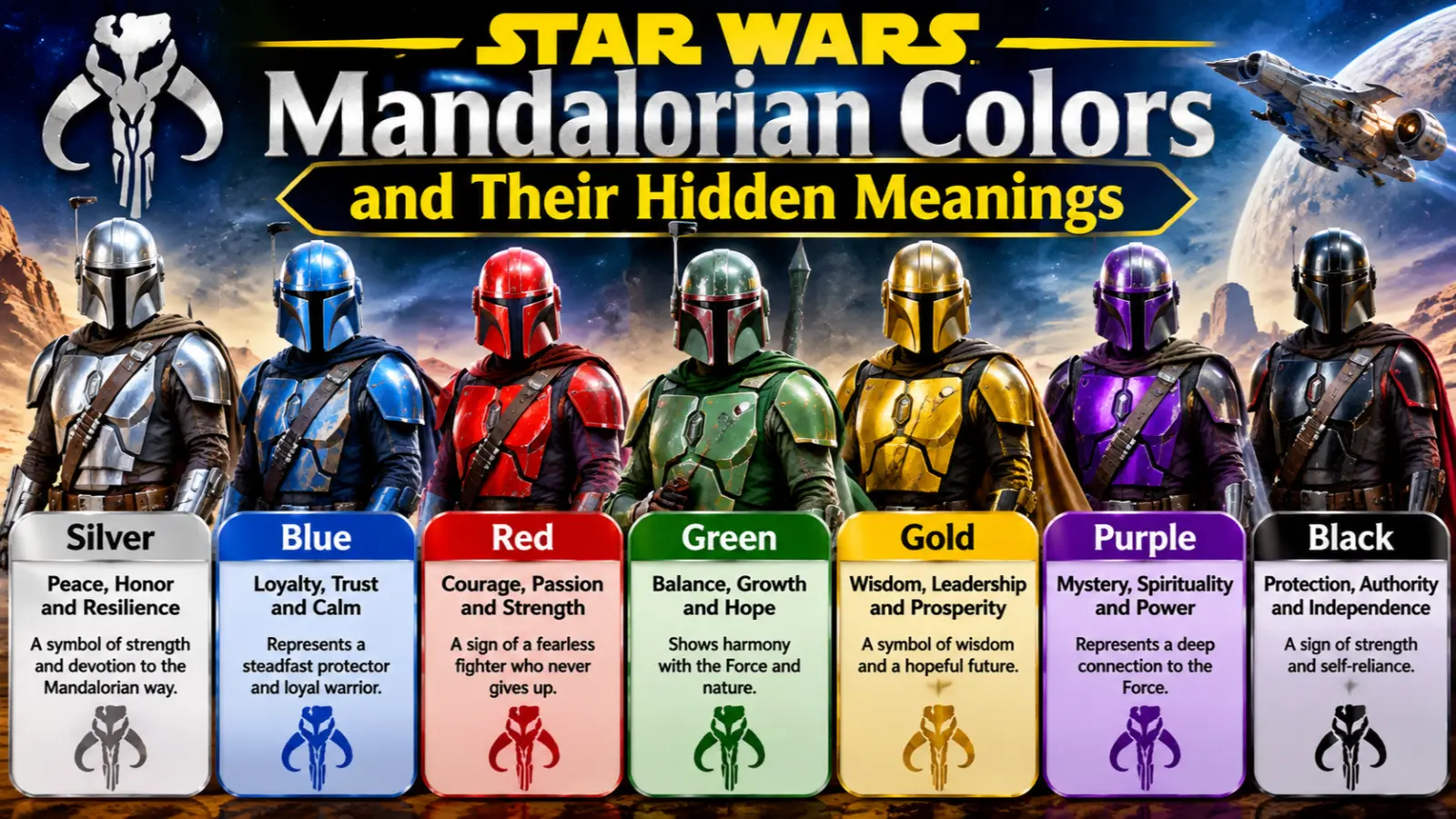
Star Wars Mandalorian Armor Color meanings universe, Mandalorian armor represents much more than protection in battle. Its colors, symbols, weathered surfaces, and clan markings can communicate a warrior’s identity, heritage, personal history, and allegiance. From Boba Fett’s distinctive green armor to Bo-Katan Kryze’s blue-accented helmet and Din Djarin’s silver beskar, every design offers clues about Mandalorian culture. However, fans should distinguish established Star Wars canon from older Legends material when interpreting individual colors.
Quick answer:
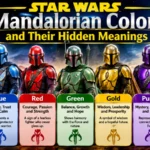
Traditional Legends symbolism associates red with honoring a parent, green with duty, blue with reliability, black with justice, gold with vengeance, gray with mourning, and orange with a love of life.
What Do Mandalorian Armor Colors Symbolize?
Mandalorian armor, known as beskar’gam in the Mandalorian language, reflects the warrior’s identity and connection to Mandalorian heritage. It serves as protective equipment, a cultural tradition, and a personal expression.
According to Lucasfilm’s official Star Wars Inside Intel feature, Mandalorians customize their armor to reflect clan affiliations and individual identity. Some clans also use recognizable color combinations and distinctive symbols.
Importantly, Star Wars does not establish one universal color code for every Mandalorian. The familiar list of individual color meanings comes primarily from the older Expanded Universe, now called Legends, rather than a confirmed rule in current canon. Some warriors also choose colors simply because they like them. StarWars.com+2
Traditional Mandalorian Armor Color Meanings
| Armor color | Traditional Legends meaning |
|---|---|
| Red | Honoring a parent |
| Green | Duty |
| Blue | Reliability |
| Black | Justice |
| Gold | Vengeance |
| Gray | Mourning a lost love |
| Orange | A love of life |
These associations provide an interesting way to understand Mandalorian characters, but they should not serve as automatic explanations for every character’s armor.
Psychological Characteristics of Mandalorian Armor Colors
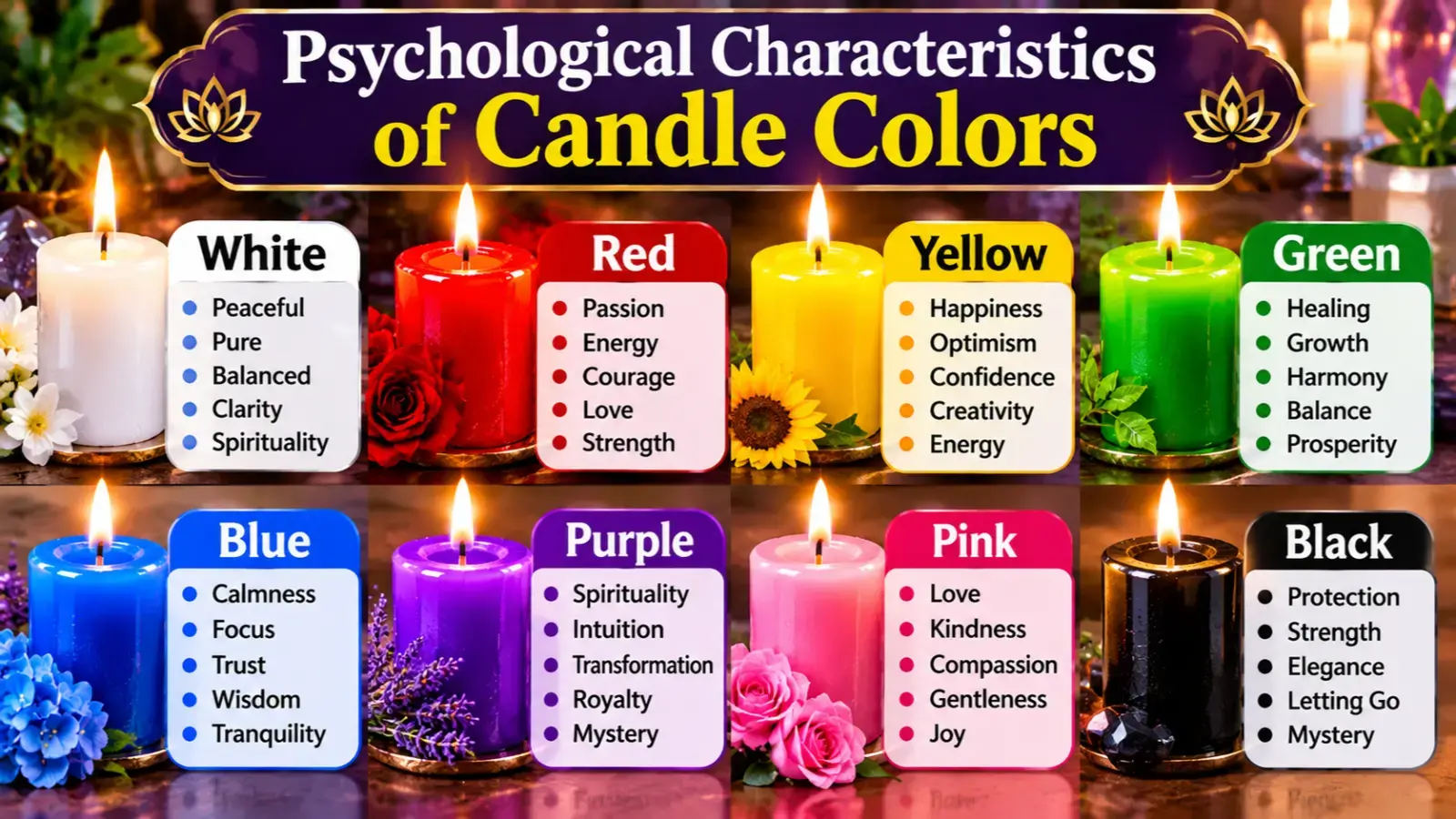
Color psychology helps explain why Mandalorian armor designs create strong impressions. Although fictional armor does not follow scientific personality classifications, familiar color associations can help audiences interpret a warrior’s visual identity.
Emotional Associations
- Red: Suggests courage, passion, family loyalty, and determination.
- Green: Communicates responsibility, resilience, stability, and duty.
- Blue: Creates impressions of reliability, discipline, and confidence.
- Black: Suggests authority, strength, justice, and seriousness.
- Gold: Communicates ambition, achievement, power, and determination.
- Gray: Creates impressions of experience, restraint, maturity, and loss.
- Orange: Suggests energy, enthusiasm, optimism, and independence.
Psychological Effects
Mandalorian armor often uses strong contrasts between metallic surfaces and painted sections. Dark colors create a threatening or mysterious appearance, while brighter colors help warriors stand out.
Silver beskar communicates technological strength and durability. Red and orange accents attract attention, while green and blue create distinctive visual identities.
Positive Emotional Responses
Armor colors can communicate bravery, loyalty, protection, confidence, independence, and perseverance. These associations help viewers connect a warrior’s appearance with the character’s actions.
Negative Emotional Responses
Some combinations can suggest aggression, intimidation, revenge, emotional distance, or danger. For example, extensive black and red detailing may create a more threatening impression than a lighter, neutral armor design.
Impact on Mood and Behavior
Within visual storytelling, armor colors help establish a character’s personality before dialogue reveals their motivations. A bright and unconventional design may suggest individuality, while a uniform clan palette can communicate discipline and group loyalty.
However, color alone does not determine a Mandalorian’s behavior. Their decisions, relationships, history, and actions provide stronger evidence of their character.
Spiritual Meaning of Mandalorian Armor Colors
Mandalorian armor does not follow a single religious or spiritual color system. Nevertheless, its traditional symbolism connects with values that many spiritual traditions recognize, including family, protection, justice, sacrifice, and transformation.
In the Star Wars universe, the strongest spiritual and cultural significance comes from the Mandalorian Creed, clan heritage, and the history attached to a warrior’s armor.
Here are some symbolic interpretations:
- Red – Family and remembrance: Represents honoring a parent in traditional Legends symbolism. It can also suggest sacrifice, courage, and devotion.
- Green – Duty and responsibility: Represents commitment to one’s people, family, and responsibilities.
- Blue – Trust and loyalty: Traditionally symbolizes reliability, suggesting a warrior others can depend on.
- Black – Justice and protection: Represents the pursuit of justice and the willingness to defend others.
- Gold – Vengeance and determination: Connects with the desire to answer past wrongdoing.
- Gray – Mourning and remembrance: Represents grief and the memory of a lost loved one.
- Orange – Vitality and enthusiasm: Represents a strong appreciation for life and personal freedom.
Protection and Spiritual Identity
Beskar armor carries particular cultural importance because it protects the warrior while preserving a connection to Mandalorian history. A helmet and armor set can represent belonging, personal responsibility, and respect for previous generations.
The Mandalorian Creed also emphasizes loyalty, perseverance, and the importance of found family. These values give armor a deeper meaning beyond its physical function.
Positive and Negative Meanings of Mandalorian Armor Colors
Mandalorian armor colors can communicate admirable qualities, but their interpretations may also suggest difficult emotions and personal struggles.
Positive Meanings
Red – Courage and family honor
Red can communicate courage, determination, and devotion to family. Its traditional Legends association with honoring a parent gives it an emotional connection to heritage.
Green – Duty and loyalty
Green represents responsibility and commitment. It suits warriors who place their clan, community, and obligations above personal comfort.
Blue – Reliability and trust
Blue symbolizes dependability, discipline, and confidence. It creates the impression of a warrior who values loyalty and keeps promises.
Black – Justice and strength
Black communicates authority, determination, and protection. Its traditional association with justice gives it a strong connection to Mandalorian warrior values.
Gold – Achievement and ambition
Gold suggests strength, prestige, ambition, and personal determination. Although its traditional Mandalorian meaning involves vengeance, its broader visual symbolism often communicates achievement.
Gray – Experience and remembrance
Gray can suggest maturity, resilience, and reflection. It also carries the traditional association of mourning a lost love.
Orange – Energy and enthusiasm
Orange represents vitality, optimism, courage, and a love of life. It creates a lively appearance that distinguishes a warrior from more conventional armor designs.
Negative Meanings
The same colors can communicate less positive qualities depending on the character and story.
- Red – Anger and aggression: Excessive red detailing may create an impression of hostility, conflict, or uncontrolled passion.
- Green – Stubbornness: Strong associations with duty can suggest inflexibility when a warrior refuses to reconsider an established responsibility.
- Blue – Emotional distance: Blue can appear reserved or detached when a character prioritizes discipline over emotional expression.
- Black – Intimidation: Extensive black armor may communicate danger, fear, secrecy, or an aggressive personality.
- Gold – Revenge and obsession: Its Legends association with vengeance can suggest resentment or an unhealthy attachment to past conflicts.
- Gray – Grief and isolation: Gray can communicate sadness, emotional withdrawal, and difficulty moving beyond loss.
- Orange – Impulsiveness: Its energetic appearance may suggest recklessness, impatience, or excessive risk-taking.
Real-World Examples
A red-and-black costume in a science-fiction convention may communicate a powerful warrior identity. A green-and-silver design may create an impression of discipline and strength. Gray armor with weathered details can suggest a veteran who has experienced difficult battles.
These interpretations describe visual impressions rather than fixed personality traits.
Meanings of Mandalorian Armor Colors
Mandalorian armor carries different meanings depending on historical period, clan affiliation, character development, and storytelling context.
A warrior’s armor can include personalized paint, family symbols, battle damage, and recognizable clan markings. These details often communicate more than color alone.
Traditional Color Symbolism
Red – Honoring a Parent
Red traditionally represents respect for a parent. It connects a Mandalorian’s identity with family history and inherited values. It can also create a powerful impression of courage and determination.
Green – Duty
Green symbolizes a commitment to responsibility. A warrior choosing green may identify with loyalty, discipline, and the protection of their community.
Blue – Reliability
Blue represents dependability and trustworthiness. Its visual associations make it suitable for a warrior who values teamwork and consistent service.
Black – Justice
Black traditionally communicates the pursuit of justice. Its dark appearance also creates an impression of authority, strength, and determination.
Gold – Vengeance
Gold represents vengeance in the traditional Legends color system. Its metallic appearance also suggests prestige, power, and ambition.
Gray – Mourning a Lost Love
Gray symbolizes grief and remembrance. It can represent a warrior’s connection to someone who has died or someone they have lost.
Orange – A Lust for Life
Orange represents enthusiasm and an appreciation for life. It can also communicate independence and a bold approach to personal identity.
White – Clan Identity and Individual Expression
White does not have the same established traditional meaning in the familiar Legends color list. However, it appears prominently in Mandalorian designs.
Clan Wren, for example, wears white armor with yellow accents. This demonstrates how a clan’s visual identity can take priority over a universal color interpretation. StarWars.com+1
Silver – Beskar and Mandalorian Heritage
Silver often appears naturally through the metallic finish of beskar armor. It communicates durability, craftsmanship, and the importance of Mandalorian tradition.
Din Djarin’s silver armor provides a recognizable example of how the material itself contributes to a character’s visual identity.
Clan Symbols and Armor Markings
Mandalorian armor also communicates identity through symbols and customized details.
- Mythosaur symbol: An important symbol in Mandalorian history and culture, associated with the legendary creatures of Mandalore.
- Mudhorn signet: Represents the bond between Din Djarin and Grogu as a clan of two.
- Owl imagery: Appears in Bo-Katan Kryze’s helmet design and connects with the visual identity of the Nite Owls.
- Clan markings: Identify family heritage and connections with particular Mandalorian groups.
These markings demonstrate why armor interpretation requires more than simply identifying a paint color. StarWars.com+1
Feng Shui and Mandalorian Armor Colors
Feng Shui is a traditional Chinese practice that organizes spaces around energy, balance, and the five elements. It does not establish an official system for interpreting fictional Mandalorian armor.
However, fans can use the visual associations of Mandalorian colors when decorating a Star Wars-inspired room.
- Red: Adds energy and visual intensity to a gaming room.
- Green: Creates an earthy atmosphere in a study or display area.
- Blue: Offers a calm appearance for a home office.
- Black: Creates a dramatic atmosphere in a collectibles room.
- Gold: Adds a prestigious metallic accent to display shelves.
- Gray and silver: Create a modern, industrial aesthetic.
- Orange: Adds warmth and energy to a creative space.
For a balanced Mandalorian-inspired interior, combine metallic silver with dark gray, muted green, and carefully selected accent colors.
Marketing
Mandalorian armor colors offer useful examples of visual branding and character recognition.
Branding psychology: Strong color combinations help audiences recognize characters and factions. Boba Fett’s green armor and red accents create an especially recognizable appearance.
Consumer perception: Fans often connect particular armor designs with courage, independence, loyalty, and warrior culture.
Trust signals: Consistent clan colors and recognizable symbols help communicate group identity and belonging.
Product packaging: Toy manufacturers and collectible brands use distinctive armor colors to help customers recognize individual characters and merchandise collections.
Advertising applications: Promotional artwork frequently uses recognizable Mandalorian helmets, metallic surfaces, and contrasting colors to establish an immediate connection with the franchise.
Examples include Star Wars merchandise from LEGO, Hasbro, and Disney consumer products. Their character-inspired designs demonstrate how visual identity supports product recognition.
Design
Mandalorian armor provides excellent examples of character-focused industrial and costume design.
Interior design: Beskar-inspired metallic finishes, dark walls, and colored accent lighting can create a futuristic atmosphere.
Graphic design: Clan symbols, geometric shapes, and contrasting armor colors help create recognizable visual identities.
Web design: Star Wars fan websites can use black, silver, and character-specific accent colors to establish a science-fiction aesthetic.
User experience: Clear visual differences between characters and factions help viewers recognize important story elements.
Minimalist aesthetics: A simplified Mandalorian helmet silhouette can communicate the franchise without requiring complicated decorative details.
Fashion
Mandalorian armor has influenced science-fiction costumes, cosplay, streetwear, and collectible-inspired fashion.
Clothing symbolism: Fans often use armor-inspired colors to communicate courage, individuality, loyalty, and independence.
Seasonal use: Dark green, black, and metallic gray work well in fall and winter styling, while brighter orange and lighter metallic accents create a more energetic appearance.
Styling effects: Green and silver create a classic Mandalorian-inspired combination. Red and black offer a dramatic appearance, while blue and gray create a cooler, more restrained look.
Personality impressions: Bold armor-inspired clothing may suggest confidence and creativity. Minimal metallic accessories can communicate a more understated interest in science-fiction design.
Advantages:
- Creates distinctive visual combinations.
- Offers opportunities for personalized cosplay.
- Connects fashion with popular science-fiction culture.
- Supports creative expression.
Disadvantages:
- Heavy armor-inspired costumes can restrict movement.
- Elaborate designs may require considerable expense.
- Certain combinations may look more like costumes than everyday clothing.
For example, a simple green jacket with silver accessories can create a subtle Boba Fett-inspired outfit without reproducing the complete armor.
Color Associations Are Not Universal
Mandalorian armor colors have different meanings depending on the Star Wars timeline, cultural background, and storytelling tradition. Fans should distinguish fictional Mandalorian symbolism from real-world color psychology.
Western Interpretations
In Western visual culture, red often represents courage, passion, danger, and strength. Blue frequently communicates trust and reliability, while black suggests authority and sophistication.
These associations help explain why Mandalorian armor designs can create powerful impressions among American audiences.
Eastern Interpretations
Eastern color traditions vary considerably between countries.
In China, red often represents good fortune, celebration, and prosperity. Gold connects with wealth and prestige. White can represent mourning in certain traditional contexts.
These cultural associations provide additional ways to appreciate the visual symbolism of Mandalorian armor.
Religious Traditions
Religious color symbolism also varies.
- White frequently represents purity and spiritual renewal in Christian traditions.
- Gold can symbolize divine glory and sacred authority.
- Red can represent sacrifice, courage, and martyrdom.
- Black can represent mourning, humility, or solemnity.
These are real-world cultural associations, not official Mandalorian religious teachings.
Historical Interpretations
Mandalorian armor has evolved throughout Star Wars history.
The older Neo-Crusader armor system used colors to distinguish military ranks. Silver represented veterans on the front lines, gold represented Field Marshals, crimson represented Rally Masters, and blue represented other warriors.
Later Mandalorian armor designs placed greater emphasis on personal identity, clan affiliation, and individual preferences. Fandom+1
Modern Global Interpretations
Modern audiences interpret Mandalorian colors through films, television, gaming, cosplay, and merchandise.
For example, Boba Fett’s green armor has become a recognizable symbol of the Star Wars franchise. Din Djarin’s silver beskar represents a different visual identity, while Bo-Katan’s blue-accented armor connects with her Mandalorian heritage.
These interpretations demonstrate how fictional color symbolism can become part of global popular culture.
What Mandalorian Armor Colors Say About Your Personality
Fans who prefer particular Mandalorian armor colors may connect with the qualities those colors traditionally communicate.
However, choosing an armor color does not establish someone’s actual personality. These associations offer creative ways to express personal interests and values.
Red Armor Lovers
People who prefer red Mandalorian armor may appreciate:
- Courage and determination.
- Family loyalty and tradition.
- Passion and confidence.
- Strong emotional connections.
They may enjoy bold designs that communicate strength and individuality.
Green Armor Lovers
Green armor enthusiasts may appreciate:
- Responsibility and discipline.
- Loyalty and stability.
- Independence and resilience.
- Commitment to personal values.
They may prefer practical designs with traditional Mandalorian details.
Blue Armor Lovers
People attracted to blue armor may appreciate:
- Reliability and trust.
- Cooperation and teamwork.
- Calmness and consistency.
- Dependability in relationships.
They may favor balanced designs with recognizable clan markings.
Black Armor Lovers
Black armor enthusiasts may appreciate:
- Strength and authority.
- Independence and determination.
- Justice and fairness.
- Mystery and sophistication.
They may enjoy dramatic, minimalist, and intimidating armor designs.
Gold Armor Lovers
Gold armor enthusiasts may appreciate:
- Achievement and ambition.
- Recognition and prestige.
- Determination and confidence.
- Personal accomplishment.
Gray Armor Lovers
Gray armor enthusiasts may appreciate:
- Experience and maturity.
- Reflection and wisdom.
- Emotional depth.
- Understated designs.
Orange Armor Lovers
Orange armor enthusiasts may appreciate:
- Creativity and enthusiasm.
- Adventure and independence.
- Optimism and energy.
- Personal freedom.
Strengths and Weaknesses
A preference for a particular color may reflect someone’s aesthetic interests, cultural experiences, or emotional associations.
For example, someone who prefers green armor might admire its traditional connection with duty. However, that preference does not prove that the individual is more responsible than someone who prefers red or black.
Similarly, a fan who chooses black armor does not necessarily have an aggressive personality.
Social behavior, work style, relationships, and emotional tendencies depend on many factors. Armor color preferences offer creative self-expression rather than reliable psychological assessments.
Frequently Asked Questions
1. What do Mandalorian armor colors mean in Star Wars?
Traditional Legends symbolism associates red with honoring a parent, green with duty, blue with reliability, black with justice, gold with vengeance, gray with mourning a lost love, and orange with a love of life.
2. Does every Mandalorian armor color have a specific meaning?
No. Mandalorians can choose armor colors based on personal preferences, clan affiliation, family history, or individual identity. Current canon does not establish a universal color-to-meaning system.
3. What does red Mandalorian armor symbolize?
In traditional Legends material, red represents honoring a parent. It also creates broader visual associations with courage, passion, strength, and family loyalty.
4. What does green Mandalorian armor mean?
Green traditionally represents duty. It symbolizes responsibility, loyalty, and commitment to protecting one’s people.
5. What does blue Mandalorian armor represent?
Blue traditionally represents reliability. It suggests trustworthiness, discipline, loyalty, and dependability.
6. What does black Mandalorian armor symbolize?
Black represents justice in traditional Legends symbolism. Its visual appearance can also communicate authority, strength, protection, and intimidation.
7. What does gold Mandalorian armor mean?
Gold traditionally represents vengeance. Its metallic appearance can also suggest prestige, ambition, achievement, and power.
8. What does gray Mandalorian armor symbolize?
Gray represents mourning a lost love in traditional Mandalorian color symbolism. It can also suggest experience, remembrance, maturity, and emotional depth.
9. What does orange Mandalorian armor mean?
Orange traditionally represents a lust for life. It communicates enthusiasm, vitality, independence, and appreciation for life.
10. What does silver Mandalorian armor represent?
Silver commonly represents the metallic appearance of beskar armor. It communicates durability, craftsmanship, and Mandalorian heritage rather than having a universally established traditional color meaning.
11. Why is Mandalorian armor important?
Mandalorian armor provides physical protection and represents cultural identity, family history, clan affiliation, and personal achievements. It connects individual warriors with generations of Mandalorian tradition.
12. Are Mandalorian armor color meanings official canon?
The familiar list of seven traditional color meanings comes from Legends material. Lucasfilm’s current official canon emphasizes customization, clan identity, and personal expression without confirming that universal color code.
Conclusion
Star Wars Mandalorian armor color meanings reveal how visual design can communicate identity, heritage, loyalty, and personal history. Traditional Legends symbolism connects red with honoring a parent, green with duty, blue with reliability, black with justice, gold with vengeance, gray with mourning, and orange with a love of life. However, these meanings do not apply universally to every Mandalorian. Current canon places greater emphasis on clan affiliation, personal preferences, and individual stories. From Boba Fett’s distinctive green armor to Din Djarin’s silver beskar, each design contributes to the rich cultural identity of the Mandalorians. Understanding the difference between canon and Legends makes these iconic armor designs even more interesting.