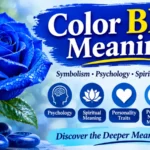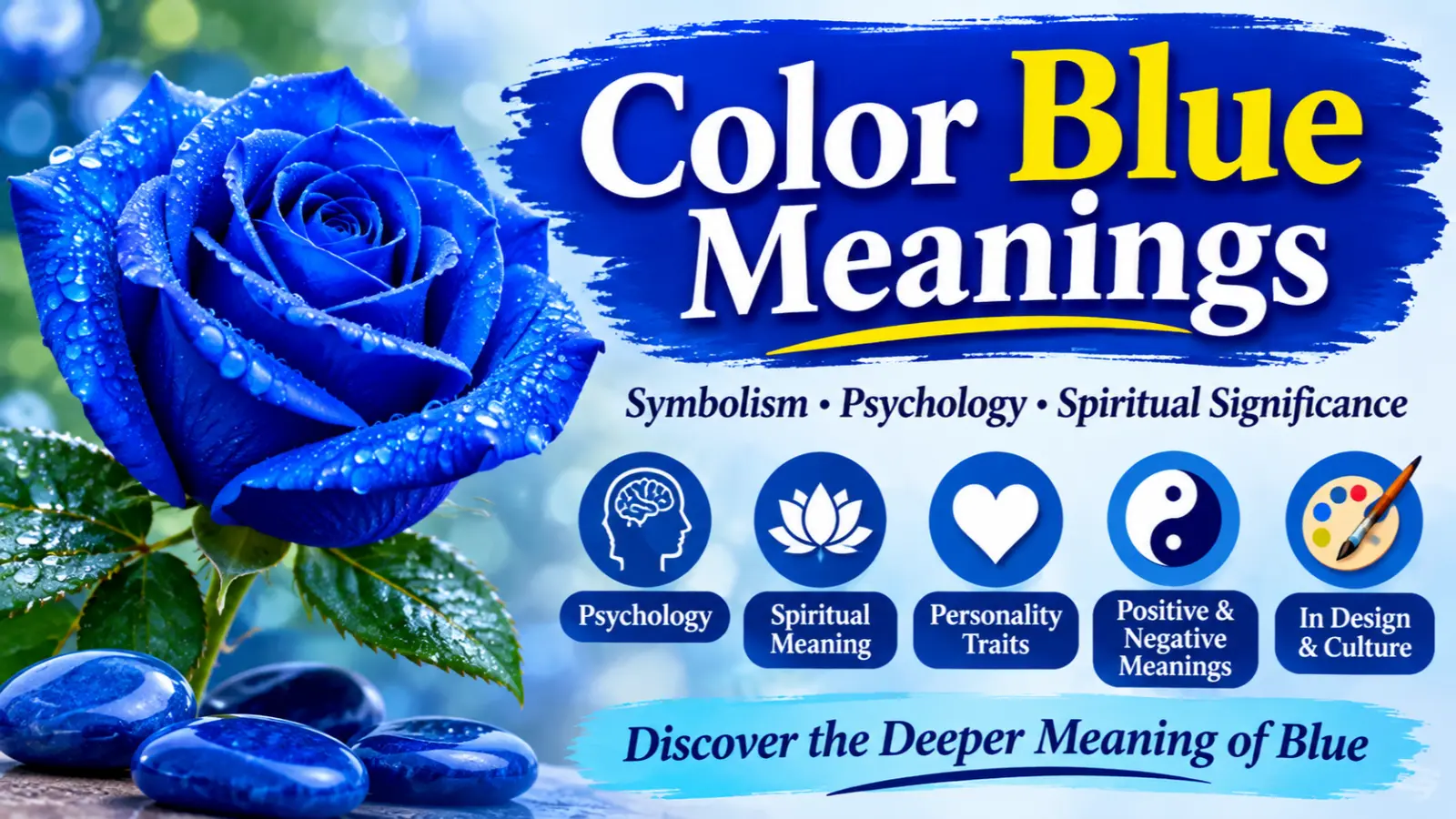
color blue meanings is widely associated with peace, trust, wisdom, stability, and emotional balance. Inspired by the sky and ocean, it often represents calmness, freedom, confidence, and reliability. Across different cultures, blue has also been connected with spirituality, protection, healing, and authority.
However, its meaning can change depending on the shade, personal experiences, and cultural traditions. From interior design and fashion to branding and everyday communication, blue plays an important role in how people interpret their surroundings.
Quick answer:
Blue symbolizes trust, tranquility, intelligence, loyalty, wisdom, and emotional stability, although it can sometimes represent sadness, coldness, or distance.
What Does the Color Blue Symbolize?
Blue symbolizes trust, peace, loyalty, intelligence, confidence, and emotional stability. Its connection with the sky and water makes it a natural representation of openness, freedom, depth, and continuity.
In everyday life, blue is frequently associated with dependable relationships, professional environments, and peaceful surroundings. Businesses often use it to communicate credibility, while individuals may choose blue clothing to create an impression of confidence and composure.
Different shades also carry distinct associations:
- Light blue: Peace, innocence, freshness, openness, and relaxation.
- Sky blue: Freedom, optimism, clarity, and possibility.
- Royal blue: Confidence, authority, leadership, and ambition.
- Navy blue: Professionalism, discipline, loyalty, and responsibility.
- Turquoise blue: Communication, creativity, emotional renewal, and balance.
- Dark blue: Intelligence, seriousness, depth, and stability.
Blue’s symbolism is not limited to positive qualities. Dark or overly muted shades can suggest sadness, loneliness, emotional distance, or coldness.
Psychological Characteristics of the Color Blue
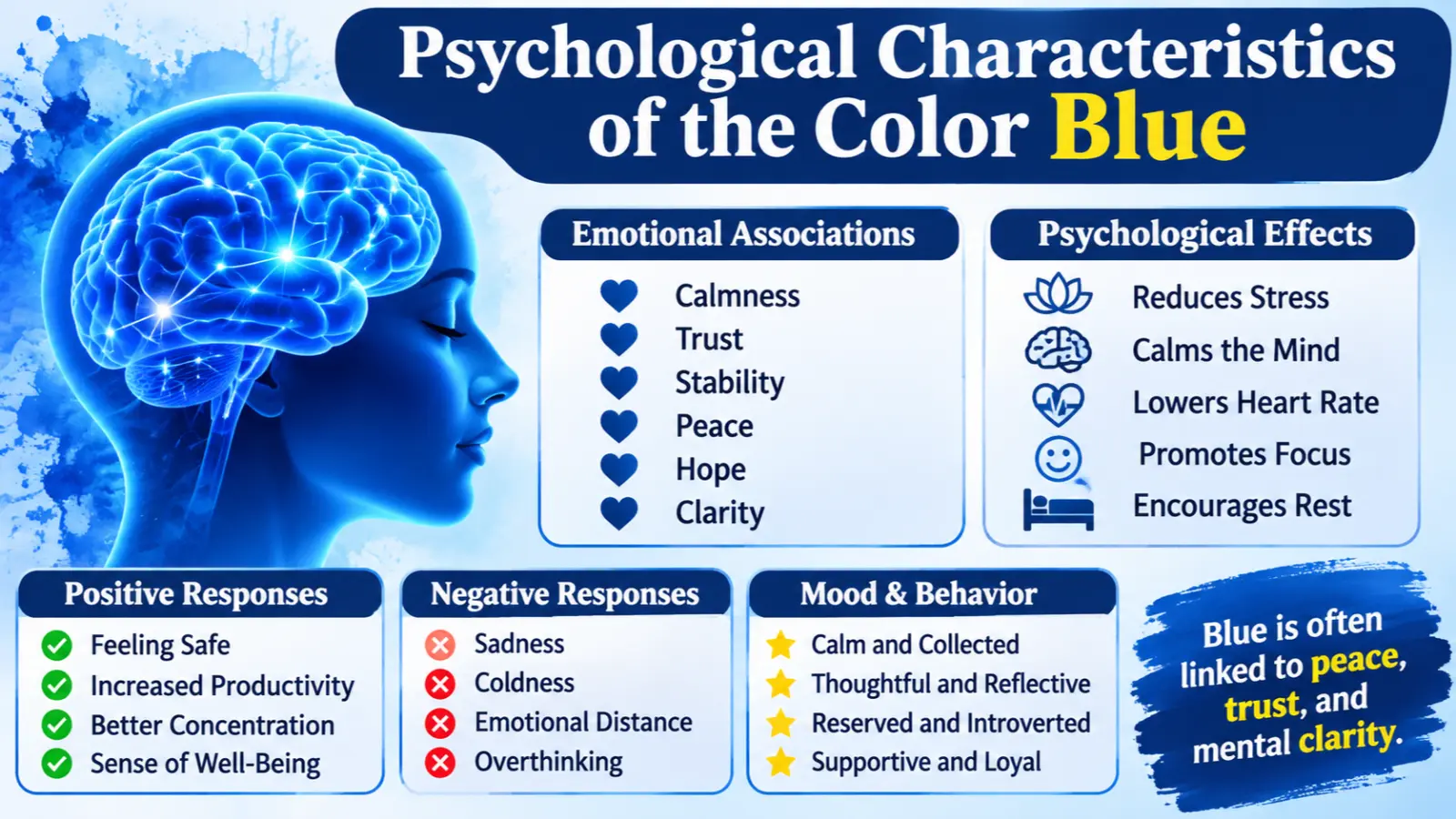
Color psychology examines how people associate colors with emotions, thoughts, and experiences. Blue is generally considered a cool color and is commonly connected with calmness, security, and mental clarity.
Emotional Associations
Blue is associated with several emotional and psychological qualities:
- Calmness: Its connection with peaceful skies and water can create associations with relaxation.
- Trust: Blue frequently communicates dependability and honesty.
- Confidence: Darker shades often suggest authority and self-assurance.
- Intelligence: Blue is commonly linked with knowledge, communication, and thoughtful decision-making.
- Loyalty: It can represent commitment, faithfulness, and dependable relationships.
- Sadness: Expressions such as feeling blue connect the color with melancholy and disappointment.
Psychological Effects
Blue is often selected for environments where a peaceful and organized atmosphere is desirable. Its cool appearance can make spaces feel visually spacious and less intense.
Research has identified consistent associations between blue and positive, relatively low-arousal emotions, including relaxation and comfort. However, these associations do not mean that looking at blue will automatically produce a particular psychological response.
Positive Emotional Responses
Blue can represent feelings of:
- Peace and emotional security.
- Confidence and personal stability.
- Trust and reassurance.
- Relaxation and mental clarity.
- Hope and freedom.
- Loyalty and connection.
Negative Emotional Responses
Depending on its shade and surroundings, blue may also suggest:
- Loneliness and isolation.
- Emotional coldness.
- Sadness and melancholy.
- Distance and detachment.
- Passivity or lack of excitement.
- Excessive seriousness.
Impact on Mood and Behavior
Blue is frequently used in bedrooms, offices, hospitals, and educational environments because it communicates a calm and organized visual atmosphere. Light blue can create a gentle impression, while navy blue often appears more formal and authoritative.
People may also associate blue with predictable behavior, responsible decisions, and clear communication. Nevertheless, individual reactions depend on lighting, cultural background, personal memories, and the surrounding environment.
How People Typically React to Blue
Many people describe blue as comfortable, familiar, and visually pleasant. Its association with natural landscapes may contribute to its widespread appeal.
Some people prefer brighter blues because they feel fresh and energetic, while others favor darker shades because they appear sophisticated and professional.
Spiritual Meaning of the Color Blue
The spiritual meaning of blue is commonly connected with peace, wisdom, divine protection, healing, and spiritual awareness. Its association with the expansive sky and deep water has made it a meaningful color in various religious and spiritual traditions.
Its interpretations include:
- Holiness: Blue may represent heavenly presence, sacred authority, and devotion. In some religious traditions, it is used in sacred clothing and decorative objects.
- Wisdom: Blue symbolizes knowledge, thoughtful judgment, and the search for truth.
- Purity: Light blue can suggest sincerity, innocence, and spiritual cleanliness.
- Transformation: Blue water and open skies can symbolize renewal, personal growth, and changing perspectives.
- Healing: In spiritual symbolism, blue is frequently associated with emotional restoration, peace, and balance. These are symbolic associations rather than proven medical effects.
- Protection: Blue protective symbols and decorations appear in several cultural traditions, where they are believed to discourage harmful influences.
- Power: Royal and deep blue shades have historically represented authority, dignity, and leadership.
- Enlightenment: Blue can symbolize spiritual understanding, awareness, and a deeper search for truth.
- New beginnings: Light blue skies and flowing water may represent fresh opportunities and renewed hope.
- Eternity: Its connection with the seemingly endless sky and ocean makes blue a symbol of continuity and infinity.
In some Hindu traditions, blue is associated with divine figures such as Krishna, whose blue appearance carries complex symbolic meanings involving divinity and cosmic significance. In Christianity, blue has been associated with the Virgin Mary in religious art, often communicating heavenly grace and devotion.
Positive and Negative Meanings of the Color Blue
Blue has both uplifting and challenging symbolic interpretations. Its overall meaning depends on the shade, cultural setting, and purpose for which it is used.
Positive Meanings
1. Peace: Blue represents tranquility and quietness. Pale blue walls, for example, can give a bedroom a peaceful visual appearance.
2. Purity: Light blue may communicate sincerity and innocence. It is sometimes used in products and designs intended to feel clean and gentle.
3. Simplicity: Blue can create an uncomplicated and organized appearance. Minimalist websites often use it to maintain a clean visual identity.
4. Clarity: Blue is associated with clear skies, communication, and thoughtful expression. It can support a visual message of transparency.
5. Freshness: Aqua and sky-blue shades suggest fresh water, clean air, and renewal. They are popular in personal care and lifestyle branding.
6. Hope: Blue skies often symbolize better opportunities and positive changes after difficult periods.
7. Balance: Blue’s cool appearance can represent emotional steadiness and moderation.
8. Harmony: Blue is frequently used to communicate cooperation, peaceful relationships, and mutual understanding.
Negative Meanings
1. Emptiness: Excessive use of pale or cold blue may make a room feel empty or unfinished. An interior with blue walls and very little decoration can lack warmth.
2. Isolation: Dark blue imagery may communicate loneliness or separation. A solitary figure against a deep blue background can reinforce this impression.
3. Coldness: Blue is visually associated with cool temperatures. In interior design, too much icy blue can make a room appear less welcoming.
4. Sterility: Certain blue-white combinations may resemble clinical environments. This can be useful in healthcare settings but less inviting in residential spaces.
5. Boredom: Large areas of repetitive, muted blue can appear monotonous, especially when there is little variation in texture or contrast.
6. Emotional Distance: Dark blue can communicate reserve and seriousness. In relationships, excessive visual use of cool shades may create an emotionally distant impression.
7. Perfectionism: Blue’s associations with order and professionalism can sometimes suggest excessive control, rigidity, or unrealistic expectations.
These negative meanings are contextual interpretations, not universal psychological effects.
Meanings of the Color Blue
The color blue has different meanings across interior decoration, marketing, fashion, and visual communication. Its usefulness comes from its flexibility, as different shades can communicate relaxation, authority, creativity, or sophistication.
Feng Shui
In Feng Shui, blue is generally associated with the Water element, which represents wisdom, communication, career opportunities, and the flow of energy.
- Associated element: Water.
- Energy symbolism: Knowledge, flexibility, movement, and personal development.
- Best rooms: Study rooms, offices, meditation areas, and bedrooms.
- Recommended combinations: Blue and white for clarity, blue and black for depth, and blue and green for a natural atmosphere.
- Home decorating tips: Use light blue for peaceful bedrooms and deeper blue accents in offices. Balance cool shades with wooden furniture or warm neutral colors.
In traditional Feng Shui practice, the placement and shade of blue may be considered alongside the room’s purpose and overall energy balance.
Marketing
Blue is one of the most recognizable colors in corporate branding. Companies frequently use it to communicate trust, professionalism, security, and reliability.
Branding psychology: Blue can create an impression of responsibility, stability, and confidence.
Consumer perception: Customers may associate blue branding with dependable services, particularly in industries involving finance, technology, and communication.
Trust signals: Banks, insurance companies, and technology businesses often incorporate blue into their visual identities to reinforce credibility.
Product packaging: Blue packaging is common in personal care, household products, bottled water, and healthcare-related products. It can suggest freshness and cleanliness.
Advertising applications: Blue backgrounds, logos, and promotional materials can create a professional appearance and provide contrast with brighter accent colors.
Famous examples include:
- Facebook: Uses blue as a major part of its recognizable visual identity.
- IBM: Incorporates blue into its corporate branding to communicate professionalism and technological expertise.
- PayPal: Uses blue in its financial technology branding.
- Samsung: Uses blue prominently in aspects of its corporate identity.
- American Express: Uses blue as a recognizable element of its financial services branding.
However, blue does not guarantee consumer trust. Brand reputation, product quality, messaging, and customer experience remain more important.
Design
Blue is widely used in visual and environmental design because it offers a broad range of styles, from peaceful and minimal to bold and sophisticated.
Interior design: Light blue works well in bedrooms, bathrooms, and relaxing spaces. Navy blue can add depth to living rooms, kitchens, and office interiors.
Graphic design: Blue creates a recognizable visual hierarchy and works effectively in professional presentations, business materials, and educational graphics.
Web design: Many websites use blue for navigation bars, icons, links, and backgrounds because it can communicate reliability and clarity.
User experience: Blue is frequently used for interactive elements, including links and buttons. Designers should maintain sufficient contrast and use clear labels so that important actions remain accessible.
Minimalist aesthetics: Soft blue combined with white, gray, and beige can produce a clean and balanced appearance.
Fashion
Blue is a versatile fashion color that can communicate elegance, confidence, relaxation, and individuality.
Clothing symbolism: Navy blue often represents professionalism and sophistication, while lighter shades communicate freshness and approachability.
Seasonal use: Pale blue is popular in spring and summer collections, while navy and deeper blues are common in autumn and winter wardrobes.
Styling effects: Blue pairs well with white, black, gray, beige, brown, and complementary warm shades such as orange.
Personality impressions: People wearing blue may appear dependable, calm, thoughtful, and confident, although clothing color cannot reliably reveal someone’s personality.
Advantages:
- Suitable for casual and formal clothing.
- Easy to combine with neutral colors.
- Offers a wide variety of shades.
- Works across different seasons.
- Creates both relaxed and professional looks.
Disadvantages:
- Some dark shades may appear overly serious.
- Very cool blues can look less warm or inviting.
- Certain combinations may appear monotonous without contrasting accents.
Practical examples include a navy business suit for professional occasions, a light-blue shirt for casual settings, and a turquoise accessory for a brighter fashion statement.
Color Associations Are Not Universal
Although blue has widely recognized symbolic meanings, its interpretation can differ according to culture, religion, history, and personal experience.
Western Cultures
In many Western societies, blue is associated with trust, loyalty, professionalism, and stability. It is common in corporate branding, formal clothing, and institutional communication.
Blue is also connected with sadness through expressions such as feeling blue. These contrasting associations demonstrate that a single color can communicate different emotions.
Eastern Cultures
Blue has a long history in Asian art, ceramics, clothing, and religious imagery.
In China, blue has appeared in traditional ceramics and decorative arts, where its meanings can vary according to the material, historical period, and design.
In Japan, blue has been associated with traditional clothing and artistic representations of nature. Its meaning also changes across contemporary settings and popular culture.
Religious Traditions
Blue has significant religious associations in several traditions.
- Christianity: Blue is often used in representations of the Virgin Mary and can symbolize heavenly grace and devotion.
- Hinduism: Blue is associated with deities such as Krishna and Vishnu, representing complex ideas of divinity and cosmic power.
- Judaism: Blue, particularly tekhelet, has historical religious significance and appears in discussions of sacred garments and ritual symbolism.
- Buddhism: Blue appears in religious art and imagery, including representations of enlightened figures and sacred objects.
Historical Interpretations
Historically, blue pigments were sometimes expensive and difficult to produce. In ancient Egypt, blue was associated with the sky, water, divine authority, and the afterlife.
During later European history, blue became increasingly important in religious paintings, royal clothing, and artistic traditions. The availability of new pigments also expanded its use in decorative arts and fashion.
Modern Global Interpretations
Today, blue is widely recognized as a symbol of communication, technology, trust, and professionalism. It is used in international business, digital platforms, education, and public institutions.
Nevertheless, political symbols, national flags, local traditions, and individual experiences can give blue additional meanings.
What Blue Says About Your Personality
People who prefer blue are sometimes associated with calmness, loyalty, thoughtfulness, and dependability. These associations are common in popular color psychology, but a person’s favorite color cannot establish their personality with scientific certainty.
Strengths
People who enjoy blue may identify with qualities such as:
- Reliability and responsibility.
- Patience and emotional steadiness.
- Loyalty and honesty.
- Thoughtful decision-making.
- Preference for stability and organization.
Weaknesses
Some traditional personality interpretations associate a strong preference for blue with possible challenges, including:
- Avoiding unnecessary risks.
- Being overly cautious.
- Difficulty expressing emotions.
- Excessive concern about stability.
- Resistance to sudden changes.
These are possible symbolic interpretations rather than established personality characteristics.
Social Behavior
Blue lovers are often portrayed as dependable and considerate. They may value meaningful conversations, trustworthy friendships, and peaceful social environments.
Work Style
In popular color-personality interpretations, people attracted to blue may prefer organized workplaces, clear expectations, teamwork, and consistent professional relationships.
Relationships
Blue is commonly associated with loyalty, commitment, honesty, and emotional security. People who appreciate the color may value dependable relationships and open communication.
Emotional Tendencies
Blue preferences are sometimes connected with a desire for peace, reflection, and emotional balance. However, personal experiences and individual differences have a much stronger influence on emotional behavior than color preference alone.
Frequently Asked Questions
1. What Defines the Color Blue?
Blue is a primary color in traditional painting models and is commonly classified as a cool color. It includes shades ranging from pale sky blue to deep navy and is associated with the appearance of the sky and water.
2. What Does the Color Blue Symbolize?
Blue symbolizes trust, peace, loyalty, intelligence, confidence, stability, and wisdom. Depending on the shade and context, it may also represent sadness, loneliness, or emotional distance.
3. Why Is the Color Blue Important?
Blue is important in communication, branding, fashion, art, and interior design. Its familiar associations with reliability and calmness make it a useful color for professional and personal environments.
4. Is Blue a Warm or Cool Color?
Blue is generally classified as a cool color. Its cool appearance is associated with water, ice, and open skies. However, different blue shades can have warmer or cooler undertones.
5. What Emotions Does Blue Represent?
Blue commonly represents peace, relaxation, trust, confidence, loyalty, and emotional stability. It can also communicate sadness, melancholy, and isolation.
6. What Does Blue Mean Spiritually?
The spiritual meaning of blue is associated with wisdom, divine connection, healing, protection, purity, enlightenment, and eternity. Interpretations differ across religious and cultural traditions.
7. What Colors Pair Well With Blue?
Blue pairs beautifully with white, gray, beige, black, green, and orange. Navy and white create a classic appearance, while turquoise and beige produce a fresh, natural combination.
8. What Does Liking Blue Say About a Person?
In popular color psychology, people who like blue are often associated with loyalty, reliability, patience, and thoughtfulness. However, favorite colors cannot accurately determine someone’s personality.
9. What Is the Difference Between Light Blue and Dark Blue Meaning?
Light blue usually represents peace, openness, innocence, and freshness. Dark blue is more commonly associated with authority, confidence, intelligence, responsibility, and sophistication.
10. Why Is Blue Commonly Used in Business Branding?
Businesses frequently use blue because it communicates professionalism, reliability, security, and trust. It is particularly popular in financial services, technology, healthcare, and corporate communication.
Conclusion
The color blue carries a wide range of meanings, including peace, trust, loyalty, wisdom, confidence, and emotional stability. Its connection with the sky and water makes it a powerful symbol of freedom, depth, and continuity. From spiritual traditions and cultural history to modern marketing, fashion, and interior design, blue remains an influential color. Although it can also represent sadness, coldness, and isolation, its overall symbolism is commonly positive. Understanding color blue meanings helps explain how this versatile color communicates emotions, influences visual impressions, and shapes everyday experiences.