Handfasting cord is an ancient wedding ritual in which cords or ribbons are gently tied around a couple’s hands to symbolize their union, commitment, and shared future.
Each handfasting cord color carries its own symbolic meaning, allowing couples to personalize the ceremony according to their values, beliefs, and relationship goals.
While many meanings stem from Celtic and modern Pagan traditions, others reflect broader color psychology and cultural symbolism.
Choosing the right combination of colors transforms the cords into a meaningful expression of love, trust, prosperity, protection, and lifelong partnership.
Quick Answer:
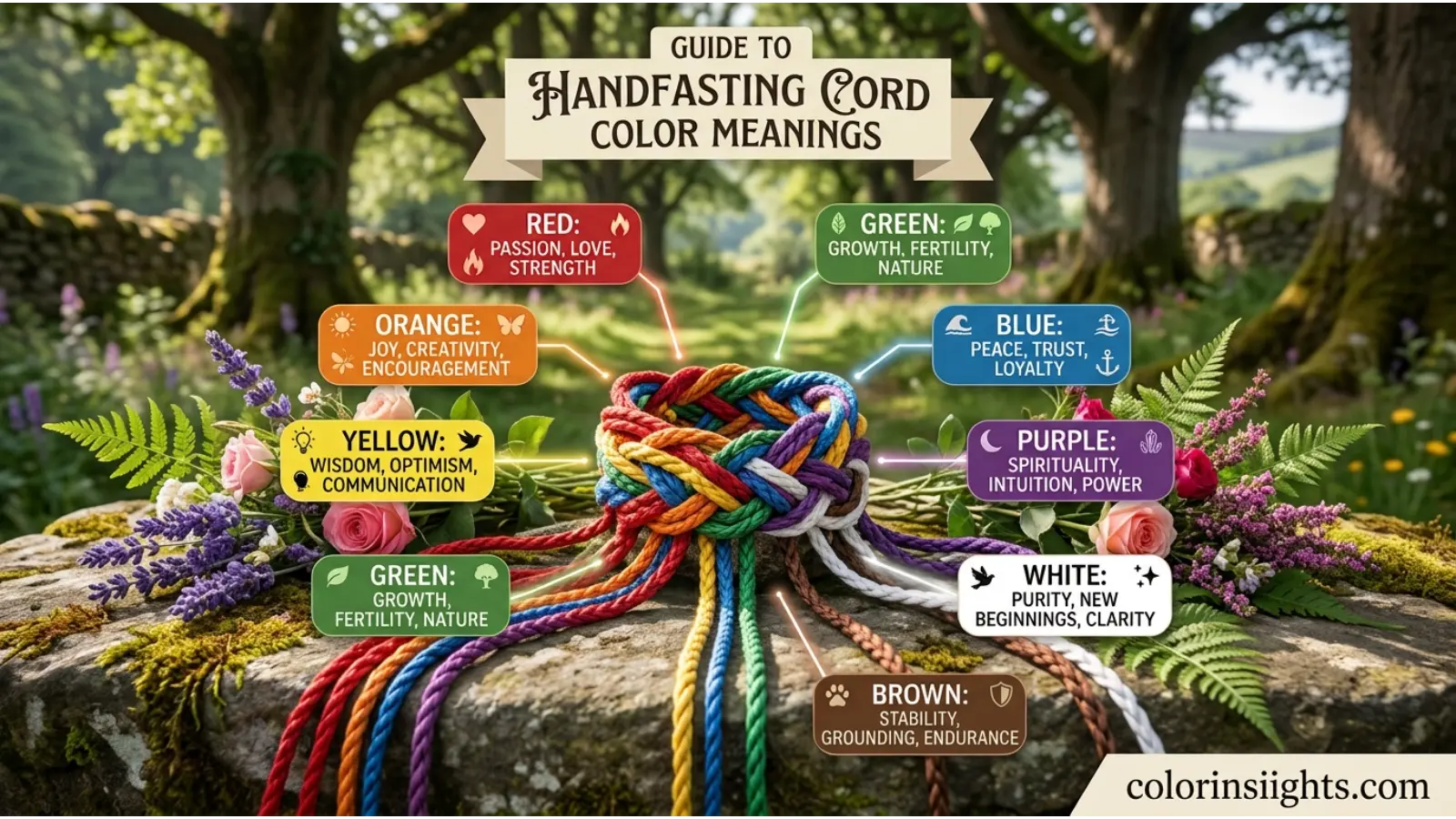
Handfasting cord color meanings represent the qualities a couple wishes to bring into their marriage. Common examples include red for passion, blue for loyalty, green for growth, white for purity, purple for wisdom, gold for prosperity, and silver for intuition and balance.
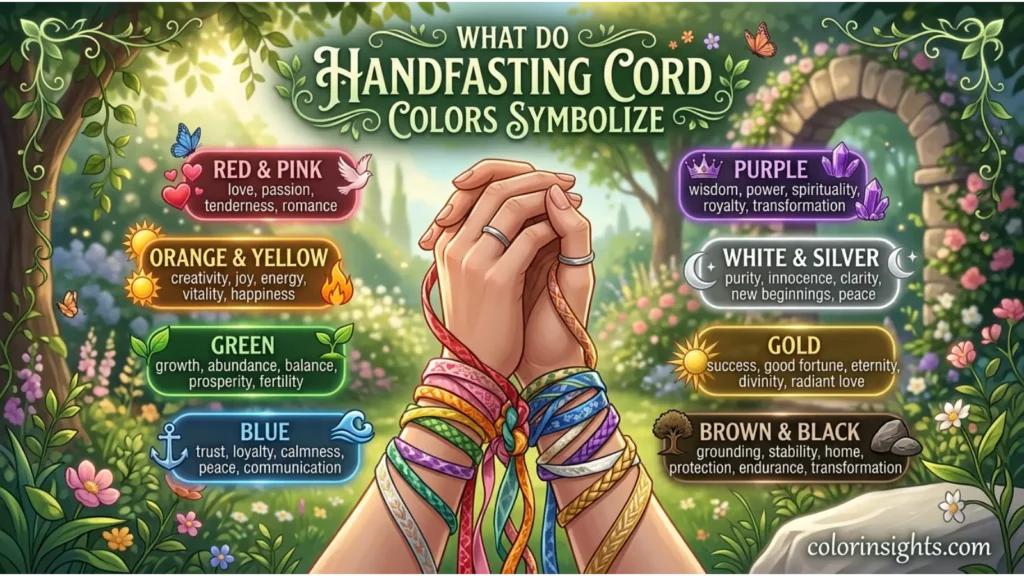
What Do Handfasting Cord Colors Symbolize?
Handfasting cord colors symbolize the intentions, promises, and aspirations exchanged during a handfasting ceremony. Unlike ordinary decorative ribbons, each cord represents a specific blessing or value that supports a healthy and lasting relationship. Couples often select several colors so the completed braid reflects multiple aspects of their partnership.
Although meanings may vary slightly between traditions, most interpretations combine elements of ancient symbolism, spiritual beliefs, and modern color psychology.
Common symbolic themes include:
- Eternal love and commitment
- Trust and loyalty
- Passion and romance
- Prosperity and abundance
- Fertility and family
- Wisdom and spiritual growth
- Protection from negativity
- Harmony and emotional balance
- Courage during life’s challenges
- Hope for a joyful future
Many couples also choose colors that represent personal experiences, family heritage, favorite colors, or important milestones, making every handfasting cord unique.
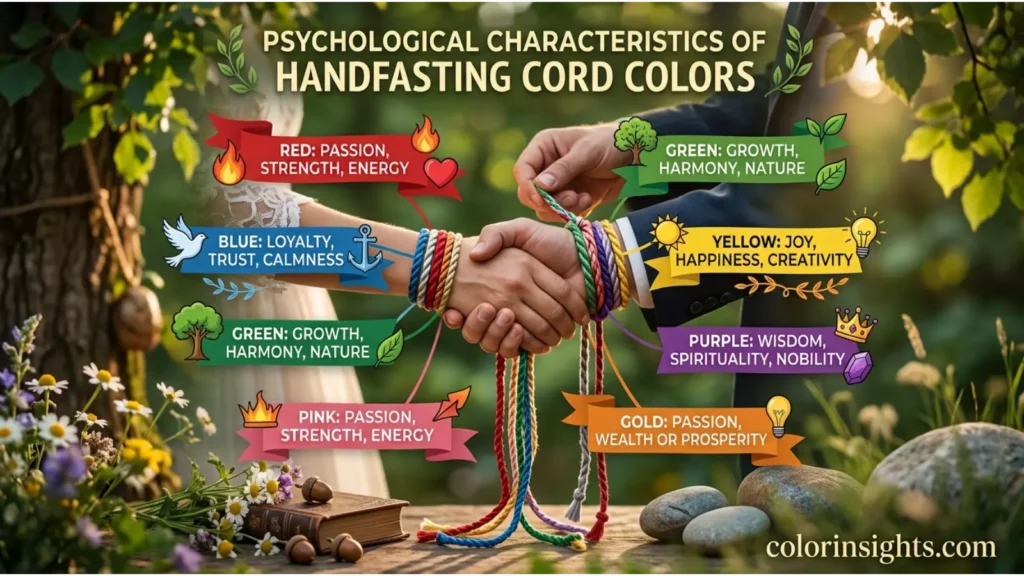
Psychological Characteristics of Handfasting Cord Colors
Color psychology suggests that colors influence emotions, perceptions, and interpersonal relationships. During a handfasting ceremony, the selected cord colors reinforce the emotional intentions behind the vows and create a memorable visual representation of the couple’s bond.
Emotional Associations
Different cord colors evoke different emotional responses, including:
- Love and affection
- Trust and security
- Calmness and peace
- Joy and optimism
- Strength and resilience
- Compassion and understanding
- Confidence and purpose
These associations help create a ceremony that feels deeply personal and emotionally meaningful.
Psychological Effects
The symbolism of each color can subtly influence how people perceive the ceremony and the relationship itself.
- Warm colors often encourage excitement and intimacy.
- Cool colors promote calmness and stability.
- Earth tones inspire grounding and dependability.
- Metallic shades suggest achievement and lasting value.
Together, these colors create a balanced emotional experience.
Positive Emotional Responses
Handfasting cord colors are commonly associated with positive feelings such as:
- Love
- Unity
- Devotion
- Security
- Gratitude
- Hope
- Compassion
- Confidence
- Joy
- Peace
These emotions reinforce the promises exchanged during the ceremony.
Negative Emotional Responses
Although most handfasting symbolism is positive, colors can occasionally carry less favorable associations depending on personal or cultural interpretation.
Possible negative responses include:
- Overwhelming passion becoming conflict
- Excessive independence creating emotional distance
- Perfectionism leading to unrealistic expectations
- Material success overshadowing emotional connection
- Tradition feeling restrictive rather than meaningful
These interpretations remind couples that healthy relationships depend on communication rather than symbolism alone.
Impact on Mood and Behavior
Colors can influence the atmosphere of a wedding ceremony by encouraging:
- Relaxation
- Emotional openness
- Confidence during vows
- Optimism about the future
- Feelings of unity and belonging
Soft combinations often create a peaceful setting, while vibrant colors contribute excitement and celebration.
How People Typically React to Handfasting Colors
People generally respond positively to thoughtfully chosen handfasting cords because they:
- Add personal meaning to the ceremony.
- Visually represent shared values.
- Strengthen emotional connections.
- Create memorable wedding photographs.
- Encourage meaningful conversations about marriage and commitment.
Rather than serving only as decoration, the cords become symbolic reminders of the promises made during the ceremony.
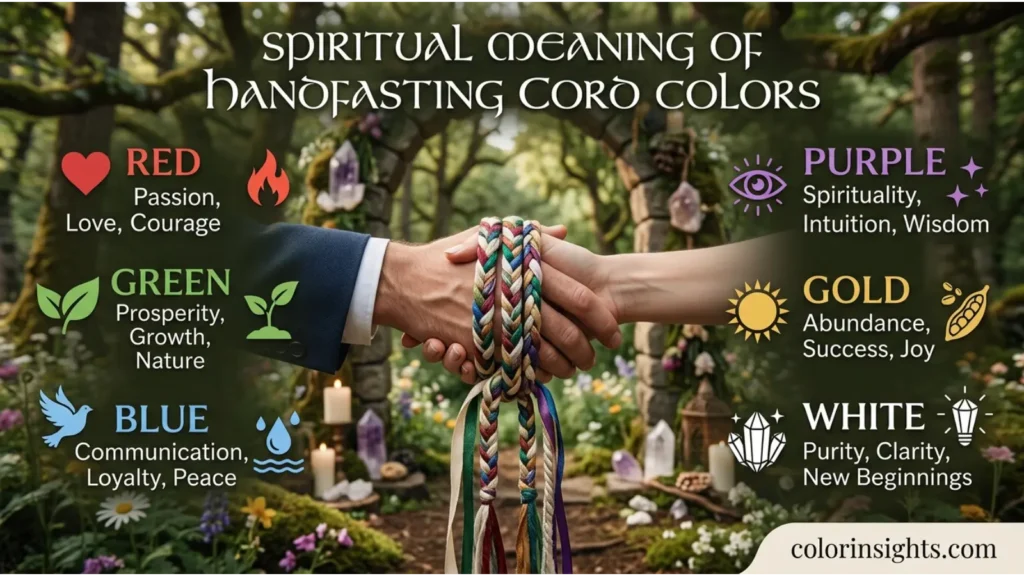
Spiritual Meaning of Handfasting Cord Colors
Handfasting has deep spiritual roots, particularly within Celtic-inspired traditions, modern Pagan practices, and nature-based spiritual paths. The colors chosen for the cords often represent blessings, virtues, and spiritual intentions that the couple hopes will guide their marriage.
Holiness
White and gold are commonly associated with sacred commitments, divine blessings, and the sanctity of marriage.
Wisdom
Purple symbolizes spiritual wisdom, maturity, insight, and thoughtful decision-making throughout married life.
Purity
White represents honesty, sincerity, faithful intentions, and a relationship built on openness and mutual respect.
Transformation
Purple and silver often symbolize personal growth, life transitions, and the transformation that occurs when two individuals become lifelong partners.
Healing
Green is widely associated with emotional healing, forgiveness, compassion, and the ability to overcome life’s challenges together.
Protection
Black, deep blue, and silver are sometimes chosen to represent protection from negativity, resilience during hardships, and spiritual safeguarding.
Power
Red and gold symbolize courage, determination, confidence, and the strength needed to maintain a lasting relationship.
Enlightenment
Silver and purple may represent intuition, spiritual awareness, and deeper understanding between partners.
New Beginnings
Green, white, and yellow often symbolize fresh starts, hope, optimism, and the exciting journey ahead.
Eternity
Braided cords themselves symbolize an unbroken bond, while gold and silver reinforce ideas of enduring commitment, lifelong partnership, and everlasting love.
In many spiritual traditions, the power of the handfasting ceremony comes not from the colors alone but from the sincere intentions and vows shared by the couple.
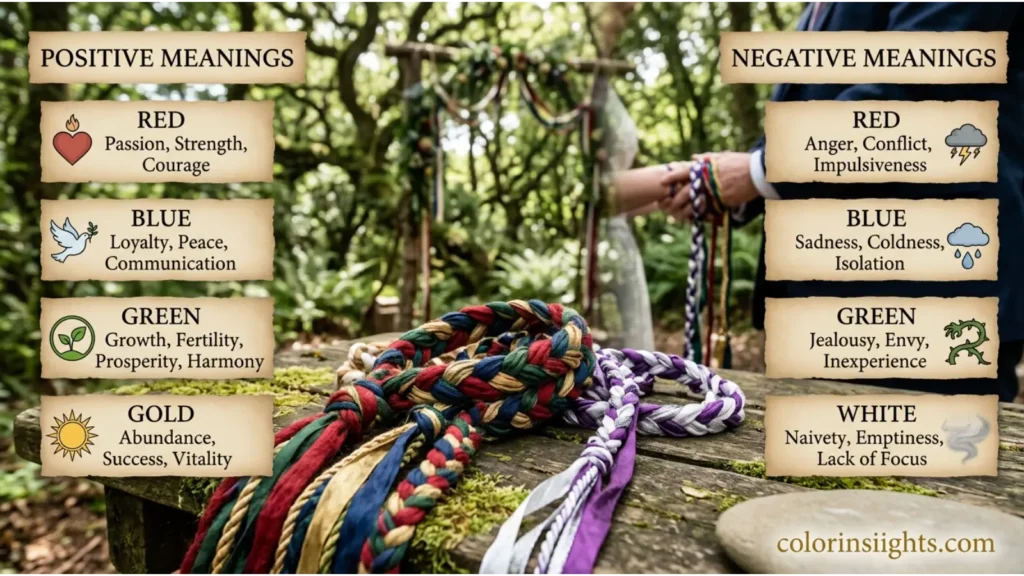
Positive and Negative Meanings of Handfasting Cord Colors
Every handfasting cord color carries both uplifting and cautionary symbolism. While most couples focus on positive meanings when selecting their cords, understanding the broader interpretations provides a more balanced perspective. Cultural traditions, personal experiences, and spiritual beliefs can also influence how each color is understood.
Positive Meanings
Love and Passion
Red is one of the most popular handfasting cord colors because it symbolizes romantic love, physical attraction, courage, and enduring passion. Couples often choose it to represent a relationship filled with warmth and emotional connection.
Example:
A couple celebrating a long-distance relationship may include a red cord to symbolize the passion that kept them connected despite the distance.
Loyalty and Trust
Blue represents honesty, faithfulness, stability, and dependable love. It reflects the desire to build a marriage based on mutual respect and unwavering commitment.
Example:
Couples who value lifelong partnership often include blue to emphasize trust as the foundation of their relationship.
Growth and Prosperity
Green symbolizes renewal, fertility, abundance, health, and personal growth. It reflects the hope that the relationship will flourish over time.
Example:
Newlyweds planning to start a family may choose green as a symbol of growth and new beginnings.
Purity and Sincerity
White represents truth, integrity, peace, and pure intentions. It reminds couples to approach marriage with honesty and openness.
Example:
White cords are frequently included in spiritual or nature-inspired ceremonies to symbolize a fresh chapter in life.
Wisdom and Spiritual Connection
Purple is associated with wisdom, intuition, dignity, and spiritual awareness. It symbolizes emotional maturity and thoughtful decision-making.
Example:
Couples who share spiritual practices often incorporate purple to represent their deeper emotional and spiritual bond.
Prosperity and Success
Gold symbolizes abundance, achievement, generosity, and lasting happiness. It reflects hopes for a secure and fulfilling future together.
Example:
Gold cords are commonly selected to represent financial stability and shared success.
Harmony and Emotional Balance
Silver represents intuition, reflection, emotional balance, and inner peace. It encourages patience and understanding within the relationship.
Example:
Couples who value communication may include silver as a reminder to listen with empathy.
Negative Meanings
Although handfasting cord colors are primarily chosen for their positive symbolism, some colors can also have less favorable interpretations depending on context.
Excessive Passion
Red may represent anger, impulsiveness, or emotional intensity if passion is not balanced with patience.
Real-world example: Constant emotional reactions without healthy communication can create unnecessary conflict.
Emotional Distance
Blue may sometimes symbolize emotional reserve or reluctance to express vulnerable feelings.
Real-world example: A partner who avoids discussing emotions may unintentionally create distance despite good intentions.
Jealousy or Stagnation
Green occasionally represents envy or complacency instead of healthy growth.
Real-world example: Comparing a relationship to others may reduce appreciation for one’s own partnership.
Perfectionism
White can symbolize unrealistic expectations or the pursuit of perfection.
Real-world example: Expecting a flawless marriage may lead to disappointment when normal challenges arise.
Pride
Purple may occasionally represent superiority or excessive pride when wisdom turns into arrogance.
Real-world example: Refusing to compromise because one believes they are always right can weaken a relationship.
Materialism
Gold sometimes represents an excessive focus on wealth or status.
Real-world example: Prioritizing financial success over emotional connection may create imbalance in a marriage.
Indecision
Silver may symbolize uncertainty or overthinking.
Real-world example: Avoiding important decisions due to fear of making mistakes can slow personal and relationship growth.
These interpretations are not predictions but reminders that every symbolic quality benefits from balance and self-awareness.
Meanings of Handfasting Cord Colors
The meaning of a handfasting cord depends not only on its individual color but also on the combination of colors chosen. A couple may select cords that reflect their personalities, shared values, family traditions, or future aspirations. For example, combining red, blue, and white symbolizes passionate love supported by trust and honesty, while green and gold together represent growth, prosperity, and long-term success.
Because handfasting is a highly personal ceremony, there is no single “correct” combination. The symbolism becomes most meaningful when it reflects the couple’s unique relationship and intentions.
Feng Shui
Although handfasting originates from Celtic traditions rather than Feng Shui, many couples appreciate incorporating Feng Shui color symbolism into their ceremonies.
Associated Elements
- Red – Fire
- Blue – Water
- Green – Wood
- White and Silver – Metal
- Yellow and Gold – Earth
Energy Symbolism
Each element represents a different type of life energy:
- Fire encourages passion and vitality.
- Water supports wisdom and adaptability.
- Wood symbolizes growth and renewal.
- Metal represents clarity and strength.
- Earth promotes stability and harmony.
Best Rooms
If handfasting cords are displayed after the wedding, Feng Shui principles suggest placing them in:
- The bedroom to encourage romance.
- The family room to strengthen relationships.
- A meditation or prayer space for spiritual reflection.
Recommended Color Combinations
Balanced combinations include:
- Red and Gold for prosperity and celebration.
- Blue and White for peace and trust.
- Green and Brown for stability and growth.
- Purple and Silver for spiritual connection and wisdom.
Home Decorating Tips
Many couples preserve their handfasting cords in a shadow box or decorative frame. Displaying them in a meaningful place serves as a daily reminder of the promises made during the wedding ceremony while adding sentimental value to the home.
Marketing
Although handfasting cords themselves are ceremonial items, the colors used in their promotion and presentation draw on familiar branding psychology.
Branding Psychology
Wedding artisans and handmade craft businesses often use soft, elegant color palettes to communicate authenticity, craftsmanship, and emotional value.
Consumer Perception
Customers generally associate:
- White with elegance and simplicity.
- Gold with luxury.
- Green with natural materials.
- Blue with trust and reliability.
- Purple with handcrafted artistry.
Trust Signals
Professional presentation, consistent color choices, and high-quality photography help create confidence in handmade wedding products.
Product Packaging
Luxury packaging often combines:
- White with gold accents.
- Ivory with silver details.
- Natural kraft paper with green botanical designs.
These combinations reinforce themes of romance, sustainability, and timeless elegance.
Advertising Applications
Wedding businesses frequently use meaningful color combinations to appeal to couples seeking personalized ceremonies. Marketing materials often emphasize symbolism, customization, and emotional storytelling rather than simply displaying decorative products.
Design
Handfasting cord colors influence visual harmony across multiple design disciplines.
Interior Design
Framed handfasting cords complement rustic, bohemian, traditional, and nature-inspired interiors. Neutral backgrounds help colorful cords remain the focal point.
Graphic Design
Wedding invitations, ceremony programs, and keepsakes often incorporate the same color palette as the handfasting cords to create a cohesive visual identity.
Web Design
Wedding planners and artisan websites frequently use soft earth tones, muted greens, warm neutrals, and elegant metallic accents to communicate warmth and trustworthiness.
User Experience
Simple layouts paired with calming color combinations help visitors focus on meaningful storytelling rather than visual distractions.
Minimalist Aesthetics
Neutral cord colors such as white, ivory, gray, and beige fit well within minimalist wedding themes, while a single bold accent color creates visual emphasis without overwhelming the overall design.
Fashion
Although handfasting cords are ceremonial rather than everyday fashion accessories, their colors often complement the couple’s wedding attire and overall aesthetic. Thoughtful color coordination helps create a visually harmonious ceremony while reinforcing the symbolic meaning behind each cord.
Clothing Symbolism
The colors chosen for handfasting cords can enhance the symbolism of wedding clothing.
- Red complements bold, romantic wedding styles and symbolizes passionate love.
- Blue pairs well with classic or nautical themes, representing loyalty and trust.
- Green works beautifully with outdoor, woodland, or botanical weddings, reflecting growth and harmony.
- White blends naturally with traditional bridal attire, emphasizing purity and sincerity.
- Purple adds a regal touch and symbolizes wisdom, dignity, and spiritual connection.
- Gold creates an elegant, luxurious appearance while representing prosperity and abundance.
- Silver offers a refined, modern aesthetic associated with balance and intuition.
Seasonal Use
Certain color combinations naturally suit different wedding seasons.
- Spring: Green, white, pink, and yellow reflect renewal and fresh beginnings.
- Summer: Blue, turquoise, coral, and gold create a bright and joyful atmosphere.
- Autumn: Orange, burgundy, brown, and forest green complement earthy landscapes.
- Winter: White, silver, navy, and deep purple evoke elegance and serenity.
Selecting seasonal colors can strengthen both the symbolism and the visual appeal of the ceremony.
Styling Effects
Handfasting cords often become a focal point during the exchange of vows. Coordinating them with bouquets, floral arrangements, bridesmaid dresses, or reception décor creates a unified wedding design.
For example:
- White and gold cords pair beautifully with ivory gowns and gold accessories.
- Green and brown cords complement rustic woodland weddings.
- Blue and silver cords suit coastal or winter-themed ceremonies.
- Burgundy and gold create a rich, elegant appearance for formal weddings.
Personality Impressions
Although symbolism varies, different cord colors may create certain impressions.
- Bright colors suggest warmth, optimism, and energy.
- Soft neutrals convey elegance and simplicity.
- Earth tones express authenticity and dependability.
- Metallic shades reflect sophistication and celebration.
- Jewel tones communicate confidence and individuality.
These impressions contribute to the atmosphere of the ceremony without defining the couple’s personalities.
Advantages
Using symbolic cord colors can:
- Personalize the ceremony.
- Reinforce meaningful wedding vows.
- Complement the overall wedding theme.
- Create memorable photographs.
- Reflect shared values and future aspirations.
Disadvantages
Potential challenges include:
- Conflicting symbolic interpretations across cultures.
- Choosing colors based solely on trends rather than personal meaning.
- Overly complex color combinations that distract from the ceremony.
- Difficulty coordinating multiple colors with wedding décor.
Most couples overcome these challenges by selecting colors that genuinely reflect their relationship rather than following strict symbolic rules.
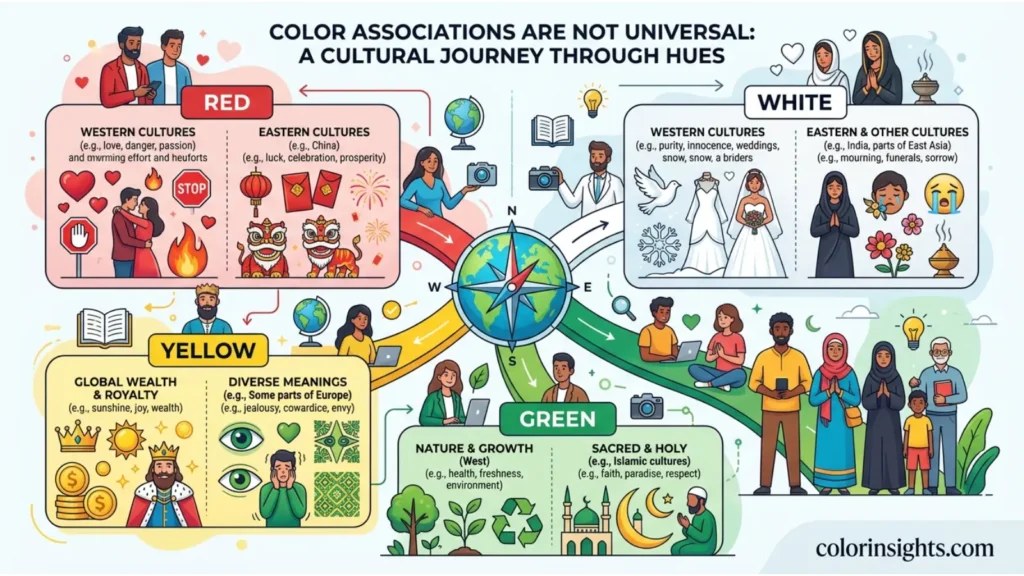
Color Associations Are Not Universal
The symbolism of handfasting cord colors is shaped by culture, history, religion, and personal experience. While many meanings are widely recognized, no interpretation is universally accepted.
Western Cultures
In many Western countries, color symbolism often aligns with contemporary color psychology.
- White commonly represents purity, honesty, and new beginnings.
- Red symbolizes love, romance, and passion.
- Blue is associated with loyalty, stability, and trust.
- Green represents growth, prosperity, and nature.
- Gold signifies success, abundance, and celebration.
These meanings frequently influence modern handfasting ceremonies and personalized wedding traditions.
Eastern Cultures
Many Eastern traditions assign different symbolic meanings to colors.
For example:
- Red is widely associated with happiness, prosperity, celebration, and good fortune.
- White may symbolize mourning or remembrance in some cultures rather than weddings.
- Gold represents wealth, honor, and spiritual blessings.
- Green is often connected with harmony, vitality, and renewal.
Couples with multicultural backgrounds may choose colors that honor both family traditions.
Religious Traditions
Different faiths interpret colors according to their own spiritual teachings.
- Christianity often associates white with purity, holiness, and faith.
- Modern Pagan traditions emphasize the connection between colors, nature, seasonal cycles, and spiritual intentions.
- Celtic-inspired ceremonies often view braided cords as symbols of unity, commitment, and interconnected lives.
- Some spiritual traditions use purple to represent wisdom, transformation, and devotion.
Because handfasting has been adapted by many communities, its symbolism continues to evolve while respecting diverse beliefs.
Historical Interpretations
Historically, colors often reflected available dyes, social status, and regional customs rather than fixed symbolic meanings.
Natural fibers were commonly dyed using plants, minerals, and flowers, giving each color practical as well as symbolic significance. Over time, folklore, literature, and religious traditions expanded these meanings, creating the rich symbolism associated with handfasting cords today.
Modern Global Interpretations
Today, couples often combine traditional symbolism with personal significance.
A cord may represent:
- Shared life experiences.
- Family heritage.
- Favorite colors.
- Cultural identity.
- Personal values.
- Future dreams.
This flexibility allows each handfasting ceremony to become a unique expression of the couple’s relationship rather than a strict adherence to historical customs.
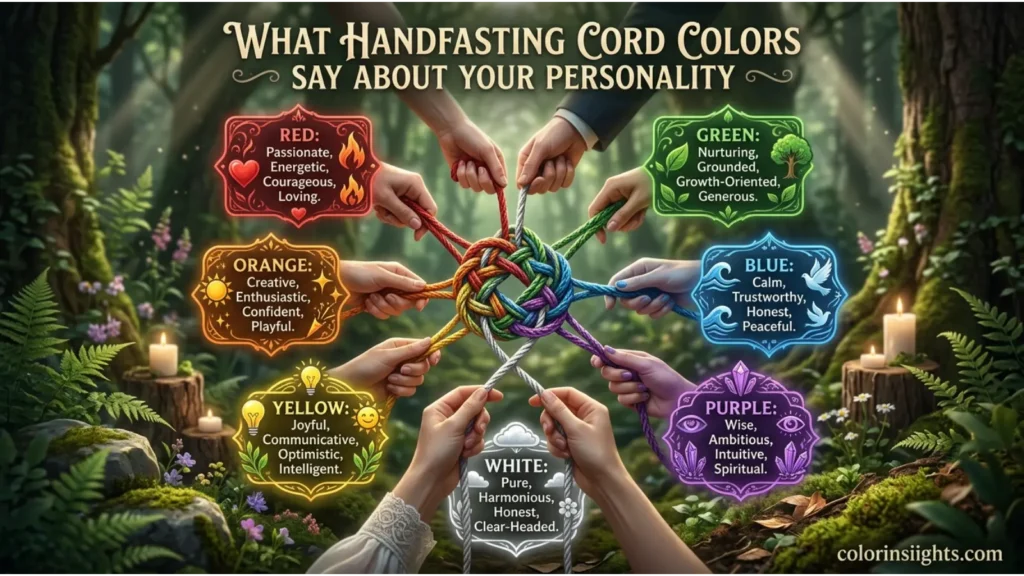
What Handfasting Cord Colors Say About Your Personality
People sometimes choose handfasting cord colors that reflect qualities they admire or hope to strengthen in their relationship. However, color preferences are influenced by culture, memories, personality, and individual experiences. They should be viewed as expressions of personal taste rather than reliable indicators of character.
Strengths
Individuals drawn to symbolic color choices often value:
- Commitment
- Loyalty
- Emotional authenticity
- Creativity
- Personal growth
- Compassion
- Optimism
- Thoughtful decision-making
These qualities may inspire the colors selected for the ceremony.
Weaknesses
Depending on personal circumstances, some preferences may also reflect challenges such as:
- Idealism
- Perfectionism
- Emotional sensitivity
- Overthinking
- Reluctance to embrace change
- Strong emotional attachment
Recognizing these tendencies can encourage greater self-awareness and healthier communication.
Social Behavior
Couples who carefully select symbolic colors often appreciate meaningful traditions and value strong interpersonal connections. They may enjoy celebrating milestones, preserving family customs, and creating memorable experiences with loved ones.
Work Style
People who appreciate symbolism frequently approach work with creativity, organization, and long-term thinking. They often enjoy projects that require planning, collaboration, and attention to detail.
Relationships
In relationships, symbolic color preferences may reflect a desire for:
- Trust
- Open communication
- Mutual respect
- Emotional security
- Shared goals
- Lifelong commitment
These values often influence both the choice of handfasting cords and the intentions expressed during the ceremony.
Emotional Tendencies
Many individuals who appreciate symbolic rituals are emotionally reflective and enjoy expressing affection through meaningful gestures. They may place great importance on traditions, shared memories, and personal milestones.
FAQs
What defines handfasting cord colors?
Handfasting cord colors are ceremonial ribbons or cords used during a handfasting wedding ritual. Each color symbolizes specific qualities, such as love, loyalty, prosperity, wisdom, or protection, allowing couples to personalize their vows and reflect the values they wish to bring into their marriage.
What do handfasting cord colors symbolize?
Handfasting cord colors symbolize the hopes, promises, and intentions shared by a couple during their wedding ceremony. Depending on the chosen colors, they may represent love, trust, passion, harmony, abundance, spiritual growth, courage, healing, or lifelong commitment.
Why are handfasting cord colors important?
The colors add personal and symbolic meaning to the ceremony. Rather than serving as simple decorations, they visually represent the couple’s shared values and the blessings they hope to experience throughout their marriage. Many couples also choose colors that reflect their cultural heritage, spiritual beliefs, or relationship journey.
Are handfasting cord colors considered warm or cool colors?
Handfasting cords can include both warm and cool colors.
- Warm colors, such as red, orange, and gold, symbolize passion, energy, happiness, and celebration.
- Cool colors, such as blue, green, purple, and silver, represent peace, stability, wisdom, healing, and emotional balance.
Most couples combine warm and cool colors to create symbolic harmony.
What emotions do handfasting cord colors represent?
Different colors evoke different emotional responses.
- Red: Love, passion, courage
- Blue: Trust, loyalty, calmness
- Green: Growth, hope, renewal
- White: Peace, honesty, purity
- Purple: Wisdom, spirituality
- Gold: Success, prosperity
- Silver: Intuition, balance
- Pink: Affection, kindness
- Yellow: Joy, optimism
- Black: Strength, resilience, protection
Together, these emotions reflect the foundation of a healthy and lasting relationship.
What is the spiritual meaning of handfasting cord colors?
Spiritually, handfasting cord colors represent blessings and intentions for married life. They may symbolize divine guidance, protection, healing, transformation, abundance, compassion, wisdom, and eternal love. In many Pagan and Celtic-inspired traditions, the braided cords also represent the joining of two lives into one shared journey.
Which handfasting cord colors pair well together?
Popular color combinations include:
- Red and White: Passion with honesty and purity
- Blue and Silver: Loyalty with emotional balance
- Green and Gold: Growth with prosperity
- Purple and White: Wisdom with sincerity
- Red, Blue, and Gold: Love, trust, and abundance
- Green, White, and Brown: Nature, stability, and new beginnings
The best combination is one that reflects the couple’s unique story and shared values.
What do favorite handfasting cord colors say about a couple?
Choosing particular cord colors often reflects the qualities a couple values most, such as trust, compassion, stability, creativity, or adventure. However, color preferences are influenced by personal experiences, culture, and tradition, so they should not be viewed as definitive indicators of personality.
Can you use more than one handfasting cord color?
Yes. In fact, many couples choose several colors to represent multiple hopes and blessings for their marriage. Braiding or tying together different colored cords symbolizes the blending of individual strengths, values, and life paths into a unified partnership.
Is there a traditional color for handfasting cords?
There is no single traditional color required for a handfasting ceremony. Historical and modern practices vary widely, and many couples select colors based on symbolism rather than strict tradition. This flexibility makes handfasting one of the most personalized wedding rituals.
Conclusion
Handfasting cord color meanings transform a beautiful wedding tradition into a deeply personal expression of love, commitment, and shared purpose. Whether representing passion through red, loyalty through blue, growth through green, purity through white, wisdom through purple, or prosperity through gold, each cord contributes its own symbolic message to the ceremony.
While many meanings originate from Celtic-inspired customs, modern Pagan practices, and color psychology, there are no universal rules governing the “correct” combination of colors. Cultural traditions, spiritual beliefs, and personal experiences all shape how these colors are interpreted. Ultimately, the most meaningful handfasting cords are those that reflect the couple’s unique journey, values, and aspirations for the future.
By thoughtfully selecting colors that resonate with their relationship, couples create not only a memorable wedding ritual but also a lasting symbol of unity, trust, and enduring love that can be treasured for years to come.