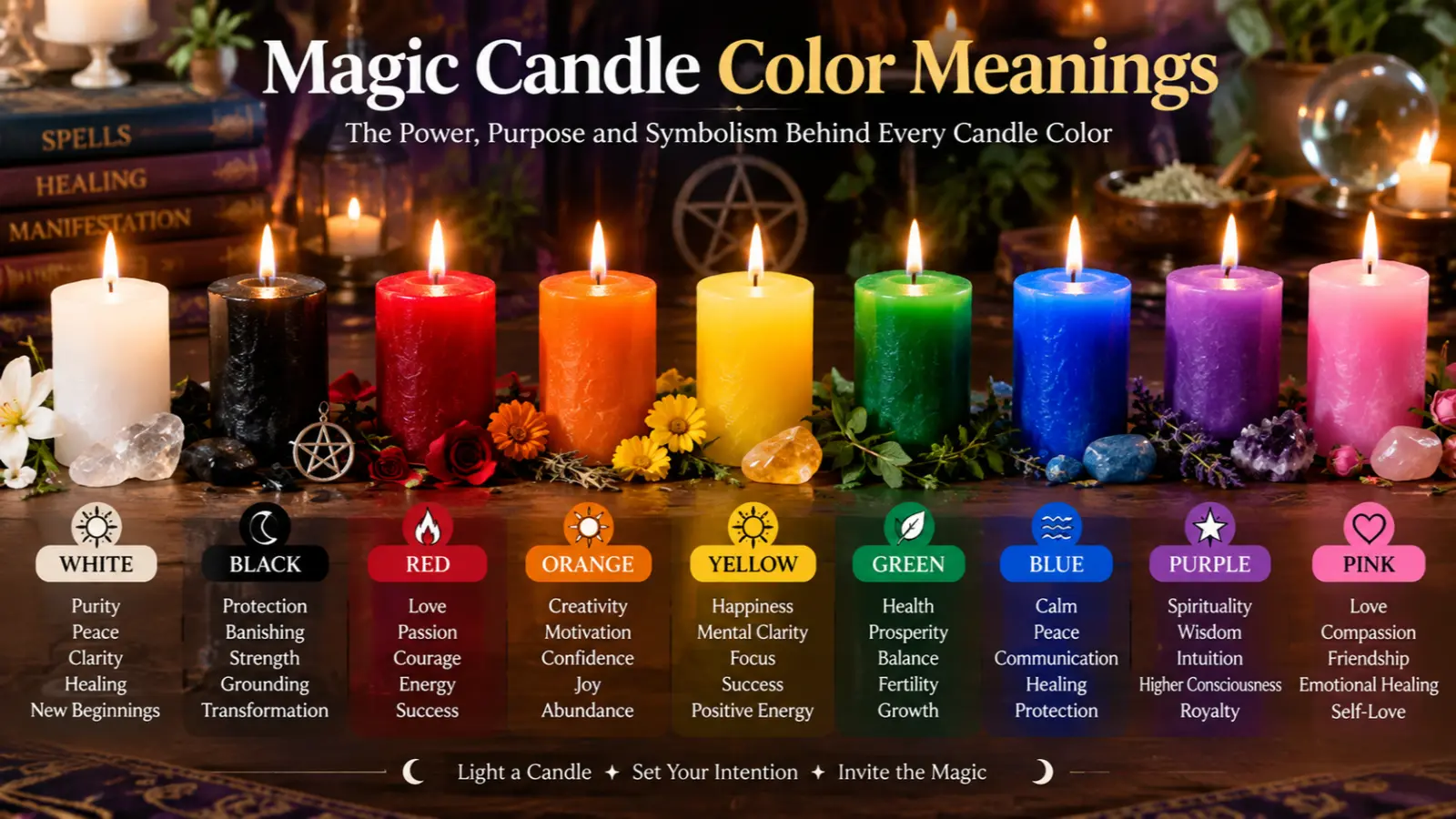
Magic candle color meanings describe the symbolic associations people give to different candle colors in spiritual practices, rituals, meditation, intention-setting, and modern witchcraft. Across traditions, candle colors may represent qualities such as love, protection, prosperity, healing, peace, confidence, transformation, or spiritual awareness.
These meanings are symbolic rather than scientifically proven, and interpretations can vary between cultures and spiritual systems. The color of a candle can also influence the atmosphere through ordinary visual and psychological associations, making color selection an important part of ritual design.
Quick answer:
magic candle colors are generally chosen to reinforce a specific intention, with each color carrying a commonly recognized symbolic theme.
What Does the Color Magic Candle Symbolize?
Unlike a single color, magic candle color meanings refer to a system in which different candle colors represent different intentions. The candle itself is often viewed as a symbolic tool: its flame can represent energy, awareness, transformation, or the focus of an intention.
Common interpretations include:
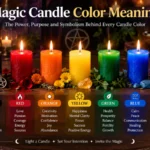
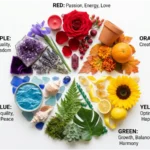
- White: purity, peace, cleansing, protection, and new beginnings.
- Black: protection, boundaries, endings, release, and transformation.
- Red: passion, courage, vitality, love, and motivation.
- Pink: affection, compassion, friendship, emotional healing, and gentleness.
- Orange: creativity, enthusiasm, confidence, attraction, and opportunity.
- Yellow: communication, optimism, learning, clarity, and mental energy.
- Green: prosperity, growth, renewal, fertility, and balance.
- Blue: peace, communication, emotional stability, wisdom, and tranquility.
- Purple: spirituality, intuition, imagination, wisdom, and transformation.
- Gold: success, achievement, abundance, confidence, and recognition.
- Silver: intuition, reflection, emotional awareness, and lunar symbolism.
- Brown: grounding, stability, practicality, and connection with nature.
The same color may have different meanings depending on the tradition, personal intention, and cultural context.
Psychological Characteristics of Magic Candle Colors
The psychology of magic candle colors is different from the spiritual beliefs attached to them. Color psychology examines how visual colors can influence perception, emotion, attention, and environmental experience. These effects are influenced by culture, context, personal experience, brightness, saturation, and surrounding colors.
When candles are used in meditation or ritual settings, color can contribute to the atmosphere even when a person does not believe in supernatural effects.
Emotional Associations
Different colors can evoke different associations:
- Red may feel energetic, urgent, passionate, or stimulating.
- Blue often creates associations with calmness, stability, and tranquility.
- Green can suggest nature, renewal, health, and growth.
- Yellow may appear cheerful, bright, and mentally stimulating.
- Purple can communicate mystery, imagination, and spirituality.
- White often conveys simplicity, cleanliness, and openness.
- Black can suggest seriousness, mystery, strength, or finality.
Psychological Effects
Candlelight itself can create a focused and intimate environment. Adding a specific color may reinforce the intended mood. For example, blue candles may visually support a calming meditation space, while orange or red may create a more energetic atmosphere.
Positive Emotional Responses
Depending on context, colored candles may encourage feelings of:
- Calmness
- Hope
- Confidence
- Connection
- Motivation
- Comfort
- Focus
- Emotional warmth
Negative Emotional Responses
Color can also produce less comfortable associations. Very intense red may feel aggressive, excessive black may feel heavy, and highly saturated yellow can become visually overwhelming.
Impact on Mood and Behavior
The psychological impact of color should not be overstated. A candle color does not automatically change behavior or produce a particular emotional state. Instead, it can work as an environmental cue that supports an existing intention.
How People Typically React
Individual reactions vary considerably. Someone may associate purple with spirituality because of personal experience, while another person may simply view it as an attractive decorative color. This is why personal symbolism can be just as important as traditional associations.
Spiritual Meaning of Magic Candle Colors
The spiritual meaning of magic candle colors depends heavily on the tradition in which candles are used. In many practices, selecting a color is a way of expressing an intention rather than claiming that the color itself has guaranteed supernatural power.
Common symbolic themes include:
- Holiness: White and gold are frequently associated with sacredness, divine light, and spiritual devotion.
- Wisdom: Blue, purple, and gold may symbolize knowledge, insight, or higher understanding.
- Purity: White commonly represents cleansing, innocence, clarity, and spiritual renewal.
- Transformation: Black, purple, and sometimes red can represent change, endings, rebirth, or personal transformation.
- Healing: Green, blue, and white are often selected for intentions involving restoration and emotional well-being.
- Protection: Black, white, blue, and red may be used symbolically for protection or strengthening personal boundaries.
- Power: Red, gold, and purple can represent strength, authority, vitality, and confidence.
- Enlightenment: White, gold, yellow, and purple may symbolize illumination and greater awareness.
- New Beginnings: White, green, and yellow can represent fresh starts, growth, and optimism.
- Eternity: Silver, white, and gold can symbolize continuity, timelessness, and spiritual connection.
These meanings are best understood as symbolic frameworks rather than universal religious rules.
Positive and Negative Meanings of Magic Candle Colors
Positive Meanings
Purity: White candles are frequently connected with cleansing and simplicity. For example, someone beginning a meditation practice may choose white as a visual symbol of a fresh start.
Peace: Blue and white are commonly associated with tranquility. A blue candle may be used to create a peaceful atmosphere during reflection.
Simplicity: White and neutral candles can create a clean, uncluttered visual environment, making them popular for minimalist spiritual spaces.
Clarity: Yellow and white may symbolize mental clarity and illumination. A person studying or journaling might use yellow as a symbolic reminder to seek clear thinking.
Freshness: Green and white can represent renewal. Green candles are often connected with growth and restoration.
Hope: Yellow, green, white, and gold may communicate optimism and positive expectations.
Balance: Green and blue are frequently associated with harmony, making them useful symbolic choices for intentions involving emotional equilibrium.
Harmony: Pink, blue, green, and white can represent cooperation, compassion, peaceful relationships, and emotional harmony.
Negative Meanings
Emptiness: White can sometimes symbolize emptiness or absence when used in contexts where purity becomes associated with a lack of warmth.
Isolation: Blue may occasionally communicate emotional distance or loneliness rather than peacefulness.
Coldness: Blue, silver, and white can appear emotionally cool, especially when used in stark environments.
Sterility: Excessive white in interior settings can feel clinical or impersonal rather than spiritual.
Boredom: Neutral or subdued colors may feel uninteresting when there is little variation in the surrounding environment.
Emotional Distance: Blue and silver can suggest restraint or detachment depending on cultural and personal associations.
Perfectionism: White symbolism may sometimes be connected with ideals of perfection, cleanliness, or strict order, which can become psychologically uncomfortable when taken to an extreme.
These negative meanings demonstrate why magic candle symbolism depends on context rather than having one fixed interpretation.
Meanings of Magic Candle Colors
The meaning of a magic candle changes according to the intention behind its use. A red candle might symbolize romantic love in one practice and courage or physical energy in another. Similarly, black can represent protection and boundaries rather than simply negativity.
Feng Shui
Traditional Feng Shui uses color as part of a broader system of spatial relationships and the five elements. Candle colors can therefore be incorporated symbolically, but a candle color should not automatically be treated as having one universal Feng Shui meaning.
- Associated element: Red is commonly connected with Fire, while green is associated with Wood.
- Energy symbolism: Red can represent active, dynamic energy, while green suggests growth and renewal.
- Best rooms: Candles are often used in living rooms, meditation areas, bedrooms, or decorative spaces where safe placement is possible.
- Recommended combinations: Green and red can create energetic contrast; blue and white can create a calmer visual scheme.
- Decorating tips: Use candle colors that complement the room instead of relying exclusively on symbolic rules. Always prioritize safe candle placement.
Marketing
Color psychology also plays a major role in branding and packaging. Candle companies may use specific colors to communicate product positioning.
- Branding psychology: Green can suggest natural or botanical products, while gold can communicate premium quality.
- Consumer perception: Blue may appear calming, whereas red can attract attention quickly.
- Trust signals: White and blue are often used to create clean, dependable visual identities.
- Product packaging: Luxury candles frequently use black, gold, cream, or metallic finishes.
- Advertising: Lifestyle brands may use warm orange, red, or amber lighting to communicate comfort and intimacy.
Well-known brands such as Yankee Candle, Bath & Body Works, and Diptyque demonstrate how candle presentation can combine color, fragrance, packaging, and lifestyle imagery to create a recognizable identity.
Design
Magic candles in design can combine symbolic meaning with visual aesthetics.
- Interior design: White, cream, and neutral candles create a minimalist appearance, while jewel tones provide visual richness.
- Graphic design: Candle colors can communicate different moods in promotional materials and social media graphics.
- Web design: Color-coded candle collections can help shoppers quickly understand themes such as relaxation, romance, or prosperity.
- User experience: Consistent color categories make product navigation easier and more intuitive.
- Minimalist aesthetics: White, beige, gray, and soft pastel candles work particularly well in uncluttered spaces.
Fashion
Although candles are not fashion items, their colors often overlap with fashion symbolism.
- Clothing symbolism: Red may communicate confidence and passion, while blue can suggest calmness and professionalism.
- Seasonal use: Orange and gold often feel appropriate for autumn, while pastels may suit spring.
- Styling effects: Metallic candles can complement sophisticated interiors, while earthy colors create a natural aesthetic.
- Personality impressions: Bright colors may appear expressive, while neutral shades can seem understated.
- Advantages: Coordinated candle colors can strengthen the visual identity of a room or event.
- Disadvantages: Using too many highly saturated colors can create visual clutter.
For example, a romantic dinner might combine red or pink candles with neutral tableware, while a wellness-inspired space could use white, green, and soft blue.
Color Associations Are Not Universal
Western Cultures
In many Western contexts, white is associated with purity and new beginnings, red with passion or danger, green with nature and prosperity, and black with sophistication, mystery, or mourning. These associations are common but not universal.
Eastern Cultures
Color symbolism differs substantially across Asian cultures. For example, red has historically held strong associations with celebration, prosperity, luck, and happiness in China. White may have different associations surrounding mourning and funerary traditions in several East Asian contexts.
Religious Traditions
Different religious traditions use candles and colors in distinct ways. Christian traditions may use candles during worship, Advent, memorials, or other observances, with specific colors sometimes carrying liturgical significance. Other spiritual systems may assign colors to intentions, elements, planets, seasons, or symbolic energies.
Historical Interpretations
Historically, colors were influenced by available dyes, precious materials, social status, political symbolism, religious traditions, and artistic conventions. Purple, for example, became associated with prestige in parts of Europe because certain purple dyes were historically difficult and expensive to produce.
Modern Global Interpretations
Modern candle culture combines traditional symbolism with wellness, interior design, social media aesthetics, and personal spirituality. As a result, a candle may simultaneously function as a spiritual symbol, decorative object, fragrance product, and emotional cue.
What Magic Candle Colors Say About Your Personality
People sometimes use magic candle color preferences as a way to express personality or personal intentions. However, liking a specific color does not scientifically determine personality traits.
Someone who consistently chooses red candles might be drawn to themes of confidence, passion, or action. A person who prefers blue may appreciate calmness, reflection, or emotional balance. Green may appeal to people interested in growth and nature, while purple can attract those who enjoy creativity, symbolism, or spiritual themes.
Possible associations include:
- Strengths: People may use favorite colors to express confidence, creativity, optimism, calmness, or independence.
- Weaknesses: A strong preference for one symbolic theme can sometimes reflect an overly narrow emotional focus, but this cannot be assumed from color preference alone.
- Social behavior: Warm colors may be chosen by people who want an energetic or welcoming atmosphere, while cool colors can create a quieter setting.
- Work style: Yellow may be selected for creative environments, blue for concentration, and green for balance.
- Relationships: Pink and red may symbolize affection and passion, while blue and white can communicate trust and peacefulness.
- Emotional tendencies: Color choices may reflect current emotional needs, such as choosing calming colors during stressful periods.
These are symbolic interpretations rather than personality assessments. Personality is shaped by many biological, psychological, social, and environmental factors.
Frequently Asked Questions
What defines magic candle color meanings?
Magic candle color meanings are symbolic associations assigned to different candle colors in spiritual, ritual, meditation, and intention-setting practices.
What does the color of a magic candle symbolize?
The meaning depends on the color. Red may symbolize passion or courage, green growth and prosperity, blue peace, white purity, and purple spirituality.
Why is candle color important in magic?
Candle color can help visually represent an intention and make a ritual or meditation practice feel more focused and personally meaningful.
Is there a single universal magic candle color system?
No. Candle symbolism varies between spiritual traditions, cultures, practitioners, and personal belief systems.
Is magic candle color symbolism scientifically proven?
The symbolic or supernatural effects of candle colors are not scientifically established. However, colors can influence visual perception and emotional associations through psychological and cultural factors.
What emotions do magic candle colors represent?
Different colors may represent emotions such as love, peace, confidence, hope, calmness, motivation, or spirituality. The interpretation depends on context.
What is the spiritual meaning of candle colors?
Spiritually, candle colors may represent intentions such as protection, healing, transformation, wisdom, prosperity, purification, or new beginnings.
What colors pair well with magic candles?
White pairs easily with nearly any color. Green and gold can create an abundance-oriented aesthetic, blue and white a peaceful atmosphere, and red and pink a romantic presentation.
What does liking a particular magic candle color say about a person?
A favorite candle color may reflect personal taste, current intentions, cultural associations, or emotional preferences, but it cannot reliably determine someone’s personality.
Can I use different candle colors together?
Yes. People may combine colors when they want to represent multiple intentions. For example, blue and white can symbolically emphasize peace and clarity, while green and gold may represent growth and abundance.
Conclusion
Magic candle color meanings provide a symbolic language for expressing intentions through color, light, and ritual. White can represent purity and new beginnings, red passion and courage, green growth and prosperity, blue peace and communication, purple spirituality and intuition, and black protection or transformation. Yet these interpretations are not universal rules. Cultural traditions, religious practices, personal experiences, and modern design all influence how colors are understood. The most meaningful approach is to choose a candle color that clearly represents your personal intention while recognizing the difference between spiritual symbolism and scientifically established color psychology.