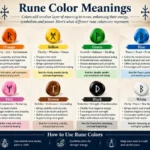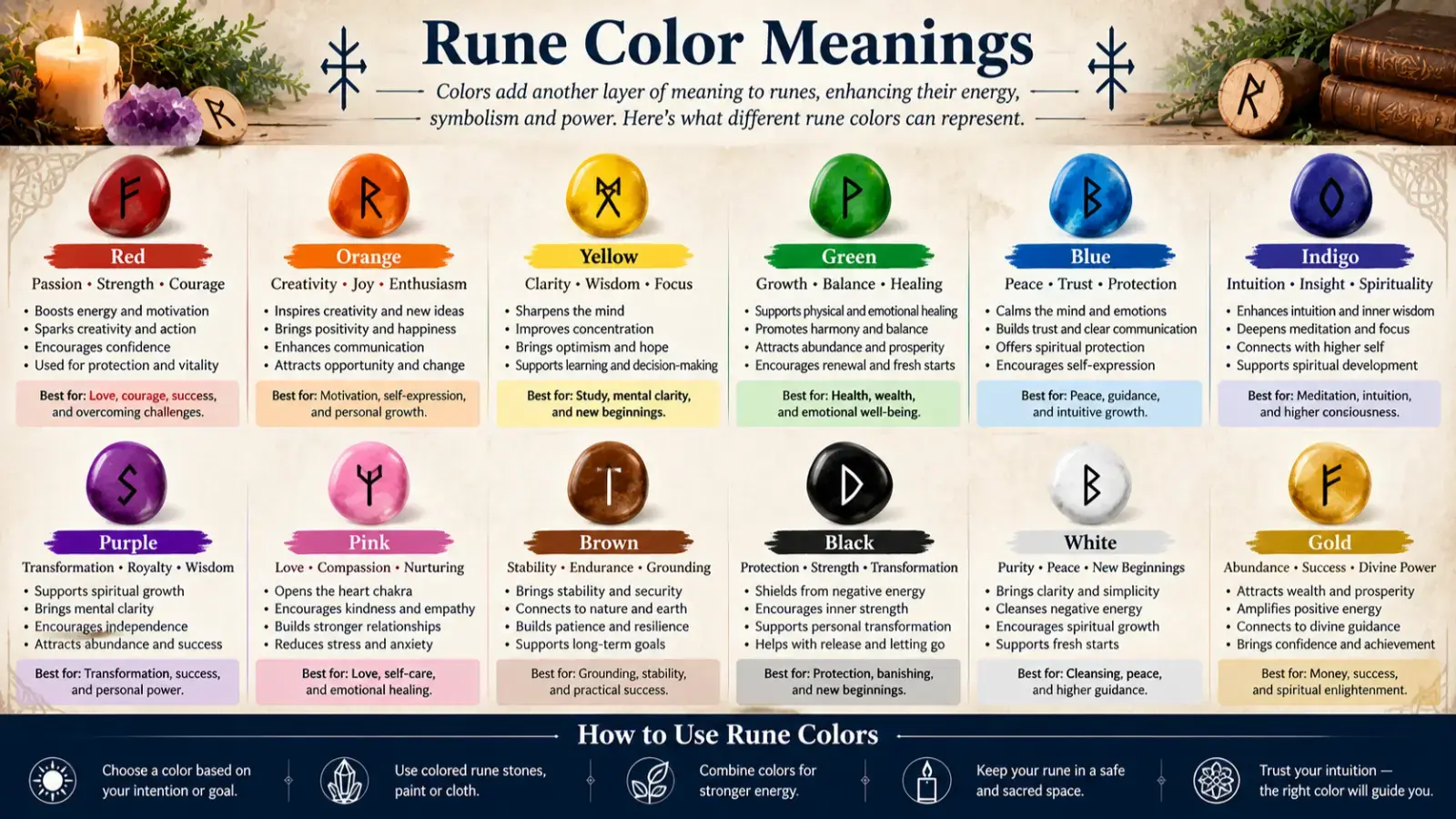
Rune color meanings explore the symbolic relationship between colors and the ancient runic alphabets used by Germanic and Norse-speaking peoples. Historically, runes were primarily writing symbols rather than a standardized color-coded spiritual system. However, modern rune readers, artists, tattoo designers, and contemporary practitioners often combine rune symbolism with colors to communicate emotions, elements, spiritual intentions, and personal meanings.
Red may suggest vitality and strength, while blue can represent wisdom, calm, or protection. Black often conveys mystery and transformation, whereas white can suggest clarity and renewal.
Quick answer:
rune color meanings are contextual rather than universal, with each color adding an interpretive layer to the meaning of a rune.
What Does the Color Rune Symbolize?
There is no single historically established system in which every rune had one official color. Runes developed primarily as writing systems, including the Elder Futhark, Younger Futhark, and Anglo-Saxon Futhorc. Their meanings came from letters, words, names, inscriptions, and cultural contexts rather than a fixed color chart.
Modern rune color meanings are therefore best understood as a combination of two symbolic systems:
- The meaning of the rune itself, based on historical names, linguistic evidence, mythology, or modern divinatory traditions.
- The symbolic meaning of the chosen color, which can come from broader cultural, psychological, artistic, or spiritual associations.
For example, a rune associated in modern practice with strength may be illustrated in red to emphasize courage and vitality. The same rune rendered in blue could create a calmer interpretation emphasizing wisdom or emotional control.
This approach is particularly common in modern spiritual artwork, rune cards, jewelry, tattoos, altar designs, fantasy art, and contemporary forms of rune divination.
Psychological Characteristics of Rune Colors
The psychology of rune colors depends largely on the psychological associations of the individual color. Color psychology does not provide a universal dictionary in which a particular color produces exactly the same emotional response in every person. Culture, personal experience, context, brightness, saturation, and surrounding colors all influence perception.
When colors are incorporated into rune designs, they can change how the symbol is emotionally perceived.
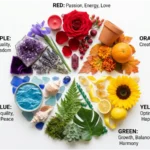
- Red: Often associated with energy, courage, passion, urgency, strength, and action. A red rune may appear powerful, intense, or protective.
- Blue: Commonly associated with calmness, stability, trust, wisdom, and reflection. Blue runes may create a contemplative atmosphere.
- Green: Often connected with nature, renewal, growth, balance, and healing. It can make rune imagery feel organic and restorative.
- Black: Frequently symbolizes mystery, authority, protection, seriousness, transformation, or the unknown.
- White: Can suggest purity, clarity, peace, simplicity, illumination, and new beginnings.
- Gold: Often communicates value, achievement, power, prosperity, sacredness, or prestige.
- Purple: May suggest spirituality, mystery, imagination, introspection, and transformation.
- Yellow: Can represent sunlight, optimism, intellect, awareness, and creativity, although excessive brightness may also feel visually stimulating.
- Orange: Often conveys enthusiasm, warmth, creativity, movement, and sociability.
- Brown: Can suggest earthiness, stability, tradition, endurance, and connection with nature.
Positive Psychological Responses
Color can reinforce the emotional message of a rune. A green rune may feel nurturing, while a gold rune can make a symbol appear important or ceremonial. Red may increase the perception of intensity, whereas blue can make a design seem more peaceful.
Negative Psychological Responses
The same color can produce less favorable associations. Red may appear aggressive, black may feel ominous, white may seem emotionally distant, and yellow can become overwhelming when used excessively.
Impact on Mood and Behavior
Color generally works as a contextual visual cue rather than a guaranteed psychological trigger. In rune artwork, the combination of symbol shape, color, typography, texture, and surrounding imagery can influence whether an inscription feels ancient, mystical, peaceful, powerful, or threatening.
Spiritual Meaning of Rune Colors
The spiritual meaning of rune colors is primarily a modern interpretive practice rather than a standardized feature of historical runic writing. Contemporary practitioners may assign colors according to personal symbolism, elemental associations, meditation practices, or broader occult traditions.
Common interpretations include:
- Holiness: White and gold are frequently used to communicate sacredness, divine light, or spiritual purity.
- Wisdom: Blue, purple, and deep indigo can symbolize contemplation, knowledge, and inner understanding.
- Purity: White is commonly connected with cleansing, innocence, and spiritual clarity.
- Transformation: Black, purple, deep red, and sometimes orange may represent change, transition, or rebirth.
- Healing: Green and blue are often selected for imagery associated with restoration, balance, and emotional healing.
- Protection: Black, red, blue, and metallic tones may be used symbolically to create a protective visual identity.
- Power: Red, gold, and black can emphasize strength, authority, determination, or personal power.
- Enlightenment: White, gold, yellow, and violet can represent illumination or expanded awareness.
- New beginnings: White, green, and light blue can suggest renewal and fresh starts.
- Eternity: Black, white, gold, and deep blue can be used artistically to communicate timelessness, infinity, or the enduring nature of spiritual traditions.
These meanings should be treated as interpretive symbolism rather than universal religious doctrine.
Positive and Negative Meanings of Rune Colors
Positive Meanings
Rune colors can strengthen positive symbolic messages when thoughtfully selected.
- Purity: White runes can communicate simplicity and spiritual cleanliness. For example, a white rune on a natural background may be used in modern artwork representing renewal.
- Peace: Blue and pale green can create a calm visual atmosphere around a rune.
- Simplicity: Black-and-white rune designs can emphasize the structure and geometry of the symbol without visual distraction.
- Clarity: White, light blue, and yellow can visually reinforce ideas of awareness and understanding.
- Freshness: Green can associate a rune with nature, growth, and renewal.
- Hope: Yellow and green may communicate optimism and positive change.
- Balance: Green and blue combinations can suggest emotional or environmental balance.
- Harmony: Earth tones combined with natural greens can create a grounded and harmonious rune aesthetic.
Negative Meanings
Color symbolism also has contrasting interpretations.
- Emptiness: Excessive white space can make a design appear vacant or emotionally distant.
- Isolation: Very dark or monochromatic rune artwork may create a feeling of separation.
- Coldness: Pale blue or gray-blue can appear detached in certain visual contexts.
- Sterility: Excessive white may communicate clinical cleanliness rather than spiritual purity.
- Boredom: A design using little color variation can sometimes appear visually flat.
- Emotional distance: Gray, muted blue, or restrained monochrome palettes can communicate reserve.
- Perfectionism: Extremely precise black-and-white geometric designs may visually suggest order, rigidity, or perfection.
For example, a black rune carved into a stark white surface may communicate mystery and authority, while the same symbol surrounded by soft green foliage may appear connected to nature and renewal.
Meanings of Rune Colors
The meaning of a rune color changes according to its rune, purpose, cultural setting, and visual context. A color used for a historical reconstruction should not automatically be interpreted using modern spiritual symbolism.
Feng Shui
Feng Shui does not form part of historical Germanic rune tradition, so combining Feng Shui with rune colors is a modern cross-cultural practice, not an ancient Norse system.
In traditional Chinese color symbolism and Feng Shui, colors can be associated with elements and forms of energy. For example, green is commonly connected with Wood, red with Fire, white with Metal, black with Water, and yellow or earthy tones with Earth.
Modern decorators may incorporate rune artwork according to these broader associations.
- Associated element: Depends on the color rather than the rune itself.
- Energy symbolism: Green may suggest growth, red activation, and blue or black depth and calm.
- Best rooms: Choose colors according to the atmosphere desired rather than claiming a historical rune-Feng Shui rule.
- Color combinations: Natural green and brown can create a grounded appearance; blue and white can feel calm and clean.
- Decorating tips: Use rune artwork as a visual focal point and avoid overcrowding a room with competing symbols.
Marketing
Rune imagery is particularly useful in branding when a company wants to communicate heritage, adventure, mythology, craftsmanship, fantasy, or Nordic-inspired identity.
Color influences how that branding is perceived.
- Branding psychology: Black can make rune-inspired branding feel sophisticated or mysterious.
- Consumer perception: Red can emphasize energy, while blue may make a design feel more dependable.
- Trust signals: Blue is often associated with reliability, although the effect depends on the overall brand.
- Product packaging: Gold, black, brown, and deep red can create a premium, historical, or handcrafted appearance.
- Advertising: Strong contrast can make angular rune-inspired graphics highly noticeable.
Brands such as Nordic-inspired lifestyle companies, fantasy publishers, gaming studios, jewelry businesses, and historical-product retailers frequently use combinations of runic imagery and dark, earthy, metallic, or natural colors. The meaning comes from the overall branding system rather than from an established runic color code.
Design
Rune color meanings in design are especially useful when creating artwork that needs a specific emotional atmosphere.
- Interior design: Framed rune artwork can add historical or mystical character to a room.
- Graphic design: High-contrast black-and-white runes create a clean, symbolic appearance.
- Web design: Dark backgrounds with restrained metallic or accent colors can create a fantasy or historical aesthetic.
- User experience: Color should still preserve readability and accessibility when runic symbols are used in interfaces.
- Minimalist aesthetics: A single rune rendered in black, gray, or one accent color can create a strong visual focal point.
Designers should avoid using colors merely because they appear culturally “Norse.” Historical accuracy and modern artistic interpretation are different goals.
Fashion
Rune-inspired fashion frequently combines symbolism with personal identity.
Clothing symbolism can vary significantly. Black rune graphics may communicate mystery, independence, or strength, while green designs can suggest nature and renewal.
Seasonal use also affects perception. Earth tones, dark reds, and browns often work naturally with autumn and winter styling, whereas lighter blues, greens, and whites can create a spring or summer aesthetic.
Styling effects depend on contrast. A small colored rune on a neutral shirt can function as a subtle accent, while a large multicolored design becomes a dominant visual statement.
Personality impressions may include strength, individuality, spirituality, creativity, or interest in mythology.
Advantages include strong visual identity, symbolic depth, and versatility. Disadvantages include possible cultural misunderstanding, overly aggressive aesthetics, or assumptions about the wearer’s beliefs.
Color Associations Are Not Universal
Western Cultures
In many contemporary Western settings, black is associated with authority, sophistication, mourning, and mystery; white can suggest purity and simplicity; red can symbolize passion and danger. These associations can influence modern interpretations of rune artwork. However, Western symbolism itself varies between countries and historical periods.
Eastern Cultures
Color symbolism in Asian cultures can differ substantially. White, for example, has important associations with mourning in several East Asian traditions, while red can carry strong associations with celebration, prosperity, luck, and happiness in Chinese cultural contexts. Therefore, a red rune does not automatically communicate the same idea to every audience.
Religious Traditions
Runes have sometimes been connected in modern popular culture with spirituality, pagan reconstruction, and Norse mythology. However, historical runic inscriptions should not be treated as evidence for one universal religious color system. Religious traditions often develop their own symbolic uses of color, and these should be distinguished from modern rune practices.
Historical Interpretations
Historically, runes were writing systems used across different Germanic-speaking communities. Inscriptions could appear on wood, stone, metal, bone, and other materials. Their original function was not equivalent to the modern color-coded divination charts found online.
This historical distinction is important when discussing rune symbolism. Modern color associations may be meaningful to contemporary practitioners without being historically documented practices.
Modern Global Interpretations
Today, rune imagery appears in books, video games, tattoos, jewelry, movies, fantasy art, spiritual communities, and online culture. As a result, colors may acquire new meanings based on visual storytelling and personal symbolism.
A modern artist might use glowing blue runes to communicate magical wisdom, fiery red runes to suggest power, or green runes to represent nature. These are contemporary artistic conventions rather than universal historical rules.
What Rune Colors Say About Your Personality
People sometimes use color preference as a way to describe personality, but rune color preferences cannot reliably determine someone’s personality. Color choices are influenced by culture, fashion, memories, aesthetics, and personal experiences.
Still, symbolic interpretations can provide useful self-reflection prompts.
- Red rune preference: May be interpreted as an attraction to energy, courage, passion, or assertiveness.
- Blue rune preference: May suggest an appreciation for calmness, reflection, wisdom, or stability.
- Green rune preference: Can symbolically reflect interest in growth, nature, balance, or renewal.
- Black rune preference: May appeal to people attracted to mystery, independence, authority, or minimalist aesthetics.
- White rune preference: May symbolize an appreciation for clarity, simplicity, peace, or fresh beginnings.
- Gold rune preference: May communicate an attraction to achievement, prestige, tradition, or sacred imagery.
- Purple rune preference: Can be associated symbolically with imagination, spirituality, creativity, and mystery.
Strengths
A person attracted to rune symbolism may appreciate history, mythology, visual symbolism, individuality, or storytelling.
Weaknesses
An intense fascination with symbolic systems can sometimes encourage overinterpretation. It is important to distinguish meaningful personal reflection from claims that symbols objectively predict behavior.
Social Behavior
Rune-inspired aesthetics may communicate individuality or a strong interest in historical and mythological themes. However, appearance alone cannot establish someone’s beliefs.
Work Style
People who choose structured geometric rune designs may appreciate visual order, symbolism, craftsmanship, or historical detail. This is an aesthetic observation rather than a psychological diagnosis.
Relationships
Color preferences may serve as a form of self-expression in relationships. Someone might choose a particular rune color because it represents loyalty, protection, passion, or personal transformation.
Emotional Tendencies
Colors can provide a language for expressing emotions that are difficult to articulate verbally. Using blue for calmness or red for strength can be a personal symbolic choice without implying a fixed personality type.
Frequently Asked Questions
What defines rune color meanings?
Rune color meanings describe the symbolic interpretations created by combining the meaning of a rune with the psychological, cultural, or spiritual associations of a color.
What does the color of a rune symbolize?
A rune’s color can emphasize a particular theme. Red may suggest strength and vitality, blue wisdom and calm, green growth, black mystery or protection, and white clarity or renewal.
Why are rune colors important?
Colors can make rune designs easier to interpret emotionally and visually. They are especially useful in modern artwork, tattoos, jewelry, cards, branding, and spiritual practices.
Is rune color symbolism historically standardized?
No. There is no universally documented historical system assigning one specific color to each rune. Many color associations used today are modern interpretations.
Is rune color a warm or cool color?
There is no single “rune color.” Red, orange, and yellow are generally warm colors, while blue and many greens are generally cool. Black, white, gray, and brown are typically treated as neutrals or earth tones depending on context.
What emotions do rune colors represent?
Different colors can represent different emotions. Red may evoke energy, blue calmness, green renewal, black mystery, white peace, and gold achievement or importance.
What does rune color mean spiritually?
Spiritually, colors may be used to express concepts such as protection, transformation, healing, wisdom, purity, power, enlightenment, or renewal. These meanings are generally contemporary and vary between practitioners.
What colors pair well with rune symbols?
Black, white, gray, deep red, forest green, navy, brown, bronze, silver, and gold commonly work well with rune-inspired designs. The best combination depends on the intended mood.
What does liking black rune designs say about a person?
Symbolically, black rune designs may appeal to someone who enjoys mystery, minimalism, strength, history, or dramatic aesthetics. Color preference alone cannot determine personality.
Can rune colors be used in tattoos?
Yes. Modern tattoo artists may use color to emphasize a rune’s intended emotional or symbolic theme. Anyone considering a historically inspired tattoo should research the specific rune and its cultural context before using it.
Are rune colors connected to Norse mythology?
Some modern practitioners connect colors with Norse gods, natural forces, elements, or mythological themes. However, there is no single historically verified color chart for the runes that applies across Norse tradition.
Conclusion
Rune color meanings provide a fascinating modern framework for combining the visual power of color with the symbolism of runic characters. The most important point is that runes themselves were historically writing symbols rather than a universally standardized color-coded spiritual system. Modern interpretations can nevertheless be valuable for art, fashion, tattoos, graphic design, personal reflection, and contemporary spiritual practices. Red can emphasize strength, blue can suggest wisdom, green can represent renewal, black can communicate mystery, and white can symbolize clarity. Understanding these associations works best when historical evidence, cultural context, color psychology, and personal interpretation are kept distinct