Mood Ring Color Meanings have fascinated people since the 1970s by combining fashion with color symbolism. These rings contain thermochromic liquid crystals that change color as the temperature of your finger changes.
While many people associate each shade with a specific emotion or state of mind, mood ring colors should be viewed as symbolic interpretations rather than scientifically proven measures of feelings.
Understanding the mood ring color meanings chart can help you appreciate the psychological, cultural, and spiritual symbolism behind each color while enjoying the ring as a fun conversation piece.
Quick Answer:
A mood ring color meanings chart explains what each color traditionally represents, from black for stress or cold temperatures to blue for calmness and green for balance. These meanings are symbolic rather than scientifically verified.
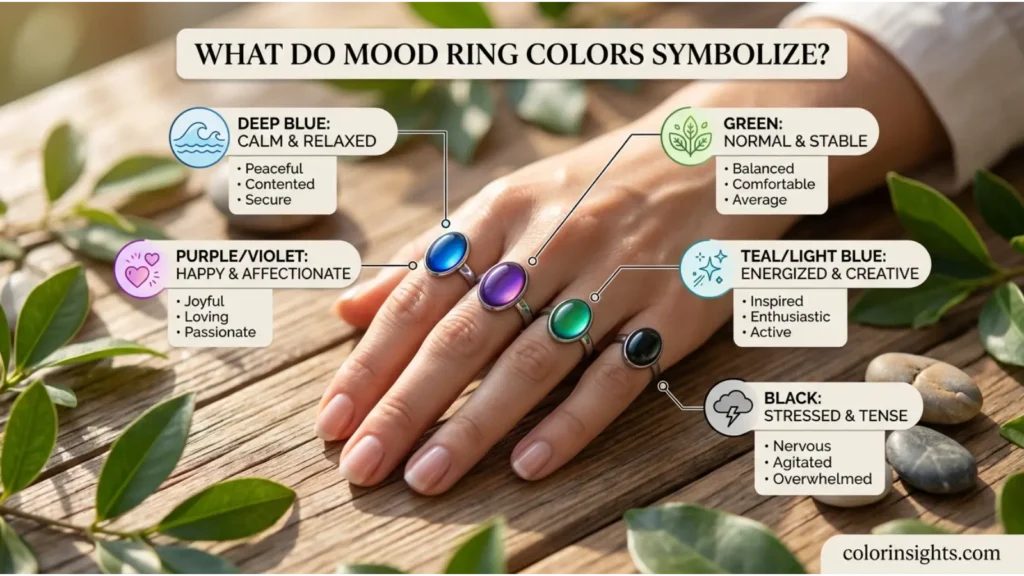
What Do Mood Ring Colors Symbolize?
Mood ring color meanings symbolize emotional states, energy levels, and general well-being based on traditional interpretations. Although the ring changes color because of temperature fluctuations rather than directly detecting emotions, body temperature often changes with stress, relaxation, excitement, or physical activity. As a result, mood ring colors have become associated with particular feelings and personality traits.
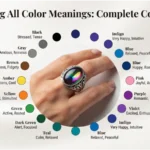
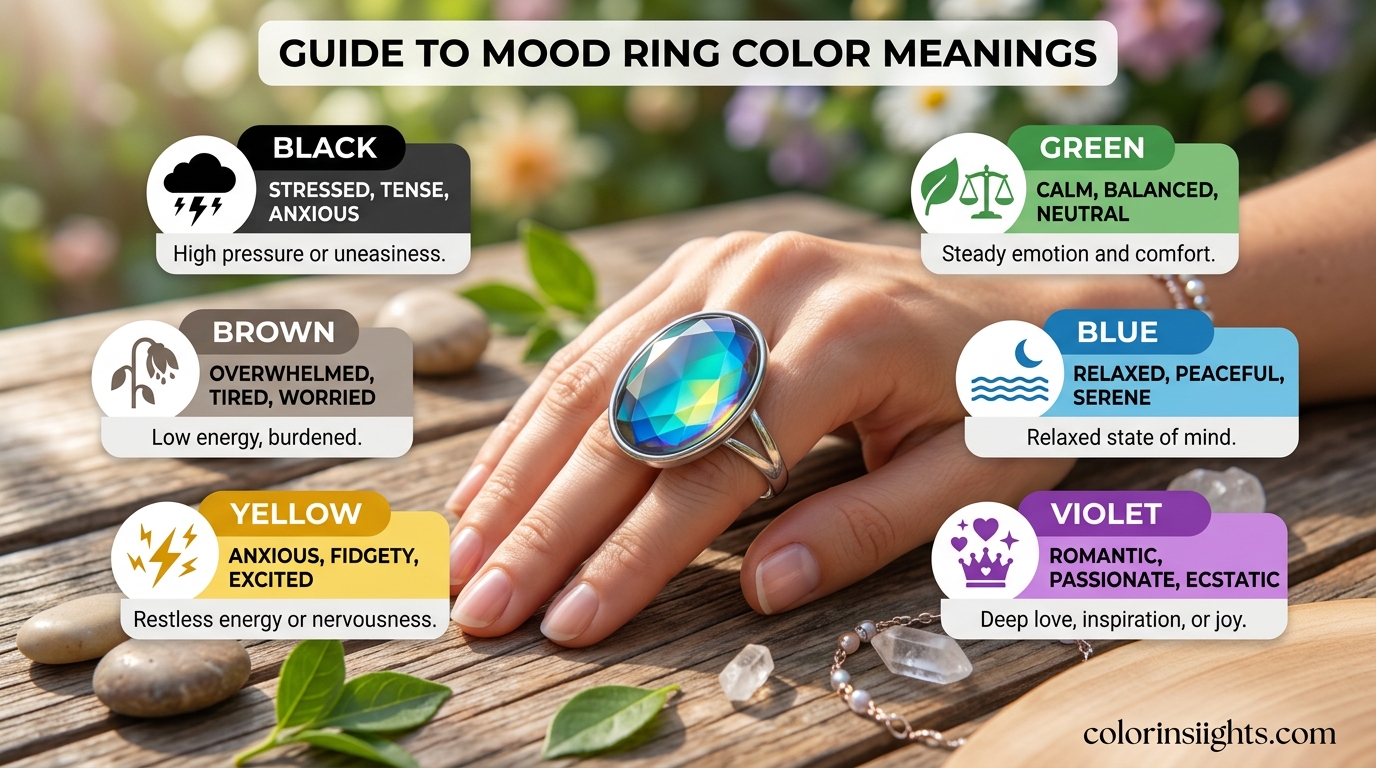
Below is a general mood ring color meanings chart.
| Mood Ring Color | Traditional Meaning |
|---|---|
| Black | Stress, tension, cold temperature |
| Gray | Anxiety, uncertainty, fatigue |
| Brown | Nervousness, restlessness |
| Amber | Mixed emotions, caution |
| Yellow | Curiosity, creativity, alertness |
| Green | Balance, stability, relaxation |
| Light Blue | Calmness, peace, contentment |
| Dark Blue | Happiness, confidence, emotional comfort |
| Purple | Passion, imagination, inspiration |
| Pink | Affection, romance, joy |
| Red | Excitement, strong emotions, high energy |
These interpretations vary among manufacturers, so slight differences are common.
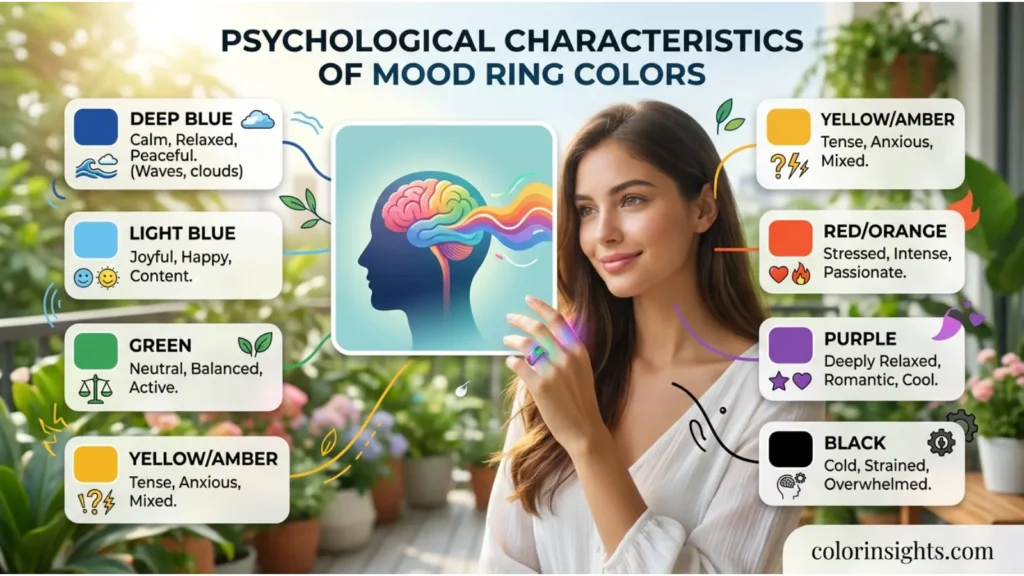
Psychological Characteristics of Mood Ring Colors
Color psychology suggests that colors influence perception, emotions, and behavior. Mood rings use these established color associations to assign emotional meanings to changing colors.
Emotional Associations
- Black: Stress, overwhelm, emotional exhaustion
- Gray: Indecision, uncertainty, mental fatigue
- Brown: Worry, discomfort, insecurity
- Amber: Alertness, anticipation
- Yellow: Optimism, curiosity, mental stimulation
- Green: Emotional balance, harmony
- Blue: Relaxation, trust, confidence
- Purple: Creativity, wisdom, imagination
- Pink: Compassion, affection
- Red: Passion, excitement, determination
Psychological Effects
Different colors evoke different psychological responses:
- Cool colors like blue and green generally promote relaxation.
- Warm colors such as red and yellow stimulate energy and attention.
- Dark shades often represent emotional heaviness or stress.
- Bright colors usually suggest optimism and engagement.
Positive Emotional Responses
- Calmness
- Confidence
- Happiness
- Hope
- Creativity
- Compassion
- Emotional stability
Negative Emotional Responses
- Stress
- Anxiety
- Confusion
- Irritability
- Emotional overload
- Restlessness
Impact on Mood and Behavior
Although mood rings do not measure emotions directly, their colors encourage self-reflection. Seeing a calming blue or balanced green may reinforce relaxation, while black or gray may remind wearers to pause and manage stress.
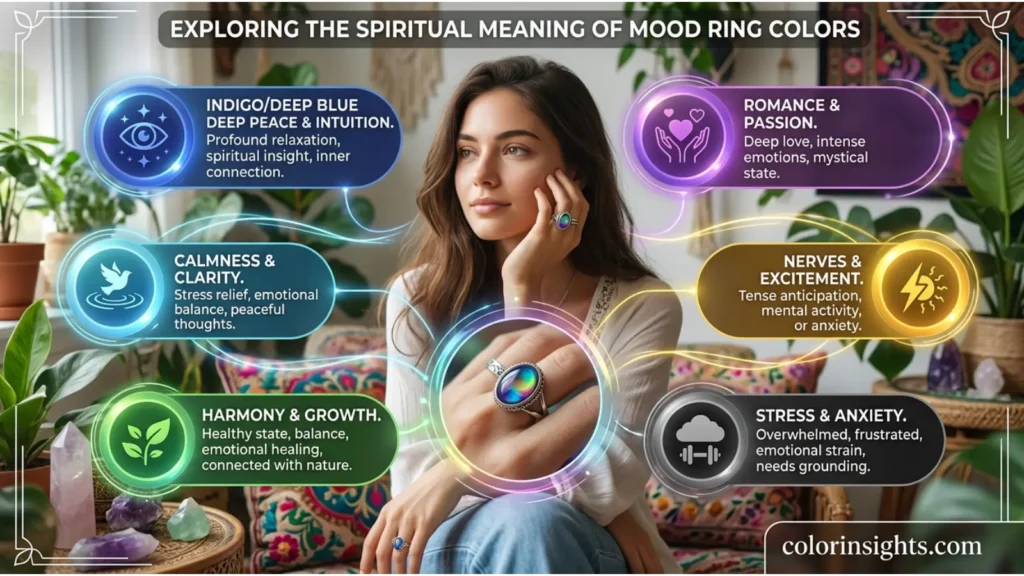
Spiritual Meaning of Mood Ring Colors
Many spiritual traditions assign symbolic meanings to colors. Mood ring colors often borrow from these broader interpretations.
- Black: Protection, grounding, releasing negative energy
- Gray: Reflection, transition, inner contemplation
- Brown: Stability, connection to nature
- Amber: Personal growth, confidence
- Yellow: Wisdom, optimism, spiritual awareness
- Green: Healing, renewal, heart-centered energy
- Blue: Peace, truth, communication
- Purple: Spiritual awakening, intuition, enlightenment
- Pink: Unconditional love, kindness
- Red: Life force, courage, personal power
While these meanings appear in many spiritual practices, they are symbolic rather than universal religious teachings.
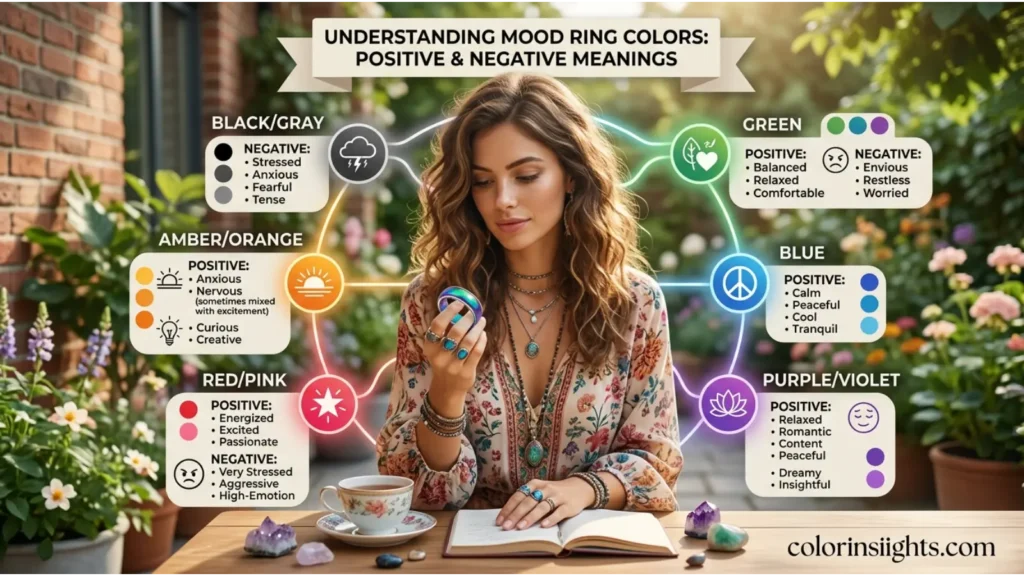
Positive and Negative Meanings of Mood Ring Colors
Positive Meanings
Black
Can symbolize protection, resilience, and grounding during periods of change.
Gray
Represents thoughtful reflection and careful decision-making.
Brown
Suggests reliability, practicality, and stability.
Amber
Reflects curiosity, adaptability, and personal growth.
Yellow
Represents optimism, learning, creativity, and enthusiasm.
Green
Symbolizes harmony, balance, emotional healing, and renewal.
Blue
Represents trust, peace, honesty, confidence, and emotional security.
Purple
Suggests imagination, wisdom, spirituality, and creativity.
Pink
Reflects compassion, affection, warmth, and friendship.
Red
Represents courage, passion, motivation, and determination.
Negative Meanings
Black
May indicate stress, emotional pressure, or physical coldness.
Example:
A cold hand on a winter day may turn the ring black regardless of your mood.
Gray
Can suggest uncertainty or emotional fatigue.
Example:
Feeling mentally exhausted after a demanding workday.
Brown
May represent nervousness or insecurity.
Example:
Feeling uncomfortable before giving a presentation.
Amber
Can symbolize hesitation or emotional conflict.
Example:
Weighing an important life decision.
Yellow
May indicate nervous excitement or impatience.
Example:
Waiting for important exam results.
Green
In rare interpretations, excessive balance may suggest emotional neutrality.
Example:
Remaining detached during emotional discussions.
Blue
Very dark blue may occasionally represent emotional reserve.
Example:
Choosing solitude to recharge.
Purple
Can indicate emotional intensity or overthinking.
Example:
Becoming deeply absorbed in creative projects.
Pink
May suggest emotional sensitivity.
Example:
Feeling easily affected by criticism.
Red
Can symbolize anger or impulsiveness alongside excitement.
Example:
Reacting emotionally during an argument.
Meanings of Mood Ring Colors
Mood ring colors take on different meanings depending on context. Psychology, spirituality, fashion, and design all interpret colors differently.
Feng Shui
Each mood ring color corresponds loosely with Feng Shui energy.
- Red: Fire element; ideal for living rooms and social spaces.
- Green: Wood element; promotes growth in home offices and bedrooms.
- Blue: Water element; supports relaxation in bathrooms and meditation spaces.
- Yellow: Earth element; adds warmth to kitchens and dining rooms.
- Brown: Earth element; creates stability in family areas.
Recommended combinations include blue with white for serenity, green with natural wood for renewal, and red with gold for prosperity. Use these colors thoughtfully to maintain visual balance.
Marketing
Brands carefully use color psychology to influence consumer behavior.
- Blue builds trust and professionalism.
- Green communicates health and sustainability.
- Red attracts attention and creates urgency.
- Yellow encourages optimism and visibility.
- Purple conveys luxury and creativity.
- Black suggests sophistication and exclusivity.
Companies such as Facebook, IBM, and PayPal prominently use blue to reinforce trust. Starbucks uses green to highlight growth and sustainability, while Coca-Cola relies on red to communicate excitement and energy.
Design
Mood ring colors inspire designers across many fields.
- Interior design: Blue and green create peaceful rooms, while red serves as an accent.
- Graphic design: Bright colors improve visual hierarchy.
- Web design: Blue enhances trust for financial and healthcare websites.
- User experience: Color guides user attention and improves navigation.
- Minimalist aesthetics: Neutral backgrounds paired with vibrant accent colors create visual balance.
Fashion
Mood ring colors influence personal style choices.
- Blue clothing projects confidence during business meetings.
- Green outfits suggest calmness and natural elegance.
- Red creates bold, attention-grabbing looks.
- Purple expresses creativity and individuality.
- Pink adds softness and warmth.
- Black remains timeless and versatile.
Seasonally, lighter blues and greens work well during spring and summer, while deeper reds, browns, and blacks complement autumn and winter wardrobes.
Color Associations Are Not Universal
Western Cultures
Western societies often associate blue with trust, green with nature, red with passion, and black with mourning. These associations influence branding, fashion, and everyday communication.
Eastern Cultures
Many Eastern traditions view red as a symbol of prosperity, celebration, and good fortune. White may symbolize mourning in several Asian cultures, unlike its association with weddings in many Western countries.
Religious Traditions
Religious symbolism varies considerably. Christianity often associates white with purity and gold with divinity. Buddhism frequently connects saffron and yellow with wisdom and spiritual devotion. Hindu traditions use red in weddings to symbolize prosperity and commitment.
Historical Interpretations
Throughout history, purple represented royalty because purple dyes were expensive and rare. Green has symbolized fertility and renewal in many agricultural societies, while black has represented both authority and mystery.
Modern Global Interpretations
Global communication has blended many traditional meanings. Today, companies and designers often choose colors based on psychology, accessibility, and cultural awareness rather than relying on a single universal interpretation.
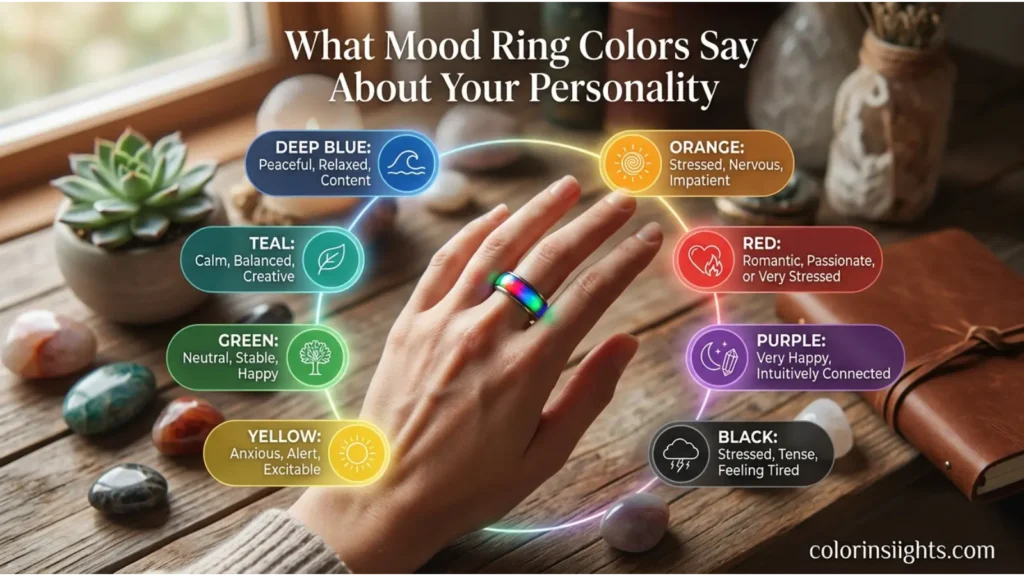
What Mood Ring Colors Say About Your Personality
People sometimes identify with their favorite mood ring color, but personality cannot be determined solely by color preference.
Those drawn to blue often value honesty, stability, and peaceful relationships. Fans of green may appreciate harmony, personal growth, and balance. Individuals who favor red frequently enjoy action, leadership, and excitement. Purple lovers often embrace creativity and imagination, while those who prefer pink may value compassion and emotional connection.
Potential strengths include empathy, confidence, creativity, resilience, and optimism. Possible weaknesses may include perfectionism, emotional sensitivity, impulsiveness, or excessive caution.
At work, color preferences may influence personal style rather than actual performance. Similarly, relationship behaviors depend on communication, values, and life experiences—not favorite colors.
Research in psychology suggests that color preferences can reflect temporary moods, cultural influences, and individual experiences, but they do not reliably predict personality traits.
FAQs
What defines mood ring colors?
Mood ring colors are produced by thermochromic liquid crystals that respond to changes in skin temperature, with each color traditionally linked to a symbolic emotional state.
What do mood ring colors symbolize?
They traditionally symbolize emotions such as calmness, stress, happiness, creativity, confidence, and emotional balance.
Why are mood ring colors important?
They encourage self-reflection, spark conversations, and introduce people to the symbolism of color psychology.
Are mood ring colors scientifically accurate?
No. Mood rings respond to temperature changes rather than directly measuring emotions.
Which mood ring color represents happiness?
Dark blue commonly represents happiness, comfort, and emotional confidence.
What does black mean on a mood ring?
Black usually indicates a cool finger temperature, stress, or emotional tension.
Which mood ring color symbolizes healing?
Green is most commonly associated with healing, renewal, and emotional balance.
What colors pair well with mood ring-inspired palettes?
Blue pairs beautifully with white or silver, green complements earthy neutrals, and purple combines well with gold or gray.
What does liking blue or green mood ring colors say about a person?
It may suggest a preference for calmness, balance, or trustworthiness, although color preference alone does not determine personality.
Can mood ring colors change throughout the day?
Yes. Temperature changes caused by weather, activity, stress, or circulation can cause the ring to shift between colors.
Conclusion
A mood ring color meanings chart offers a fascinating blend of color psychology, symbolism, and popular culture. While mood rings cannot scientifically measure emotions, their changing colors encourage mindfulness and provide an enjoyable way to explore traditional interpretations of human feelings.
Whether you wear one as a fashion accessory, a nostalgic keepsake, or a conversation starter, understanding what each color traditionally represents adds greater meaning to the experience. Appreciating both the symbolism and the science behind mood rings helps you enjoy them for what they are: creative accessories inspired by the enduring influence of color on human perception.