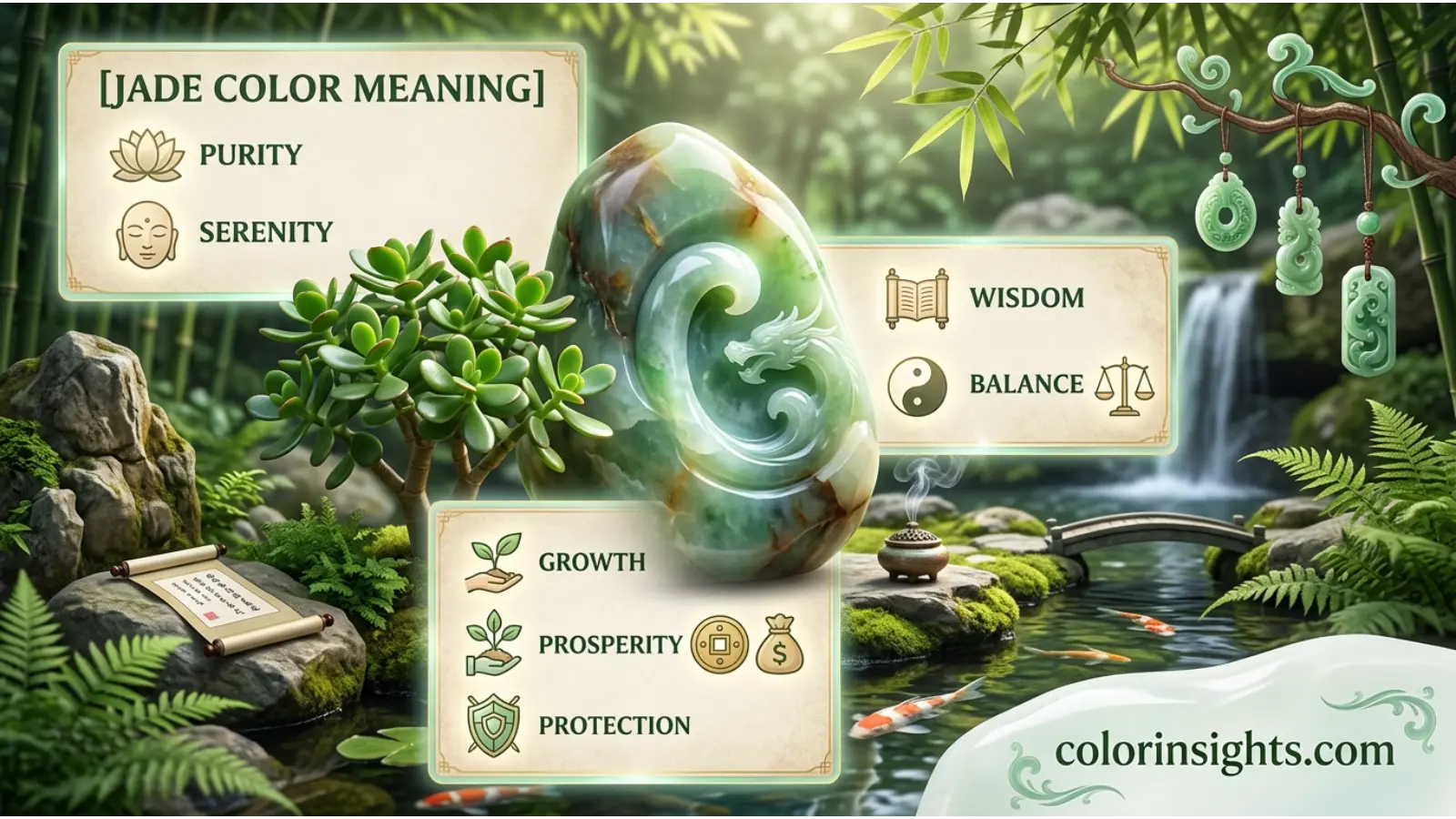
Jade color is a soft to medium green with subtle blue undertones that reflects the appearance of the treasured jade gemstone. Across cultures, it symbolizes harmony, wisdom, prosperity, healing, and emotional balance.
Designers, marketers, and psychologists often associate jade with renewal, trust, and natural elegance because it blends the calming qualities of green with the refreshing character of blue.
Whether used in fashion, branding, home décor, or spiritual practices, jade communicates sophistication without appearing overwhelming.
Quick Answer:
Jade color primarily symbolizes balance, healing, prosperity, wisdom, growth, and inner peace while also representing renewal, protection, and timeless elegance.
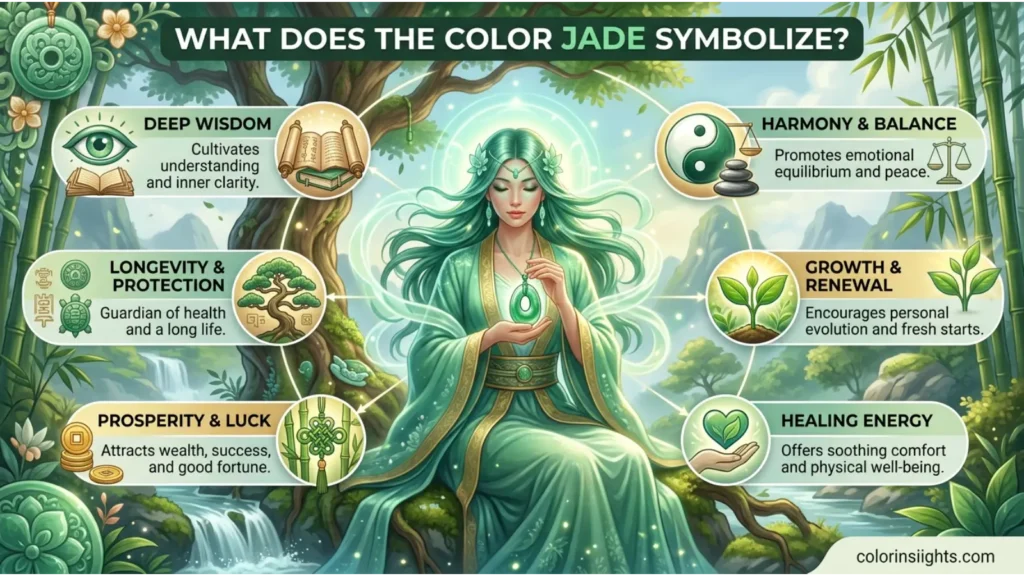
What Does the Color Jade Symbolize?
Jade color symbolizes balance between the physical and emotional worlds. Because it resembles the precious jade gemstone, many cultures connect it with wealth, protection, longevity, and good fortune.
Common symbolism includes:
- Wisdom and thoughtful decision-making
- Emotional healing and inner peace
- Prosperity and abundance
- Renewal and personal growth
- Harmony in relationships
- Protection from negativity
- Stability and resilience
- Natural beauty and elegance
In modern color symbolism, jade also represents sustainability, wellness, and healthy living. Many wellness brands, spas, and eco-conscious businesses use jade to communicate calmness and trustworthiness.
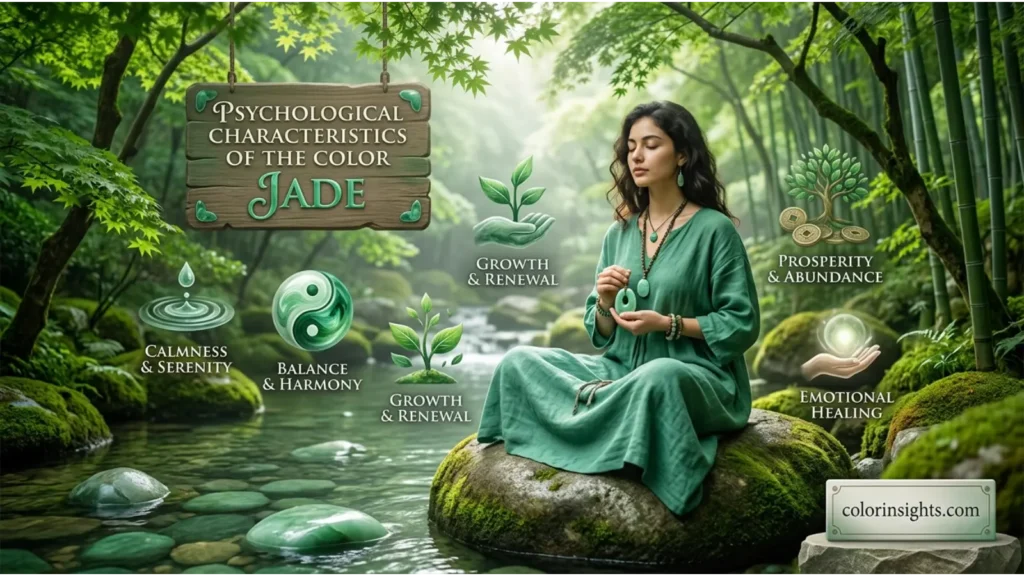
Psychological Characteristics of the Color Jade
Color psychology interprets jade as one of the most emotionally balanced shades of green. It combines green’s restorative qualities with blue’s calming influence, creating a color that encourages relaxation without feeling passive.
Emotional Associations
- Calmness
- Compassion
- Hope
- Stability
- Patience
- Confidence
- Emotional security
Psychological Effects
Jade can help create mentally relaxing environments. People often perceive it as refreshing, balanced, and emotionally supportive. It encourages thoughtful reflection rather than impulsive behavior.
Positive Emotional Responses
- Reduces feelings of stress
- Promotes optimism
- Encourages patience
- Creates feelings of safety
- Inspires personal growth
- Supports emotional resilience
Negative Emotional Responses
Although generally positive, excessive use of jade may:
- Feel overly reserved
- Reduce visual excitement
- Create emotional detachment in minimalist spaces
- Appear conservative in energetic environments
Impact on Mood and Behavior
Jade often helps people feel more centered and focused. Offices, healthcare facilities, meditation spaces, and wellness centers frequently use jade because it encourages concentration while reducing mental fatigue.
Typical Reactions
People commonly describe jade as:
- Refreshing
- Elegant
- Trustworthy
- Natural
- Comfortable
- Peaceful
- Sophisticated
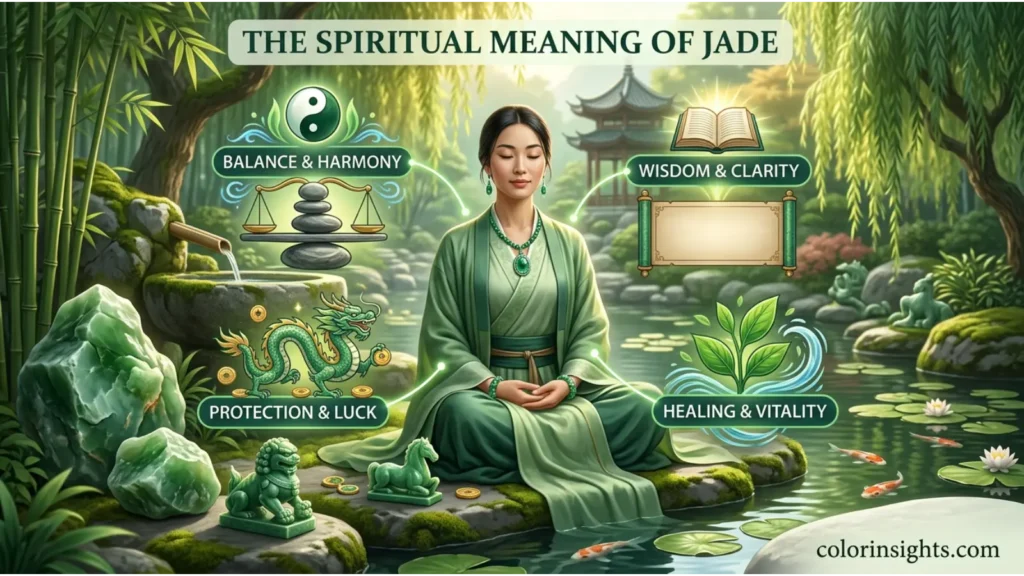
Spiritual Meaning of Jade
Spiritually, jade represents healing, wisdom, purity, and protection. Much of this symbolism comes from the historical significance of jade gemstones in Asian cultures, where they have been treasured for thousands of years.
Jade commonly represents:
- Holiness: Reflects spiritual purity and moral integrity.
- Wisdom: Encourages thoughtful decisions and lifelong learning.
- Purity: Represents honesty, sincerity, and clean intentions.
- Transformation: Supports personal growth and positive life changes.
- Healing: Symbolizes emotional recovery and physical wellness.
- Protection: Traditionally believed to guard against negative influences.
- Power: Represents quiet strength rather than dominance.
- Enlightenment: Encourages self-awareness and spiritual understanding.
- New Beginnings: Inspires fresh opportunities and renewed purpose.
- Eternity: Represents enduring values, lasting relationships, and longevity.
Many meditation practices also associate jade with emotional balance and heart-centered compassion.
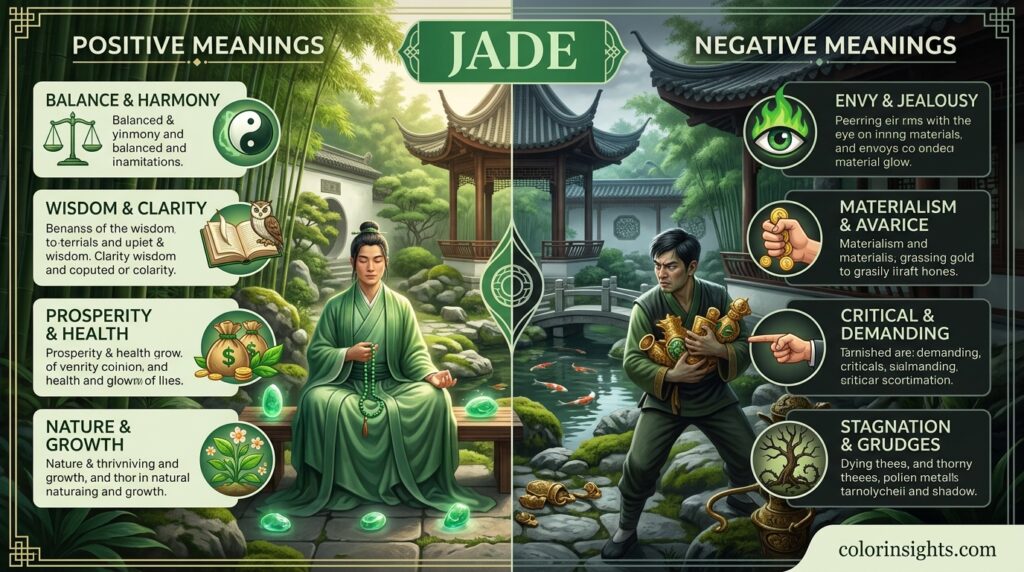
Positive and Negative Meanings of the Color
Positive Meanings
Peace
Jade creates peaceful environments in homes, wellness centers, and healthcare spaces where relaxation is important.
Balance
Its blend of green and blue symbolizes emotional and mental equilibrium, making it popular in meditation rooms.
Clarity
Designers often use jade to encourage clear thinking and organized decision-making in offices and study areas.
Freshness
Jade evokes fresh leaves, clean water, and healthy living, making it ideal for organic product packaging.
Hope
Its natural appearance suggests renewal after challenges and encourages optimism.
Harmony
Jade promotes cooperation in shared living spaces and collaborative workplaces.
Growth
Businesses focused on sustainability often use jade to symbolize long-term development.
Prosperity
Inspired by the jade gemstone, the color remains closely connected with success and abundance.
Negative Meanings
Although jade carries mostly positive symbolism, context matters.
Emptiness
In very large monochromatic spaces, jade may appear emotionally flat.
Example:
A waiting room decorated entirely in muted jade may feel impersonal.
Isolation
Overly cool jade shades can reduce warmth in social environments.
Example:
A restaurant with excessive jade décor may seem less inviting.
Coldness
Pairing jade only with gray and white may create a clinical atmosphere.
Example:
Modern offices sometimes appear emotionally distant.
Sterility
Very pale jade can resemble medical interiors.
Example:
Hospital corridors occasionally use similar shades for cleanliness.
Boredom
Without contrasting colors, jade may lack visual excitement.
Example:
Retail displays using only jade may fail to capture attention.
Emotional Distance
Minimalist jade palettes can feel formal rather than welcoming.
Example:
Luxury hotel lobbies sometimes prioritize elegance over warmth.
Perfectionism
Because jade conveys refinement, it may unintentionally suggest excessively high standards.
Example:
Premium brands may appear less approachable if jade dominates every visual element.
Meanings of the Color Jade
Jade meaning changes depending on how and where it is used. In spiritual settings it represents healing, while in branding it communicates trust and premium quality. In fashion it symbolizes elegance, and in interior design it creates calming environments.
Feng Shui
Jade belongs primarily to the Wood element, representing growth, vitality, and renewal.
- Energy symbolism: Healthy life force, abundance, harmony
- Best rooms: Living rooms, bedrooms, meditation spaces, home offices
- Color combinations: White, cream, beige, gold, natural wood, charcoal, soft pink
- Decorating tips: Use jade as an accent wall, decorative cushions, ceramics, or indoor plants to create a balanced atmosphere without overwhelming the room.
Marketing
Jade communicates wellness, quality, and environmental responsibility.
Brands use jade to convey:
- Trust and reliability
- Natural ingredients
- Sustainable practices
- Luxury without extravagance
- Emotional well-being
It appears frequently in skincare, wellness products, organic foods, financial services, spas, and healthcare branding.
Well-known brands such as Starbucks, Whole Foods Market, and Android use green tones that evoke similar ideas of freshness, growth, and sustainability, although not always the exact jade shade.
Design
Interior designers use jade to soften modern spaces while maintaining sophistication.
Applications include:
- Calm living rooms
- Spa-inspired bathrooms
- Product packaging
- Website backgrounds
- User interface accents
- Minimalist office interiors
In UX design, jade often highlights success messages, wellness features, or environmentally friendly products because users naturally associate green hues with positive outcomes.
Fashion
Jade remains a timeless fashion color because it flatters many skin tones.
It is commonly worn in:
- Spring collections
- Summer outfits
- Evening dresses
- Business casual clothing
- Jewelry and accessories
Jade clothing creates impressions of confidence, elegance, and emotional stability.
Advantages
- Easy to pair with neutrals
- Looks sophisticated
- Suitable for casual and formal wear
- Photographs well
Disadvantages
- Very muted shades may appear subdued.
- Bright accessories may overpower soft jade outfits.
Color Associations Are Not Universal
Western Cultures
In many Western countries, jade represents health, prosperity, nature, balance, and environmental awareness. It frequently appears in wellness branding and sustainable product packaging.
Eastern Cultures
In China and several East Asian traditions, jade carries exceptional cultural importance. It symbolizes virtue, prosperity, longevity, protection, honor, and moral excellence. Jade objects have historically been treasured as family heirlooms and ceremonial gifts.
Religious Traditions
Although jade itself is not universally sacred, many spiritual traditions associate green shades with renewal, compassion, life, healing, and hope. These interpretations vary depending on religious beliefs and regional customs.
Historical Interpretations
Ancient civilizations valued jade more highly than gold in some regions because it represented strength, wisdom, and immortality. Royal families often used jade ornaments to symbolize status and protection.
Modern Global Interpretations
Today, jade commonly represents sustainability, wellness, luxury, mindfulness, and emotional balance. Its meaning continues to evolve as environmental awareness becomes increasingly important worldwide.
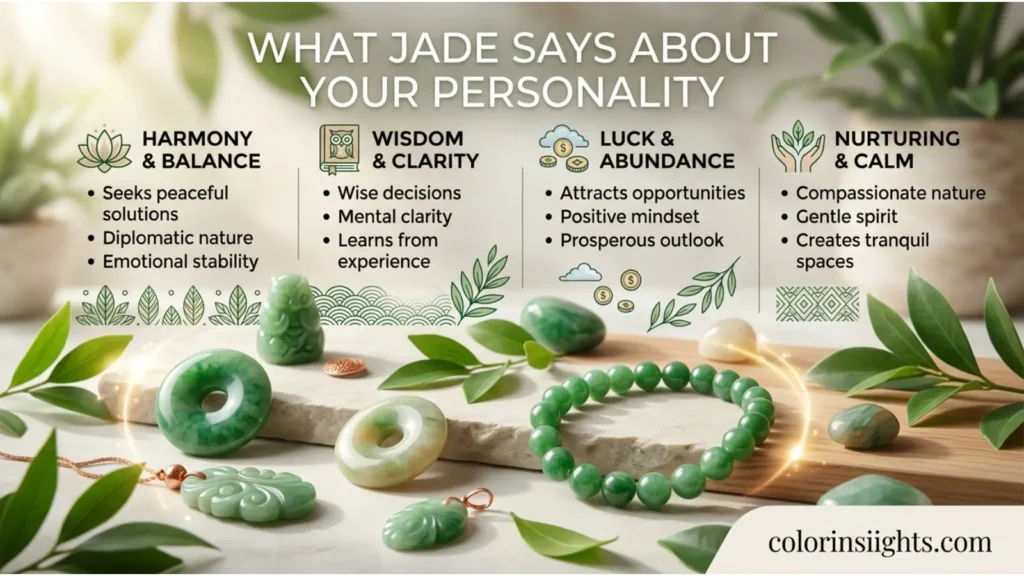
What Jade Says About Your Personality
People who prefer jade often appreciate calm environments, meaningful relationships, and personal growth. However, color preferences cannot accurately determine personality and should be viewed as general tendencies rather than scientific facts.
Strengths
- Compassionate
- Patient
- Reliable
- Balanced
- Wise
- Supportive
- Practical
Weaknesses
- May avoid confrontation
- Sometimes overly cautious
- Can appear emotionally reserved
- May resist sudden change
Social Behavior
Jade enthusiasts often value trust, honesty, and long-term friendships over large social circles.
Work Style
They typically prefer organized environments where collaboration, creativity, and steady progress are encouraged.
Relationships
People drawn to jade often seek loyalty, emotional stability, and open communication in personal relationships.
Emotional Tendencies
They may naturally pursue inner peace, thoughtful decision-making, and balanced emotional responses while avoiding unnecessary conflict.
FAQs
What defines jade color?
Jade is a medium green with subtle blue undertones inspired by the natural jade gemstone. It combines freshness, elegance, and tranquility.
What does jade symbolize?
Jade symbolizes wisdom, prosperity, balance, healing, protection, renewal, and harmony.
Why is jade important?
Jade has cultural, artistic, and historical significance because many societies associate it with good fortune, virtue, longevity, and wealth.
Is jade a warm or cool color?
Jade is generally considered a cool color because of its green-blue composition.
What emotions does jade represent?
Jade commonly represents calmness, hope, trust, emotional balance, compassion, and confidence.
What does jade mean spiritually?
Spiritually, jade symbolizes healing, wisdom, protection, inner peace, transformation, and spiritual growth.
What colors pair well with jade?
Jade pairs beautifully with white, cream, beige, charcoal, gold, brass, navy, blush pink, brown, and natural wood tones.
What does liking jade say about a person?
People who enjoy jade often appreciate harmony, stability, personal growth, and thoughtful decision-making, although color preferences alone do not define personality.
Is jade suitable for home décor?
Yes. Jade works well in bedrooms, living rooms, bathrooms, meditation spaces, and home offices where a peaceful atmosphere is desired.
Why do wellness brands use jade?
Many wellness brands use jade because consumers associate it with health, relaxation, nature, trust, and emotional well-being.
Conclusion
Jade is more than an attractive green shade—it represents harmony, prosperity, wisdom, healing, and emotional balance across many cultures. Its calming psychological effects make it valuable in interior design, branding, fashion, and wellness environments, while its historical connection to the jade gemstone reinforces themes of protection and longevity.
Although cultural interpretations vary, jade consistently conveys renewal, trust, and natural elegance. Whether you’re choosing colors for your home, brand, wardrobe, or creative project, jade offers a timeless combination of sophistication, tranquility, and meaningful symbolism.