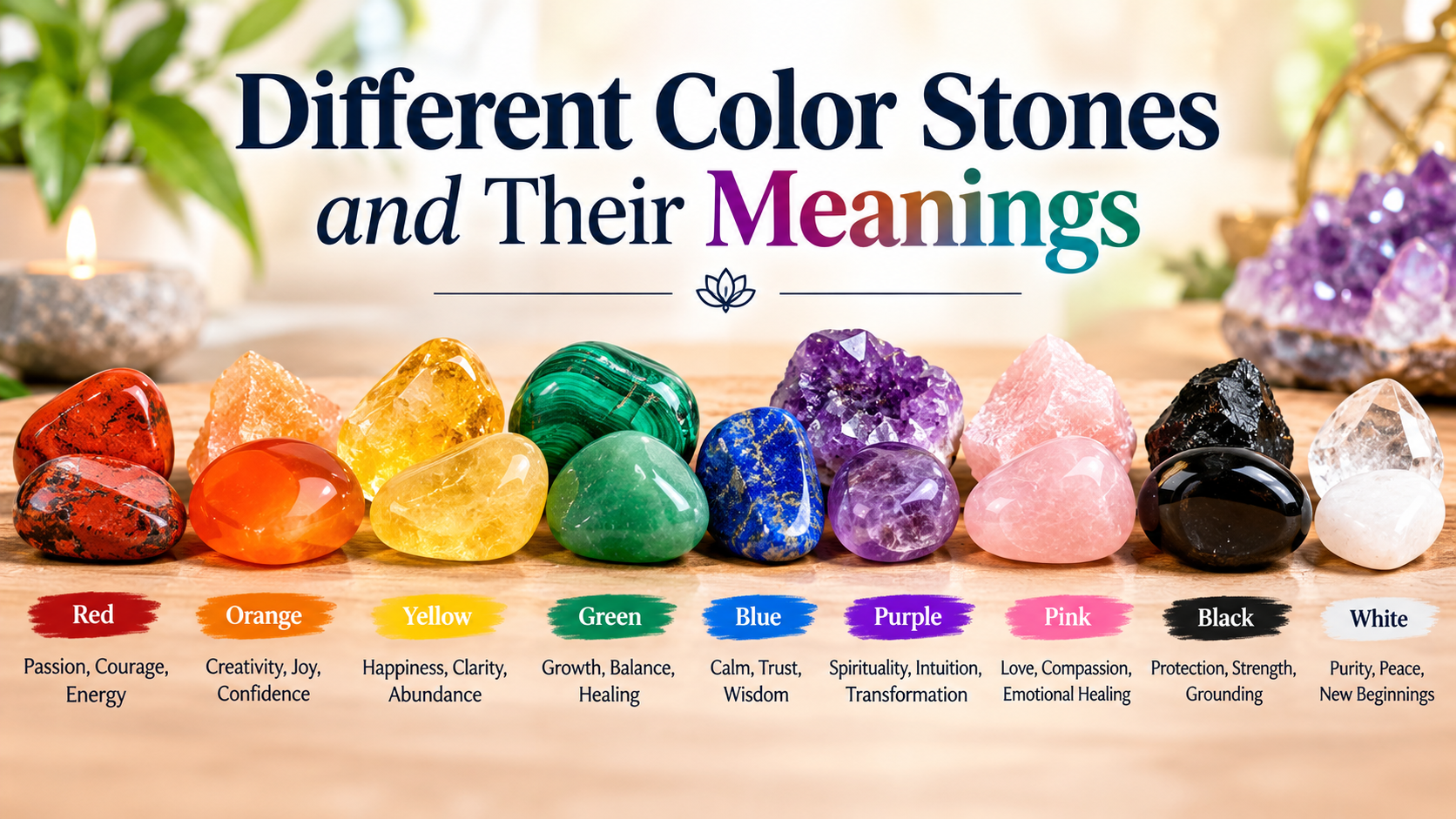
Different color stones and their meanings reveal how gemstones connect natural beauty with symbolism, cultural traditions, spirituality, and personal expression. From ruby’s rich red hue to sapphire’s deep blue, emerald’s vibrant green, and amethyst’s royal purple, each gemstone has developed associations shaped by history, folklore, religion, and modern jewelry trends.
Some stones symbolize love and courage, while others represent wisdom, prosperity, protection, or renewal. These interpretations can help people choose meaningful jewelry and gifts, although beliefs differ across cultures.
Quick answer:
Different color stones commonly symbolize love, courage, peace, wisdom, prosperity, healing, and transformation, depending on the stone and cultural context.
What Do Different Color Stones Symbolize?
The symbolism of colored stones comes from several influences, including their appearance, rarity, durability, historical use, and cultural significance. Gemstones have served as jewelry, ceremonial objects, gifts, and status symbols across many civilizations.
Color offers a useful starting point for understanding gemstone meanings, but the mineral itself also matters. Ruby and garnet are both red, for example, yet their traditional associations and cultural histories are not identical.
Common gemstone meanings include:
- Red stones: Ruby and red garnet symbolize passion, courage, vitality, and romantic love.
- Blue stones: Sapphire and aquamarine represent wisdom, loyalty, serenity, and clear communication.
- Green stones: Emerald and jade are associated with growth, harmony, abundance, and good fortune.
- Purple stones: Amethyst commonly symbolizes reflection, spiritual awareness, and calm.
- Pink stones: Rose quartz represents affection, compassion, and emotional warmth.
- Yellow stones: Citrine and yellow sapphire are associated with optimism, confidence, and prosperity.
- Black stones: Onyx and black tourmaline are linked with strength, mystery, and protection.
- White and clear stones: Diamond, white moonstone, and clear quartz may symbolize purity, clarity, commitment, or new beginnings.
- Brown stones: Tiger’s eye and smoky quartz are associated with stability, grounding, and resilience.
These meanings are symbolic rather than universal facts. A gemstone may have different interpretations depending on the community, historical period, or individual wearing it.
Psychological Characteristics of Different Color Stones
Color psychology explores how colors influence perception, attention, emotional associations, and behavior. When people view gemstones, they respond not only to color but also to sparkle, transparency, shape, texture, and personal memories.
There is no strong scientific evidence that wearing a particular gemstone reliably changes personality, cures emotional difficulties, or produces supernatural effects. However, people may find personal meaning in stones and use them to express identity or remember important experiences.
Emotional Associations
Gemstone colors can create different visual impressions:
- Red: Energy, passion, boldness, and excitement.
- Blue: Calmness, trust, stability, and composure.
- Green: Nature, balance, renewal, and growth.
- Purple: Creativity, mystery, luxury, and contemplation.
- Pink: Affection, tenderness, and compassion.
- Yellow: Optimism, brightness, confidence, and warmth.
- Black: Sophistication, authority, seriousness, and mystery.
- White or clear: Simplicity, openness, purity, and clarity.
- Brown: Dependability, earthiness, and stability.
These responses vary according to individual preferences and cultural experience.
Psychological Effects
Gemstone colors influence how jewelry and decorative objects are perceived. A ruby pendant may appear dramatic and energetic, while a sapphire ring may feel traditional and composed. Emerald can introduce a natural, luxurious quality, whereas clear gemstones often suit minimalist designs.
The setting also changes the impression. A ruby surrounded by diamonds may communicate glamour, while a simple ruby pendant can feel personal and understated. Lighting, clothing, metal choice, and the occasion all influence how the piece is perceived.
Positive Emotional Responses
People often choose gemstones because the stones represent qualities they value. A rose quartz bracelet may serve as a reminder of compassion, while a sapphire ring might represent loyalty or commitment.
Common positive associations include:
- Courage and determination through red stones.
- Calmness and trust through blue stones.
- Hope and renewal through green stones.
- Love and compassion through pink stones.
- Confidence and optimism through yellow stones.
- Reflection and spirituality through purple stones.
- Clarity and simplicity through clear stones.
The benefit may come from personal meaning, memory, or self-expression rather than a proven effect of the gemstone itself.
Negative Emotional Responses
Colors can also create less favorable impressions depending on their intensity and context. A very dark gemstone may appear severe, a bright red stone may seem overpowering, and a pale stone may appear visually understated.
Possible negative associations include:
- Aggression or danger in certain uses of red.
- Emotional distance or coolness associated with some blues.
- Envy or greed in some interpretations of green.
- Excessive extravagance associated with elaborate purple jewelry.
- Formality, grief, or mystery associated with black stones.
These meanings are not fixed. Black onyx, for instance, can look elegant in a formal ring or somber in a different setting.
Impact on Mood and Behavior
Gemstones can influence personal presentation by adding color, symbolism, and visual interest to clothing or surroundings. Someone who wears citrine because it represents optimism may feel that the jewelry reinforces a positive intention. Another person may choose amethyst as a reminder to slow down and reflect.
However, symbolic associations should not be confused with scientific evidence. A gemstone cannot be relied upon to change behavior, treat a medical condition, or guarantee an emotional outcome. Personal beliefs, social context, and individual experience remain important.
Spiritual Meaning of Different Color Stones
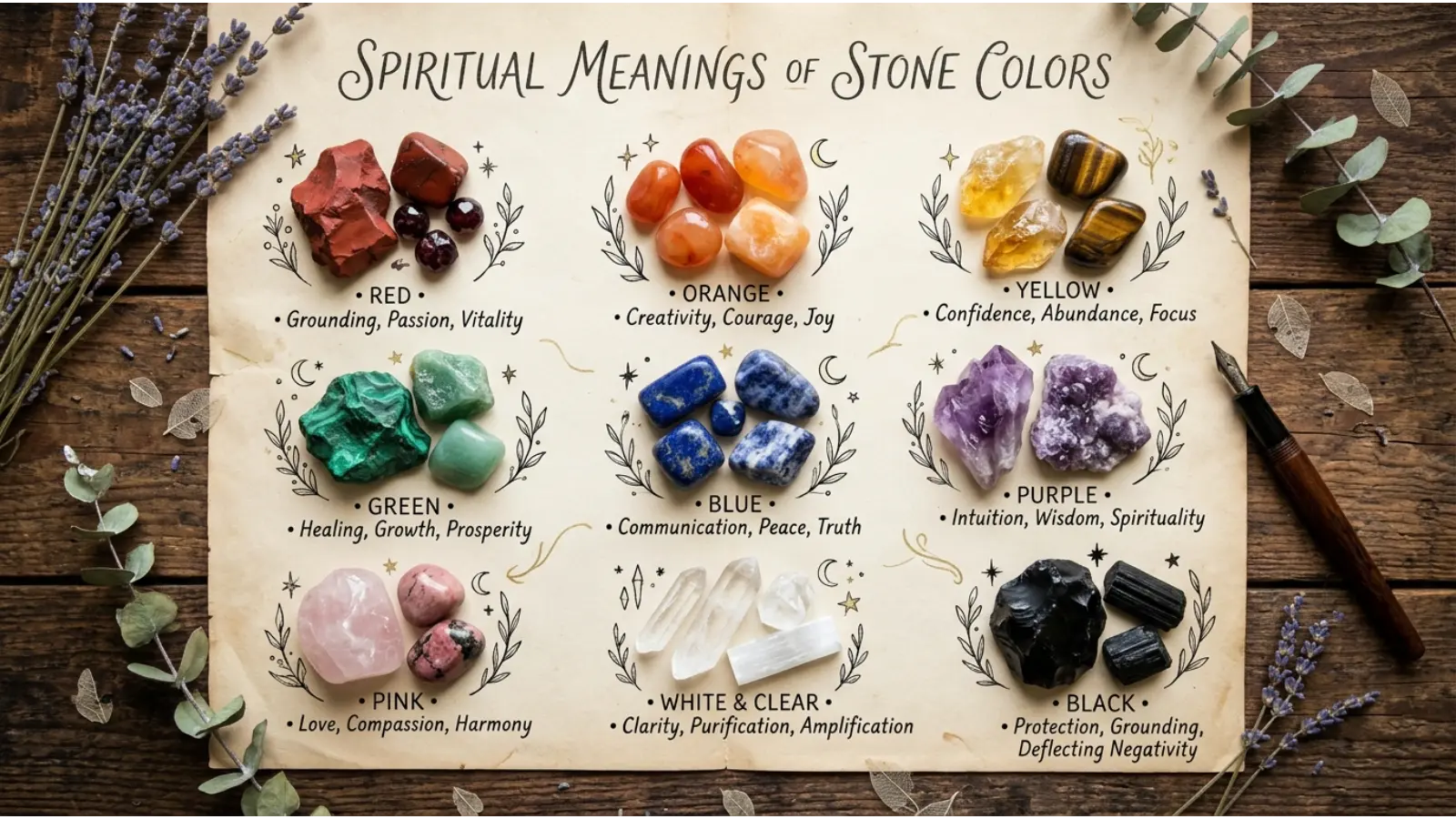
Gemstones have appeared in religious art, ceremonial jewelry, cultural rituals, and spiritual practices for centuries. Their meanings differ among traditions, and modern crystal practices sometimes assign meanings that are not shared by established religions.
The following interpretations describe common symbolic associations rather than universal doctrines or scientifically verified powers.
- Holiness: White and clear stones may represent purity, sacredness, or spiritual dedication.
- Wisdom: Blue sapphire is traditionally linked with discernment, truth, and wisdom.
- Purity: Clear quartz and white gemstones can symbolize sincerity, simplicity, and a fresh start.
- Transformation: Amethyst is sometimes associated with reflection, personal growth, and spiritual change.
- Healing: Green stones and rose quartz are used symbolically in some contemporary practices to represent renewal and compassion. These associations do not demonstrate medical benefits.
- Protection: Onyx and black tourmaline are often described as protective symbols in modern crystal traditions.
- Power: Ruby may represent courage, vitality, leadership, and passionate commitment.
- Enlightenment: Amethyst and clear quartz are sometimes connected with meditation, awareness, and inner clarity.
- New beginnings: Moonstone and clear gemstones can symbolize transitions and new opportunities.
- Eternity: Diamonds often represent enduring love because of their hardness, brilliance, and established role in engagement jewelry.
People may use gemstones as reminders of values or spiritual intentions. Nevertheless, claims that stones guarantee protection, heal illness, or produce supernatural outcomes are not established scientific facts.
Positive and Negative Meanings of Different Color Stones
Positive Meanings
Colored gemstones often represent qualities that people wish to celebrate, encourage, or remember.
Love and compassion: Rose quartz is widely associated with affection, tenderness, and caring relationships. It can be a meaningful gift for a friend, partner, or family member.
Courage and vitality: Ruby and red garnet commonly symbolize passion, confidence, and determination. A red gemstone may mark a personal achievement or a significant life event.
Peace and wisdom: Sapphire and aquamarine are linked with calmness, loyalty, and clear communication. Their colors make them popular for classic jewelry.
Growth and prosperity: Emerald and jade are associated with nature, abundance, harmony, and good fortune in various traditions. Green gemstones can represent a new opportunity or personal development.
Clarity and simplicity: Clear quartz and diamonds may symbolize transparency, commitment, or a clean beginning. Their appearance also complements minimalist jewelry.
Optimism and renewal: Citrine is often linked with joy and abundance, while moonstone can represent transitions and fresh chapters.
In everyday life, these meanings can help people select gifts for anniversaries, graduations, birthdays, or other milestones.
Negative Meanings
Negative gemstone symbolism depends on context rather than an inherent flaw in a stone.
Jealousy or greed: Green has sometimes represented envy, although emerald and jade are also linked with prosperity and harmony. Literature and cultural context influence the interpretation.
Intensity or conflict: Red can symbolize anger or danger as well as love and courage. A large red gemstone may appear too bold for a delicate outfit.
Mystery or mourning: Black stones may suggest grief or seriousness in some circumstances. In contemporary fashion, however, black onyx is also associated with elegance and versatility.
Excess or vanity: Highly elaborate gemstone jewelry can appear ostentatious in settings where understated accessories are preferred.
Unrealistic expectations: A more practical concern occurs when symbolic beliefs are treated as guarantees. A gemstone cannot promise wealth, prevent every danger, or replace medical treatment.
For example, someone may wear black tourmaline as a personal symbol of resilience, but should still use practical safety measures. Citrine can represent financial optimism without guaranteeing success.
Meanings of Different Color Stones
The meaning of a gemstone depends on its color, mineral identity, cultural background, intended use, and personal significance. Two stones that look similar may have different histories, while a single gemstone may carry several interpretations.
Feng Shui
Feng Shui associates colors with the five elements and traditional ideas about harmony and energy. These are cultural and philosophical associations rather than scientifically proven ways to control outcomes.
- Red stones, such as ruby, are often associated with fire, vitality, and visibility.
- Green stones, such as jade, may represent wood, growth, and renewal.
- Blue and black stones are commonly linked with water, reflection, and flow.
- Yellow and brown stones may represent earth, stability, and grounding.
- White stones are often associated with metal, clarity, and order.
Small gemstone objects can be displayed in living rooms, offices, or meditation spaces according to personal taste. Pair green stones with wood textures for a natural appearance, or combine white stones with neutral colors for a clean look. Keep arrangements balanced rather than overcrowding shelves.
Marketing
Gemstone colors help brands communicate style, luxury, heritage, romance, or individuality. Consumers often notice color before reading a product description, making gemstone photography and presentation important parts of jewelry marketing.
- Branding psychology: Red stones can communicate passion, blue stones elegance or trust, and green stones nature or renewal.
- Consumer perception: Sapphire jewelry may be positioned as timeless, while turquoise may suggest an artistic or relaxed style.
- Trust signals: Accurate product descriptions, transparent sourcing, clear information about treatments, and reliable certifications help customers make informed decisions.
- Product packaging: Dark velvet boxes can emphasize luxury, while cream or recycled-paper packaging may communicate simplicity or natural style.
- Advertising: Ruby jewelry may feature in romantic campaigns, emeralds in heritage-inspired collections, and citrine in bright seasonal promotions.
Luxury jewelry brands such as Tiffany & Co., Cartier, and Bvlgari incorporate gemstones into many of their designs. Their brand identities rely on craftsmanship, heritage, materials, and presentation rather than any single gemstone color.
Design
Gemstone colors can create contrast, texture, and visual interest in physical and digital design. Their symbolic meanings can support a creative concept, but usability, durability, maintenance, and accessibility remain essential.
Interior design: Marble, granite, and decorative stone surfaces add natural patterns to kitchens, bathrooms, and living rooms. Green accents can complement wood and plants, while black stone can contrast with pale cabinetry.
Graphic design: Gemstone-inspired palettes can suit jewelry catalogs, luxury packaging, wellness materials, and editorial layouts. A dominant color with a few complementary tones usually creates a more coherent visual identity.
Web design: Product photographs should represent gemstones accurately under neutral lighting. Clear labels, descriptive alt text, and transparent product details help users understand what they are buying.
User experience: Do not rely on color alone to distinguish gemstones or product options. Include names, photographs, dimensions, care requirements, and relevant information about treatments.
Minimalist aesthetics: A single colored stone in a simple setting can become the focal point of a design. Neutral backgrounds and restrained typography help its natural features stand out.
Fashion
Gemstones allow people to express personal style, coordinate accessories, and celebrate important events. Their meanings may influence a purchase, but individual taste and practical considerations matter just as much.
Clothing symbolism: Ruby jewelry can add drama to a neutral outfit, sapphire can complement professional clothing, and rose quartz can suit soft, romantic styling.
Seasonal use: Deep red, green, and dark blue stones often appear in autumn and winter looks. Aquamarine, turquoise, and lighter-colored stones can complement spring and summer outfits. These are styling conventions, not strict rules.
Styling effects: Large, vivid stones attract attention, while small stones in simple settings create a subtle impression. Mixing gemstone colors can work well when metal tones and clothing colors are coordinated.
Personality impressions: A red ring may appear bold, jade jewelry may evoke tradition, and clear-stone accessories may feel understated. These are visual impressions rather than reliable personality assessments.
Advantages: Gemstones offer color, individuality, variety, and personal significance. Natural variations in color and pattern can make each piece distinctive.
Disadvantages: Some gemstones are expensive, fragile, or sensitive to heat and chemicals. Buyers should also check whether stones are natural, laboratory-grown, treated, or imitation.
For example, an emerald pendant can complement a black dress, while turquoise earrings can brighten a white shirt and denim. Choose jewelry according to comfort, occasion, budget, and care requirements as well as symbolism.
Color Associations Are Not Universal
Western Cultures
In many Western settings, red gemstones are associated with romance and passion, particularly around Valentine’s Day and anniversaries. Diamonds have become strongly connected with engagement and lasting commitment. These meanings reflect social traditions, marketing, and popular culture rather than color alone.
Eastern Cultures
In several East and South Asian traditions, jade has been valued for its beauty and cultural significance, with associations that may include virtue, harmony, status, or good fortune. Red is auspicious in many Chinese celebrations, so red gemstones may carry positive associations in appropriate contexts. However, Asian cultures are diverse, and meanings differ by region, religion, and historical period.
Religious Traditions
Gemstones appear in religious texts, ceremonial objects, and devotional art. Some biblical passages describe precious stones in sacred settings, while gemstones also feature in different Hindu, Buddhist, and other cultural practices. Interpretations depend on the specific tradition; no single spiritual meaning applies to every religion.
Historical Interpretations
Across history, gemstones have been used as ornaments, seals, status symbols, gifts, and amulets. Some societies believed that particular stones offered protection or were connected with celestial forces. These beliefs provide insight into historical culture, but they do not prove that gemstones possess supernatural powers.
Modern Global Interpretations
Today, gemstone meanings are shaped by jewelry trends, birthstone traditions, social media, wellness culture, and personal experiences. Rose quartz is frequently presented as a symbol of self-love, while black tourmaline is popular in contemporary crystal practices as a protective symbol. These interpretations may be personally meaningful without being universal or scientifically verified.
What Different Color Stones Say About Your Personality
People sometimes choose gemstones that reflect their identity, preferences, or desired self-image. Someone drawn to ruby may enjoy bold accessories, while someone who prefers aquamarine may favor cool colors and understated jewelry. These preferences can express taste, but they do not establish fixed personality traits.
- Red-stone preferences: May reflect an appreciation for vivid color, expressive style, or romantic symbolism.
- Blue-stone preferences: May indicate a liking for classic design, cool palettes, or associations with loyalty and calm.
- Green-stone preferences: May reflect an interest in nature-inspired colors, traditional jewelry, or symbolism connected with growth.
- Purple-stone preferences: May appeal to people who enjoy artistic expression, distinctive colors, or spiritual symbolism.
- Pink-stone preferences: May suit people who like gentle palettes or jewelry associated with affection.
- Yellow-stone preferences: May appeal to those who enjoy bright accents and cheerful styling.
- Black-stone preferences: May reflect a preference for versatility, minimalism, or dramatic contrast.
- Clear-stone preferences: May suit people who favor simplicity, classic jewelry, or understated elegance.
Strengths and Weaknesses
Choosing a stone for personal reasons can encourage self-expression and help someone remember an important experience. A gemstone may represent a personal goal, a relationship, or a meaningful milestone.
However, judging someone’s character by their jewelry is unreliable. A preference for dark stones does not prove that someone is private, and a preference for bright stones does not establish that a person is outgoing.
Social Behavior and Relationships
Gemstones often have social significance because they are given as gifts, worn at ceremonies, or passed down through families. A birthstone necklace may express affection, while an engagement ring can represent a shared commitment. The meaning comes from the people and traditions involved, not from the mineral alone.
Work Style and Emotional Tendencies
Some people choose understated gemstones for professional settings and colorful accessories for creative environments. These choices may reflect workplace expectations, comfort, or fashion preferences rather than stable work habits or emotional tendencies.
Ultimately, gemstone preferences are best understood as personal expression. They can reveal something about a person’s taste or the stories they value, but they cannot reliably diagnose personality or predict behavior.
Frequently Asked Questions
1. What defines different color stones and their meanings?
Different color stones and their meanings refer to the symbolism associated with gemstone colors, mineral types, cultural traditions, and personal experiences. Red stones commonly represent passion, blue stones wisdom, green stones growth, and pink stones affection, although interpretations vary.
2. What does the color of a gemstone symbolize?
Gemstone color can symbolize emotions and values. Red often represents love or courage, blue suggests calm or loyalty, green relates to renewal or prosperity, and purple is associated with reflection or spirituality. Meaning depends on context.
3. Why are colored stones important?
Colored stones are important in jewelry, cultural heritage, ceremonies, gift-giving, and design. They can represent relationships, milestones, identity, or spiritual beliefs. Their importance is often cultural or emotional rather than scientific.
4. Are gemstone colors warm or cool?
Red, orange, and yellow gemstones are generally considered warm colors. Blue, blue-green, and some purple stones are often considered cool. Green can appear warm or cool depending on its undertone, while white, gray, and black are generally neutral.
5. What emotions do different color stones represent?
Red stones often symbolize passion and courage; blue stones calmness and trust; green stones balance and growth; pink stones affection; yellow stones optimism; and black stones strength or mystery. These are common associations, not universal emotional responses.
6. What do colored gemstones mean spiritually?
In spiritual traditions, gemstones may symbolize protection, wisdom, renewal, love, purity, or enlightenment. The specific meaning depends on the stone and belief system. Claims that gemstones cure illness or guarantee protection are not established scientific facts.
7. What colors pair well with colored stones?
Neutral colors such as black, white, gray, beige, and navy complement many gemstones. Emerald pairs well with cream or gold, ruby with black or ivory, sapphire with silver or white, and turquoise with denim or earthy brown.
8. What does liking a particular gemstone say about a person?
A gemstone preference may reflect taste, culture, memories, or desired style. It does not reliably determine personality, intelligence, emotional health, or future behavior.
9. Which gemstone symbolizes love?
Rose quartz is widely associated with affection and compassion, while ruby often represents passion and romantic commitment. Diamonds commonly symbolize lasting love in engagement jewelry. These meanings come from tradition and popular symbolism.
10. Which colored stone symbolizes protection?
Black tourmaline and onyx are commonly described as protective stones in contemporary spiritual and crystal traditions. People may wear them as personal symbols of safety or resilience, but they should not replace practical safety measures.
11. Which gemstone represents prosperity and good luck?
Jade, citrine, and green aventurine are often associated with prosperity, abundance, or good fortune in different traditions. These symbolic associations do not guarantee financial success or luck.
12. How should I choose a gemstone based on its meaning?
Start with the quality you want the stone to represent, such as love, courage, wisdom, or renewal. Then consider your style, budget, durability needs, authenticity, and care requirements. Choose a stone whose meaning feels personally relevant rather than relying on promises of guaranteed results.
Conclusion
Different color stones and their meanings bring together natural beauty, cultural history, emotional symbolism, spiritual traditions, and personal style. Ruby may represent passion, sapphire wisdom, emerald renewal, rose quartz affection, and amethyst reflection, but no single interpretation applies to everyone. These associations can help people choose meaningful gifts, design jewelry, and express identity. At the same time, gemstone symbolism should be distinguished from scientific evidence about health, personality, and supernatural effects. The most useful gemstone is one that suits your taste, purpose, budget, and personal connection.