Rose colors carry unique messages that have been used for centuries to express emotions, relationships, celebrations, and personal sentiments. From passionate red roses to peaceful white roses and joyful yellow roses, each rose color meaning communicates a different feeling without words.
These symbolic interpretations appear in literature, art, religion, psychology, fashion, and everyday gift-giving traditions.
Understanding different rose color meanings helps people choose the right flowers for special occasions, romantic gestures, sympathy arrangements, friendships, and celebrations.
While interpretations can vary across cultures, many rose color associations remain widely recognized around the world.
Quick Answer:
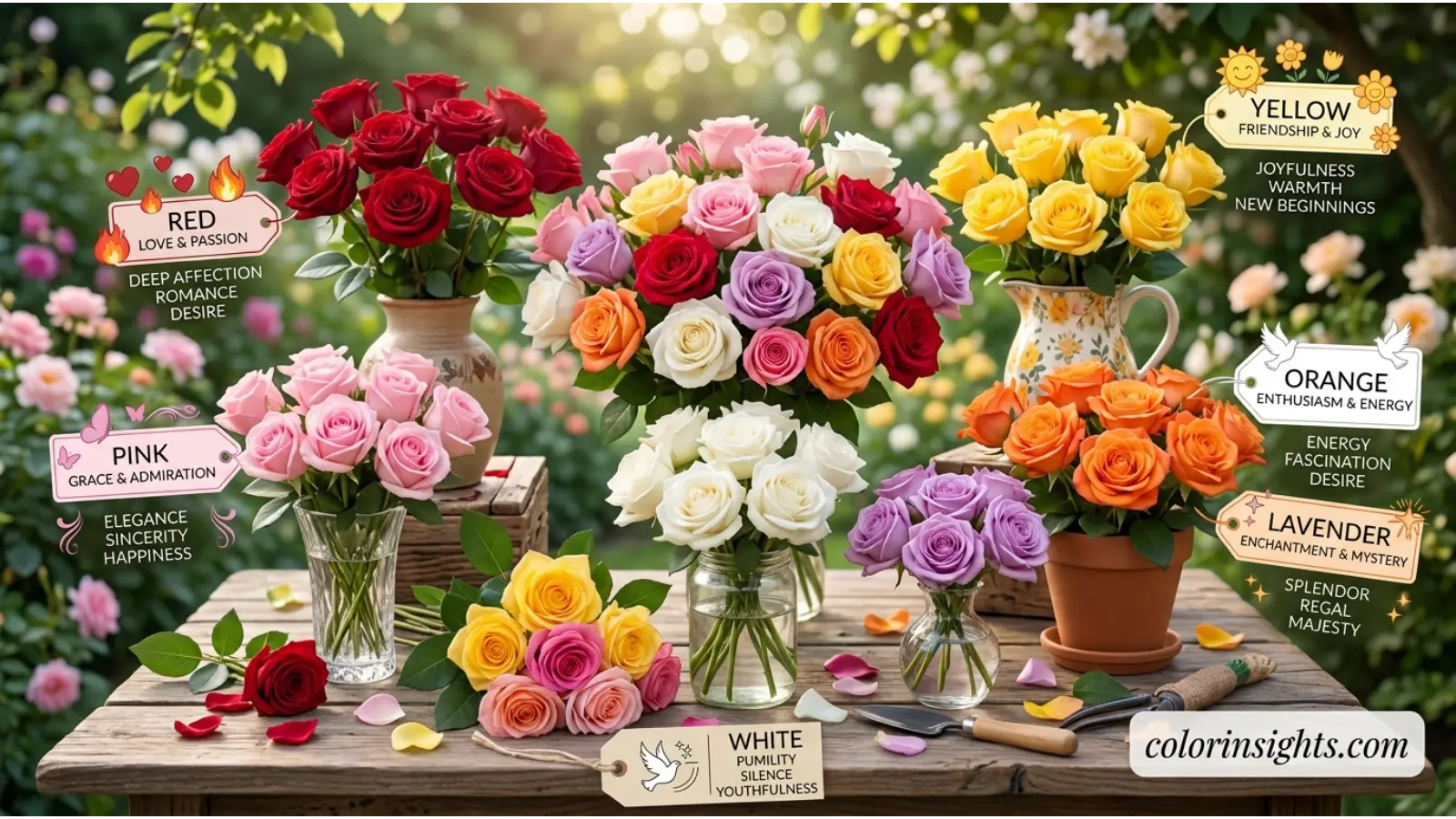
Different rose color meanings include love (red), purity (white), friendship (yellow), admiration (pink), enthusiasm (orange), enchantment (lavender), and new beginnings (peach). Each color conveys a distinct emotional and symbolic message.
Understanding the Symbolism of Different Rose Colors
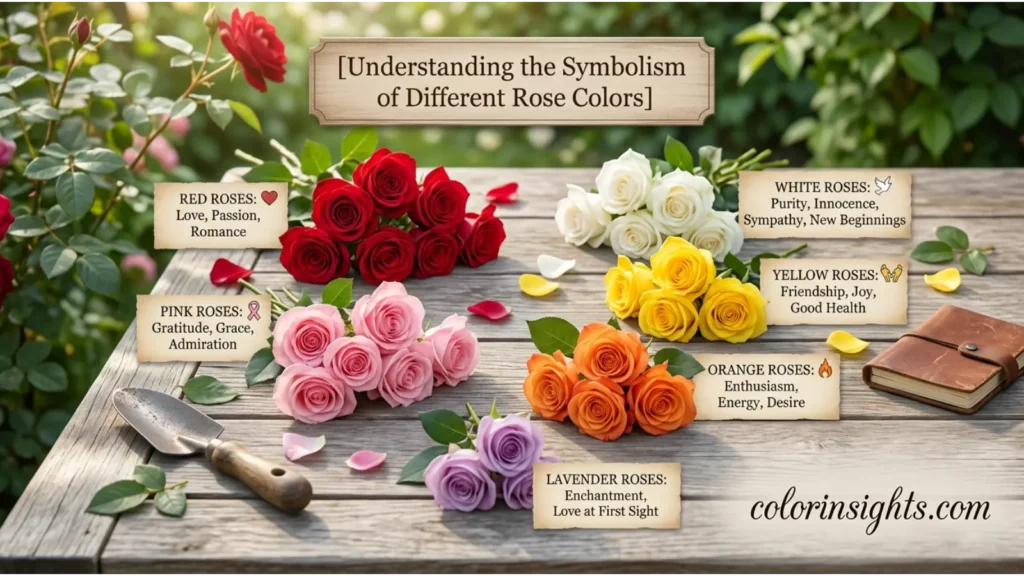
Different rose colors symbolize various human emotions, values, and life experiences. The meaning often depends on cultural traditions, historical usage, and personal interpretation.
Some of the most recognized rose color symbolism includes:
- Red Roses: Love, passion, romance, courage.
- White Roses: Purity, innocence, peace, remembrance.
- Pink Roses: Gratitude, admiration, gentleness, affection.
- Yellow Roses: Friendship, joy, happiness, optimism.
- Orange Roses: Enthusiasm, energy, excitement, desire.
- Lavender Roses: Mystery, enchantment, fascination.
- Peach Roses: Sincerity, appreciation, modesty.
- Cream Roses: Elegance, thoughtfulness, charm.
- Blue Roses: Mystery, uniqueness, the impossible.
- Black Roses: Transformation, farewell, rebirth.
These symbolic meanings make roses one of the most expressive flowers in the world.
The Psychology Behind Rose Colors
Color psychology suggests that different rose colors trigger specific emotional and behavioral responses.
Emotional Associations
- Red creates feelings of excitement and passion.
- Pink evokes warmth and affection.
- White promotes calmness and peace.
- Yellow stimulates happiness and optimism.
- Orange encourages confidence and enthusiasm.
- Purple inspires imagination and creativity.
Psychological Effects
- Bright colors tend to energize people.
- Soft colors create relaxation and comfort.
- Warm-toned roses often encourage social interaction.
- Cool-toned roses can promote reflection and contemplation.
Positive Emotional Responses
- Love
- Happiness
- Hope
- Appreciation
- Confidence
- Trust
- Comfort
- Inspiration
Negative Emotional Responses
Depending on context, some colors may also evoke:
- Jealousy (yellow)
- Sadness (white at funerals)
- Obsession (dark red)
- Mystery or uncertainty (blue and black)
Impact on Mood and Behavior
People frequently associate rose colors with memories and emotions. A bouquet of yellow roses may instantly create cheerful feelings, while red roses often increase perceptions of romance and intimacy.
Typical Reactions
Most people naturally interpret rose colors through cultural experiences and emotional associations rather than conscious analysis.
Spiritual Significance of Rose Colors
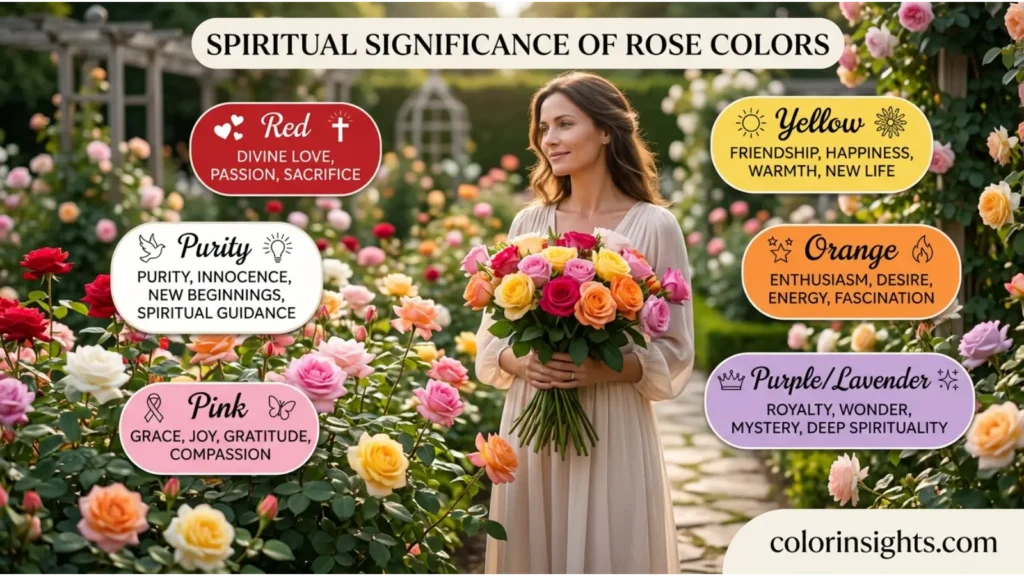
Throughout history, roses have appeared in spiritual traditions, sacred art, meditation practices, and religious symbolism.
Common Spiritual Meanings
- Holiness: White roses often represent divine purity.
- Wisdom: Purple and lavender roses symbolize spiritual insight.
- Purity: White roses are linked to innocence and virtue.
- Transformation: Black and deep burgundy roses represent change.
- Healing: Pink roses symbolize emotional healing and compassion.
- Protection: Roses are sometimes used in spiritual rituals for protection.
- Power: Red roses signify life force and strength.
- Enlightenment: White and lavender roses symbolize higher awareness.
- New Beginnings: Peach and white roses often represent fresh starts.
- Eternity: Roses are commonly used in memorial traditions to symbolize enduring love.
Many spiritual teachings view roses as symbols of the soul’s growth and emotional awakening.
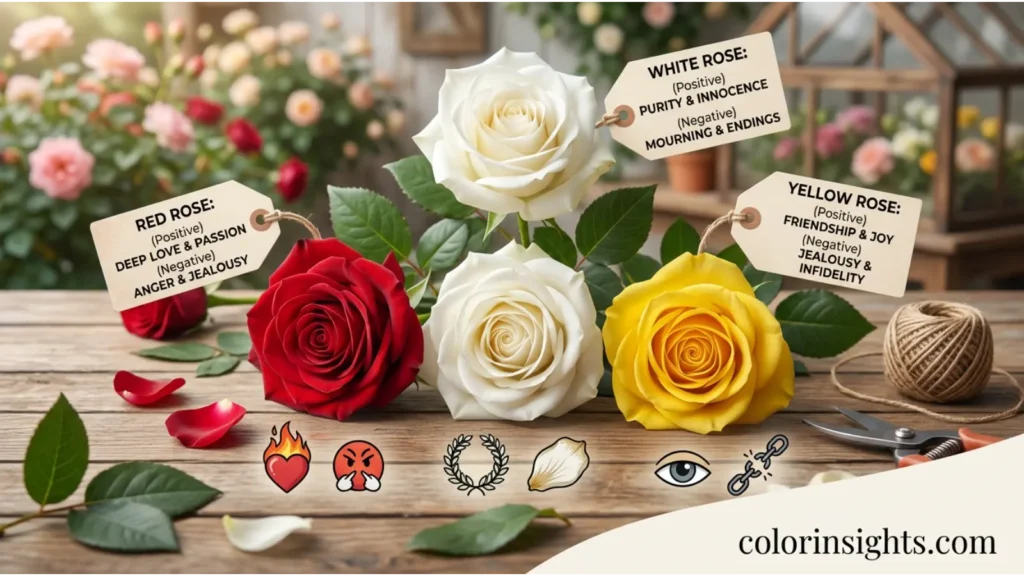
Positive and Negative Symbolism of Rose Colors
Positive Meanings
Different rose colors can symbolize many uplifting qualities:
Love and Romance
Red roses remain the universal symbol of romantic love and devotion.
Peace and Harmony
White roses are often associated with tranquility and unity.
Friendship
Yellow roses celebrate companionship and loyalty.
Gratitude
Pink roses express appreciation and thankfulness.
Hope
Peach and cream roses symbolize optimism and new opportunities.
Balance
Blended rose colors often represent harmony between emotions and logic.
Freshness
Light-colored roses suggest renewal and positive energy.
Negative Meanings
Rose colors can also carry less favorable interpretations depending on context.
Jealousy
Historically, yellow roses were occasionally associated with jealousy.
Emotional Distance
White roses may appear cold or overly formal in certain situations.
Farewell
Black roses are frequently connected with endings or goodbyes.
Isolation
Blue roses sometimes symbolize unattainable desires.
Perfectionism
Pure white roses can represent unrealistic standards of perfection.
Uncertainty
Lavender roses may suggest mystery or ambiguity.
For example:
while white roses are ideal for weddings, they may also be used in memorial arrangements, giving them different emotional meanings depending on the occasion.
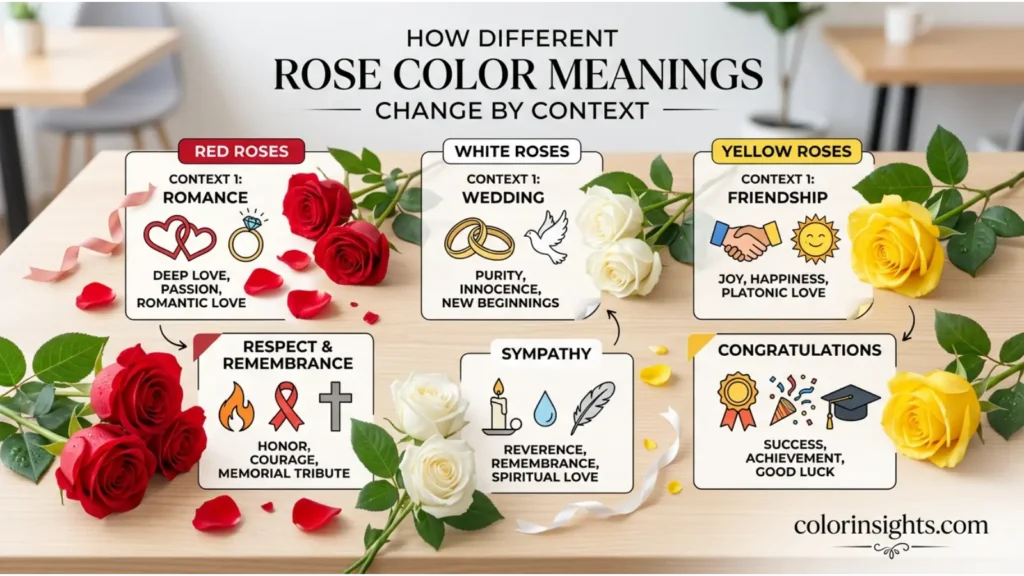
How Different Rose Color Meanings Change by Context
The meaning of rose colors often depends on where, how, and why they are used.
Feng Shui and Rose Colors
Associated Elements
- Red: Fire
- White: Metal
- Yellow: Earth
- Pink: Fire and Earth balance
- Purple: Fire and spiritual energy
Energy Symbolism
Rose colors are believed to influence emotional energy and environmental harmony.
Best Rooms
- Red roses: Living rooms and relationship corners.
- Pink roses: Bedrooms.
- White roses: Meditation spaces.
- Yellow roses: Kitchens and family areas.
Recommended Color Combinations
- Pink and white for harmony.
- Red and gold for prosperity.
- Purple and white for spiritual balance.
Home Decorating Tips
Fresh roses can be placed strategically to encourage positive energy and create welcoming environments.
Rose Colors in Marketing and Branding
Branding Psychology
Brands often use rose-inspired colors to communicate specific emotions.
- Red suggests passion and confidence.
- Pink suggests compassion and femininity.
- White communicates simplicity and cleanliness.
Consumer Perception
Color influences purchasing decisions by creating emotional connections.
Trust Signals
Soft pink and white tones often appear trustworthy and approachable.
Product Packaging
Beauty, wellness, and luxury products frequently use rose-inspired color palettes.
Advertising Applications
Marketers use rose colors to trigger emotions associated with romance, elegance, happiness, or sophistication.
Common examples include cosmetics, floral companies, luxury gifts, and wellness brands.
Rose Colors in Design
Interior Design
Rose-inspired colors can make spaces feel elegant, welcoming, and emotionally balanced.
Graphic Design
Designers use rose shades to communicate warmth, creativity, and personality.
Web Design
Pink and rose tones often create friendly and approachable user experiences.
User Experience
Soft rose colors can reduce visual stress and improve engagement.
Minimalist Aesthetics
Muted rose shades pair well with white, gray, beige, and black for modern minimalist designs.
Rose Colors in Fashion
Clothing Symbolism
- Red symbolizes confidence and attraction.
- Pink represents kindness and elegance.
- White signifies simplicity and refinement.
- Purple conveys luxury and creativity.
Seasonal Use
- Pastel roses dominate spring.
- Bright roses appear in summer.
- Deep rose shades are popular in autumn and winter.
Styling Effects
Rose colors can soften appearances while maintaining sophistication.
Personality Impressions
People wearing rose-inspired colors are often perceived as:
- Friendly
- Romantic
- Creative
- Approachable
- Stylish
Advantages
- Versatile
- Timeless
- Universally flattering
- Emotionally expressive
Disadvantages
- Certain shades may appear overly formal or sentimental.
- Bright rose tones may overwhelm minimalist outfits.
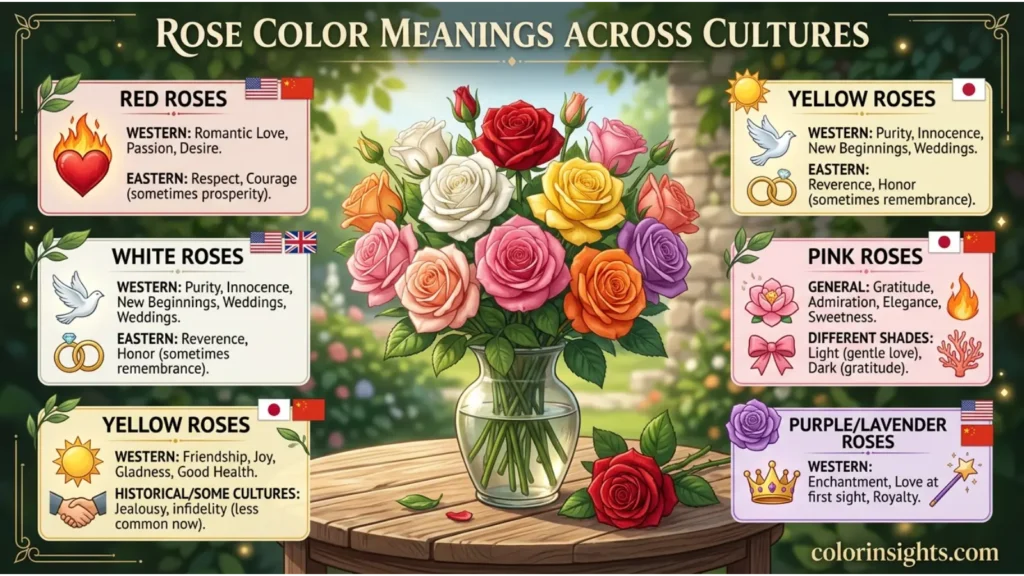
Rose Color Meanings Across Cultures
Color symbolism is not universal, and rose color meanings vary globally.
Western Cultures
In North America and Europe, red roses symbolize romantic love, white roses symbolize purity, and yellow roses symbolize friendship.
Eastern Cultures
Many Asian cultures associate red with luck, prosperity, and celebration. White flowers may sometimes be connected with mourning and remembrance.
Religious Traditions
Christian symbolism frequently links white roses with purity and divine grace. Red roses may symbolize sacrifice and spiritual devotion.
Historical Interpretations
Victorian flower language, known as floriography, assigned detailed meanings to every rose color. People often communicated secret messages through floral arrangements.
Modern Global Interpretations
Today, rose colors are influenced by media, marketing, fashion, social networks, and international cultural exchange, creating broader and more flexible interpretations.
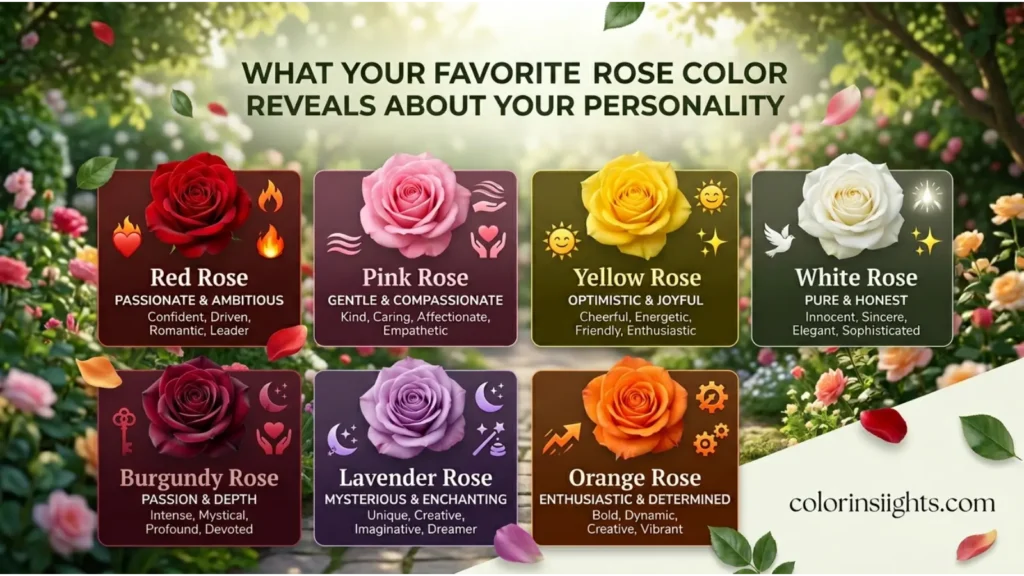
What Your Favorite Rose Color May Reveal About Your Personality
Although color preferences do not scientifically determine personality, psychologists acknowledge that people often gravitate toward colors that reflect their current emotions, values, or aesthetic preferences.
Red Rose Lovers
Strengths
- Passionate
- Confident
- Determined
Weaknesses
- Impulsive
- Competitive
White Rose Lovers
Strengths
- Honest
- Organized
- Calm
Weaknesses
- Perfectionistic
- Reserved
Pink Rose Lovers
Strengths
- Compassionate
- Friendly
- Nurturing
Weaknesses
- Sensitive
- Indecisive
Yellow Rose Lovers
Strengths
- Optimistic
- Social
- Energetic
Weaknesses
- Easily distracted
- Restless
Purple Rose Lovers
Strengths
- Creative
- Imaginative
- Visionary
Weaknesses
- Idealistic
- Unpredictable
Social Behavior
Rose color enthusiasts often seek emotional connections and meaningful relationships.
Work Style
Many value creativity, communication, collaboration, and emotional intelligence.
Relationships
People attracted to rose colors frequently appreciate affection, loyalty, and emotional expression.
Emotional Tendencies
Preferences may change throughout life as personal experiences and emotional needs evolve.
FAQs
What defines different rose color meanings?
Different rose color meanings are symbolic interpretations assigned to rose colors based on culture, psychology, history, and tradition.
What do different rose colors symbolize?
Rose colors symbolize emotions such as love, friendship, gratitude, purity, admiration, and transformation.
Why are rose color meanings important?
They help communicate feelings and intentions when giving flowers for special occasions.
Are rose colors warm or cool colors?
Some are warm, such as red, orange, and yellow, while others, including lavender and blue, are considered cool colors.
What emotions do rose colors represent?
Rose colors represent love, happiness, trust, compassion, peace, hope, passion, and admiration.
What is the spiritual meaning of rose colors?
Spiritually, rose colors can symbolize purity, healing, wisdom, protection, enlightenment, and personal transformation.
Which rose color represents friendship?
Yellow roses are most commonly associated with friendship, joy, and companionship.
Which rose color symbolizes true love?
Red roses traditionally symbolize deep love, romance, and commitment.
What colors pair well with rose-inspired colors?
White, gold, gray, cream, navy blue, green, and black pair beautifully with many rose shades.
What does liking rose colors say about a person?
It may suggest appreciation for beauty, emotional expression, creativity, compassion, or elegance, though personality cannot be determined solely by color preferences.
What does a black rose symbolize?
Black roses generally symbolize transformation, endings, rebirth, mystery, or significant life changes.
What is the meaning of lavender roses?
Lavender roses commonly represent enchantment, admiration, mystery, and love at first sight.
Conclusion:
Different rose color meanings have evolved through centuries of cultural traditions, psychology, spirituality, art, and social customs.
Whether expressing romantic love with red roses, friendship with yellow roses, gratitude with pink roses, or purity with white roses, each rose color carries a unique message.
Understanding these meanings helps people communicate emotions more effectively, choose appropriate flowers for special occasions, and appreciate the rich symbolism behind one of the world’s most beloved flowers.
While interpretations vary across cultures and personal experiences, rose colors continue to serve as powerful symbols of human emotion and connection.