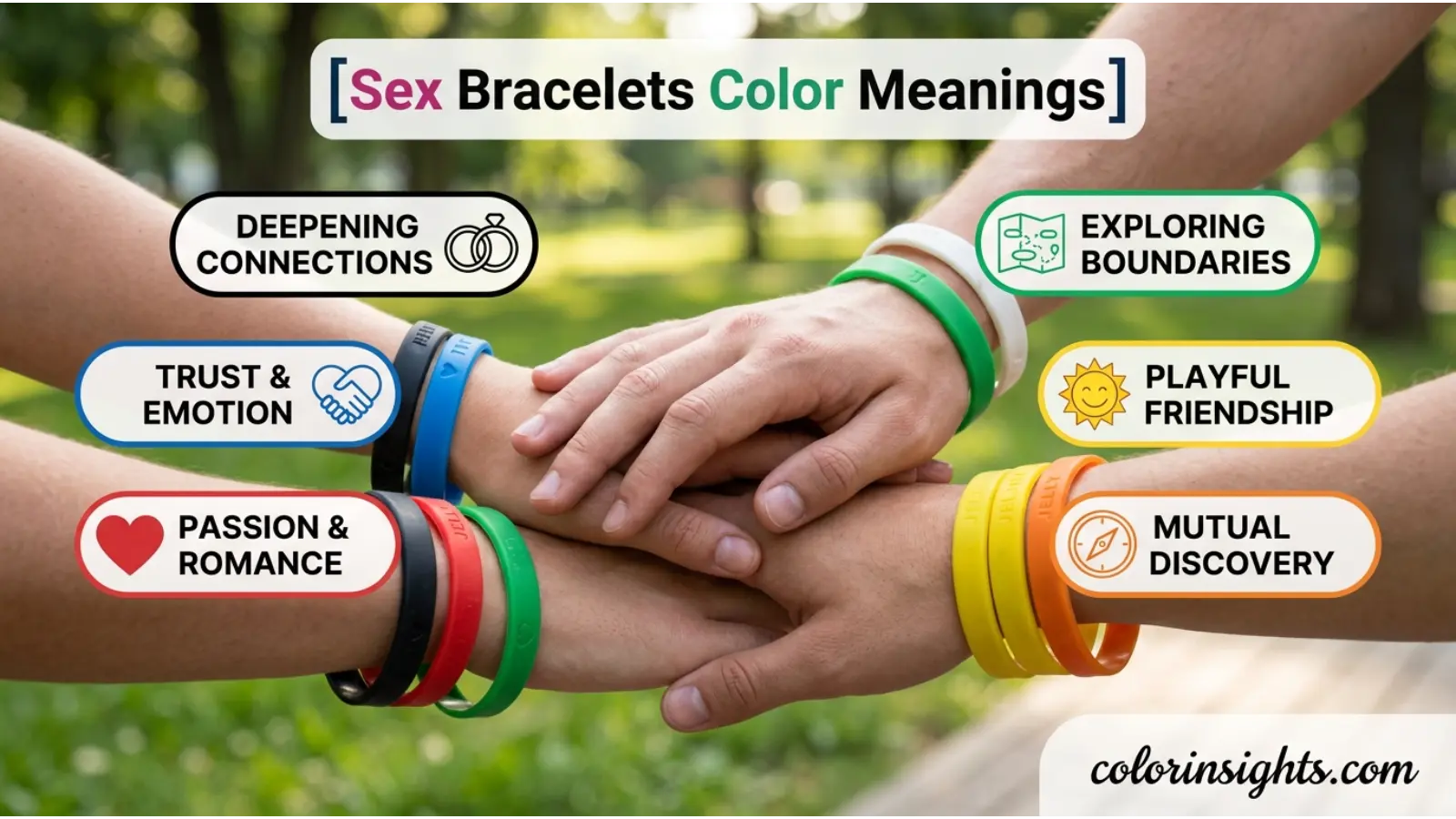
The phrase sex bracelets color meanings refers to a pop-culture trend in which different colored silicone or jelly bracelets were rumored to represent specific romantic or sexual activities.
The trend gained widespread attention during the early 2000s, particularly among teenagers in schools across the United States and parts of Europe.
While many people believed the color meanings were universally recognized, there was never a single official system. In reality, interpretations varied by school, community, and online discussions, making the meanings inconsistent and often exaggerated by media reports.
Today, sex bracelets are better understood as a cultural phenomenon rather than an established social code.
Many people wore colorful bracelets simply as fashion accessories without associating them with any hidden message. Understanding their history helps separate fact from rumor while providing context about youth culture, symbolism, and changing fashion trends.
Quick Answer:
Sex bracelets color meanings are unofficial color associations assigned to colored jelly bracelets, but there is no universal or officially recognized color code, and meanings have varied widely by region, school, and online communities.
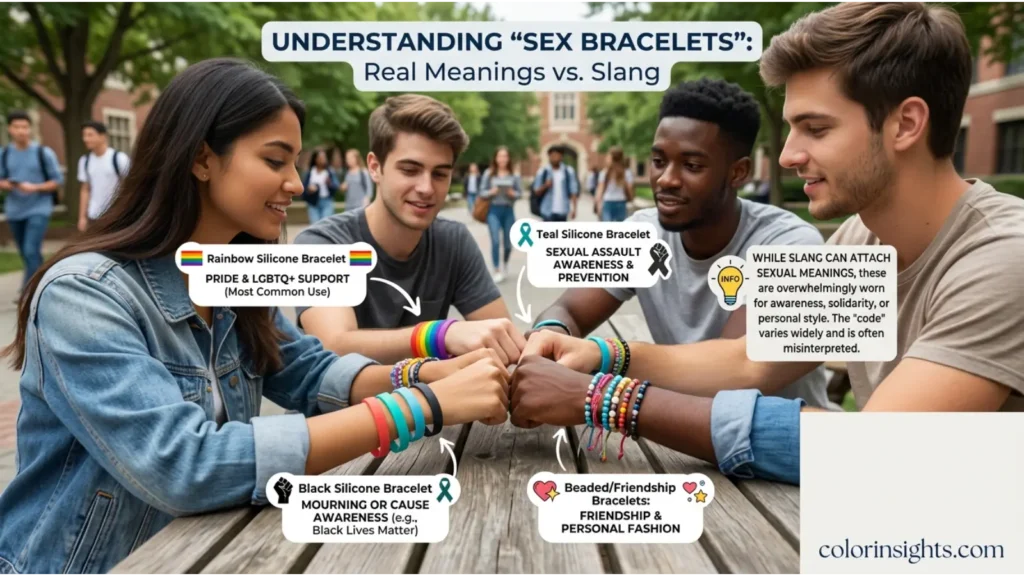
What Are Sex Bracelets?
Sex bracelets are brightly colored silicone or jelly bracelets that became popular fashion accessories during the early 2000s. They were inexpensive, available in many colors, and commonly worn in stacks on the wrist.
The controversy surrounding these bracelets came from a rumor that each bracelet color represented a specific romantic or sexual act. According to the legend, breaking another person’s bracelet supposedly signaled interest in performing the activity associated with that color.
Although these stories spread rapidly through schools, internet forums, and news outlets, there has never been evidence of a standardized nationwide color code. Most reports relied on local rumors rather than documented social practices.
Today, historians of youth culture generally describe sex bracelets as an example of an urban legend that mixed fashion trends with exaggerated interpretations.
Key Facts
- Became popular during the early 2000s.
- Usually made from silicone or jelly plastic.
- Available in many bright colors.
- Meanings varied from one community to another.
- No official organization ever defined the colors.
- Many teenagers wore them purely as fashion accessories.
- Numerous schools addressed the rumors despite limited evidence of widespread participation.
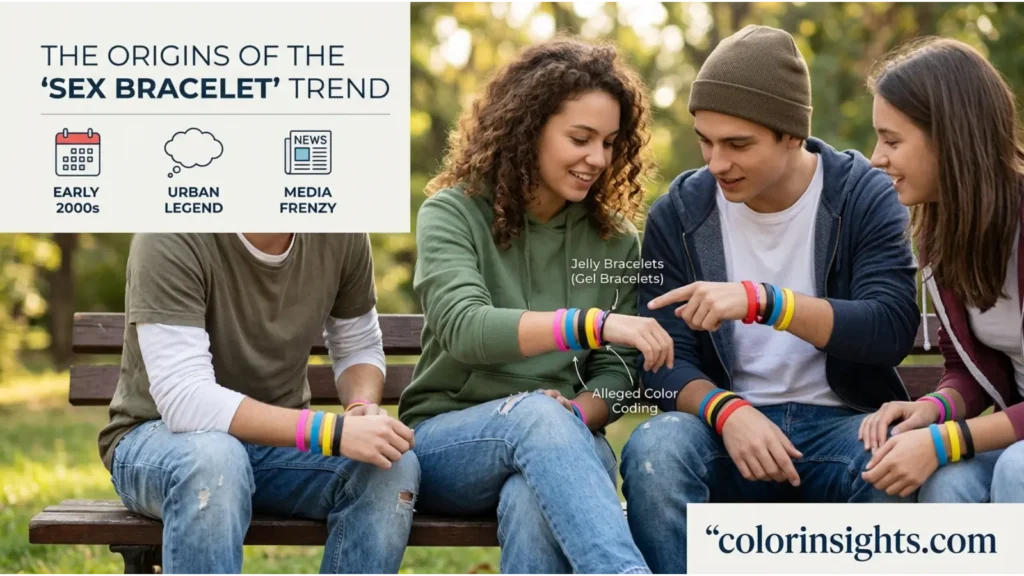
Origin of the Sex Bracelet Trend
The popularity of colorful jelly bracelets began as a simple fashion trend inspired by vibrant accessories that appealed to teenagers and young adults. Their affordability and ability to mix multiple colors made them especially fashionable.
Over time, rumors emerged claiming that each bracelet color symbolized a different level of romantic or sexual behavior. These stories spread through:
- School gossip
- Internet message boards
- Email chains
- Teen magazines
- Local television reports
- Social media discussions in later years
As media coverage increased, many parents and educators became concerned about the alleged meanings. Some schools even prohibited jelly bracelets as a precaution, although investigations often found little evidence that students consistently followed any shared code.
Today, researchers generally view the phenomenon as an example of how rumors can spread rapidly among adolescents and become accepted as fact despite lacking consistent evidence.
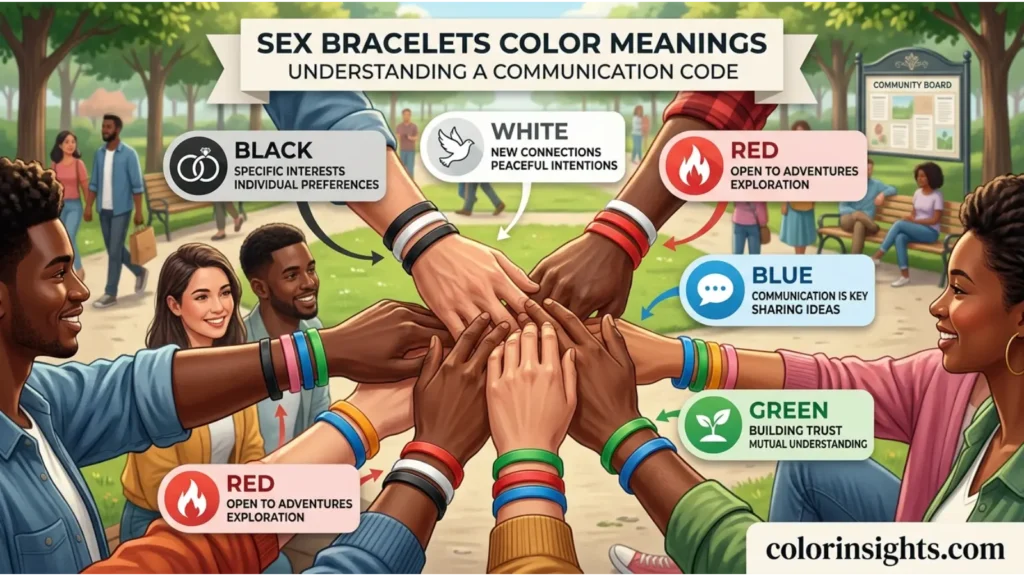
Sex Bracelets Color Meanings
Because there was never a universally accepted system, the meanings below represent commonly reported interpretations rather than official definitions. Different schools and communities often assigned completely different meanings to the same bracelet colors.
Red Bracelet Meaning
Red was frequently associated with passion, attraction, and physical intimacy. In many rumored color charts, it represented one of the more serious romantic or sexual activities.
However, outside the sex bracelet trend, red traditionally symbolizes:
- Love
- Passion
- Energy
- Confidence
- Courage
Many people wore red bracelets simply because they liked the bold color rather than intending to communicate any hidden meaning.
Blue Bracelet Meaning
Blue commonly appeared in online lists with various rumored interpretations depending on location. There was no consistent agreement about what blue represented.
Outside the urban legend, blue is widely associated with:
- Trust
- Calmness
- Loyalty
- Stability
- Intelligence
Its popularity as a bracelet color often reflected fashion preferences rather than symbolic communication.
Green Bracelet Meaning
Green frequently appeared in unofficial color charts, although its rumored meaning varied considerably between different communities.
Traditionally, green symbolizes:
- Growth
- Nature
- Renewal
- Health
- Balance
- Prosperity
Many teenagers selected green simply because it complemented other bracelet colors.
Yellow Bracelet Meaning
Yellow was one of the most inconsistently interpreted colors in the rumored bracelet system. Different schools attributed different meanings, demonstrating the lack of any standardized code.
In general color symbolism, yellow represents:
- Happiness
- Optimism
- Friendship
- Creativity
- Positivity
- Warmth
These traditional meanings remain far more widely recognized than the rumors associated with sex bracelets.
Black Bracelet Meaning
Black bracelets were sometimes linked to mystery or more mature themes within unofficial rumor lists.
Outside those rumors, black commonly symbolizes:
- Strength
- Sophistication
- Elegance
- Authority
- Independence
- Protection
Black bracelets continue to be popular fashion accessories because they match nearly every outfit.
White Bracelet Meaning
White often received different interpretations depending on the community discussing the bracelets.
Across many cultures, white traditionally represents:
- Purity
- Innocence
- Peace
- Simplicity
- Honesty
- New beginnings
These established symbolic meanings are much more consistent than any rumored bracelet code.
Pink Bracelet Meaning
Pink was generally associated with affection, romance, kindness, and youthful femininity outside the urban legend.
Traditional symbolism includes:
- Compassion
- Love
- Caring
- Gentleness
- Sweetness
- Emotional warmth
Many people chose pink bracelets because they reflected their personal style rather than any hidden message.
Purple Bracelet Meaning
Purple often appeared in unofficial lists but with highly inconsistent interpretations.
Its broader symbolic meanings include:
- Royalty
- Luxury
- Creativity
- Spirituality
- Wisdom
- Imagination
Purple remains a popular fashion color due to its rich and distinctive appearance.
Orange Bracelet Meaning
Orange bracelets were sometimes included in rumored color charts, although reported meanings differed widely.
Traditionally, orange symbolizes:
- Enthusiasm
- Adventure
- Confidence
- Energy
- Optimism
- Social interaction
Its bright appearance made it especially popular among teenagers during the jelly bracelet trend.
Clear or Transparent Bracelet Meaning
Clear bracelets generally carried fewer rumored associations than brightly colored versions.
In modern symbolism, transparent accessories often represent:
- Simplicity
- Openness
- Neutrality
- Flexibility
- Minimalism
Many people selected clear bracelets because they matched every color combination.
Rainbow or Multi-Colored Bracelets
Some individuals wore stacked bracelets featuring multiple colors simply to create colorful fashion combinations.
Rather than communicating secret meanings, rainbow combinations often represented:
- Individuality
- Creativity
- Self-expression
- Fun
- Personal style
Today, colorful stacked bracelets remain a common fashion trend without implying any universal symbolic message.
Are the Color Meanings Universal?
No. One of the biggest misconceptions surrounding sex bracelets is the belief that every color carried the same meaning everywhere.
In reality, reported meanings differed significantly depending on:
- Geographic location
- Individual schools
- Friend groups
- Internet communities
- Local rumors
- Media reports
For example, a color rumored to represent one activity in one school might carry an entirely different interpretation—or no meaning at all—in another community.
This inconsistency is one reason researchers classify sex bracelets as an urban legend rather than an organized symbolic system.

Myths vs. Reality
The popularity of sex bracelets was fueled by rumors that often spread faster than verified information. While some teenagers may have believed in or discussed the alleged color meanings, there is little evidence that a single, universally accepted code ever existed. Understanding the difference between myth and reality provides important context for this cultural phenomenon.
Myth: Every Bracelet Color Had an Official Meaning
This is one of the most common misconceptions. There has never been an official organization, fashion brand, or youth culture group that established a standardized set of bracelet meanings. Lists circulated through schools and online communities often contradicted one another, with the same color assigned different meanings in different places.
Myth: Everyone Wearing Jelly Bracelets Knew the Code
In reality, millions of people wore colorful silicone or jelly bracelets simply because they were fashionable and inexpensive. Many children, teenagers, and adults had never heard of the rumored meanings until media coverage brought attention to the trend.
Myth: The Trend Was Widespread Everywhere
Although news stories suggested that the phenomenon was common, reports were largely anecdotal. Some schools reported rumors among students, while others found no evidence that the bracelets carried any special significance. The experience varied greatly by region and community.
Reality: Fashion Was the Primary Reason People Wore Them
Jelly bracelets became popular because they were:
- Affordable
- Available in many colors
- Comfortable to wear
- Easy to stack and mix
- Trendy among teenagers
For most wearers, they were simply colorful accessories rather than symbols of hidden messages.
Reality: Media Amplified Public Concern
As reports spread through television, newspapers, and online forums, public awareness grew rapidly. In some cases, schools introduced dress code policies to discourage misunderstandings or reduce distractions, even when there was limited evidence that students were using bracelets as a coded communication system.
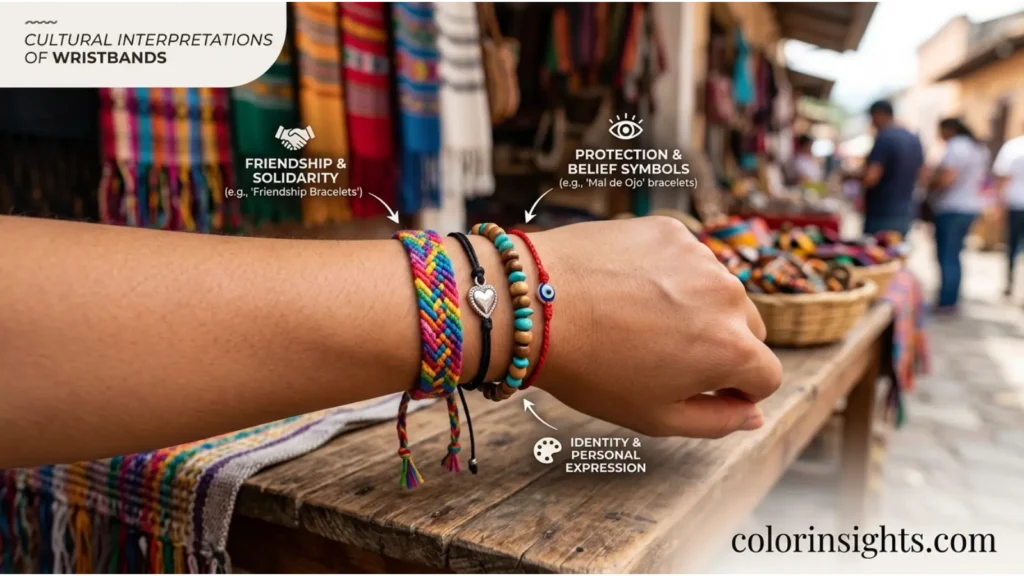
Cultural Interpretations of Sex Bracelets
The meaning and perception of sex bracelets differed across cultures, generations, and communities. Their symbolism was shaped more by local attitudes and media coverage than by any universally accepted tradition.
United States
In the United States, sex bracelets became associated with teenage urban legends during the early 2000s. Numerous schools debated whether colorful jelly bracelets encouraged inappropriate behavior, leading some districts to restrict or ban them.
However, many students viewed the bracelets simply as fashionable accessories. The contrast between public concern and everyday use illustrates how rumors can influence perceptions of ordinary objects.
Europe
Several European countries also experienced similar rumors, although the intensity of media attention varied. In some communities, the bracelets were seen primarily as a fashion trend, while others adopted localized versions of the alleged color meanings.
As in the United States, there was no single interpretation shared across schools or regions.
Other Regions
Outside North America and Europe, jelly bracelets were generally recognized as colorful fashion accessories. The specific “sex bracelet” narrative was far less common, and many people were unfamiliar with the rumors altogether.
This demonstrates that the bracelet meanings were largely tied to particular cultural contexts rather than global traditions.
Influence on Schools and Pop Culture
The controversy surrounding sex bracelets highlights how youth fashion can become the subject of broader social discussions.
Schools
Many educational institutions responded by:
- Reviewing dress code policies
- Educating students about rumors and peer pressure
- Encouraging respectful communication
- Addressing parental concerns
- Promoting appropriate school environments
These responses often focused on preventing misunderstandings rather than confirming the existence of any official bracelet code.
Media
Television news programs, newspapers, and websites played a significant role in spreading awareness of the rumors. Sensational headlines sometimes presented unverified claims as widespread trends, contributing to public anxiety.
Fashion Industry
Despite the controversy, colorful silicone bracelets continued to evolve as fashion accessories. Today they are commonly used for:
- Charity fundraising
- Awareness campaigns
- Sports teams
- School spirit
- Promotional events
- Personal style
Modern silicone bracelets are generally associated with positive causes rather than hidden symbolic meanings.
FAQs
What are sex bracelets?
Sex bracelets are colorful silicone or jelly bracelets that became associated with an urban legend claiming different colors represented different romantic or sexual activities. There was never a universally accepted or official color code.
What do sex bracelet colors mean?
Reported meanings varied widely between schools, communities, and online discussions. Because there was no standardized system, the same color could have different interpretations in different places.
Were sex bracelets actually used as a secret code?
There is little evidence that they functioned as a widespread or organized secret communication system. Most accounts were based on rumors rather than documented social practices.
Why did sex bracelets become controversial?
The controversy stemmed from media reports and school rumors suggesting the bracelets carried hidden sexual meanings. This led to concern among parents and educators despite limited evidence supporting the claims.
Did schools ban sex bracelets?
Some schools introduced dress code restrictions or discouraged students from wearing jelly bracelets due to concerns about the rumors. Policies varied depending on the school district and local circumstances.
Are the bracelet color meanings the same everywhere?
No. The alleged meanings differed significantly by location, school, and community. There has never been a universal or officially recognized set of color meanings.
Are jelly bracelets still popular?
Yes. Silicone and jelly bracelets remain popular as fashion accessories and are widely used for fundraising campaigns, charitable causes, sports teams, promotional events, and awareness initiatives.
Do colorful bracelets always carry hidden meanings?
No. Most colorful bracelets are worn simply as fashion accessories or to support a particular cause. It is not appropriate to assume that a bracelet color communicates a hidden message.
Why are sex bracelets considered an urban legend?
Researchers often classify them as an urban legend because the reported meanings were inconsistent, varied by location, and lacked evidence of a standardized system being widely practiced.
What is the main takeaway about sex bracelets?
The most important point is that sex bracelets represent a cultural rumor connected to early-2000s youth fashion. While stories about color meanings became popular, there was never an official or universally accepted bracelet code.
Conclusion
Sex bracelets color meanings remain one of the most well-known examples of how fashion trends can become intertwined with rumors and popular culture.
Although colorful jelly bracelets were widely worn during the early 2000s, the alleged meanings attached to each color were never standardized or officially recognized.
Instead, interpretations differed from one school, community, and online discussion to another.
Today, most colorful silicone bracelets are associated with self-expression, charitable causes, awareness campaigns, and personal style rather than hidden symbolism.
Understanding the history of sex bracelets helps separate fact from fiction while illustrating how cultural narratives can shape public perceptions of everyday fashion accessories.






 Welcome to The colorinsiights.com