Peony Colors Meanings are among the most symbolically rich flowers, and their colors add different layers of meaning to their beauty. Peony color meanings commonly include romance, prosperity, honor, compassion, happiness, good fortune, and emotional devotion, but the symbolism changes significantly between pink, white, red, coral, and purple peonies. Unlike a single standardized color, the peony palette represents a range of cultural and emotional associations.
Quick answer:
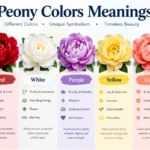
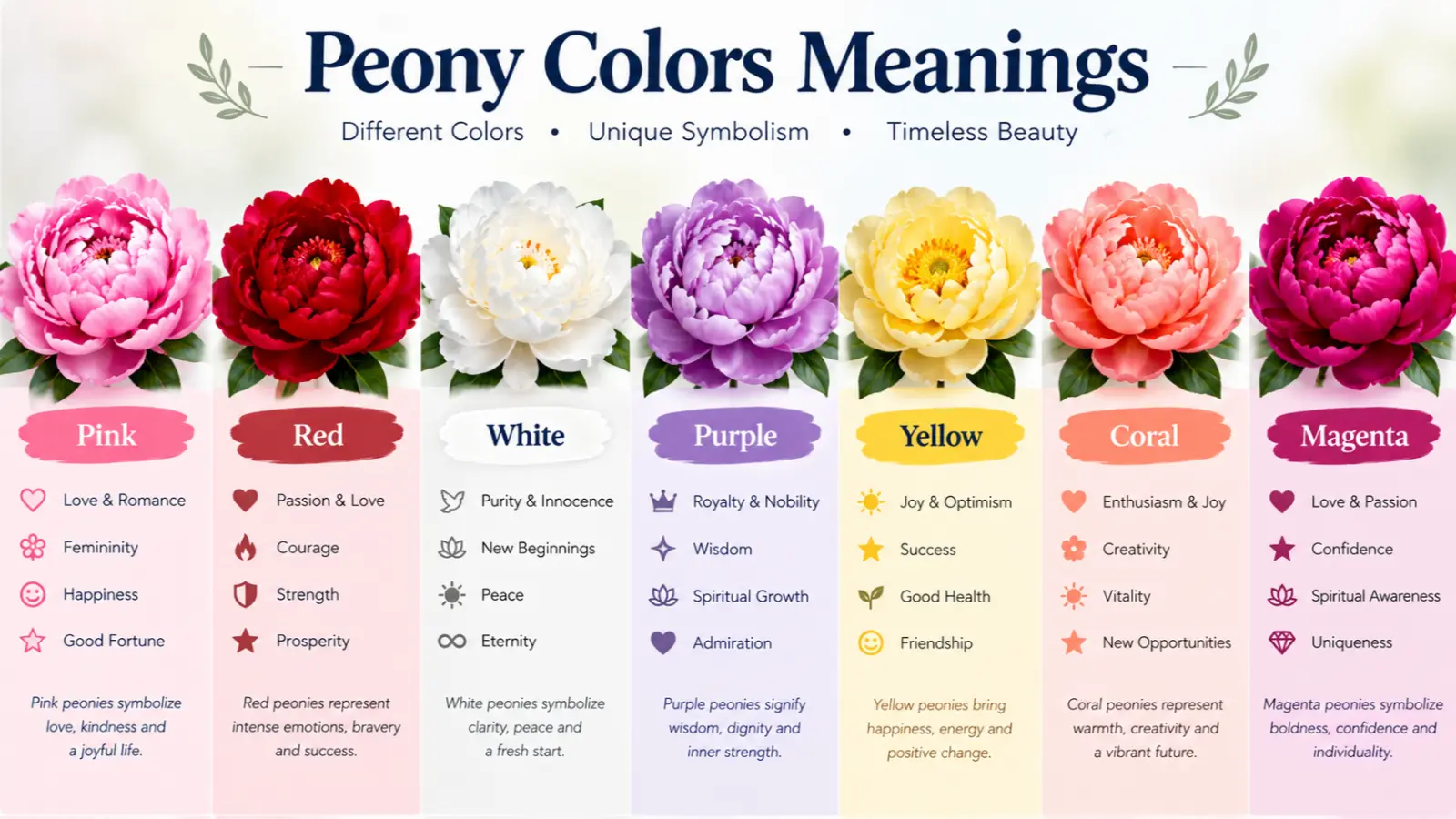
pink peonies generally symbolize romance and affection, red peonies suggest love, honor, and prosperity, white peonies represent purity and remembrance, while coral and purple varieties can suggest enthusiasm, elegance, ambition, and admiration.
What Does the Color Peony Symbolize?
The phrase peony color meaning refers to the symbolism associated with the different colors found in peony flowers rather than one specific color. Peonies are traditionally connected with beauty, prosperity, honor, romance, good fortune, and emotional richness.
The meaning can vary according to the flower’s shade, cultural setting, occasion, and personal interpretation. For example, a soft pink peony may communicate tenderness and affection, while a deep red peony can convey passionate love, respect, or prosperity.
Common peony symbolism includes:
- Pink: romance, affection, compassion, and happiness.
- Red: passion, love, honor, prosperity, and respect.
- White: purity, sincerity, remembrance, and peacefulness.
- Coral: enthusiasm, confidence, warmth, and positive energy.
- Purple: elegance, admiration, dignity, and individuality.
Because peonies have been cultivated and appreciated across Asia, Europe, and North America, their symbolism has developed through multiple cultural traditions rather than one universal system.
Psychological Characteristics of the Color Peony
The psychology of peony colors is best understood through the individual colors that make up the flower’s natural palette. Color psychology studies how visual colors can influence associations, emotions, attention, and perceived atmosphere. However, these responses are shaped by culture, experience, context, and personal preference.
Emotional Associations
Pink and coral peonies tend to create softer, warmer emotional impressions, while white can appear calm and clean. Red generally has greater visual intensity and may attract attention more quickly.
- Pink peonies: affection, tenderness, romance, comfort, and emotional warmth.
- Red peonies: passion, confidence, strength, love, and vitality.
- White peonies: peace, simplicity, sincerity, and remembrance.
- Coral peonies: optimism, enthusiasm, friendliness, and energy.
- Purple peonies: sophistication, mystery, admiration, and distinction.
Psychological Effects
Soft peony shades can contribute to a gentle and welcoming visual environment. Stronger red or purple shades can create greater visual emphasis and communicate a more dramatic aesthetic.
Positive Emotional Responses
Peony colors may be associated with:
- Happiness and celebration
- Affection and intimacy
- Calmness and peacefulness
- Confidence and vitality
- Appreciation and admiration
- Hope and optimism
Negative Emotional Responses
The same colors can produce different responses depending on saturation and context. Very intense red may feel aggressive or overwhelming, while excessive pale pink can sometimes appear overly sentimental. White can feel emotionally distant in some settings, and dark purple may seem formal or mysterious.
Impact on Mood and Behavior
Peony-colored environments can influence perceived atmosphere without determining behavior. A bouquet of pink peonies may make a room feel romantic and welcoming, while red flowers can create a stronger focal point. White peonies may support a minimalist or tranquil aesthetic.
People typically react not only to the flower’s color but also to its shape, fragrance, cultural meaning, occasion, and personal memories.
Spiritual Meaning of the Color Peony
Peonies have acquired spiritual symbolism in different traditions, particularly through associations with prosperity, beauty, honor, renewal, and emotional well-being. These meanings should be understood as cultural or symbolic interpretations rather than universal spiritual facts.
- Holiness: White peonies can symbolize sincerity, sacred beauty, and reverence.
- Wisdom: Mature peonies may represent experience, dignity, and cultivated understanding.
- Purity: White varieties are commonly connected with innocence and clean intentions.
- Transformation: A peony opening from a bud into a large bloom can symbolize personal growth and transformation.
- Healing: Soft floral colors may be used symbolically to express comfort, restoration, and emotional care.
- Protection: In some cultural traditions, flowers associated with prosperity and good fortune can also carry protective symbolism.
- Power: Red and deep-colored peonies can represent vitality, strength, status, and confidence.
- Enlightenment: Light-colored blossoms may be interpreted as symbols of clarity and spiritual awareness.
- New beginnings: Blooming peonies can represent renewal, celebration, and the beginning of a new stage.
- Eternity: Their enduring cultural presence and recurring seasonal bloom can inspire associations with continuity and lasting affection.
Positive and Negative Meanings of the Color Peony
Positive Meanings
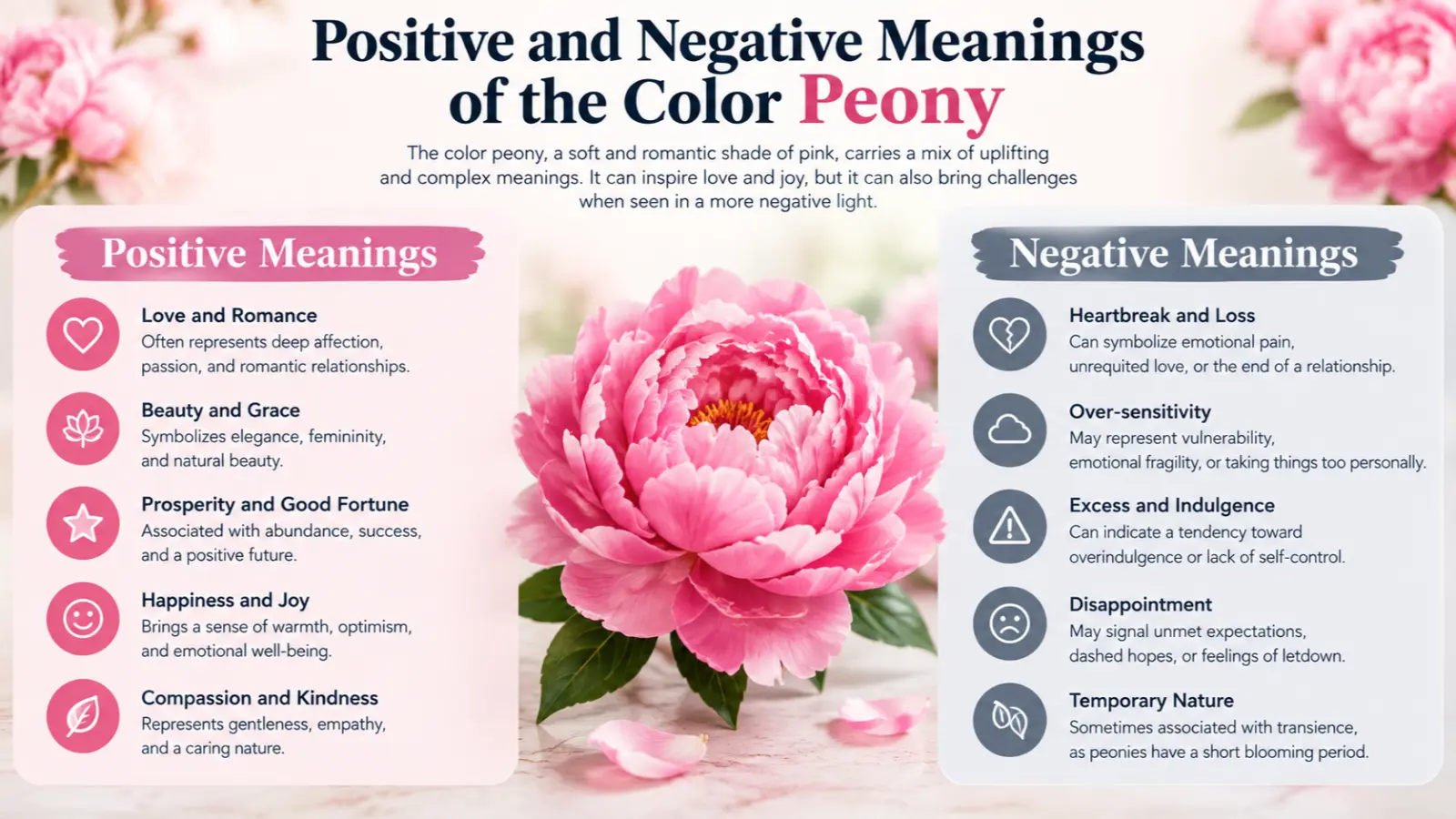
Peony colors are predominantly associated with positive symbolism, particularly in floral traditions.
Purity: White peonies can represent sincere intentions and purity. They may be appropriate for elegant ceremonies or remembrance arrangements.
Peace: Soft pink and white peonies can create a peaceful visual impression. They are often suitable for spaces intended to feel calm and welcoming.
Simplicity: White peonies work particularly well with minimalist floral designs because their color allows the flower’s form to remain visually prominent.
Clarity: Light colors can communicate visual simplicity and openness, particularly when paired with neutral backgrounds.
Freshness: Pink, coral, and white blooms can suggest spring, renewal, and natural freshness.
Hope: Bright coral or soft pink peonies can communicate optimism and encouragement.
Balance: Peonies combine substantial flower forms with relatively soft color palettes, making them useful for balanced floral compositions.
Harmony: Different peony colors can be combined to create a harmonious arrangement, such as pink with white or coral with cream.
Negative Meanings
Negative interpretations are generally contextual rather than inherent to peonies.
Emptiness: An arrangement dominated by very pale tones may feel visually sparse when used without contrasting colors.
Isolation: White flowers can sometimes communicate emotional distance or solitude in certain artistic or ceremonial settings.
Coldness: Cool white or lavender-purple combinations may feel less emotionally warm than coral or pink palettes.
Sterility: Excessive white in a highly clinical environment may reinforce a sterile appearance.
Boredom: Using one very pale shade repeatedly can create limited visual contrast.
Emotional distance: Very formal white or purple arrangements may communicate dignity rather than intimacy.
Perfectionism: Highly symmetrical, carefully styled peony arrangements can sometimes symbolize an idealized form of beauty or perfection.
These interpretations depend heavily on context. A white peony at a wedding and a white peony at a memorial can carry completely different emotional meanings.
Meanings of the Color Peony
The meaning of a peony changes according to color, occasion, culture, and design context. A bouquet of red peonies may emphasize romantic passion, whereas white peonies may be selected for a ceremony emphasizing sincerity or remembrance.
Feng Shui
In Feng Shui-inspired decorating, flowers and colors are often interpreted according to their symbolic qualities rather than as strict scientific rules. Peonies are especially associated in Chinese cultural symbolism with prosperity, honor, romance, and flourishing.
Red peonies can introduce a strong, energetic quality. Pink varieties can support associations with affection and relationships, while white flowers may create a calmer visual atmosphere.
Peonies can work well in living rooms, entry areas, and relationship-oriented spaces. Common combinations include pink with cream, red with gold, or white with green.
For home decorating, use fresh or realistic peony imagery where it complements the room rather than relying on symbolism alone. Avoid overcrowding a small space with highly saturated flowers.
Marketing
In marketing, peony colors can communicate different emotional signals.
Branding psychology: Pink peonies can support brands positioned around beauty, romance, wellness, or femininity. Red can create stronger emotional intensity, while white can suggest simplicity and elegance.
Consumer perception: Floral imagery is frequently associated with natural beauty, care, celebration, and premium presentation.
Trust signals: White and soft neutral palettes can communicate cleanliness and simplicity, although color alone does not establish consumer trust.
Product packaging: Peony imagery appears naturally suited to cosmetics, fragrances, skincare, candles, wedding products, and luxury floral products.
Advertising applications: Pink and coral peonies can work in spring campaigns, romantic promotions, Mother’s Day advertising, and lifestyle imagery.
Brands and product categories associated with beauty and fragrance sometimes use peony imagery or peony-inspired palettes to suggest elegance and natural luxury. The specific meaning depends on the complete visual identity rather than the flower color alone.
Design
Interior design: Pink and white peonies soften contemporary rooms, while red or purple arrangements can create a dramatic focal point.
Graphic design: Peony illustrations can add sophistication to invitations, packaging, stationery, and editorial layouts.
Web design: Soft peony palettes can work particularly well for wedding, beauty, wellness, lifestyle, and floral websites.
User experience: Light floral colors can create a gentle interface atmosphere, but designers should maintain sufficient contrast and accessibility.
Minimalist aesthetics: White peonies against neutral backgrounds can produce an elegant minimalist appearance. A single bloom may provide visual interest without overwhelming the composition.
Fashion
Peony colors can influence the impression created by clothing and accessories.
Clothing symbolism: Pink may suggest softness and romance, red confidence and passion, white elegance and simplicity, and purple sophistication.
Seasonal use: Pale pink and coral often work naturally in spring and summer wardrobes, while deeper red and purple can transition into autumn and formal evening styling.
Styling effects: A coral peony-inspired accessory can brighten a neutral outfit, while burgundy-red or deep purple can add depth.
Personality impressions: Pink may be perceived as approachable, red as confident, white as refined, and purple as distinctive. These are visual impressions rather than reliable personality measurements.
Advantages and disadvantages: Peony-inspired colors can make an outfit memorable and expressive, but highly saturated floral shades may dominate a look. Neutral clothing can balance stronger colors.
For example, a cream dress with soft pink accessories creates a romantic appearance, while a black outfit with deep red floral details creates greater contrast and drama.
Color Associations Are Not Universal
Western Cultures
In many Western settings, pink peonies are strongly associated with romance, affection, and springtime beauty. Red flowers commonly communicate love and passion, while white can suggest purity, elegance, sympathy, or remembrance depending on the occasion. Floral symbolism is often used in weddings, anniversaries, Mother’s Day celebrations, and memorial arrangements.
Eastern Cultures
Peonies have particularly important historical and cultural associations in China, where they have been connected with wealth, honor, prosperity, beauty, and status. The flower has appeared extensively in traditional art and decorative culture. In Japan, peonies can also symbolize beauty, good fortune, honor, and a refined aesthetic.
Religious Traditions
Peonies do not have one universal religious meaning. Their interpretation depends on the specific tradition and context. White flowers may be used to represent purity or remembrance in some Christian-influenced settings, while floral offerings and decorative flowers can carry different meanings in Asian religious and cultural practices.
Historical Interpretations
Historically, peonies have been associated with wealth, status, medicinal traditions, gardens, and ornamental beauty. Their large blooms and cultivation requirements contributed to their association with prestige and refined taste.
Modern Global Interpretations
Today, peonies are widely marketed as symbols of romance, luxury, beauty, celebration, and prosperity. Social media, floral design, weddings, fashion, and international commerce have helped blend different traditions. As a result, modern peony color meanings are often more flexible than historical symbolism.
What Peony Says About Your Personality
People sometimes associate preferences for particular peony colors with personality traits, but color preference does not scientifically determine personality. These associations are best understood as symbolic or aesthetic interpretations.
Strengths: People attracted to pink peonies may be described symbolically as affectionate and compassionate. Red-peony preferences may be associated with confidence and emotional intensity, while white may suggest a preference for simplicity and order.
Weaknesses: Symbolic interpretations can also associate strong red preferences with impulsiveness or intensity, pale colors with excessive sensitivity, and highly controlled arrangements with perfectionism.
Social behavior: Peony lovers may be perceived as appreciative of beauty, celebration, nature, or meaningful gestures. However, these impressions do not predict actual social behavior.
Work style: Someone drawn to structured white floral designs might appreciate clarity and organization, while someone attracted to bold red or purple arrangements may prefer expressive aesthetics.
Relationships: Pink and red peonies are especially connected with affection and romantic symbolism. A preference for these colors may reflect an appreciation for traditional romantic imagery rather than a fixed relationship style.
Emotional tendencies: Soft peony shades are often symbolically connected with tenderness and calmness, whereas deeper shades suggest stronger emotional expression.
Ultimately, personality is influenced by many factors, including temperament, environment, experiences, values, and social context. Peony personality traits should therefore be treated as symbolic associations, not psychological diagnoses.
Frequently Asked Questions
What defines peony color?
Peony color refers to the natural and cultivated shades found in peony flowers, including pink, white, red, coral, and purple. Each shade can carry different symbolic associations.
What does peony symbolize?
Peonies commonly symbolize beauty, prosperity, honor, romance, good fortune, affection, and happiness. Their exact meaning changes according to color and cultural context.
Why is peony important?
Peonies have cultural importance because of their long history in ornamental gardening, art, floral traditions, and symbolism. They are particularly significant in East Asian cultural history.
Is peony a warm or cool color?
Peony is not a single standardized color. Pink, coral, and red peony shades generally create warmer impressions, while lavender, purple, and some pale tones can appear cooler.
What emotions do peony colors represent?
Pink commonly represents affection and tenderness, red passion and vitality, white peace and purity, coral enthusiasm, and purple elegance or admiration.
What does peony mean spiritually?
Spiritually, peonies may symbolize prosperity, beauty, renewal, transformation, honor, emotional healing, and flourishing. Spiritual meanings vary by tradition.
What colors pair well with peony?
Peony shades pair well with cream, ivory, green, beige, gold, gray, black, and other related floral colors. Pink and white create a soft combination, while red and gold create a richer appearance.
What does liking peony colors say about a person?
A preference for peony colors may reflect an appreciation for floral beauty, romance, elegance, or particular visual qualities. It does not reliably determine personality.
What does a pink peony symbolize?
Pink peonies are commonly associated with romance, affection, compassion, happiness, and feminine beauty.
What does a red peony symbolize?
Red peonies often symbolize love, passion, honor, prosperity, strength, and respect.
What does a white peony symbolize?
White peonies commonly represent purity, sincerity, peacefulness, elegance, and remembrance. Their meaning can change according to the occasion.
Conclusion
Peony color meanings combine floral symbolism, color psychology, cultural history, and modern design. Pink generally emphasizes affection and romance, red communicates passion and honor, white suggests purity and remembrance, coral brings warmth and optimism, and purple conveys elegance and admiration. These meanings are not universal rules; they change according to culture, personal experience, occasion, and visual context. From weddings and home interiors to branding, fashion, and spiritual symbolism, peonies remain powerful because their large, expressive blooms can communicate both beauty and emotional significance. Understanding the symbolism behind each shade makes it easier to choose peonies intentionally for gifts, celebrations, decoration, and creative projects.