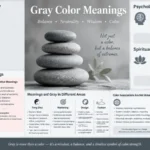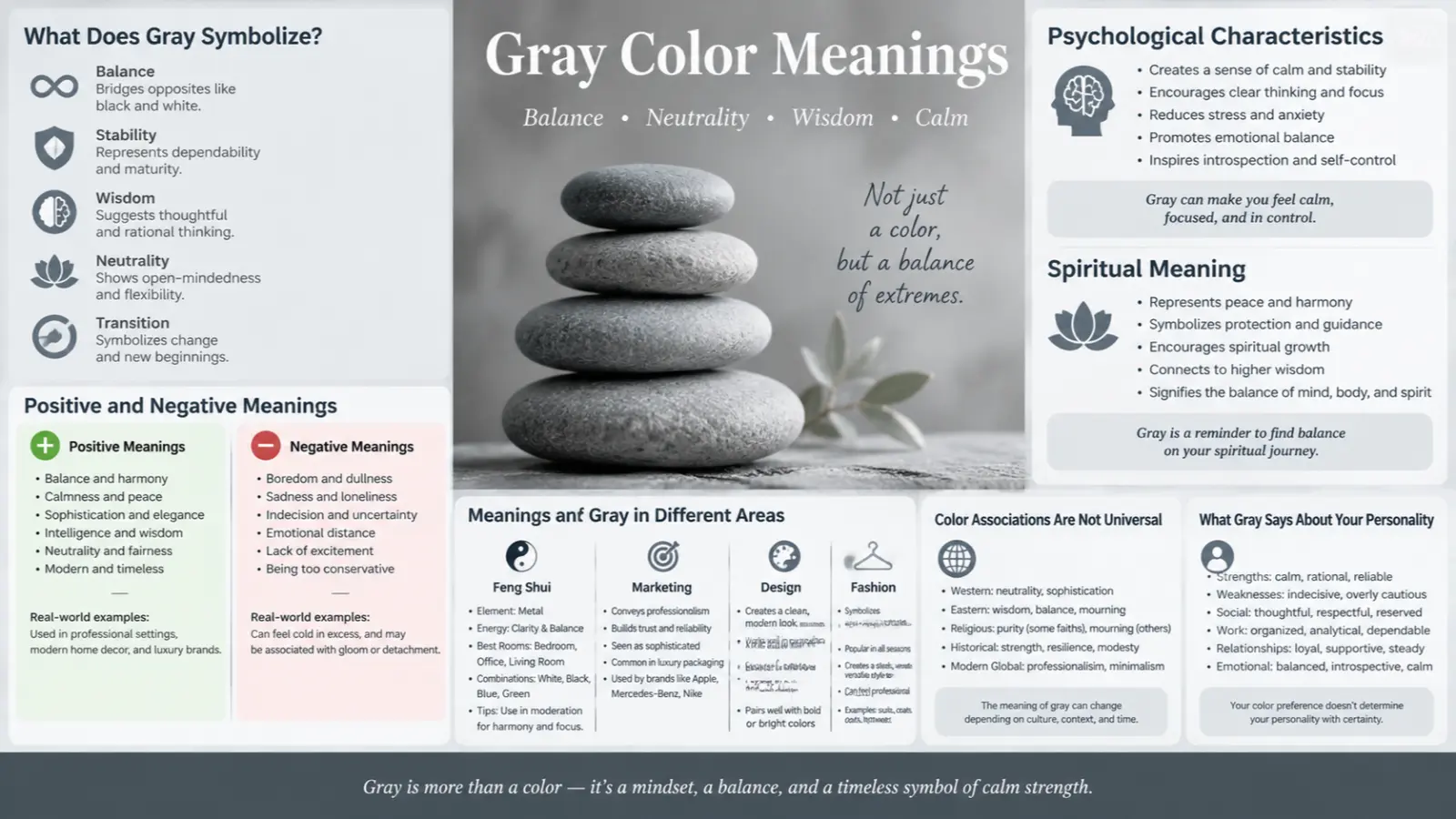
color meanings gray is a versatile neutral color associated with balance, sophistication, practicality, maturity, and restraint. Positioned between black and white, it can symbolize compromise, neutrality, and the space between opposing ideas. Depending on its shade and context, gray may also suggest sadness, uncertainty, isolation, or emotional distance. It plays an important role in interior design, fashion, branding, and visual communication because it complements many other colors without overwhelming them.
Quick answer:
Gray commonly represents neutrality, stability, elegance, wisdom, and balance, but it can also symbolize dullness, detachment, or uncertainty.
What Does the Color Gray Symbolize?
Gray is created by combining black and white in different proportions, although its appearance can also be influenced by undertones such as blue, green, brown, or purple. Its symbolic meaning depends on the shade, surrounding colors, cultural context, and intended use.
One of gray’s strongest associations is neutrality. Because it sits between black and white, gray can represent compromise, moderation, and a balanced perspective. It is often chosen when a design needs to feel restrained rather than dramatic.
Gray also symbolizes sophistication and professionalism. Charcoal gray suits, polished concrete, stainless steel, and minimalist interiors often communicate seriousness, precision, and contemporary style. In workplaces, gray can create a formal visual impression without the intensity of black.
Other common associations include:
- Balance: A middle ground between extremes.
- Wisdom and maturity: Experience, reflection, and measured judgment.
- Stability: Dependability and a practical outlook.
- Elegance: Understated luxury and refined simplicity.
- Modernity: Technology, metal, architecture, and industrial materials.
- Uncertainty: Ambiguity or a lack of clear direction.
- Sadness: Gloomy weather, emotional heaviness, and subdued moods.
- Restraint: Privacy, discretion, and limited emotional expression.
The color gray meaning can therefore be positive or negative. A warm gray paired with natural wood may feel welcoming, while a large, cold gray space with little texture may appear impersonal. Context is essential to understanding its symbolism.
Psychological Characteristics of the Color Gray
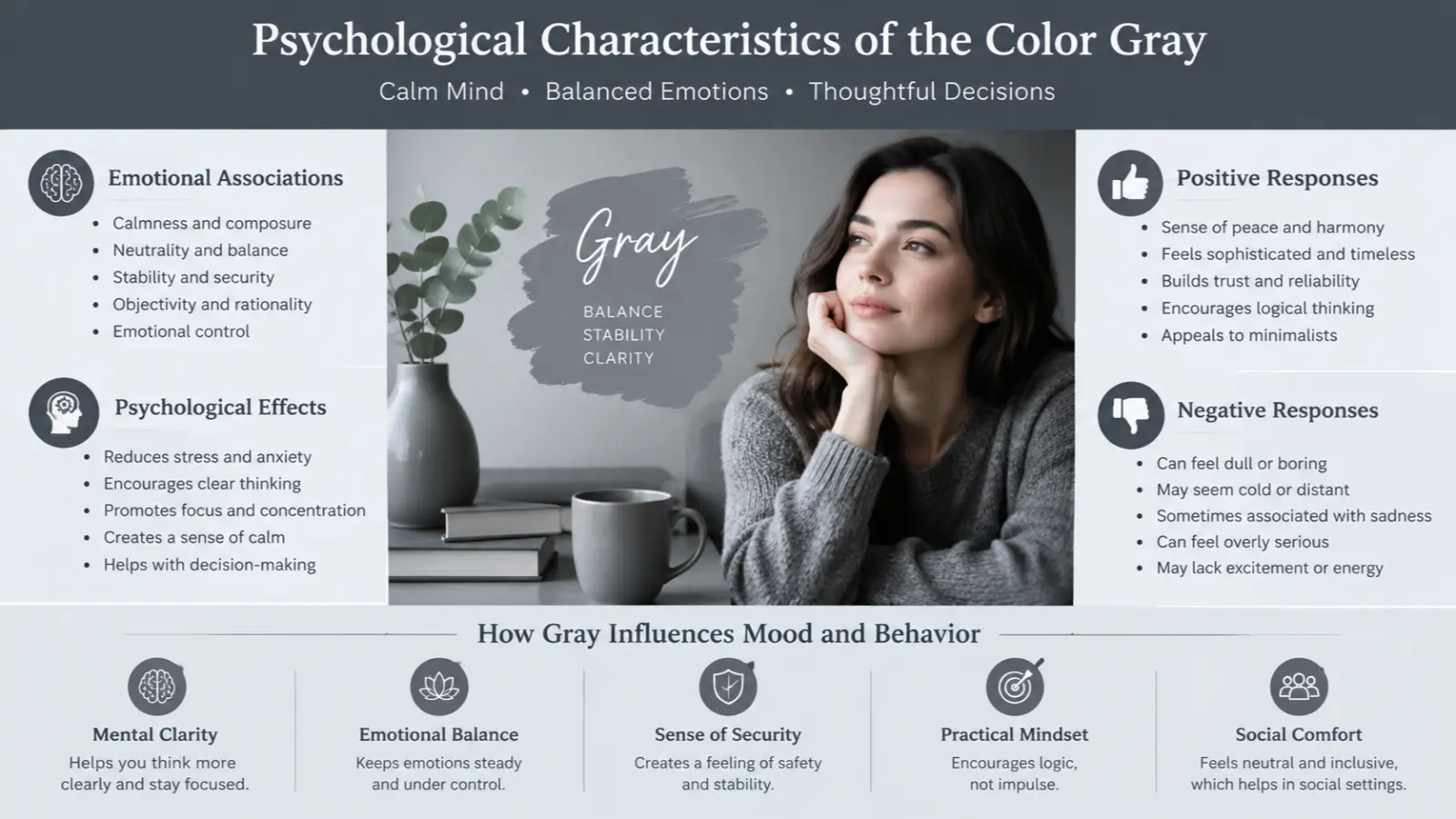
Color psychology examines how colors influence perception, associations, and emotional responses. Gray is generally considered a neutral color, but its psychological effect depends on its brightness, undertone, surrounding environment, and the experiences of the person viewing it.
Emotional Associations
Gray is often associated with:
- Calmness: Soft gray can create a quiet, understated atmosphere.
- Stability: Its neutral appearance may suggest reliability and consistency.
- Maturity: Gray hair is frequently associated with age and experience.
- Professionalism: Charcoal and slate gray often appear formal and restrained.
- Uncertainty: The expression “gray area” describes a situation without a clear answer.
- Sadness: Gray skies and gloomy weather are commonly linked with subdued moods.
- Detachment: Excessive gray can appear emotionally distant or impersonal.
These associations are common cultural patterns, not fixed psychological reactions.
Psychological Effects
Gray can reduce visual competition when used alongside brighter colors. In a room, gray walls may allow artwork, furniture, or natural materials to become the main focus. In graphic design, gray text and backgrounds can create hierarchy without competing with a primary brand color.
However, gray is not automatically calming. A room with insufficient natural light, cool gray surfaces, and little variation may feel cold or gloomy. Warm undertones, lighting, plants, and textured materials can make gray environments more inviting.
Positive Emotional Responses
Gray may encourage perceptions of:
- Composure and emotional restraint.
- Practicality and rational thinking.
- Order and organization.
- Professional confidence.
- Simplicity and visual clarity.
- Timelessness and understated elegance.
For example, a charcoal gray presentation template can feel polished and focused when paired with readable white text and a clear layout.
Negative Emotional Responses
Gray may also evoke:
- Boredom or monotony.
- Loneliness and isolation.
- Emotional distance.
- Indecision or ambiguity.
- Coldness and impersonality.
- A lack of energy or visual excitement.
An office decorated entirely in flat gray, with harsh lighting and no contrasting materials, may feel less welcoming than a space that combines gray with wood, plants, or warmer colors.
Impact on Mood and Behavior
Gray can support visual simplicity and help people focus on other elements in an environment. It is often useful where a neutral background is needed, such as in galleries, offices, product photography, and digital interfaces.
Yet an environment dominated by gray may feel monotonous to some people. The effect depends on lighting, personal preference, task, and context rather than color alone.
How People Typically React to Gray
Some people perceive gray as elegant, practical, and dependable. Others see it as dull, conservative, or uninspiring. Younger audiences may associate certain gray palettes with contemporary minimalism, while other viewers may connect them with older industrial settings or institutional spaces.
The psychology of gray is therefore best understood as a set of possible associations rather than a universal emotional response.
Spiritual Meaning of the Color Gray
Gray does not have one universal spiritual meaning. In different belief systems and personal practices, it can represent humility, reflection, transition, wisdom, or uncertainty. Its position between black and white also makes it a useful metaphor for ambiguity and the complexity of human experience.
- Holiness: Gray is not universally considered sacred, but muted shades can symbolize humility and restraint in some spiritual settings.
- Wisdom: Gray hair is widely associated with age, experience, and thoughtful judgment.
- Purity: Gray is less commonly associated with purity than white, although its simplicity can symbolize modesty or freedom from excess.
- Transformation: Gray can represent a transitional stage between darkness and light.
- Healing: Soft gray may support a quiet atmosphere for reflection, but it has no established healing power by itself.
- Protection: Gray can symbolize discretion, camouflage, or a low-profile presence.
- Power: Charcoal gray may communicate authority, control, and seriousness.
- Enlightenment: Gray can symbolize the willingness to examine uncertainty rather than accept simple answers.
- New beginnings: A neutral gray background can represent a blank foundation on which new ideas develop.
- Eternity: Stone, rock, and other gray materials may suggest endurance and permanence.
In personal spirituality, gray can be used as a reminder to seek balance, accept uncertainty, or approach difficult questions thoughtfully. These interpretations are symbolic rather than universal religious teachings.
Positive and Negative Meanings of Gray
Positive Meanings
Gray has many positive associations, particularly when it is used deliberately and balanced with suitable colors and textures.
- Balance: Gray can represent moderation between extremes. In an interior, gray walls can connect bold furniture and lighter decorative elements.
- Simplicity: Gray supports uncluttered visual compositions. A gray website background can keep attention on the main content.
- Clarity: Neutral gray can separate sections and improve visual hierarchy when there is sufficient contrast.
- Stability: Gray stone, concrete, and metal can suggest strength and durability.
- Sophistication: Charcoal gray clothing often creates a refined, formal appearance.
- Harmony: Gray can connect colors that might otherwise compete.
- Timelessness: Neutral gray furniture can remain visually compatible with changing decor trends.
- Practicality: Gray often hides minor marks better than very light surfaces, depending on the material and shade.
For example, a living room combining warm gray walls, cream upholstery, and natural oak may feel balanced and comfortable without appearing overly decorative.
Negative Meanings
Gray can become less appealing when its neutrality turns into visual monotony or emotional distance.
- Emptiness: An undecorated gray room may feel unfinished.
- Isolation: A cold gray palette can seem distant when used without human or natural elements.
- Coldness: Blue-gray surfaces may feel chilly, particularly under cool lighting.
- Sterility: Excessive gray in a clinical setting may create an impersonal atmosphere.
- Boredom: Repeating the same gray shade throughout a design can reduce visual interest.
- Emotional distance: Gray clothing or decor may appear reserved in settings where warmth is expected.
- Indecision: Gray can symbolize uncertainty when a situation lacks a clear position.
- Conservatism: A very restrained gray palette may seem traditional or risk-averse to some audiences.
For instance, a waiting room with gray walls, gray flooring, and gray seating may appear institutional. Adding plants, warm wood, artwork, and softer lighting can make the same space feel more inviting.
Meanings of the Color Gray
Gray’s meaning changes with its shade, material, lighting, and purpose. Pale gray can look delicate and airy, while dark gray can feel strong and dramatic. Warm gray has beige or brown undertones, whereas cool gray may contain blue or green.
These distinctions matter in practical settings. A brand may choose charcoal gray to communicate precision, while a home designer may select warm gray to create a relaxed background. In fashion, gray can be understated and versatile; in art, it may suggest fog, uncertainty, distance, or realism.
Feng Shui
In Feng Shui, gray is often associated with the Metal element, especially in modern interpretations of the system. Metal symbolism includes clarity, structure, organization, and precision.
- Energy symbolism: Gray can represent order, restraint, and a clean visual foundation.
- Best rooms: It may work in offices, entryways, or living areas where a composed atmosphere is desired.
- Color combinations: Pair gray with white and metallic accents for a crisp look, or with wood and green for a softer balance.
- Decorating tips: Use warm lighting, varied textures, and natural materials to prevent gray rooms from feeling cold.
Feng Shui traditions vary, so gray should not be assigned a single universal energy meaning.
Marketing
Gray is popular in branding because it can suggest sophistication, neutrality, technical precision, and understated quality. It often works as a supporting color rather than the only identifying feature of a brand.
Branding psychology: Charcoal gray can create a premium, serious appearance, while light gray can make a design feel modern and restrained.
Consumer perception: Gray packaging may suggest simplicity, durability, or professional quality, but the actual impression depends on typography, materials, price, and product category.
Trust signals: Gray can look dependable when paired with clear information and consistent design. Color alone does not establish a brand’s trustworthiness.
Product packaging: Electronics, appliances, tools, and premium products often use gray, silver, or graphite finishes to suggest precision and durability.
Advertising applications: Gray backgrounds can keep attention on a product or headline without competing with brighter accents.
Famous examples include Apple, which frequently uses silver, gray, and neutral tones in product presentation, and Mercedes-Benz, whose vehicles and branding often feature silver and metallic gray. These examples illustrate common design choices, not a universal meaning shared by all consumers.
Design
Gray is an adaptable design color because it can function as a background, a structural element, or a strong visual statement.
- Interior design: Warm gray works well with wood, cream, and natural fabrics. Cool gray can suit contemporary spaces with glass and metal.
- Graphic design: Gray creates visual hierarchy, supporting text, dividers, and background elements.
- Web design: Gray is frequently used for secondary text, borders, panels, and neutral backgrounds. Text contrast must remain accessible.
- User experience: Gray can distinguish inactive controls or secondary information, but important functions should not be indicated by color alone.
- Minimalist aesthetics: Gray supports clean lines, restrained palettes, and simple forms.
For practical results, use multiple tones rather than one flat shade. A palette of light gray, medium gray, charcoal, and one accent color can create depth without visual clutter.
Fashion
Gray is a staple of modern fashion because it works across casual, professional, and formal wardrobes.
- Clothing symbolism: Gray can communicate maturity, sophistication, neutrality, and practicality.
- Seasonal use: Light gray often suits spring and summer outfits, while charcoal and graphite are common in autumn and winter.
- Styling effects: Pale gray creates a softer impression, medium gray is versatile, and charcoal offers a more formal look.
- Personality impressions: Gray clothing may be perceived as understated, thoughtful, or professional, but clothing does not reliably reveal character.
- Advantages: Gray coordinates easily with black, white, navy, burgundy, pink, green, and many other colors.
- Disadvantages: A head-to-toe gray outfit may appear flat without differences in texture, fit, or tone.
For example, charcoal trousers with a white shirt create a classic office look. A light gray sweater with denim feels relaxed, while a gray coat over a burgundy outfit adds contrast and sophistication.
Color Associations Are Not Universal
Western Cultures
In many Western contexts, gray is associated with neutrality, professionalism, age, and sophistication. Gray suits are common in business settings, while gray skies are often connected with gloomy weather. The phrase “gray area” also represents uncertainty or a lack of clear boundaries.
Eastern Cultures
Gray’s meaning varies across East and South Asia, influenced by local art, clothing, religion, and modern design. It may appear in minimalist architecture or traditional materials, but it does not have one shared meaning across all Eastern cultures. Local context is more informative than broad regional generalizations.
Religious Traditions
Gray is not a universal religious color. In some Christian contexts, ashes and muted shades may be associated with penitence, humility, or mourning. In other traditions, gray may have little formal ritual significance. The meaning depends on the specific faith, community, and practice.
Historical Interpretations
Gray materials such as stone, ash, wool, and metal have played practical roles throughout history. Gray clothing has sometimes been associated with modesty, work, or restraint, while silver-gray materials could communicate value or status. Industrialization also strengthened gray’s association with concrete, machinery, and urban environments.
Modern Global Interpretations
Today, gray is widely used in technology, architecture, fashion, and digital design. It can signal premium simplicity in one setting and institutional dullness in another. Global design trends have increased the popularity of gray interiors and minimalist palettes, although preferences still differ by audience and context.
What Gray Says About Your Personality
People who prefer gray may appreciate its neutrality, versatility, and understated appearance. In popular color symbolism, gray preference is sometimes linked with practicality, independence, restraint, or a desire to avoid unnecessary attention. These are interpretations, not scientifically reliable conclusions about an individual’s personality.
Strengths
Gray preference may symbolically suggest a practical outlook, calm decision-making, adaptability, and appreciation for simplicity. People who choose gray clothing or decor may value versatility and a polished appearance.
Weaknesses
In popular interpretations, gray may be associated with excessive caution, reserve, or reluctance to stand out. However, choosing gray does not prove that someone is indecisive or emotionally distant.
Social Behavior
Gray can communicate discretion and professionalism. Someone who likes gray may prefer understated self-expression, but social confidence and communication style depend on many factors beyond color preference.
Work Style
Gray is associated with structure, practicality, and focus. It is common in professional settings because it is easy to coordinate and rarely overwhelms a visual presentation. A preference for gray does not predict productivity, intelligence, or work performance.
Relationships
Gray can symbolize steadiness and a balanced approach. Some people may prefer it because it feels calm and unobtrusive, while others choose it for fashion or practical reasons. It cannot reveal a person’s capacity for intimacy, loyalty, or emotional expression.
Emotional Tendencies
A person may find gray reassuring, elegant, or emotionally neutral. Another may experience it as dull or gloomy. Personal memories, surroundings, and cultural associations shape these responses.
Ultimately, gray color meanings offer a framework for discussing symbolism, not a method for diagnosing personality. A favorite color is only one small part of a person’s preferences and experiences.
Frequently Asked Questions
1. What defines the color gray?
Gray is a neutral color between black and white. It can have warm or cool undertones and ranges from pale silver-gray to deep charcoal.
2. What does the color gray symbolize?
Gray commonly symbolizes neutrality, balance, maturity, sophistication, stability, and restraint. In negative contexts, it can represent sadness, uncertainty, isolation, or monotony.
3. Why is gray important in design?
Gray creates a flexible visual foundation that allows other colors and content to stand out. It is widely used in interiors, branding, websites, product design, and minimalist aesthetics.
4. Is gray a warm or cool color?
Gray can be either warm or cool. Warm grays contain beige or brown undertones, while cool grays often have blue or green undertones.
5. What emotions does gray represent?
Gray may evoke calmness, practicality, and sophistication, but it can also suggest sadness, coldness, or emotional distance. The response depends on the shade and context.
6. What does gray mean spiritually?
Gray may symbolize humility, reflection, transition, or wisdom in some personal and religious contexts. It does not have one universal spiritual meaning.
7. What colors pair well with gray?
Gray pairs well with white, black, navy, beige, blush pink, burgundy, green, and natural wood tones. Warm gray often suits earthy colors, while cool gray works well with crisp whites and blues.
8. What does liking gray say about a person?
Gray preference is often associated symbolically with practicality, restraint, and understated style. However, a person’s favorite color cannot reliably determine personality traits.
9. Is gray a positive or negative color?
Gray can be both. It may communicate elegance, stability, and balance, or feel dull, cold, and impersonal. Its effect depends on the shade and how it is used.
10. What is the difference between gray and silver?
Gray is generally a neutral color without a metallic shine. Silver is a metallic-looking tone associated with reflection, brightness, technology, and luxury.
Conclusion
Gray is much more than a simple mixture of black and white. Its symbolism includes balance, maturity, sophistication, stability, and practical restraint, while its less positive associations include sadness, uncertainty, and emotional distance. Its meaning changes across spiritual traditions, cultures, branding, interior design, and fashion. Used thoughtfully, gray creates a timeless foundation that supports other colors and materials. Whether you choose gray for your home, wardrobe, or visual identity, consider its undertone, lighting, surrounding colors, and intended message rather than assuming that the color has one universal meaning.