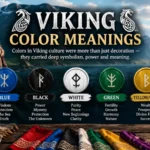
Viking color meanings explore the colors associated with Viking Age Scandinavia, Norse mythology, traditional clothing, decorated shields, and modern Scandinavian-inspired design. Colors such as red, blue, black, white, gold, and green are often connected with courage, protection, wisdom, nature, and power. However, historical evidence does not establish a universal color code shared by all Vikings. Some interpretations come from archaeological discoveries, while others reflect modern storytelling and contemporary color psychology. Understanding this distinction helps separate documented history from symbolic interpretation.
Quick answer:
Viking colors commonly represent strength, adventure, nature, protection, and mystery in modern interpretations of Norse culture.
What Do Viking Colors Symbolize?
Viking color meanings refer to the symbolic associations of colors in Viking Age Scandinavian culture and their later representations in Norse-inspired art, literature, and entertainment. The Viking Age is generally dated from approximately 793 to 1066 CE.
During this period, Scandinavians used colored textiles, decorated objects, jewelry, and painted surfaces. Colors could reflect available materials, craftsmanship, personal preference, social status, or practical purposes. Their use did not necessarily communicate a specific spiritual message.
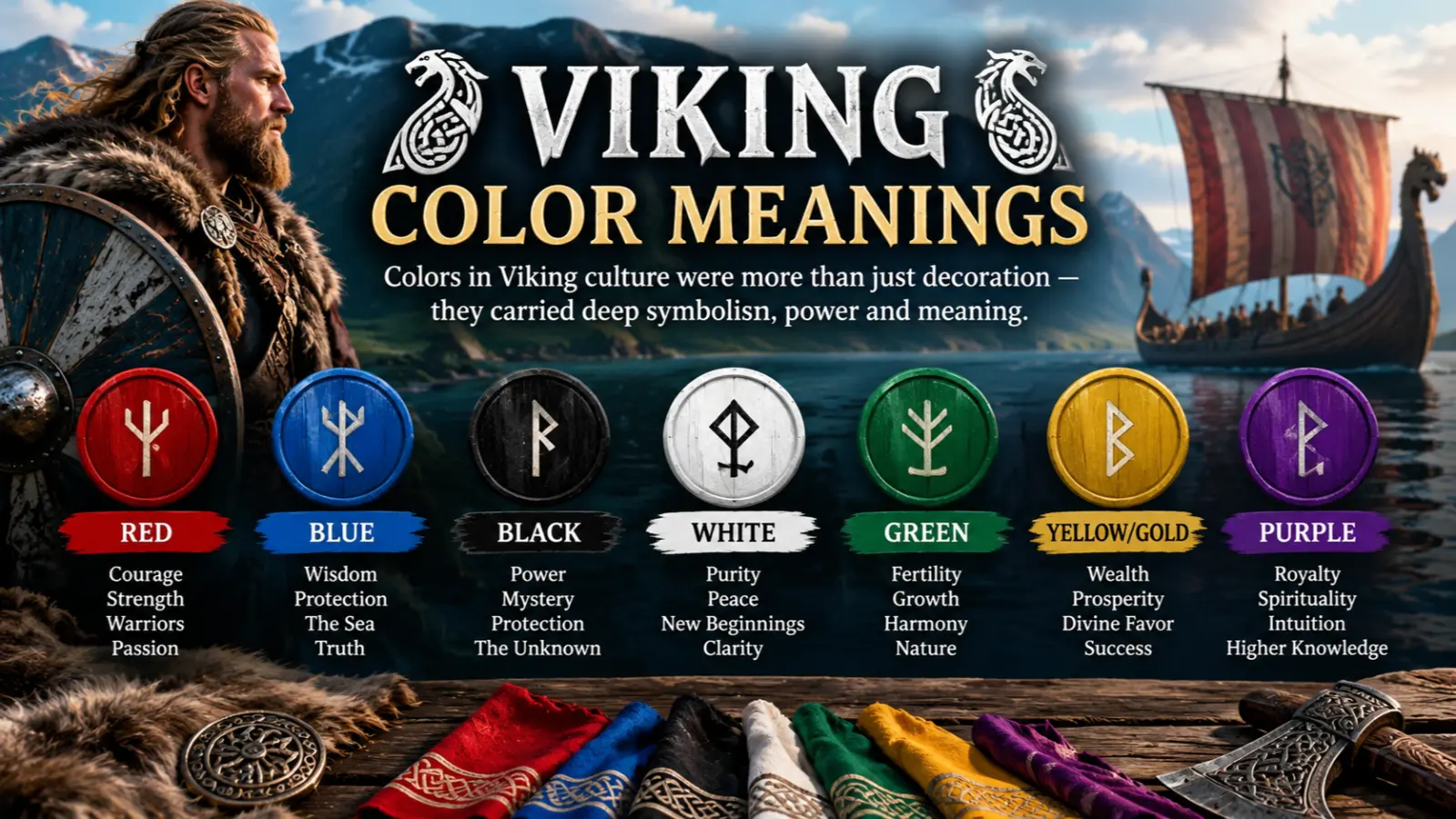
Modern interpretations commonly associate Viking-inspired colors with the following themes:
- Red: Courage, vitality, conflict, and determination.
- Blue: The sea, sky, depth, and exploration.
- Black: Mystery, darkness, authority, and the unknown.
- White: Brightness, cleanliness, and renewal.
- Gold and yellow: Wealth, prestige, sunlight, and achievement.
- Green: Nature, growth, fertility, and renewal.
- Brown: Earth, wood, practicality, and stability.
- Gray: Stone, metal, endurance, and the rugged northern landscape.
These associations are useful for contemporary design and storytelling, but they should not be treated as a historically verified Viking color dictionary. The meaning of a color depends on its use, the available evidence, and the cultural setting.
Psychological Characteristics of Viking Colors
Color psychology examines how colors influence perception, emotional associations, and responses to visual environments. When applied to Viking-inspired palettes, it helps explain why certain colors communicate courage, adventure, mystery, or stability to modern audiences.
However, there is no reliable evidence that every Viking Age community experienced these colors in exactly the same way.
Emotional Associations
Different Viking-inspired colors can create distinct visual impressions.
- Red: Often associated with energy, passion, courage, and danger.
- Blue: Commonly suggests calmness, openness, trust, and depth.
- Black: Can communicate authority, seriousness, mystery, or threat.
- White: Often represents clarity, simplicity, and brightness.
- Gold: Suggests prestige, achievement, and luxury.
- Green: Evokes growth, balance, and the natural world.
- Brown: Communicates warmth, earthiness, and practicality.
- Gray: May suggest resilience, restraint, and a rugged atmosphere.
These emotional associations are influenced by culture, personal experience, brightness, saturation, and surrounding imagery.
Psychological Effects
Viking-inspired artwork frequently combines contrasting shades to create drama. Red and black can emphasize conflict, while blue and gray can evoke cold seas or winter landscapes. Gold accents may draw attention to important objects, royal figures, or legendary treasures.
These effects are particularly useful in video games, films, illustrations, and historical exhibitions. The palette guides attention and helps establish a visual mood, but it does not automatically produce the same response in every viewer.
Positive Emotional Responses
Viking color palettes can evoke several positive impressions:
- Confidence: Bold red and gold can create an energetic, assertive appearance.
- Stability: Brown and charcoal can suggest dependable, natural materials.
- Hope: White and pale gold can introduce brightness and optimism.
- Balance: Blue and green can soften an intense composition.
- Adventure: Strong contrasts can communicate exploration and discovery.
- Connection with nature: Earthy shades can evoke forests, coastlines, and mountains.
Negative Emotional Responses
The same colors can create less favorable impressions when used excessively or in unsuitable contexts.
- Aggression: Heavy use of red and black may feel confrontational.
- Oppression: Very dark palettes can create a threatening atmosphere.
- Coldness: Blue-gray combinations may seem distant or unwelcoming.
- Excess: Too much gold can appear ostentatious.
- Visual fatigue: Highly saturated colors can overwhelm a composition.
- Monotony: Repeated gray and brown shades may lack visual interest.
Impact on Mood and Behavior
In modern Viking-themed media, colors help communicate narrative roles and environmental conditions. A game might use red for combat, blue for icy landscapes, and gold for valuable objects. These choices can help players interpret a scene quickly.
In branding and graphic design, the same palette can suggest adventure, heritage, toughness, or craftsmanship. The effect depends on the entire design rather than the color alone.
How People Typically React to Viking Colors
People interested in Norse mythology may associate Viking colors with gods, warriors, exploration, and legendary battles. Others may simply appreciate the natural Scandinavian palette or dramatic visual style.
These responses vary according to personal taste, cultural background, familiarity with history, and the images accompanying the colors.
Spiritual Meaning of Viking Colors
The spiritual meaning of Viking colors is often interpreted through Norse mythology, cosmology, and traditional ideas about nature. Historical Scandinavian religion included gods, rituals, burial practices, and beliefs about fate and the afterlife. However, surviving sources do not establish one universal spiritual meaning for each color.
The following associations are modern interpretations inspired by Norse themes rather than definitive historical rules.
- Holiness: Gold and luminous white may symbolize sacredness or divine presence in modern Norse-inspired artwork. These are interpretive choices, not established universal Viking color meanings.
- Wisdom: Blue and gray can suggest depth, reflection, and knowledge. Odin’s association with wisdom may inspire these choices, although a fixed color assigned to Odin is not established.
- Purity: White may represent brightness, cleanliness, or renewal.
- Transformation: Green and brown can symbolize natural cycles, growth, and regeneration.
- Healing: Green can evoke vitality and restoration through its association with vegetation. This does not demonstrate a historical Viking healing-color system.
- Protection: Red, black, and gold may be used in modern shield designs to suggest strength and defense.
- Power: Red and gold can communicate authority, courage, and prestige in contemporary illustrations.
- Enlightenment: Gold and white may represent insight, revelation, or divine radiance.
- New beginnings: Green and pale blue can evoke spring, renewal, and changing seasons.
- Eternity: Recurring natural cycles and circular designs can suggest continuity, although these meanings depend on the wider symbolism rather than a specific color.
Norse mythology includes Yggdrasil, the world tree, and a cosmology involving interconnected realms. Modern artists may use green foliage and brown wood to represent these ideas visually. Such choices can be meaningful without claiming that all historical Vikings assigned those colors specific spiritual roles.
Positive and Negative Meanings of Viking Colors
Positive Meanings
Viking-inspired colors can communicate courage, endurance, natural beauty, prosperity, and connection with the landscape.
1. Courage and bravery
Red is frequently used in contemporary Viking artwork to express the intensity of battle and the willingness to face danger.
Example: A red shield in a historical illustration may emphasize a warrior’s determination. Its color alone does not prove that the original shield owner followed a particular symbolic tradition.
2. Peace and clarity
White can suggest snow, light, openness, and visual simplicity.
Example: White details against a dark blue background can create a balanced visual identity for a Scandinavian history exhibition.
3. Strength and stability
Brown, charcoal, and gray evoke wood, stone, iron, and weathered materials.
Example: A museum display using muted earth tones can help communicate the material culture of Viking Age settlements.
4. Hope and renewal
Green and pale blue can suggest vegetation, changing seasons, and the northern environment.
Example: A modern illustration of a Norse landscape might use green to emphasize nature and regeneration.
5. Wealth and achievement
Gold and yellow can communicate prestige, success, and value.
Example: Gold accents on a Viking-inspired book cover may highlight legendary treasure or royal status.
6. Balance and harmony
Combining warm and cool shades creates visual variety and prevents an image from feeling monotonous.
Example: Blue, brown, and muted gold can evoke sea voyages, wooden ships, and crafted objects in a harmonious palette.
Negative Meanings
Negative interpretations generally come from broader color associations or the way colors are used in a particular design.
1. Danger and aggression
Red can signal urgency or violence when paired with weapons or battle imagery.
Example: A red-and-black combat scene may create a threatening atmosphere in a video game.
2. Darkness and fear
Black is commonly used in modern fantasy to represent mystery, death, secrecy, or the unknown.
Example: A dark illustration of a ruined settlement may emphasize danger or loss.
3. Coldness and isolation
Blue-gray palettes can evoke freezing temperatures and harsh weather.
Example: A film scene dominated by icy blue and gray may make a character’s surroundings feel lonely.
4. Emptiness and sterility
Excessive white can appear sparse when a composition lacks texture or visual detail.
Example: A Viking-themed website with large white spaces and minimal imagery may feel disconnected from its historical subject.
5. Boredom and heaviness
Using only gray and brown can make a composition feel subdued.
Example: A costume made entirely of similar dark shades may lose detail in poor lighting.
6. Excessive luxury
Too much gold can make a design look extravagant rather than historically grounded.
Example: A character covered in bright gold decorations may communicate fantasy wealth rather than an evidence-based reconstruction of everyday Viking clothing.
These interpretations are possibilities, not universal meanings. Their effectiveness depends on the audience, setting, and intended message.
Meanings of Viking Colors
Viking color meanings change according to whether the subject is archaeology, Norse mythology, spiritual interpretation, historical fiction, or contemporary design.
Archaeological discoveries can provide evidence of pigments, textiles, and decorated objects. Historical texts can offer information about clothing, objects, and social life. However, neither type of evidence automatically proves that a particular color had one fixed symbolic meaning.
Modern artists often combine historical references with contemporary color psychology. Understanding the distinction helps readers appreciate Viking symbolism without confusing modern creative choices with established historical facts.
Feng Shui
Feng Shui is a Chinese system of spatial arrangement and traditional symbolism, not a historical Viking practice. It can still provide a separate framework for decorating a Viking-inspired home.
- Associated element: In common Feng Shui color associations, brown and yellow relate to Earth, while blue and black are often linked with Water.
- Energy symbolism: Earth colors suggest grounding; blue can represent flow and reflection.
- Best rooms: Earthy shades can suit living rooms and studies, while blue works well as a restrained accent.
- Color combinations: Try charcoal with brown, cream with muted blue, or forest green with beige.
- Decorating tips: Combine wood textures, natural fabrics, and restrained metal accents for a Scandinavian-inspired atmosphere.
These are modern decorating suggestions rather than traditional Viking beliefs.
Marketing
Viking-inspired branding often uses colors that communicate strength, adventure, heritage, and craftsmanship.
Branding psychology: Red and black can create a bold identity, while brown and gray suggest rugged materials. Gold can add prestige.
Consumer perception: A balanced palette may help customers recognize a brand as adventurous, outdoors-oriented, or inspired by Scandinavian history. Color alone cannot guarantee trust or purchasing decisions.
Trust signals: Accurate historical references, consistent design, transparent messaging, and high-quality products provide stronger credibility than color alone.
Product packaging: Dark packaging with metallic accents can suit Viking-inspired collectibles, books, games, and premium merchandise. Natural brown packaging can support a handcrafted appearance.
Advertising applications: Viking-inspired palettes appear in entertainment promotions, fantasy games, themed events, outdoor products, and historical publications.
Examples of modern entertainment properties using Viking-related imagery include Ubisoft’s Assassin’s Creed Valhalla and the God of War franchise. Their color choices are contemporary artistic decisions, not evidence of a universal Viking color system.
Design
Viking-inspired design combines historical references with modern visual storytelling.
- Interior design: Use natural wood, stone textures, wool, leather, and muted earth tones to evoke Scandinavian materials.
- Graphic design: Strong contrasts can highlight shields, ships, knotwork, and runic lettering. Check the accuracy of historical symbols.
- Web design: Dark backgrounds with restrained gold or red accents can create a dramatic theme. Maintain readable text and accessible contrast.
- User experience: Apply colors consistently to navigation and interactive elements. Do not rely on color alone to communicate important information.
- Minimalist aesthetics: Neutral shades, simple forms, and natural textures can evoke Nordic design without overcrowding a room or page with fantasy imagery.
A visually convincing Viking-inspired design is not necessarily an archaeologically accurate reconstruction.
Fashion
Viking-inspired fashion draws on archaeological interpretations of historical clothing as well as modern fantasy and alternative fashion.
Clothing symbolism: Brown, gray, and natural shades evoke wool, linen, leather, and other materials. Red, blue, and yellow accents introduce contrast.
Seasonal use: Earthy browns, deep reds, and charcoal suit fall and winter outfits, while lighter blue and cream create a softer look in spring and summer.
Styling effects: Layered fabrics, simple tunics, textured outerwear, and restrained metal accessories create a Scandinavian-inspired appearance.
Personality impressions: Dark, rugged palettes may communicate confidence or a preference for dramatic styling, but clothing color cannot reliably reveal personality.
Advantages: Natural shades coordinate easily, textures add depth, and strong accents create a distinctive appearance.
Disadvantages: Excessive dark colors can make an outfit look heavy, while too many decorative pieces may make it resemble a costume rather than everyday clothing.
Practical example: Combine a charcoal wool coat with a brown leather belt and a muted blue scarf for a subtle Viking-inspired look. For a more theatrical outfit, introduce a restrained red accent instead of using several saturated colors at once.
Historical clothing varied by region, period, resources, and social status, so modern Viking-inspired fashion should not be confused with a complete reconstruction of Viking Age dress.
Color Associations Are Not Universal
Color meanings vary by culture, historical period, religion, and personal experience. Viking color symbolism requires additional care because many popular associations originate in modern interpretations rather than direct historical evidence.
Western cultures: In contemporary North American and European design, red may suggest courage or danger, black may communicate power or mystery, and gold may represent prestige. These associations influence Viking-themed films, games, and merchandise.
Eastern cultures: Eastern societies do not share one unified color system. For example, Chinese traditions associate red with good fortune and celebration in many contexts, while white can be associated with mourning in certain ceremonies. These cultural meanings should not be projected onto historical Scandinavia.
Religious traditions: Pre-Christian Norse religion included distinctive gods, rituals, and cosmological beliefs. Later Christian Scandinavian art introduced additional religious imagery. Surviving evidence does not establish a universal set of sacred meanings for Viking colors.
Historical interpretations: Archaeological finds, textile fragments, pigments, and written sources help reconstruct Viking Age objects. Their colors may reflect available dyes, material costs, craftsmanship, and personal taste. Some colors may also have changed through burial and centuries of exposure.
Modern global interpretations: Television, games, fantasy novels, tattoos, and online communities have popularized associations such as red for warriors, black for mystery, and gold for power. These conventions are influential today but are not necessarily direct reflections of Viking Age beliefs.
Distinguishing historical evidence from modern interpretation is essential for a trustworthy understanding of Norse culture.
What Viking Colors Say About Your Personality
People who enjoy Viking-inspired colors may appreciate Norse mythology, Scandinavian history, outdoor aesthetics, or dramatic visual design. However, liking a particular palette does not establish a person’s personality.
Contemporary color psychology sometimes associates shades with broad emotional impressions, but these are perceptions rather than reliable personality measurements.
- Strengths: A preference for bold red, charcoal, or gold may reflect an appreciation for expressive design. Natural browns and greens may appeal to people who enjoy earthy aesthetics.
- Weaknesses: A limited palette can sometimes produce repetitive design choices, but this is an aesthetic issue rather than a personal flaw.
- Social behavior: Someone interested in Viking themes may enjoy history, storytelling, mythology, or adventurous imagery. Color preference alone cannot establish introversion or extroversion.
- Work style: People may choose restrained palettes for practicality or dramatic colors for creative projects. These preferences do not reliably predict organization or productivity.
- Relationships: Viking-inspired aesthetics cannot determine loyalty, empathy, compatibility, or relationship quality.
- Emotional tendencies: A person may find dark colors comforting, energizing, or simply attractive. Such preferences can change over time and across situations.
Color preference is only one aspect of personal taste. Interests, upbringing, lived experience, and individual values provide a fuller understanding of personality than color alone.
Frequently Asked Questions
1. What defines Viking colors?
Viking colors are those associated with Viking Age Scandinavian objects, textiles, art, and modern interpretations of Norse mythology. Commonly discussed shades include red, blue, white, black, gold, green, brown, and gray.
2. What do Viking colors symbolize?
In modern interpretations, red often suggests courage, blue evokes the sea, gold represents prestige, green suggests nature, and black conveys mystery. These are broad associations rather than a universally documented Viking color code.
3. Why are Viking colors important?
Colors help historians, artists, and designers discuss material culture, visual appearance, and modern representations of Norse traditions. Archaeological evidence helps distinguish historical practices from contemporary symbolism.
4. Are Viking colors warm or cool?
Viking-inspired palettes can include both. Red, gold, and many browns are warm colors, while blue and blue-gray are cool. Green may appear warm or cool depending on its undertones.
5. What emotions do Viking colors represent?
They may evoke courage, calmness, mystery, stability, or prestige depending on the shade and context. These emotional associations are influenced by modern color perception and cultural learning.
6. What do Viking colors mean spiritually?
There is no universally established spiritual color system for Vikings. Modern interpretations may connect gold with divine radiance, green with renewal, and dark colors with mystery, but these associations should not be treated as definitive historical beliefs.
7. What colors pair well with Viking colors?
Charcoal and muted red create a dramatic palette; navy and brown suggest the sea and wooden ships; cream and gold provide contrast; and forest green with gray evokes a rugged landscape.
8. What does liking Viking colors say about a person?
It may indicate an interest in Norse mythology, historical aesthetics, fantasy art, or natural color palettes. It does not reliably reveal personality traits, emotional health, or behavior.
9. Were Viking colors used in clothing and shields?
Archaeological evidence indicates that Viking Age people used colored textiles and decorated objects, although preservation varies. Specific colors and designs differed according to materials, region, period, and individual circumstances.
10. Did every Viking color have a spiritual meaning?
No reliable evidence establishes a fixed spiritual meaning for every color across all Viking communities. Interpretations should distinguish archaeological evidence, historical texts, and modern symbolic conventions.
Conclusion
Viking color meanings provide an engaging way to explore Scandinavian material culture, Norse mythology, and modern visual symbolism. Red, blue, black, white, gold, green, brown, and gray can communicate ideas such as courage, mystery, nature, prestige, and endurance in contemporary interpretations. However, these associations should not be mistaken for a universal color code used by all Vikings. Archaeological evidence, cultural context, and historical sources provide the strongest foundation for understanding Viking Age color use. Whether applied to fashion, marketing, interior design, or creative storytelling, a balanced approach combines visual appeal with historical accuracy.