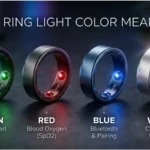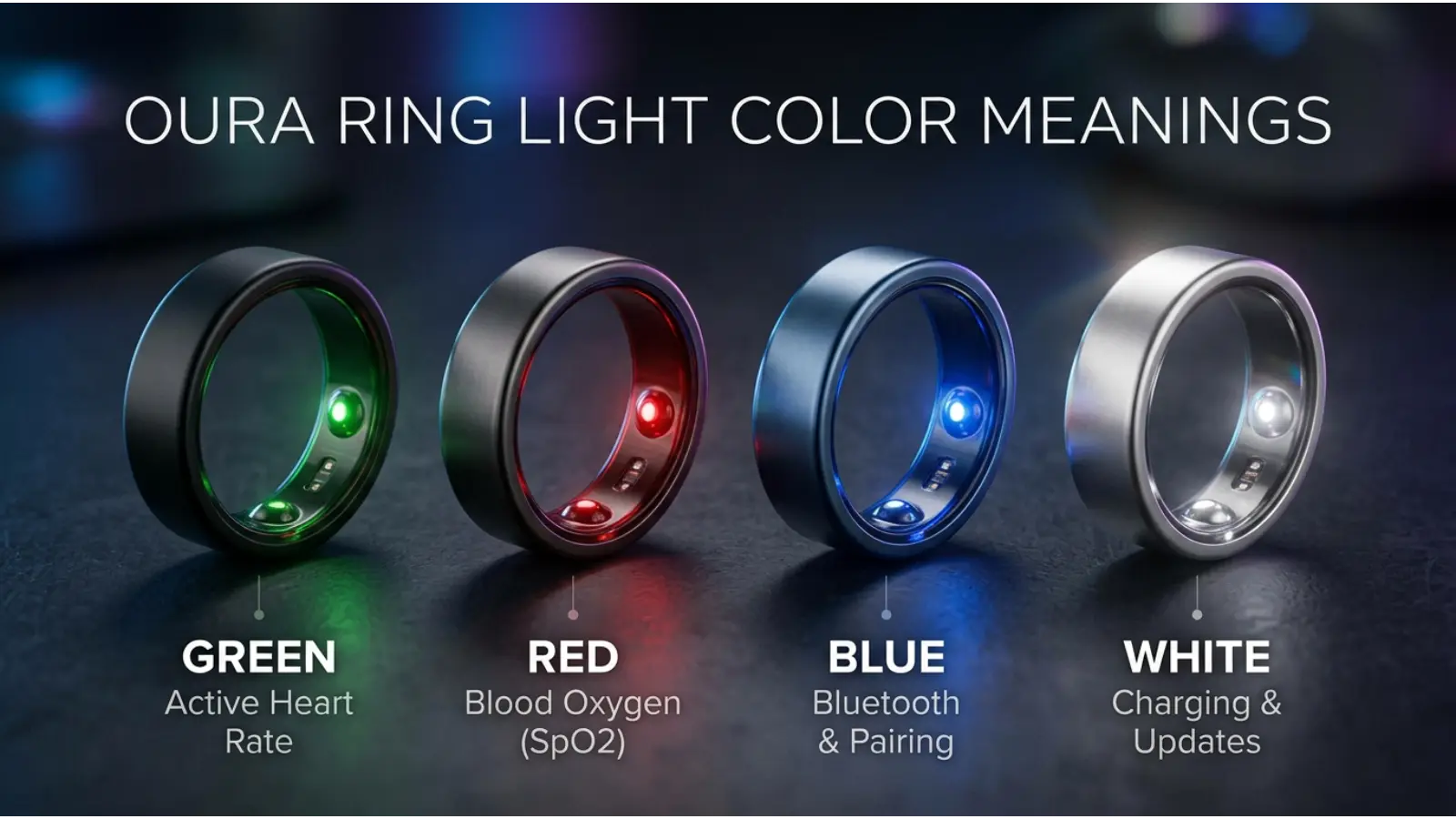
Oura Ring light color meanings help users understand what their smart ring is communicating while tracking sleep, activity, and recovery. Unlike traditional color symbolism, the lights on an Oura Ring serve a practical technological purpose: they indicate sensor activity, charging status, or other device functions, depending on the ring model and situation. Green, red, and other visible lights should therefore be interpreted through the device’s design rather than through general color psychology alone. Understanding these signals can help users avoid confusion and use their wearable more confidently.
Quick answer:
Oura Ring light colors are primarily functional indicators, and their exact meanings depend on the device generation, activity, and context.
What Do Oura Ring Light Colors Symbolize?
The Oura Ring is a wearable health-tracking device designed to monitor information such as sleep patterns, heart rate, heart rate variability, body temperature trends, and daily activity. Its optical sensors use light to collect physiological measurements, while the ring’s app presents the results in a readable format.
This makes Oura Ring light color meanings different from the symbolism of colors in art, spirituality, or fashion. A green light does not necessarily mean good luck or emotional balance, and a red light does not automatically indicate danger. The color may simply describe how a sensor is operating.
Oura Ring models use different sensor technologies, and light visibility can vary according to the model, measurement, and environment. Users may notice green or red light beneath the ring, especially in darker surroundings. Not every visible light is a user-facing status signal, so it is important to distinguish sensor illumination from charging indicators or app notifications.
For the most accurate interpretation, check the specific ring generation and the relevant support guidance in the Oura app or official help resources.
Psychological Characteristics of Oura Ring Light Colors
Color psychology explores how people perceive colors and the emotions or associations they may evoke. However, the psychological meaning of an Oura Ring light is not the same as its technical function. The light is part of a measurement system, not a reliable indicator of the wearer’s emotional state or health condition by itself.
Green Light
Green is often associated with nature, balance, renewal, safety, and progress. In everyday interfaces, green commonly communicates that a process is active or that a condition is acceptable.
When users see green light from a wearable sensor, they may interpret it positively because of these familiar associations. Nevertheless, green sensor light should not be taken as proof that the wearer is healthy, fully recovered, or sleeping well. Those conclusions require relevant measurements and appropriate interpretation.
Red Light
Red commonly attracts attention and is associated with energy, urgency, warmth, and caution. In technology, red can also be used for alerts, but the meaning depends on the device.
A red glow from an Oura Ring sensor does not automatically mean something is wrong. It may be associated with the ring’s optical sensing system. Users should rely on actual device messages and documented status indicators rather than assuming that the color is a warning.
Psychological Effects and Typical Reactions
People may respond to wearable lights in several ways:
- Reassurance: A familiar color may make a device feel easier to understand.
- Curiosity: An unfamiliar glow can prompt users to investigate how the sensor works.
- Concern: Red light may cause unnecessary worry if someone assumes it signals a problem.
- Confidence: Understanding the device’s function can reduce uncertainty.
- Overinterpretation: Users may assign a symbolic meaning to a color even when it has a technical explanation.
These reactions reflect human perception and expectations rather than a direct psychological effect created by the ring itself.
Impact on Mood and Behavior
Wearable technology can influence behavior by making health-related information more visible. For example, a user might check the Oura app more regularly after noticing the ring’s sensors operating at night. The light itself, however, is not a dependable measure of mood, stress, or recovery.
A useful approach is to interpret the ring’s recorded trends over time instead of reacting to a single visual signal. Sleep scores, activity information, and recovery-related metrics provide more relevant context than the apparent emotional symbolism of a sensor color.
Spiritual Meaning of Oura Ring Light Colors
Green and red have spiritual meanings in various traditions, but these interpretations are separate from the engineering purpose of an Oura Ring. Users may personally connect a sensor’s glow with a spiritual idea, yet there is no established basis for treating the light as a spiritual message from the device.
- Holiness: Some traditions use light to represent sacred presence or divine guidance. A wearable sensor light does not independently signify holiness.
- Wisdom: Green may suggest growth and learning in personal symbolism, while the ring’s data can encourage informed choices.
- Purity: Light is sometimes associated with cleansing or renewal. This is a symbolic interpretation, not a technical feature.
- Transformation: Health tracking may support changes in sleep or activity habits, making transformation a possible personal association.
- Healing: The ring can provide wellness-related information, but it does not heal the body or diagnose every health condition.
- Protection: A wearable may help users become more aware of patterns, but it should not be regarded as spiritual or medical protection.
- Power: Red may symbolize vitality or strength in some contexts; the sensor uses light for measurement.
- Enlightenment: Better understanding of personal habits may feel enlightening, but this comes from learning and reflection.
- New beginnings: Starting a tracking routine can represent a fresh commitment to well-being.
- Eternity: Light may symbolize continuity in religious or philosophical settings, but a ring’s illumination has no established connection to eternity.
The most balanced interpretation separates personal spiritual meaning from verifiable product behavior.
Positive and Negative Meanings of Oura Ring Light Colors
Positive Meanings
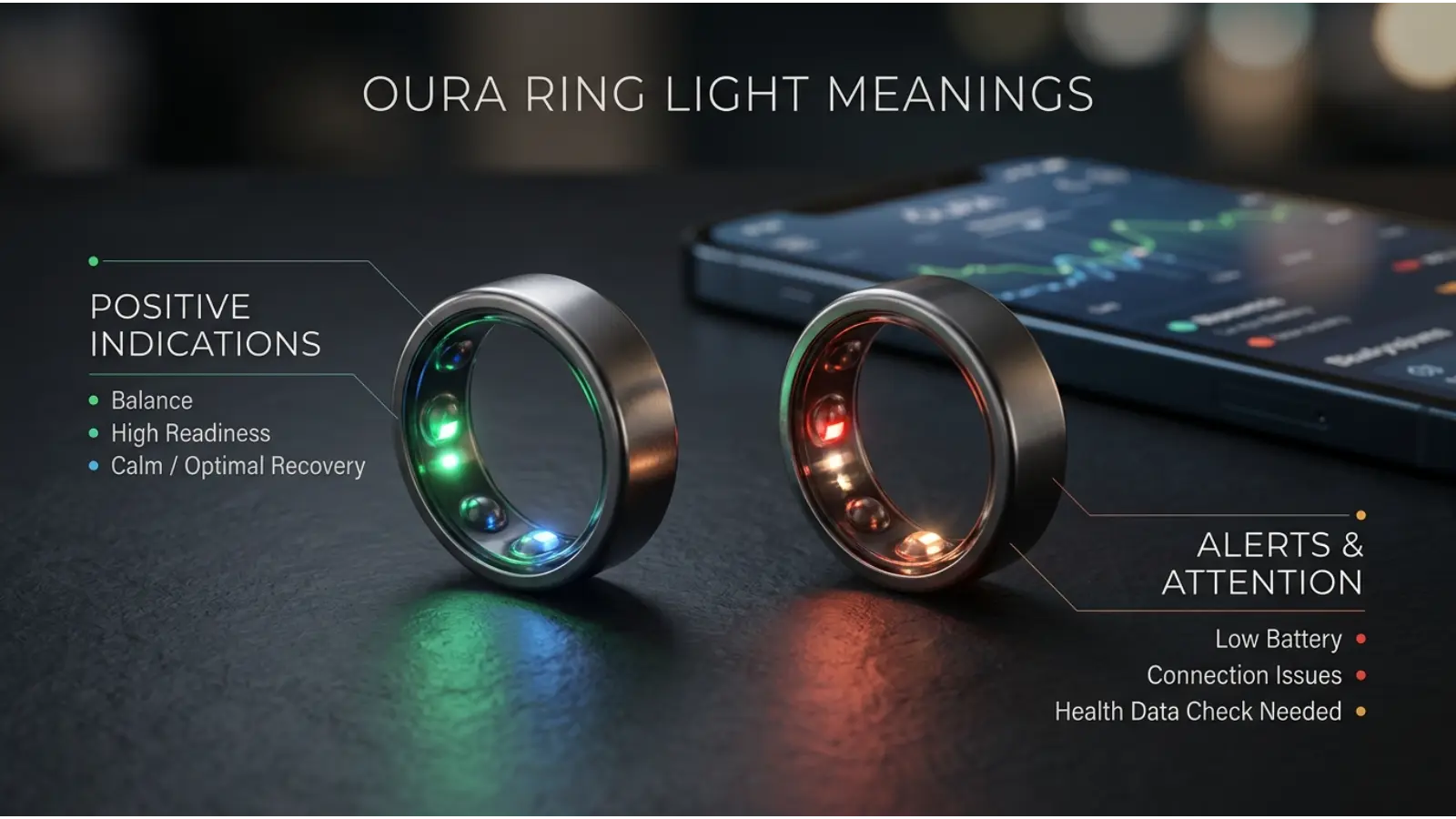
The colors used by wearable sensors can carry positive associations because people bring familiar cultural expectations to technology.
- Clarity: Learning what a sensor light does can make the ring easier to use.
- Awareness: Seeing the sensors operate may remind users that the ring collects measurements.
- Balance: Green is often linked with balance, echoing the general goal of managing sleep, activity, and rest.
- Progress: Tracking trends in the app can help users recognize changes in their habits.
- Reassurance: Understanding that sensor illumination can be normal may reduce unnecessary worry.
- Fresh starts: Beginning to use a wearable may motivate someone to establish a more consistent sleep routine.
- Practical confidence: Knowing the difference between sensor light and a documented warning can help users respond appropriately.
For example, a new user who notices a green glow may feel reassured after learning that the ring uses optical sensors for measurement. The reassurance comes from understanding the device, not from green light proving that the user is healthy.
Negative Meanings
Color associations can also create confusion when users apply symbolic meanings to technical signals.
- Anxiety: Red may be mistaken for an error or health warning.
- Uncertainty: Unfamiliar light can make users wonder whether the ring is working properly.
- False reassurance: Green may be incorrectly interpreted as proof of good health.
- Overmonitoring: Constantly checking sensor behavior may distract from broader health habits.
- Misinterpretation: A user may confuse normal sensor activity with a charging or battery indicator.
- Emotional distance: A device that provides data without explaining it clearly may feel impersonal.
- Perfectionism: Some users may become overly focused on achieving ideal scores rather than maintaining sustainable routines.
For instance, someone might see a red glow at night and assume the ring has detected a health problem. That conclusion is not justified by the light alone. The better response is to check the app, consult the official instructions for the specific model, and seek medical advice when symptoms or other genuine concerns warrant it.
Meanings of Oura Ring Light Colors
The meaning of a visible light depends on where it appears, when it appears, and which Oura Ring generation is being used. It is especially important to distinguish the ring’s internal optical sensors from any status information shown in the app or associated with charging.
Green Light
Oura Ring sensors can use green LEDs for optical measurements, including aspects of heart-rate monitoring. Green light interacts with blood flow near the skin, allowing sensors to detect changes that contribute to physiological measurements.
The exact sensing activity depends on the device and the measurement being taken. A green glow is not, by itself, a personalized wellness score or a sign that every metric is normal.
Red Light
Red or infrared light can be used in optical sensing systems to gather additional physiological information. Oura Ring generations may use different combinations of sensors and wavelengths, so the exact function should be checked against the specifications for the model in question.
A red glow is not automatically an alert, a spiritual warning, or evidence of a medical problem. Interpret it in the context of the ring’s documented behavior.
Infrared Light
Some sensor wavelengths may not be easily visible to the human eye. Infrared light is used in many optical measurement technologies because it interacts with tissue differently from visible light. The ring’s sensing system may combine multiple optical components to support different measurements.
Users do not need to interpret every wavelength individually. The practical goal is to understand the ring’s documented operation and use the app to review recorded data.
Charging and App Indicators
Do not assume that a light inside the ring has the same meaning as an indicator on the charging dock or a message in the app. Charging behavior and software notifications may differ by model and firmware version.
If the ring will not charge, will not connect, or displays an unexpected status, consult the official Oura troubleshooting instructions for the specific issue. Avoid diagnosing a device problem based only on the color of a glow.
Feng Shui
In Feng Shui, green is commonly associated with growth, renewal, and the Wood element, while red is associated with vitality, visibility, and the Fire element. These ideas may influence how someone decorates a room or chooses personal accessories.
However, Feng Shui does not establish the technical meaning of an Oura Ring sensor. If you want to use the ring as part of a wellness routine, focus on practical habits such as a consistent sleep schedule, comfortable bedroom lighting, and time for recovery.
For a calming home environment, green can pair with natural wood, cream, and soft neutral shades. Red is often best used as a small accent when a quieter atmosphere is the priority.
Marketing
Oura’s product identity is built around wearable technology, health insights, sleep tracking, and personal wellness rather than a universal symbolic meaning for sensor colors. In technology marketing, green often suggests progress or reassurance, while red may signal energy or draw attention.
Brands use color strategically in logos, packaging, websites, and interfaces to support recognition and usability. Yet the meaning of a sensor light should be explained accurately rather than treated as a branding promise.
Trustworthy wearable marketing distinguishes measured information from medical diagnosis. It should also explain limitations, data interpretation, and the difference between general wellness insights and professional medical care.
Design
Color is important in the design of wearable devices and their companion apps. A ring needs to remain discreet, comfortable, and visually consistent with everyday clothing, while the app must present complex data in a clear way.
- Interior design: Green and red may be used in a home setting to create different moods, but they do not alter the ring’s technical function.
- Graphic design: Consistent color use can help users recognize categories of information.
- Web design: Accessible contrast and clear labels make device instructions easier to follow.
- User experience: Text labels and explanatory messages are more reliable than color alone.
- Minimalist aesthetics: The ring’s compact appearance fits the preference for discreet technology and simple accessories.
A well-designed health interface should not rely on color alone to communicate important information. Labels, explanations, and accessible visual cues help prevent misunderstandings.
Fashion
The Oura Ring is also a personal accessory, so its appearance may contribute to the wearer’s style. Ring finishes and colors can communicate different fashion impressions, although those impressions are subjective.
- Clothing symbolism: Green clothing may suggest nature or freshness, while red can look bold and energetic. These associations do not describe the sensor’s function.
- Seasonal use: Earthy green shades often suit spring and autumn palettes; red can work for holidays, winter outfits, or statement styling.
- Styling effects: A discreet metallic ring can complement both casual and formal clothing.
- Personality impressions: Minimal accessories may be perceived as understated, practical, or modern, but appearance alone cannot reveal a person’s character.
- Advantages: A compact wearable can fit into an everyday wardrobe while providing tracking features.
- Disadvantages: Some users may dislike the appearance, need to consider fit and comfort, or worry about scratches and wear.
For example, a neutral-toned ring can pair with office clothing without drawing attention, while a brighter finish may act as a more noticeable accessory. Choose according to comfort, fit, and personal preference rather than assigning health meaning to its appearance.
Color Associations Are Not Universal
Western Cultures
In many Western contexts, green is associated with nature, environmental awareness, permission, or positive progress. Red can signify love, excitement, danger, or urgency. Traffic lights and digital interfaces have helped make these associations familiar, but their meanings still depend on context.
Eastern Cultures
Color meanings vary widely across East and South Asia. Red is associated with luck and celebration in many Chinese cultural settings, including weddings and Lunar New Year celebrations. Green may be connected with nature, vitality, or renewal, depending on the society and context. These broad examples should not be treated as universal rules for all Asian cultures.
Religious Traditions
Religious meanings differ across faiths and denominations. Green can be linked with growth, paradise, or renewal in some traditions, while red may symbolize sacrifice, devotion, vitality, or celebration. Such meanings come from religious history and practice, not from the light emitted by a wearable device.
Historical Interpretations
Historically, color symbolism has been shaped by the availability and cost of pigments, clothing traditions, political systems, and artistic conventions. Red dyes, for example, have been associated with status and ceremony in several societies. Modern electronic sensor colors, by contrast, are selected partly for technical reasons.
Modern Global Interpretations
Global technology products often use familiar interface conventions to help users understand status information. Even so, a color alone may be ambiguous. Clear instructions, accessible labels, and model-specific documentation are more reliable than assumptions based on culture or symbolism.
For Oura Ring users, the central distinction is that cultural associations can influence how a light feels, but they do not establish what the sensor is measuring.
What Oura Ring Light Colors Say About Your Personality
A person’s reaction to an Oura Ring’s light may reflect their expectations about technology, health tracking, and color symbolism. It cannot reliably reveal their personality.
Strengths
People who enjoy wearable health tracking may value curiosity, self-awareness, organization, and learning from patterns. They may like having information that helps them review routines and make practical adjustments. These are possible preferences, not traits that can be inferred from a light color.
Weaknesses
Some users may become anxious about unfamiliar signals or overly focused on daily scores. Others may assume that one measurement defines their overall health. Recognizing these tendencies can help users maintain a balanced relationship with tracking technology.
Social Behavior
A user might enjoy discussing sleep data or wellness routines with friends, while another may prefer to keep personal measurements private. Neither choice is indicated by whether the ring emits green or red light.
Work Style
People who use wearable data to support their routines may appreciate structure and feedback. However, a preference for tracking does not necessarily mean someone is more productive, disciplined, or analytical than others.
Relationships
Health-tracking tools can prompt conversations about sleep, activity, and lifestyle habits. They should not replace direct communication, and a partner’s ring light should never be used to make assumptions about their feelings or behavior.
Emotional Tendencies
A person may find health metrics motivating, neutral, or stressful. If tracking increases worry, it can help to reduce unnecessary checking and focus on longer-term patterns rather than isolated readings.
Ultimately, Oura Ring light colors do not determine personality. Personal preferences, experiences, culture, and circumstances influence how people interpret them. Use the ring as a tool for awareness, not as a personality test or a substitute for medical guidance.
Frequently Asked Questions
1. What defines Oura Ring light colors?
Oura Ring light colors are associated primarily with the device’s optical sensing system and, depending on the model, other device functions. Their meaning depends on the ring generation and context.
2. What does green light on an Oura Ring mean?
Green LEDs can be used for optical measurements such as heart-rate monitoring. A green glow alone does not prove that your health or recovery is good.
3. What does red light on an Oura Ring mean?
Red or infrared light may be part of the ring’s optical sensing technology. It does not automatically indicate an error or a medical warning.
4. Why are Oura Ring lights important?
The lights help the ring’s sensors collect physiological information. The recorded measurements are interpreted by the device and app rather than by the color alone.
5. Is Oura Ring sensor light a warm or cool color?
Green is generally classified as a cool color, while red is generally considered warm. These are color-theory categories, not explanations of the sensor’s technical purpose.
6. What emotions do Oura Ring light colors represent?
People may associate green with balance and renewal and red with energy or urgency. These are common cultural associations, not emotions measured by the ring.
7. What does an Oura Ring light mean spiritually?
There is no established spiritual meaning assigned to the ring’s sensor lights. Individuals may make personal symbolic connections, but these are separate from the device’s documented functions.
8. What colors pair well with an Oura Ring?
Neutral clothing colors such as black, white, gray, beige, and navy work with many ring finishes. Green or red accessories can add contrast, depending on the outfit and personal style.
9. Does a red Oura Ring light mean something is wrong?
Not necessarily. Sensor illumination can be part of normal operation. If the ring displays an actual error message or stops working as expected, follow the official troubleshooting guidance for your model.
10. What does noticing Oura Ring light colors say about a person?
It may indicate curiosity about the device or a desire to understand health-tracking technology. It does not reliably reveal personality, emotional state, or medical status.
11. Can Oura Ring lights diagnose health problems?
No. Sensor lights are part of the measurement system, not a diagnosis. Use the app’s information as intended and consult a qualified healthcare professional about symptoms or medical concerns.
12. Where can I confirm the meaning of my ring’s lights?
Check Oura’s official support documentation and the instructions for your specific ring generation. Model-specific guidance is more reliable than general color symbolism or assumptions based on another device.
Conclusion
Oura Ring light color meanings are best understood through wearable technology rather than traditional color symbolism. Green, red, and other sensor wavelengths can support physiological measurements, but a visible glow does not independently confirm health, recovery, or a problem with the device. Cultural associations may shape how users react to colors, yet technical context matters most. For accurate interpretation, review your Oura app, identify your ring generation, and consult official support instructions when something seems unusual. Use the ring’s measurements as one source of wellness information—not as a diagnosis, spiritual message, or personality assessment.