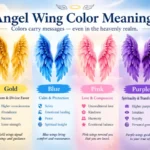
Angel wing color meanings explore the symbolism associated with the colors of angel wings in religious art, spiritual traditions, mythology, and modern popular culture. Although angels are often depicted with white wings, artistic representations also feature gold, silver, blue, pink, purple, and black wings, each suggesting different qualities or emotions.
White commonly represents purity and peace, while gold symbolizes divine glory, blue suggests protection and tranquility, and pink expresses love and compassion. These interpretations vary across traditions, and no single color system applies to every belief.
Quick answer:
Angel wing colors generally symbolize purity, protection, love, wisdom, hope, transformation, and spiritual connection, depending on the color and cultural context.
What Do Angel Wing Colors Symbolize?
Angel wings are powerful visual symbols in many religious artworks and spiritual interpretations. Wings suggest the ability to move between earthly and heavenly realms, while their colors help artists communicate qualities such as holiness, mercy, wisdom, and divine authority.
In Christianity, angels appear in biblical narratives as messengers and servants of God, but Scripture does not establish a universal color code for angel wings. Many familiar color meanings come from religious art, cultural traditions, contemporary spirituality, and personal interpretation.
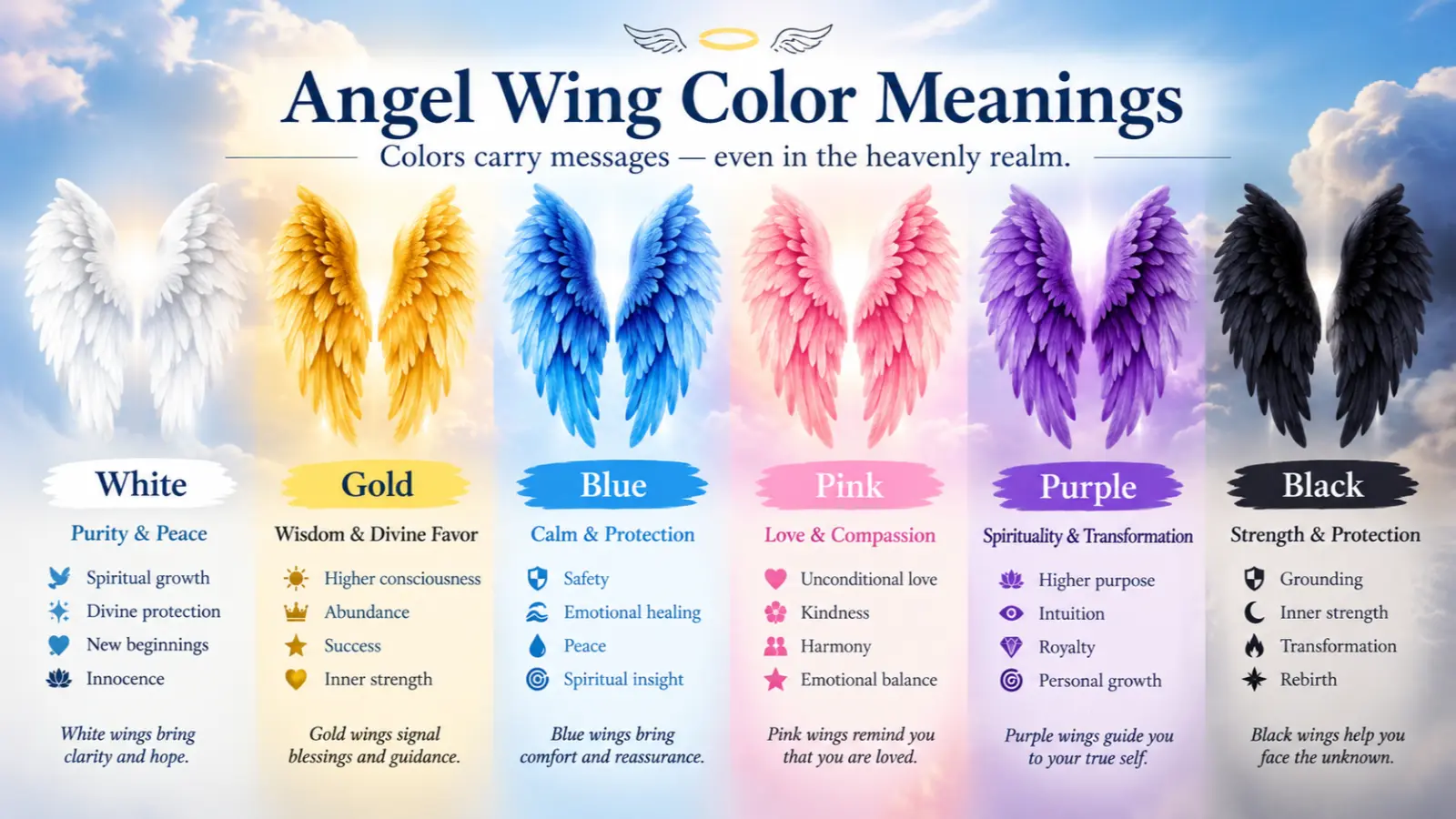
Here are some commonly encountered angel wing color meanings:
- White angel wings: Purity, peace, innocence, holiness, and spiritual clarity.
- Gold angel wings: Divine glory, wisdom, enlightenment, abundance, and sacred authority.
- Blue angel wings: Protection, tranquility, truth, faith, and heavenly connection.
- Pink angel wings: Love, compassion, kindness, tenderness, and emotional healing.
- Purple angel wings: Spiritual wisdom, mystery, dignity, transformation, and contemplation.
- Silver angel wings: Reflection, intuition, clarity, and celestial beauty.
- Green angel wings: Renewal, growth, balance, hope, and restoration.
- Red angel wings: Courage, passion, sacrifice, strength, and intense devotion.
- Black angel wings: Mystery, grief, protection, rebellion, or the shadow side of human experience.
- Rainbow angel wings: Diversity, hope, unity, renewal, and the coexistence of different qualities.
These associations are symbolic rather than universal religious rules. The same color may communicate different ideas depending on the angel depicted, the artwork, the surrounding imagery, and the viewer’s beliefs.
Psychological Characteristics of Angel Wing Colors
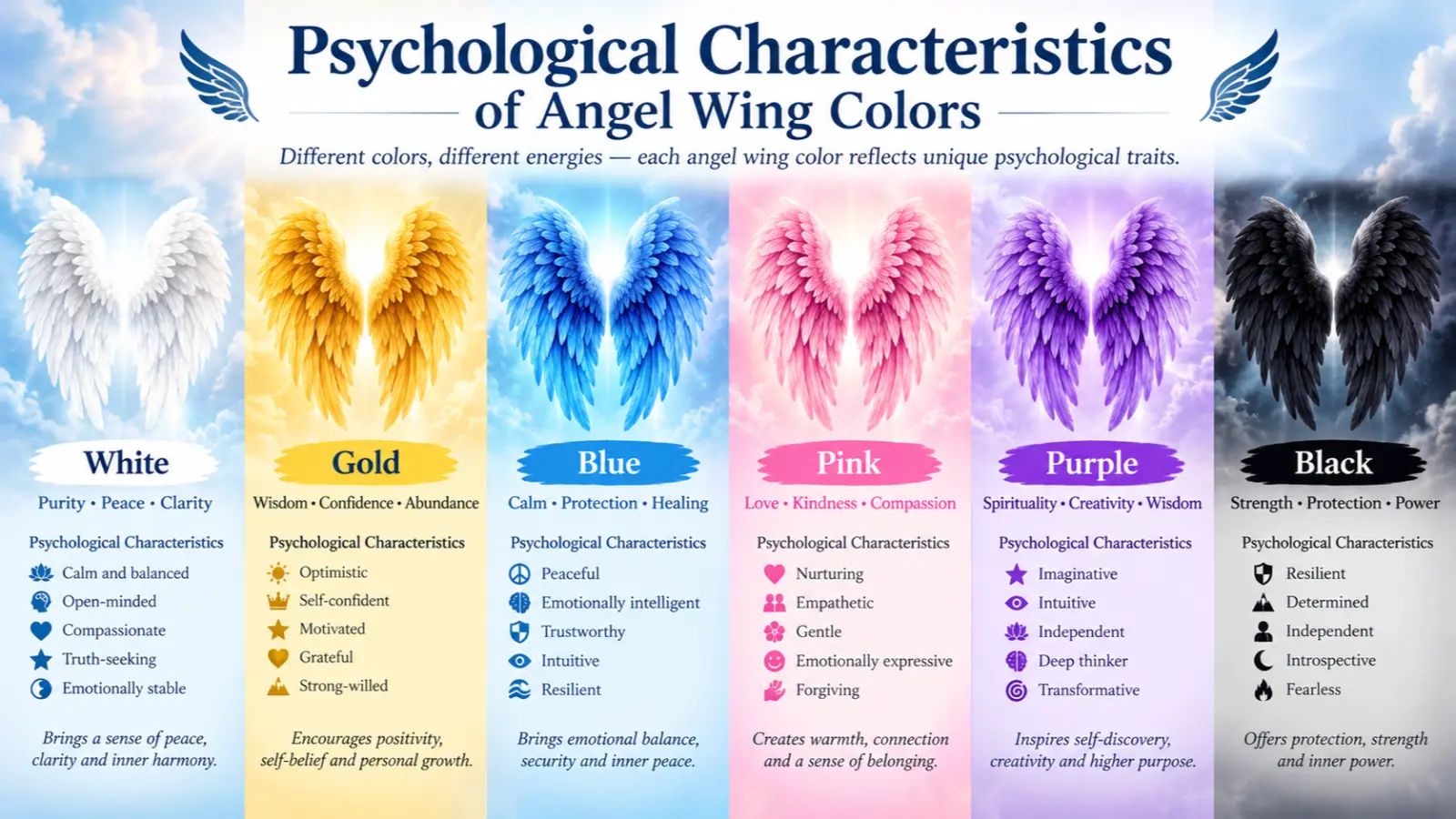
Color psychology examines how visual characteristics influence perception, emotion, and behavior. Angel wing colors combine these general associations with the spiritual meanings viewers attach to angels.
A white wing may feel peaceful, while a red or black wing may communicate intensity or mystery. These responses are influenced by cultural learning, personal experience, contrast, and context.
Emotional Associations
Angel wing colors often evoke emotions through familiar associations:
- White: Calmness, innocence, openness, and peace.
- Gold: Warmth, admiration, prestige, and inspiration.
- Blue: Trust, serenity, security, and contemplation.
- Pink: Affection, tenderness, comfort, and compassion.
- Purple: Wonder, dignity, imagination, and spirituality.
- Silver: Elegance, reflection, subtlety, and mystery.
- Green: Balance, growth, hope, and renewal.
- Red: Energy, courage, urgency, and passion.
- Black: Seriousness, mystery, grief, and power.
- Rainbow: Joy, inclusion, creativity, and optimism.
These are common associations, not guaranteed emotional responses.
Psychological Effects
The visual presentation of angel wings can influence how viewers interpret a religious image, illustration, memorial, or decorative object.
Soft white and blue tones may create a quiet, reassuring atmosphere. Gold can draw attention to a central figure and suggest importance. Pink may make an illustration feel gentle, while dark wings can create dramatic tension or represent grief and mystery.
The combination of color, lighting, facial expression, and posture is important. A dark-winged angel with a compassionate expression may communicate protection, whereas the same wings on a threatening figure may suggest danger.
Positive Emotional Responses
Angel wing colors may encourage several positive emotional associations:
- Comfort: White and pale blue wings may be used in memorial art to express peace.
- Hope: Green and rainbow wings can suggest renewal and better possibilities.
- Love: Pink wings often communicate affection and tenderness.
- Inspiration: Gold and purple wings can suggest wisdom or spiritual aspiration.
- Security: Blue wings may represent a protective presence.
- Acceptance: Rainbow wings can communicate diversity and inclusion in contemporary art.
Negative Emotional Responses
Some colors can also evoke more difficult emotions:
- Isolation: Extremely pale or monochromatic wings may appear distant in a composition with little contrast.
- Coldness: Icy blue and silver may feel emotionally restrained.
- Grief: Black wings are often used in memorials or dramatic illustrations.
- Overwhelming intensity: Highly saturated red or gold may dominate an image.
- Unease: Dark wings may feel threatening when combined with ominous imagery.
- Uncertainty: Unfamiliar combinations may appear mysterious or ambiguous.
These reactions depend on presentation and personal associations rather than fixed psychological rules.
Impact on Mood and Behavior
Color may influence how viewers approach an image, but the effect is not deterministic. A peaceful angel illustration may encourage reflection, while a dramatic design with black and red wings may invite viewers to consider conflict, sacrifice, or transformation.
In practical settings, artists can use color contrast to direct attention, create emotional atmosphere, and communicate a narrative. However, color alone cannot reliably change someone’s behavior or guarantee a specific emotional response.
How People Typically React to Angel Wing Colors
Many viewers interpret white wings as benevolent because white has longstanding associations with purity and sacredness in several artistic traditions. Gold often attracts attention because of its brightness and historical connection with precious materials.
Blue and green may feel calming or restorative to some viewers, while red and black may appear more intense. Personal religious beliefs, cultural background, and previous exposure to angel imagery can significantly change these reactions.
Spiritual Meaning of Angel Wing Colors
The spiritual meaning of angel wing colors varies across religions, spiritual movements, and artistic traditions. Some contemporary spiritual practices associate particular colors with qualities such as healing, protection, or divine guidance. These interpretations should not be presented as universally accepted doctrine or scientifically verified effects.
- Holiness: White wings commonly symbolize purity and sacredness in Christian-inspired art.
- Wisdom: Gold and purple wings may represent divine knowledge, insight, or spiritual authority.
- Purity: White and pale silver can suggest innocence, sincerity, and spiritual clarity.
- Transformation: Purple, green, and rainbow wings may symbolize personal growth, renewal, and change.
- Healing: Green and pink wings are sometimes used in contemporary spirituality to represent restoration and compassion.
- Protection: Blue wings often symbolize peace, trust, and a protective presence.
- Power: Gold and red may communicate divine authority, courage, strength, or sacrifice.
- Enlightenment: Gold and white can represent illumination, truth, and spiritual understanding.
- New beginnings: White, green, and rainbow wings may suggest fresh starts and renewed hope.
- Eternity: Silver and gold can symbolize timelessness, while white may represent enduring peace.
In Christian traditions, angels are primarily understood through their roles as God’s messengers and servants. The specific color meanings described above often come from artistic conventions and later spiritual interpretations rather than a single authoritative biblical system.
Positive and Negative Meanings of Angel Wing Colors
Positive Meanings
Angel wings are frequently used in visual storytelling to express hope, protection, compassion, and spiritual aspiration. Positive meanings vary with the color chosen.
1. Purity
White wings often represent innocence, sincerity, and holiness. Their clean appearance makes them common in depictions of benevolent angels.
Example: A white-winged angel on a memorial card may express peace and loving remembrance.
2. Peace
White and light blue can communicate serenity and reassurance.
Example: A bedroom print featuring pale blue wings and a soft sky may create a tranquil visual atmosphere.
3. Simplicity
White or silver wings can create a restrained, uncluttered aesthetic.
Example: A minimalist pendant featuring a small silver wing may communicate elegance without elaborate decoration.
4. Clarity
White, blue, and silver may symbolize truth, reflection, and mental clarity.
Example: An illustration of a blue-winged guardian can represent guidance through a difficult decision.
5. Freshness
Green wings may symbolize nature, vitality, and renewal.
Example: A spring-themed illustration can combine green angel wings with leaves and flowers to represent growth.
6. Hope
Rainbow and gold wings can express optimism and encouragement.
Example: A greeting card featuring rainbow wings may celebrate a new chapter after a challenging period.
7. Balance
Green and blue can symbolize harmony between emotional calm and renewal.
Example: A wellness journal may use these colors in artwork intended to encourage reflection.
8. Harmony
Pink, white, and gold can communicate tenderness, compassion, and unity.
Example: An illustration of pink-and-white wings may be used to celebrate a caring relationship or honor a loved one.
Negative Meanings
Angel wing colors can also communicate difficult emotions, especially in dark fantasy, memorial art, and dramatic religious imagery.
1. Emptiness
An entirely white design with little detail may feel vacant when the surrounding composition lacks warmth or contrast.
Example: A large white-winged figure against a blank background may convey loneliness in a contemporary artwork.
2. Isolation
Silver, pale blue, or gray wings can appear distant when depicted alone in a cold environment.
Example: An illustration of a solitary angel with silver wings in a frozen landscape may suggest separation.
3. Coldness
Icy blue and metallic silver can create an emotionally restrained atmosphere.
Example: A blue-gray wing design may appear less comforting than one using warm pink or gold.
4. Sterility
Overly bright white imagery can resemble clinical environments rather than warm spiritual settings.
Example: A completely white illustration with harsh lighting may feel impersonal.
5. Boredom
A design that uses only one pale color without texture or contrast may appear monotonous.
Example: Repeating identical white wings across a poster without variation can reduce visual interest.
6. Emotional distance
Black or dark silver wings may suggest withdrawal, grief, or guardedness.
Example: A dark-winged angel in a memorial painting may express sorrow and separation.
7. Perfectionism
Highly polished gold or white wings can suggest an idealized standard of beauty or purity.
Example: A flawless, symmetrical angel illustration may emphasize unattainable perfection rather than human complexity.
These negative meanings are not inherent in the colors. Artists use visual elements deliberately, and a dark-winged angel can represent a compassionate protector just as readily as a threatening figure.
Meanings of Angel Wing Colors
Angel wing color meanings change according to the setting. Religious paintings, memorial jewelry, fantasy illustrations, tattoos, holiday decorations, and contemporary spiritual artwork may use the same colors in different ways.
For example, white wings may symbolize holiness in religious art, remembrance on a memorial card, or freedom in a fantasy illustration. Black wings may represent grief in one image and independence or transformation in another.
Feng Shui
Feng Shui traditionally uses color in relation to the five elements and the balance of a living environment. Angel wings themselves do not have a standardized Feng Shui classification, but their colors can be interpreted through conventional color associations.
- Associated elements: Green relates to Wood, red to Fire, and many white and metallic shades to Metal. Gold and silver are often treated as metallic colors.
- Energy symbolism: Blue and green may suggest calmness and growth, while red and gold can introduce warmth and visual emphasis.
- Best rooms: Use peaceful blue or white angel artwork in quiet spaces, and warmer gold accents in living areas.
- Color combinations: White and blue create a gentle palette; green and cream suggest nature; gold and white feel luminous.
- Decorating tips: Choose artwork that complements the room’s lighting, purpose, and existing colors. Avoid overcrowding a space with competing decorative elements.
These are design suggestions informed by traditional symbolism, not guarantees of spiritual energy or measurable outcomes.
Marketing
Angel wing imagery is common in products related to jewelry, memorials, gifts, religious art, and fantasy merchandise. Color selection helps establish the mood and intended meaning.
Branding psychology: White wings can suggest purity, gold can communicate prestige, and pink can express tenderness. Blue may create a reassuring appearance, while black can support a dramatic or alternative identity.
Consumer perception: Customers may interpret angel wings as symbols of comfort, remembrance, faith, or personal protection. Interpretations differ according to beliefs and product context.
Trust signals: Clear product descriptions, honest materials information, thoughtful design, and transparent business practices establish more reliable trust than color symbolism alone.
Product packaging: White, cream, and gold are common choices for memorial gifts and elegant jewelry packaging. Pink may suit sentimental gifts, while black can complement contemporary or gothic products.
Advertising applications: Angel wing designs may appear in holiday campaigns, memorial products, faith-oriented materials, and fantasy merchandise.
There is no single famous global brand universally associated with a particular angel wing color. Instead, businesses in jewelry, giftware, religious publishing, and fashion often select colors to match their individual audiences and products.
Design
Angel wing colors have practical uses across several design disciplines.
- Interior design: White and cream wings can complement peaceful, traditional, or minimalist rooms. Gold accents add warmth, while dark wings create drama.
- Graphic design: Contrast between wing color and background helps establish a focal point and communicate emotion.
- Web design: Angel imagery may support memorial, religious, artistic, or fantasy themes. Readable typography and sufficient color contrast remain essential.
- User experience: Decorative wings should not interfere with navigation, readability, or the recognition of important interface controls.
- Minimalist aesthetics: Simple white or silver wing illustrations work well with open space and limited typography. A restrained palette can make the symbol more prominent.
For example, a memorial website might combine soft blue, white, and subtle gray to create a quiet visual identity. A fantasy game could use red and black wings to distinguish a powerful character from a peaceful guardian.
Fashion
Angel wings appear in necklaces, earrings, clothing graphics, tattoos, costume design, and decorative accessories. Their colors influence the style and message of the design.
Clothing symbolism: White wings often suggest innocence or faith, gold suggests glamour, pink communicates tenderness, and black may represent mystery or individuality.
Seasonal use: White and silver may be popular in winter-inspired outfits, while pink and pastel blue suit spring designs. Gold and red can work well in festive clothing throughout the year.
Styling effects: Small silver wing jewelry creates a subtle look, while large black or rainbow wing graphics make a stronger statement.
Personality impressions: People may associate white wings with gentleness or black wings with boldness, but clothing choices do not establish personality traits.
Advantages: Angel wing designs can express personal beliefs, remembrance, affection, or creativity. Neutral colors are generally easy to coordinate, while brighter colors can make an outfit distinctive.
Disadvantages: Highly decorative wings may clash with formal outfits, and religious symbols can carry meanings that differ among audiences. Large graphics can also dominate an outfit.
Practical example: Pair a simple silver angel wing pendant with a white blouse and dark jeans for everyday wear. For a more dramatic look, a black wing graphic on a neutral shirt can provide contrast without overwhelming the entire outfit.
Color Associations Are Not Universal
Angel wing colors do not carry identical meanings across cultures. Interpretations depend on religious teachings, artistic conventions, historical experiences, and contemporary media.
Western cultures: In many Western Christian-inspired artworks, white wings are associated with purity and heavenly beings. Gold often suggests divine glory, while dark wings appear in Gothic art and fantasy to represent mystery, grief, or rebellion. These are common artistic conventions rather than universal beliefs.
Eastern cultures: There is no single Eastern interpretation of angel wings. Religious traditions differ substantially across Asia, and winged figures may belong to Buddhist, Hindu, folk, or other artistic contexts rather than the Christian concept of angels. Colors should therefore be interpreted within the specific tradition and image.
Religious traditions: Christian art often depicts angels with white or luminous wings, but biblical texts do not prescribe one fixed color for all angels. In other religions, celestial beings have distinct identities and symbolism. Contemporary spiritual systems may assign colors to protection, healing, or guidance, but those associations are not shared by all religious communities.
Historical interpretations: Artists have used pigments, gilding, and contrasting light to distinguish sacred figures and communicate status or spiritual significance. Gold leaf in religious art, for example, can suggest heavenly radiance. The color choices also reflect the materials, artistic styles, and conventions of their time.
Modern global interpretations: Movies, video games, social media, tattoos, and fantasy illustration have expanded the range of angel wing imagery. White wings may signify benevolence, while black wings can symbolize rebellion or a morally complex character. Rainbow wings may communicate hope or inclusion, depending on the artist’s intention.
Understanding the cultural and historical context is more reliable than assigning a single meaning to every wing color.
What Angel Wing Colors Say About Your Personality
Some people choose angel wing colors that reflect their aesthetic preferences, religious beliefs, emotional experiences, or personal goals. However, there is no scientifically validated personality test based on preferred angel wing colors.
The following interpretations are best understood as popular symbolic associations rather than reliable assessments of character.
- Strengths: Someone drawn to white wings may appreciate simplicity, while a preference for green may reflect an interest in nature or renewal. These possibilities do not establish actual strengths.
- Weaknesses: A strong preference for idealized white or gold imagery might reflect an attraction to perfection, but it does not prove perfectionism.
- Social behavior: Pink wings may appeal to people who enjoy expressing affection, while rainbow designs may attract those who appreciate colorful, inclusive imagery. Neither predicts social behavior.
- Work style: Someone who chooses clean, minimal wing designs may prefer restrained aesthetics, but this does not reveal their productivity or professional ability.
- Relationships: Pink and white wings are often used to express affection, loyalty, or remembrance. Choosing them does not determine how a person behaves in relationships.
- Emotional tendencies: Blue wings may appeal to someone seeking a calm visual theme, while darker wings may offer a way to express grief, individuality, or artistic interests.
Personal color preferences are influenced by memory, culture, mood, and individual taste. They can provide a starting point for reflection, but they cannot reliably determine personality, mental health, or future behavior.
Frequently Asked Questions
1. What defines angel wing colors?
Angel wing colors are the shades used to depict the wings of angels in religious art, spiritual imagery, memorial designs, and popular culture. Common choices include white, gold, blue, pink, purple, silver, green, red, black, and rainbow.
2. What do angel wing colors symbolize?
Angel wing colors may symbolize purity, peace, protection, love, wisdom, courage, renewal, or mystery. The meaning depends on the color, the artwork, and the cultural or religious context.
3. Why are angel wing colors important?
Color helps artists communicate the qualities of an angel, establish emotional atmosphere, and distinguish different characters or themes. It also allows people to personalize jewelry, tattoos, memorial objects, and spiritual artwork.
4. Are angel wing colors warm or cool?
Angel wing colors can be warm or cool. Red, pink, and gold generally appear warm, while blue and silver often appear cool. White, green, purple, and rainbow combinations can vary depending on their undertones.
5. What emotions do angel wing colors represent?
White may evoke peace, pink affection, blue tranquility, gold inspiration, green hope, red courage, and black mystery. These are common associations rather than guaranteed emotional responses.
6. What do angel wing colors mean spiritually?
In contemporary spiritual interpretations, white may symbolize purity, blue protection, pink compassion, green renewal, and gold enlightenment. These meanings vary and are not a universal religious code.
7. What colors pair well with angel wing designs?
White pairs well with silver, blue, or gold. Pink works with cream and rose gold, green with white and beige, and black with silver or red. Rainbow wings often look best against a simple neutral background.
8. What does liking a particular angel wing color say about a person?
It may reflect personal taste, artistic interests, beliefs, or emotional associations, but it cannot establish a person’s personality. Color preference is not a scientifically reliable personality assessment.
9. What does a black angel wing symbolize?
Black angel wings may represent mystery, grief, protection, independence, rebellion, or transformation. Their meaning depends on the artwork and the story being communicated.
10. What is the most common angel wing color?
White is one of the most familiar colors in Western Christian-inspired angel imagery. It is often associated with purity and holiness, although angelic appearances and artistic conventions vary across traditions.
Conclusion
Angel wing color meanings provide a rich vocabulary for expressing spirituality, emotion, remembrance, and artistic identity. White wings commonly suggest purity and peace, gold conveys divine glory, blue represents tranquility and protection, pink communicates compassion, and darker shades may evoke mystery or transformation. However, these meanings are shaped by religious traditions, cultural influences, personal experiences, and artistic choices. No single color system applies to every angel or belief. Whether used in religious art, interior decoration, jewelry, fashion, or digital illustration, angel wing colors are most meaningful when interpreted within their specific context.