The Maneki Neko Color Meanings, often called the Lucky Cat or Beckoning Cat, is one of Japan’s most recognizable symbols of prosperity and good fortune. While its raised paw invites luck and positive opportunities, the color of the Maneki Neko adds another layer of meaning.
Each color represents a specific blessing, such as wealth, protection, love, health, academic success, or career growth. Understanding these color meanings can help you choose the lucky cat that best matches your personal goals or intentions.
Whether you display one at home, in a business, or give it as a gift, the right color carries unique cultural and symbolic significance.
Quick Answer:
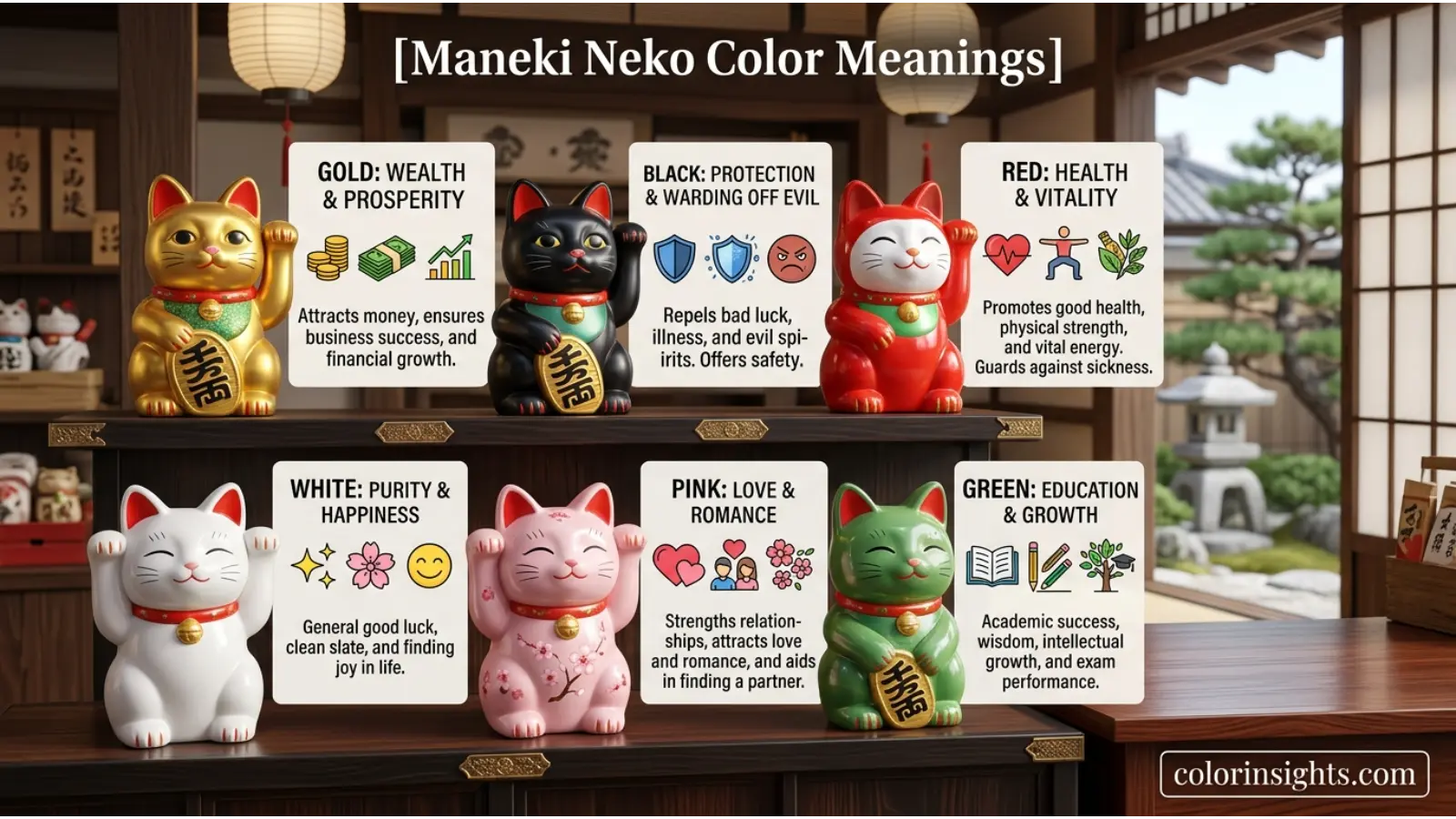
Maneki Neko color meanings symbolize different types of luck. Gold attracts wealth, white represents happiness and purity, black offers protection, red promotes health, pink encourages love, green supports education, and blue symbolizes career success.
What Do Maneki Neko Colors Symbolize?
Unlike ordinary decorative colors, Maneki Neko colors carry traditional Japanese symbolism influenced by folklore, Buddhism, Shinto beliefs, and Feng Shui principles. Rather than changing the meaning of the cat itself, each color changes the type of luck it is believed to attract.
Some colors emphasize financial prosperity, while others focus on emotional well-being, safety, relationships, education, or personal growth. Although interpretations may vary slightly among manufacturers and regions, several meanings remain widely accepted.
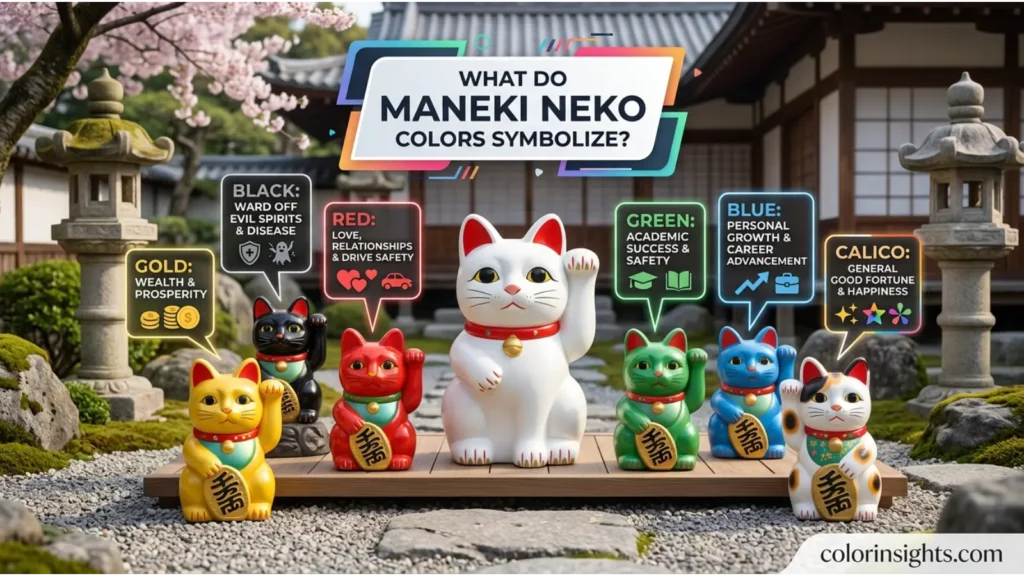
Common Maneki Neko color meanings include:
- White: Purity, happiness, and positive beginnings.
- Gold: Wealth, prosperity, and financial success.
- Black: Protection against negative energy and misfortune.
- Red: Good health, vitality, and protection from illness.
- Pink: Romance, affection, and successful relationships.
- Green: Academic achievement, wisdom, and personal growth.
- Blue: Career success, ambition, and self-improvement.
- Yellow: Stable relationships and lasting friendships.
- Purple: Longevity, dignity, and spiritual development.
- Orange: Family happiness and joyful living.
These meanings make the Maneki Neko more than a decorative ornament—it becomes a personalized symbol of hope and positive intention.
Psychological Characteristics of Maneki Neko Colors
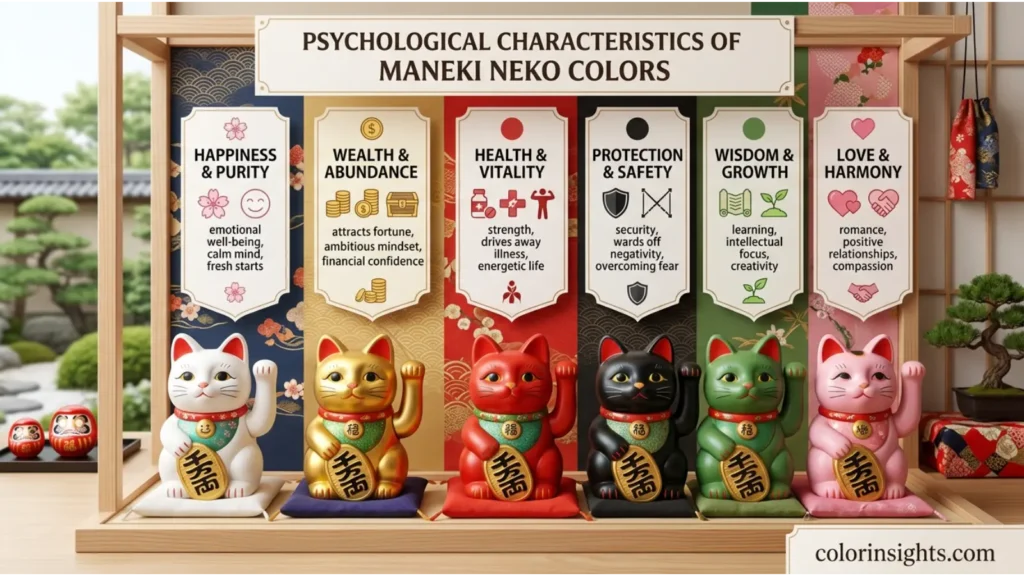
Color psychology suggests that colors influence emotions, perceptions, and behavior. The various Maneki Neko colors evoke different psychological responses, helping explain why people choose certain lucky cats for particular goals.
Emotional Associations
- White inspires peace, optimism, and emotional clarity.
- Gold encourages confidence, ambition, and success.
- Black creates feelings of safety and resilience.
- Red increases motivation, courage, and energy.
- Pink promotes compassion, affection, and kindness.
- Green encourages balance, learning, and renewal.
- Blue supports trust, focus, and stability.
Psychological Effects
Different colors may affect mood in subtle ways:
- Warm colors like red and gold stimulate action and confidence.
- Cool colors such as blue and green promote calm thinking.
- Neutral colors like white create a sense of simplicity and freshness.
- Dark colors such as black reinforce emotional strength and security.
Positive Emotional Responses
Many people associate Maneki Neko colors with:
- Hope
- Optimism
- Confidence
- Motivation
- Security
- Happiness
- Peace of mind
Negative Emotional Responses
Depending on personal experiences and cultural background, some colors may also evoke:
- Pressure to succeed (gold)
- Aggression or urgency (red)
- Mystery or fear (black)
- Emotional distance (blue)
- Simplicity that feels plain (white)
Impact on Mood and Behavior
People often display specific Maneki Neko colors as visual reminders of personal goals. A gold lucky cat can motivate financial discipline, while a green one may encourage consistent study habits. Although these effects are psychological rather than supernatural, symbolic objects can reinforce positive behaviors through daily visual cues.
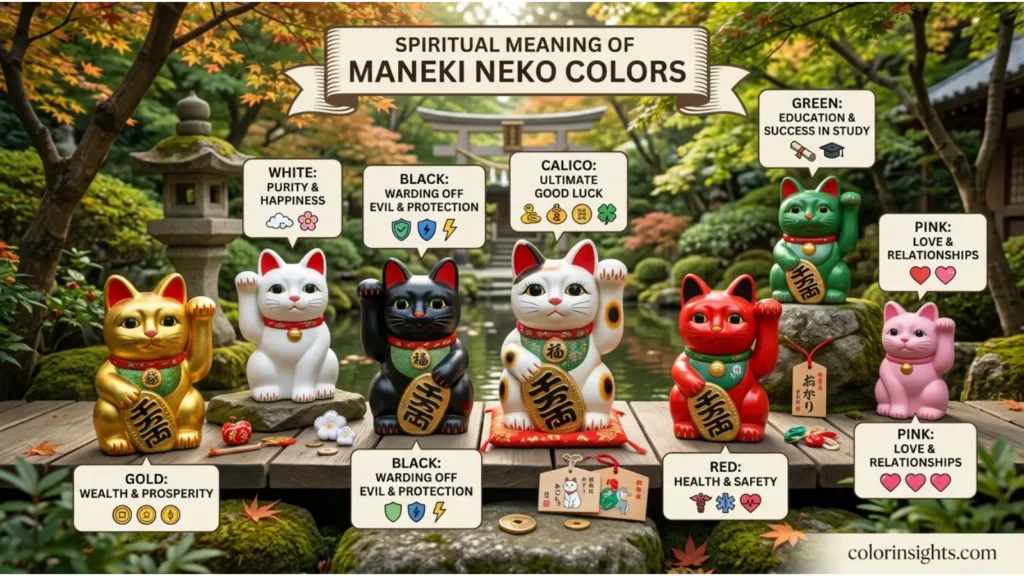
Spiritual Meaning of Maneki Neko Colors
In Japanese tradition, Maneki Neko colors symbolize blessings rather than guaranteed outcomes. Their meanings combine cultural beliefs, spiritual symbolism, and positive intention.
White
- Represents purity and honesty.
- Symbolizes new beginnings.
- Encourages inner peace and harmony.
Gold
- Represents abundance and prosperity.
- Symbolizes financial blessings.
- Encourages gratitude and generosity.
Black
- Traditionally protects against evil spirits.
- Symbolizes strength and resilience.
- Represents spiritual protection.
Red
- Associated with health and vitality.
- Traditionally believed to ward off illness.
- Symbolizes life force and courage.
Pink
- Represents unconditional love.
- Encourages emotional healing.
- Symbolizes healthy relationships.
Green
- Represents wisdom and knowledge.
- Encourages learning and personal growth.
- Symbolizes renewal and balance.
Blue
- Symbolizes honesty and perseverance.
- Represents career development.
- Encourages inner confidence.
Although modern interpretations sometimes connect these colors with healing, enlightenment, transformation, and protection, these meanings are symbolic rather than religious doctrine.
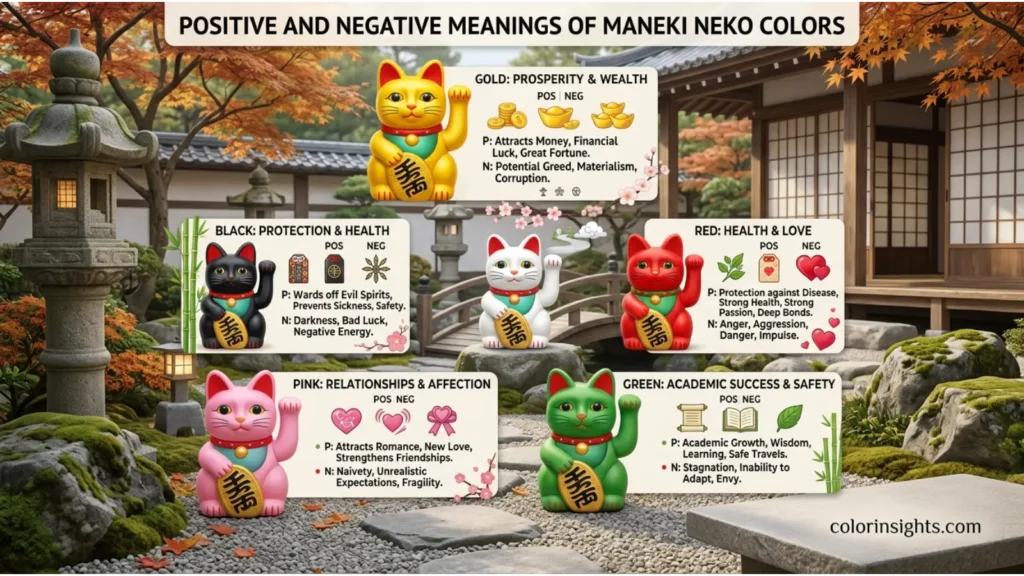
Positive and Negative Meanings of Maneki Neko Colors
Positive Meanings
Each Maneki Neko color reflects hopeful qualities people often seek.
- White: Fresh starts, honesty, peace, and emotional clarity. A white lucky cat makes a thoughtful housewarming gift.
- Gold: Prosperity, business success, and financial opportunity. Many store owners display gold Maneki Neko near cash registers.
- Black: Protection from negativity and confidence during difficult periods.
- Red: Physical well-being, vitality, and energetic living.
- Pink: Love, friendship, and stronger emotional connections.
- Green: Education, wisdom, and continuous improvement.
- Blue: Professional success, reliability, and personal discipline.
Negative Meanings
No Maneki Neko color is considered unlucky, but color symbolism can have less favorable interpretations depending on context.
- White may represent emotional emptiness when used in overly minimal spaces.
- Gold can suggest materialism if wealth becomes the only focus.
- Black may feel intimidating in cultures where dark colors symbolize mourning.
- Red can communicate urgency or emotional intensity.
- Pink may appear overly sentimental in formal settings.
- Green can sometimes represent inexperience.
- Blue may feel emotionally distant if used excessively.
Understanding these balanced interpretations helps people choose a color that matches both their goals and personal preferences.
Meanings of Maneki Neko Colors
The symbolism of Maneki Neko colors changes depending on cultural traditions, placement, and personal intention. While Japanese customs emphasize good fortune, modern users also choose colors based on emotional meaning, interior design, or Feng Shui practices.
Feng Shui
Although Maneki Neko originated in Japan rather than China, many people incorporate it into Feng Shui-inspired decorating.
- Associated element: Varies by color. Gold often relates to Metal, green to Wood, red to Fire, blue to Water, and yellow to Earth.
- Energy symbolism: Attracts positive energy, opportunity, and harmony.
- Best rooms: Entryways, home offices, living rooms, business receptions, and study areas.
- Recommended color combinations: Gold with red for prosperity, green with white for growth, blue with silver for career success.
- Decorating tips: Place the lucky cat where it faces visitors or entrances rather than hidden on shelves.
Marketing
Businesses frequently use Maneki Neko imagery because consumers naturally associate it with success, optimism, and welcoming service.
Gold versions commonly appear in restaurants, retail stores, and small businesses to reinforce messages of prosperity and customer appreciation.
Design
Maneki Neko colors influence both traditional and modern design because each color communicates a different mood and purpose. Designers often select a lucky cat color that complements the space while reinforcing its symbolic meaning.
Interior Design
In homes and workplaces, Maneki Neko colors serve as decorative accents with cultural significance.
- White brightens minimalist, Scandinavian, and contemporary interiors.
- Gold adds a luxurious touch to offices, restaurants, and business reception areas.
- Black creates contrast in modern or industrial spaces.
- Green works well in study rooms, home libraries, and indoor garden areas.
- Blue suits professional offices where calmness and productivity are priorities.
- Pink complements bedrooms or spaces designed for warmth and romance.
Graphic Design
Graphic designers use Maneki Neko colors to communicate specific messages.
- Gold conveys success, prosperity, and premium quality.
- Red grabs attention in promotional campaigns.
- White creates a clean and trustworthy appearance.
- Green suggests growth and sustainability.
- Blue communicates professionalism and reliability.
Web Design
E-commerce stores and Japanese-themed websites often feature Maneki Neko colors to create a welcoming atmosphere.
- Gold highlights promotions and special offers.
- White improves readability and visual balance.
- Blue enhances trust for financial or service-based websites.
- Red works well for call-to-action buttons when used sparingly.
User Experience (UX)
Strategic color selection improves user engagement.
- Warm colors encourage action.
- Cool colors support concentration.
- Neutral colors reduce visual fatigue.
- Balanced color combinations create a comfortable browsing experience.
Minimalist Aesthetics
Modern minimalist interiors often feature white or black ceramic Maneki Neko figures. Their simple appearance blends easily with neutral décor while preserving their traditional symbolism.
Fashion
Although Maneki Neko itself is not clothing, its color symbolism frequently appears in fashion accessories, jewelry, handbags, and printed apparel.
Clothing Symbolism
People sometimes wear colors inspired by Maneki Neko meanings to express personal goals.
- White symbolizes fresh beginnings.
- Gold represents confidence and success.
- Red conveys energy and determination.
- Pink reflects affection and kindness.
- Green represents learning and personal growth.
- Blue communicates professionalism.
Seasonal Use
- White remains popular throughout the year.
- Gold is especially common during Lunar New Year celebrations.
- Red appears frequently during festivals and holidays.
- Green suits spring collections.
- Blue complements summer and business attire.
Styling Effects
A gold accessory can create an elegant focal point, while white provides a clean and timeless appearance. Black accessories offer sophistication, whereas pink softens an outfit with warmth.
Personality Impressions
Observers often associate these colors with different characteristics.
- White appears calm and organized.
- Gold looks ambitious.
- Blue suggests reliability.
- Green feels balanced.
- Pink appears approachable.
- Red projects confidence.
These impressions vary by culture and personal preference.
Advantages and Disadvantages
Advantages
- Easy to coordinate with different styles.
- Adds symbolic meaning to everyday fashion.
- Suitable for gifts and cultural celebrations.
Disadvantages
- Meanings differ across cultures.
- Bright colors may not fit every occasion.
- Symbolism should not replace personal style preferences.
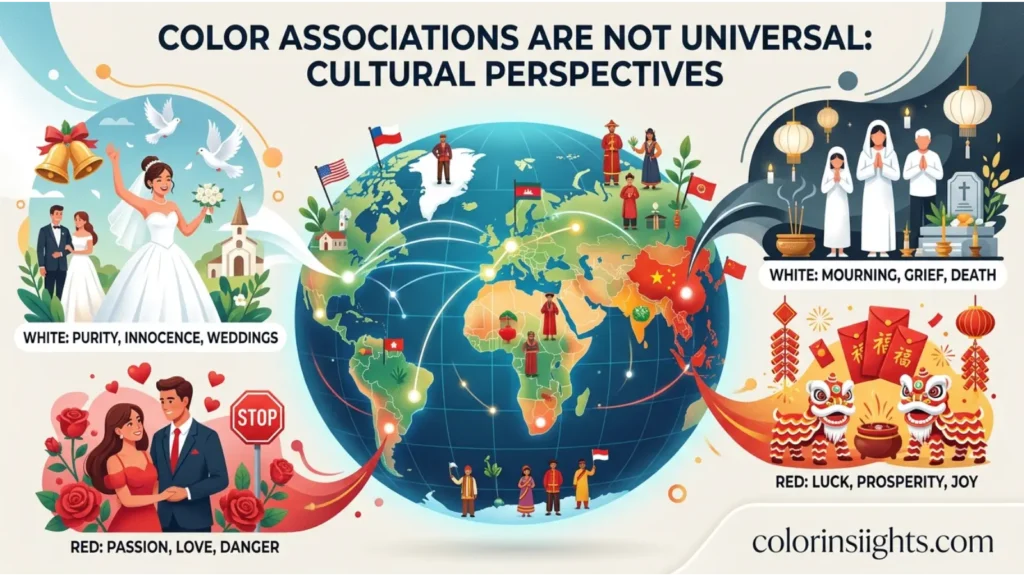
Color Associations Are Not Universal
Although Maneki Neko colors have established meanings in Japan, color symbolism varies across cultures, religions, and historical periods.
Western Cultures
In many Western countries, gold represents luxury and achievement, white symbolizes weddings and purity, black is often associated with elegance or mourning, while red communicates passion, excitement, or warning. These interpretations generally complement—but do not exactly match—traditional Maneki Neko symbolism.
Eastern Cultures
Across East Asia, colors often carry stronger traditional meanings. Red symbolizes happiness and celebration, gold represents prosperity, white may be associated with purity or mourning depending on the country, and black frequently symbolizes protection or authority. Japanese interpretations of Maneki Neko colors reflect these long-standing cultural traditions.
Religious Traditions
Buddhism and Shinto have influenced Japanese symbolism by emphasizing ideas such as purity, harmony, gratitude, protection, and balance. However, the Maneki Neko is primarily considered a cultural folk symbol rather than a religious object.
Historical Interpretations
Historically, certain pigments were expensive and reserved for wealthy families or religious artifacts. Gold naturally became associated with prosperity and status, while white represented cleanliness and ceremonial importance. These historical associations continue to influence modern interpretations.
Modern Global Interpretations
Today, Maneki Neko colors are appreciated worldwide. Many people choose a lucky cat simply because they enjoy its appearance, while others embrace its symbolism as a reminder of personal goals, optimism, and positive thinking. Modern interpretations are often more personal than traditional.
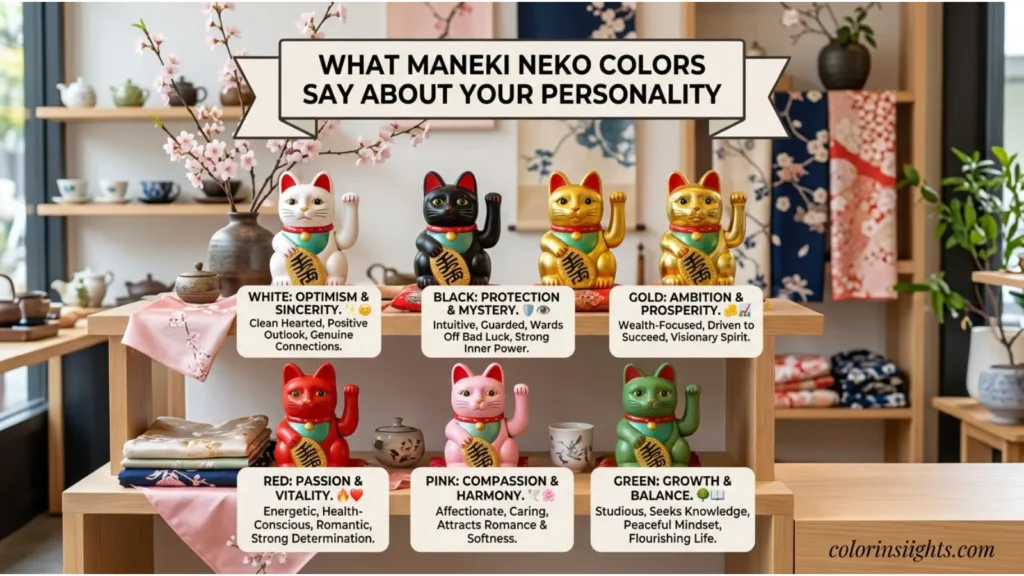
What Maneki Neko Colors Say About Your Personality
Some people believe that the Maneki Neko color they prefer reflects aspects of their personality or aspirations. While color psychology explores emotional preferences, there is no scientific evidence that favorite colors can accurately determine personality. Instead, these associations should be viewed as symbolic rather than factual.
White Lovers
Often value honesty, simplicity, organization, and peaceful environments. They usually appreciate fresh starts and balanced living.
Gold Lovers
May enjoy setting ambitious goals and pursuing financial security. They often value achievement, confidence, and long-term success.
Black Lovers
Frequently admire independence, resilience, and emotional strength. They may prefer privacy while remaining dependable.
Red Lovers
Often appear energetic, courageous, and enthusiastic. They typically enjoy challenges and active lifestyles.
Pink Lovers
Usually appreciate kindness, romance, compassion, and supportive relationships. They often prioritize emotional connection.
Green Lovers
Commonly value education, self-improvement, and steady personal growth. They tend to appreciate nature and lifelong learning.
Blue Lovers
Often prefer stability, responsibility, and careful planning. They usually enjoy structured environments and dependable relationships.
Remember that personality develops through genetics, life experiences, culture, education, and environment—not color preference alone.
FAQs
What are Maneki Neko color meanings?
Each Maneki Neko color symbolizes a different type of good fortune. Gold represents wealth, white symbolizes happiness, black offers protection, red promotes health, pink encourages love, green supports education, and blue represents career success.
What does a gold Maneki Neko symbolize?
A gold Maneki Neko symbolizes financial prosperity, business growth, abundance, and success.
What does a white Maneki Neko mean?
White represents purity, happiness, honesty, positive energy, and new beginnings.
Why is the black Maneki Neko considered lucky?
Traditional Japanese beliefs associate black Maneki Neko with protection from negative energy, misfortune, and harmful influences.
What does the red Maneki Neko represent?
Red symbolizes health, vitality, courage, and protection from illness.
Which Maneki Neko color is best for love?
Pink is widely associated with romance, affection, healthy relationships, and emotional harmony.
Which Maneki Neko color is best for students?
Green is commonly chosen because it symbolizes knowledge, academic achievement, wisdom, and continuous learning.
Does Maneki Neko color really affect luck?
There is no scientific evidence that color changes luck. The symbolism is based on Japanese cultural traditions and personal beliefs.
Where should I place a Maneki Neko?
Many people place it near entrances, cash registers, reception desks, or home offices where it symbolically welcomes opportunities and visitors.
Can I own more than one Maneki Neko?
Yes. Many people display multiple Maneki Neko figures with different colors to represent various hopes, such as prosperity, health, protection, and love.
Conclusion
Maneki Neko color meanings transform the traditional Lucky Cat into a personalized symbol of hope, prosperity, and positive intention. While every Maneki Neko represents good fortune, each color emphasizes a unique blessing—from financial success and protection to love, health, education, and career growth.
Although these meanings are rooted in Japanese folklore and cultural tradition rather than scientific evidence, they continue to inspire millions of people around the world. Whether displayed in a home, office, or business, choosing the right Maneki Neko color allows you to celebrate meaningful traditions while expressing your personal goals and aspirations.