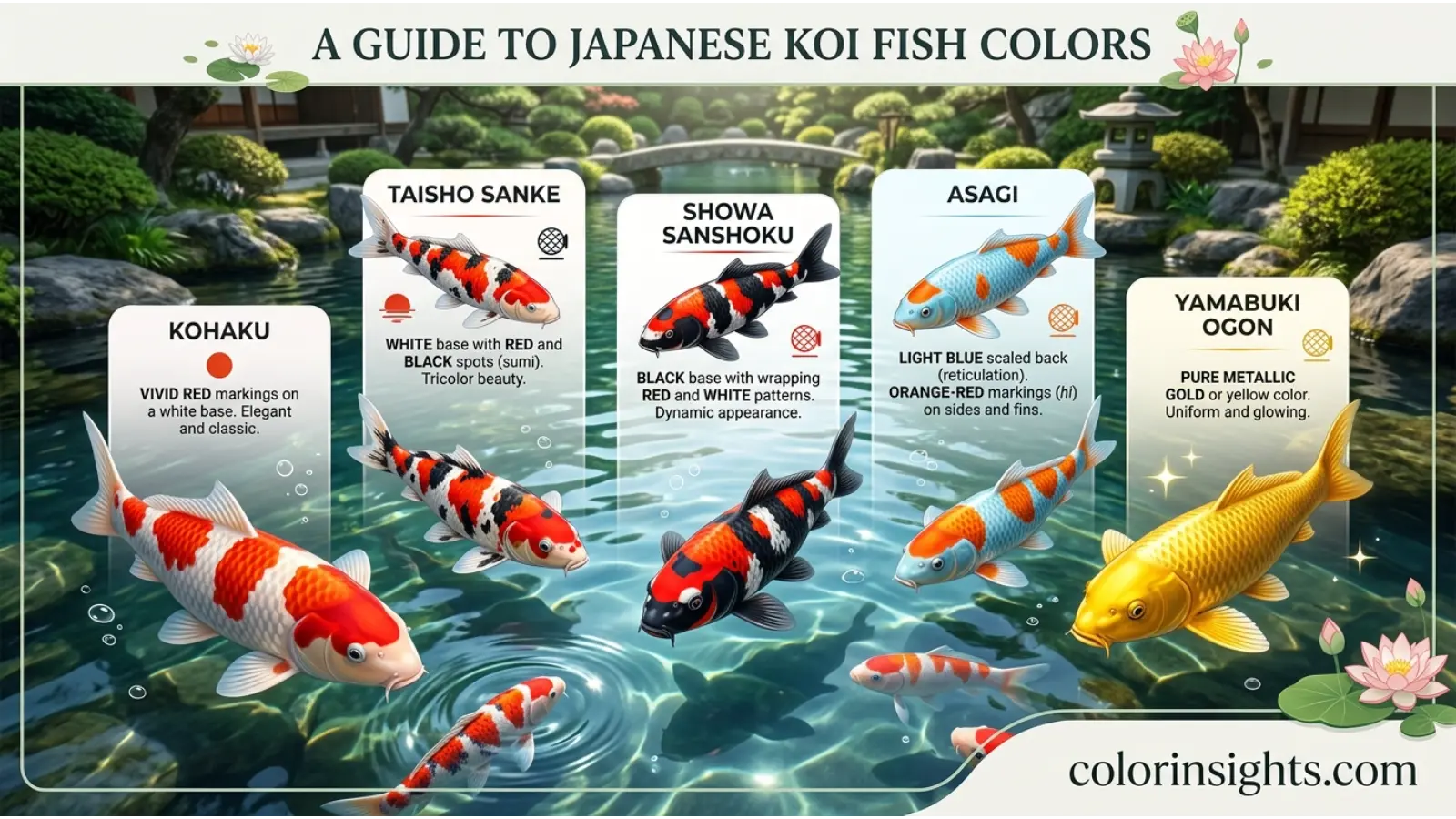
Japanese koi fish colors are among the most symbolic creatures in Japanese culture, admired for their beauty, resilience, and spiritual significance.
Each koi fish color carries a unique meaning, representing different qualities such as prosperity, love, courage, success, and personal transformation.
For centuries, koi have appeared in Japanese art, gardens, folklore, and Feng Shui practices as symbols of perseverance and good fortune.
Understanding Japanese koi fish color meanings helps people appreciate the deeper symbolism behind these ornamental-fish. Whether displayed in a pond, tattoo, painting, or decorative design, koi colors often communicate personal values and aspirations.
Quick Answer:
Japanese koi fish colors symbolize different life blessings and character traits. Black koi represent overcoming adversity, red koi symbolize love and passion, gold koi signify wealth and prosperity, white koi reflect purity and success, while blue koi are associated with peace and tranquility.
What Does the Color Japanese Koi Fish Symbolize?
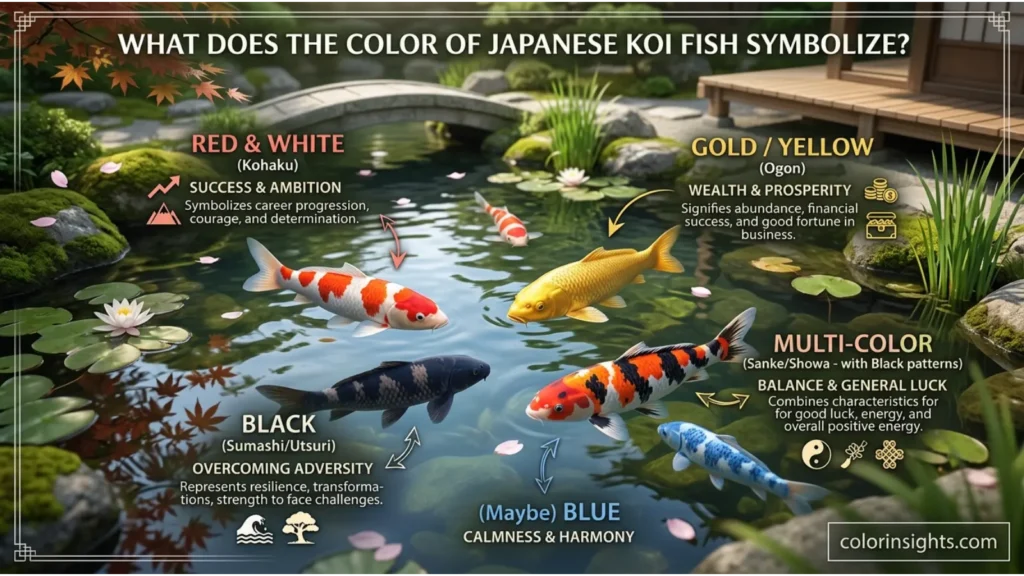
Japanese koi fish symbolism varies according to color, but collectively koi represent determination, perseverance, strength, and good fortune. Their cultural significance originates from the legendary tale of koi swimming upstream against strong currents and transforming into dragons after reaching the top of a waterfall.
Common color symbolism includes:
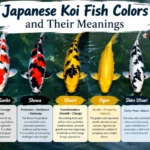
- Black Koi (Karasu Koi): Strength, resilience, overcoming challenges.
- Red Koi (Benigoi): Love, romance, courage, strong relationships.
- Gold Koi (Yamabuki Ogon): Wealth, prosperity, abundance.
- White Koi: Purity, success, achievement, spiritual growth.
- Blue Koi: Calmness, serenity, family harmony.
- Yellow Koi: Friendship, happiness, optimism.
- Silver Koi (Platinum Ogon): Career success and financial opportunities.
- Orange Koi: Ambition, enthusiasm, motivation.
The symbolism of koi colors often reflects personal goals, emotional values, and cultural beliefs.
Psychological Characteristics of the Color Japanese Koi Fish
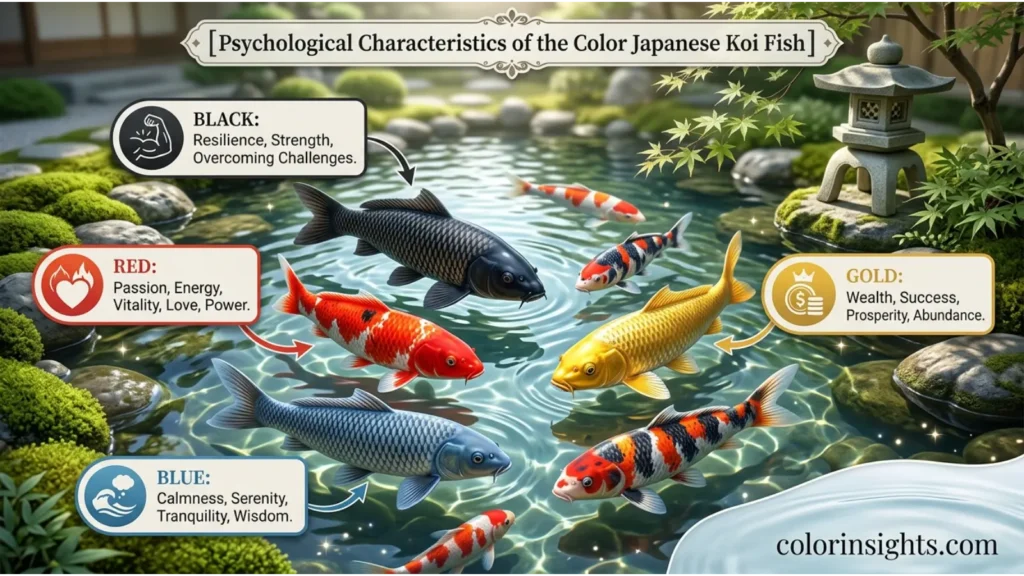
Color psychology interprets koi fish colors based on the emotional responses commonly associated with each shade.
Emotional Associations
- Black evokes determination and endurance.
- Red inspires passion and emotional intensity.
- Gold creates feelings of prosperity and achievement.
- White encourages clarity and optimism.
- Blue promotes relaxation and emotional balance.
- Yellow stimulates happiness and social connection.
Psychological Effects
- Encourages positive thinking.
- Reinforces perseverance during difficulties.
- Supports feelings of success and accomplishment.
- Enhances emotional motivation.
- Creates visual harmony and balance.
Positive Emotional Responses
- Confidence
- Hope
- Stability
- Joy
- Love
- Courage
- Ambition
Negative Emotional Responses
Depending on context, certain koi colors may evoke:
- Excessive competitiveness
- Materialism
- Emotional intensity
- Isolation
- Perfectionism
- Fear of failure
Impact on Mood and Behavior
People often associate koi imagery with persistence and self-improvement. Viewing colorful koi ponds may create feelings of calmness, inspiration, and emotional restoration.
Typical Reactions
Many individuals perceive koi fish colors as:
- Elegant
- Inspirational
- Peaceful
- Luxurious
- Spiritually uplifting
- Symbolically meaningful
Spiritual Meaning of the Color Japanese Koi Fish
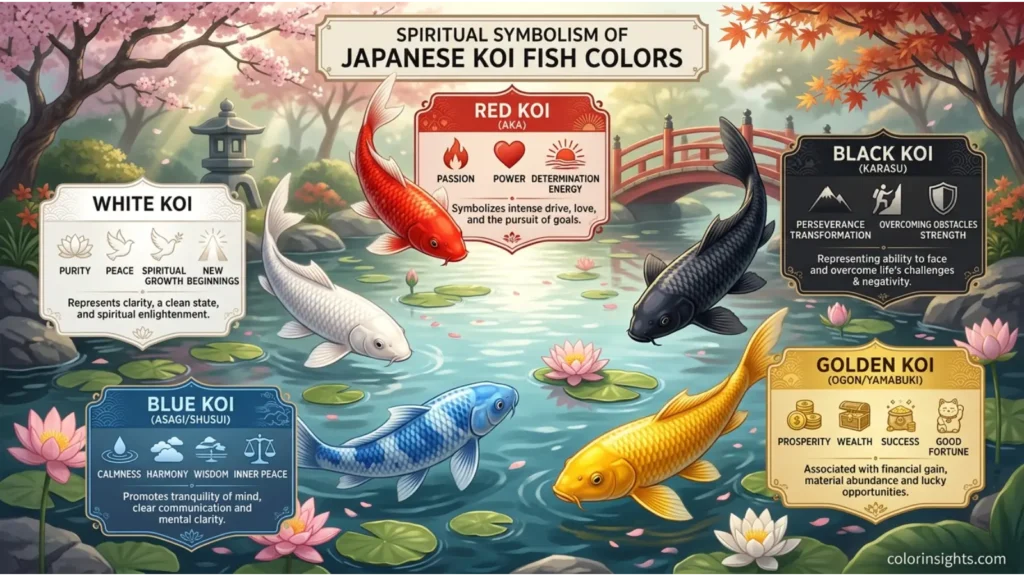
In spiritual traditions, koi fish represent transformation, growth, and life’s journey.
Spiritual Symbolism
- Holiness: White koi symbolize spiritual purity.
- Wisdom: Blue and silver koi are linked with insight and maturity.
- Purity: White koi often represent clean intentions.
- Transformation: Black koi symbolize personal growth through hardship.
- Healing: Blue koi encourage emotional healing and peace.
- Protection: Black koi are believed to absorb negative energy.
- Power: Gold koi symbolize authority and achievement.
- Enlightenment: White and silver koi are associated with spiritual awakening.
- New Beginnings: Orange koi signify fresh starts and optimism.
- Eternity: Koi fish themselves symbolize the continuous journey of life.
Many spiritual practices view koi as reminders that perseverance leads to personal evolution and success.
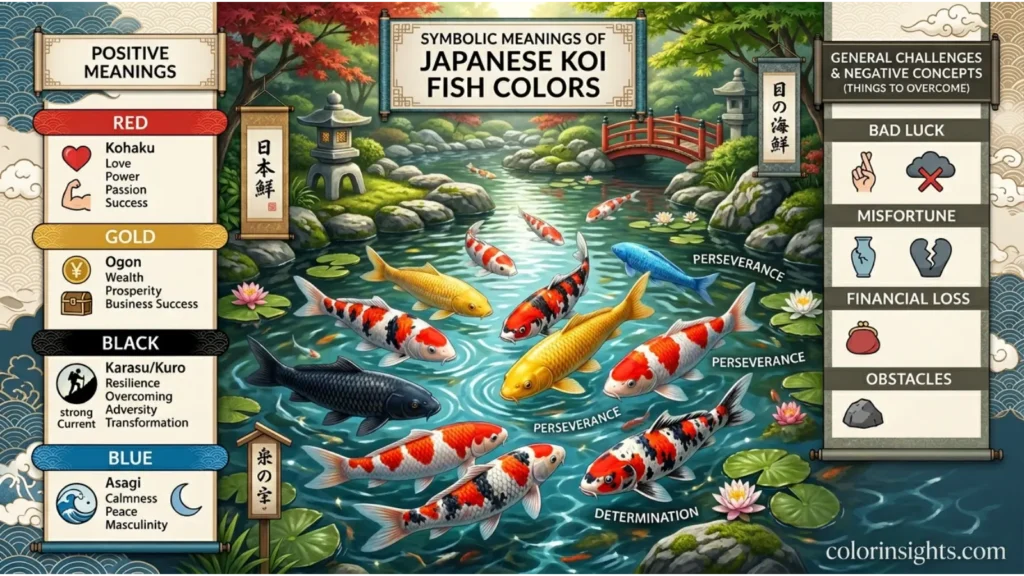
Positive and Negative Meanings of the Color Japanese Koi Fish
Positive Meanings
Japanese koi fish colors are commonly associated with:
- Prosperity: Gold koi symbolize wealth and abundance.
- Love: Red koi represent deep affection and commitment.
- Success: White and silver koi signify achievement.
- Hope: Orange koi inspire optimism.
- Harmony: Blue koi encourage emotional balance.
- Strength: Black koi symbolize resilience.
- Transformation: Koi reflect growth through adversity.
- Good Fortune: Many koi varieties are considered lucky symbols.
Real-world example:
Business owners often place gold koi imagery in offices to symbolize financial growth and prosperity.
Negative Meanings
Although largely positive, some interpretations can be less favorable.
- Materialism: Excessive focus on gold koi symbolism may suggest obsession with wealth.
- Emotional Intensity: Red koi can represent overwhelming passion.
- Isolation: White koi may symbolize emotional distance in certain contexts.
- Perfectionism: White and silver colors can suggest unrealistic standards.
- Control Issues: Strong black koi symbolism may sometimes reflect excessive self-reliance.
Real-world example:
A workplace focused solely on success symbolism may unintentionally create pressure and stress.
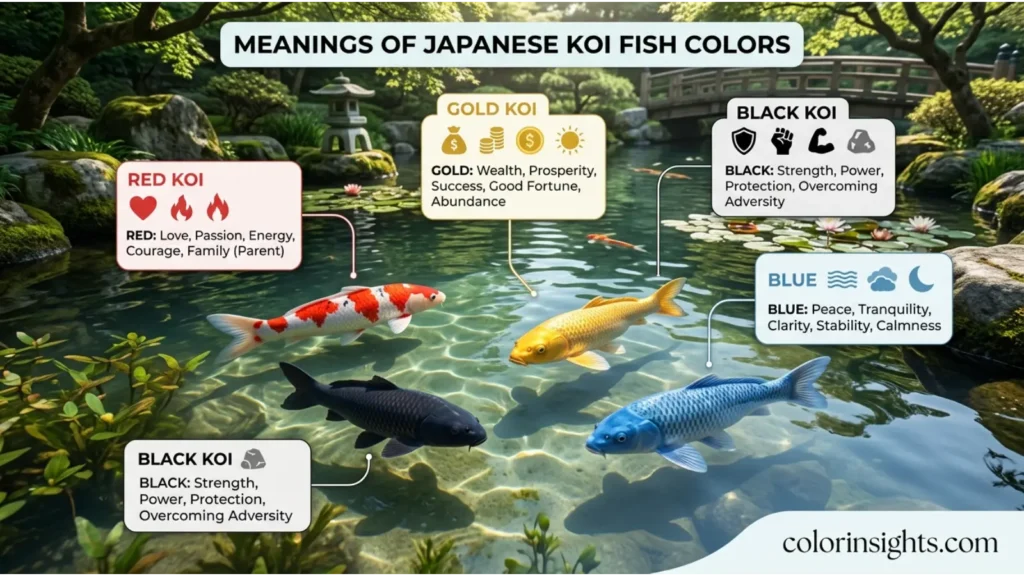
Meanings of the Color Japanese Koi Fish
The meaning of koi fish colors changes depending on cultural, spiritual, artistic, and practical contexts. In gardens they may symbolize harmony, while in tattoos they often represent personal victories and resilience.
Feng Shui
Japanese koi fish are highly respected in Feng Shui.
Associated Element
- Water element
Energy Symbolism
- Wealth attraction
- Positive energy flow
- Abundance
- Personal growth
Best Rooms
- Living room
- Home office
- Entryway
- Meditation room
Recommended Color Combinations
- Gold and black for prosperity and protection.
- Red and white for balance and happiness.
- Blue and silver for tranquility and success.
Home Decorating Tips
- Place koi artwork near water features.
- Use gold koi imagery in wealth corners.
- Combine koi themes with natural materials and calming colors.
Marketing
Businesses often use koi symbolism to communicate positive brand values.
Branding Psychology
- Success
- Growth
- Reliability
- Determination
Consumer Perception
Koi imagery often appears trustworthy, aspirational, and premium.
Trust Signals
- Tradition
- Excellence
- Longevity
- Quality craftsmanship
Product Packaging
Luxury products may use gold koi imagery to communicate prestige and abundance.
Advertising Applications
- Financial services
- Wellness brands
- Hospitality businesses
- Premium lifestyle products
Famous luxury and wellness brands frequently incorporate koi-inspired visual themes to suggest elegance and prosperity.
Design
Interior Design
Koi artwork creates peaceful and sophisticated spaces. Large koi murals often serve as focal points in modern homes and spas.
Graphic Design
Designers use koi illustrations to symbolize movement, ambition, and transformation.
Web Design
Koi imagery can enhance storytelling and reinforce themes of growth and achievement.
User Experience
Flowing koi-inspired designs encourage visual harmony and smooth navigation experiences.
Minimalist Aesthetics
Simple koi silhouettes work well in minimalist layouts while maintaining strong symbolic meaning.
Fashion
Clothing Symbolism
Koi patterns often represent:
- Good luck
- Success
- Strength
- Courage
Seasonal Use
- Spring: renewal and growth.
- Summer: vitality and abundance.
- Autumn: reflection and transformation.
Styling Effects
Koi-inspired clothing creates an artistic and culturally rich appearance.
Personality Impressions
People wearing koi designs may appear:
- Confident
- Creative
- Ambitious
- Spiritually aware
Advantages
- Timeless symbolism
- Strong visual appeal
- Cultural significance
Disadvantages
- Complex designs may overwhelm minimalist styles.
- Symbolism may be misunderstood outside Asian cultures.
Practical Example:
A gold koi embroidery on a jacket may communicate prosperity and confidence.
Color Associations Are Not Universal
Western Cultures
Gold koi are commonly associated with wealth, while red koi symbolize passion and romance.
Eastern Cultures
In Japan and other East Asian cultures, koi have deeper historical significance. They symbolize perseverance, honor, family prosperity, and personal achievement.
Religious Traditions
Buddhist and spiritual traditions sometimes interpret koi as symbols of enlightenment, transformation, and overcoming earthly obstacles.
Historical Interpretations
Historically, koi represented courage and perseverance because of legends describing their journey against powerful currents.
Modern Global Interpretations
Today, koi symbolism blends traditional meanings with modern themes of self-improvement, resilience, and personal growth. Their popularity in tattoos, art, and design has expanded worldwide.
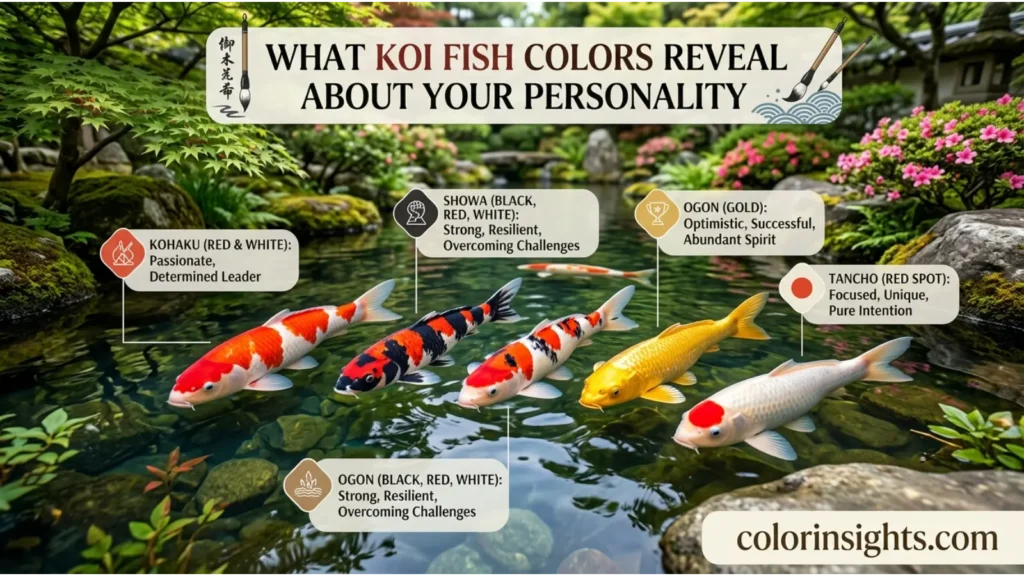
What Japanese Koi Fish Colors Say About Your Personality
People who are drawn to koi symbolism often identify with the qualities represented by their favorite koi colors.
Strengths
- Determined
- Ambitious
- Loyal
- Optimistic
- Resilient
- Goal-oriented
Weaknesses
- Perfectionism
- Stubbornness
- Competitiveness
- Overcommitment
Social Behavior
Koi enthusiasts often value meaningful relationships and long-term friendships.
Work Style
They may prefer:
- Clear goals
- Personal growth
- Achievement-oriented environments
- Continuous learning
Relationships
People attracted to red or pink koi symbolism often prioritize love and emotional connection, while those preferring blue koi may value harmony and stability.
Emotional Tendencies
Many appreciate emotional resilience and personal transformation, especially those who connect with black koi symbolism.
It is important to remember that color preferences alone do not determine personality. Individual experiences, culture, and personal beliefs play much larger roles.
FAQs:
What defines Japanese koi fish color meaning?
Japanese koi fish color meaning refers to the symbolic messages associated with different koi colors, including prosperity, love, courage, peace, and transformation.
What do Japanese koi fish colors symbolize?
They symbolize qualities such as perseverance, success, wealth, loyalty, emotional growth, and spiritual development.
Why are Japanese koi fish important?
Koi are important because they represent resilience, determination, and good fortune in Japanese culture.
Are koi fish colors considered warm or cool colors?
Some koi colors are warm, such as red, orange, and gold, while others like blue, white, and silver are considered cool.
What emotions do Japanese koi fish colors represent?
They commonly represent hope, courage, love, peace, confidence, optimism, and ambition.
What is the spiritual meaning of Japanese koi fish colors?
Spiritually, koi colors symbolize transformation, enlightenment, protection, healing, prosperity, and personal growth.
What colors pair well with koi fish themes?
Popular combinations include gold and black, red and white, blue and silver, and orange with gold accents.
What does liking koi symbolism say about a person?
It may suggest an appreciation for perseverance, achievement, resilience, and continuous self-improvement.
Which koi color symbolizes wealth?
Gold koi are the strongest symbol of wealth, prosperity, and abundance.
Which koi color represents love?
Red koi traditionally symbolize love, romance, and strong emotional relationships.
Which koi color symbolizes overcoming challenges?
Black koi are most commonly associated with overcoming adversity and personal transformation.
What does a white koi symbolize?
White koi symbolize purity, achievement, spiritual growth, and successful life goals.
Conclusion:
Japanese koi fish color meanings and symbolism offer a fascinating blend of cultural heritage, psychology, spirituality, and personal expression.
Each koi color carries distinct symbolism, from the prosperity of gold koi and the love represented by red koi to the resilience embodied by black koi and the tranquility associated with blue koi.
Whether used in Feng Shui, art, tattoos, fashion, marketing, or personal reflection, koi fish colors continue to inspire people around the world.
Their enduring message remains powerful: persistence, growth, and determination can transform life’s challenges into success and fulfillment.