Native American color meanings reflect the deep relationship between Indigenous peoples, nature, spirituality, and community. Rather than serving as simple decorative elements, colors communicate cultural values, sacred teachings, life cycles, and connections to the natural world.
Their meanings vary among Tribal Nations, including the Navajo, Cherokee, Lakota, Hopi, and Ojibwe, making it important to avoid treating Native American symbolism as universal. Today, these colors continue to influence traditional ceremonies, artwork, clothing, and storytelling while inspiring modern design and cultural appreciation.
Quick Answer:
Native American colors generally symbolize harmony, courage, healing, wisdom, protection, and the interconnectedness of people, nature, and the spiritual world, although meanings differ by tribe and tradition.
What Do Native American Colors Symbolize?
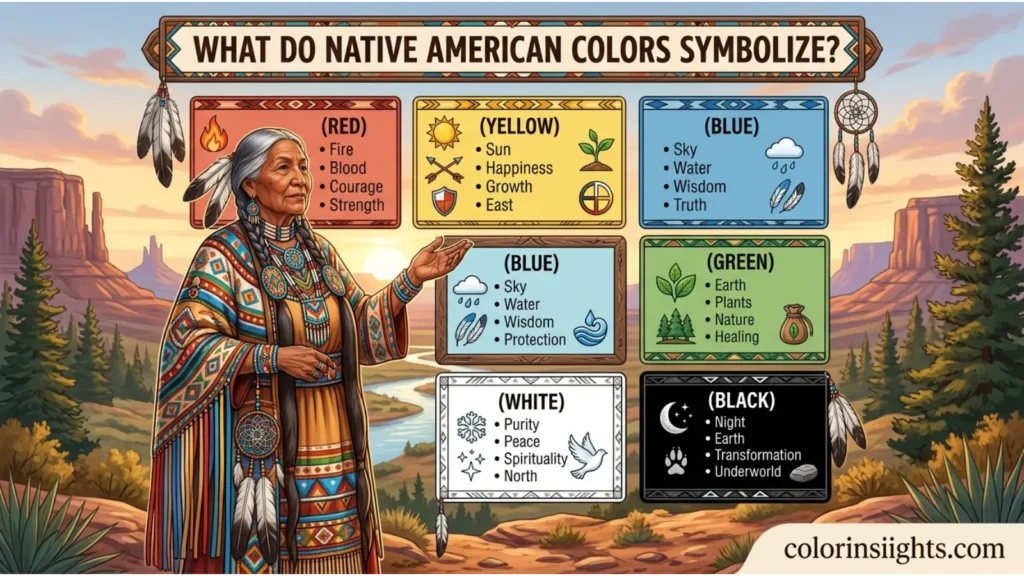
Native American colors carry symbolic meanings that reflect the natural environment, spiritual beliefs, and community traditions. They appear in beadwork, pottery, baskets, ceremonial clothing, paintings, and sacred rituals, where each color contributes to a larger story or teaching.
Although interpretations vary among tribes, several colors are widely associated with common themes:
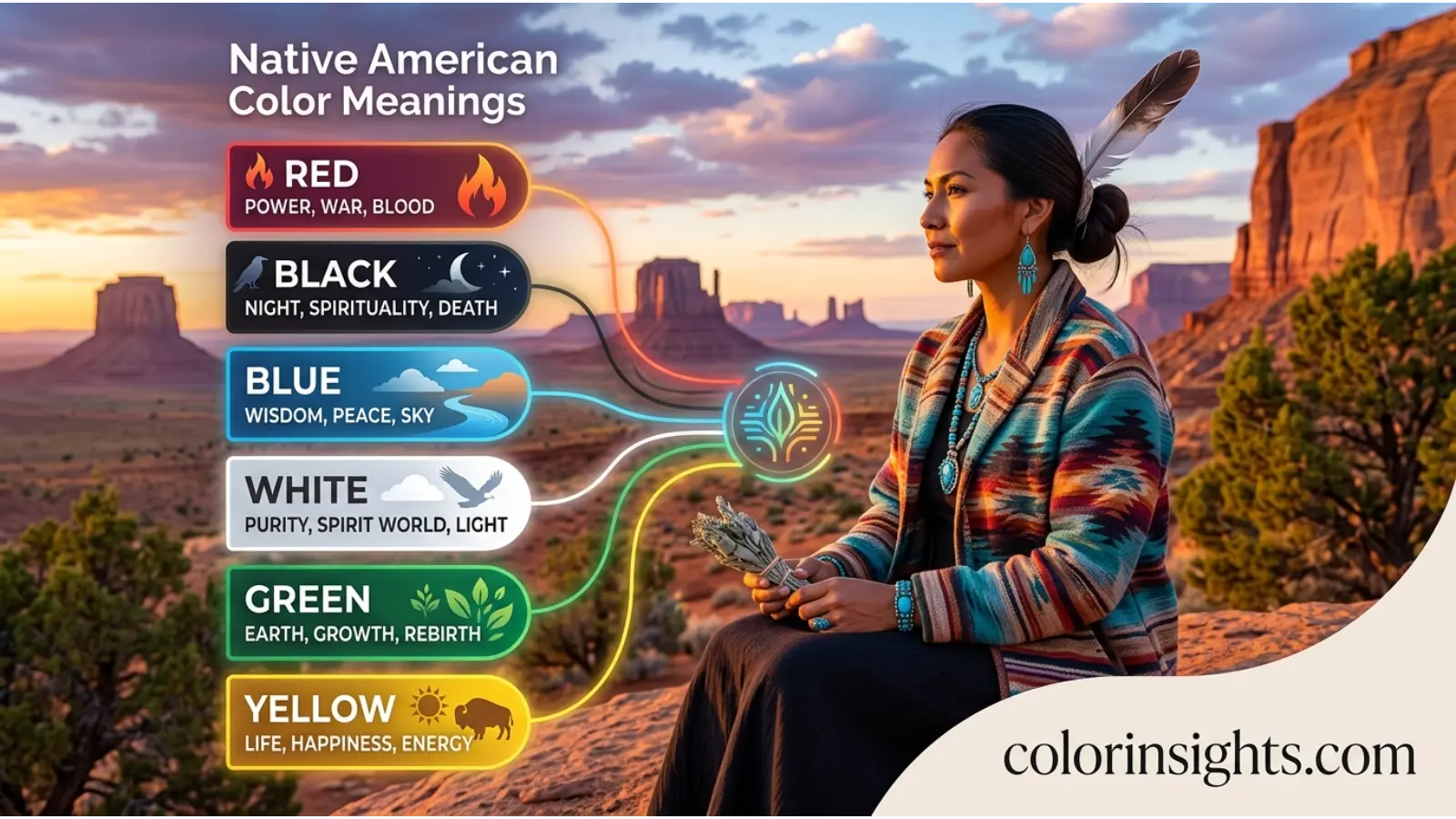
- Red: Courage, strength, life, and sacrifice.
- Black: Protection, resilience, mystery, and transformation.
- White: Peace, purity, spiritual guidance, and respect.
- Yellow: The sun, wisdom, hope, and abundance.
- Blue: Water, healing, reflection, and the sky.
- Green: Nature, growth, renewal, and fertility.
- Brown: Stability, the Earth, and a connection with animals and the land.
Many Native traditions also associate colors with the four directions, the seasons, and the stages of life. However, these associations are not identical across all Tribal Nations. Understanding Native American color symbolism means recognizing the diversity of Indigenous cultures rather than expecting one universal interpretation.
Psychological Characteristics of Native American Colors
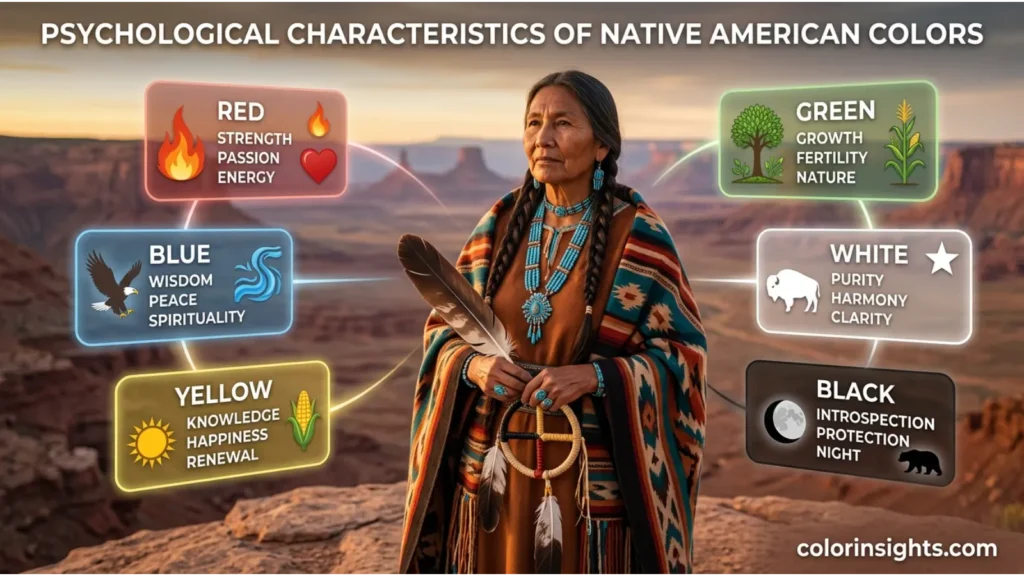
Modern color psychology explores how colors influence thoughts and emotions. Native American traditions view colors through a broader cultural and spiritual lens, connecting them with nature, balance, and community. While these approaches differ, they often share similar emotional associations.
Emotional Associations
Native American colors commonly evoke feelings such as:
- Courage and determination through red.
- Calmness and healing through blue.
- Growth and hope through green.
- Wisdom and optimism through yellow.
- Peace and clarity through white.
- Strength and resilience through black.
Psychological Effects
These colors often encourage people to:
- Feel connected to nature.
- Reflect on personal growth.
- Respect traditions and ancestors.
- Strengthen community relationships.
- Appreciate balance in everyday life.
Positive Emotional Responses
Many traditional color combinations inspire:
- Harmony
- Gratitude
- Confidence
- Inner peace
- Hope
- Belonging
Negative Emotional Responses
Depending on the context, some colors may also represent life’s challenges.
- Black may symbolize grief or difficult transitions.
- Red can represent conflict or sacrifice.
- White may signify mourning in certain tribal traditions.
- Dark earth tones can reflect hardship and endurance.
Rather than being purely negative, these meanings acknowledge that growth often comes through life’s challenges.

Spiritual Meaning of Native American Colors
Spiritual symbolism is central to Native American color traditions. Colors help express relationships between people, the Creator, the natural world, and future generations. They appear in ceremonies, dances, sacred artwork, prayer objects, and traditional teachings.
Although meanings vary among tribes, common spiritual themes include:
- Holiness: White represents sacred ceremonies and spiritual purity.
- Wisdom: Yellow symbolizes knowledge, learning, and enlightenment.
- Purity: White reflects honesty, peaceful intentions, and spiritual cleansing.
- Transformation: Red represents life’s continual cycle of growth, change, and renewal.
- Healing: Blue symbolizes healing waters and emotional restoration, while green reflects the healing power of plants and nature.
- Protection: Black often represents strength, endurance, and spiritual protection.
- Power: Red symbolizes bravery, leadership, and vitality.
- Enlightenment: Yellow and white are frequently associated with spiritual awareness and guidance.
- New Beginnings: Green represents spring, fresh opportunities, and renewal.
- Eternity: Circular color arrangements, such as those found in some Medicine Wheel teachings, symbolize the ongoing cycles of life, seasons, and nature.
These meanings should be understood as broad cultural themes rather than fixed definitions. Every Tribal Nation preserves its own traditions, making context essential when interpreting Native American color symbolism.
Positive and Negative Meanings of Native American Colors
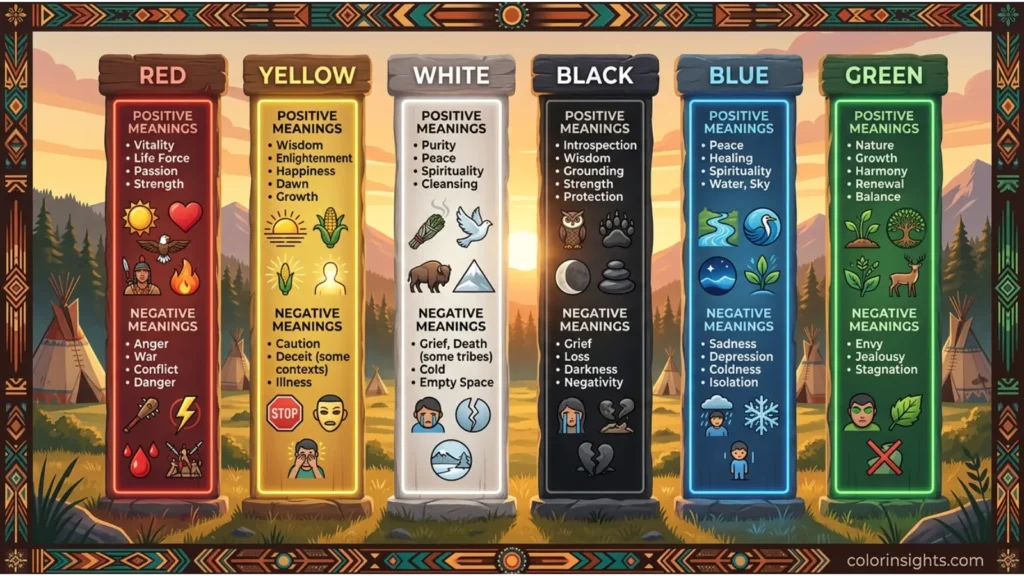
Native American colors can express both positive and challenging aspects of life. Their symbolism depends on the tribal tradition, ceremony, artwork, or historical setting. Instead of labeling colors as simply good or bad, many Indigenous teachings view them as part of life’s natural balance.
Positive Meanings
Purity
White often represents honesty, spiritual cleansing, and sacred intentions. It is commonly associated with peace and respect during ceremonies.
Peace
Blue and white frequently symbolize tranquility, unity, and harmony with nature. These colors appear in artwork and ceremonial objects that promote balance.
Simplicity
Brown and other earth tones reflect humility and a close relationship with the land. They encourage appreciation for nature rather than material wealth.
Clarity
Yellow represents sunlight, wisdom, and clear thinking. It reminds people to seek knowledge and make thoughtful decisions.
Freshness
Green symbolizes new life, healthy plants, and seasonal renewal. It reflects personal growth and the ongoing cycle of nature.
Hope
Bright colors, especially yellow and green, often represent optimism, resilience, and the promise of new beginnings after difficult times.
Balance
Many Native traditions emphasize harmony between the physical, emotional, mental, and spiritual aspects of life. Color combinations in sacred artwork often reinforce this belief.
Harmony
Colors used together in beadwork, weaving, pottery, and ceremonial clothing symbolize the interconnectedness of people, animals, the Earth, and the Creator.
Negative Meanings
Colors may also represent life’s hardships or important lessons.
Emptiness
Muted tones can symbolize loss or periods of reflection following significant change.
Example:
An artist may use subdued colors to depict winter or the passing of a respected community member.
Isolation
Dark shades may represent solitude, encouraging self-reflection and spiritual growth.
Coldness
White can symbolize snow, harsh weather, and the endurance required to survive difficult seasons.
Hardship
Dark brown or gray tones may represent perseverance through adversity rather than failure.
Emotional Distance
Black may express mourning, remembrance, or respect for those who have passed away.
These meanings remind us that challenges are part of life’s journey and often lead to wisdom and renewal.
Meanings of Native American Colors
The meaning of Native American colors changes depending on how and where they are used. A color in a healing ceremony may carry a different message than the same color in clothing, pottery, or modern artwork. Understanding the context is essential for interpreting Native American symbolism accurately.
Feng Shui
Feng Shui is a Chinese philosophy and is not part of Native American traditions. However, people sometimes combine natural color palettes from both approaches when decorating their homes.
- Associated element: Earth, Wood, and Water pair well with natural colors.
- Energy symbolism: Earthy shades promote grounding, stability, and renewal.
- Best rooms: Living rooms, home offices, meditation spaces, and reading areas.
- Recommended color combinations: Brown with green, blue with white, or terracotta with cream.
- Decorating tip: Use natural materials such as wood, stone, woven baskets, and clay pottery alongside earthy colors to create a warm, nature-inspired space.
Marketing
Many companies use earth-inspired colors because they communicate authenticity, trust, and environmental responsibility. However, brands should avoid using Native American cultural symbols or sacred imagery without permission or cultural understanding.
- Branding psychology: Earth tones suggest heritage, craftsmanship, and sustainability.
- Consumer perception: Natural colors make products appear honest, reliable, and eco-friendly.
- Trust signals: Green, brown, and blue often reinforce messages of quality and environmental care.
- Packaging: Organic foods, outdoor gear, and wellness products frequently use these color palettes.
- Advertising: Nature-inspired visuals combined with earthy colors create a welcoming and authentic brand image.
Examples:
Patagonia, Timberland, and Whole Foods Market use natural color palettes to emphasize sustainability and outdoor lifestyles rather than Native American symbolism.
Design
Natural color palettes inspired by Native American art continue to influence contemporary design while encouraging respect for Indigenous cultural traditions.
Interior Design
Earth tones, turquoise, terracotta, and sandstone create warm, inviting spaces that reflect nature.
Graphic Design
Natural colors communicate authenticity, craftsmanship, and timeless appeal, especially for environmental or heritage-focused projects.
Web Design and User Experience
Soft greens, browns, and neutral backgrounds improve readability and create a calm, trustworthy experience.
Minimalist Aesthetics
Combining natural textures with simple color palettes produces elegant, balanced designs suitable for homes, offices, and digital platforms.
Fashion
Earth-inspired colors remain popular because they are versatile and timeless. While these palettes may be influenced by nature, authentic Native American patterns and ceremonial designs should always be respected and not copied without permission.
- Clothing symbolism: Browns, greens, and rust tones reflect resilience and a connection to the Earth.
- Seasonal use: These colors are especially popular in autumn but can be worn throughout the year.
- Styling effects: Earth tones create warm, sophisticated, and relaxed outfits.
- Personality impressions: They often suggest confidence, authenticity, and appreciation for nature.
- Advantages: Easy to coordinate and suitable for both casual and professional settings.
- Disadvantages: Wearing only dark earth tones without lighter accents may make an outfit appear heavy.
Practical example:
Pair a tan jacket with dark denim, a forest green shirt, and turquoise jewelry for a balanced, nature-inspired look that appreciates earthy aesthetics without imitating sacred cultural regalia.
Color Associations Are Not Universal
Native American color meanings cannot be reduced to a single set of definitions. More than 570 federally recognized Tribal Nations in the United States, along with many Indigenous communities across North America, have their own histories, languages, ceremonies, and cultural traditions. As a result, color symbolism varies significantly.
Western cultures
In many Western societies, white symbolizes purity and weddings, while black is associated with mourning. Native American traditions may assign different meanings based on tribal teachings, ceremonies, or historical context.
Eastern cultures
Several Eastern traditions connect red with prosperity and celebration, while white often represents mourning. These meanings developed independently and should not be confused with Native American beliefs.
Religious traditions
Christianity, Buddhism, Hinduism, and Native American spiritual traditions each use colors differently. Indigenous beliefs typically emphasize harmony with nature, the four directions, seasonal cycles, and the interconnectedness of all living things.
Historical interpretations
For centuries, Native American communities created pigments from minerals, plants, charcoal, and clay. These natural colors decorated pottery, beadwork, baskets, clothing, and ceremonial objects while preserving stories and cultural identity.
Modern global interpretations
Today, Native American-inspired earth tones influence interior design, fashion, and artwork worldwide. Appreciating these colors also means respecting their cultural origins and recognizing the unique traditions of each Tribal Nation.
What Native American Colors Say About Your Personality
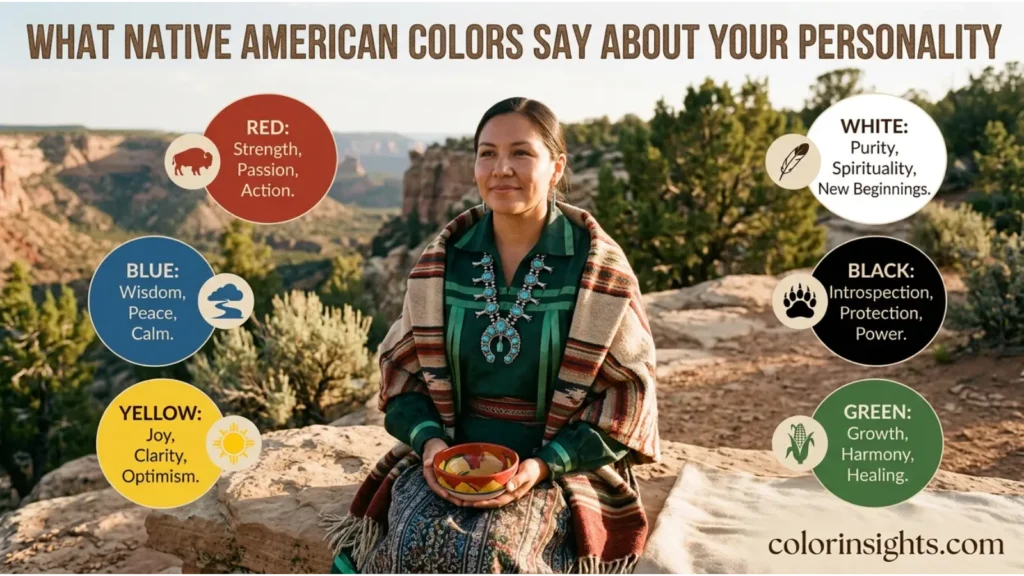
Although color psychology explores how color preferences may relate to personality, no scientific evidence proves that favorite colors determine character. Personal values, life experiences, culture, and environment all shape individual personalities.
People who are drawn to Native American-inspired earth tones often appreciate nature, authenticity, and balance.
Strengths
- Honest and dependable
- Patient and resilient
- Respectful of traditions and cultural diversity
- Environmentally conscious
- Calm and thoughtful decision-makers
Weaknesses
- May resist sudden change
- Can be overly cautious
- Sometimes prefers solitude over large social settings
- May become attached to familiar routines
Social Behavior
People who enjoy earthy color palettes often value meaningful conversations, close relationships, and a strong sense of community. They usually prioritize trust and loyalty over popularity.
Work Style
They often succeed in careers that require creativity, responsibility, or environmental awareness, such as education, conservation, healthcare, design, architecture, or the arts.
Relationships
They generally seek long-term relationships built on honesty, mutual respect, and emotional stability. Reliability is often more important than excitement.
Emotional Tendencies
Many enjoy peaceful environments and outdoor activities that help them relax and maintain emotional balance.
Remember:
A preference for Native American-inspired colors does not define your personality. It simply reflects one aspect of your aesthetic preferences and personal experiences.
FAQs
1. What are Native American color meanings?
Native American color meanings are symbolic interpretations of colors used in Indigenous traditions, ceremonies, artwork, and storytelling. Their meanings differ among Tribal Nations.
2. What do Native American colors symbolize?
They commonly symbolize courage, wisdom, healing, protection, balance, nature, and spiritual connection, although interpretations vary by tribe.
3. Why are Native American colors important?
They preserve cultural identity, communicate traditional knowledge, honor ancestors, and strengthen spiritual and community connections.
4. Are Native American colors warm or cool?
Native American symbolism includes both warm and cool colors. Each color carries its own cultural meaning rather than fitting into a single emotional category.
5. What is the spiritual meaning of Native American colors?
Spiritually, colors often represent the four directions, natural elements, life cycles, healing, protection, and humanity’s relationship with the Creator and the Earth.
6. What colors pair well with Native American-inspired palettes?
Earthy shades such as brown, terracotta, forest green, turquoise, cream, sandstone, and muted gold create balanced, nature-inspired color combinations.
7. What does liking Native American-inspired colors say about a person?
People who prefer these colors may appreciate nature, authenticity, simplicity, and cultural heritage. However, color preferences do not determine personality.
8. Are Native American color meanings the same across all tribes?
No. Every Tribal Nation has its own customs, beliefs, and symbolic traditions, so color meanings should always be understood within their specific cultural context.
Conclusion
Native American color meanings represent a rich blend of spirituality, cultural identity, and respect for the natural world. From traditional ceremonies and artwork to storytelling and craftsmanship, colors help communicate values that have been passed down through generations.
While certain themes—such as courage, healing, wisdom, and harmony—appear across many traditions, no single interpretation applies to every Tribal-Nation.
Learning about Native American color symbolism with respect and cultural awareness allows us to appreciate Indigenous traditions while recognizing the diversity that makes each community unique.
Whether explored through history, art, design, or personal interest, these colors continue to offer meaningful insights into the enduring relationship between people, nature, and spirituality.