Roses Color communicate emotions through their colors, making each bloom a meaningful symbol in relationships, celebrations, and cultural traditions. From passionate red roses to peaceful white blooms and cheerful yellow varieties, every rose color carries its own message.
Psychologists often associate these colors with emotional responses, while spiritual traditions and cultural customs give them additional symbolic value. Understanding rose color meanings helps you choose the right flowers for gifts, events, home décor, or personal expression.
Whether you want to express love, gratitude, friendship, or remembrance, the right rose color makes your message more meaningful.
Quick Answer:
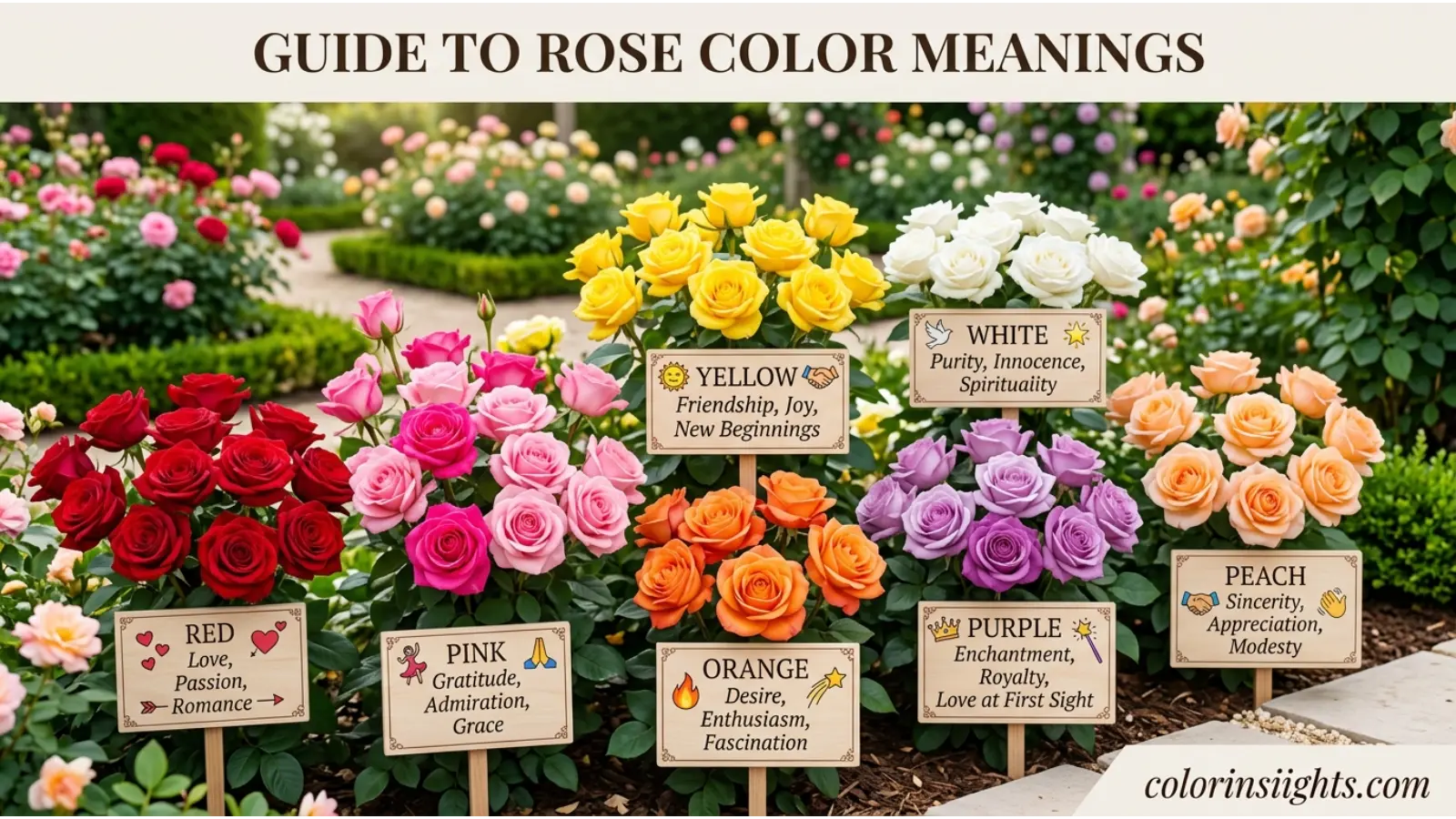
Rose colors symbolize different emotions and intentions—red represents love, white symbolizes purity, yellow expresses friendship, pink reflects admiration, orange conveys enthusiasm, purple suggests enchantment, and black often represents farewell or transformation.
Rose Color Meanings List
| Rose Color | Primary Meaning | Common Occasions |
|---|---|---|
| Red | Love, passion, romance | Valentine’s Day, anniversaries |
| White | Purity, innocence, sympathy | Weddings, memorials |
| Pink | Gratitude, admiration, joy | Birthdays, Mother’s Day |
| Yellow | Friendship, happiness | Congratulations, friendship gifts |
| Orange | Enthusiasm, desire, excitement | Celebrations, achievements |
| Purple (Lavender) | Enchantment, royalty, mystery | Romantic gestures, luxury events |
| Peach | Appreciation, sincerity | Thank-you gifts |
| Coral | Energy, optimism, desire | Celebrations |
| Blue (Dyed) | Mystery, uniqueness, imagination | Decorative arrangements |
| Green | Renewal, growth, prosperity | New beginnings |
| Black (Dyed) | Farewell, transformation, strength | Memorial symbolism, artistic displays |
| Burgundy | Deep affection, commitment | Romantic milestones |
| Cream | Elegance, thoughtfulness | Formal occasions |
What Does the Color Rose Symbolize?
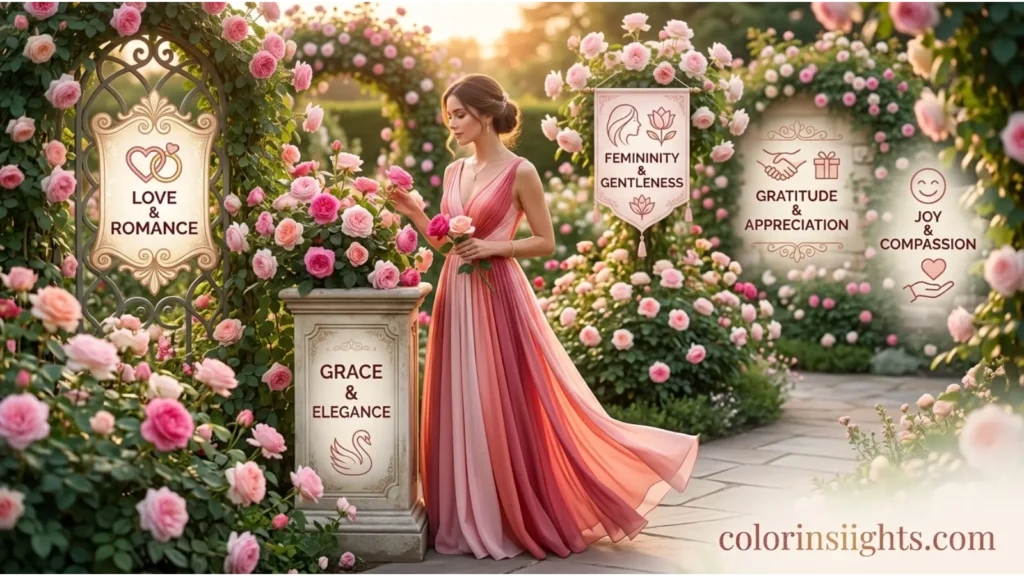
Rose colors symbolize emotions more than the flower itself. While roses generally represent affection and beauty, each color changes the message significantly.
For example:
- Red symbolizes romantic love, courage, and devotion.
- White represents innocence, purity, peace, and remembrance.
- Pink expresses admiration, appreciation, and gentle affection.
- Yellow signifies friendship, happiness, optimism, and support.
- Orange reflects enthusiasm, confidence, and excitement.
- Purple symbolizes admiration, mystery, luxury, and love at first sight.
- Peach conveys sincerity and gratitude.
- Green represents renewal, abundance, and harmony.
- Black often symbolizes endings, resilience, mystery, or transformation rather than literal death.
The symbolism also changes depending on cultural traditions, historical customs, and personal experiences.
Psychological Characteristics of Rose Colors
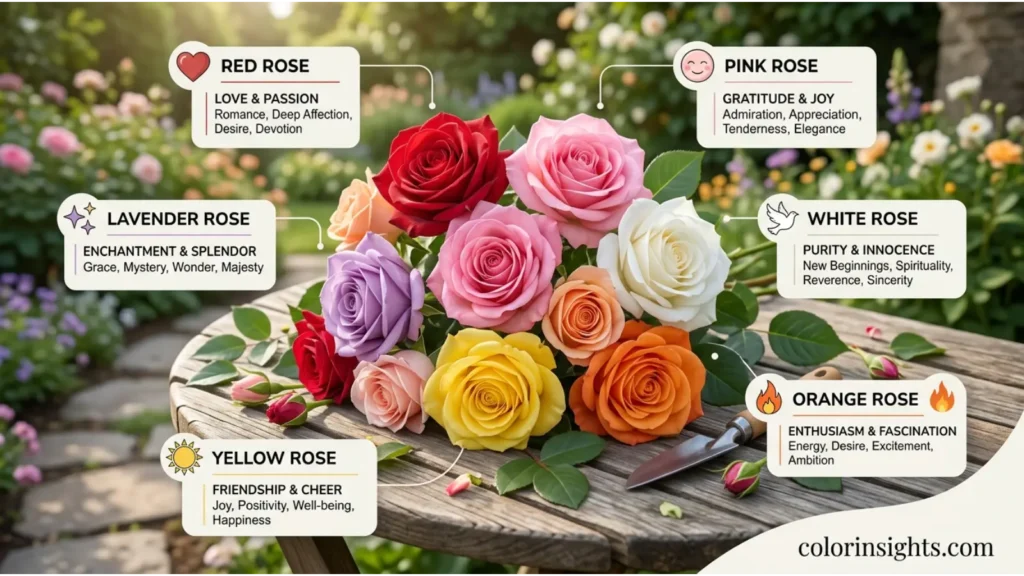
Color psychology suggests that different rose colors influence emotions in unique ways.
Emotional Associations
- Red encourages passion and emotional intensity.
- Pink promotes warmth and kindness.
- White creates feelings of calmness.
- Yellow increases optimism.
- Orange stimulates enthusiasm.
- Purple inspires creativity and imagination.
Psychological Effects
- Warm-colored roses attract attention and create excitement.
- Cool or neutral shades encourage relaxation.
- Bright arrangements improve perceived positivity.
- Soft pastel roses reduce visual stress.
Positive Emotional Responses
- Love
- Joy
- Appreciation
- Trust
- Hope
- Comfort
- Gratitude
- Confidence
Negative Emotional Responses
Certain contexts may create different interpretations.
- Black roses may evoke sadness.
- Yellow roses once represented jealousy in some cultures.
- White roses may remind people of funerals.
- Dark red roses can symbolize grief or sacrifice.
Impact on Mood and Behavior
People often respond to rose colors emotionally rather than logically.
- Red increases emotional engagement.
- Pink softens conversations.
- Yellow encourages sociability.
- White creates peaceful environments.
- Purple promotes reflection and creativity.
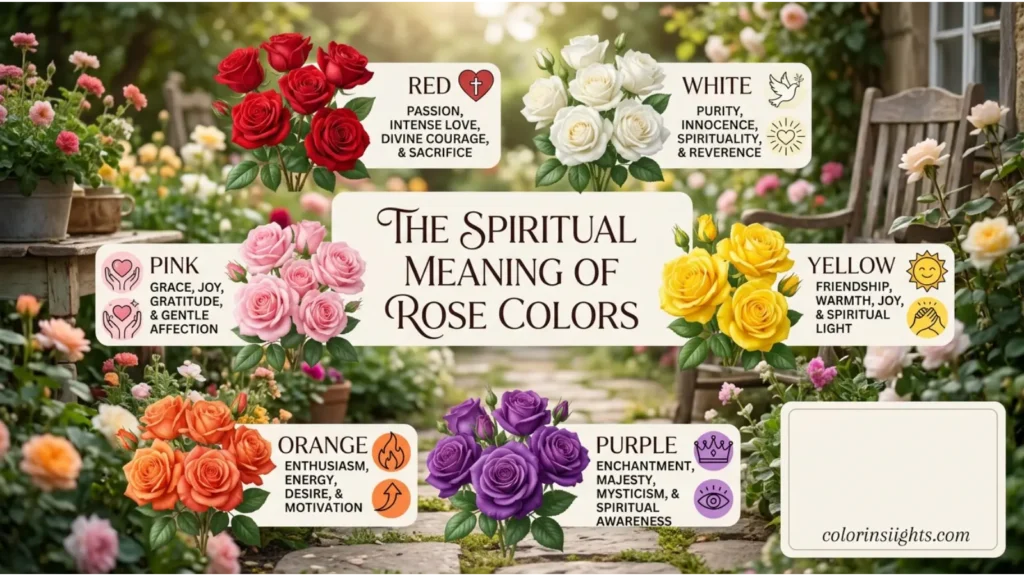
Spiritual Meaning of Rose Colors
Across many traditions, rose colors symbolize spiritual ideas rather than literal beliefs.
- Holiness: White roses often represent purity and sacred devotion.
- Wisdom: Purple roses symbolize higher understanding and dignity.
- Purity: White remains the universal symbol of innocence.
- Transformation: Black and deep burgundy roses can symbolize endings leading to renewal.
- Healing: Pink roses often represent compassion and emotional healing.
- Protection: Red roses have historically symbolized courage and protective love.
- Power: Red and purple communicate strength and leadership.
- Enlightenment: White roses represent spiritual awakening and inner peace.
- New Beginnings: Green roses symbolize fresh starts and growth.
- Eternity: White and red roses are frequently used in memorial traditions to express everlasting love.
Although meanings vary by faith and culture, these symbolic interpretations remain widely recognized.
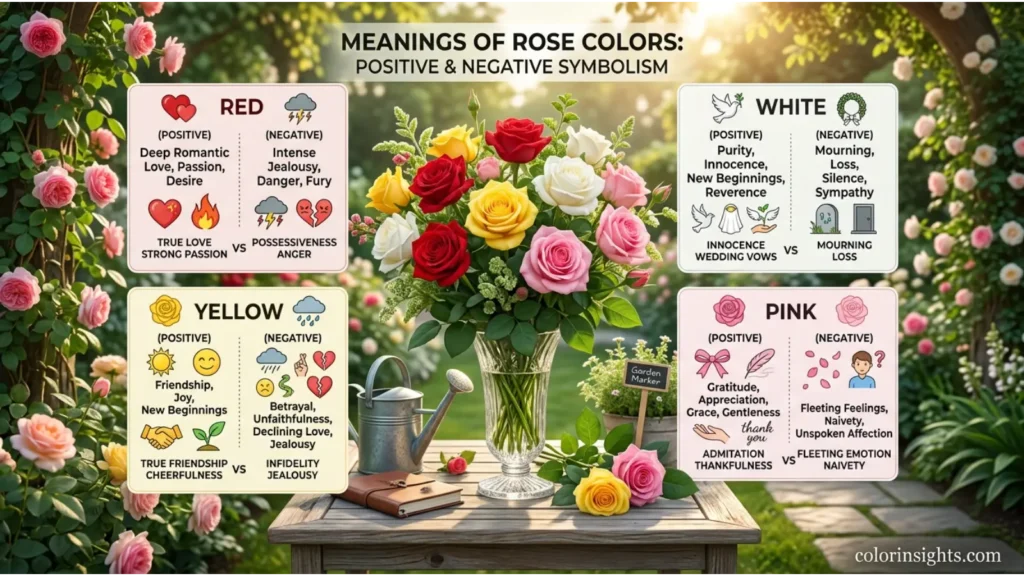
Positive and Negative Meanings of Rose Colors
Positive Meanings
Love
Red roses remain the international symbol of romance and lifelong commitment.
Peace
White roses create peaceful environments at weddings and remembrance ceremonies.
Simplicity
Cream and white roses complement minimalist designs without overwhelming a space.
Clarity
Soft white arrangements promote feelings of order and freshness in interiors.
Freshness
Green and peach roses represent renewal during spring celebrations.
Hope
Yellow roses brighten hospital rooms and congratulatory bouquets.
Balance
Pink roses combine warmth with elegance, making them suitable for both formal and casual occasions.
Harmony
Mixed rose bouquets symbolize unity among family members, friends, or coworkers.
Negative Meanings
Emptiness
Sparse white floral arrangements may appear emotionally distant in some settings.
Isolation
Black roses sometimes symbolize loneliness or emotional separation in literature.
Coldness
An all-white bouquet may feel formal rather than affectionate.
Sterility
Pure white floral themes in modern interiors can seem clinical if overused.
Boredom
Using only neutral-colored roses repeatedly may reduce visual interest.
Emotional Distance
Very formal floral arrangements sometimes communicate obligation rather than genuine affection.
Perfectionism
Highly symmetrical luxury rose displays may project unrealistic expectations or excessive formality.
Meanings of Rose Colors
Rose color meanings depend on personal experiences, cultural traditions, design trends, and the occasion. A white rose at a wedding symbolizes purity, while the same flower at a memorial represents remembrance. Likewise, yellow roses can express friendship in modern Western cultures but once carried more complex meanings in historical symbolism.
Feng Shui
In Feng Shui, fresh flowers symbolize positive life energy (Qi), and their colors influence different intentions.
- Associated element: Depends on the color. Red relates to Fire, white to Metal, green to Wood, and yellow to Earth.
- Energy symbolism: Rose colors can attract love, harmony, prosperity, or emotional balance.
- Best rooms: Living rooms, bedrooms, entryways, and dining areas.
- Recommended color combinations: Pink with white for harmony, red with gold for prosperity, and yellow with green for growth.
- Home decorating tips: Use fresh roses in clean vases, avoid wilted flowers, and match colors to the room’s purpose.
Marketing
Brands use floral colors because they create immediate emotional associations.
- Branding psychology: Pink suggests care, red creates excitement, and white communicates simplicity.
- Consumer perception: Floral colors influence perceptions of quality and emotion.
- Trust signals: Soft colors appear approachable and comforting.
- Product packaging: Rose-inspired palettes are common in cosmetics, skincare, chocolates, and fragrances.
- Advertising applications: Rose colors often reinforce emotional storytelling and seasonal campaigns.
Famous brands such as Victoria’s Secret, Barbie, L’Oréal Paris, Hallmark, and Fenty Beauty frequently incorporate pink, red, white, or rose-inspired color palettes in selected products or campaigns.
Design
Interior designers use rose colors to influence atmosphere.
- Soft pink creates relaxing bedrooms.
- White brightens minimalist interiors.
- Burgundy adds luxury.
- Peach introduces warmth without overpowering a room.
In graphic and web design, rose-inspired colors improve visual hierarchy, create emotional branding, and soften user interfaces. Designers often combine rose shades with beige, cream, gray, or gold for elegant aesthetics.
Fashion
Rose colors influence first impressions and personal style.
- Clothing symbolism: Red suggests confidence, pink communicates kindness, and white reflects elegance.
- Seasonal use: Pastels suit spring, vibrant shades fit summer, and burgundy complements autumn and winter.
- Styling effects: Rose tones flatter many skin tones and pair well with neutral accessories.
- Personality impressions: Wearers may appear romantic, approachable, creative, or sophisticated.
- Advantages: Versatile, timeless, and emotionally expressive.
- Disadvantages: Certain shades may appear overly formal or highly romantic in professional settings.
Color Associations Are Not Universal
Western Cultures
In North America and much of Europe, red roses symbolize romance, white roses represent weddings and sympathy, while yellow roses express friendship.
Eastern Cultures
Many Asian cultures associate red with prosperity and celebration. White flowers may symbolize mourning in several regions, making gifting customs different from Western traditions.
Religious Traditions
Christian traditions often associate white roses with purity and the Virgin Mary. Red roses may symbolize sacrifice and divine love. Other religious traditions interpret flower colors according to local customs rather than universal meanings.
Historical Interpretations
During the Victorian era, people used flower colors to send secret messages through floriography. Every rose color communicated a specific emotion without spoken words.
Modern Global Interpretations
Today, globalization has blended many traditional meanings. Social media, international marketing, and modern floral trends encourage broader interpretations while respecting local customs.
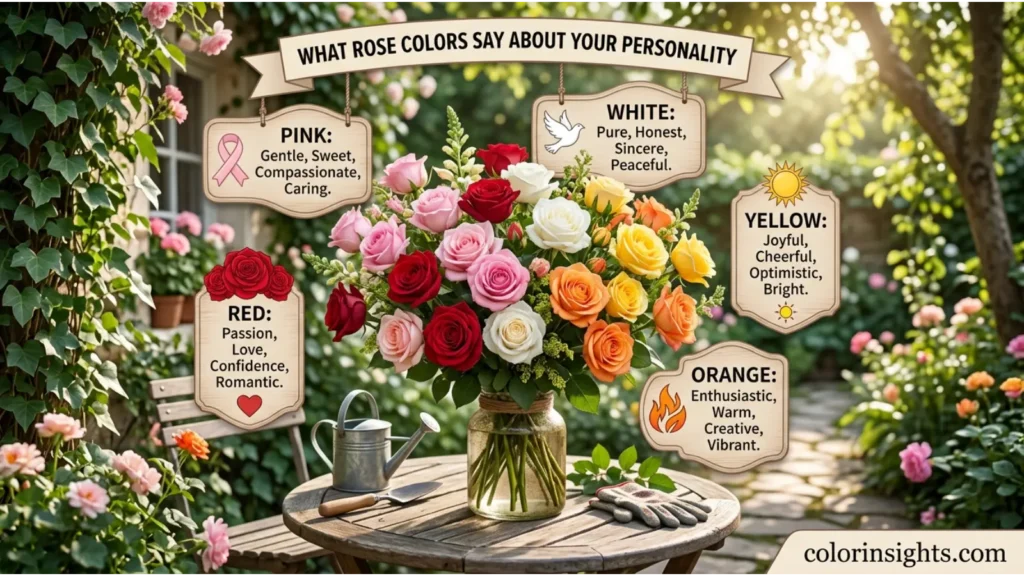
What Rose Colors Say About Your Personality
People sometimes associate favorite rose colors with personality preferences, although research does not prove that color choices determine personality.
Someone who prefers:
- Red may enjoy passion, confidence, and leadership.
- Pink may value compassion, kindness, and emotional warmth.
- White may appreciate simplicity, honesty, and organization.
- Yellow may enjoy optimism, humor, and social interaction.
- Orange may seek adventure and creativity.
- Purple may appreciate imagination, individuality, and elegance.
- Green may prioritize balance, growth, and nature.
Strengths
- Compassionate
- Loyal
- Creative
- Optimistic
- Supportive
- Emotionally expressive
Weaknesses
- Sensitive
- Idealistic
- Perfectionistic
- Emotionally intense
- Occasionally reserved
Social Behavior
Rose color enthusiasts often appreciate meaningful relationships and thoughtful communication.
Work Style
Many enjoy collaborative, creative, or people-centered environments.
Relationships
They frequently value trust, loyalty, appreciation, and emotional connection.
Emotional Tendencies
Preferences often reflect current moods, life experiences, and cultural influences rather than fixed personality traits.
Frequently Asked Questions
What defines rose color meanings?
Rose color meanings refer to the symbolic messages associated with different rose colors, such as love, friendship, purity, gratitude, or remembrance.
What do rose colors symbolize?
Rose colors symbolize various emotions, intentions, celebrations, and spiritual concepts depending on their shade and cultural context.
Why are rose colors important?
They help communicate feelings without words and make gifts more meaningful.
Are rose colors warm or cool?
Some are warm, such as red, orange, and yellow, while others like white, lavender, and green create cooler or more calming impressions.
What emotions do rose colors represent?
They commonly represent love, hope, friendship, admiration, gratitude, peace, excitement, compassion, and renewal.
What do rose colors mean spiritually?
Spiritually, rose colors can symbolize purity, healing, transformation, enlightenment, protection, wisdom, and eternal love.
What colors pair well with rose colors?
White, cream, gold, silver, sage green, navy, charcoal gray, blush, and soft beige complement most rose-inspired palettes.
What does liking rose colors say about a person?
It may suggest preferences for beauty, emotional connection, creativity, kindness, or optimism, although color preferences cannot reliably predict personality.
Which rose color represents friendship?
Yellow roses are the traditional symbol of friendship, happiness, and encouragement.
Which rose color symbolizes eternal love?
Red and white roses together often symbolize enduring love, unity, and lifelong commitment.
Conclusion
Rose colors carry rich symbolic meanings that extend beyond simple aesthetics. Each shade expresses unique emotions, from the deep passion of red to the peaceful purity of white and the cheerful optimism of yellow.
Their meanings also vary across psychology, spirituality, design, fashion, marketing, and cultural traditions. While these associations provide helpful guidance when choosing flowers, personal experiences and cultural backgrounds can shape interpretation.
Understanding the symbolism behind rose colors allows you to communicate emotions more thoughtfully and select the perfect rose for every occasion.