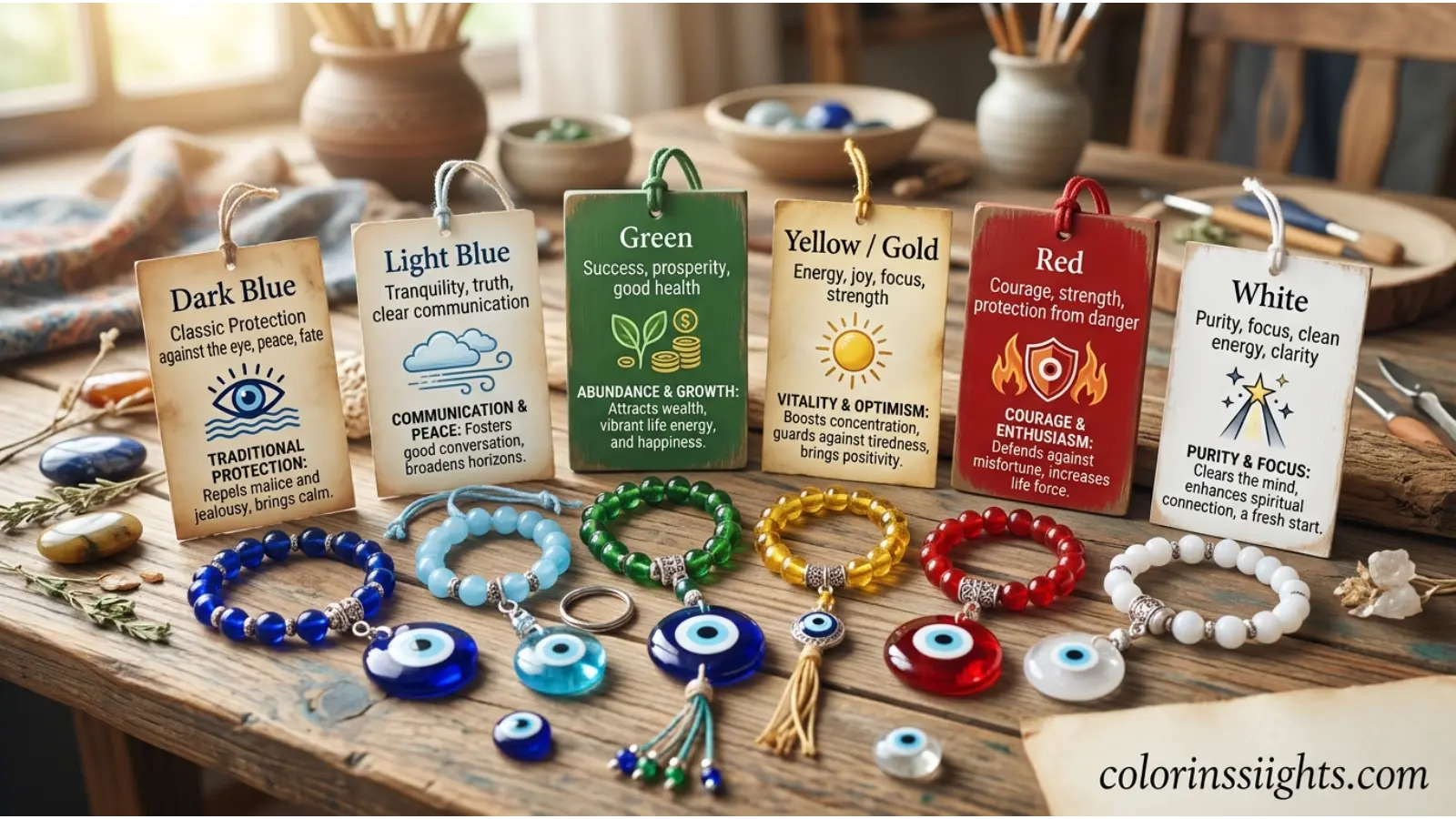
Different evil eye color meanings represent unique forms of protection, emotional energy, spiritual growth, and personal intentions. While the evil eye symbol itself is widely believed to guard against envy and negative energy, the color of the amulet often adds another layer of symbolic meaning.
Across Mediterranean, Middle Eastern, South Asian, and modern spiritual traditions, each color is associated with specific qualities such as wisdom, courage, healing, prosperity, love, or transformation.
Although interpretations vary by culture and belief system, color symbolism helps many people choose an evil eye charm that reflects their goals, emotions, or life circumstances.
Quick Answer:
Different evil eye colors symbolize different intentions—for example, blue represents protection, green symbolizes growth, red encourages courage, white signifies purity, and purple supports wisdom and spiritual transformation.
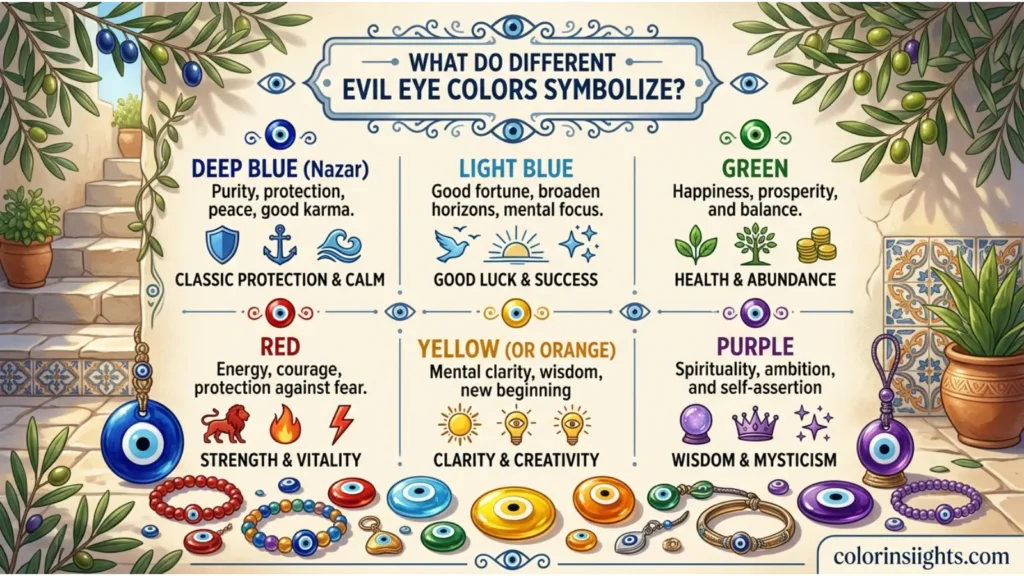
What Do Different Evil Eye Colors Symbolize?
The evil eye is one of the world’s oldest protective symbols. Traditionally, it is believed to shield people from jealousy, envy, and harmful intentions. While the classic blue evil eye remains the most recognized, modern evil eye charms come in many colors, each carrying its own symbolic meaning.
Although meanings are not universally standardized, the following interpretations are commonly accepted:
| Evil Eye Color | Common Symbolic Meaning |
|---|---|
| Dark Blue | Protection, karma, peace, safety |
| Light Blue | Truth, clarity, open communication |
| White | Purity, focus, fresh beginnings |
| Red | Courage, strength, passion, vitality |
| Pink | Love, friendship, compassion |
| Orange | Happiness, creativity, motivation |
| Yellow | Confidence, optimism, mental clarity |
| Green | Growth, health, success, balance |
| Purple | Wisdom, spirituality, transformation |
| Brown | Stability, grounding, connection to nature |
| Gray | Neutrality, resilience, emotional balance |
| Black | Power, strength, protection from fear |
Many people choose an evil eye color based on their current goals, emotional needs, or spiritual beliefs rather than following strict cultural rules.
Psychological Characteristics of Different Evil Eye Colors
Color psychology suggests that colors influence emotions, perceptions, and behavior. While scientific evidence does not support supernatural powers, colors can affect mood and personal interpretation, making colored evil eye charms psychologically meaningful.
Emotional Associations
- Blue promotes calmness and security.
- Green encourages hope and emotional renewal.
- Red stimulates confidence and determination.
- Yellow inspires positivity and mental energy.
- White creates feelings of peace and simplicity.
- Purple encourages imagination and spiritual reflection.
Psychological Effects
Different colors may influence how people feel throughout the day.
- Cool colors generally reduce stress.
- Warm colors increase motivation and activity.
- Neutral colors promote emotional stability.
- Bright colors encourage optimism.
Positive Emotional Responses
- Greater confidence
- Reduced anxiety
- Emotional comfort
- Increased optimism
- Better focus
- Sense of protection
Negative Emotional Responses
Certain colors may also trigger less desirable emotions depending on context.
- Excessive red may increase tension.
- Too much black can appear intimidating.
- Gray may seem emotionally distant.
- White may feel sterile or empty.
- Yellow may become overwhelming if overused.
Impact on Mood and Behavior
Many people wear evil eye jewelry as a daily reminder to stay mindful, confident, and emotionally balanced. Whether viewed spiritually or psychologically, the symbolic color often reinforces positive intentions and emotional resilience.
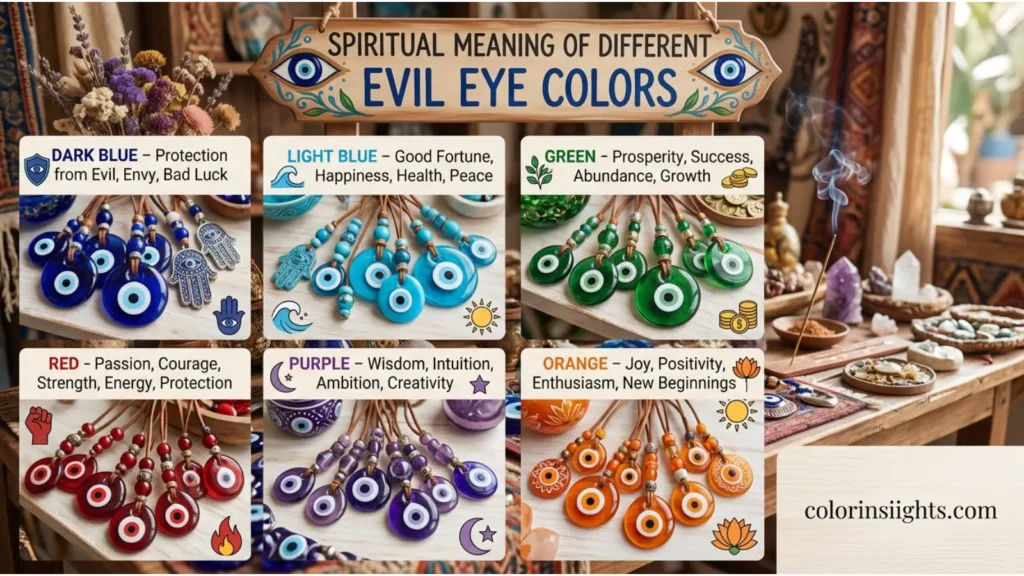
Spiritual Meaning of Different Evil Eye Colors
Across many spiritual traditions, colors represent different energies rather than magical powers. Evil eye colors are often chosen according to personal intentions or symbolic beliefs.
Common Spiritual Meanings
- Protection: Dark blue and black symbolize defense against negativity.
- Wisdom: Purple represents higher knowledge and intuition.
- Purity: White symbolizes inner peace and spiritual cleansing.
- Transformation: Purple and green represent personal growth.
- Healing: Green is associated with physical and emotional renewal.
- Power: Red symbolizes strength and determination.
- Enlightenment: Yellow encourages awareness and understanding.
- New Beginnings: White represents fresh starts.
- Eternity: Blue reflects stability, continuity, and lasting protection.
- Balance: Gray symbolizes emotional moderation.
Many practitioners view these meanings as symbolic tools for mindfulness rather than guaranteed spiritual outcomes.
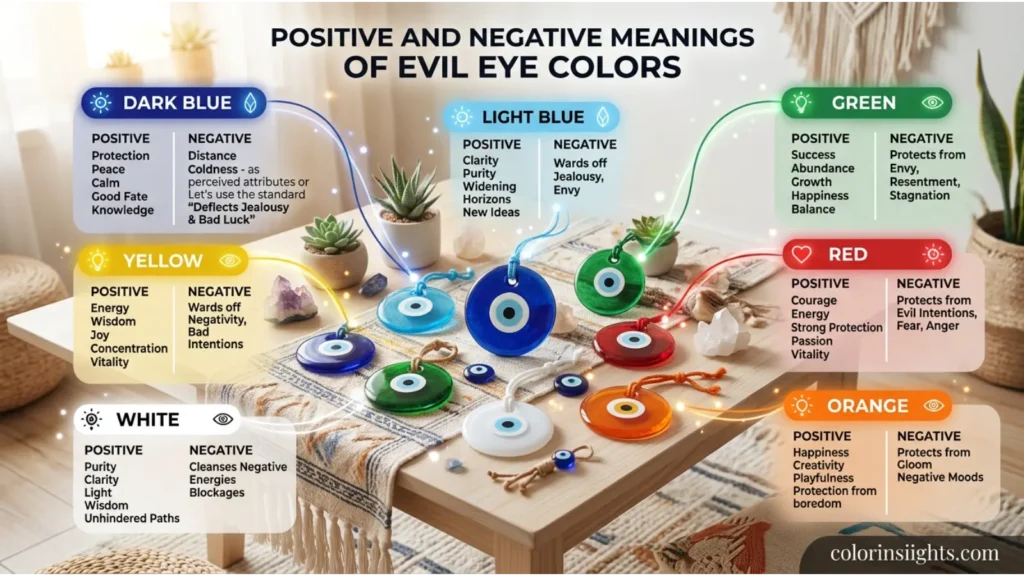
Positive and Negative Meanings of Different Evil Eye Colors
Positive Meanings
Different evil eye colors often represent uplifting personal qualities.
Protection
Blue remains the traditional symbol of protection against jealousy and harmful intentions.
Example:
Someone starting a new job may wear a blue evil eye bracelet for reassurance.
Hope
Green symbolizes new opportunities and emotional renewal.
Example:
A graduate beginning a new career might choose green.
Courage
Red encourages bravery during difficult situations.
Example:
Athletes often appreciate red for its association with determination.
Love
Pink promotes kindness, friendship, and compassion.
Example:
Pink jewelry is frequently exchanged as a thoughtful gift.
Wisdom
Purple encourages learning, creativity, and spiritual reflection.
Example:
Students or meditation practitioners may prefer purple.
Clarity
Light blue supports honest communication and mental focus.
Example:
Someone preparing for an important presentation may wear a light blue charm.
Balance
Gray represents emotional stability during stressful periods.
Prosperity
Green is frequently connected with abundance and healthy growth.
Negative Meanings
Although colors usually carry positive symbolism, they may also have less favorable interpretations depending on culture and personal experience.
Isolation
Gray sometimes reflects emotional distance.
Example:
An office decorated entirely in gray may feel less welcoming.
Emotional Intensity
Red can encourage impulsiveness if used excessively.
Example:
Overuse of red may create a stressful environment.
Perfectionism
White sometimes symbolizes unrealistic expectations.
Example:
A completely white workspace may feel overly formal.
Mystery
Black may appear intimidating despite symbolizing strength.
Boredom
Neutral colors without contrast may feel uninspiring.
Emotional Distance
Cool colors can occasionally create a sense of detachment in interior spaces.
These interpretations depend heavily on personal perception and cultural context.
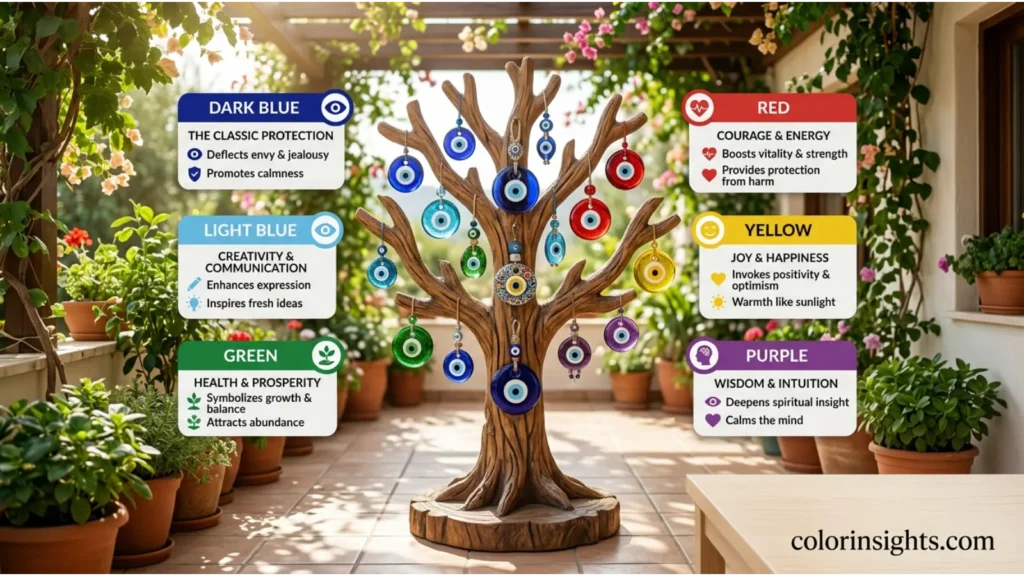
Meanings of Different Evil Eye Colors
The meaning of an evil eye color changes depending on cultural tradition, spiritual belief, design purpose, and personal intention. A blue charm may symbolize ancient protection in one culture while simply representing calmness in another.
Feng Shui
Although the evil eye originates outside traditional Feng Shui, many people incorporate it into modern home décor.
- Associated elements: Blue relates to Water, green to Wood, red to Fire, white to Metal, and brown to Earth.
- Energy symbolism: Protection, balance, and harmonious energy flow.
- Best rooms: Entryways, living rooms, home offices, and meditation spaces.
- Recommended color combinations: Blue with white, green with natural wood, red with gold, and purple with silver.
- Decorating tips: Place evil eye decorations near entrances or display them alongside other meaningful decorative items without overcrowding the space.
Marketing
Brands rely on color psychology to influence consumer perception rather than supernatural symbolism.
Branding Psychology
- Blue builds trust.
- Green suggests sustainability.
- Red creates urgency.
- Yellow attracts attention.
- Black conveys luxury.
Consumer Perception
Consumers often associate different colors with quality, reliability, innovation, or excitement.
Trust Signals
Blue remains one of the most trusted colors in branding because it communicates stability and professionalism.
Product Packaging
Beauty, wellness, jewelry, and lifestyle brands often choose colors that match their product identity.
Advertising Applications
Bright colors capture attention, while softer colors communicate calmness and wellness.
Famous Brands
Examples include:
- Blue: IBM, Ford, Intel
- Red: Coca-Cola, Netflix, YouTube
- Green: Starbucks, Spotify, Whole Foods Market
- Black: Nike, Chanel
- Yellow: McDonald’s, IKEA
Design
Interior and graphic designers use color to influence atmosphere and user perception.
Interior Design
Blue creates relaxing environments.
Green supports natural themes.
White increases the feeling of openness.
Black adds sophistication.
Graphic Design
Designers use color contrast to improve readability and brand recognition.
Web Design
Color guides navigation, highlights calls to action, and reinforces brand identity.
User Experience
Appropriate color combinations improve accessibility, reduce cognitive load, and create intuitive interfaces.
Minimalist Aesthetics
Neutral evil eye colors work well in modern minimalist interiors because they blend symbolism with simple design.
Fashion
Evil eye jewelry combines symbolism with personal style.
Clothing Symbolism
- Blue represents protection.
- Red reflects confidence.
- Green symbolizes renewal.
- White expresses simplicity.
- Black conveys elegance.
Seasonal Use
- Spring: Green and pink
- Summer: Turquoise and yellow
- Autumn: Brown and orange
- Winter: Blue, white, and black
Styling Effects
Colorful evil eye accessories can become statement pieces or subtle everyday jewelry.
Personality Impressions
Bright colors appear energetic, while darker colors project confidence and sophistication.
Advantages
- Meaningful accessories
- Easy to coordinate
- Suitable for casual and formal wear
Disadvantages
Highly colorful jewelry may not complement every wardrobe or professional setting.
Color Associations Are Not Universal
Color symbolism differs significantly across cultures, religions, and historical periods.
Western Cultures
Blue often symbolizes trust and security, while red represents passion or warning. White commonly reflects purity and weddings, whereas black is associated with elegance and mourning.
Eastern Cultures
In many East Asian traditions, red symbolizes happiness and prosperity. White may be linked to mourning rather than celebration. Green often represents harmony and renewal.
Religious Traditions
Different religions assign unique meanings to colors. Christianity often associates white with purity, while Islam frequently connects green with paradise and spiritual significance. Hindu traditions commonly use saffron to symbolize sacrifice and spiritual devotion.
Historical Interpretations
Ancient Mediterranean societies valued blue amulets for protection because they believed blue reflected the sky and divine guardianship. Over time, additional colors gained symbolic meanings through regional traditions and modern jewelry design.
Modern Global Interpretations
Today, many people choose evil eye colors based on personal goals, fashion preferences, or emotional intentions rather than traditional beliefs. Social media and global jewelry trends have also expanded the meanings associated with different colors.
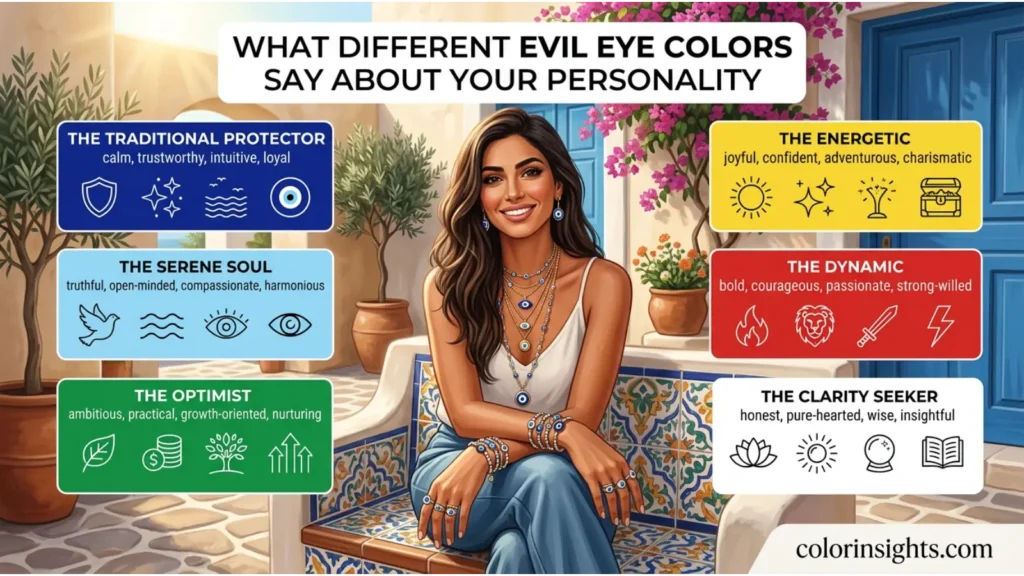
What Different Evil Eye Colors Say About Your Personality
Some people believe favorite evil eye colors reflect aspects of personality. However, these associations are symbolic rather than scientifically proven, and color preferences alone cannot determine someone’s character.
Strengths
People drawn to certain colors may value qualities such as:
- Compassion
- Confidence
- Creativity
- Emotional balance
- Optimism
- Independence
Weaknesses
Depending on the preferred color, individuals may sometimes struggle with:
- Overthinking
- Emotional sensitivity
- Impatience
- Perfectionism
- Risk avoidance
Social Behavior
Warm-color enthusiasts often appear outgoing and energetic, while cool-color preferences may be associated with calm, thoughtful communication.
Work Style
Blue and gray admirers often appreciate organization, whereas red and orange lovers may enjoy leadership and fast-paced environments.
Relationships
Pink and green enthusiasts may value empathy and emotional connection, while black or purple admirers sometimes prefer deeper, more meaningful relationships.
Emotional Tendencies
Color preferences can reflect current moods, personal experiences, or aesthetic tastes that change throughout life. They should not be viewed as reliable indicators of personality.
FAQs
What defines different evil eye colors?
Different evil eye colors are decorative variations of the traditional protective symbol, with each color representing a distinct symbolic intention such as protection, love, wisdom, healing, or prosperity.
What do different evil eye colors symbolize?
They commonly symbolize protection, courage, emotional balance, growth, spiritual awareness, love, confidence, and personal transformation.
Why are different evil eye colors important?
Many people choose a specific color to reflect their goals, beliefs, emotions, or desired intentions while wearing the protective symbol.
Are evil eye colors warm or cool colors?
The collection includes both warm colors like red and orange and cool colors like blue and green, along with neutral shades such as white, gray, brown, and black.
What emotions do different evil eye colors represent?
They may represent calmness, hope, confidence, compassion, joy, resilience, wisdom, emotional healing, or motivation.
What is the spiritual meaning of different evil eye colors?
Spiritually, the colors are often associated with protection, purification, transformation, healing, intuition, prosperity, and inner strength, though meanings vary across traditions.
Which colors pair well with evil eye jewelry?
Blue pairs well with white and silver, green with earthy tones, red with gold, black with metallic accents, and purple with neutral colors.
What does liking a certain evil eye color say about a person?
A preferred color may reflect current tastes, intentions, or emotional preferences, but it does not reliably predict personality or behavior.
Which evil eye color is the most popular?
Dark blue remains the most widely recognized and traditionally used evil eye color because it has long been associated with protection against envy and negative energy.
Can I wear more than one evil eye color?
Yes. Many people combine multiple colors to represent several personal intentions, such as protection, health, confidence, and love.
Conclusion:
Different evil eye color meanings combine ancient cultural traditions with modern interpretations of color symbolism and psychology. While blue remains the classic protective color, every shade carries its own symbolic associations, ranging from courage and love to wisdom, healing, prosperity, and transformation.
These meanings vary across cultures and personal beliefs, making the evil eye both a meaningful spiritual emblem and a versatile fashion accessory.
Whether chosen for tradition, mindfulness, or personal expression, selecting an evil eye color is ultimately a reflection of individual intention rather than a universally fixed rule.