Rubber band color meanings can vary depending on their purpose, design, and cultural context. Although rubber bands mainly serve practical functions, their colors can also communicate organization, identification, personal preferences, and symbolic messages.
From red and blue to green, yellow, black, and white, each shade may create a different visual impression. Some colors suggest energy and creativity, while others represent calmness, growth, or simplicity. Understanding rubber band color meanings can help explain their uses in offices, schools, crafts, packaging, and everyday life.
Quick answer:
Rubber band colors primarily help with identification and organization, but people may also associate them with different emotions and symbolic meanings.
What Do Rubber Band Colors Symbolize?
Rubber band colors can carry practical and symbolic meanings. Manufacturers often produce colored rubber bands to help people distinguish sizes, organize items, identify products, or create attractive designs.
Unlike standardized warning signs or official color codes, ordinary rubber band colors generally have no universal meanings. Their interpretation depends on the situation and the person using them.
Here are some common symbolic associations:
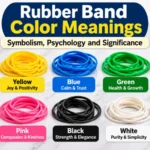
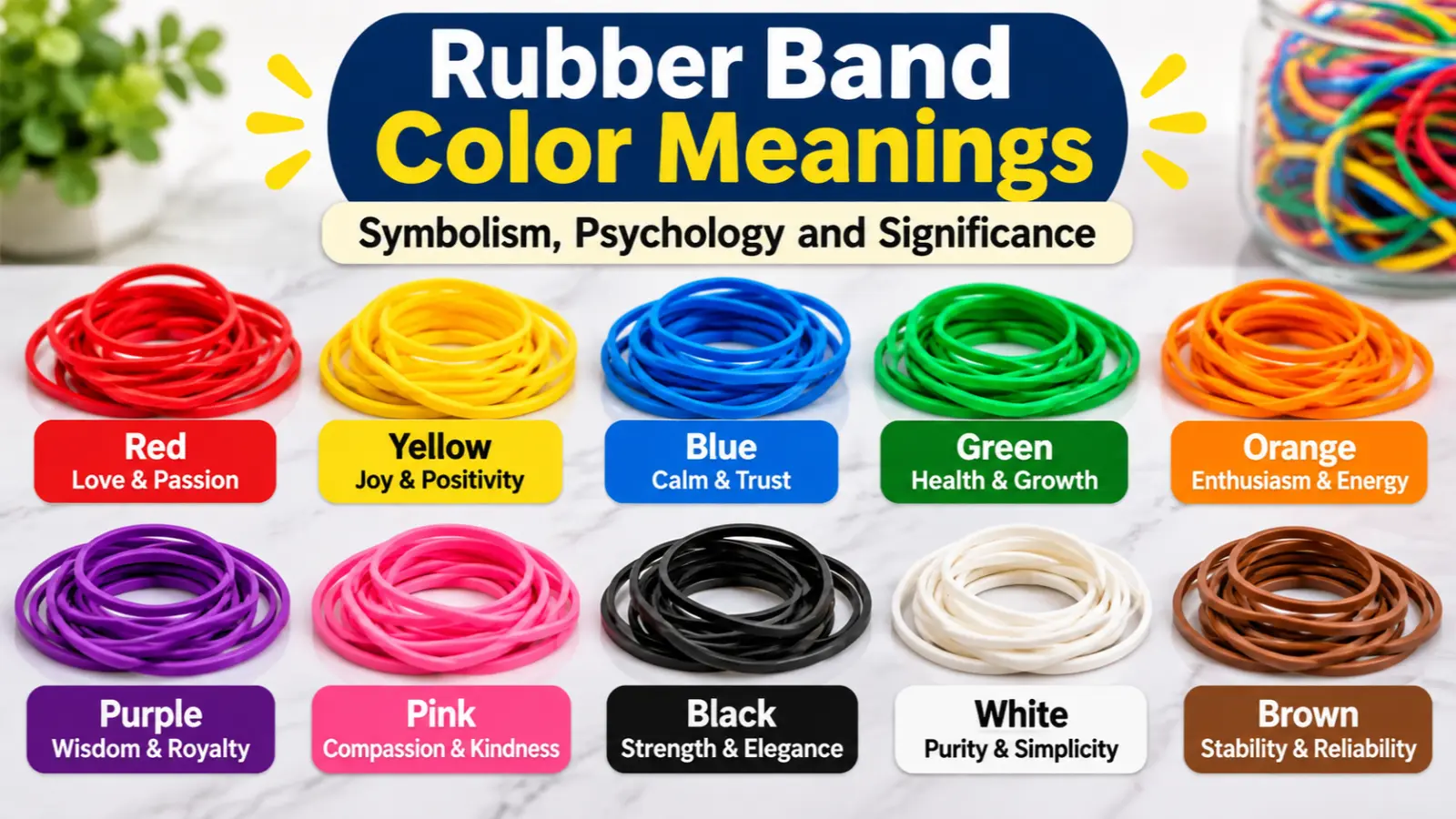
- Red: Energy, urgency, passion, and attention.
- Blue: Calmness, trust, stability, and reliability.
- Green: Growth, nature, freshness, and balance.
- Yellow: Happiness, optimism, creativity, and visibility.
- Black: Strength, sophistication, authority, and simplicity.
- White: Cleanliness, purity, simplicity, and organization.
- Purple: Creativity, imagination, individuality, and mystery.
- Orange: Enthusiasm, warmth, excitement, and friendliness.
- Pink: Kindness, playfulness, affection, and gentleness.
These interpretations describe general color associations rather than official rubber band identification standards.
Psychological Characteristics of Rubber Band Colors
Color psychology examines how colors influence perception, emotions, and behavior. The appearance of a rubber band may seem insignificant, but its color can influence how people organize, recognize, and respond to everyday objects.
Colored rubber bands can also make practical tasks more engaging by introducing visual differences into otherwise ordinary supplies.
Emotional Associations
Different rubber band colors can create different emotional impressions.
- Red: Often attracts attention and suggests excitement or urgency.
- Blue: Creates associations with calmness, confidence, and dependability.
- Green: Suggests natural environments, renewal, and emotional balance.
- Yellow: Communicates cheerfulness, optimism, and enthusiasm.
- Black: Creates impressions of strength, elegance, and authority.
- White: Suggests cleanliness, simplicity, and order.
- Purple: Often represents imagination, creativity, and individuality.
- Pink: Communicates warmth, affection, and friendliness.
Psychological Effects
Color can influence visual attention and the way people interpret objects. Bright rubber bands, such as red, orange, and yellow, stand out against many backgrounds.
Darker colors, including black, navy, and deep purple, create a more understated appearance. Neutral shades can also help maintain a consistent and organized visual system.
Positive Emotional Responses
People may associate colored rubber bands with:
- Happiness and creativity.
- Organization and control.
- Confidence and individuality.
- Freshness and renewal.
- Calmness and balance.
- Playfulness and enthusiasm.
Negative Emotional Responses
Certain colors may also create less positive impressions depending on their intensity and context.
For example, excessive red may appear aggressive, bright yellow may feel overwhelming, and dark colors may seem serious or distant.
Impact on Mood and Behavior
Colored rubber bands can support simple organizational habits. Someone might use green bands for gardening supplies, blue for office materials, and red for items that require attention.
This system does not create a guaranteed psychological effect. However, consistent color grouping can make objects easier to recognize and retrieve.
Spiritual Meaning of Rubber Band Colors
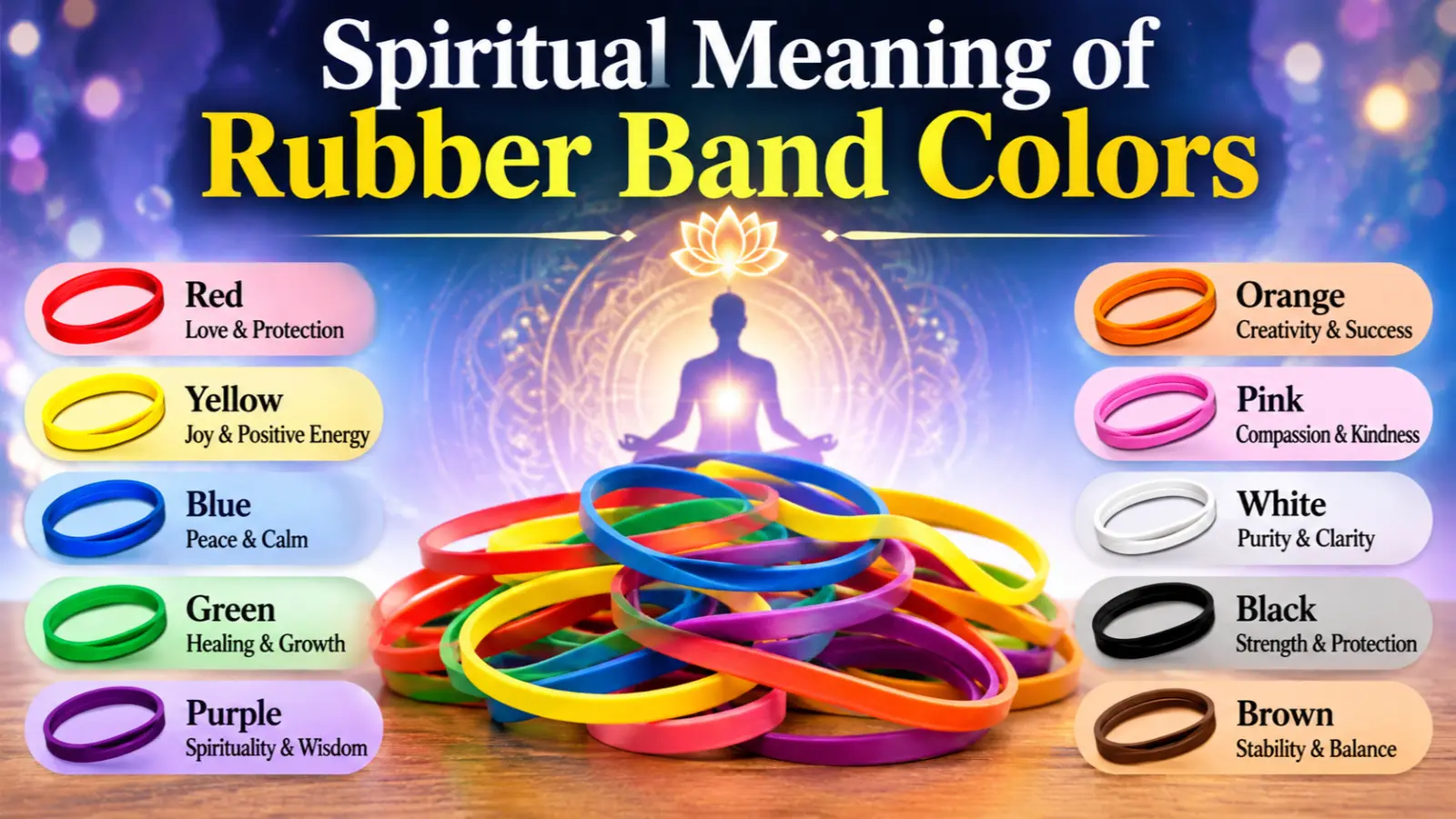
Rubber bands do not have established spiritual meanings across religions. However, people who use colors symbolically may connect their shades with spiritual ideas, personal intentions, and cultural traditions.
The following interpretations reflect general color symbolism rather than universal religious teachings.
- Holiness: White rubber bands may symbolize purity, simplicity, and spiritual cleanliness.
- Wisdom: Purple can represent spiritual awareness, reflection, and deeper understanding.
- Purity: White may suggest innocence, honesty, and a fresh beginning.
- Transformation: Orange and purple can symbolize personal development and positive change.
- Healing: Green often represents renewal, restoration, and harmony with nature.
- Protection: Black may symbolize strength, boundaries, and protection in some spiritual traditions.
- Power: Red can represent courage, determination, and personal strength.
- Enlightenment: Yellow may symbolize knowledge, awareness, and mental clarity.
- New Beginnings: Green and white can represent growth, renewal, and fresh opportunities.
- Eternity: Blue may symbolize continuity, loyalty, and the lasting nature of meaningful connections.
People may also choose specific rubber band colors for crafts, bracelets, gifts, or personal reminders that reflect their intentions.
Positive and Negative Meanings of Rubber Band Colors
Colored rubber bands offer different visual and symbolic associations. A color that appears positive in one situation may communicate something different in another.
Positive Meanings
Common positive associations include:
- Purity: White suggests cleanliness and simplicity. White rubber bands can create a neat appearance when organizing supplies.
- Peace: Blue represents calmness and stability. Blue bands may create a relaxed visual impression.
- Simplicity: White and gray support minimalistic organization without unnecessary visual distractions.
- Clarity: Yellow and white can make certain objects easier to distinguish.
- Freshness: Green represents nature, renewal, and healthy growth.
- Hope: Yellow and green can suggest optimism and new opportunities.
- Balance: Blue and green create associations with stability and harmony.
- Harmony: Purple, green, and blue can contribute to visually coordinated arrangements.
Negative Meanings
Some colors can also create less favorable impressions.
- Emptiness: Excessive white may appear plain or empty. For example, an arrangement containing only white rubber bands may lack visual variety.
- Isolation: Dark blue or black may create a distant impression when used without contrasting colors.
- Coldness: Pale blue and cool gray can appear emotionally distant in certain designs.
- Sterility: Too much white may resemble a clinical environment rather than a welcoming workspace.
- Boredom: Repeated use of one neutral color may make an arrangement look uninteresting.
- Emotional Distance: Black and dark gray may communicate seriousness rather than friendliness.
- Perfectionism: Excessive attention to matching colors and precise organization may create an overly controlled appearance.
These negative associations describe possible visual impressions. They do not indicate that a particular rubber band color causes negative emotions or behavior.
Meanings of Rubber Band Colors in Different Settings
Rubber band colors become more meaningful when people use them for specific purposes. A red band might identify an important item in an office, while the same color might represent passion in an artistic project.
Understanding the context helps distinguish practical color coding from personal symbolism.
Feng Shui
In Feng Shui, colors connect with the five elements and their associated energies. People can apply these ideas to decorative rubber bands and colorful craft arrangements.
- Red: Associated with the Fire element, passion, activity, and recognition.
- Blue: Associated with Water, wisdom, and calmness.
- Green: Associated with Wood, growth, and renewal.
- Yellow: Associated with Earth, stability, and nourishment.
- White: Associated with Metal, clarity, and organization.
- Black: Associated with Water, depth, and protection.
Home decorating tips: Use green and blue rubber bands in nature-inspired crafts, red for energetic decorative projects, and white or yellow for simple organizational displays. Feng Shui interpretations vary by school and application.
Marketing
Businesses use rubber band colors to support product identification, packaging, and brand presentation.
Branding psychology: Companies select colors that match their desired brand personality. Red may communicate excitement, blue may suggest reliability, and green may communicate environmental awareness.
Consumer perception: Bright colors attract attention, while neutral colors can create a clean and understated appearance.
Trust signals: Blue packaging and coordinated product colors may create impressions of professionalism, although trust depends more on product quality and brand reputation.
Product packaging: Manufacturers may use different rubber band colors to distinguish product sizes, bundles, and categories.
Advertising applications: Colorful rubber bands can make stationery, craft kits, and office products more visually appealing.
Familiar brands such as Office Depot and Staples use color throughout their broader branding and product presentation. However, ordinary rubber band colors do not represent an official code shared by these brands.
Design
Rubber band colors offer simple ways to introduce contrast and visual organization into creative projects.
- Interior Design: Use colored rubber bands in DIY organizers, decorative holders, and creative home accessories.
- Graphic Design: Rubber band colors can inspire bright palettes and contrasting visual elements.
- Web Design: Their color combinations can serve as inspiration for category labels, icons, and visual indicators.
- User Experience: Consistent colors can help users recognize groups of objects or supplies.
- Minimalist Aesthetics: White, black, gray, and beige create simple, coordinated arrangements.
For example, a craft organizer might use green bands for gardening tools, blue for stationery, and orange for art materials.
Fashion
Rubber bands can also serve as inexpensive fashion accessories, especially in handmade bracelets, hair accessories, and colorful craft designs.
Clothing symbolism: Bright rubber bands can communicate playfulness, while black and white create a simple, classic appearance.
Seasonal use: Yellow, orange, and pink work well in summer-inspired accessories. Green, brown, and burgundy can complement autumn designs.
Styling effects: Combining contrasting shades creates a bold appearance, while using similar shades creates a coordinated look.
Personality impressions: Red may suggest confidence, blue may appear relaxed, and purple may communicate creativity.
Advantages:
- Affordable and widely available.
- Easy to combine with different colors.
- Suitable for DIY bracelets and craft projects.
- Available in many shades and sizes.
Disadvantages:
- Ordinary rubber bands may lose elasticity over time.
- Some materials can irritate sensitive skin.
- They may break or snap under excessive tension.
- They generally lack the durability of purpose-made jewelry materials.
For wearable accessories, choose materials designed for skin contact rather than assuming ordinary office rubber bands are suitable for prolonged use.
Color Associations Are Not Universal
Rubber band color meanings do not remain identical across cultures. Historical traditions, religious beliefs, social customs, and modern design trends influence how people interpret different shades.
Western Cultures
In the United States and other Western societies, red commonly represents passion, energy, and urgency. Blue often communicates trust and professionalism, while green suggests nature and environmental awareness.
White frequently represents cleanliness, although it also carries associations with weddings and new beginnings in many Western traditions.
Eastern Cultures
In several East Asian traditions, red represents happiness, prosperity, celebration, and good fortune. Chinese New Year decorations frequently feature red.
White has different associations across Eastern cultures. In some Chinese and other Asian funeral traditions, white represents mourning rather than celebration.
Religious Traditions
Religious symbolism also influences color interpretations.
- Christianity often associates white with purity and resurrection.
- Hindu traditions use colors such as red, yellow, and saffron in ceremonies and religious celebrations.
- Buddhism uses different colors in specific traditions, with saffron and orange often associated with monastic life and spiritual discipline.
These meanings belong to particular religious contexts rather than rubber bands themselves.
Historical Interpretations
Historically, people have used colors to communicate status, identity, authority, and group membership.
Red dyes sometimes represented wealth and power because certain pigments required expensive materials. Purple also became associated with royalty in several historical societies because of the rarity and cost of particular purple dyes.
Modern rubber manufacturing makes colorful products widely accessible, so these historical associations do not automatically apply to rubber bands.
Modern Global Interpretations
Today, colored rubber bands appear in schools, workplaces, medical environments, craft projects, and packaging systems.
Their meanings often depend on local instructions or organizational practices. For example, a company might use red bands to identify one product category and green bands for another.
Always check the relevant organization’s instructions before assuming that a rubber band color communicates a particular official message.
What Rubber Band Colors Say About Your Personality
People sometimes use their favorite colors to express individuality, creativity, and personal preferences. Choosing particular rubber band colors may reflect aesthetic interests, but it cannot reliably determine someone’s personality.
Here are some common personality associations:
- Red: People who prefer red may enjoy energetic designs and bold visual statements.
- Blue: Blue enthusiasts may appreciate calm, balanced, and organized appearances.
- Green: Green preferences may reflect an interest in nature, freshness, and harmony.
- Yellow: Yellow lovers may enjoy cheerful, optimistic, and creative designs.
- Black: People who prefer black may appreciate simplicity, sophistication, and strong contrasts.
- White: White preferences may reflect an appreciation for clean and minimalistic arrangements.
- Purple: Purple enthusiasts may enjoy imaginative, artistic, and distinctive combinations.
- Pink: Pink preferences may reflect a liking for playful, gentle, and expressive designs.
- Orange: Orange lovers may enjoy energetic, warm, and adventurous color combinations.
Strengths
People who enjoy colorful accessories may demonstrate creativity, visual awareness, and an interest in personal expression.
Weaknesses
A strong preference for bright or coordinated colors may sometimes lead to excessive attention to appearance or organization.
Social Behavior
Some people use colorful bracelets and accessories to express individuality or create a sense of belonging with friends.
Work Style
People who organize supplies by color may appreciate visual systems that make everyday tasks easier.
Relationships
Colorful handmade rubber band bracelets can serve as inexpensive gifts that express friendship, appreciation, and affection.
Emotional Tendencies
Color preferences may reflect temporary moods, personal experiences, and aesthetic interests. However, they cannot establish someone’s emotional characteristics with certainty.
Important: Personality depends on many factors, including experiences, environment, behavior, and individual differences. A favorite rubber band color should never serve as a psychological assessment.
Frequently Asked Questions
1. What do rubber band colors mean?
Rubber band colors primarily help people organize, identify, and distinguish items. Symbolically, red can represent energy, blue calmness, green growth, yellow optimism, and black strength. However, these meanings are not universal.
2. What does a red rubber band symbolize?
A red rubber band may symbolize energy, passion, confidence, excitement, and urgency. Its bright appearance also makes it useful for identifying or highlighting particular objects.
3. What does a blue rubber band mean?
Blue rubber bands commonly create associations with calmness, trust, stability, and reliability. People may also choose them for organizing office supplies and craft materials.
4. What does a green rubber band represent?
Green rubber bands can symbolize nature, growth, renewal, freshness, and balance. They also work well for color-coded organizational systems.
5. What does a black rubber band symbolize?
Black rubber bands may represent strength, sophistication, authority, simplicity, and protection. Their neutral appearance also makes them suitable for understated designs.
6. What does a yellow rubber band mean?
Yellow rubber bands often represent happiness, optimism, creativity, and enthusiasm. Their bright appearance can also make them easier to notice.
7. What is the spiritual meaning of rubber band colors?
Spiritual interpretations depend on personal beliefs and cultural traditions. For example, white may represent purity, green renewal, blue wisdom, red strength, and purple spiritual awareness.
8. Do rubber band colors have official meanings?
Most ordinary rubber bands do not follow a universal color-coding system. Manufacturers, workplaces, schools, and organizations may create their own identification systems.
9. What rubber band colors are best for organization?
Red, blue, green, yellow, and orange can help distinguish different categories. The best choice depends on the items being organized and the visibility of each color against its background.
10. What does liking colorful rubber bands say about your personality?
Enjoying colorful rubber bands may suggest an appreciation for creativity, visual variety, and personal expression. However, color preferences alone cannot accurately determine personality traits.
Conclusion
Rubber band color meanings combine practical identification with general color symbolism. Red can communicate energy, blue can suggest calmness, green can represent growth, yellow can express optimism, and black can create a sophisticated appearance. These associations can make colorful rubber bands useful in organization, crafts, fashion, and everyday activities. However, no universal system assigns a fixed meaning to every rubber band color. Their interpretation depends on personal preferences, cultural traditions, and the purpose for which people use them.