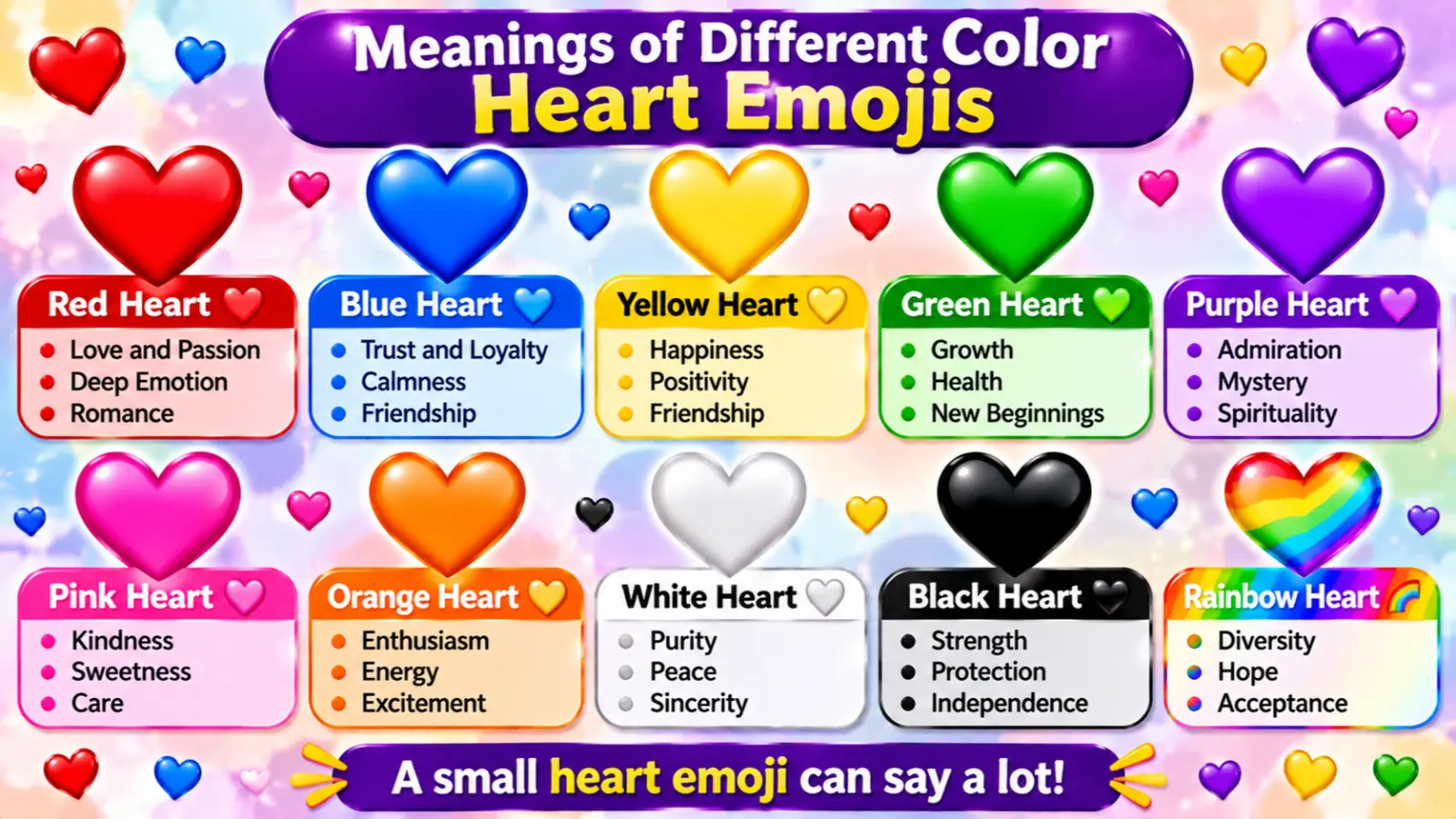
Meanings of Different Color Heart Emojis make digital conversations more expressive by communicating emotions, affection, friendship, and personal connections. However, each heart color can suggest a different feeling depending on the relationship, conversation, and cultural context. A red heart often represents romantic love, while a yellow heart commonly expresses friendship, happiness, and positivity.
Blue, green, purple, black, white, and other heart colors also carry distinctive associations. Understanding the meanings of different color heart emojis can help people choose the right symbol for their messages and avoid misunderstandings.
Quick Answer:
Different heart emoji colors represent different emotions, including love, friendship, loyalty, happiness, peace, gratitude, and sympathy.
What Do Different Color Heart Emojis Symbolize?
Different color heart emojis symbolize emotions, relationships, and personal intentions in digital communication. People use them in text messages, social media comments, online communities, and everyday conversations to express feelings that words sometimes cannot communicate.
Although the traditional red heart represents romantic love, other colors offer more specific emotional meanings.
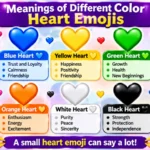
Here are some common interpretations:
| Heart Emoji | Common Meaning |
|---|---|
| Red Heart | Romantic love, passion, and deep affection |
| Orange Heart | Care, warmth, encouragement, and friendship |
| Yellow Heart | Happiness, friendship, and positivity |
| Green Heart | Nature, growth, health, and jealousy |
| Blue Heart | Trust, loyalty, peace, and support |
| Purple Heart | Compassion, admiration, creativity, and affection |
| Black Heart | Dark humor, grief, elegance, and emotional depth |
| White Heart | Purity, peace, sympathy, and sincere love |
| Brown Heart | Warmth, comfort, stability, and connection |
| 🩷 Pink Heart | Sweetness, tenderness, romance, and affection |
| 🩵 Light Blue Heart | Calmness, gentleness, friendship, and serenity |
| 🩶 Grey Heart | Neutrality, balance, sympathy, and emotional distance |
These meanings provide general guidance rather than fixed definitions. The sender’s intention and the surrounding conversation matter just as much as the emoji’s color.
Psychological Characteristics of Different Color Heart Emojis
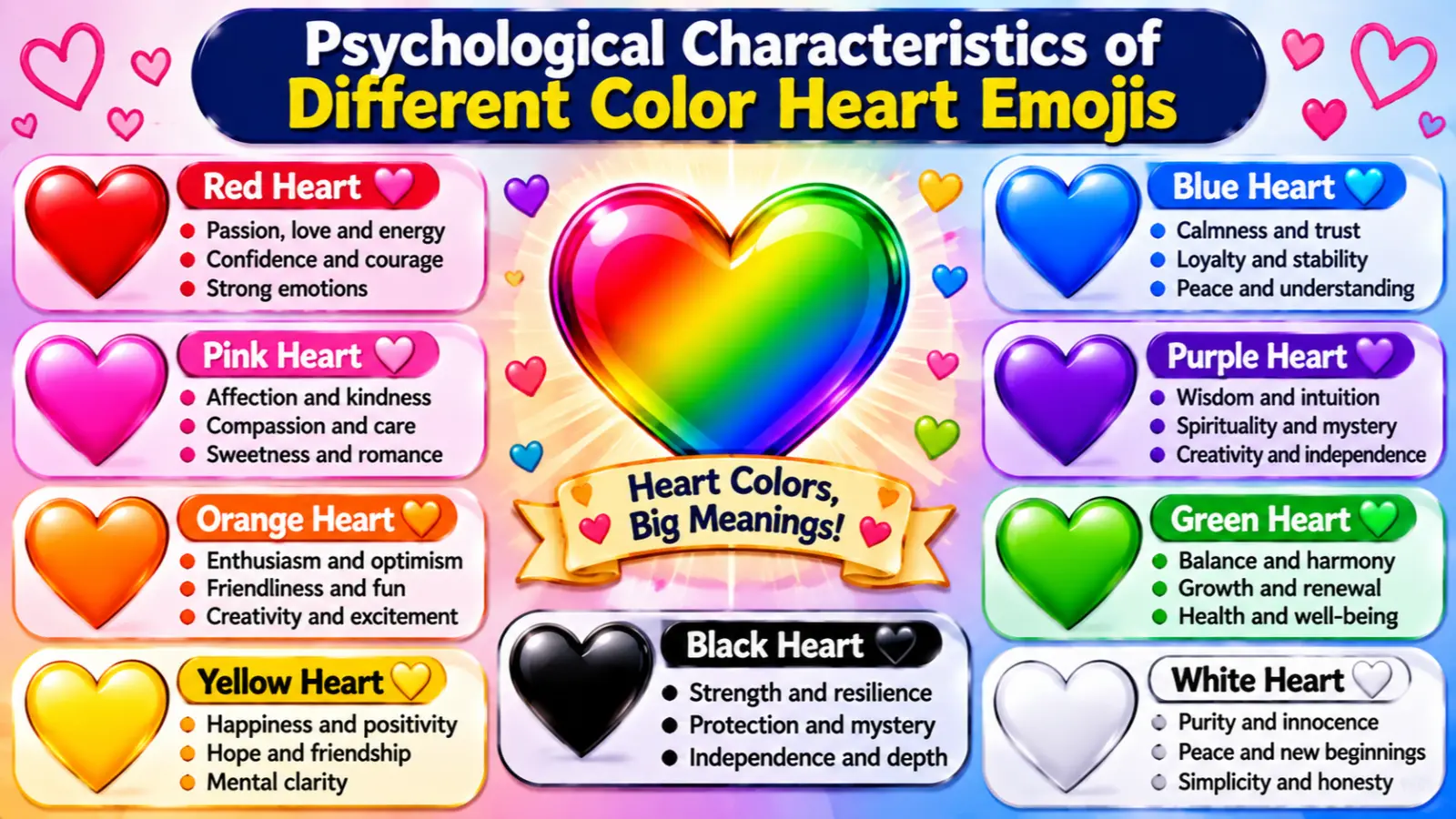
Color psychology explores how people associate colors with emotions, thoughts, and behavior. Heart emojis combine these color associations with a familiar symbol of affection, making them useful tools for expressing feelings online.
Each color can create a different emotional impression.
Emotional Associations
Heart colors communicate different emotional experiences:
- Red: Passion, romantic attachment, excitement, and desire.
- Orange: Encouragement, enthusiasm, warmth, and social connection.
- Yellow: Happiness, optimism, friendship, and cheerfulness.
- Green: Renewal, balance, environmental awareness, and sometimes jealousy.
- Blue: Reliability, emotional stability, loyalty, and calmness.
- Purple: Creativity, admiration, compassion, and individuality.
- Black: Grief, mystery, emotional complexity, and dark humor.
- White: Innocence, sincerity, peace, and sympathy.
- Brown: Security, comfort, natural connection, and dependability.
- Pink: Gentleness, sweetness, affection, and tenderness.
- Light Blue: Relaxation, openness, and peaceful communication.
- Grey: Neutrality, restraint, and emotional uncertainty.
Psychological Effects
Heart emojis can influence how people interpret messages. A red heart may communicate stronger romantic feelings than a yellow heart, while a blue heart can create an impression of dependable friendship.
The color also changes the emotional tone of a message. For example, someone might send a yellow heart to celebrate a friend’s achievement or a white heart to express sympathy.
However, emoji interpretation varies between individuals. Personal experiences, online communities, age groups, and relationships can influence how someone understands a particular color.
Positive Emotional Responses
Positive associations commonly include:
- Love and emotional closeness.
- Happiness and optimism.
- Friendship and belonging.
- Trust and loyalty.
- Compassion and understanding.
- Peace and emotional comfort.
- Gratitude and appreciation.
- Hope and encouragement.
Negative Emotional Responses
Some heart colors can communicate more complicated emotions:
- Jealousy or envy through green.
- Grief or sadness through black.
- Emotional distance through grey.
- Loneliness through certain uses of black or white.
- Uncertainty through neutral-colored hearts.
- Emotional intensity through excessive use of red hearts.
These interpretations depend heavily on context.
Impact on Mood and Behavior
Heart emojis can make online conversations feel warmer and more personal. They help people communicate affection without writing lengthy explanations.
For example, a friend who sends a yellow heart after receiving good news may communicate happiness and support. A partner who sends a red heart may reinforce romantic affection.
People also use different heart colors to establish their online communication style. Some prefer traditional red hearts, while others choose colors that reflect their personality, interests, or aesthetic preferences.
How People Typically React to Heart Colors
People often recognize red and pink hearts as affectionate symbols. Yellow and orange hearts generally suggest friendliness, while blue and green hearts may communicate support, shared interests, or environmental awareness.
Black and grey hearts can create more ambiguous impressions. Some people interpret them as fashionable or humorous, while others associate them with sadness.
Spiritual Meaning of Different Color Heart Emojis
In spiritual symbolism, heart colors can represent love, compassion, healing, wisdom, protection, and personal transformation. These interpretations often connect traditional color symbolism with the heart’s association with emotions and human connection.
However, heart emojis do not have universal religious meanings. Their spiritual interpretations depend on individual beliefs and cultural traditions.
Common spiritual associations include:
- Holiness: White hearts often represent spiritual purity, peace, sincerity, and divine love.
- Wisdom: Purple hearts can symbolize spiritual awareness, intuition, and personal understanding.
- Purity: White and light pink hearts may represent innocence, kindness, and genuine intentions.
- Transformation: Green hearts can symbolize renewal, emotional growth, and personal development.
- Healing: Green and blue hearts may represent emotional recovery, balance, and inner peace.
- Protection: Blue hearts can symbolize loyalty, security, and spiritual reassurance.
- Power: Red hearts represent courage, passion, strength, and powerful emotional connections.
- Enlightenment: Purple hearts can suggest higher awareness, reflection, and spiritual development.
- New Beginnings: Green, yellow, and white hearts can represent hope, renewal, and fresh opportunities.
- Eternity: Red and white hearts can symbolize lasting love, devotion, and enduring emotional connections.
These meanings work best as symbolic interpretations rather than established spiritual rules.
Positive and Negative Meanings of Different Color Heart Emojis
Heart emojis communicate positive and negative emotions depending on their colors and the situations in which people use them.
Positive Meanings
Different heart colors can express several positive qualities.
1. Love and Affection
The red heart represents deep love, romance, passion, and emotional attachment. People frequently use it in messages to partners, family members, and close friends.
2. Friendship and Happiness
The yellow heart communicates happiness, optimism, and genuine friendship. It works particularly well in friendly conversations and celebratory messages.
3. Peace and Loyalty
The blue heart suggests trust, dependability, and emotional support. People often use it to express loyalty and appreciation.
4. Compassion and Kindness
The purple heart can communicate admiration, understanding, and emotional warmth.
5. Purity and Sincerity
The white heart represents peaceful intentions, kindness, innocence, and sincere affection.
6. Growth and Renewal
The green heart connects with nature, positive development, health, and fresh beginnings.
7. Tenderness and Sweetness
The pink heart communicates gentle affection, appreciation, and caring relationships.
8. Comfort and Stability
The brown heart can represent warmth, reliability, and a grounded emotional connection.
Negative Meanings
Some heart emojis also carry less positive associations.
1. Jealousy
Although green often represents growth, people sometimes use it to express envy or jealousy. For example, someone might send a green heart when discussing another person’s relationship or success.
2. Grief and Sadness
The black heart can communicate emotional pain, mourning, disappointment, or loss. People also use it for humor and alternative fashion aesthetics.
3. Emotional Distance
A grey heart may suggest neutrality, detachment, or an emotionally complicated situation.
4. Loneliness
Although white commonly symbolizes peace, some people associate it with emptiness or emotional separation, especially in messages about loss.
5. Overwhelming Passion
The red heart usually communicates affection, but repeated use in an uncomfortable conversation may suggest excessive intensity or emotional pressure.
6. Uncertainty
A light blue heart can express gentle affection, but its less traditional romantic associations may create uncertainty about the sender’s intentions.
7. Emotional Ambiguity
An orange heart may communicate friendship, attraction, or general care. Without context, the recipient may find its meaning unclear.
The most important point is that no heart color automatically communicates a negative emotion. The surrounding message provides essential meaning.
Meanings of Different Color Heart Emojis
Heart emoji meanings can change according to relationships, communication platforms, personal preferences, and cultural backgrounds.
The same emoji may communicate romance in one conversation and friendship in another.
Red Heart Emoji Meaning
O que significa emoji de coração? Veja explicação para 5 cores
The red heart is the most recognizable symbol of love and affection. It commonly represents romantic relationships, passion, emotional closeness, and sincere appreciation.
Common uses:
- Sending romantic messages to a partner.
- Expressing love toward family members.
- Showing appreciation to close friends.
- Celebrating anniversaries and special occasions.
In digital communication, the red heart often communicates stronger affection than neutral or lighter-colored hearts.
Orange Heart Emoji Meaning
Orange Heart Emoji: Meaning & Usage
The orange heart symbolizes warmth, encouragement, friendship, and emotional support.
People often choose it when they want to express affection without creating a strongly romantic impression.
Common uses:
- Supporting friends.
- Celebrating achievements.
- Showing encouragement.
- Expressing warmth and appreciation.
It can also represent enthusiasm, creativity, and positive energy.
Yellow Heart Emoji Meaning
Cuore Giallo Emoji: Significato e Utilizzo
The yellow heart represents friendship, happiness, sunshine, and optimism. Its bright appearance connects it with cheerful emotions and positive relationships.
Common uses:
- Celebrating friendships.
- Sending cheerful messages.
- Expressing gratitude.
- Showing appreciation and kindness.
Many people use yellow hearts to communicate platonic affection rather than romantic interest.
Green Heart Emoji Meaning
WhatsApp | Qué significa el emoji del corazón verde | Green heart | nnda | nnni | EL COMERCIO PERÚ
The green heart represents nature, health, renewal, environmental awareness, and personal growth.
It may also communicate jealousy or envy in certain conversations.
Common uses:
- Supporting environmental causes.
- Celebrating healthy lifestyles.
- Expressing appreciation for nature.
- Encouraging personal growth.
- Showing support for green-themed communities.
Its interpretation depends on the sender’s intentions.
Blue Heart Emoji Meaning
The blue heart commonly represents trust, loyalty, stability, and dependable friendship.
People often use it to express emotional support without emphasizing romantic passion.
Common uses:
- Showing loyalty to friends.
- Expressing trust and appreciation.
- Supporting someone during difficult times.
- Communicating calm affection.
- Representing blue-themed communities or causes.
Purple Heart Emoji Meaning
If someone sends you *this* heart emoji, they might have a crush – Yahoo Life UK
The purple heart represents admiration, compassion, creativity, and affection. Purple also has associations with luxury, imagination, and individuality.
Common uses:
- Showing admiration.
- Expressing emotional support.
- Celebrating creative interests.
- Communicating appreciation.
- Supporting purple-themed communities.
It may also carry specific meanings within particular fandoms and online communities.
Black Heart Emoji Meaning
Black Heart Emoji — (5) Meanings, Copy & Paste
The black heart has several interpretations, including grief, dark humor, mystery, elegance, and emotional depth.
Its meaning depends strongly on the conversation.
Common uses:
- Expressing sadness or sympathy.
- Sharing dark humor.
- Representing gothic or alternative aesthetics.
- Communicating emotional complexity.
- Showing affection with an edgy tone.
A black heart does not necessarily indicate negative feelings.
White Heart Emoji Meaning
Trái tim trắng là gì? Tìm hiểu ý nghĩa cơ bản của icon
The white heart represents purity, peace, sincerity, compassion, and gentle affection.
People often use it when they want to communicate a calm and meaningful emotional connection.
Common uses:
- Expressing sympathy.
- Showing peaceful affection.
- Celebrating weddings.
- Communicating sincere friendship.
- Expressing support during difficult moments.
Brown Heart Emoji Meaning
Corazón marrón Emoji — Significado, copiar y pegar, combinaciónes
The brown heart symbolizes warmth, comfort, stability, and a connection with nature.
It also appears in conversations about coffee, chocolate, autumn, and earthy aesthetics.
Common uses:
- Expressing warmth and appreciation.
- Celebrating natural beauty.
- Discussing brown-themed fashion.
- Sharing cozy moments.
- Representing earthy design preferences.
Pink Heart Emoji Meaning 🩷
🩷 – Coração Rosa Significado do emoji, copiar e colar
The pink heart represents tenderness, sweetness, affection, and gentle romance.
It often communicates caring emotions without the intensity associated with a traditional red heart.
Common uses:
- Showing appreciation.
- Sending affectionate messages.
- Celebrating friendships.
- Expressing romantic interest.
- Sharing cute or positive moments.
Light Blue Heart Emoji Meaning 🩵
🩵 Corazón Azul Claro Emoji: Significado y Uso
The light blue heart symbolizes calmness, serenity, gentleness, and peaceful affection.
People often use it to create a softer emotional tone than the traditional dark blue heart.
Common uses:
- Expressing gentle friendship.
- Sharing peaceful feelings.
- Showing appreciation.
- Representing sky and ocean aesthetics.
- Supporting light-blue-themed communities.
Grey Heart Emoji Meaning 🩶
🩶 Coração Cinza Emoji: Significado e Uso
The grey heart represents neutrality, balance, sympathy, and emotional complexity.
Some people use it to express understated affection or a more reserved communication style.
Common uses:
- Showing quiet support.
- Expressing sympathy.
- Representing neutral aesthetics.
- Communicating understated affection.
- Sharing emotionally complicated feelings.
Feng Shui
Traditional Feng Shui uses colors to represent different elements and forms of energy. Heart emojis do not have official Feng Shui meanings, but people can interpret their colors through traditional color associations.
- Red: Associated with the Fire element, passion, recognition, and vitality.
- Green: Connected with the Wood element, growth, renewal, and development.
- Yellow: Associated with Earth, stability, nourishment, and grounding.
- Blue: Often connected with Water, wisdom, and calmness.
- White: Associated with Metal, clarity, organization, and simplicity.
- Black: Also connected with Water, depth, and reflection.
- Purple: Often represents spiritual awareness, prosperity, and transformation.
For home decoration, people can combine these colors with neutral shades to create balanced interiors. For example, green and white can create a fresh atmosphere, while blue and beige can create a calming environment.
Marketing
Brands use heart symbols and colors to communicate emotional messages, strengthen brand identity, and encourage social engagement.
Different heart colors can create different consumer impressions.
- Red: Brands use red to communicate passion, excitement, and strong emotional appeal.
- Orange: Orange can communicate friendliness, enthusiasm, and approachability.
- Yellow: Yellow can suggest optimism, happiness, and energy.
- Green: Green commonly communicates sustainability, wellness, and environmental responsibility.
- Blue: Blue can suggest reliability, security, and professionalism.
- Purple: Purple can communicate creativity, luxury, and individuality.
- Black: Black can suggest sophistication, exclusivity, and elegance.
- White: White can communicate simplicity, cleanliness, and transparency.
- Pink: Pink can suggest tenderness, playfulness, and beauty.
- Brown: Brown can communicate natural qualities, warmth, and authenticity.
Companies such as Coca-Cola use red in their branding, while Facebook and IBM use blue prominently.
In social media marketing, heart emojis can make captions feel more personal. Businesses frequently use them in promotional messages, customer appreciation posts, and community campaigns.
Design
Heart emoji colors also influence visual communication and digital design.
Interior Design: Red and pink create energetic or romantic accents. Blue and green support calm, nature-inspired themes. White and grey create minimalist spaces.
Graphic Design: Designers use heart colors to communicate specific emotions in posters, greeting cards, illustrations, and social media graphics.
Web Design: Heart icons often appear in favorites, likes, donation buttons, and customer engagement features.
User Experience: Familiar heart symbols help users recognize emotional reactions and save preferred content. Designers should maintain clear contrast and accessible labels.
Minimalist Aesthetics: White, grey, and black hearts work well in simple visual layouts, while pink and pastel hearts create softer designs.
Fashion
Heart colors also influence clothing, accessories, jewelry, and personal styling.
Clothing Symbolism: Red hearts suggest romance, while pink hearts communicate sweetness. Black hearts often complement alternative and gothic fashion.
Seasonal Use: Red and pink hearts commonly appear around Valentine’s Day. Orange and brown hearts fit autumn aesthetics, while light blue and white hearts work well with winter-inspired styles.
Styling Effects: Heart-colored accessories can introduce a playful or expressive element to an outfit.
Personality Impressions: Bright heart colors can create cheerful impressions, while neutral hearts can suggest understated styling preferences.
Advantages:
- Help communicate personal style.
- Add emotional expression to accessories.
- Create recognizable fashion themes.
- Offer many color combinations.
Disadvantages:
- Some designs may look overly playful in formal settings.
- Certain colors may carry unintended cultural associations.
- Excessive heart motifs can reduce visual simplicity.
For example, a pink heart necklace can create a sweet and romantic look, while a black heart accessory can complement a bold alternative outfit.
Color Associations Are Not Universal
Heart emoji meanings vary across cultures, generations, social groups, and communication platforms. Although many interpretations have become popular internationally, no single meaning applies to every person.
Western Cultures
In the United States and other Western societies, the red heart commonly represents romantic love. Pink often suggests tenderness, while yellow frequently communicates friendship and happiness.
People also use black hearts for alternative fashion, dark humor, and emotional expression.
Eastern Cultures
In East Asian digital communication, people often combine heart emojis with other symbols, colors, and cultural references.
Red frequently represents happiness, celebration, and good fortune in Chinese traditions. White can have associations with mourning in several East Asian cultural contexts.
However, these traditional color associations do not automatically determine how someone uses a heart emoji in a personal message.
Religious Traditions
Religious symbolism also influences heart colors.
In Christianity, the Sacred Heart traditionally represents divine love and compassion. White often symbolizes purity, while purple can represent reflection and spiritual preparation in certain Christian traditions.
Other religious communities may interpret colors through their own histories, ceremonies, and teachings.
Historical Interpretations
Historically, people have associated colors with emotions, social status, religious beliefs, and political movements.
Red has represented love and passion in many artistic traditions. Purple has long carried associations with royalty and prestige. Black has represented mourning in several Western traditions.
Modern heart emojis combine these older associations with contemporary digital communication.
Modern Global Interpretations
Social media has helped spread common heart emoji meanings across international communities.
However, online groups sometimes develop their own interpretations. For example, a particular heart color may represent a music fandom, sports team, awareness campaign, or shared identity.
Therefore, people should consider the sender’s community and communication style before interpreting a heart emoji.
What Different Color Heart Emojis Say About Your Personality
Your favorite heart emoji may reflect your communication preferences, emotional expression, or personal aesthetic. However, choosing a particular color does not establish your personality or psychological characteristics.
Here are some common personality associations.
| Favorite Heart | Possible Personality Associations |
|---|---|
| Red | Passionate, affectionate, expressive |
| Orange | Friendly, enthusiastic, encouraging |
| Yellow | Optimistic, cheerful, sociable |
| Green | Nature-loving, growth-oriented, balanced |
| Blue | Loyal, dependable, thoughtful |
| Purple | Creative, imaginative, individualistic |
| Black | Independent, expressive, unconventional |
| White | Peaceful, sincere, gentle |
| Brown | Grounded, dependable, warm |
| 🩷 Pink | Caring, affectionate, romantic |
| 🩵 Light Blue | Calm, sensitive, approachable |
| 🩶 Grey | Reserved, balanced, understated |
Strengths
People who prefer particular heart colors may enjoy expressing qualities such as affection, optimism, loyalty, creativity, or compassion.
Weaknesses
Some people may communicate emotions indirectly or rely too heavily on emojis instead of clear conversations. However, this behavior does not depend on a specific heart color.
Social Behavior
Yellow, orange, and pink hearts often appeal to people who enjoy friendly and expressive communication. Blue and white hearts may appeal to people who prefer calm and understated messages.
Work Style
A person’s preferred emoji color may reflect their online communication style rather than their professional abilities. For example, someone might use blue hearts to express support in a professional community.
Relationships
Red and pink hearts often communicate affection, while yellow and orange hearts can express friendship. Blue and white hearts may suggest dependable support and sincere care.
Emotional Tendencies
People may select colors that match their current feelings. Someone experiencing happiness might choose yellow, while someone expressing sympathy might prefer white or black.
Remember that color preferences cannot accurately predict someone’s personality, relationship behavior, intelligence, or emotional health.
Frequently Asked Questions
1. What do different color heart emojis mean?
Different color heart emojis communicate different emotions. Red represents romantic love, yellow represents friendship, blue represents loyalty, green represents growth, purple represents admiration, and white represents peace and sincerity.
2. What does a red heart emoji mean?
The red heart emoji represents romantic love, passion, affection, and emotional closeness. People commonly send it to partners, family members, and close friends.
3. What does a yellow heart emoji mean?
The yellow heart emoji represents happiness, friendship, optimism, and positive energy. People frequently use it to express platonic affection.
4. What does a purple heart emoji mean?
The purple heart emoji commonly represents admiration, compassion, creativity, and affection. Some online communities also use it for specific fandom-related meanings.
5. What does a black heart emoji mean?
The black heart emoji can represent grief, sadness, dark humor, mystery, and alternative aesthetics. Its meaning depends on the conversation and the sender’s intention.
6. What does a white heart emoji mean spiritually?
The white heart emoji can symbolize purity, peace, sincerity, compassion, and spiritual love. These associations reflect traditional white color symbolism rather than a universal religious definition.
7. Which heart emoji represents friendship?
The yellow heart is strongly associated with friendship and happiness. Orange and blue hearts can also communicate warmth, loyalty, and supportive relationships.
8. Which heart emoji represents true love?
The red heart is the most widely recognized symbol of romantic love and deep affection. Pink hearts can also communicate tenderness and romantic interest.
9. What does a green heart mean from a girl or boy?
A green heart can represent friendship, nature, support, or personal appreciation regardless of gender. In some conversations, it may also suggest jealousy. The surrounding message provides better clues about its meaning.
10. What is the difference between a pink heart and a red heart?
A pink heart 🩷 generally communicates gentle affection, sweetness, and tenderness. A red heart more commonly represents passionate romance, deep love, and strong emotional attachment.
11. What does a blue heart mean in texting?
A blue heart commonly represents trust, loyalty, friendship, and emotional support. People also use it to show appreciation or support for particular communities.
12. What does a grey heart emoji mean?
The grey heart 🩶 can symbolize neutrality, balance, sympathy, and understated affection. Some people also use it to communicate emotional distance or complicated feelings.
Conclusion
The meanings of different color heart emojis help explain how people communicate emotions, affection, friendship, and personal connections online. Red hearts commonly represent romantic love, yellow hearts suggest happiness and friendship, blue hearts communicate loyalty, and green hearts connect with nature and growth. Meanwhile, purple, pink, white, black, brown, light blue, and grey hearts offer additional ways to express feelings. Although these interpretations provide useful guidance, context and personal intention matter most. Choosing the right heart emoji can make digital conversations more meaningful, expressive, and emotionally engaging.