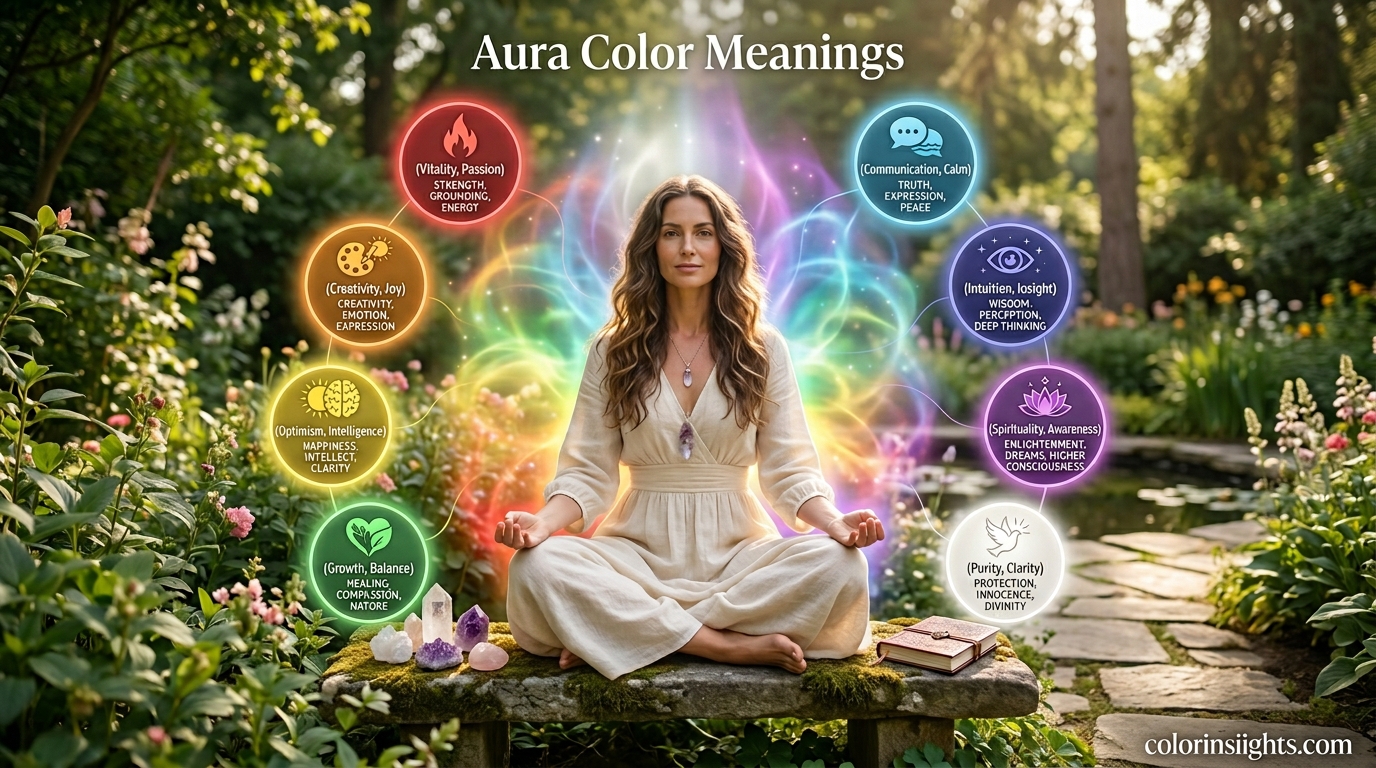
Aura color meanings have fascinated spiritual practitioners, energy healers, and psychology enthusiasts for decades. An aura is commonly described as an energetic field that surrounds living beings, and different aura colors are believed to reflect emotions, personality traits, spiritual development, and current life circumstances.
While scientific evidence for aura interpretation remains limited, aura colors continue to play an important role in many spiritual and metaphysical traditions.
Understanding aura color meanings can provide insight into emotional patterns, personal growth, relationships, and spiritual awareness. Each aura color carries unique symbolism, ranging from love and compassion to wisdom, creativity, strength, and transformation.
Quick Answer:
Aura color meanings represent the symbolic interpretation of the colors believed to appear in a person’s energy field. Different aura colors are associated with specific emotions, personality traits, spiritual qualities, strengths, and challenges.
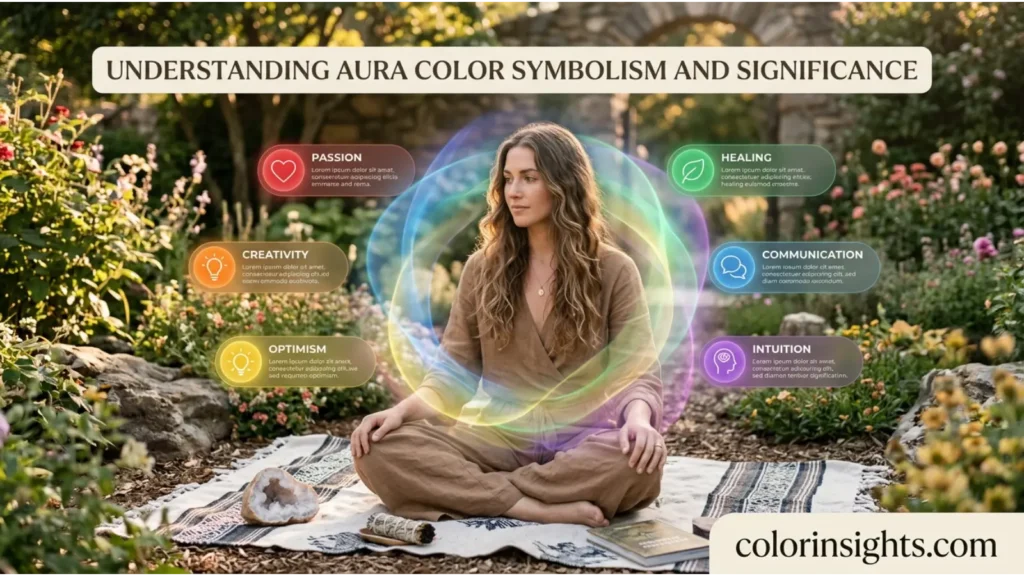
Understanding Aura Color Symbolism and Significance
Aura colors are often viewed as reflections of a person’s emotional state, mental focus, spiritual growth, and energetic condition. Many spiritual traditions believe that aura colors can change over time depending on life experiences, thoughts, relationships, and personal development.
Common symbolic themes associated with aura colors include:
- Emotional well-being
- Spiritual awareness
- Personality characteristics
- Mental clarity
- Relationship patterns
- Creative expression
- Physical vitality
- Life purpose and personal growth
Rather than having a single meaning, aura colors are interpreted within the broader context of an individual’s experiences, behavior, and energy patterns.
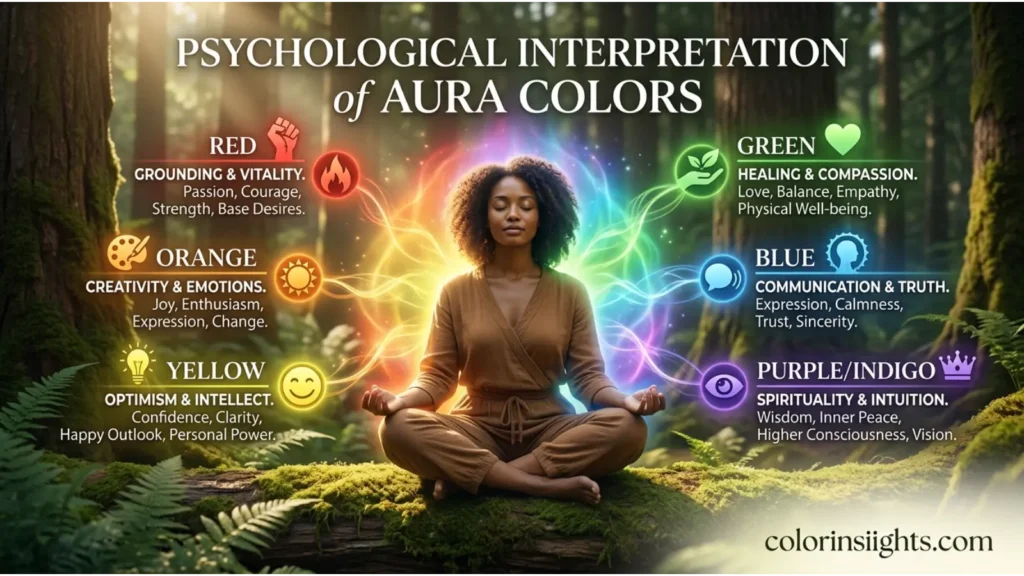
Psychological Interpretation of Aura Colors
Although practitioners mainly view aura reading as a spiritual practice, many aura color meanings correspond to established principles of color psychology.
Emotional Associations
People commonly connect different aura colors to specific emotional states.
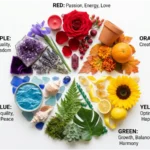
- Red: Passion, courage, determination
- Orange: Enthusiasm, sociability, creativity
- Yellow: Optimism, confidence, intelligence
- Green: Compassion, healing, balance
- Blue: Calmness, communication, trust
- Purple: Intuition, wisdom, spirituality
- Pink: Love, kindness, affection
- White: Purity, clarity, spiritual awareness
Psychological Effects
People often interpret aura colors as indicators of personality, energy, or emotional states.
- Mental focus
- Emotional stability
- Motivation levels
- Stress responses
- Personal confidence
- Social interaction styles
Positive Emotional Responses
Aura colors may symbolize:
- Self-confidence
- Compassion
- Inspiration
- Peacefulness
- Optimism
- Creativity
- Loyalty
- Personal growth
Negative Emotional Responses
Certain aura colors or darker shades may sometimes indicate:
- Anxiety
- Emotional exhaustion
- Confusion
- Fear
- Anger
- Isolation
- Stress
- Unresolved emotional conflicts
Impact on Mood and Behavior
Aura interpretations suggest that energy colors can reflect:
- Decision-making styles
- Leadership tendencies
- Relationship approaches
- Communication patterns
- Problem-solving abilities
Typical Reactions to Aura Colors
People often associate aura colors with:
- Emotional impressions
- Personality expectations
- Spiritual qualities
- Social behavior
- Character strengths and weaknesses
Spiritual Meaning of Aura Colors
In many metaphysical traditions, indicators of spiritual development and energetic balance are believed to be represented by aura colors.
Common spiritual themes include:
Holiness
- White and gold auras are frequently associated with spiritual purity and divine connection.
Wisdom
- Purple, indigo, and gold auras often symbolize wisdom, insight, and higher understanding.
Purity
- White auras commonly represent innocence, clarity, and spiritual cleansing.
Transformation
- Purple and violet energies are frequently linked to personal transformation and growth.
Healing
- Green auras are traditionally associated with healing energy, compassion, and restoration.
Protection
- Blue and indigo aura colors are often interpreted as symbols of protection and inner strength.
Power
- Red and gold auras may symbolize leadership, confidence, and personal power.
Enlightenment
- White, violet, and gold auras are often connected with spiritual awakening and enlightenment.
New Beginnings
- Bright yellow, white, and light green energies may represent renewal and fresh starts.
Eternity
- Gold and white aura symbolism sometimes reflects timeless spiritual awareness and universal consciousness.
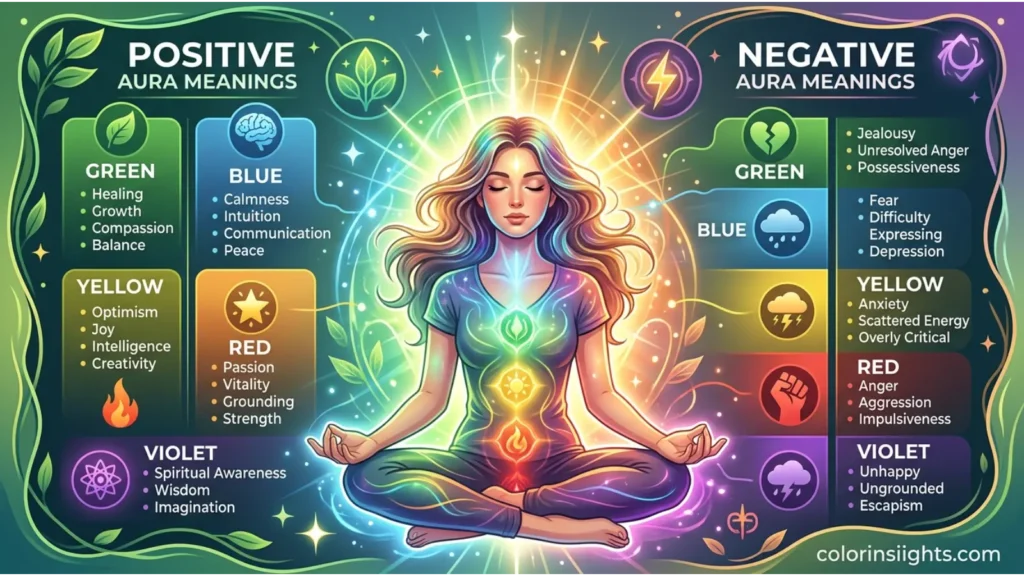
Positive and Negative Meanings of Aura Colors
Positive Meanings
Aura colors often symbolize beneficial personal qualities and emotional strengths.
Love and Compassion
Pink and green auras frequently represent empathy, kindness, and emotional warmth.
Example:
A counselor known for helping others may be associated with green aura symbolism.
Clarity
White and yellow auras often symbolize mental clarity and understanding.
Example:
Someone entering a new phase of self-discovery may be described as having a bright aura.
Hope
Light-colored auras are commonly associated with optimism and future possibilities.
Example:
Individuals overcoming challenges often embrace aura meanings related to renewal.
Balance
Green and blue aura symbolism frequently represents emotional harmony and stability.
Creativity
Orange and yellow auras are often linked to imagination and innovation.
Spiritual Growth
Purple and gold auras commonly symbolize higher awareness and wisdom.
Negative Meanings
Aura interpretations can also include potential challenges.
Emotional Imbalance
Cloudy or dull aura colors may symbolize emotional stress.
Example:
Extended periods of burnout may be associated with weakened energy symbolism.
Isolation
Muted blue or gray aura interpretations can sometimes reflect withdrawal or loneliness.
Confusion
Mixed or unclear aura colors may symbolize uncertainty.
Perfectionism
Bright white aura symbolism can occasionally be associated with unrealistic standards.
Fear
Darkened shades of certain colors may indicate anxiety or insecurity.
Emotional Distance
Cool-toned aura interpretations may sometimes suggest difficulty expressing emotions.
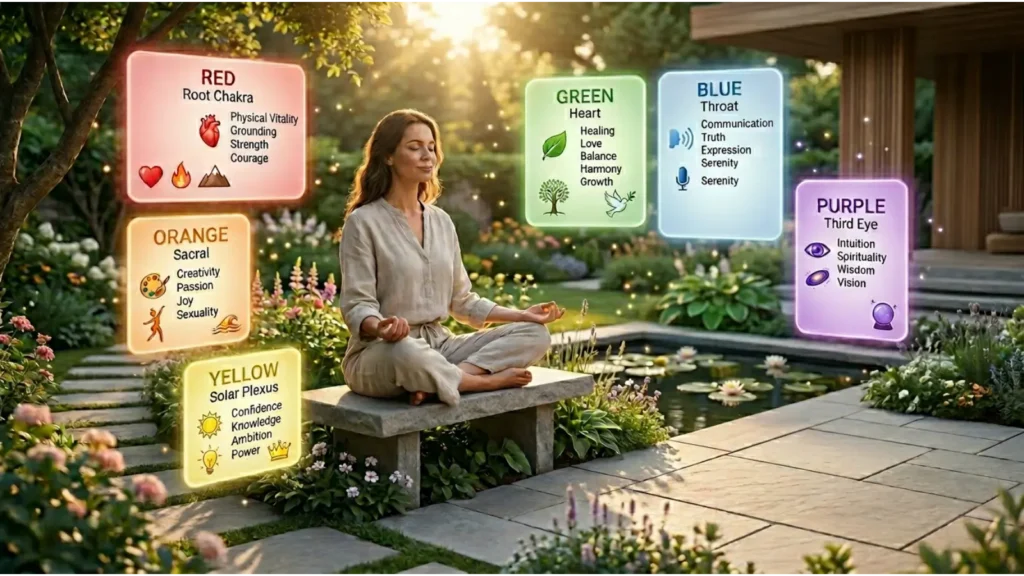
Aura Color Meanings in Different Contexts
Aura color meanings often vary depending on spiritual, cultural, and practical interpretations.
Feng Shui
Aura colors share symbolic connections with Feng Shui principles.
Associated Elements
- Red: Fire
- Green: Wood
- Blue: Water
- Yellow: Earth
- White: Metal
Energy Symbolism
Aura-inspired colors may be used to encourage harmony, growth, protection, and prosperity.
Best Rooms
- Green: Living rooms and healing spaces
- Blue: Bedrooms
- Yellow: Kitchens
- Purple: Meditation rooms
Recommended Color Combinations
- Blue and white
- Green and brown
- Purple and silver
- Yellow and beige
Home Decorating Tips
Use aura-inspired colors thoughtfully to support desired emotional and energetic atmospheres.
Marketing
Aura color symbolism often overlaps with branding psychology.
Branding Psychology
Brands use color associations to influence consumer perception.
Consumer Perception
Colors communicate emotional messages:
- Blue: Trust
- Green: Wellness
- Red: Energy
- Yellow: Optimism
Trust Signals
Blue and green are commonly used to build credibility.
Product Packaging
Natural products often feature green tones, while luxury products may incorporate gold and purple.
Advertising Applications
Color selection helps reinforce brand identity and emotional appeal.
Examples of brands using these color associations include:
- Facebook (blue trust symbolism)
- Starbucks (green growth symbolism)
- McDonald’s (yellow and red energy symbolism)
Design
Aura color meanings influence many design disciplines.
Interior Design
Colors create specific moods and atmospheres within spaces.
Graphic Design
Color choices help communicate messages quickly and effectively.
Web Design
User engagement often depends on thoughtful color selection.
User Experience
Color can guide attention and improve usability.
Minimalist Aesthetics
Neutral aura-inspired palettes often create calm, sophisticated environments.
Fashion
Aura color symbolism frequently influences clothing choices.
Clothing Symbolism
- Red: Confidence
- Blue: Reliability
- Green: Balance
- Purple: Creativity
- White: Simplicity
Seasonal Use
- Bright colors often appear in spring and summer.
- Deeper tones are popular during autumn and winter.
Styling Effects
Colors can influence how outfits are perceived.
Personality Impressions
People may associate certain colors with confidence, friendliness, professionalism, or creativity.
Advantages
- Supports self-expression
- Enhances visual impact
- Reinforces personal style
Disadvantages
- Cultural interpretations vary
- Color symbolism may be misunderstood
Example:
Wearing blue during an interview may help communicate professionalism and trustworthiness.
Aura Color Associations Are Not Universal
Aura color meanings differ significantly across cultures and traditions.
Western Cultures
Western interpretations often associate:
- White with purity
- Blue with trust
- Green with nature
- Red with passion
These meanings frequently influence branding, design, and fashion.
Eastern Cultures
Many Eastern traditions connect colors with spiritual energy, balance, and life force.
For example:
- Red often symbolizes luck and prosperity.
- Gold may represent abundance and spiritual achievement.
Religious Traditions
Different religions assign unique symbolic meanings to colors.
Examples include:
- White representing holiness.
- Gold symbolizing divine wisdom.
- Purple signifying spiritual authority.
Historical Interpretations
Throughout history, color symbolism has evolved.
Purple once represented royalty due to its rarity and cost. Gold has long been associated with wealth, power, and sacred authority.
Modern Global Interpretations
Globalization has blended many cultural meanings, creating more universal associations while preserving regional traditions.
What Aura Colors Say About Your Personality
Many aura interpretations suggest that color preferences and dominant aura colors may reflect personality tendencies.
Strengths
Commonly associated traits include:
- Compassion
- Creativity
- Confidence
- Leadership
- Wisdom
- Optimism
Weaknesses
Potential challenges may include:
- Overthinking
- Impulsiveness
- Sensitivity
- Perfectionism
- Emotional intensity
Social Behavior
Aura interpretations often connect colors with:
- Communication style
- Friendliness
- Empathy
- Group participation
Work Style
Different aura colors are sometimes associated with:
- Leadership
- Innovation
- Collaboration
- Organization
- Strategic thinking
Relationships
Aura symbolism may suggest preferences for:
- Emotional connection
- Loyalty
- Independence
- Supportiveness
Emotional Tendencies
Aura readings often focus on:
- Emotional resilience
- Stress management
- Self-awareness
- Adaptability
It is important to remember that color preferences and aura interpretations do not scientifically determine personality. They should be viewed as symbolic tools for reflection rather than definitive assessments.
FAQs
What defines an aura color?
An aura color is believed to represent the energetic field surrounding a person and may symbolize emotional, mental, and spiritual qualities.
What do aura colors symbolize?
Aura colors symbolize personality traits, emotional states, spiritual development, strengths, and life experiences.
Why are aura colors important?
Many people use aura color interpretations for self-reflection, personal growth, and spiritual exploration.
Are aura colors scientifically proven?
There is no widely accepted scientific evidence confirming aura colors. Most interpretations come from spiritual and metaphysical traditions.
What emotions do aura colors represent?
Aura colors are commonly associated with emotions such as love, confidence, peace, creativity, compassion, and determination.
What is the spiritual meaning of aura colors?
Spiritually, aura colors may symbolize healing, wisdom, protection, transformation, enlightenment, and personal growth.
Which aura color is considered the most powerful?
Different traditions interpret power differently, but gold, purple, white, and red are often associated with strong energetic symbolism.
What colors pair well with aura-inspired themes?
Popular combinations include blue and white, green and gold, purple and silver, and yellow with neutral tones.
What does liking aura colors say about a person?
People attracted to aura symbolism are often interested in self-awareness, spirituality, creativity, or personal development.
Can aura colors change?
According to aura practitioners, aura colors may shift over time based on emotions, experiences, health, and spiritual growth.
Conclusion:
Aura color meanings offer a fascinating blend of symbolism, spirituality, psychology, and cultural interpretation.
If viewed as energetic reflections or symbolic tools for self-discovery, aura colors continue to inspire curiosity about personality, emotions, and spiritual development.
From healing green and peaceful blue to intuitive purple and pure white, each aura color carries unique associations that can encourage deeper reflection and personal insight.
While aura interpretations should not be considered scientific fact, they remain meaningful within many spiritual and self-development traditions.