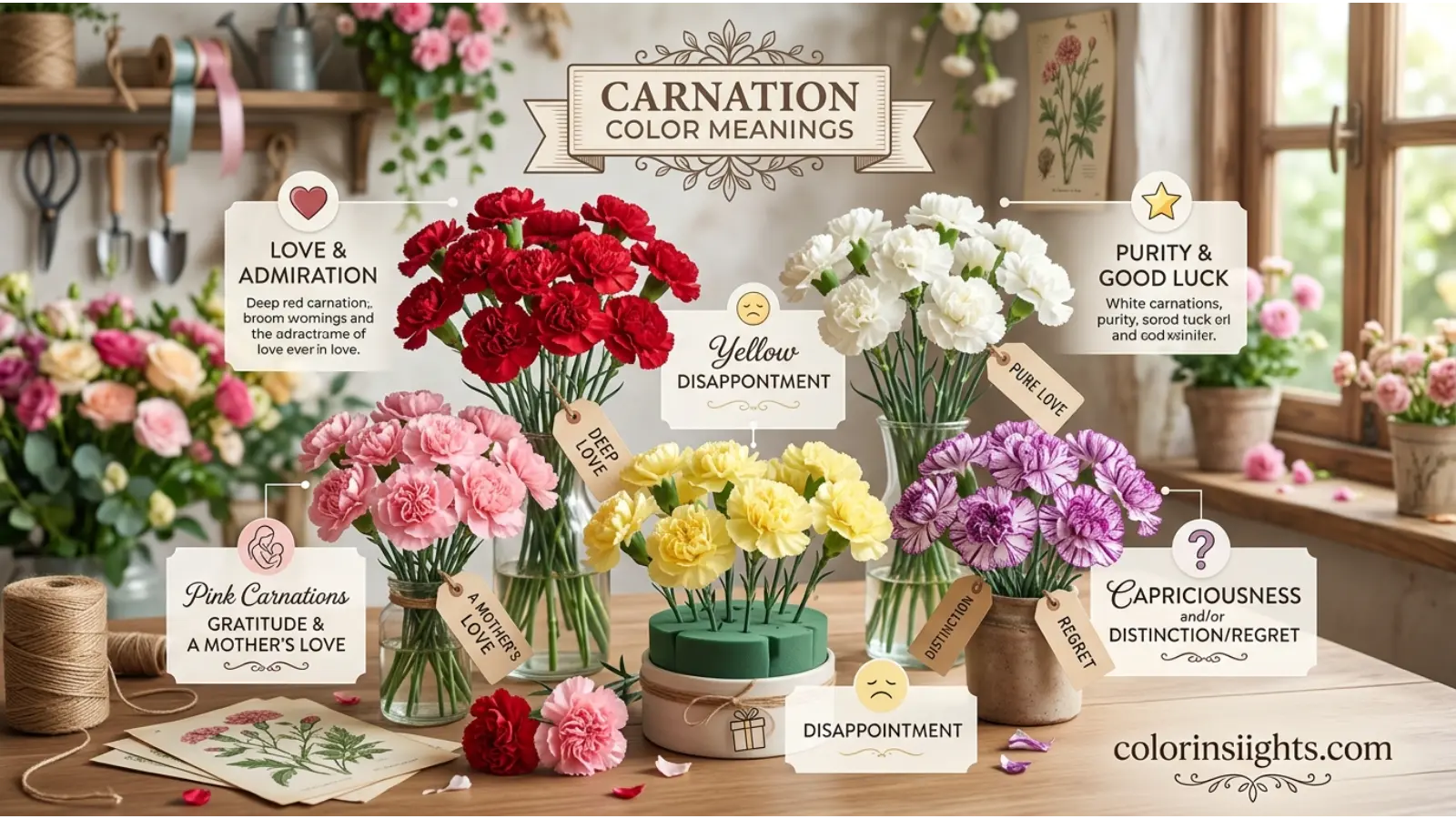
Carnations are among the most meaningful flowers in the world, admired for their beauty, fragrance, and rich symbolism. Different carnation colors meanings carry unique messages that communicate emotions, beliefs, and intentions.
From love and admiration to remembrance and gratitude, each shade tells its own story. Understanding carnation color meanings can help you choose the right flower for celebrations, gifts, memorials, weddings, and personal expression.
Whether used in floral arrangements, spiritual practices, fashion inspiration, or design, carnations continue to hold deep cultural and emotional significance across generations.
Quick Answer:
Carnation color meanings vary by shade. Red carnations symbolize love and admiration, pink carnations represent gratitude and affection, white carnations signify purity and luck, yellow carnations can indicate disappointment or friendship, and purple carnations often symbolize capriciousness and uniqueness.
Understanding the Symbolism of Carnation Colors
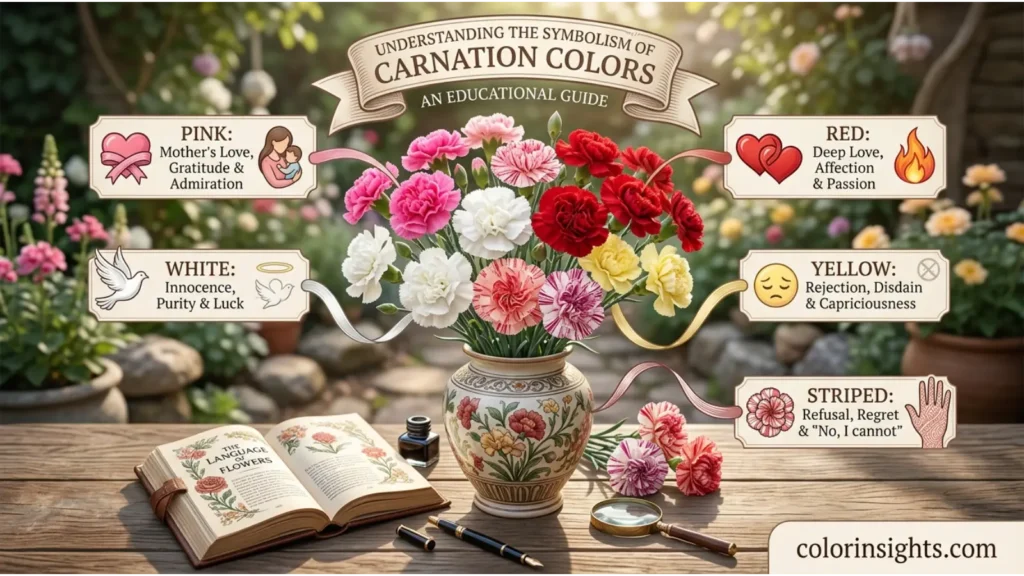
Carnation symbolism changes according to color, cultural traditions, and context. While the flower itself generally represents fascination, affection, and distinction, individual colors convey more specific meanings.
Common carnation color symbolism includes:
- Red Carnations: Love, admiration, passion, and respect.
- Pink Carnations: Gratitude, motherly love, affection, and appreciation.
- White Carnations: Purity, innocence, good luck, and remembrance.
- Yellow Carnations: Friendship, joy, disappointment, or rejection depending on context.
- Purple Carnations: Individuality, unpredictability, creativity, and uniqueness.
- Green Carnations: Renewal, prosperity, and good fortune.
These symbolic meanings make carnations popular for Mother’s Day, weddings, anniversaries, sympathy arrangements, and religious ceremonies.
Psychological Characteristics of Carnation Colors
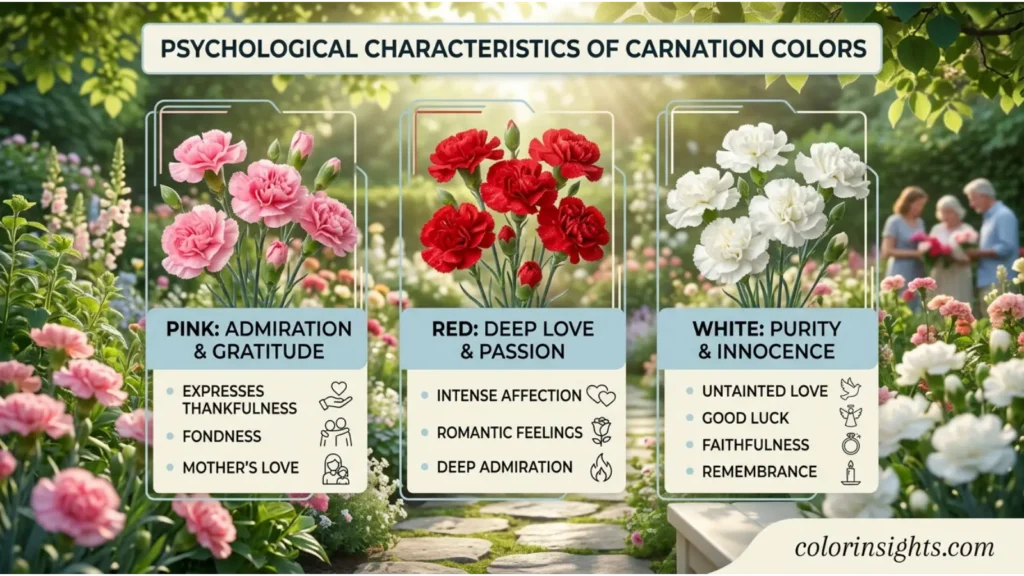
Color psychology suggests that different carnation shades trigger specific emotional and behavioral responses.
Emotional Associations
- Red evokes passion and emotional intensity.
- Pink creates feelings of warmth and compassion.
- White encourages peace and simplicity.
- Yellow promotes optimism and sociability.
- Purple inspires imagination and creativity.
- Green supports balance and renewal.
Psychological Effects
- Can influence mood and perception.
- Helps communicate feelings without words.
- Creates emotional connections through floral gifts.
- Enhances symbolic communication in social settings.
Positive Emotional Responses
- Love
- Appreciation
- Comfort
- Hope
- Joy
- Trust
- Gratitude
- Inspiration
Negative Emotional Responses
- Jealousy (certain yellow interpretations)
- Emotional vulnerability
- Nostalgia and sadness in memorial settings
- Uncertainty associated with purple symbolism
Impact on Mood and Behavior
Carnation colors often influence how floral arrangements are perceived. Warm colors such as red and pink encourage emotional closeness, while white and green promote calmness and reflection.
Typical Reactions
People often associate carnations with sincerity, affection, respect, and meaningful relationships, making them emotionally impactful flowers.
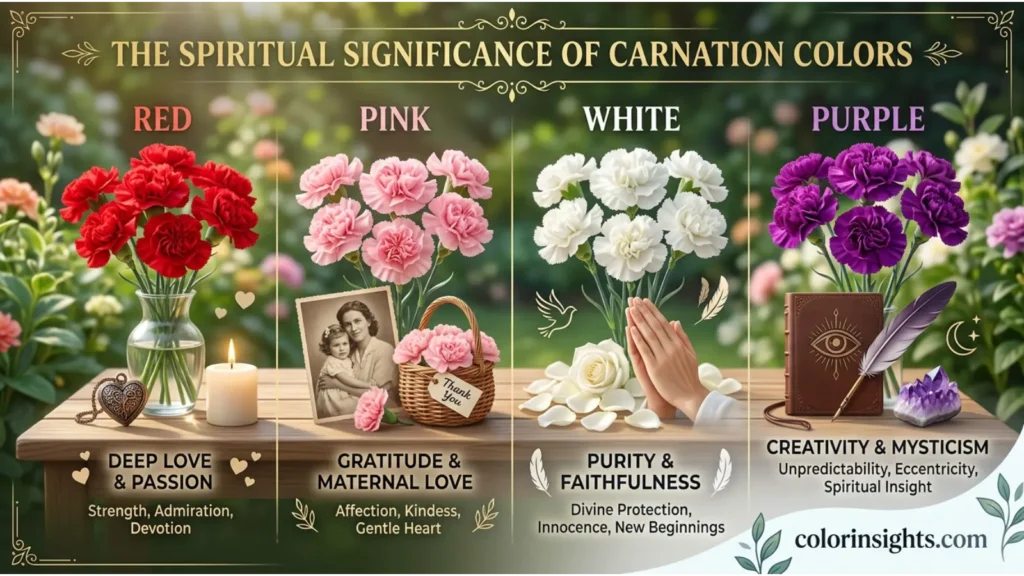
Spiritual Significance of Carnation Colors
Throughout history, carnations have appeared in spiritual traditions, folklore, and religious symbolism.
Spiritual Associations
- Holiness: White carnations are often linked to sacred purity.
- Wisdom: Purple carnations symbolize deeper insight and reflection.
- Purity: White carnations represent innocence and virtue.
- Transformation: Green carnations symbolize growth and renewal.
- Healing: Soft pink carnations convey emotional healing.
- Protection: White flowers are commonly associated with spiritual protection.
- Power: Red carnations represent strength and courage.
- Enlightenment: Purple tones encourage spiritual awareness.
- New Beginnings: Green carnations symbolize fresh starts.
- Eternity: White carnations are frequently used in memorial ceremonies to represent everlasting remembrance.
Many spiritual traditions use flowers as symbolic messengers, and carnations remain among the most meaningful blooms in ceremonial settings.
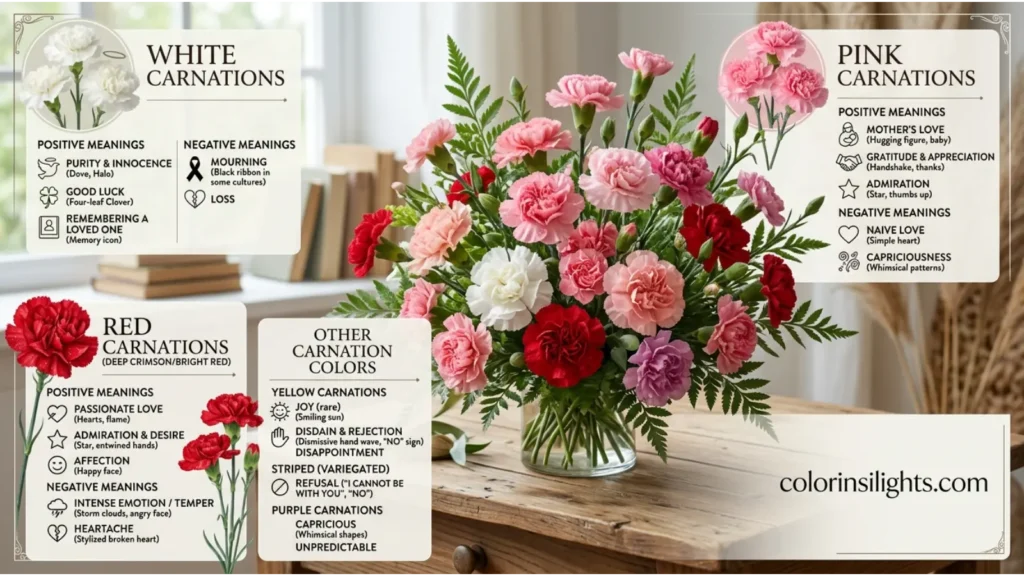
Positive and Negative Meanings of Carnation Colors
Positive Meanings
Carnations commonly symbolize:
- Love: Red carnations express deep affection.
- Gratitude: Pink carnations communicate appreciation.
- Purity: White carnations represent innocence.
- Hope: Green carnations symbolize renewal.
- Harmony: Balanced floral arrangements create emotional unity.
- Respect: Frequently used in commemorative events.
- Compassion: Soft pink shades suggest kindness.
- Devotion: Long-lasting blooms symbolize enduring relationships.
Example:
A bouquet of pink carnations is often given to thank a parent, mentor, or friend.
Negative Meanings
Certain carnation colors may carry less favorable symbolism.
- Disappointment: Yellow carnations have historically represented rejection.
- Isolation: White arrangements can sometimes appear emotionally distant.
- Emotional Coldness: Excessive white floral designs may feel impersonal.
- Unpredictability: Purple carnations symbolize capricious behavior.
- Perfectionism: Formal white arrangements can convey rigid expectations.
- Sadness: White carnations are often used in funerals and memorials.
Example:
In Victorian flower language, yellow carnations sometimes communicated disappointment or refusal.
Meanings of Carnation Colors in Different Contexts
Carnation meanings often change depending on their use, setting, and cultural interpretation.
Feng Shui
Carnations contribute positive energy within Feng Shui practices.
Associated Element
- Green carnations: Wood element
- Red carnations: Fire element
- White carnations: Metal element
Energy Symbolism
- Love and harmony
- Emotional balance
- Positive relationships
- Renewal and vitality
Best Rooms
- Living room
- Entryway
- Dining room
- Meditation space
Recommended Color Combinations
- Pink and white
- Red and green
- White and gold
- Purple and silver
Home Decorating Tips
Use fresh carnations near entrances or communal spaces to encourage positive energy flow and harmonious relationships.
Marketing
Color symbolism strongly influences floral marketing and branding.
Branding Psychology
- Pink suggests warmth and care.
- Red communicates passion and emotion.
- White reflects elegance and purity.
Consumer Perception
Customers often associate carnations with sincerity, affordability, and meaningful sentiment.
Trust Signals
- Soft color palettes build emotional trust.
- Traditional floral symbolism enhances credibility.
Product Packaging
Carnation-inspired colors are frequently used for:
- Greeting cards
- Gift packaging
- Beauty products
- Mother’s Day promotions
Advertising Applications
Marketers use carnation symbolism to emphasize appreciation, celebration, remembrance, and emotional connection.
Design
Carnation-inspired colors influence many design fields.
Interior Design
- Pink creates welcoming environments.
- White promotes clean aesthetics.
- Purple adds sophistication.
Graphic Design
Carnation color palettes create emotional resonance and visual balance.
Web Design
Soft floral tones improve approachability and user engagement.
User Experience
Warm, gentle colors can increase feelings of trust and comfort.
Minimalist Aesthetics
White carnations align particularly well with minimalist and modern design concepts.
Fashion
Carnation colors carry distinct fashion meanings.
Clothing Symbolism
- Red conveys confidence.
- Pink reflects kindness.
- White symbolizes elegance.
- Purple suggests creativity.
Seasonal Use
- Spring: Pink and white carnations.
- Summer: Bright red and yellow.
- Autumn: Deep purple shades.
Styling Effects
Carnation-inspired colors can soften appearances and create approachable impressions.
Personality Impressions
People may perceive wearers as:
- Caring
- Romantic
- Optimistic
- Sophisticated
Advantages
- Versatile color range
- Symbolic richness
- Broad seasonal appeal
Disadvantages
- Certain shades may appear overly traditional.
- Some yellow interpretations carry mixed symbolism.
Color Associations Are Not Universal
Carnation color meanings differ across cultures and historical periods.
Western Cultures
In many Western countries, red carnations symbolize romantic love, pink carnations express gratitude, and white carnations represent purity and remembrance.
Eastern Cultures
Several Eastern traditions associate flowers with prosperity, honor, longevity, and family respect. Symbolism may vary significantly between countries.
Religious Traditions
Christian symbolism often connects white carnations with purity and devotion. Floral offerings also appear in numerous religious ceremonies worldwide.
Historical Interpretations
Victorian flower language assigned highly specific meanings to carnation colors, allowing individuals to communicate emotions through bouquets.
Modern Global Interpretations
Today, carnation meanings blend traditional symbolism with contemporary emotional expression. Social media, gifting trends, and global commerce continue to shape modern interpretations.
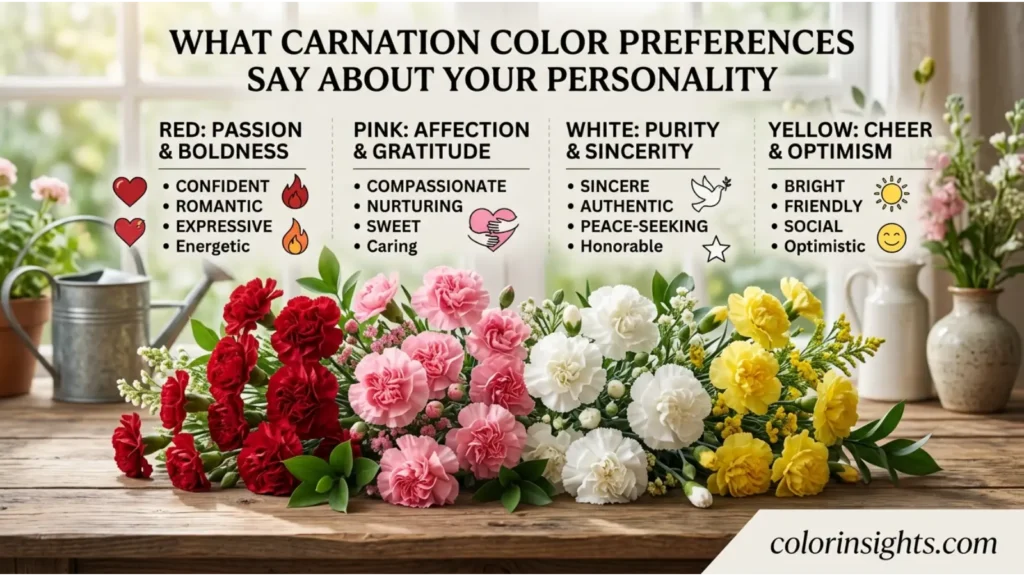
What Carnation Color Preferences Say About Your Personality
While color preferences cannot determine personality with certainty, psychology researchers have identified common associations.
Strengths
People drawn to carnation-inspired colors may value:
- Compassion
- Loyalty
- Optimism
- Creativity
- Emotional intelligence
Weaknesses
Potential tendencies include:
- Sensitivity
- Overthinking
- Idealism
- Emotional dependence
Social Behavior
They often enjoy meaningful relationships and sincere communication.
Work Style
Many prefer collaborative environments where appreciation and teamwork are valued.
Relationships
Carnation enthusiasts frequently prioritize loyalty, affection, and emotional connection.
Emotional Tendencies
They may seek harmony, kindness, beauty, and personal growth.
Remember that personality is shaped by numerous factors beyond color preference alone.
FAQs
What defines carnation color meaning?
Carnation color meaning refers to the symbolic messages associated with different carnation flower colors, such as love, gratitude, purity, and remembrance.
What do carnation colors symbolize?
Carnation colors symbolize various emotions and values including love, appreciation, friendship, innocence, devotion, and renewal.
Why are carnation colors important?
They help communicate feelings and intentions in gifts, celebrations, memorials, and special occasions.
Are carnation colors warm or cool?
It depends on the shade. Red and yellow carnations are warm colors, while white, purple, and some pink tones can appear cooler.
What emotions do carnation colors represent?
Carnations commonly represent love, gratitude, hope, compassion, joy, remembrance, and admiration.
What is the spiritual meaning of carnations?
Spiritually, carnations can symbolize purity, healing, protection, devotion, transformation, and eternal remembrance.
Which carnation color represents love?
Red carnations most strongly symbolize romantic love, admiration, and deep affection.
Which carnation color symbolizes gratitude?
Pink carnations are traditionally associated with gratitude, appreciation, and motherly love.
What colors pair well with carnations?
White, green, blush pink, lavender, gold, silver, and soft cream tones pair beautifully with carnation-inspired color schemes.
What does liking carnation colors say about a person?
People who enjoy carnation-inspired colors are often perceived as caring, compassionate, loyal, creative, and emotionally aware.
Are carnation meanings the same worldwide?
No. Meanings vary across cultures, religions, and historical traditions.
Which carnation color is best for sympathy flowers?
White carnations are most commonly used to express remembrance, respect, peace, and sympathy.
Conclusion:
Carnation color meanings provide a fascinating blend of symbolism, psychology, spirituality, and cultural tradition. Whether expressing love through red carnations, gratitude through pink blooms, purity through white flowers, or creativity through purple varieties, each color communicates a unique emotional message.
Understanding carnation symbolism can help individuals choose meaningful flowers for celebrations, memorials, relationships, and personal expression.
While interpretations differ across cultures and contexts, carnations remain one of the world’s most symbolic and beloved flowers.