A coat of arms is much more than a decorative emblem. Throughout history, colors used in heraldry have carried powerful symbolic meanings that communicate values, achievements, family heritage, religious beliefs, and social status.
Heraldic colors, known as tinctures, were carefully selected to represent virtues such as courage, loyalty, wisdom, generosity, and honor. Understanding coat of arms color meanings helps historians, genealogists, designers, and enthusiasts interpret the messages embedded within these traditional symbols.
In heraldry, each color conveys a specific set of characteristics and ideals. While interpretations can vary by culture and historical period, most heraldic traditions share common symbolic associations that have remained influential for centuries.
Quick Answer:
Coat of arms colors symbolize personal virtues, noble qualities, spiritual beliefs, and family values. Gold represents generosity, silver symbolizes purity, red signifies courage, blue stands for loyalty, green represents hope and growth, black symbolizes wisdom and constancy, and purple reflects royalty and justice.
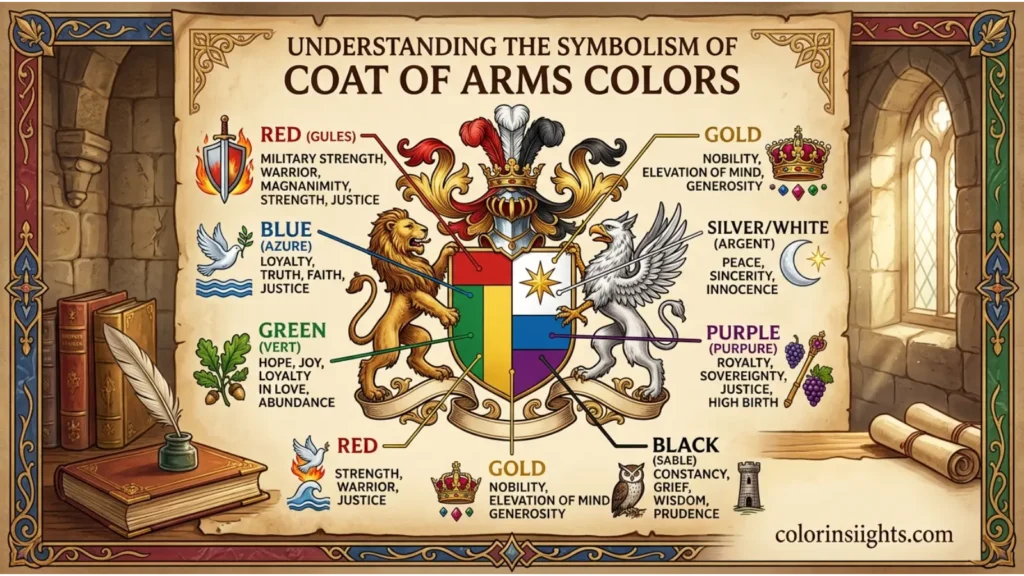
Understanding the Symbolism of Coat of Arms Colors
Unlike a single color, heraldic symbolism involves a complete palette of traditional colors known as tinctures. These colors were developed during the medieval period to create recognizable identities on shields, banners, and armor.
The primary heraldic colors include:
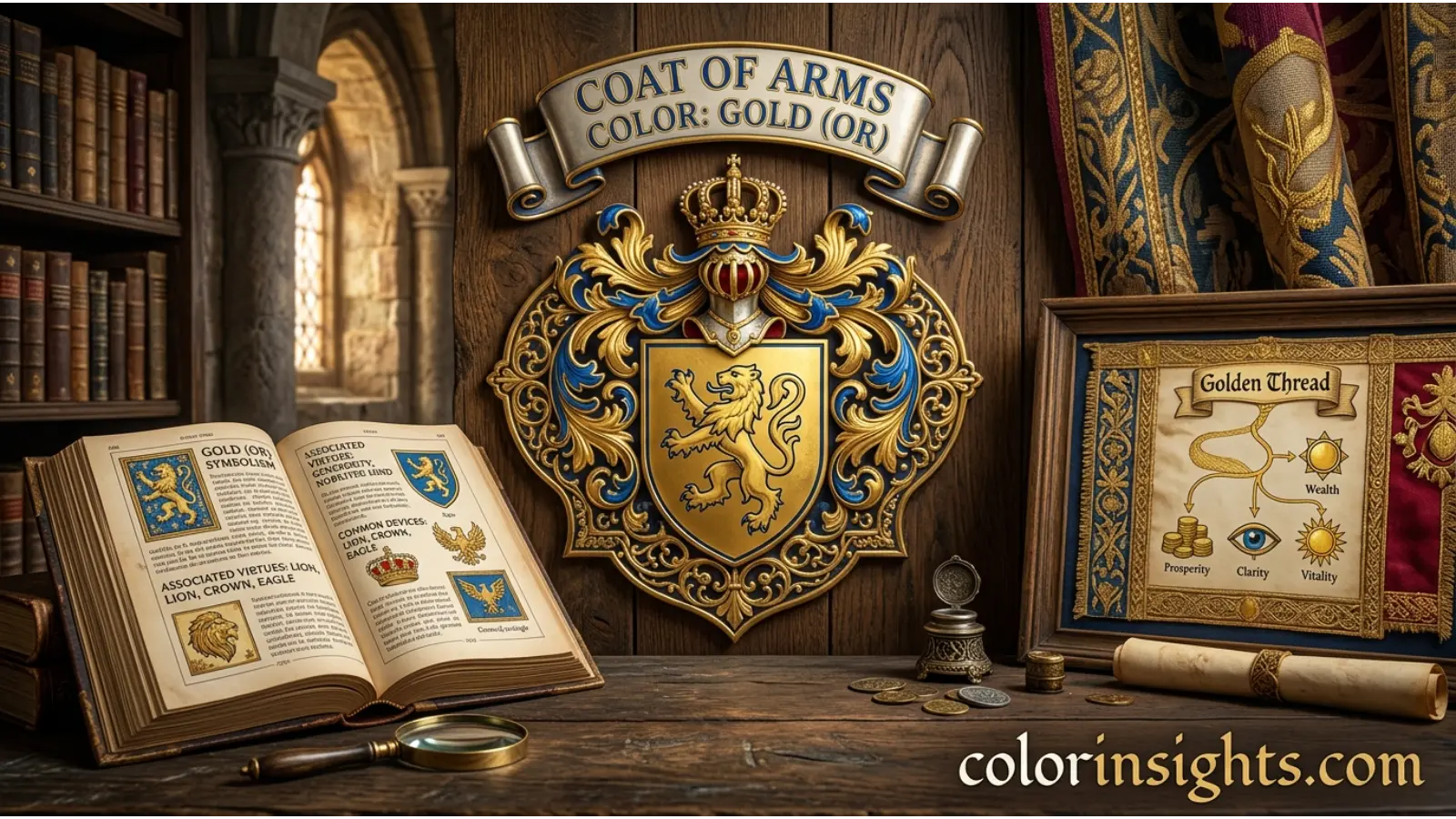
- Gold (Or)
- Silver/White (Argent)
- Red (Gules)
- Blue (Azure)
- Green (Vert)
- Black (Sable)
- Purple (Purpure)
Each color communicates a different message about the individual, family, organization, or territory represented by the coat of arms.
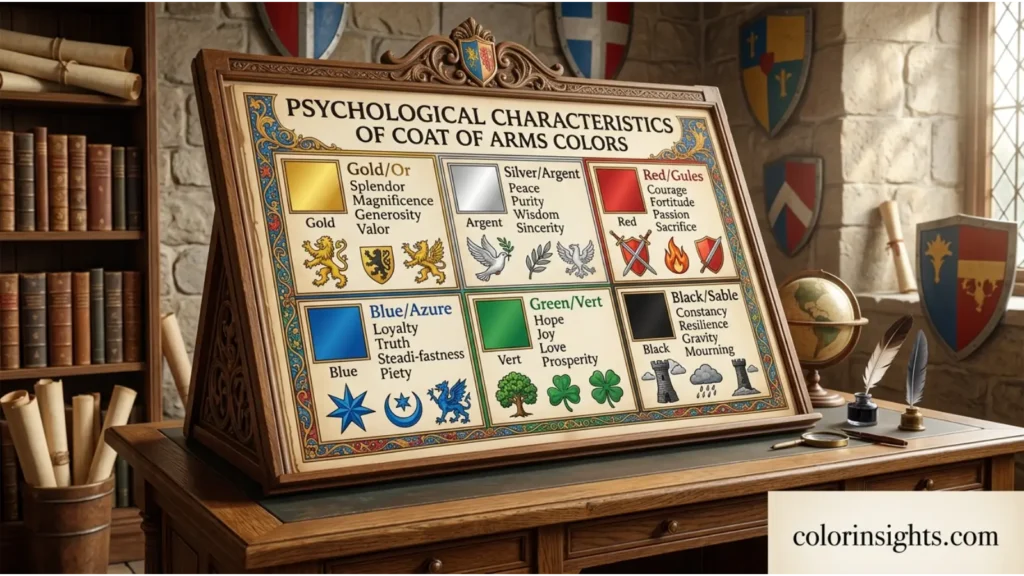
Psychological Characteristics of Coat of Arms Colors
Color psychology helps explain why certain colors became associated with specific virtues in heraldry.
Emotional Associations
- Gold evokes prestige, success, and generosity.
- Silver promotes purity, honesty, and sincerity.
- Red creates feelings of strength, bravery, and passion.
- Blue inspires trust, loyalty, and stability.
- Green suggests growth, hope, and renewal.
- Black conveys authority, determination, and resilience.
- Purple evokes dignity, wisdom, and nobility.
Psychological Effects
- Warm colors like red and gold attract attention and signal power.
- Cool colors like blue and green create feelings of calmness and reliability.
- Neutral tones such as silver and black provide balance and sophistication.
Positive Emotional Responses
- Confidence
- Security
- Trust
- Honor
- Optimism
- Respect
- Courage
Negative Emotional Responses
- Excessive red may suggest aggression.
- Excessive black may appear intimidating.
- Too much gold can imply arrogance.
- Overuse of silver may seem emotionally distant.
Impact on Mood and Behavior
Heraldic colors were chosen to inspire admiration, loyalty, and respect. Leaders often used these colors to reinforce authority and encourage unity among followers.
Typical Reactions
People generally perceive:
- Red as bold and heroic.
- Blue as dependable.
- Gold as prestigious.
- Green as balanced.
- Purple as elite.
- Black as powerful.
- Silver as pure and truthful.
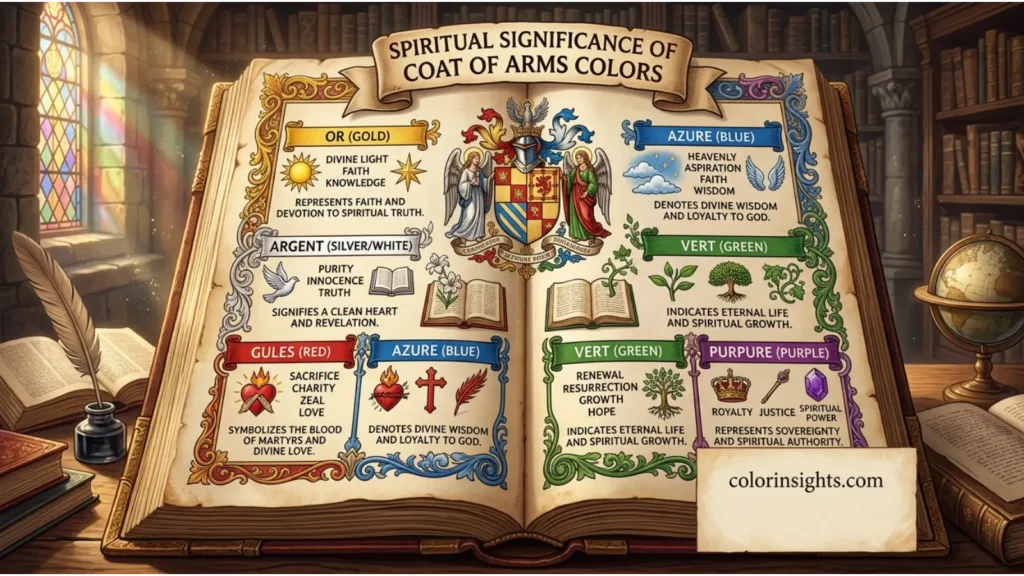
Spiritual Significance of Coat of Arms Colors
Heraldic colors often carried religious and spiritual symbolism in medieval Europe.
Gold (Or)
- Divine wisdom
- Spiritual enlightenment
- Eternal truth
- Heavenly glory
Silver (Argent)
- Purity
- Innocence
- Holiness
- Spiritual clarity
Red (Gules)
- Sacrifice
- Martyrdom
- Courage in faith
- Devotion
Blue (Azure)
- Heavenly protection
- Loyalty to God
- Faithfulness
- Truth
Green (Vert)
- Renewal
- Resurrection
- Growth
- Healing
Black (Sable)
- Wisdom gained through experience
- Endurance
- Protection
- Reflection
Purple (Purpure)
- Royal authority
- Sacred power
- Spiritual leadership
- Transformation
Other common spiritual themes represented through heraldic colors include:
- Holiness
- Wisdom
- Purity
- Transformation
- Healing
- Protection
- Power
- Enlightenment
- New beginnings
- Eternity
Positive and Negative Meanings of Coat of Arms Colors
Positive Meanings
Gold
Represents generosity, wealth, excellence, achievement, and honor.
Example:
Royal families often used gold to signify noble status and leadership.
Silver
Symbolizes purity, peace, sincerity, and truth.
Example:
Religious institutions frequently incorporated silver to represent spiritual integrity.
Red
Represents courage, valor, strength, and determination.
Example:
Military coats of arms commonly feature red to honor bravery in battle.
Blue
Symbolizes loyalty, justice, and trustworthiness.
Example:
Many civic emblems use blue to represent dependable governance.
Green
Represents hope, abundance, fertility, and growth.
Example:
Agricultural regions often use green in their heraldic symbols.
Black
Symbolizes wisdom, dignity, constancy, and resilience.
Example:
Noble houses sometimes adopted black to reflect steadfast character.
Purple
Represents royalty, justice, sovereignty, and wisdom.
Example:
Monarchies historically associated purple with high rank.
Negative Meanings
Gold
May symbolize vanity, greed, or excessive pride.
Silver
Can suggest emotional detachment or sterility.
Red
May represent aggression, conflict, or anger.
Blue
Can sometimes imply emotional reserve or rigidity.
Green
May symbolize envy or inexperience.
Black
Can be associated with mourning, loss, or mystery.
Purple
May suggest extravagance or elitism.
Interpreting Coat of Arms Color Meanings
The meaning of heraldic colors often depends on context, historical period, geographic location, and accompanying symbols.
Feng Shui
Although heraldry originated in Europe, modern designers sometimes apply Feng Shui concepts when using heraldic colors.
Associated Elements
- Red: Fire
- Blue and Black: Water
- Green: Wood
- Gold and Silver: Metal
- Purple: Fire and Spiritual Energy
Energy Symbolism
- Red promotes vitality.
- Blue encourages calmness.
- Green supports growth.
- Gold attracts abundance.
Best Rooms
- Blue: Bedrooms and offices.
- Green: Living rooms.
- Red: Dining areas.
- Gold: Entryways.
Recommended Color Combinations
- Blue and Gold
- Green and Silver
- Red and Gold
- Purple and Silver
Home Decorating Tips
Use heraldic colors as accent pieces rather than overwhelming entire spaces.
Marketing
Heraldic color symbolism continues to influence modern branding.
Branding Psychology
- Gold communicates luxury.
- Blue builds trust.
- Red creates urgency.
- Green suggests sustainability.
Consumer Perception
Consumers often associate traditional heraldic colors with credibility and heritage.
Trust Signals
Blue and silver remain among the most trusted branding colors.
Product Packaging
Premium products frequently incorporate:
- Gold for exclusivity.
- Black for sophistication.
- Purple for luxury.
Advertising Applications
Brands use heraldic-inspired color schemes to emphasize tradition and authority.
Examples include:
- Rolex
- Ford Motor Company
- Cadbury
Design
Interior Design
Heraldic colors create classic and timeless spaces.
Graphic Design
Designers use heraldic palettes to evoke tradition and credibility.
Web Design
Blue and gold combinations often appear on educational, legal, and governmental websites.
User Experience
Color choices influence trust, readability, and engagement.
Minimalist Aesthetics
Modern designers frequently pair heraldic colors with neutral backgrounds to maintain clarity.
Fashion
Clothing Symbolism
- Red suggests confidence.
- Blue reflects reliability.
- Black communicates sophistication.
- Purple implies luxury.
Seasonal Use
- Green is common in spring.
- Red dominates winter celebrations.
- Blue works year-round.
Styling Effects
Gold accessories can elevate simple outfits, while black creates a refined appearance.
Personality Impressions
People often perceive wearers of heraldic colors as:
- Confident
- Reliable
- Professional
- Distinguished
Advantages
- Timeless appeal
- Strong symbolism
- Versatility
Disadvantages
- Some combinations may feel overly formal.
- Excessive use can appear outdated if not modernized.

Color Associations Are Not Universal
Western Cultures
In Western heraldry, red commonly symbolizes courage, blue represents loyalty, and gold signifies honor and generosity.
Eastern Cultures
Many Eastern traditions associate red with luck and prosperity, while white often symbolizes mourning rather than purity.
Religious Traditions
Christian symbolism frequently links gold with divinity, white with holiness, and purple with spiritual authority.
Historical Interpretations
During the Middle Ages, color meanings were closely connected to social rank, military service, and noble lineage.
Modern Global Interpretations
Today, heraldic colors are often interpreted through a combination of historical symbolism, color psychology, branding theory, and cultural context.
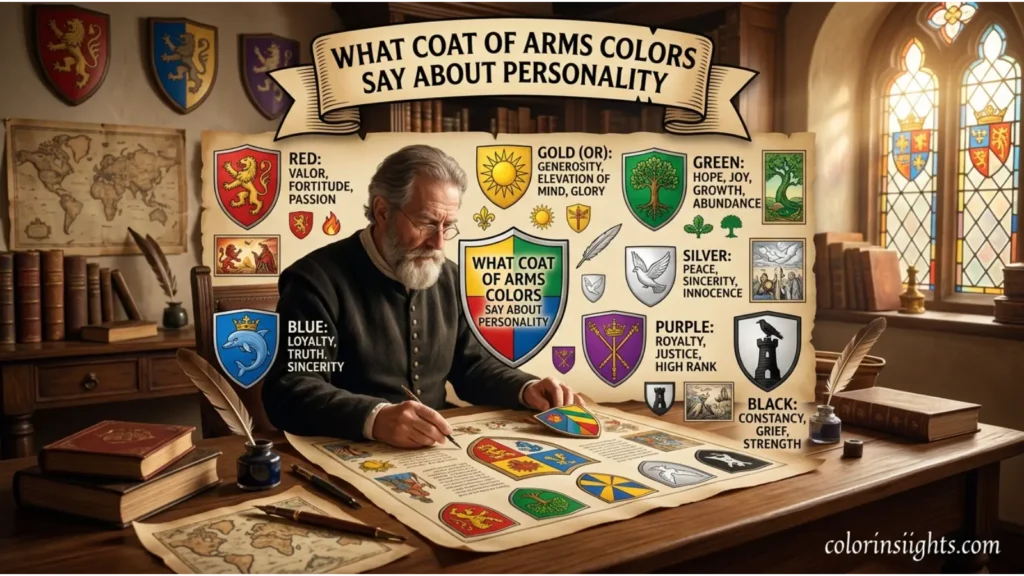
What Coat of Arms Colors Say About Personality
While color preferences do not scientifically determine personality, people often associate certain traits with favored heraldic colors.
Gold Preference
Strengths
- Ambitious
- Generous
- Confident
Weaknesses
- Status-conscious
- Competitive
Blue Preference
Strengths
- Loyal
- Dependable
- Organized
Weaknesses
- Reserved
- Cautious
Red Preference
Strengths
- Courageous
- Energetic
- Determined
Weaknesses
- Impulsive
- Aggressive
Green Preference
Strengths
- Balanced
- Compassionate
- Patient
Weaknesses
- Resistant to change
Black Preference
Strengths
- Strong-willed
- Disciplined
- Independent
Weaknesses
- Secretive
- Intimidating
Purple Preference
Strengths
- Creative
- Visionary
- Wise
Weaknesses
- Idealistic
- Perfectionistic
Social Behavior
People attracted to heraldic colors often value tradition, identity, and meaningful symbolism.
Work Style
They may prefer structured environments, clear goals, and recognition of achievements.
Relationships
Many value loyalty, honesty, and long-term commitment.
Emotional Tendencies
Color preferences can reflect emotional needs and experiences, but they should not be viewed as definitive personality indicators.
FAQs
What defines coat of arms colors?
Coat of arms colors are traditional heraldic tinctures used to represent virtues, values, achievements, and family heritage.
What do coat of arms colors symbolize?
They symbolize qualities such as courage, loyalty, wisdom, purity, generosity, justice, and honor.
Why are coat of arms colors important?
They help communicate identity, heritage, status, and moral values through visual symbolism.
Are heraldic colors universal?
No. Interpretations vary across cultures, religions, and historical periods.
What is the spiritual meaning of coat of arms colors?
Many heraldic colors represent divine wisdom, purity, faith, protection, transformation, and spiritual authority.
Which coat of arms color represents courage?
Red (Gules) is traditionally associated with courage, valor, and military strength.
Which heraldic color symbolizes loyalty?
Blue (Azure) is widely recognized as the color of loyalty, truth, and faithfulness.
What colors pair well in heraldic design?
Popular combinations include blue and gold, red and silver, green and gold, and purple and silver.
How are coat of arms colors used in modern branding?
Businesses use heraldic color symbolism to communicate trust, prestige, heritage, luxury, and authority.
What do favorite heraldic colors say about a person?
They may reflect personal values and preferences, though color choices do not reliably predict personality traits.
Which heraldic color represents royalty?
Purple (Purpure) traditionally symbolizes royalty, sovereignty, and noble authority.
What is the difference between gold and silver in heraldry?
Gold generally represents generosity and excellence, while silver symbolizes purity, sincerity, and truth.
Conclusion:
Understanding coat of arms color meanings provides valuable insight into the rich tradition of heraldry and visual symbolism. For centuries, heraldic colors have communicated powerful messages about courage, loyalty, purity, wisdom, authority, and honor.
From medieval shields to modern branding and design, these symbolic colors continue to influence how people perceive identity, character, and values.
Whether studying family history, creating a heraldic design, or exploring color psychology, the symbolism behind coat of arms colors remains a fascinating and enduring part of cultural heritage.