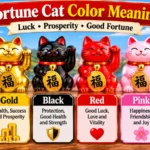
The color red meanings are closely associated with passion, love, energy, courage, power, and urgency. As one of the most visually striking colors, red attracts attention and can communicate strong emotions across art, fashion, branding, and everyday life. It may symbolize romance and celebration in one context, while representing danger, anger, or warning in another.
Its significance also varies across cultures, religious traditions, and historical periods. Understanding red color symbolism helps explain why this bold hue appears in everything from national flags and wedding celebrations to advertising campaigns and safety signs.
Quick answer:
Red generally symbolizes passion, love, energy, strength, and urgency, but its precise meaning depends on context and culture.
What Does the Color Red Symbolize?
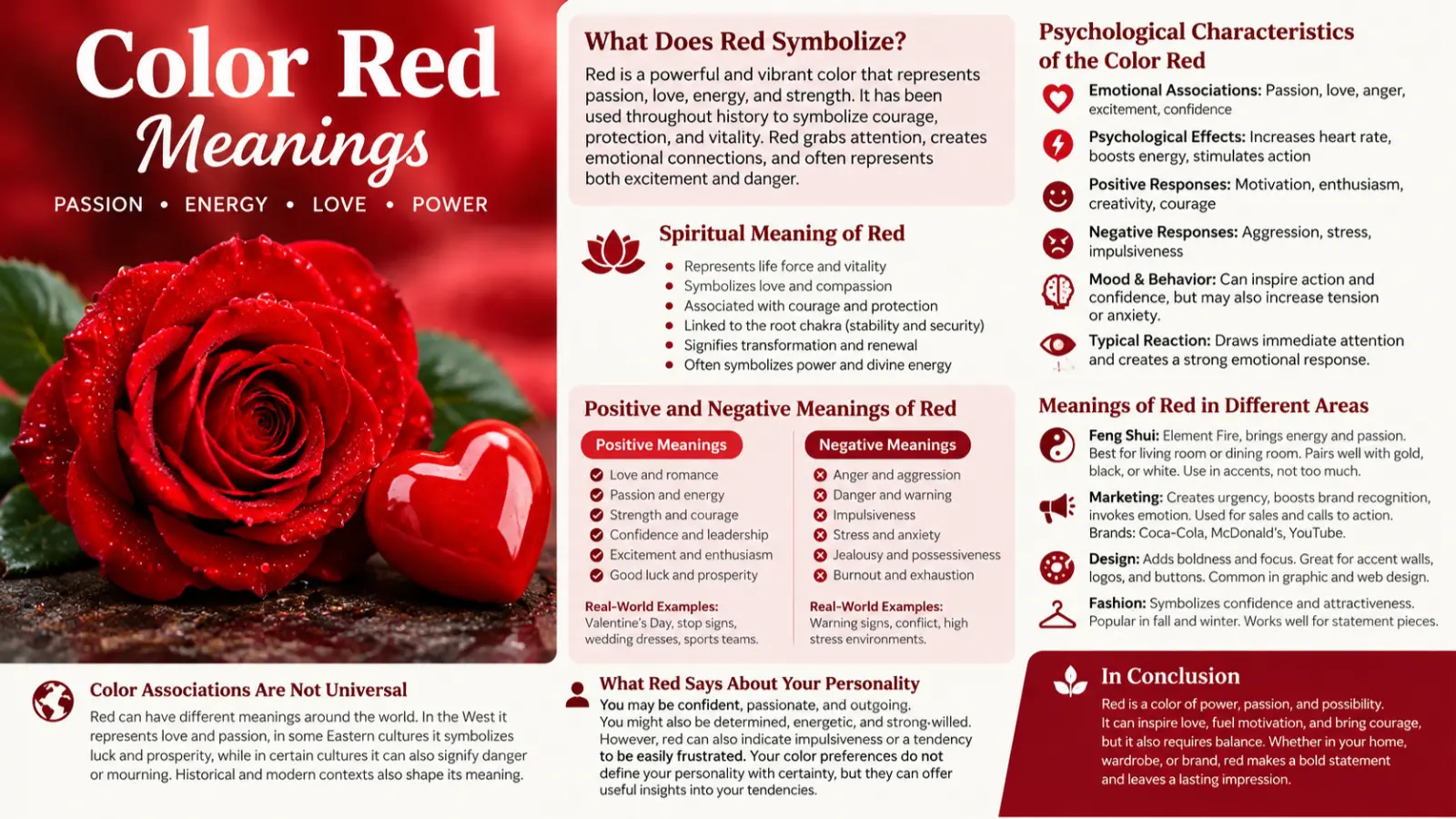
Red is a warm primary color associated with strong emotions and visible action. Its high visual impact makes it useful for drawing attention, communicating importance, and creating contrast. Across different societies, red has developed meanings connected with blood, fire, vitality, romance, power, celebration, and danger.
In relationships, red commonly represents love, desire, and affection. Red roses, Valentine’s Day decorations, and romantic gifts use the color to express emotional intensity. In other settings, red communicates caution or risk, appearing on stop signs, emergency indicators, and warning labels.
The most common symbolic meanings of red include:
- Love and passion: Red roses and red hearts represent romance and emotional intensity.
- Energy and vitality: Red can suggest movement, strength, excitement, and physical activity.
- Courage and confidence: Red clothing and banners may communicate boldness, determination, or leadership.
- Power and authority: Red appears in ceremonial clothing, royal imagery, and prominent institutional designs.
- Danger and warning: Red traffic signals and emergency indicators demand attention.
- Prosperity and celebration: Red is associated with good fortune and festive occasions in several cultures, including Chinese New Year.
- Anger and aggression: Expressions such as “seeing red” connect the color with intense frustration.
- Importance and urgency: Red text, labels, and visual markers can highlight information that requires attention.
The color red meaning is therefore not entirely positive or negative. Its interpretation depends on its shade, surroundings, cultural associations, and purpose.
Psychological Characteristics of the Color Red
Color psychology studies how colors influence perception, emotional associations, attention, and behavior. Red is often considered an attention-grabbing color, but its effects depend on the individual and situation. Research does not support the idea that red produces the same psychological response in every person.
Emotional Associations
Red is commonly linked with powerful emotional experiences, including excitement, desire, courage, anger, and urgency.
- Passion: Deep and bright reds often communicate romantic intensity.
- Excitement: Vivid red can create an energetic visual impression.
- Confidence: Red clothing may be chosen to make a bold statement.
- Anger: Red is frequently used in illustrations and expressions associated with frustration.
- Urgency: Red alerts and warning signs are designed to capture attention quickly.
- Warmth: Red can evoke fire, warmth, and a welcoming atmosphere when balanced with softer tones.
These associations are influenced by learned meanings, social conventions, personal memories, and visual context.
Psychological Effects
Red is visually prominent and can increase the salience of an object or message. This makes it useful for highlighting important information, particularly when contrast is sufficient.
Some studies have explored whether red influences performance, competition, or social judgments. Results vary according to the task and experimental conditions, so it would be inaccurate to claim that red universally improves confidence, increases aggression, or makes people more successful.
In interior spaces, large areas of saturated red may feel intense or stimulating to some people. Smaller red accents can introduce warmth and visual energy without dominating a room.
Positive Emotional Responses
Red can evoke several favorable associations:
- Love: Red is a familiar symbol of romance and affection.
- Courage: Its bold appearance can communicate bravery and resolve.
- Motivation: Red accents may help emphasize an energetic visual theme.
- Vitality: The color is often associated with life, movement, and strength.
- Celebration: Red decorations can make festive occasions feel lively.
- Confidence: Red accessories may help someone express an assertive personal style.
For example, a red dress may create a striking appearance at a social event, while a red accent wall can add warmth to a room with neutral furniture.
Negative Emotional Responses
The same intensity that makes red noticeable can also create less favorable impressions.
- Anger: Red is commonly used to depict rage or conflict.
- Danger: Warning signs and emergency indicators rely on its visibility.
- Stress: Excessive use of saturated red may feel visually overwhelming.
- Aggression: In certain settings, red may appear confrontational or forceful.
- Pressure: Red marks on assignments, dashboards, or reports can signal errors or urgent problems.
For instance, an interface covered with red alerts may make users feel overwhelmed rather than informed. Using red selectively can help preserve its effectiveness.
Impact on Mood and Behavior
Red can influence how people interpret a visual environment, but it does not determine their behavior. A red sports uniform may communicate intensity, while a red sale label draws attention to a commercial message. A red stop signal communicates a specific instruction because society has established and reinforced that convention.
The surrounding colors also matter. Red paired with white may feel crisp and energetic, while red combined with black can appear dramatic or formal. Red with pink may emphasize romance, whereas red with green often creates strong seasonal associations.
How People Typically React to Red
Many people recognize red quickly because it is frequently used in public signs, packaging, entertainment, and digital interfaces. However, reactions differ with brightness, saturation, familiarity, culture, and personal preference.
A bright scarlet may appear exciting, while a muted brick red may feel traditional and grounded. Deep burgundy can communicate refinement, and coral-red can seem playful. These differences demonstrate why the psychology of red cannot be reduced to one universal emotional response.
Spiritual Meaning of the Color Red
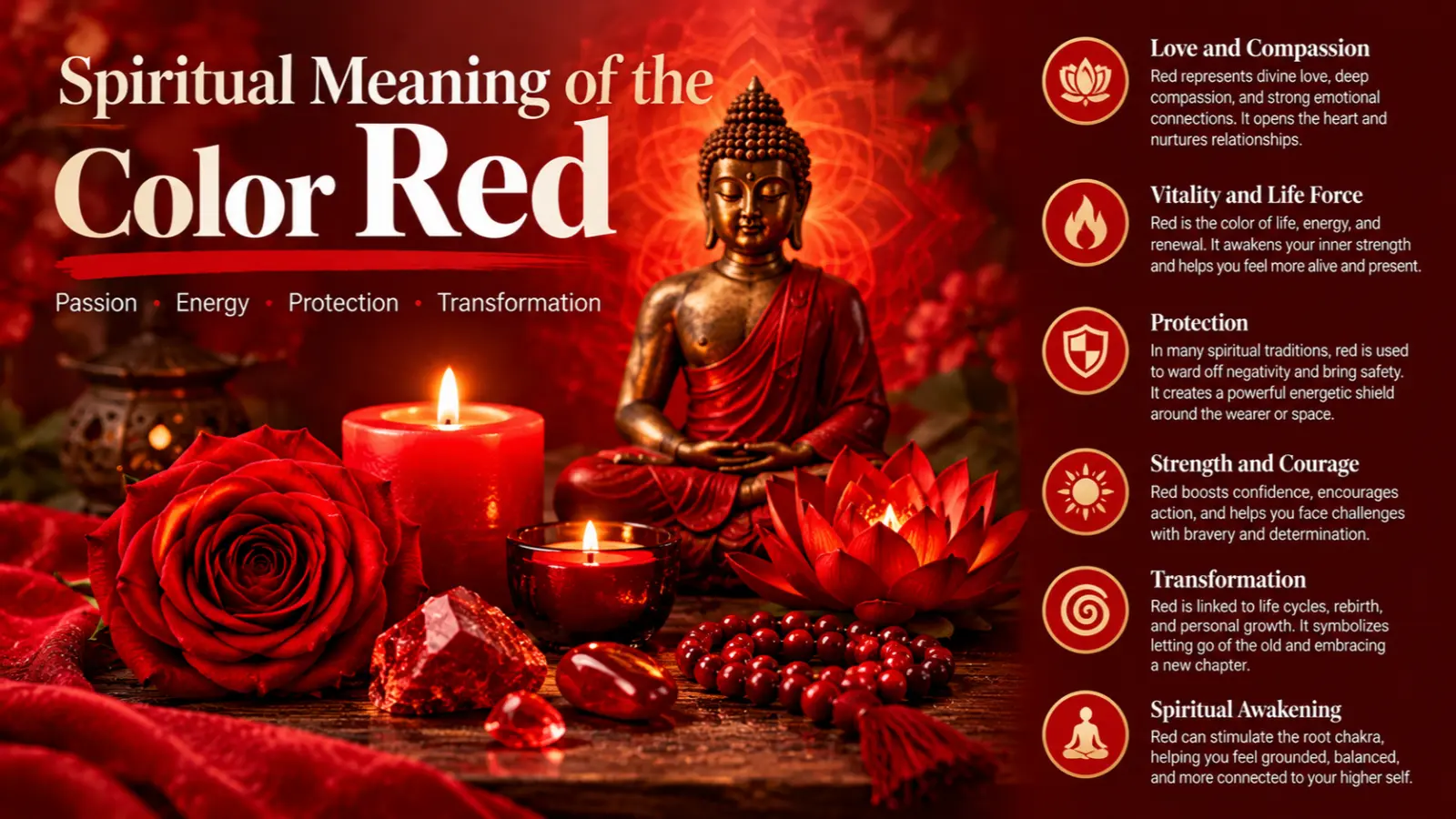
The spiritual meaning of red varies among religions, cultures, and individual belief systems. Red may symbolize life, sacrifice, devotion, celebration, protection, or transformation. These associations come from religious teachings, ceremonies, mythology, and cultural traditions rather than from a single universal spiritual definition.
- Holiness: In some Christian traditions, red is used during particular observances to represent the Holy Spirit, martyrdom, or sacrifice.
- Wisdom: Red is not universally a symbol of wisdom, but in some traditions it may accompany sacred authority or ceremonial knowledge.
- Purity: Red does not generally symbolize purity everywhere; in some cultures, it represents auspiciousness, blessing, or the beginning of a new chapter.
- Transformation: Red can symbolize major life transitions, especially in ceremonies associated with marriage, adulthood, or renewal.
- Healing: Some contemporary spiritual practices use red as a symbol of vitality and life force, but this does not establish a medical healing effect.
- Protection: Red threads, garments, and charms are used in some cultural and religious practices as protective symbols.
- Power: Red has long been associated with authority, leadership, strength, and ceremonial importance.
- Enlightenment: Red is not a universal symbol of enlightenment, although it may have a role in particular religious art or ritual systems.
- New beginnings: Red clothing and decorations can represent auspicious beginnings, especially in some wedding and New Year traditions.
- Eternity: Red may symbolize enduring devotion, sacrifice, or continuity in particular cultural narratives, though it is not universally associated with eternity.
Spiritual interpretations should be understood within their specific traditions. They are different from scientific claims about the color’s physical or psychological effects.
Positive and Negative Meanings of the Color Red
Positive Meanings
Red’s positive symbolism often centers on life, connection, courage, and celebration.
Love and affection: Red roses, hearts, and romantic gifts are widely used to communicate passion and devotion. A red card or bouquet can make an anniversary gift feel emotionally expressive.
Energy and vitality: Red can create a sense of motion and intensity in sports branding, exercise spaces, and event graphics.
Courage and strength: Red capes, uniforms, and flags have been used in stories and public imagery to communicate bravery or determination.
Confidence and leadership: A red accessory can become the focal point of a professional outfit. In visual communication, red can make a key message stand out.
Prosperity and good fortune: Red envelopes, decorations, and garments play important roles in several Chinese celebrations, where red is associated with auspiciousness and good luck.
Warmth and celebration: Red candles, flowers, and decorations can make a gathering feel festive and lively.
In practical use, red works especially well when the intention is to emphasize an important message, express emotion, or create a strong visual accent.
Negative Meanings
Red can also suggest danger, conflict, excess, or pressure.
Danger and warning: Red traffic signals and hazard labels indicate that attention or action is required. In these contexts, the meaning comes from established safety conventions.
Anger and hostility: Red backgrounds and intense red graphics can communicate conflict in political cartoons, dramatic scenes, or sports rivalries.
Stress and overload: Too much saturated red in a small room or crowded interface may feel visually demanding.
Aggression: Red can be perceived as forceful when used in confrontational imagery or paired with sharp typography.
Mistakes and financial loss: Red ink is traditionally used to mark errors, while the phrase “in the red” refers to financial losses or debt.
For example, a red warning banner can be useful when it signals a genuine problem. If every message is red, however, users may struggle to distinguish urgent issues from ordinary information.
Meanings of the Color Red
The meaning of red changes according to where it appears and what it is intended to communicate. A red rose may symbolize affection, a red road sign may indicate a legal instruction, and a red package may signal excitement or seasonal celebration.
Feng Shui
In Feng Shui, red is commonly associated with the fire element, vitality, visibility, and active energy.
- Energy symbolism: Red is often used to represent passion, warmth, and dynamism.
- Best rooms: Small accents can work in living rooms, dining areas, or entryways. Bedrooms may benefit from softer reds if a restful atmosphere is the goal.
- Color combinations: Pair red with cream or beige for warmth, charcoal for contrast, or green for a vivid natural combination.
- Decorating tips: Use red cushions, artwork, flowers, or a single accent wall instead of covering every surface in a saturated shade.
Feng Shui is a traditional design philosophy, not a scientifically established method for controlling luck or outcomes.
Marketing
Red is a prominent color in marketing because it is highly visible and can create strong contrast. Brands use it to communicate excitement, affordability, appetite, urgency, or boldness, depending on the product and design.
- Branding psychology: Red can make logos and packaging visually distinctive.
- Consumer perception: It may suggest energy, passion, or an immediate opportunity.
- Trust signals: Red alone does not establish trust. Clear product information, consistent service, credible reviews, and transparent policies matter more.
- Product packaging: Food, cosmetics, toys, and promotional products often use red to create a memorable shelf presence.
- Advertising applications: Red buttons, banners, and sale labels can draw attention, but excessive use may create visual clutter.
Famous brands that use red prominently include Coca-Cola, Target, Netflix, and the fast-food brand McDonald’s. Each combines red with other design elements and brand associations; their identities cannot be explained by color alone.
Design
Interior design: Red can bring warmth and drama to a room. A red chair or rug may work well against gray, white, or natural wood finishes. Large areas of deep red can feel cozy, while bright scarlet can dominate a space.
Graphic design: Red is useful for headlines, promotional artwork, posters, and strong visual accents. Designers should check that text remains readable against the background.
Web design: Red can highlight errors, urgent notifications, or selected actions. It should not be used for every button or message because users need a clear visual hierarchy.
User experience: Red is often appropriate for destructive actions, such as deleting an item, when the interface also includes clear text and confirmation. Color should never be the only indicator of an error or status.
Minimalist aesthetics: A single red object against a neutral background creates emphasis without adding many decorative elements. This approach is effective in editorial layouts, product photography, and contemporary interiors.
Fashion
Red is a versatile fashion color that can communicate confidence, romance, creativity, and visual drama.
Clothing symbolism: A red dress may suggest boldness or glamour, while a burgundy coat can feel more restrained and sophisticated.
Seasonal use: Bright red is popular for holiday styling and festive events. Burgundy, brick red, and wine tones are often used in fall and winter, while coral-red and lighter shades work well in spring and summer.
Styling effects: Red attracts attention and can serve as the focal point of an outfit. Pair a red blouse with black trousers for a classic look or wear red shoes with neutral clothing for a smaller accent.
Personality impressions: Red clothing may be perceived as expressive, assertive, or confident, but these are impressions rather than reliable judgments of personality.
Advantages: Red can make an outfit distinctive, coordinate with neutrals, and suit both casual and formal occasions.
Disadvantages: Bright red can dominate an outfit, may not suit every dress code, and can be difficult to balance with several other saturated colors.
For a practical example, a red tie can add a focal point to a navy suit, while a burgundy handbag can bring color to a beige or gray outfit without appearing overly bright.
Color Associations Are Not Universal
Western Cultures
In many Western settings, red is linked with romance, danger, excitement, and urgency. Red roses are common romantic gifts, while red stop signs and traffic signals communicate instructions. These meanings are reinforced through popular culture, public safety systems, and commercial advertising.
Eastern Cultures
In China, red is strongly associated with good fortune, happiness, prosperity, and celebration. Red envelopes are traditionally given during Lunar New Year and other special occasions. Red wedding garments are also important in some Chinese and South Asian traditions, although practices differ between communities.
Religious Traditions
In Christianity, red can represent the Holy Spirit, martyrdom, sacrifice, or the blood of Christ, depending on the liturgical context. In Hindu traditions, red is often associated with auspiciousness, marriage, and ceremonial significance. Buddhist uses of red vary across traditions and settings. No single religious meaning applies to every community.
Historical Interpretations
Red pigments have been used in art, clothing, decoration, and ceremonial objects for thousands of years. Because some red dyes and pigments were expensive or difficult to produce, particular shades became associated with status and authority in certain historical societies. Red has also appeared in revolutionary flags, military uniforms, and political movements, where its meanings depend on the specific history.
Modern Global Interpretations
Modern media and global commerce have spread some red associations across borders, especially in advertising, sports, entertainment, and digital design. However, local traditions still influence how people interpret it. A red package might communicate a festive gift in one context and a discount promotion in another.
What the Color Red Says About Your Personality
People who prefer red may enjoy its vivid appearance or the qualities it symbolizes, such as energy, romance, courage, and confidence. Color preference can reflect personal taste, memories, fashion choices, or cultural background, but it does not reliably reveal someone’s personality.
- Strengths: Red lovers may appreciate expressive design, bold choices, or energetic visual styles.
- Weaknesses: A strong preference for intense colors may sometimes lead to choices that feel overpowering in particular settings, but this is a design consideration rather than a character flaw.
- Social behavior: Some people use red to stand out or communicate confidence; others wear it simply because they like the color.
- Work style: Red may appeal to people who enjoy prominent accessories or high-contrast presentation, but it does not predict productivity or leadership ability.
- Relationships: Red’s association with romance may make it a meaningful choice for gifts or special occasions.
- Emotional tendencies: Someone may associate red with excitement, warmth, or strength, while another person may connect it with stress or danger.
A person’s preference can change over time and across situations. The color red personality meaning is best understood as a symbolic interpretation, not a psychological assessment.
Frequently Asked Questions
1. What defines the color red?
Red is a primary color in traditional painting models and a hue associated with the long-wavelength end of the visible spectrum. It ranges from bright scarlet to deep burgundy and can appear warm, dramatic, vivid, or subdued depending on its shade.
2. What does the color red symbolize?
Red commonly symbolizes love, passion, courage, energy, power, danger, and urgency. Its meaning depends on cultural traditions and the setting in which it appears.
3. Why is the color red important?
Red is important because it attracts attention and has established roles in safety signs, celebrations, branding, art, and fashion. It can highlight important information or communicate strong emotion.
4. Is red a warm or cool color?
Red is generally classified as a warm color because of its associations with fire, heat, and sunlight. Some red shades appear cooler when they contain blue or violet undertones, while orange-red shades tend to feel warmer.
5. What emotions does red represent?
Red is often associated with love, passion, excitement, confidence, anger, and urgency. Individual responses vary, and the color does not produce the same emotion in every person.
6. What does red mean spiritually?
Red can symbolize life, sacrifice, devotion, protection, celebration, or transformation in different spiritual and religious traditions. The exact interpretation depends on the community and its practices.
7. What colors pair well with red?
Red pairs well with white, black, gray, navy, beige, and cream. Green creates strong contrast, while burgundy and blush pink can produce a coordinated palette. The best combination depends on the shade and intended atmosphere.
8. What does liking red say about a person?
Liking red may reflect a preference for bold colors, vivid design, or romantic symbolism. It does not reliably determine confidence, aggression, leadership, or other personality traits.
9. Why is red used in warning signs?
Red is widely used in warnings because it is visually prominent and has established safety associations. Its meaning is reinforced by standardized signs and repeated public exposure. Warning systems should still include appropriate shapes, symbols, and text.
10. What does red mean in marketing?
In marketing, red can communicate excitement, urgency, passion, or boldness. Brands use it in logos, packaging, promotional materials, and advertising to create contrast and attract attention.
Conclusion
The color red meanings encompass love, passion, courage, energy, power, celebration, danger, and urgency. Its psychological associations make it useful in branding, design, fashion, and visual communication, while its cultural and spiritual meanings give it significance in ceremonies and traditions around the world. Red can feel romantic in a bouquet, urgent on a warning sign, or sophisticated in a burgundy outfit. Its meaning depends on context, shade, and cultural background. Understanding red symbolism helps people use this powerful color more intentionally without assuming that it produces identical emotional or behavioral effects in everyone.