Heart emojis have become one of the most popular ways to express emotions in digital communication. While every heart represents affection, care, or connection, each heart color carries its own symbolic meaning shaped by color psychology, culture, personal interpretation, and online trends.
From the passionate ❤️ Red Heart to the peaceful 🤍 White Heart and supportive 💚 Green Heart, these emojis help people communicate feelings more precisely. Understanding heart color emoji meanings can improve personal conversations, strengthen social media communication, and prevent misunderstandings across different contexts.
Quick Answer:
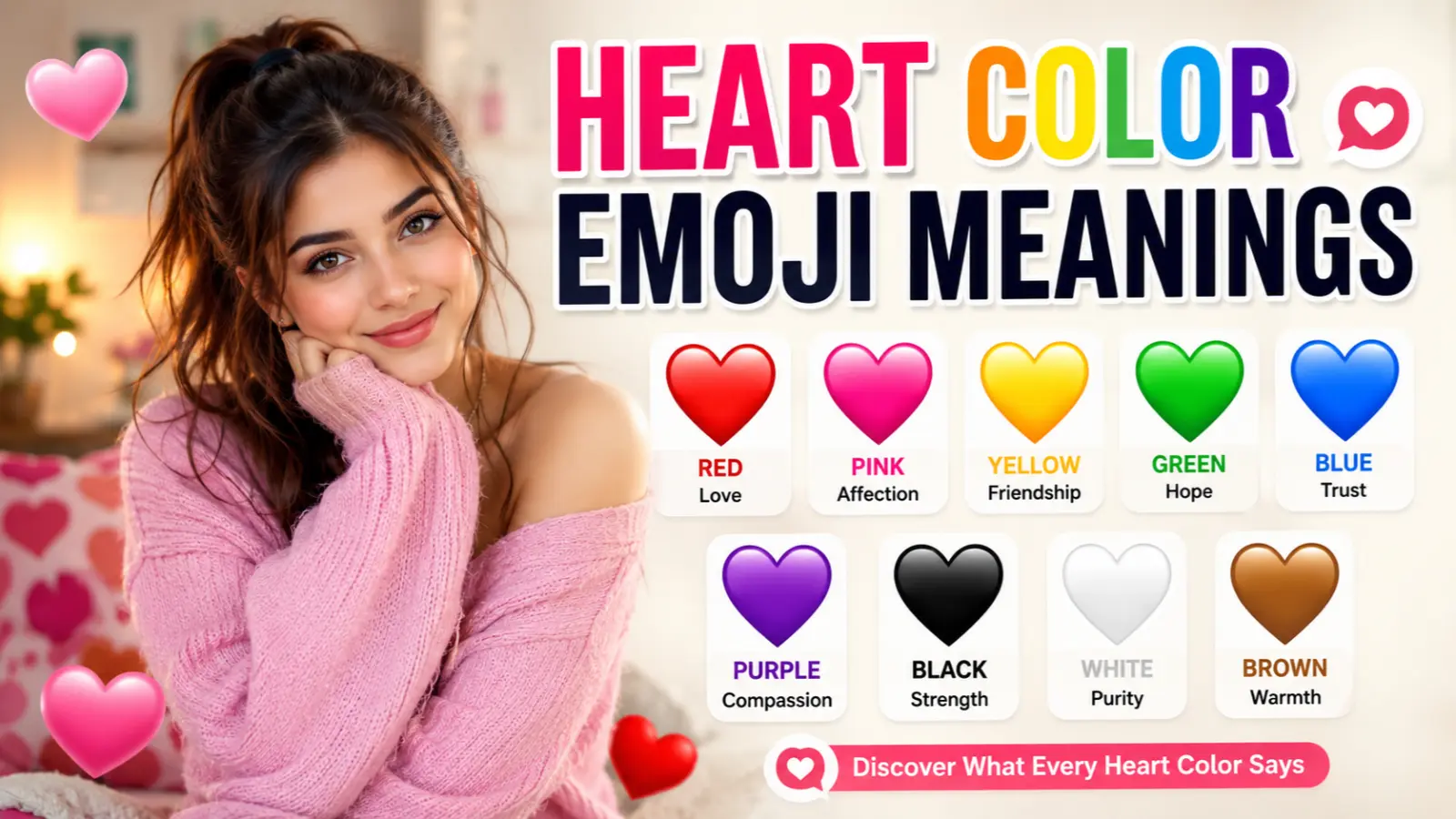
Each heart emoji color has a unique meaning. Red symbolizes love, pink represents affection, yellow expresses friendship, green stands for growth, blue conveys trust, purple reflects compassion or luxury, black represents grief or dark humor, white symbolizes purity, and brown expresses warmth, stability, and inclusivity.
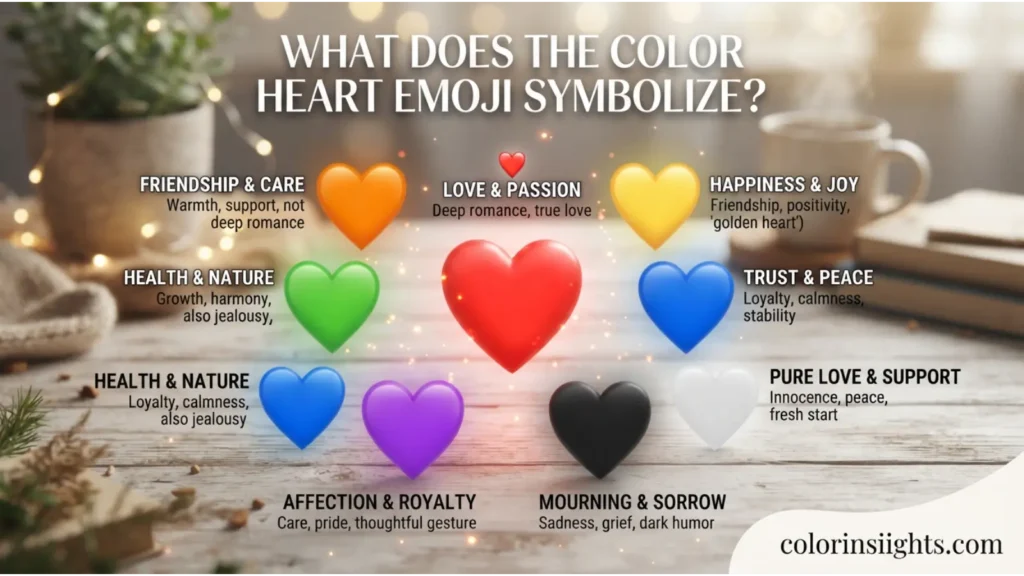
What Does the Color Heart Emoji Symbolize?
Heart emojis symbolize emotional connection, but the color changes the message significantly. According to color psychology, colors influence how people perceive emotions, relationships, and intentions.
Here are the most common heart color emoji meanings:
| Heart Emoji | Primary Meaning |
|---|---|
| ❤️ Red Heart | True love, romance, passion |
| 🩷 Pink Heart | Affection, sweetness, admiration |
| 💖 Sparkling Heart | Excitement, new love, happiness |
| 💕 Two Hearts | Mutual affection, close relationship |
| 💓 Beating Heart | Emotional excitement, growing love |
| 💗 Growing Heart | Increasing affection |
| 💘 Heart with Arrow | Falling in love |
| 💝 Heart with Ribbon | Gift of love |
| 💛 Yellow Heart | Friendship, happiness, positivity |
| 💚 Green Heart | Nature, healing, hope, growth |
| 💙 Blue Heart | Trust, loyalty, calmness |
| 🩵 Light Blue Heart | Peace, support, serenity |
| 💜 Purple Heart | Compassion, luxury, admiration |
| 🤎 Brown Heart | Stability, comfort, inclusivity |
| 🖤 Black Heart | Grief, irony, gothic style, dark humor |
| 🤍 White Heart | Peace, sincerity, purity |
| 🩶 Gray Heart | Neutrality, emotional balance, resilience |
| ❤️🔥 Heart on Fire | Passion, intense love |
| ❤️🩹 Mending Heart | Healing, emotional recovery |
Each emoji combines the universal symbolism of the heart with the emotional associations traditionally linked to its color.
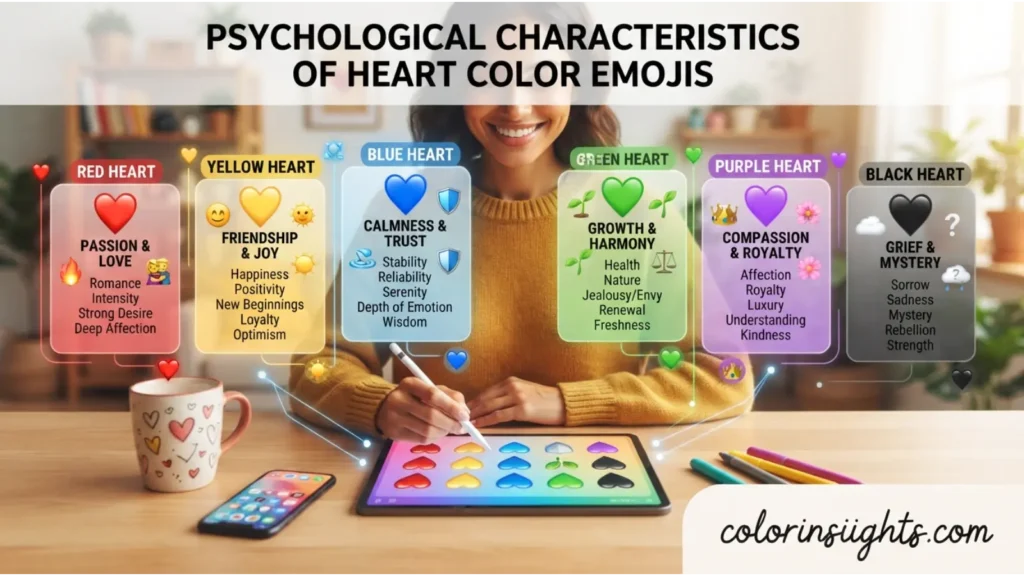
Psychological Characteristics of Heart Color Emojis
Color psychology explains why different heart emojis evoke different emotional responses.
Emotional Associations
- ❤️ evokes romantic attachment.
- 🩷 suggests gentle affection.
- 💛 communicates cheerful friendship.
- 💚 symbolizes hope and renewal.
- 💙 promotes trust and reliability.
- 💜 represents creativity and compassion.
- 🤍 expresses peace.
- 🖤 may indicate sadness or sarcasm.
Psychological Effects
Different heart colors influence emotional interpretation during digital communication.
- Warm colors increase emotional intensity.
- Cool colors create calmness.
- Neutral colors communicate sincerity.
- Dark colors add mystery or seriousness.
Positive Emotional Responses
- Love
- Compassion
- Support
- Gratitude
- Loyalty
- Optimism
- Comfort
- Encouragement
Negative Emotional Responses
Depending on context, some heart colors may imply:
- Jealousy
- Emotional distance
- Mourning
- Sarcasm
- Heartbreak
- Ambiguity
Impact on Mood and Behavior
Heart emojis often make messages appear:
- Friendlier
- More supportive
- More personal
- More empathetic
- Less formal
Typical Reactions
People often interpret:
- ❤️ as romantic.
- 💛 as platonic.
- 💙 as trustworthy.
- 💚 as supportive.
- 🖤 as edgy or humorous.
- 🤍 as respectful or sympathetic.
Spiritual Meaning of Heart Color Emojis
Although emojis themselves are modern, their colors reflect long-standing spiritual symbolism.
❤️ Red Heart
- Divine love
- Life force
- Courage
- Vitality
🩷 Pink Heart
- Compassion
- Emotional healing
- Kindness
- Unconditional love
💛 Yellow Heart
- Joy
- Inner wisdom
- Optimism
- Personal growth
💚 Green Heart
- Healing
- Renewal
- Prosperity
- Balance
💙 Blue Heart
- Truth
- Faith
- Peace
- Protection
💜 Purple Heart
- Spiritual awakening
- Higher consciousness
- Wisdom
- Transformation
🤍 White Heart
- Purity
- Holiness
- Enlightenment
- New beginnings
🤎 Brown Heart
- Grounding
- Stability
- Connection to nature
🖤 Black Heart
- Personal transformation
- Letting go
- Reflection
- Strength through adversity
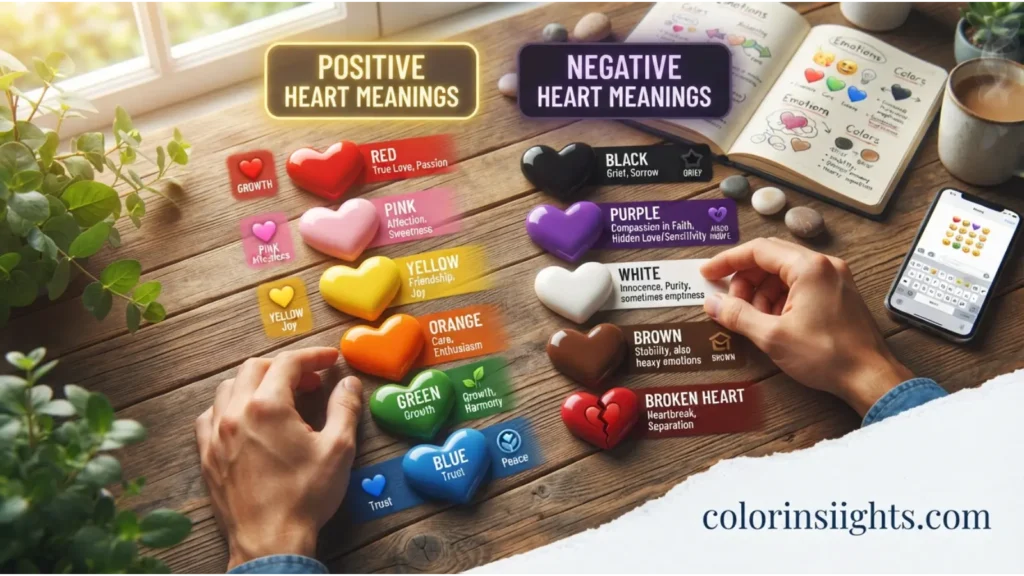
Positive and Negative Meanings of Heart Color Emojis
Positive Meanings
Love
❤️ expresses deep romantic commitment.
Friendship
💛 celebrates loyal friendships.
Healing
💚 often appears in recovery and wellness communities.
Trust
💙 reinforces dependable relationships.
Peace
🤍 represents calmness and sincerity.
Creativity
💜 symbolizes imagination and inspiration.
Stability
🤎 reflects reliability and comfort.
Negative Meanings
Emotional Distance
💙 may sometimes appear emotionally reserved.
Grief
🖤 is widely used during mourning.
Jealousy
💚 can occasionally represent envy.
Misunderstanding
Using ❤️ in professional conversations may unintentionally imply romance.
Sarcasm
🖤 is frequently used in ironic internet humor.
Emotional Ambiguity
🤍 may seem emotionally distant if stronger affection is expected.
Meanings of Heart Color Emojis
Heart emoji meanings change depending on culture, platform, relationship, and context.
Feng Shui
Although heart emojis are not traditional Feng Shui symbols, their colors align with Feng Shui elements.
❤️ Red
- Element: Fire
- Energy: Passion
- Best rooms: Living room
- Combines well with gold and white
💚 Green
- Element: Wood
- Energy: Growth
- Best rooms: Home office
- Pairs well with brown and blue
💙 Blue
- Element: Water
- Energy: Wisdom
- Best rooms: Bathroom and meditation space
🤍 White
- Element: Metal
- Energy: Clarity
- Best rooms: Study and workspace
Decorating with these color combinations can reinforce the desired emotional atmosphere.
Marketing
Brands often use heart colors strategically.
Branding Psychology
- ❤️ encourages emotional engagement.
- 💙 builds trust.
- 💚 supports sustainability.
- 💛 attracts optimism.
- 💜 conveys creativity and premium quality.
Consumer Perception
Consumers associate different colors with different brand personalities.
Trust Signals
Blue heart symbolism aligns with reliability.
Product Packaging
Natural products frequently use green, while luxury products often feature purple or black.
Advertising Applications
Heart colors help campaigns communicate emotions quickly.
Examples include:
- ❤️ Entertainment and romance brands
- 💚 Eco-friendly companies
- 💙 Healthcare and technology
- 💜 Beauty and premium products
Design
Heart colors play important roles in visual communication.
Interior Design
Color symbolism influences emotional atmosphere.
Graphic Design
Heart icons highlight emotional messaging.
Web Design
Colored hearts improve visual engagement.
User Experience
Heart icons increase interaction through familiar emotional cues.
Minimalist Aesthetics
Simple heart icons communicate emotion without excessive visual complexity.
Fashion
Heart colors influence clothing symbolism.
Clothing Symbolism
- ❤️ Bold confidence
- 💛 Cheerfulness
- 💚 Freshness
- 💙 Sophistication
- 💜 Creativity
- 🤍 Elegance
- 🖤 Mystery
Seasonal Use
- Spring: Pink and green
- Summer: Yellow
- Autumn: Brown
- Winter: White and blue
Styling Effects
Color coordination creates different emotional impressions.
Personality Impressions
Observers may perceive wearers differently depending on dominant colors.
Advantages
- Easy emotional expression
- Strong visual identity
Disadvantages
- Cultural interpretations vary.
- Some colors may be misunderstood.
Color Associations Are Not Universal
Western Cultures
Red usually represents romance, while white symbolizes purity. Black often signifies mourning.
Eastern Cultures
Red frequently symbolizes happiness, prosperity, and celebration. White may represent mourning in some East Asian traditions.
Religious Traditions
Different faiths associate colors with virtues such as love, sacrifice, purity, compassion, and spiritual growth.
Historical Interpretations
Color meanings have evolved through art, literature, fashion, and social customs.
Modern Global Interpretations
Social media has created new emoji meanings. Younger users often use 🖤 humorously, while 🤍 frequently expresses gentle support and kindness.
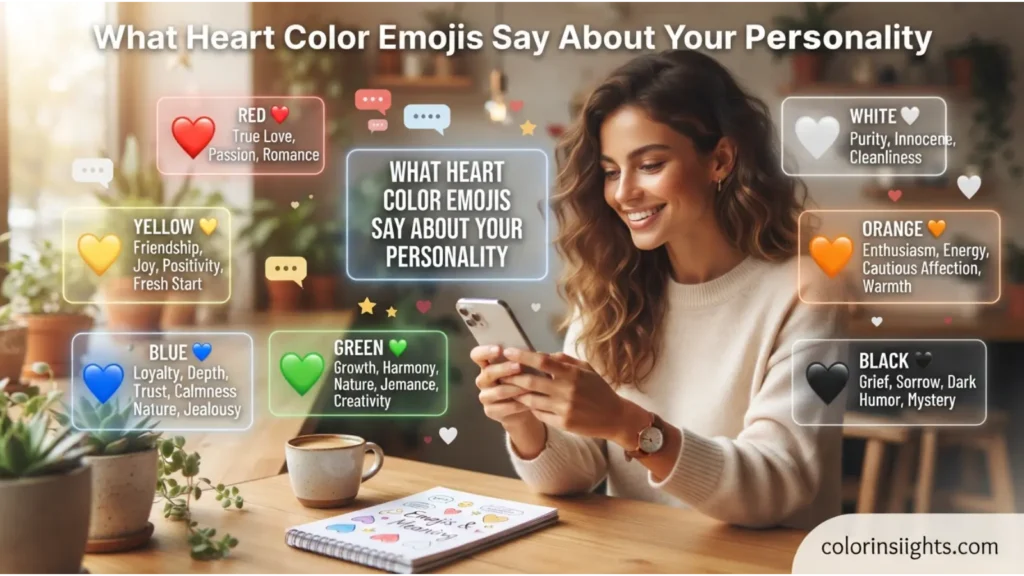
What Heart Color Emojis Say About Your Personality
Although favorite heart emojis do not determine personality, research suggests color preferences may reflect temporary emotional tendencies.
Strengths
People preferring:
- ❤️ may value commitment.
- 💙 often appreciate loyalty.
- 💚 may enjoy personal growth.
- 💜 frequently express creativity.
- 💛 often display optimism.
Weaknesses
Some preferences may also relate to:
- Emotional sensitivity
- Idealism
- Reserved communication
- Overthinking
- Perfectionism
Social Behavior
Favorite heart colors can influence communication style, from expressive to calm and supportive.
Work Style
Color preferences may reflect collaboration styles, leadership approaches, or creative thinking rather than fixed personality traits.
Relationships
Heart emoji choices often match relationship dynamics:
- ❤️ Romantic partner
- 💛 Best friend
- 💚 Emotional support
- 💙 Long-term trust
- 🤍 Sympathy
- 🩷 Gentle affection
Emotional Tendencies
Color preferences change over time and are influenced by culture, mood, and personal experiences. They should never be viewed as definitive personality assessments.
FAQs:
What defines heart color emoji meanings?
Heart color emoji meanings combine traditional color symbolism with modern digital communication, allowing users to express different emotions through specific heart colors.
What does the red heart emoji symbolize?
The ❤️ Red Heart symbolizes romantic love, passion, commitment, and deep emotional affection.
Why are heart color emojis important?
They help communicate emotional tone more accurately, making digital conversations warmer and easier to understand.
Is every heart emoji romantic?
No. While ❤️ is often romantic, colors like 💛, 💙, 💚, 🤍, and 🤎 commonly express friendship, trust, support, or appreciation.
What emotions do heart color emojis represent?
Depending on color, they can represent love, friendship, trust, healing, hope, peace, gratitude, compassion, loyalty, and emotional recovery.
What is the spiritual meaning of heart color emojis?
Their spiritual meanings reflect traditional color symbolism, including love, healing, wisdom, transformation, protection, purity, and enlightenment.
Which heart emoji is best for friendship?
The 💛 Yellow Heart is the most widely recognized emoji for friendship, happiness, and positive platonic relationships.
What colors pair well with different heart emoji themes?
Red pairs with white and gold, blue with silver and gray, green with brown and beige, purple with gold, and white with soft neutral tones.
What does liking a specific heart emoji say about a person?
It may reflect communication preferences or emotional style, but it does not reliably determine personality or character.
Which heart emoji should I use for support?
💚, 💙, 🤍, and ❤️🩹 are commonly used to express encouragement, care, healing, and emotional support.
Conclusion
Heart color emojis are much more than colorful icons—they are visual expressions of emotion shaped by color psychology, cultural traditions, and modern digital communication. Choosing the right heart emoji helps convey love, friendship, trust, healing, gratitude, or support with greater clarity.
While many meanings are widely recognized, interpretations can vary depending on context, relationship, and culture. Understanding these subtle differences allows you to communicate more thoughtfully and confidently in texts, emails, and social media, making every heart emoji a meaningful part of your digital language.