Heart color meanings play an important role in modern communication, emotional expression, psychology, and digital culture. Whether used in text messages, social media posts, greeting cards, or branding, different colored hearts convey unique emotions and symbolic messages. While the classic red heart represents romantic love, other heart colors communicate friendship, trust, compassion, support, spirituality, and even grief.
Understanding heart color symbolism can help people communicate more effectively and interpret emotional messages with greater accuracy. The meaning of a heart color often depends on cultural context, personal relationships, and the situation in which it is used.
Quick Answer:
Heart colors symbolize different emotions and intentions. Red hearts represent love and passion, pink hearts symbolize affection, blue hearts indicate trust and loyalty, green hearts represent growth and nature, purple hearts symbolize compassion and luxury, while black hearts may represent grief, irony, or emotional strength.
What Does the Color Heart Symbolize?
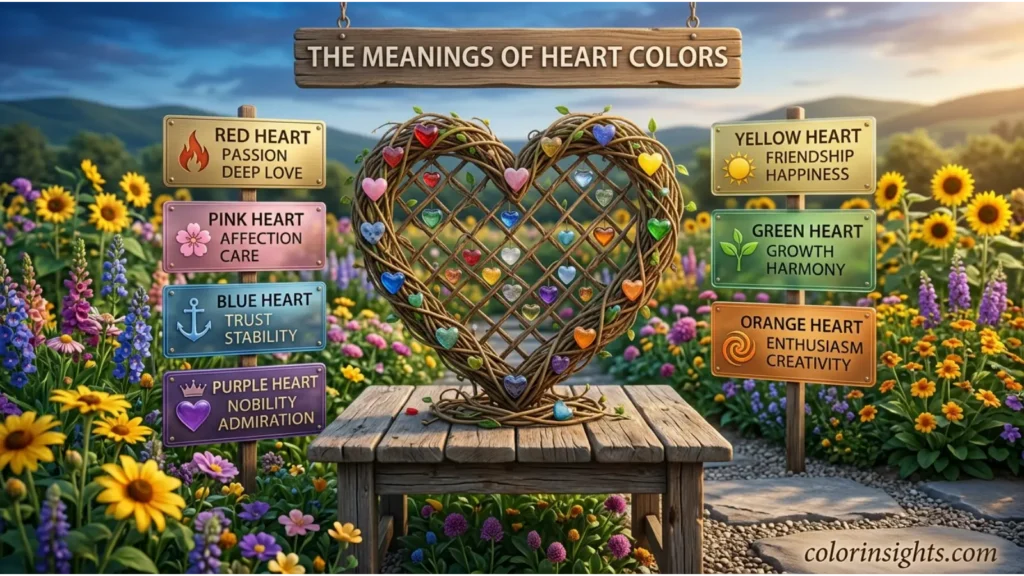
Heart colors symbolize emotional states, relationships, values, and personal intentions. Unlike standard colors that carry broad symbolic meanings, colored hearts combine the universal symbolism of the heart—love, connection, and emotion—with the psychological associations of specific colors.
Common symbolic themes include:
- Love and romance
- Friendship and support
- Trust and loyalty
- Compassion and empathy
- Hope and healing
- Spiritual connection
- Celebration and happiness
- Grief and remembrance
- Growth and renewal
- Individual identity and self-expression
The meaning of a heart color can vary depending on cultural traditions, digital communication trends, and personal interpretation.
Psychological Characteristics of the Color Heart
Color psychology suggests that people respond emotionally to colored heart symbols because they combine emotional imagery with color-based associations.
Emotional Associations
Different heart colors trigger different emotional responses:
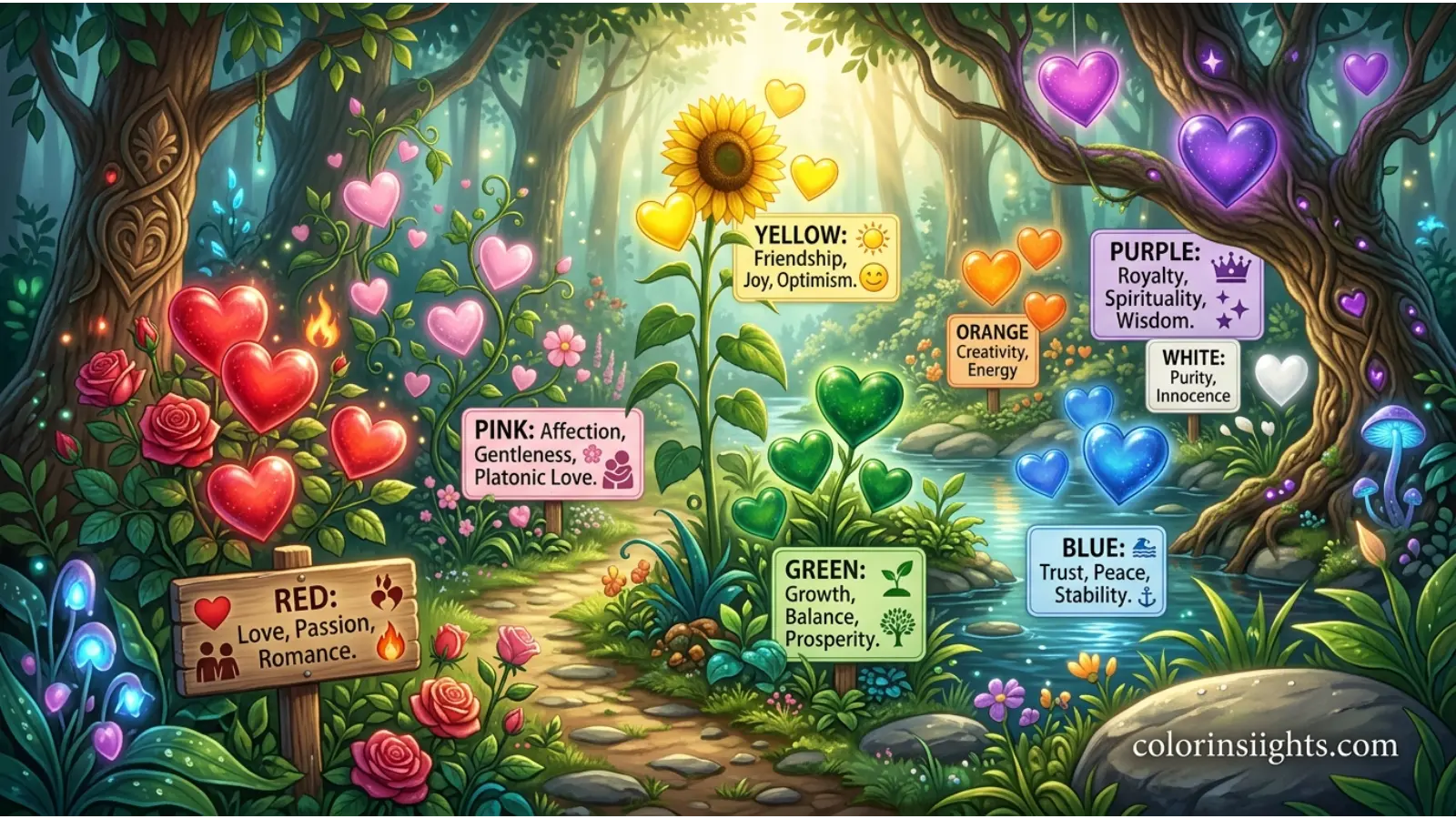
- ❤️ Red Heart: Love, passion, desire
- 🩷 Pink Heart: Affection, sweetness, kindness
- 💙 Blue Heart: Trust, loyalty, stability
- 💚 Green Heart: Growth, health, balance
- 💜 Purple Heart: Compassion, creativity, wisdom
- 🖤 Black Heart: Strength, grief, mystery
- 🤍 White Heart: Purity, peace, sincerity
- 💛 Yellow Heart: Happiness, friendship, optimism
- 🧡 Orange Heart: Warmth, enthusiasm, encouragement
- 🤎 Brown Heart: Stability, comfort, reliability
Psychological Effects
Colored hearts can:
- Reinforce emotional messages
- Strengthen interpersonal connections
- Enhance perceived sincerity
- Create emotional clarity
- Influence mood and perception
Positive Emotional Responses
- Love
- Joy
- Compassion
- Gratitude
- Trust
- Hope
- Security
- Belonging
Negative Emotional Responses
Certain heart colors may evoke:
- Jealousy
- Sadness
- Isolation
- Emotional distance
- Loss
- Uncertainty
Impact on Mood and Behavior
People often use heart colors strategically to:
- Express affection
- Show support
- Strengthen friendships
- Communicate sympathy
- Celebrate achievements
- Demonstrate loyalty
How People Typically React
Most individuals instinctively associate heart colors with emotions based on their cultural understanding and personal experiences. For example, a red heart often feels romantic, while a yellow heart feels friendly and cheerful.
Spiritual Meaning of the Color Heart
The spiritual meaning of heart colors varies across traditions, belief systems, and personal spiritual practices.
Spiritual Symbolism
- Holiness: White and gold hearts often symbolize purity and divine love.
- Wisdom: Purple hearts are frequently associated with spiritual insight.
- Purity: White hearts represent innocence and truth.
- Transformation: Green hearts symbolize growth and renewal.
- Healing: Green and blue hearts often represent emotional and physical healing.
- Protection: Blue hearts can symbolize spiritual protection and trust.
- Power: Red and purple hearts may represent spiritual strength.
- Enlightenment: White and purple hearts are linked to higher consciousness.
- New Beginnings: Green hearts symbolize fresh starts.
- Eternity: White hearts are often associated with everlasting love and remembrance.
Many spiritual traditions view the heart as the center of compassion, love, and human connection.
Positive and Negative Meanings of the Color Heart
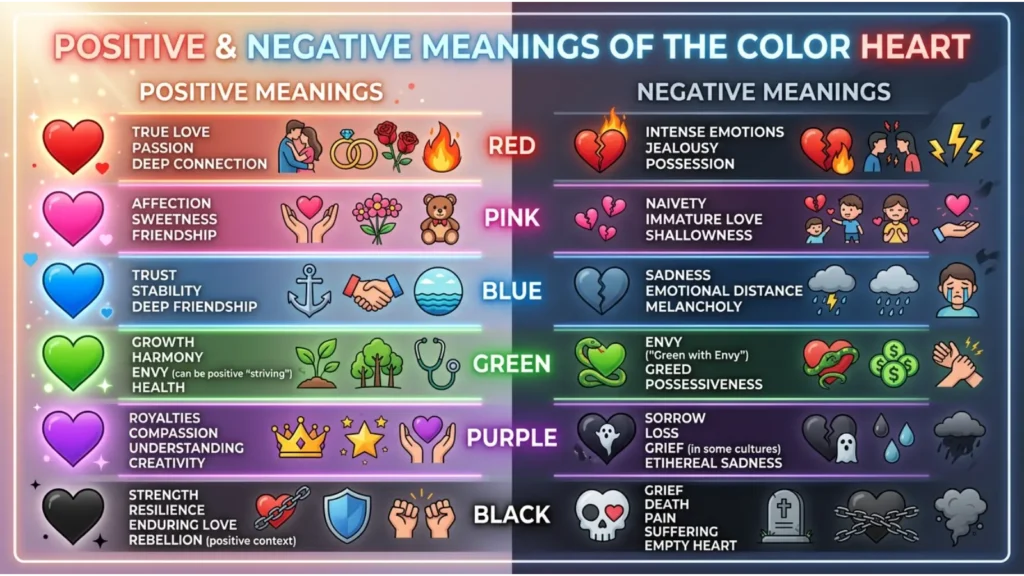
Positive Meanings
Heart colors often symbolize positive emotional qualities.
Love:
A red heart commonly represents romantic devotion and passion.
Friendship:
Yellow hearts symbolize joyful and supportive friendships.
Trust:
Blue hearts communicate loyalty and dependability.
Hope:
Green hearts often symbolize renewal and optimism.
Compassion:
Purple hearts frequently represent empathy and understanding.
Peace:
White hearts symbolize calmness and harmony.
Encouragement:
Orange hearts convey warmth, enthusiasm, and motivation.
Stability:
Brown hearts represent reliability and groundedness.
Negative Meanings
Heart colors can also have less favorable interpretations depending on context.
Emptiness:
A white heart may sometimes symbolize emotional absence or distance.
Example:
A minimalist message containing only a white heart may appear emotionally reserved.
Isolation:
Blue hearts can occasionally feel emotionally detached.
Example:
A blue heart instead of a red heart in a romantic conversation may signal friendship rather than romance.
Coldness:
White and blue hearts may sometimes appear impersonal.
Example:
Corporate messaging often uses cooler colors to maintain professionalism.
Grief:
Black hearts are frequently associated with mourning.:
Example:
Memorial posts often include black hearts to express remembrance.
Emotional Distance:
Certain heart colors may communicate boundaries rather than intimacy.
Perfectionism:
White hearts can symbolize unrealistic ideals of purity or perfection.
Misinterpretation:
Different cultures and age groups may interpret heart colors differently, creating communication confusion.
Meanings of the Color Heart
The meaning of heart colors changes according to context, relationship dynamics, cultural traditions, and communication platforms. A blue heart may symbolize friendship in one context and support for a cause in another.
Feng Shui
In Feng Shui, heart-related colors influence emotional energy and relationship harmony.
Associated Elements
- Red: Fire
- Green: Wood
- Blue: Water
- White: Metal
- Yellow: Earth
Energy Symbolism
Heart colors are believed to attract:
- Love energy
- Compassion
- Harmony
- Emotional balance
- Positive relationships
Best Rooms
- Bedroom: Red and pink hearts
- Living room: Green and yellow hearts
- Meditation space: White and purple hearts
Recommended Color Combinations
- Pink and white
- Red and gold
- Blue and silver
- Green and brown
Home Decorating Tips
Use heart-inspired accents sparingly to encourage warmth and connection without overwhelming a space.
Marketing
Heart colors are frequently used in branding and advertising.
Branding Psychology
Brands select heart colors to evoke specific emotions.
- Red: Passion and excitement
- Blue: Trust and reliability
- Green: Sustainability
- Pink: Care and compassion
Consumer Perception
Consumers often interpret heart colors subconsciously as emotional signals.
Trust Signals
Blue and white heart imagery can increase perceptions of honesty and professionalism.
Product Packaging
Heart colors are commonly used in:
- Greeting cards
- Beauty products
- Wellness products
- Charity campaigns
Advertising Applications
Marketers use heart colors to strengthen emotional engagement and customer loyalty.
Common examples include brands such as Hallmark, American Heart Association, and Pandora.
Design
Heart colors play a major role in visual communication.
Interior Design
Colored heart motifs can create emotional warmth and visual interest.
Graphic Design
Designers use heart colors to guide emotional interpretation.
Web Design
Heart icons often indicate:
- Favorites
- Likes
- Support
- Positive engagement
User Experience
Heart colors help users quickly recognize emotional meaning.
Minimalist Aesthetics
White, black, and muted heart colors work well in clean, modern designs.
Fashion
Heart colors influence clothing symbolism and personal style.
Clothing Symbolism
- Red hearts: Confidence and romance
- Pink hearts: Softness and affection
- Black hearts: Individuality and strength
- White hearts: Simplicity and elegance
Seasonal Use
- Spring: Pink and green hearts
- Summer: Yellow and orange hearts
- Autumn: Brown and orange hearts
- Winter: Blue and white hearts
Styling Effects
Heart-colored accessories can subtly communicate personality and mood.
Personality Impressions
People may perceive wearers as:
- Romantic
- Friendly
- Creative
- Compassionate
- Confident
Advantages
- Easy emotional expression
- Versatile styling options
- Strong symbolic appeal
Disadvantages
- Potential cultural misunderstandings
- Overly sentimental appearance in some settings
Color Associations Are Not Universal
Heart color meanings differ significantly around the world.
Western Cultures
In many Western countries, red hearts symbolize romantic love, pink hearts represent affection, and white hearts represent purity.
Eastern Cultures
Some Eastern traditions associate red with luck, prosperity, and celebration rather than purely romantic love.
Religious Traditions
Christian symbolism often connects the heart with divine love and compassion. White hearts may represent spiritual purity, while red hearts can symbolize sacrifice and devotion.
Historical Interpretations
Throughout history, heart imagery has represented courage, loyalty, and emotional sincerity, with color meanings evolving over time.
Modern Global Interpretations
Social media has created new heart color meanings. Today, many people use different heart emojis to indicate friendship, support, fandoms, social causes, and personal identity.
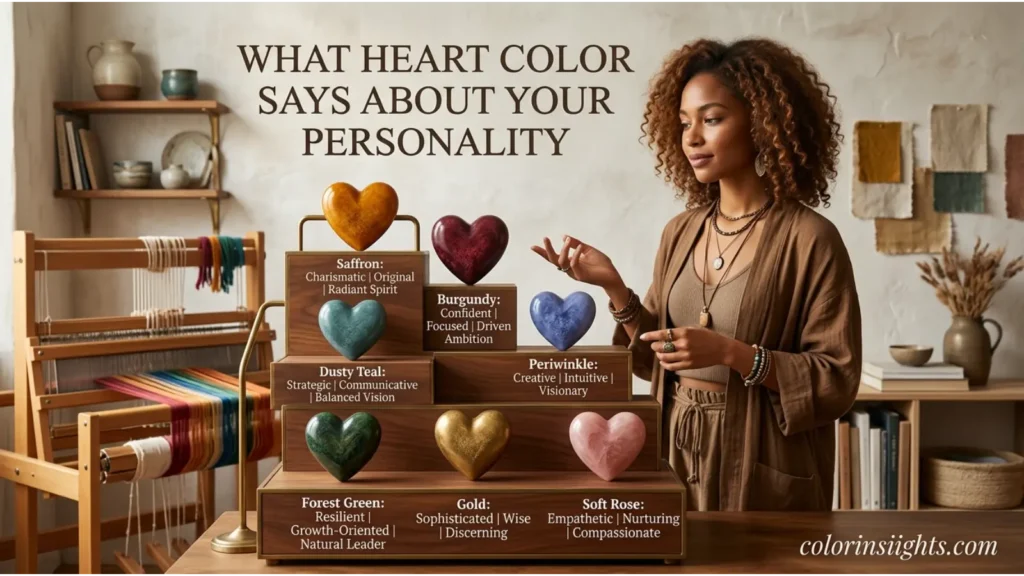
What Heart Color Says About Your Personality
People often identify with particular heart colors because they reflect personal values and emotional preferences. However, color preferences do not determine personality with certainty.
Strengths
Individuals attracted to heart symbolism may value:
- Compassion
- Empathy
- Loyalty
- Creativity
- Emotional intelligence
Weaknesses
Potential challenges may include:
- Oversensitivity
- Emotional dependence
- Idealism
- Difficulty setting boundaries
Social Behavior
People who frequently use heart emojis often prioritize relationships and social connection.
Work Style
Heart-oriented communicators may excel in:
- Teamwork
- Customer service
- Healthcare
- Education
- Leadership roles requiring empathy
Relationships
Different heart colors can reflect varying relationship priorities:
- Red: Passion
- Pink: Affection
- Blue: Loyalty
- Green: Growth
- White: Honesty
Emotional Tendencies
People may choose heart colors that align with their current mood, values, or communication style rather than fixed personality traits.
FAQs:
What defines a heart color?
A heart color is a colored heart symbol or emoji that combines the universal meaning of the heart with the psychological symbolism of a specific color.
What does the color heart symbolize?
Heart colors symbolize emotions such as love, friendship, trust, compassion, hope, healing, and remembrance.
Why are heart colors important?
They help communicate emotional intent quickly and effectively in digital and face-to-face communication.
Is a heart color warm or cool?
It depends on the color. Red, pink, orange, and yellow hearts are warm, while blue, green, and purple hearts are generally considered cool.
What emotions do heart colors represent?
Heart colors can represent love, loyalty, happiness, peace, sympathy, encouragement, and emotional support.
What is the spiritual meaning of heart colors?
Spiritually, heart colors may symbolize divine love, healing, transformation, protection, enlightenment, and compassion.
What colors pair well with heart-themed designs?
Popular combinations include red and white, pink and gold, blue and silver, green and brown, and purple and white.
What does liking heart symbols say about a person?
It may indicate an appreciation for emotional expression, connection, empathy, and communication, though preferences vary widely.
Which heart color means friendship?
The yellow heart is most commonly associated with friendship, positivity, and cheerful support.
Which heart color means trust?
The blue heart is widely used to represent trust, loyalty, reliability, and stability.
Which heart color means healing?
Green and blue hearts are often associated with healing, renewal, wellness, and recovery.
Which heart color means eternal love?
White hearts are frequently associated with pure, unconditional, and everlasting love.
Conclusion
Heart color meanings extend far beyond simple decoration. Each heart color carries unique symbolism shaped by psychology, culture, spirituality, history, and modern digital communication.
Red hearts express passionate love, blue hearts convey trust, green hearts symbolize growth, yellow hearts represent friendship, and white hearts communicate peace and purity.
While interpretations vary across cultures and individuals, understanding heart color symbolism helps people communicate emotions more clearly and connect more effectively in personal, social, and professional settings.