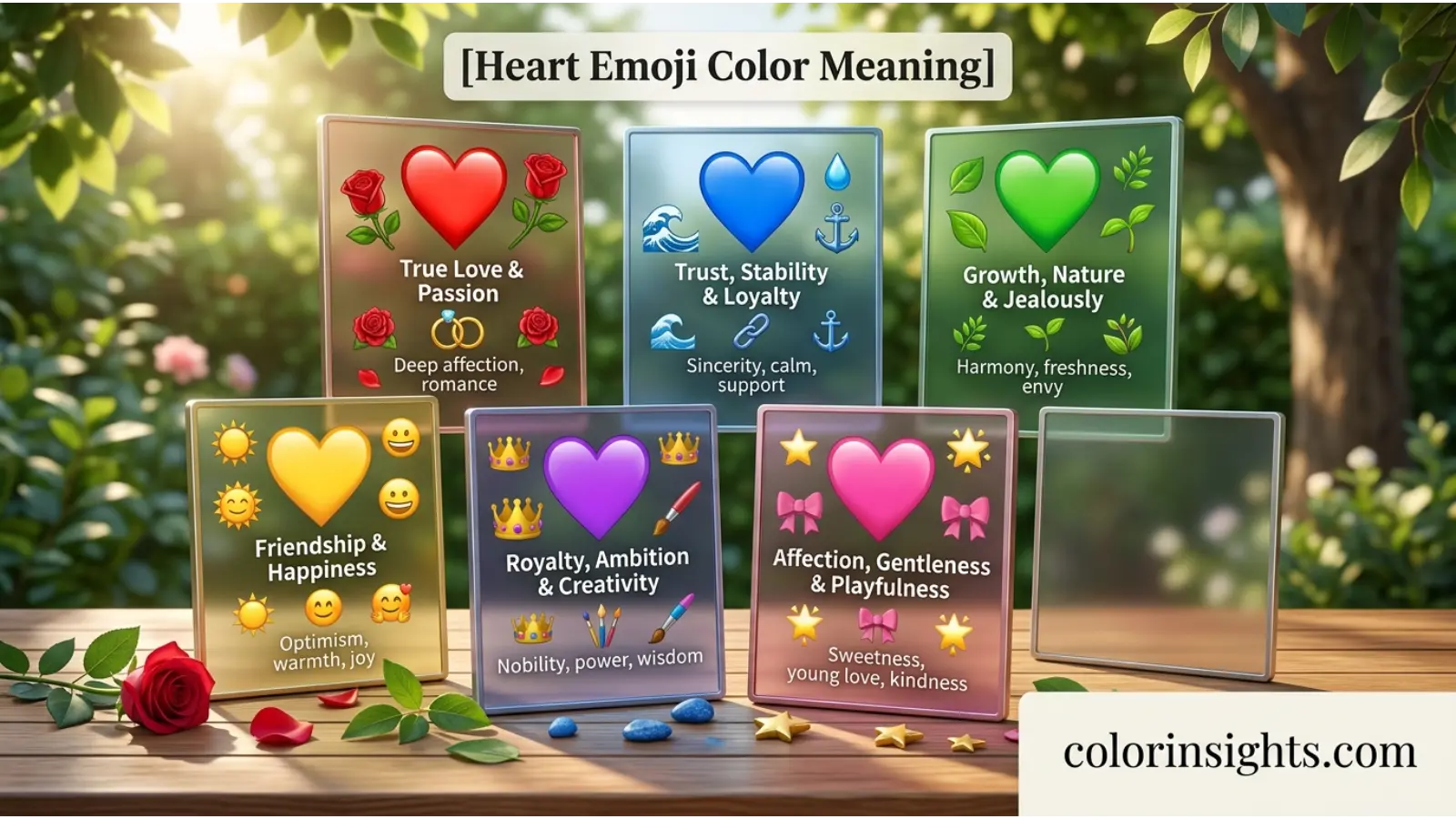
Heart emojis color are among the most widely used symbols in digital communication, but their meanings can vary dramatically depending on their color.
Each heart emoji color carries unique emotional, psychological, cultural, and symbolic associations. While all heart emojis generally represent affection, connection, and care, different colors communicate different feelings, relationships, intentions, and messages.
Understanding heart emoji color meaning can help you communicate more effectively online, interpret messages accurately, and appreciate the deeper symbolism behind these popular digital icons.
Quick Answer: Heart emoji colors symbolize different emotions and relationships. For example, ❤️ red represents love and passion, 💙 blue symbolizes trust and loyalty, 💛 yellow stands for friendship and happiness, 💚 green reflects growth and harmony, while 🖤 black often represents grief, mystery, or dark humor.
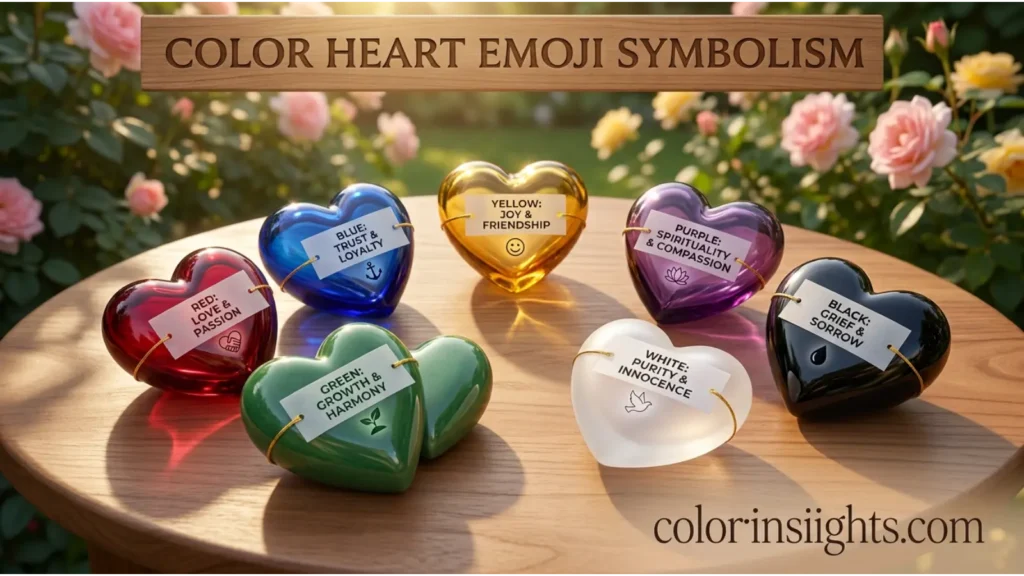
What Does the Color Heart Emoji Symbolize?
Heart emoji colors symbolize emotional states, relationship dynamics, personal values, and social intentions. Although the heart shape universally represents affection and connection, the specific color changes the meaning significantly.
Different heart colors can symbolize:
- Romantic love and passion.
- Friendship and companionship.
- Trust and loyalty.
- Compassion and support.
- Healing and growth.
- Spiritual connection.
- Mourning and remembrance.
- Joy and positivity.
- Luxury and admiration.
- Individual identity and self-expression.
The symbolism of heart emoji colors often depends on context, culture, and personal interpretation. However, certain meanings have become widely recognized across social media, messaging platforms, and digital communication.
Psychological Characteristics of the Color Heart Emoji
Color psychology suggests that colors influence emotional responses and social perceptions. Since heart emojis combine the symbolism of the heart with color psychology, they create powerful emotional messages.
Emotional Associations
Different heart colors evoke different emotions:
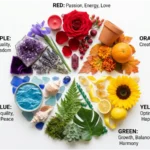
- ❤️ Red: Passion, desire, romance, excitement.
- 💙 Blue: Trust, security, loyalty.
- 💛 Yellow: Joy, optimism, friendship.
- 💚 Green: Growth, balance, renewal.
- 💜 Purple: Creativity, luxury, spirituality.
- 🖤 Black: Mystery, grief, sophistication.
- 🤍 White: Purity, peace, sincerity.
- 🤎 Brown: Stability, comfort, reliability.
- 🧡 Orange: Enthusiasm, warmth, encouragement.
- 🩷 Pink: Affection, sweetness, tenderness.
Psychological Effects
Heart emoji colors can:
- Influence emotional interpretation.
- Strengthen relationship signals.
- Create feelings of trust or attraction.
- Communicate social intentions quickly.
- Enhance emotional clarity in digital conversations.
Positive Emotional Responses
- Love and affection.
- Comfort and reassurance.
- Friendship and belonging.
- Hope and encouragement.
- Appreciation and gratitude.
Negative Emotional Responses
Some colors may also trigger less positive reactions:
- Black hearts may suggest sadness or loss.
- Red hearts may appear overly intense.
- White hearts may feel emotionally distant.
- Green hearts may occasionally be linked to jealousy.
Impact on Mood and Behavior
People often choose heart emoji colors that match:
- Their emotional state.
- The nature of a relationship.
- Cultural norms.
- Personal preferences.
- Social media trends.
How People Typically React
Users generally interpret:
- Red hearts as romantic.
- Yellow hearts as friendly.
- Blue hearts as trustworthy.
- Green hearts as supportive.
- Purple hearts as creative.
- Black hearts as edgy or symbolic.
Spiritual Meaning of the Color Heart Emoji
Heart emoji colors often carry spiritual symbolism beyond everyday communication.
Spiritual Associations
- Holiness: White and gold-toned hearts often represent sacred love.
- Wisdom: Purple hearts symbolize higher understanding.
- Purity: White hearts reflect innocence and spiritual purity.
- Transformation: Green hearts symbolize renewal and personal growth.
- Healing: Green and blue hearts are commonly associated with healing energy.
- Protection: Blue hearts may symbolize emotional protection and stability.
- Power: Red and purple hearts often represent strength and spiritual authority.
- Enlightenment: Purple hearts are linked with higher consciousness.
- New Beginnings: Green and white hearts symbolize fresh starts.
- Eternity: White hearts can represent everlasting spiritual connection.
Many spiritual traditions view the heart as the center of compassion, love, and divine connection, making heart emojis meaningful symbols beyond simple digital expressions.
Positive and Negative Meanings of the Color Heart Emoji
Positive Meanings
Heart emoji colors frequently symbolize positive emotions and values.
Love and Affection
❤️ Red hearts remain the strongest symbol of romantic love.
Friendship
💛 Yellow hearts often represent loyal friendships and happiness.
Trust
💙 Blue hearts communicate dependability and emotional security.
Growth
💚 Green hearts symbolize progress, healing, and renewal.
Compassion
🩷 Pink hearts reflect kindness and emotional warmth.
Harmony
🤍 White hearts often represent peace and balance.
Creativity
💜 Purple hearts symbolize imagination and artistic expression.
Hope
Many colorful hearts convey encouragement and optimism.
Negative Meanings
Context can also create negative interpretations.
Emptiness
🤍 White hearts may sometimes feel emotionally detached.
Isolation
🖤 Black hearts can symbolize loneliness or emotional withdrawal.
Coldness
💙 Blue hearts occasionally appear distant in highly emotional conversations.
Emotional Distance
Neutral-colored hearts may be perceived as less intimate.
Perfectionism
White hearts can symbolize unrealistic expectations of purity.
Grief
Black hearts are often used in memorial messages.
Jealousy
Green hearts may occasionally be associated with envy.
Boredom
Overuse of neutral heart colors can sometimes feel impersonal.
Meanings of the Color Heart Emoji
Heart emoji meanings shift depending on context, relationships, and communication goals.
Feng Shui
Heart emoji colors can be connected to Feng Shui principles.
Associated Elements
- Red: Fire.
- Blue: Water.
- Green: Wood.
- White: Metal.
- Brown: Earth.
Energy Symbolism
- Red hearts enhance passion.
- Green hearts encourage growth.
- Blue hearts promote calmness.
- White hearts create peaceful energy.
Best Rooms
- Red: Living rooms.
- Green: Offices and study areas.
- Blue: Bedrooms.
- White: Meditation spaces.
Recommended Color Combinations
- Red and gold.
- Blue and white.
- Green and brown.
- Purple and silver.
Home Decorating Tips
Use heart-themed accents sparingly to promote emotional warmth while maintaining visual balance.
Marketing
Heart emoji colors play a significant role in branding psychology.
Branding Psychology
Brands use heart colors to evoke specific emotions.
- Red communicates passion and urgency.
- Blue builds trust.
- Green supports sustainability.
- Purple conveys luxury.
Consumer Perception
Consumers often associate:
- Red with excitement.
- Blue with reliability.
- Green with health.
- Pink with care and compassion.
Trust Signals
Blue and white hearts are particularly effective for communicating credibility.
Product Packaging
Heart colors are often used on:
- Greeting cards.
- Beauty products.
- Wellness brands.
- Charity campaigns.
Advertising Applications
Marketers use heart colors to reinforce emotional connections and increase engagement.
Design
Heart emoji colors influence visual communication across design disciplines.
Interior Design
Colorful heart accents can add personality and emotional warmth.
Graphic Design
Designers use heart colors to direct attention and reinforce messaging.
Web Design
Heart-colored icons help communicate likes, favorites, and engagement actions.
User Experience
Different heart colors improve emotional clarity and interface usability.
Minimalist Aesthetics
Simple heart icons in limited color palettes maintain visual elegance.
Fashion
Heart colors influence style perception and self-expression.
Clothing Symbolism
- Red hearts signal confidence.
- Pink hearts suggest tenderness.
- Black hearts create an edgy aesthetic.
- White hearts communicate simplicity.
Seasonal Use
- Red and green during winter holidays.
- Pink during spring.
- Yellow during summer.
- Brown during autumn.
Styling Effects
Heart colors can make outfits appear:
- More playful.
- More romantic.
- More sophisticated.
- More expressive.
Personality Impressions
Observers may associate certain heart colors with particular moods and values.
Advantages
- Easy emotional communication.
- Strong visual impact.
- Versatile styling options.
Disadvantages
- Possible misinterpretation.
- Cultural differences.
- Changing social media trends.
Color Associations Are Not Universal
Heart emoji color meanings vary across cultures and historical contexts.
Western Cultures
In Western societies:
- Red represents romantic love.
- White symbolizes purity.
- Black often signifies mourning.
- Blue reflects trust and loyalty.
Eastern Cultures
Many Eastern traditions associate:
- Red with luck and prosperity.
- White with mourning in some regions.
- Green with harmony and growth.
- Gold with wealth and success.
Religious Traditions
Different faiths may interpret heart colors differently.
- White often symbolizes spiritual purity.
- Purple may represent wisdom and devotion.
- Red can symbolize sacrifice and divine love.
Historical Interpretations
Historically, colors carried meanings tied to social status, religion, and cultural customs.
For example:
- Purple was associated with royalty.
- White represented innocence.
- Black symbolized both authority and mourning.
Modern Global Interpretations
Social media has created more universal meanings, but regional differences still exist. The same heart color may communicate different emotions depending on cultural background and context.
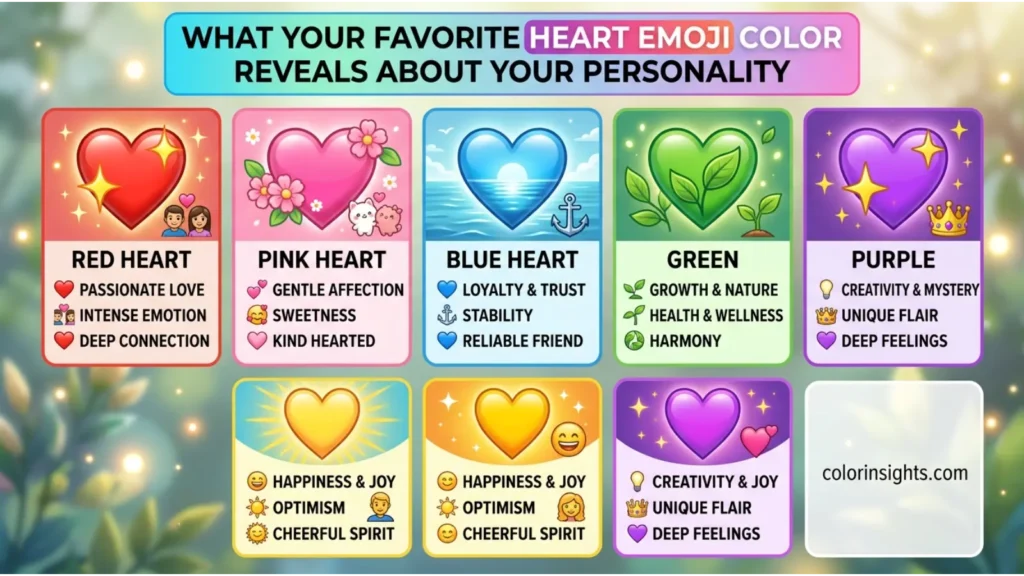
What Heart Emoji Color Says About Your Personality
People often gravitate toward heart emoji colors that reflect aspects of their personality.
Strengths
Depending on the preferred heart color, common strengths may include:
- Compassion.
- Loyalty.
- Creativity.
- Optimism.
- Confidence.
- Emotional intelligence.
Weaknesses
Potential tendencies may include:
- Over-sensitivity.
- Perfectionism.
- Emotional intensity.
- Excessive caution.
- Idealism.
Social Behavior
Heart color preferences may reflect:
- Communication style.
- Relationship priorities.
- Emotional openness.
- Social confidence.
Work Style
Different color preferences may suggest:
- Leadership qualities.
- Team-oriented thinking.
- Creativity.
- Reliability.
- Organization.
Relationships
Heart colors can indicate preferences for:
- Romance.
- Friendship.
- Emotional intimacy.
- Stability.
- Personal growth.
Emotional Tendencies
Some people naturally prefer colors that align with their emotional outlook, but personality is influenced by many factors beyond color preference.
Color preferences should be viewed as interesting indicators rather than definitive personality assessments.
FAQs
What defines heart emoji color meaning?
Heart emoji color meaning refers to the symbolism, emotions, and social messages associated with different colored heart emojis.
What does the color heart emoji symbolize?
Heart emoji colors symbolize emotions such as love, friendship, trust, compassion, healing, and personal connection.
Why is heart emoji color meaning important?
Different heart colors communicate different intentions, helping people express emotions more accurately in digital communication.
Is a heart emoji color warm or cool?
It depends on the color. Red, orange, and yellow hearts are warm colors, while blue, green, and purple hearts are generally considered cool colors.
What emotions do heart emoji colors represent?
They commonly represent love, happiness, trust, peace, compassion, hope, loyalty, and emotional support.
What is the spiritual meaning of heart emoji colors?
Spiritually, heart colors can symbolize healing, enlightenment, protection, transformation, purity, and divine love.
What colors pair well with heart emoji colors?
Popular combinations include red and gold, blue and white, green and brown, pink and white, and purple and silver.
What does liking a specific heart emoji color say about a person?
A preferred heart color may reflect emotional preferences, aesthetic tastes, or personality tendencies, though it does not determine personality with certainty.
Which heart emoji is most commonly used?
The red heart emoji (❤️) is generally the most widely used and is commonly associated with romantic love and affection.
What does a black heart emoji mean?
A black heart emoji may symbolize grief, mystery, dark humor, individuality, or emotional depth depending on context.
What does a yellow heart emoji mean?
A yellow heart typically represents friendship, happiness, positivity, and platonic affection.
What does a blue heart emoji mean?
A blue heart commonly symbolizes trust, loyalty, stability, and emotional support.
Conclusion
Heart emoji color meaning goes far beyond simple decoration. Each color communicates unique emotions, values, and relationship signals, helping people express feelings quickly and effectively in digital communication.
From the passionate symbolism of the red heart to the trustworthy nature of the blue heart and the peaceful message of the white heart, color significantly shapes interpretation.
Understanding heart emoji symbolism, psychology, spiritual meanings, cultural associations, and personality connections can improve communication and provide deeper insight into modern digital expression.