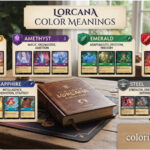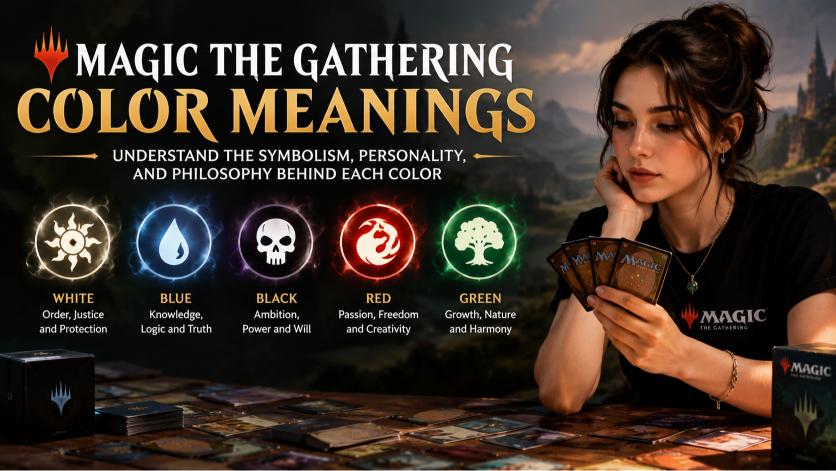
The five colors in Magic The Gathering (MTG) color meanings represent much more than gameplay mechanics. They form a philosophical system that explores different beliefs, motivations, personalities, and approaches to life.
Rather than symbolizing simple emotions, each color reflects a unique worldview about how people should pursue happiness, power, knowledge, justice, or freedom. These color identities have become widely recognized beyond the game, influencing personality discussions, storytelling, leadership styles, and creative design.
Understanding Magic The Gathering color meanings helps players appreciate the game’s deeper themes while offering fascinating insights into human psychology and decision-making.
Quick Answer:
In Magic The Gathering, White represents order, Blue symbolizes knowledge, Black stands for ambition, Red reflects freedom and emotion, and Green represents growth and harmony with nature.
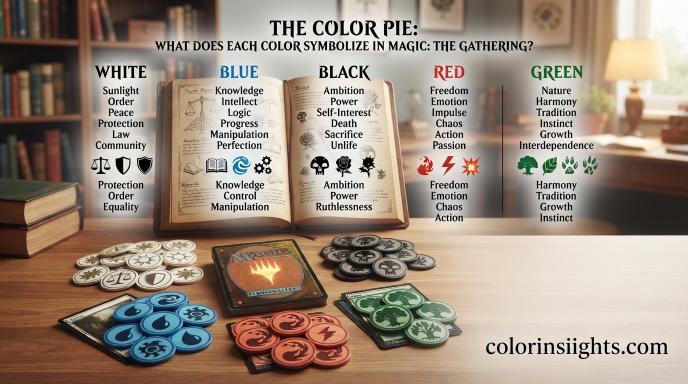
What Does the Color Magic The Gathering Symbolize?
Unlike traditional color symbolism, Magic: The Gathering assigns each color an entire philosophy rather than a single emotion. Every color seeks a better world but believes a different path is the correct one.
White — Order and Community
White believes peace comes through cooperation, justice, structure, and equality. It values responsibility over personal desire and seeks harmony by following rules and protecting others.
Core symbolism:
- Justice
- Honor
- Protection
- Peace
- Duty
- Morality
- Community
- Discipline
Blue — Knowledge and Perfection
Blue believes everyone can improve through education, planning, and continuous learning. It values logic above emotion and prefers careful analysis before taking action.
Core symbolism:
- Intelligence
- Wisdom
- Innovation
- Curiosity
- Strategy
- Precision
- Adaptability
- Self-improvement
Black — Ambition and Self-Determination
Black encourages pursuing personal goals without unnecessary limitations. It accepts that life is competitive and believes success belongs to those willing to make difficult decisions.
Core symbolism:
- Power
- Independence
- Determination
- Ambition
- Survival
- Opportunity
- Confidence
- Realism
Red — Freedom and Emotion
Red celebrates living authentically and following one’s heart. It embraces passion, creativity, excitement, and spontaneity rather than strict planning.
Core symbolism:
- Passion
- Freedom
- Courage
- Creativity
- Love
- Adventure
- Emotion
- Action
Green — Growth and Nature
Green believes life follows a natural order that should be respected. It values patience, balance, family, tradition, and personal growth through accepting one’s place in the world.
Core symbolism:
- Nature
- Growth
- Balance
- Wisdom
- Acceptance
- Tradition
- Harmony
- Renewal
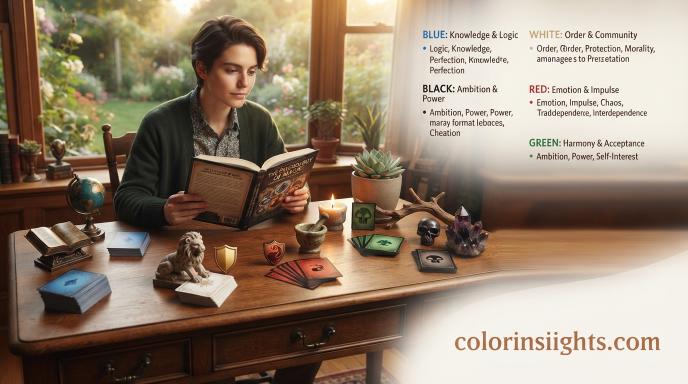
Psychological Characteristics of the Color Magic The Gathering
From a psychological perspective, the MTG color pie represents five distinct personality frameworks. Rather than categorizing people into rigid types, it illustrates different motivational patterns that influence behavior.
Emotional Associations
- White: Security, compassion, responsibility
- Blue: Curiosity, intellectual satisfaction, control
- Black: Confidence, determination, achievement
- Red: Excitement, enthusiasm, emotional expression
- Green: Calmness, belonging, stability
Psychological Effects
Each color promotes a different decision-making style.
- White encourages cooperation.
- Blue promotes analytical thinking.
- Black increases goal orientation.
- Red encourages instinctive action.
- Green supports patience and resilience.
Positive Emotional Responses
- Feeling protected
- Confidence in one’s abilities
- Creative inspiration
- Intellectual fulfillment
- Inner peace
- Hope for improvement
- Emotional authenticity
Negative Emotional Responses
When taken to extremes, each philosophy has drawbacks.
- White may become overly rigid.
- Blue can lead to overthinking.
- Black may encourage selfishness.
- Red can become impulsive.
- Green may resist necessary change.
Impact on Mood and Behavior
People often identify with MTG colors because they reflect preferred ways of solving problems.
For example:
- White personalities organize teams.
- Blue personalities research solutions.
- Black personalities pursue ambitious goals.
- Red personalities inspire action.
- Green personalities create long-term stability.
Typical Reactions
Many players naturally gravitate toward colors matching their real-life values, leadership style, or communication preferences, making the MTG color system surprisingly relatable.
Spiritual Meaning of the Color Magic The Gathering
Although Magic: The Gathering is fictional, many fans compare its philosophies to spiritual teachings found across world cultures.
White
- Holiness through service
- Moral integrity
- Protection of others
- Collective harmony
- Compassion
Blue
- Wisdom through knowledge
- Enlightenment
- Lifelong learning
- Mental discipline
- Self-transformation
Black
- Personal empowerment
- Shadow work
- Independence
- Inner strength
- Accepting difficult truths
Red
- Life force
- Creative energy
- Passion
- Emotional healing
- Courage to follow one’s heart
Green
- Unity with nature
- Healing
- Renewal
- New beginnings
- Eternity through natural cycles
- Spiritual balance
Together, the five colors symbolize the idea that no single philosophy completely explains life. Wisdom often comes from balancing multiple perspectives.
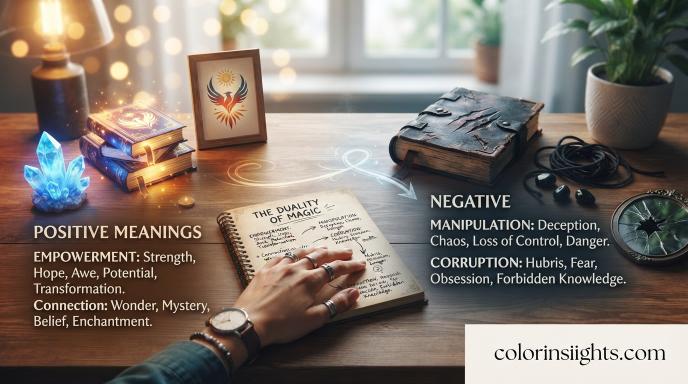
Positive and Negative Meanings of the Color Magic The Gathering
Positive Meanings
The MTG colors collectively represent many admirable qualities.
- Justice and fairness (White)
- Knowledge and wisdom (Blue)
- Confidence and ambition (Black)
- Passion and authenticity (Red)
- Growth and harmony (Green)
- Balance between individuality and community
- Hope through continuous improvement
Example:
Effective leaders often combine White’s organization, Blue’s planning, Red’s inspiration, Green’s patience, and Black’s determination.
Negative Meanings
When any philosophy becomes excessive, problems can emerge.
- White: rigidity and perfectionism
- Blue: emotional distance
- Black: manipulation
- Red: recklessness
- Green: resistance to innovation
Real-world examples
- Excessive planning delaying action reflects Blue imbalance.
- Ignoring teamwork for personal gain mirrors Black excess.
- Acting without thinking resembles Red impulsiveness.
- Refusing change despite evidence reflects Green stubbornness.
- Overregulation represents White rigidity.
Meanings of the Color Magic The Gathering
The meaning of MTG colors changes depending on context. In gameplay they define mechanics, in storytelling they represent philosophies, and in personality discussions they illustrate motivational styles.
Feng Shui
Although MTG colors were not designed using Feng Shui principles, interesting parallels exist.
- White: Metal element; clarity and organization.
- Blue: Water element; wisdom and communication.
- Black: Often associated with Water; depth and career energy.
- Red: Fire element; passion and visibility.
- Green: Wood element; growth and vitality.
Best rooms
- White: Home office
- Blue: Study room
- Black: Professional workspace
- Red: Living room
- Green: Bedroom or garden-facing spaces
Recommended combinations
- White + Green for balance
- Blue + White for calm productivity
- Red + White for energy with structure
- Green + Blue for peaceful creativity
Decorating with balanced color combinations creates visually comfortable environments.
Marketing
The MTG color philosophies also align with branding psychology.
Branding Psychology
- White communicates trust and simplicity.
- Blue builds reliability and intelligence.
- Black suggests luxury and authority.
- Red attracts excitement and urgency.
- Green communicates sustainability and health.
Consumer Perception
Customers often associate:
- Blue with dependable companies.
- Green with eco-friendly products.
- Black with premium brands.
- Red with excitement.
- White with cleanliness.
Trust Signals
Many healthcare, banking, and technology brands rely heavily on blue and white because these colors increase perceived credibility.
Product Packaging
- Green for organic foods.
- Black for luxury cosmetics.
- White for minimalist technology.
- Red for promotions.
- Blue for professional services.
Advertising Applications
Advertisers frequently use contrasting color combinations to guide attention and influence purchasing decisions.
Examples of famous brands
- Blue: Facebook, Intel, PayPal
- Red: Coca-Cola, Netflix, YouTube
- Green: Starbucks, Spotify, Whole Foods
- Black: Chanel, Nike branding
- White: Apple’s minimalist product presentation
Design
The MTG color philosophy offers useful inspiration for creative professionals.
Interior Design
- White creates openness.
- Green promotes relaxation.
- Blue encourages concentration.
- Black adds sophistication.
- Red becomes a visual focal point.
Graphic Design
Designers use these colors to communicate emotion quickly while strengthening visual hierarchy.
Web Design
- Blue improves trust.
- Green supports positive actions.
- Red highlights important buttons.
- White increases readability.
- Black adds premium appeal.
User Experience
Balanced color choices improve navigation, reduce cognitive load, and create memorable digital experiences.
Minimalist Aesthetics
White space combined with carefully selected accent colors produces clean, user-friendly layouts.
Fashion
Fashion often reflects the same psychological associations found in MTG’s philosophies.
Clothing Symbolism
- White represents elegance.
- Blue symbolizes confidence.
- Black communicates authority.
- Red expresses boldness.
- Green reflects natural confidence.
Seasonal Use
- White during summer.
- Green during spring.
- Red in winter holidays.
- Black year-round.
- Blue across every season.
Styling Effects
Different colors influence first impressions during interviews, presentations, and social events.
Personality Impressions
People wearing black often appear authoritative, while green appears approachable and blue projects reliability.
Advantages
- Strong self-expression
- Flexible styling
- Professional appearance
- Emotional communication
Disadvantages
Overusing one color can create predictable or unbalanced visual impressions.
Color Associations Are Not Universal
Color meanings vary considerably across cultures.
Western Cultures
White often symbolizes purity, weddings, and peace. Black commonly represents sophistication or mourning, while red expresses love or urgency.
Eastern Cultures
In several East Asian traditions, white can symbolize mourning, while red often represents happiness, prosperity, celebration, and good fortune.
Religious Traditions
Many religions associate white with holiness, green with life and renewal, blue with heaven or divine wisdom, and red with sacrifice or spiritual devotion.
Historical Interpretations
Historically, purple symbolized royalty due to its rarity, while black represented authority and formal status in many societies.
Modern Global Interpretations
Global branding has made many color associations more universal, but local traditions still influence how colors are perceived in advertising, fashion, and design.
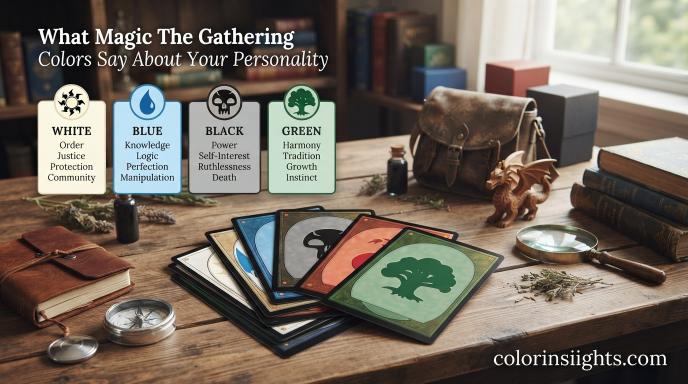
What Magic The Gathering Colors Say About Your Personality
Many players enjoy identifying with one or more MTG colors because they reflect personal values rather than fixed personality types.
White Personality
Strengths
- Responsible
- Loyal
- Fair
- Organized
Weaknesses
- Judgmental
- Resistant to change
Blue Personality
Strengths
- Intelligent
- Curious
- Strategic
Weaknesses
- Overthinks
- Emotionally reserved
Black Personality
Strengths
- Independent
- Ambitious
- Confident
Weaknesses
- Competitive
- Sometimes self-focused
Red Personality
Strengths
- Creative
- Passionate
- Courageous
Weaknesses
- Impulsive
- Easily frustrated
Green Personality
Strengths
- Patient
- Compassionate
- Grounded
Weaknesses
- Traditional
- Slow to adapt
Most people display a mixture of multiple color philosophies rather than fitting neatly into a single category.
FAQs:
What defines Magic The Gathering color meanings?
They are philosophical systems representing different beliefs, motivations, and approaches to life rather than simple color symbolism.
What does Magic The Gathering symbolize?
The five-color system symbolizes diverse paths toward achieving happiness, success, and personal fulfillment.
Why are MTG colors important?
They shape gameplay, storytelling, character identity, and player strategy while exploring deeper philosophical ideas.
Are MTG colors based on real color psychology?
They are fictional but draw inspiration from real psychological concepts, personality theories, and cultural symbolism.
What emotions do MTG colors represent?
White represents compassion, Blue curiosity, Black ambition, Red passion, and Green peace and growth.
What is the spiritual meaning of Magic The Gathering colors?
Collectively they symbolize wisdom, transformation, balance, personal growth, courage, protection, and harmony.
Which MTG color is the most balanced?
No single color is objectively superior. Each offers valuable strengths alongside potential weaknesses.
Can someone belong to more than one MTG color?
Yes. Most people identify with multiple colors because human personalities are complex and multidimensional.
What colors work well together?
Common combinations include White–Blue for strategy, Green–White for harmony, Blue–Black for intelligence and ambition, and Red–Green for passion balanced by growth.
What does liking a particular MTG color say about a person?
It may reflect preferred values, decision-making styles, and motivations, but it should not be viewed as a scientifically validated personality assessment.
Conclusion
The Magic The Gathering color meanings offer one of the most sophisticated symbolic systems in modern fantasy. Rather than simply assigning emotions to colors, the game presents five interconnected philosophies that explore justice, knowledge, ambition, freedom, and harmony.
These themes resonate because they mirror real-world differences in personality, leadership, ethics, creativity, and decision-making. Whether viewed through the lens of psychology, storytelling, branding, design, or personal growth, the MTG color pie remains a compelling framework for understanding how diverse perspectives shape both fictional worlds and everyday human behavior.