Mood bracelets have fascinated people for decades by combining fashion with the idea of emotional expression. These accessories contain thermochromic elements that change color based on temperature, which can be influenced by body heat.
While the science behind mood bracelets relates to temperature rather than directly measuring emotions, each color has developed symbolic meanings that people associate with different moods, personality traits, and emotional states.
Understanding mood bracelet color meanings can help you appreciate their cultural significance, psychological symbolism, and the fun way they encourage self-reflection and conversation.
Quick Answer:
Mood bracelet colors are believed to represent different emotional states. Although the color changes are caused by body temperature, each shade is traditionally associated with specific feelings, such as happiness, calmness, stress, excitement, or relaxation.
What Does the Mood Bracelet Color Mean Symbolize?
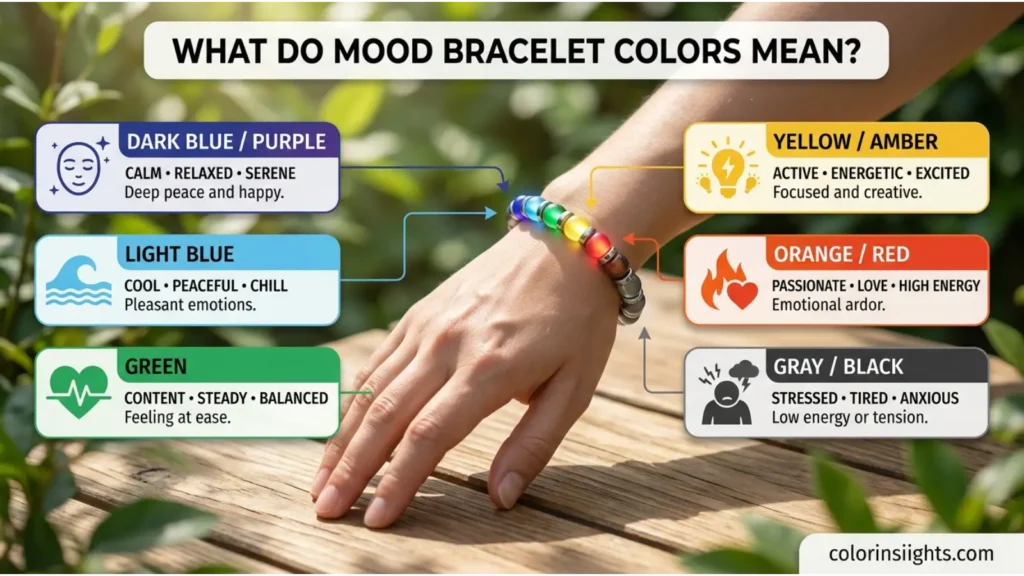
Mood bracelet color meanings symbolize a person’s emotional or physical state based on traditional interpretations rather than scientific measurement. The bracelet responds to changes in skin temperature, and each color has become linked with particular emotions over time.
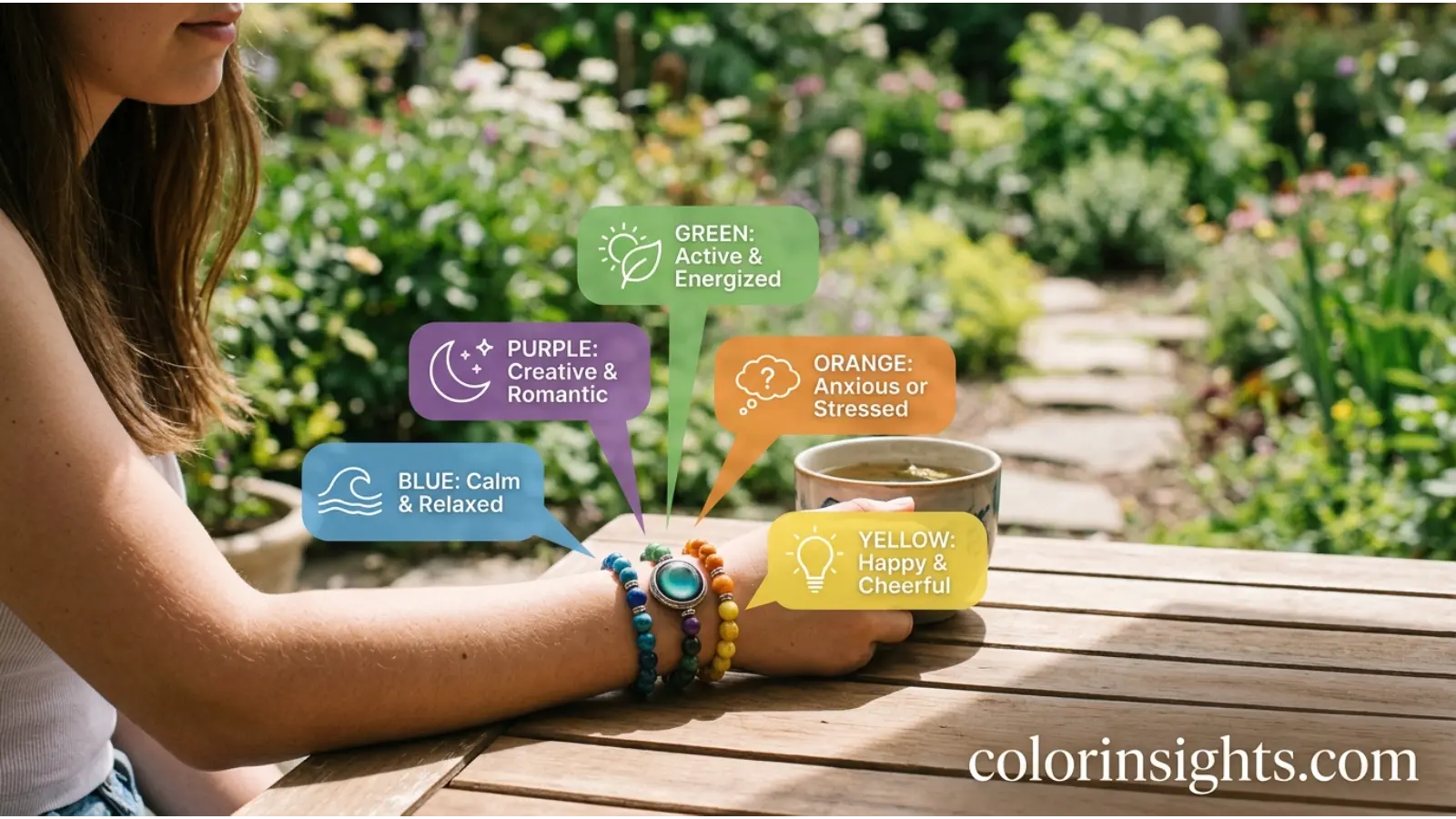
Common symbolism associated with mood bracelet colors includes:
- Black – Stress, tension, or feeling cold.
- Gray – Anxiety, uncertainty, or emotional fatigue.
- Brown – Nervousness, restlessness, or discomfort.
- Amber – Mixed emotions, surprise, or anticipation.
- Green – Calmness, balance, and emotional stability.
- Blue – Relaxation, peace, and happiness.
- Dark Blue – Confidence, affection, and emotional security.
- Purple – Passion, excitement, creativity, and romance.
- Red – High energy, enthusiasm, determination, or strong emotions.
Rather than serving as medical or psychological tools, mood bracelets symbolize emotional awareness and personal reflection. Many people enjoy them as conversation starters, nostalgic accessories, and reminders to check in with their feelings throughout the day.
Psychological Characteristics of the Mood Bracelet Color Meanings
Color psychology suggests that people naturally associate certain colors with specific emotions and mental states. Mood bracelet color meanings build upon these widely recognized psychological associations, even though the bracelet itself responds to changes in body temperature rather than emotions directly.
Emotional Associations
Different bracelet colors commonly evoke different emotional responses:
- Blue encourages feelings of calmness and relaxation.
- Green represents emotional balance and stability.
- Purple reflects imagination, passion, and inspiration.
- Red symbolizes excitement, motivation, and confidence.
- Black often represents stress, fatigue, or emotional pressure.
- Gray may indicate uncertainty or emotional withdrawal.
- Amber suggests curiosity and changing emotions.
Psychological Effects
Mood bracelet colors can influence how people interpret their emotional experiences.
- Cool colors often promote relaxation.
- Warm colors stimulate alertness and enthusiasm.
- Neutral colors encourage reflection and caution.
- Changing colors remind people that emotions naturally fluctuate.
Positive Emotional Responses
Certain colors are generally linked with uplifting emotional experiences:
- Peace and serenity
- Confidence
- Emotional balance
- Joy and optimism
- Creativity
- Affection
- Hopefulness
- Inner harmony
For example, seeing a blue or green mood bracelet may reinforce feelings of calmness during a busy workday.
Negative Emotional Responses
Some colors are traditionally connected with emotional discomfort:
- Anxiety
- Frustration
- Stress
- Emotional exhaustion
- Irritability
- Confusion
- Restlessness
- Mental overload
For instance, a bracelet displaying black or gray may encourage someone to recognize stress and consider taking a short break.
Impact on Mood and Behavior
Although mood bracelets cannot diagnose emotions, they may positively influence self-awareness by encouraging people to pause and reflect.
Potential behavioral impacts include:
- Increased emotional mindfulness.
- Better recognition of stress levels.
- Encouragement to practice relaxation techniques.
- Greater awareness of changing emotional patterns.
- Improved emotional conversations with others.
How People Typically React to Mood Bracelet Colors
People often respond to mood bracelet colors in personal and symbolic ways.
- Blue usually feels comforting and reassuring.
- Green often creates a sense of balance.
- Purple inspires imagination and emotional depth.
- Red generates excitement and motivation.
- Black may prompt concern or self-reflection.
- Amber encourages curiosity about changing emotions.
Because emotional experiences vary between individuals, reactions to the same color may differ based on personality, memories, and cultural background.
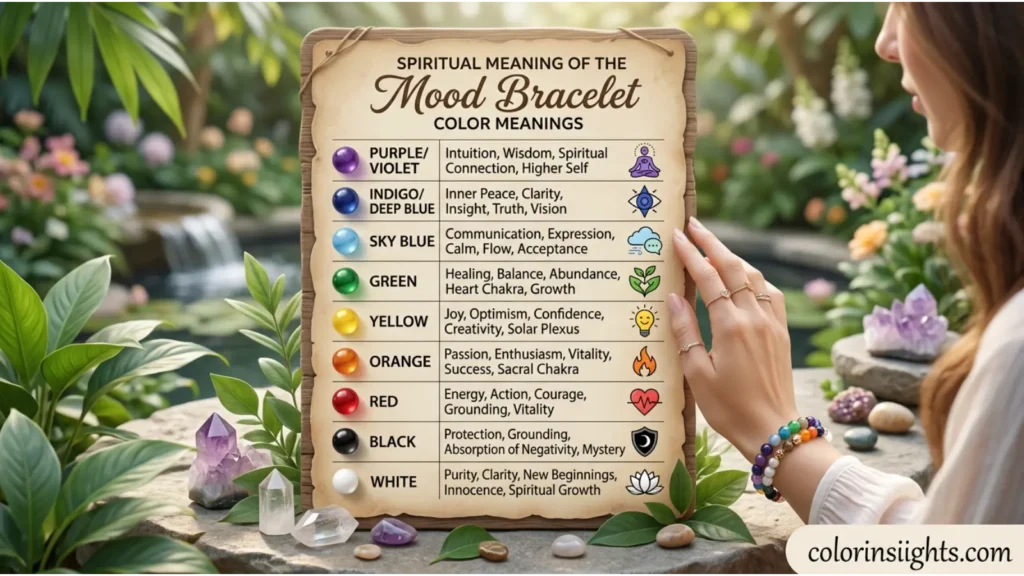
Spiritual Meaning of the Mood Bracelet Color Meanings
Although mood bracelets were originally created as novelty jewelry, many people also associate their changing colors with spiritual symbolism. Various spiritual traditions interpret colors as representations of energy, healing, awareness, and personal growth rather than literal indicators of emotional states.
Holiness
- White or very light shades symbolize purity, innocence, and spiritual clarity.
- Blue is often associated with truth, sincerity, and divine guidance.
Wisdom
- Deep blue represents thoughtful decision-making and inner wisdom.
- Purple symbolizes higher knowledge and spiritual insight.
Purity
- White reflects spiritual cleansing and fresh beginnings.
- Light blue is linked to honesty and peaceful intentions.
Transformation
- Color changes themselves symbolize personal growth and life’s continuous changes.
- Purple often represents transformation through experience and self-discovery.
Healing
- Green is widely connected with emotional healing, renewal, and recovery.
- Blue represents calmness that supports mental and emotional well-being.
Protection
- Dark blue symbolizes emotional security and inner strength.
- Black may represent shielding oneself from negative influences in some spiritual traditions.
Power
- Red symbolizes courage, vitality, determination, and life force.
- Purple reflects spiritual authority and personal empowerment.
Enlightenment
- Violet shades are frequently associated with higher consciousness and self-awareness.
- Blue symbolizes inner peace gained through reflection.
New Beginnings
- Green represents growth, fresh opportunities, and renewal.
- White symbolizes a clean slate and hopeful possibilities.
Eternity
- Blue is commonly connected with the endless sky and lasting peace.
- Purple may represent the timeless journey of spiritual development.
It is important to remember that these interpretations vary among cultures, belief systems, and spiritual practices. Mood bracelet colors should be viewed as symbolic rather than universally accepted spiritual indicators.
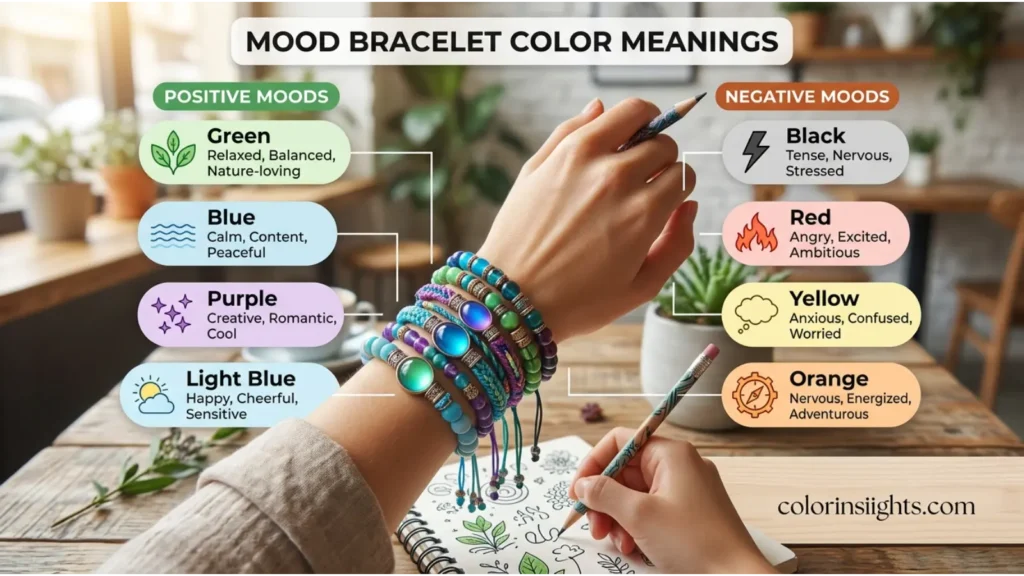
Positive and Negative Meanings of the Mood Bracelet Color Meanings
Mood bracelet colors can carry both uplifting and challenging interpretations depending on the emotional or situational context. A single color may represent confidence in one situation and intensity in another. Understanding both perspectives provides a more balanced interpretation.
Positive Meanings
Emotional Balance
Green often symbolizes stability, emotional harmony, and inner peace.
Example:
Someone wearing a green mood bracelet during meditation may view it as a reminder to stay centered.
Calmness and Peace
Blue represents relaxation, comfort, and mental clarity.
Example:
After finishing a stressful project, a blue bracelet color may symbolize a return to calm.
Confidence
Dark blue often reflects emotional security and trust.
Example:
During an important presentation, this color may be interpreted as confidence and composure.
Passion and Creativity
Purple symbolizes imagination, romance, inspiration, and artistic expression.
Example:
Artists may associate purple with creative energy while working on new ideas.
Energy and Motivation
Red represents determination, enthusiasm, and physical vitality.
Example:
Athletes may view red as a symbol of motivation before competition.
Growth and Renewal
Green is also associated with personal development and fresh opportunities.
Example:
Beginning a new career or educational journey is often symbolized by green.
Hope and Optimism
Amber reflects curiosity, possibility, and positive change.
Example:
Someone preparing for an exciting life event may associate amber with anticipation.
Self-Awareness
Changing colors encourage mindfulness and reflection.
Example:
Observing frequent color changes can remind someone to pay attention to their emotional well-being.
Negative Meanings
Stress
Black commonly symbolizes emotional pressure or physical tension.
Example:
During a demanding workday, a black bracelet color may reflect elevated stress levels caused by cooler skin temperature.
Anxiety
Gray often represents worry, uncertainty, or emotional fatigue.
Example:
Before an important interview, gray may symbolize nervous anticipation.
Restlessness
Brown is associated with discomfort or feeling unsettled.
Example:
Long periods of travel or lack of sleep may coincide with brown tones.
Emotional Distance
Dark or muted colors may symbolize withdrawal or reduced emotional openness.
Example:
Someone experiencing burnout may interpret darker shades as a need for rest and connection.
Confusion
Amber can sometimes represent mixed emotions or indecision rather than optimism.
Example:
Making a difficult life decision may bring feelings symbolized by amber.
Overstimulation
Bright red may also reflect emotional intensity or impulsiveness.
Example:
During a heated argument, red can symbolize heightened emotions instead of positive energy.
Fatigue
Gray or black shades may indicate physical exhaustion in symbolic interpretations.
Example:
After working long hours, darker colors may remind someone to prioritize recovery.
Misinterpretation
One limitation of mood bracelet color meanings is that they can be misunderstood.
Example:
A bracelet may turn black simply because your hands are cold, not because you are feeling stressed. This highlights that mood bracelet colors are symbolic and should not be used as accurate measures of emotional or mental health.
Meanings of Mood Bracelet Colors
Mood bracelet color meanings extend beyond emotional symbolism. They also influence design trends, fashion choices, branding concepts, and cultural interpretations. While the bracelet’s colors change due to skin temperature, people often assign deeper meanings to each shade based on psychology, tradition, and personal experience. Understanding these contexts helps explain why mood bracelet colors remain popular in jewelry, lifestyle products, and self-expression.
Feng Shui
Although mood bracelets are not traditional Feng Shui tools, the colors they display can be interpreted using Feng Shui principles to create balance and positive energy.
Associated Elements
Each mood bracelet color aligns with one of the five Feng Shui elements:
- Blue and Black – Water, representing wisdom, calmness, and career growth.
- Green – Wood, symbolizing health, renewal, and personal development.
- Red and Purple – Fire, representing passion, confidence, and recognition.
- Brown and Amber – Earth, associated with stability, grounding, and nourishment.
- Gray and Metallic Tones – Metal, symbolizing focus, clarity, and organization.
Energy Symbolism
- Blue encourages peaceful, flowing energy.
- Green supports healing and steady growth.
- Purple inspires spiritual awareness and abundance.
- Red activates motivation and vitality.
- Brown creates emotional stability and security.
Best Rooms
Depending on the dominant color, mood bracelet symbolism can inspire home décor choices:
- Blue: Bedrooms, meditation rooms, and bathrooms.
- Green: Living rooms, home offices, and study spaces.
- Red: Dining rooms or creative studios in moderation.
- Purple: Reading corners or spiritual spaces.
- Brown: Entryways and family rooms.
Recommended Color Combinations
Balanced combinations include:
- Blue and White for tranquility.
- Green and Brown for natural harmony.
- Purple and Silver for elegance.
- Red and Gold for prosperity.
- Blue and Green for relaxation and renewal.
Home Decorating Tips
- Introduce calming colors through cushions, artwork, or curtains.
- Use vibrant shades like red sparingly to avoid visual overload.
- Pair earthy tones with natural wood furniture for a grounded atmosphere.
- Add plants alongside green décor to reinforce growth and vitality.
Marketing
Color plays a powerful role in branding and consumer psychology. Although mood bracelet colors change throughout the day, each shade reflects emotional cues that marketers often use to influence customer perceptions.
Branding Psychology
Businesses carefully select colors because consumers form impressions within seconds.
- Blue communicates trust and dependability.
- Green suggests wellness and sustainability.
- Red creates urgency and excitement.
- Purple conveys luxury and creativity.
- Black represents sophistication and exclusivity.
Consumer Perception
Consumers often associate colors with specific qualities.
- Blue products appear reliable.
- Green packaging feels environmentally friendly.
- Red attracts immediate attention.
- Purple products seem premium.
- Black packaging often looks elegant and high-end.
Trust Signals
Brands frequently use cool colors to build credibility.
Blue and green are especially effective for industries such as:
- Healthcare
- Technology
- Finance
- Education
- Wellness
Product Packaging
Packaging colors help products stand out on store shelves.
Examples include:
- Green for organic foods and skincare.
- Blue for bottled water and healthcare products.
- Black for luxury cosmetics.
- Red for energy drinks and promotional offers.
- Purple for premium beauty or wellness items.
Advertising Applications
Advertisers use color to guide customer emotions.
- Warm colors encourage action.
- Cool colors create reassurance.
- Contrasting colors improve visibility.
- Neutral colors emphasize simplicity and elegance.
Famous Brands That Use These Colors
Many globally recognized companies rely on color psychology.
- Blue: Facebook, Intel, PayPal, IBM.
- Green: Starbucks, Spotify, Whole Foods Market.
- Red: Coca-Cola, Netflix, YouTube, Target.
- Purple: Hallmark, Yahoo.
- Black: Nike, Chanel, Adidas (in many campaigns).
These examples demonstrate how colors shape brand identity and consumer expectations.
Design
Mood bracelet color meanings also influence modern design principles because each color creates a different emotional experience for users.
Interior Design
Designers use colors to establish atmosphere.
- Blue bedrooms encourage relaxation.
- Green living rooms create freshness.
- Purple accent walls add luxury.
- Brown furniture provides warmth.
- Black accents increase sophistication.
Graphic Design
Graphic designers use color to improve communication.
- Blue builds trust.
- Green highlights sustainability.
- Red emphasizes important information.
- Purple suggests innovation.
- Neutral tones improve readability.
Web Design
Website designers rely on color psychology to improve user engagement.
Examples include:
- Blue navigation bars for reliability.
- Green call-to-action buttons for positive action.
- Red notification badges for urgency.
- White backgrounds for clarity.
- Black typography for readability.
User Experience (UX)
Effective color choices improve usability.
- Consistent color systems reduce confusion.
- Contrasting colors improve accessibility.
- Calming palettes increase reading comfort.
- Limited color palettes support visual hierarchy.
Minimalist Aesthetics
Minimalist design often combines:
- White backgrounds.
- Black typography.
- Gray interface elements.
- Soft blue accents.
- Natural green highlights.
These combinations create clean, modern, and user-friendly designs.
Fashion
Mood bracelet colors have long inspired fashion by reflecting emotions, personality, and individual style. Many people coordinate clothing with colors that match the feelings they want to express.
Clothing Symbolism
Different colors communicate different impressions.
- Blue projects confidence and calmness.
- Green represents balance and nature.
- Purple expresses creativity and individuality.
- Red communicates passion and boldness.
- Black symbolizes elegance and authority.
- Brown conveys warmth and reliability.
Seasonal Use
Fashion trends often change with the seasons.
- Spring favors greens and soft blues.
- Summer highlights bright blues and vibrant reds.
- Autumn embraces browns and amber tones.
- Winter often features black, deep blue, and rich purple.
Styling Effects
Color choices can influence how an outfit feels.
- Blue creates a polished appearance.
- Green adds freshness.
- Purple becomes a statement color.
- Red draws attention.
- Black creates a slimming and sophisticated effect.
Personality Impressions
People may form first impressions based on clothing colors.
For example:
- Blue wearers may appear dependable.
- Green may suggest a calm personality.
- Purple can signal creativity.
- Red often appears energetic.
- Black may communicate confidence and professionalism.
These impressions are subjective and can vary between cultures and individuals.
Advantages of Using Mood-Inspired Colors
- Easy way to express individuality.
- Helps create coordinated outfits.
- Supports personal branding.
- Adds emotional symbolism to accessories.
- Suitable for both casual and formal wear.
Disadvantages
- Color meanings differ across cultures.
- Personal preferences vary widely.
- Some colors may not suit every occasion.
- Fashion trends change over time.
- Symbolic interpretations are not scientifically fixed.
Practical Example:
Someone attending a job interview might choose blue clothing to project confidence and trustworthiness, while wearing a purple accessory could subtly express creativity. Likewise, a green outfit for a weekend gathering can create a relaxed, approachable impression.
Color Associations Are Not Universal
Although mood bracelet color meanings are widely recognized, color symbolism is not universal. Cultural traditions, religious beliefs, historical events, and personal experiences all influence how people interpret different colors. As a result, the same mood bracelet color may carry positive meanings in one culture and very different associations in another.
Western Cultures
In many Western countries, colors are often interpreted through the lens of modern psychology and design.
- Blue is associated with trust, loyalty, and calmness, making it a common choice for corporate branding.
- Green symbolizes nature, health, growth, and environmental awareness.
- Red represents love, passion, excitement, but also danger or warning.
- Black often conveys elegance and authority, although it is also linked with mourning and grief.
- White generally symbolizes purity, cleanliness, weddings, and new beginnings.
These associations frequently influence advertising, fashion, and home décor.
Eastern Cultures
Across many Eastern cultures, color symbolism reflects centuries of tradition and philosophy.
- Red is widely regarded as a symbol of luck, happiness, celebration, and prosperity.
- Gold represents wealth, success, and abundance.
- Green may symbolize harmony, health, and renewal.
- White, while associated with purity in some contexts, is traditionally connected with mourning and remembrance in several East Asian cultures.
- Purple often signifies nobility, dignity, and spiritual wisdom.
Because traditions vary between countries, meanings should never be generalized across all Eastern societies.
Religious Traditions
Religious symbolism gives colors additional spiritual significance.
- Christianity: White symbolizes purity and resurrection, while purple is associated with reflection, repentance, and royalty.
- Buddhism: Orange represents humility and spiritual devotion, while blue symbolizes wisdom and compassion.
- Hinduism: Saffron reflects sacrifice and courage, and green is associated with life and harmony.
- Islamic traditions: Green is commonly linked with paradise, renewal, and hope.
These meanings stem from religious teachings and ceremonial practices rather than mood bracelet interpretations.
Historical Interpretations
Throughout history, color meanings have changed alongside social and cultural developments.
- Purple was once reserved for royalty because purple dye was rare and expensive.
- Black became associated with formal authority as well as mourning in many societies.
- White has symbolized peace, surrender, and innocence in different historical periods.
- Red has represented both military power and romantic affection across various eras.
Historical context continues to shape how colors are perceived today.
Modern Global Interpretations
Global communication and digital media have created more shared color associations, especially in branding and technology.
- Blue is widely recognized as a symbol of trust and professionalism.
- Green is increasingly connected with sustainability and environmental responsibility.
- Black is commonly used to represent luxury and premium products.
- Red remains effective for attracting attention in marketing and safety signage.
- Purple continues to symbolize creativity, innovation, and imagination.
Even with these broad trends, individual experiences, cultural backgrounds, and personal preferences play an important role in shaping how people interpret mood bracelet colors. No single color carries the same meaning for everyone.
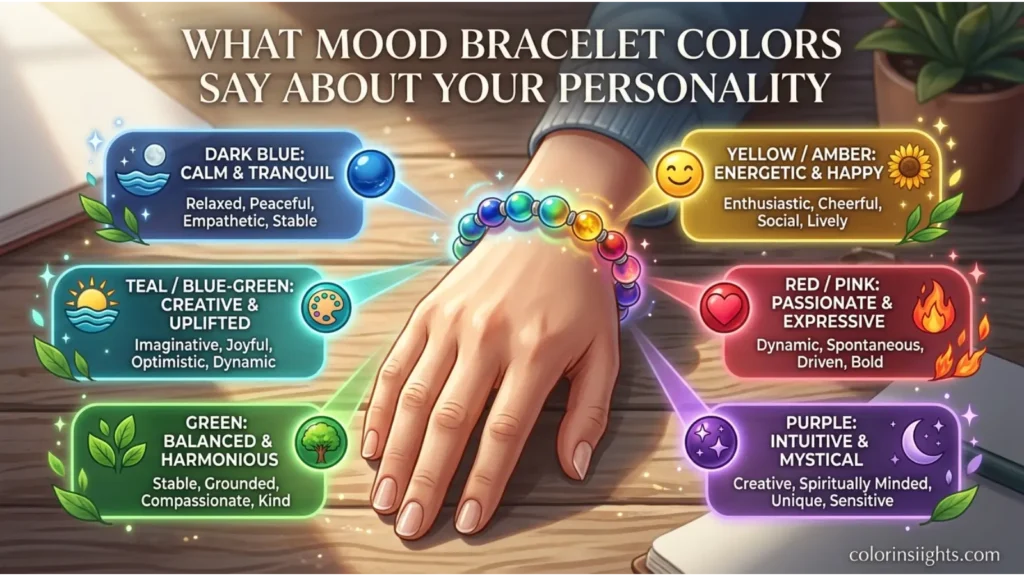
What Mood Bracelet Colors Say About Your Personality
Many people enjoy comparing their favorite mood bracelet colors with common personality descriptions. While these associations are popular in color psychology and self-help literature, there is no scientific evidence that a preferred color can accurately determine personality. Instead, color preferences may reflect temporary moods, cultural influences, personal experiences, or aesthetic tastes.
Strengths
People drawn to different mood bracelet colors are often associated with qualities such as:
- Blue: Calm, dependable, thoughtful, and trustworthy.
- Green: Balanced, patient, compassionate, and supportive.
- Purple: Creative, imaginative, intuitive, and open-minded.
- Red: Energetic, confident, determined, and ambitious.
- Black: Independent, resilient, sophisticated, and self-controlled.
Weaknesses
Every color preference also has symbolic challenges.
- Blue lovers may appear overly cautious or reserved.
- Green enthusiasts may avoid conflict to maintain harmony.
- Purple admirers can become idealistic or overly emotional.
- Red personalities may act impulsively or become impatient.
- Black enthusiasts may seem distant or difficult to read.
These are symbolic tendencies rather than fixed personality traits.
Social Behavior
Color preferences may influence how others perceive someone.
For example:
- Blue is often viewed as approachable and reliable.
- Green suggests empathy and cooperation.
- Purple conveys originality and artistic expression.
- Red attracts attention and signals confidence.
- Black can create an impression of authority and elegance.
Actual social behavior depends on many factors beyond color preference.
Work Style
Different symbolic traits can also translate into workplace preferences.
- Blue personalities may value organization, consistency, and teamwork.
- Green personalities often enjoy supportive and collaborative environments.
- Purple personalities thrive in creative or innovative roles.
- Red personalities may excel in leadership or fast-paced settings.
- Black personalities often appreciate professionalism, structure, and independence.
Relationships
Color symbolism can also reflect relationship tendencies.
- Blue is associated with loyalty and honesty.
- Green emphasizes patience and emotional support.
- Purple values meaningful emotional connections.
- Red expresses passion and enthusiasm.
- Black may reflect a preference for privacy and strong personal boundaries.
Healthy relationships ultimately depend on communication, trust, and shared values rather than favorite colors.
Emotional Tendencies
People often choose colors that match or reinforce their emotional state.
For example:
- Blue may appeal during periods of stress when calmness is desired.
- Green may attract those seeking balance and healing.
- Purple may resonate during times of creativity or personal growth.
- Red may be preferred when motivation and confidence are needed.
- Black may feel appropriate during reflection or when seeking a sense of control.
Color preferences naturally change throughout life. Liking a particular mood bracelet color does not define who you are; it simply offers an interesting way to explore emotions, personality symbolism, and self-expression.
FAQs
What defines mood bracelet color meanings?
Mood bracelet color meanings are traditional interpretations assigned to the different colors displayed by a mood bracelet. The bracelet changes color because of thermochromic liquid crystals that react to changes in skin temperature. While the colors are linked with emotions such as calmness, stress, or excitement, they do not scientifically measure a person’s feelings.
What do mood bracelet colors symbolize?
Mood bracelet colors symbolize a range of emotional states, personality traits, and energy levels. For example, blue often represents calmness and relaxation, green symbolizes balance and growth, purple reflects creativity and passion, and red suggests energy and enthusiasm. These meanings are symbolic rather than scientifically proven.
Why are mood bracelet color meanings important?
Mood bracelet color meanings are important because they encourage self-awareness, spark conversations, and provide a fun way to reflect on emotions. They also demonstrate how color psychology influences fashion, design, and popular culture, making them appealing as both accessories and educational tools.
Are mood bracelet colors warm or cool colors?
Mood bracelets display both warm and cool colors.
- Warm colors: Red, orange, and amber are commonly associated with energy, passion, excitement, and action.
- Cool colors: Blue, green, and purple are linked with calmness, relaxation, healing, and emotional balance.
Each color creates a different emotional impression depending on its shade and context.
What emotions do mood bracelet colors represent?
Mood bracelet colors are traditionally associated with emotions such as:
- Black: Stress or tension
- Gray: Anxiety or uncertainty
- Brown: Restlessness or discomfort
- Amber: Curiosity or mixed emotions
- Green: Calmness and balance
- Blue: Peace and relaxation
- Dark Blue: Confidence and affection
- Purple: Creativity and excitement
- Red: Passion, energy, and determination
Remember that these interpretations are symbolic and not a scientific assessment of emotional health.
What is the spiritual meaning of mood bracelet colors?
The spiritual meaning of mood bracelet colors varies across belief systems. Green often represents healing and renewal, blue symbolizes wisdom and inner peace, purple is associated with spiritual growth and higher awareness, red reflects courage and life force, and white signifies purity and new beginnings. These meanings differ between cultures and traditions.
What colors pair well with mood bracelet colors?
Because mood bracelets display multiple colors, they complement a wide range of color palettes.
Popular combinations include:
- Blue with white or silver for a clean, calming look.
- Green with brown for a natural appearance.
- Purple with gray or silver for elegance.
- Red with black for a bold style.
- Amber with beige or cream for warmth.
- Black with metallic accessories for a modern, sophisticated finish.
These combinations work well in clothing, jewelry, and interior design.
What does liking mood bracelet colors say about a person?
People often associate favorite mood bracelet colors with certain personality traits. For example, someone who prefers blue may value peace and reliability, while a person drawn to red may enjoy excitement and leadership. However, color preferences do not determine personality. They are influenced by individual experiences, culture, and personal taste.
Are mood bracelet color meanings scientifically accurate?
No. Mood bracelets respond to changes in skin temperature, not directly to emotions. Body temperature can fluctuate because of factors such as room temperature, physical activity, circulation, or stress. While emotions may indirectly influence body temperature, mood bracelet color meanings should be viewed as symbolic and entertaining rather than scientifically reliable.
Can mood bracelet colors change throughout the day?
Yes. Mood bracelet colors can change many times during the day as your skin temperature changes. Factors such as weather, exercise, emotional arousal, or simply holding a warm or cold object can affect the bracelet’s color. Frequent color changes are normal and are part of how the accessory works.
Are mood bracelet color meanings the same in every culture?
No. Color symbolism varies widely across cultures and religions. For example, red often symbolizes luck and celebration in many Asian cultures but may represent danger or warning in Western contexts. Likewise, white symbolizes purity in many Western traditions but is associated with mourning in parts of East Asia. These cultural differences shape how people interpret mood bracelet colors.
Conclusion:
Mood bracelet color meanings combine science, symbolism, and personal interpretation into a unique form of self-expression.
Although mood bracelets change color because of temperature-sensitive liquid crystals rather than directly measuring emotions, the traditional meanings associated with each color have become deeply rooted in popular culture.
Shades such as blue for calmness, green for balance, purple for creativity, and red for energy continue to inspire conversations about emotions, personality, and well-being.
Whether you wear a mood bracelet as a nostalgic accessory, a fashion statement, or a reminder to pause and reflect, its colors offer an engaging way to explore emotional awareness.
The most meaningful interpretation is often the one that resonates with your own experiences, while remembering that color symbolism is shaped by culture, context, and individual perspective rather than scientific certainty.