Color has long been associated with emotions, behavior, and self-expression. The concept of personality color meanings explores how certain colors are commonly linked with personality traits, emotional tendencies, communication styles, and personal preferences.
While modern color psychology suggests that colors can influence mood and perception, it is important to remember that color preferences alone do not scientifically determine an individual’s personality. Instead, personality colors serve as helpful symbolic tools used in psychology, branding, personal development, education, and design.
Understanding these meanings can help people improve communication, create harmonious environments, and better understand the emotional messages colors convey.
Quick Answer:
Personality color meanings describe the symbolic traits, emotions, and behavioral characteristics commonly associated with different colors. They are widely used in color psychology, branding, design, and self-reflection but should be viewed as general interpretations rather than definitive personality assessments.
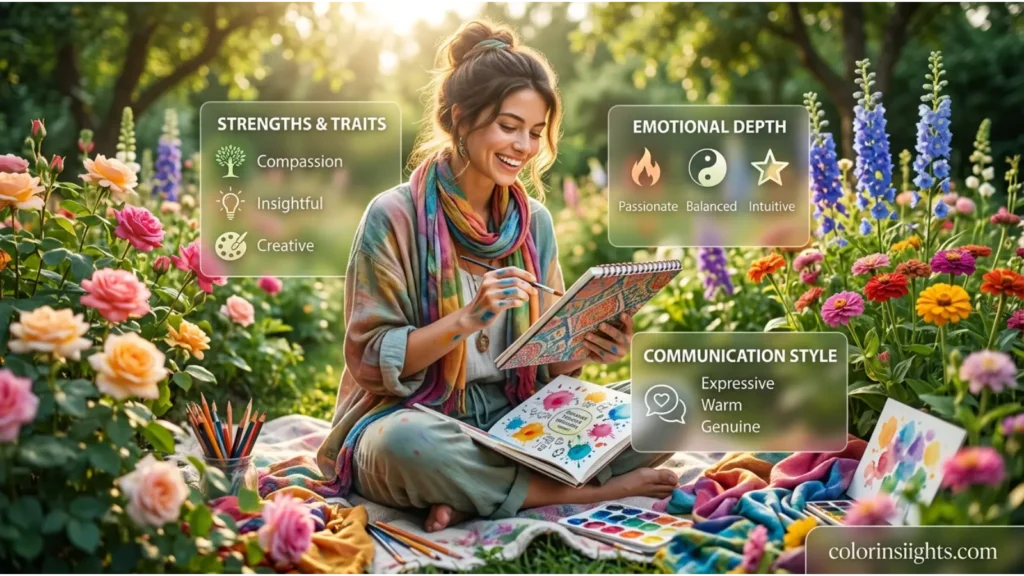
What Does the Color Personality Symbolize?
The idea of personality colors symbolizes the connection between color preferences and common behavioral patterns. Each color represents a unique combination of emotional qualities, motivations, strengths, and communication styles that people may identify with.
For example:
- Red symbolizes confidence, passion, courage, determination, and high energy.
- Blue represents trust, loyalty, stability, wisdom, and emotional calmness.
- Green symbolizes growth, balance, harmony, generosity, and compassion.
- Yellow reflects optimism, creativity, curiosity, happiness, and intellectual energy.
- Purple represents imagination, spirituality, luxury, and personal transformation.
- Orange symbolizes enthusiasm, friendliness, confidence, and adventure.
- Black often signifies power, sophistication, authority, and mystery.
- White represents purity, simplicity, peace, honesty, and fresh beginnings.
These symbolic meanings are commonly applied in personality assessments, leadership training, marketing, education, and personal development programs. Although they offer valuable insights into behavioral tendencies, they should never be considered absolute indicators of someone’s personality.
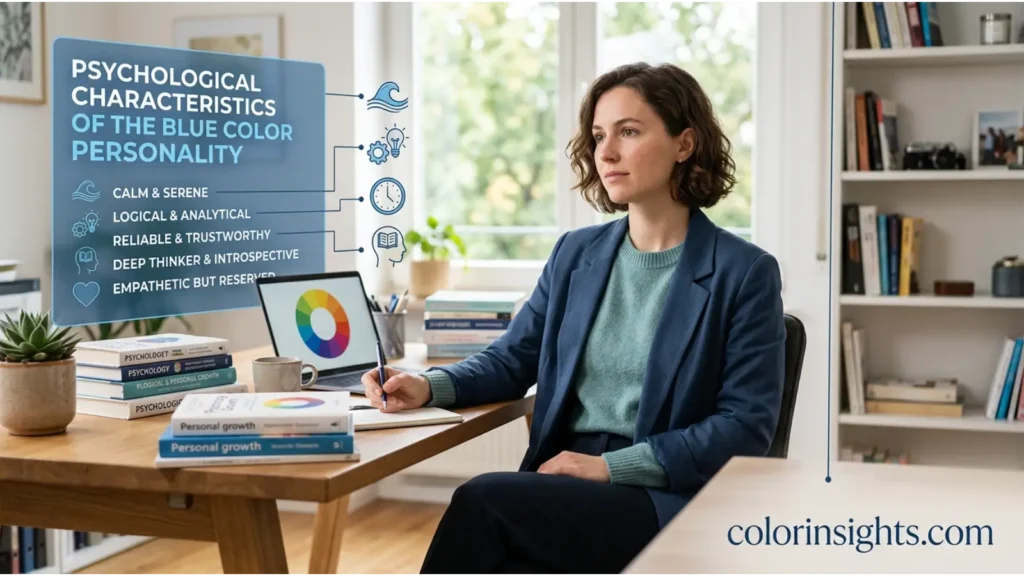
Psychological Characteristics of the Color Personality
Color psychology examines how different colors influence human thoughts, emotions, and behaviors. Personality colors are based on recurring psychological associations rather than fixed scientific rules. People’s reactions to colors are influenced by culture, life experiences, environment, and personal preferences.
Emotional Associations
Different personality colors evoke different emotional responses.
- Red encourages excitement, confidence, and action.
- Blue promotes calmness, trust, and emotional security.
- Green creates feelings of balance, renewal, and relaxation.
- Yellow stimulates happiness, curiosity, and mental activity.
- Purple inspires creativity, imagination, and introspection.
- Orange encourages enthusiasm, warmth, and social interaction.
- Black conveys strength, sophistication, and control.
- White evokes peace, cleanliness, and simplicity.
Psychological Effects
Personality colors can subtly influence thinking and decision-making.
- Warm colors often increase energy and motivation.
- Cool colors help reduce stress and encourage concentration.
- Neutral colors create feelings of stability and balance.
- Bright colors stimulate creativity and optimism.
- Dark colors communicate seriousness and authority.
Positive Emotional Responses
Many personality colors are associated with positive psychological qualities.
- Greater self-confidence
- Increased motivation
- Emotional stability
- Creativity and innovation
- Compassion and empathy
- Optimism and hope
- Trust and dependability
- Inner peace and balance
For example, someone working in a blue-themed office may feel calmer and more focused, while a yellow workspace can inspire brainstorming and creative thinking.
Negative Emotional Responses
Colors may also trigger less desirable emotional reactions depending on their intensity or context.
- Excessive red may increase stress or impatience.
- Too much blue may feel emotionally distant or cold.
- Dark colors can sometimes create feelings of sadness or isolation.
- Bright yellow may become overwhelming or increase anxiety.
- Heavy use of black may appear intimidating or pessimistic.
- Too much white may feel empty or sterile.
These responses vary significantly from person to person and are influenced by cultural background and personal experiences.
Impact on Mood and Behavior
Personality colors can affect daily behavior in subtle ways.
- They influence first impressions.
- They affect workplace productivity.
- They shape purchasing decisions.
- They influence emotional comfort.
- They contribute to communication styles.
- They impact confidence and self-expression.
For example, many businesses use blue in offices to encourage trust and professionalism, while restaurants often incorporate warm colors like red and orange to create excitement and stimulate conversation.
How People Typically React to Personality Colors
Although reactions vary, several common patterns appear consistently.
- Warm colors often encourage action, enthusiasm, and confidence.
- Cool colors promote relaxation, patience, and careful thinking.
- Earth tones provide comfort and emotional security.
- Bright colors attract attention and inspire creativity.
- Neutral shades create a sense of professionalism and simplicity.
These psychological associations explain why colors play such an important role in branding, interior design, education, fashion, and marketing.
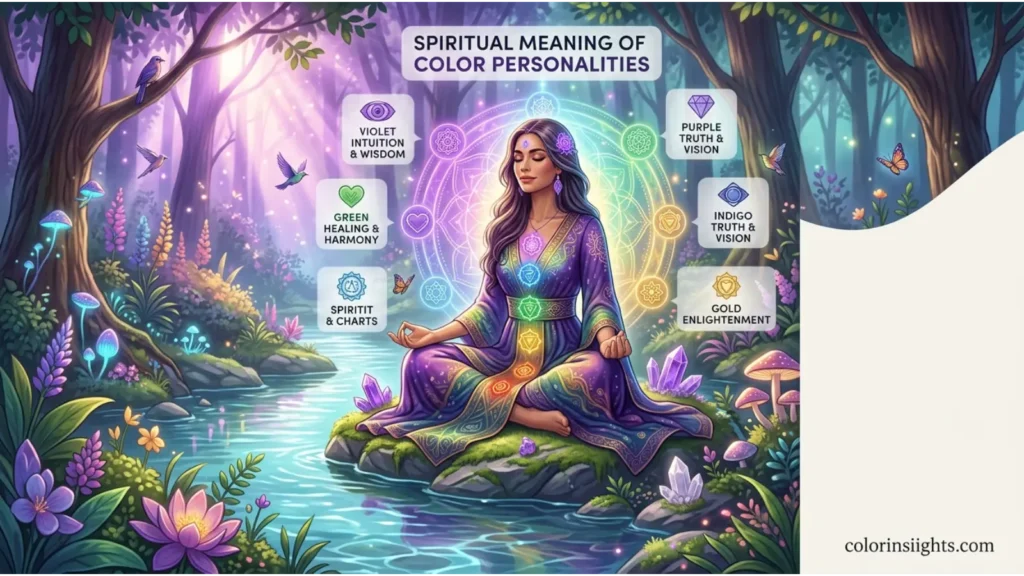
Spiritual Meaning of the Color Personality
Across many spiritual traditions, colors are viewed as symbolic representations of inner qualities, life experiences, and personal growth. Personality colors often reflect different stages of emotional development, spiritual awareness, and human potential rather than fixed identities.
Holiness
Many traditions associate white and gold with holiness, divine presence, and spiritual purity. These colors often represent moral integrity, sacred wisdom, and higher consciousness.
Wisdom
Blue and purple are commonly connected with wisdom, thoughtful decision-making, and deep understanding. They symbolize reflection, knowledge, and intellectual maturity.
Purity
White remains one of the strongest symbols of purity, innocence, honesty, and sincerity. It frequently represents fresh starts, ethical living, and spiritual cleansing.
Transformation
Purple and deep violet are widely associated with transformation, personal growth, and inner change. They symbolize the journey toward greater self-awareness and emotional maturity.
Healing
Green is traditionally linked with healing, renewal, balance, and restoration. Many spiritual practices use green to represent physical recovery, emotional resilience, and harmony with nature.
Protection
Black, dark blue, and certain earth tones are believed in various traditions to symbolize protection, grounding, resilience, and emotional strength against negative influences.
Power
Red often represents courage, determination, vitality, leadership, and life force. Spiritually, it symbolizes the energy needed to overcome obstacles and pursue meaningful goals.
Enlightenment
Gold, white, and violet are frequently connected with enlightenment, higher awareness, and spiritual awakening. They symbolize the pursuit of truth, wisdom, and inner peace.
New Beginnings
White and green commonly symbolize renewal, hope, fresh opportunities, and positive change. These colors often appear during celebrations marking new chapters in life.
Eternity
Blue is widely associated with eternity because of its connection to the sky and the sea. It symbolizes continuity, faithfulness, stability, and enduring spiritual values.
While these interpretations appear across many cultures and belief systems, their meanings are not universal. Spiritual symbolism varies by religion, history, and cultural tradition, making color meanings flexible rather than absolute.
Meanings of Personality Color Meanings
The meaning of personality colors changes depending on the context in which they are used. A color that symbolizes confidence in one situation may represent warning or urgency in another. Likewise, cultural traditions, personal experiences, and industry practices all influence how colors are interpreted.
Understanding these contextual meanings allows people to use personality colors effectively in home décor, branding, fashion, graphic design, and self-development. Instead of carrying one fixed definition, each personality color conveys multiple layers of symbolism that adapt to different environments.
Feng Shui
In Feng Shui, practitioners believe that colors influence the flow of energy (Qi) within a space. Each personality color corresponds to one of the Five Elements and helps create harmony and balance.
Associated Elements
- Red: Fire (energy, passion, motivation)
- Blue and Black: Water (wisdom, communication, calmness)
- Green: Wood (growth, health, prosperity)
- Yellow and Brown: Earth (stability, nourishment)
- White and Gray: Metal (clarity, focus, organization)
Energy Symbolism
- Warm colors increase activity and enthusiasm.
- Cool colors encourage relaxation and emotional balance.
- Earth tones promote security and stability.
- Neutral colors support mental clarity and simplicity.
Best Rooms
- Blue works well in bedrooms and home offices.
- Green is ideal for living rooms and study areas.
- Yellow brightens kitchens and dining spaces.
- Use red as an accent color in social spaces
- White suits bathrooms, entryways, and minimalist interiors.
Recommended Color Combinations
- Blue and white for serenity.
- Green and brown for natural balance.
- Gray and white for modern simplicity.
- Red and gold for prosperity and celebration.
- Yellow with earth tones for warmth.
Home Decorating Tips
Use bold personality colors as accent pieces instead of overwhelming an entire room. Combining warm and cool tones creates visual balance while maintaining a comfortable atmosphere.
Marketing
Color psychology plays an important role in branding and consumer behavior. Companies carefully select colors that communicate their brand personality and influence purchasing decisions.
Branding Psychology
- Red creates urgency, excitement, and confidence.
- Blue builds trust and professionalism.
- Green communicates sustainability, health, and growth.
- Yellow attracts attention and conveys optimism.
- Black represents luxury, sophistication, and exclusivity.
Consumer Perception
Consumers often form first impressions based on color before reading any text. A consistent color palette helps strengthen brand recognition and emotional connection.
Trust Signals
Financial institutions, healthcare organizations, and technology companies frequently use blue because it conveys reliability, stability, and security.
Product Packaging
Packaging colors influence expectations about quality and purpose.
Examples include:
- Green for eco-friendly products.
- White for cleanliness and simplicity.
- Black for premium goods.
- Orange for energetic and youthful products.
- Purple for luxury and creativity.
Advertising Applications
Advertisers use color to guide attention, encourage action, and reinforce brand identity. Strong color consistency across websites, advertisements, and packaging improves customer recognition.
Examples of Well-Known Brands
- Blue: Facebook, PayPal, Intel
- Red: Coca-Cola, Netflix, Target
- Green: Starbucks, Spotify, Whole Foods
- Yellow: McDonald’s, IKEA
- Black: Nike, Chanel
These brands demonstrate how color strengthens emotional connections with consumers.
Design
Designers use personality color meanings to improve both aesthetics and user experience.
Interior Design
Colors influence how rooms feel.
- Blue creates peaceful environments.
- Green introduces a natural atmosphere.
- White makes spaces appear larger.
- Gray provides contemporary elegance.
- Warm colors create welcoming social spaces.
Graphic Design
Graphic designers use color to establish hierarchy, communicate emotion, and improve readability. Consistent color schemes strengthen visual identity across print and digital media.
Web Design
Website colors influence visitor behavior.
Examples include:
- Blue for trust.
- Green for success messages.
- Red for urgent notifications.
- Orange for call-to-action buttons.
- Neutral backgrounds for readability.
User Experience (UX)
Effective color choices improve navigation, accessibility, and information recognition. Designers also consider color contrast to ensure websites remain usable for people with visual impairments.
Minimalist Aesthetics
Modern minimalist design often combines white, gray, black, and muted earth tones. These combinations create clean layouts that reduce visual clutter and improve focus.
Fashion
Clothing colors communicate personality before a person speaks. Fashion designers use color symbolism to create specific impressions and complement different occasions.
Clothing Symbolism
- Red projects confidence and leadership.
- Blue suggests trustworthiness and professionalism.
- Green communicates balance and calmness.
- Black expresses sophistication and authority.
- White symbolizes cleanliness and simplicity.
Seasonal Use
- Bright colors dominate spring and summer collections.
- Earth tones become popular during autumn.
- Dark shades are commonly worn in winter.
- White remains a timeless choice throughout the year.
Styling Effects
Strategic color choices can influence how clothing is perceived.
Examples include:
- Dark colors create a slimming appearance.
- Bright colors become visual focal points.
- Neutral shades provide versatility.
- Contrasting colors add energy and visual interest.
Personality Impressions
People often associate clothing colors with certain personality characteristics.
- Blue may suggest reliability.
- Red may communicate confidence.
- Green may indicate compassion.
- Purple may express creativity.
- Black may signal ambition.
These impressions are symbolic and should not be treated as accurate personality assessments.
Advantages
- Enhances self-expression.
- Supports personal branding.
- Increases outfit versatility.
- Influences first impressions.
- Reflects mood and occasion.
Disadvantages
- Strong colors may not suit every setting.
- Cultural interpretations differ.
- Fashion trends change over time.
- Personal preferences vary widely.
For example, a navy-blue suit is often chosen for business meetings because it conveys professionalism, while a bright yellow outfit may be more appropriate for creative events or casual gatherings.
Color Associations Are Not Universal
Although personality color meanings share many common themes, interpretations vary significantly across cultures, religions, historical periods, and modern societies. Understanding these differences helps avoid oversimplifying color symbolism.
Western Cultures
In many Western countries, white symbolizes purity and weddings, while black is commonly associated with mourning and formality. Red often represents love, passion, courage, and warning, whereas blue conveys trust, stability, and professionalism.
Eastern Cultures
Across many Eastern traditions, red is viewed as a symbol of happiness, prosperity, celebration, and good fortune. White, however, may be associated with mourning or remembrance in some cultures, demonstrating how meanings can differ dramatically from Western interpretations.
Religious Traditions
Religious symbolism also influences color meanings.
- White often represents holiness and purity.
- Purple is associated with spirituality, repentance, and royalty.
- Green symbolizes life, renewal, and hope in many traditions.
- Gold frequently represents divine wisdom, glory, and enlightenment.
The significance of these colors varies between religions and denominations.
Historical Interpretations
Throughout history, certain colors were reserved for royalty, religious leaders, or the wealthy because natural dyes were rare and expensive. Purple became a symbol of power and prestige, while gold represented wealth and divine authority. Over time, advances in manufacturing made these colors accessible to everyone, although many of their symbolic meanings remain.
Modern Global Interpretations
Today’s interconnected world has blended many traditional color meanings. Global brands, social media, and digital communication have created more universal associations, such as blue for trust, green for sustainability, and red for urgency. Even so, cultural traditions continue to shape how individuals perceive and respond to different colors.
What Personality Color Meanings Say About Your Personality
People often wonder whether their favorite color reveals something about who they are. While color psychology suggests that color preferences may reflect certain emotional tendencies or personal values, there is no scientific evidence that a favorite color can accurately determine personality. Instead, personality colors are best understood as symbolic frameworks that encourage self-reflection rather than definitive psychological assessments.
Strengths
Individuals who consistently prefer certain colors may identify with qualities commonly associated with them.
- Red: Confident, ambitious, energetic, and action-oriented.
- Blue: Loyal, dependable, patient, and trustworthy.
- Green: Compassionate, balanced, supportive, and growth-focused.
- Yellow: Optimistic, creative, curious, and enthusiastic.
- Purple: Imaginative, intuitive, thoughtful, and visionary.
- Orange: Friendly, adventurous, sociable, and confident.
- Black: Independent, determined, sophisticated, and resilient.
- White: Honest, organized, peaceful, and open-minded.
These strengths represent common symbolic associations rather than fixed personality traits.
Weaknesses
Every personality color also has characteristics that may become challenges when taken to extremes.
- Red: Impatience, impulsiveness, or competitiveness.
- Blue: Emotional reserve or excessive caution.
- Green: Resistance to change or overprotectiveness.
- Yellow: Restlessness or difficulty maintaining focus.
- Purple: Overthinking or unrealistic expectations.
- Orange: Impulsiveness or attention-seeking behavior.
- Black: Emotional distance or perfectionism.
- White: Fear of disorder or unrealistic standards.
Recognizing these tendencies can encourage greater self-awareness and personal growth.
Social Behavior
Color preferences may also influence how people choose to present themselves socially.
For example:
- People drawn to warm colors often enjoy energetic conversations and social gatherings.
- Those who favor cool colors may prefer thoughtful discussions and smaller groups.
- Neutral color enthusiasts frequently appreciate simplicity, balance, and consistency.
These are broad patterns rather than universal rules.
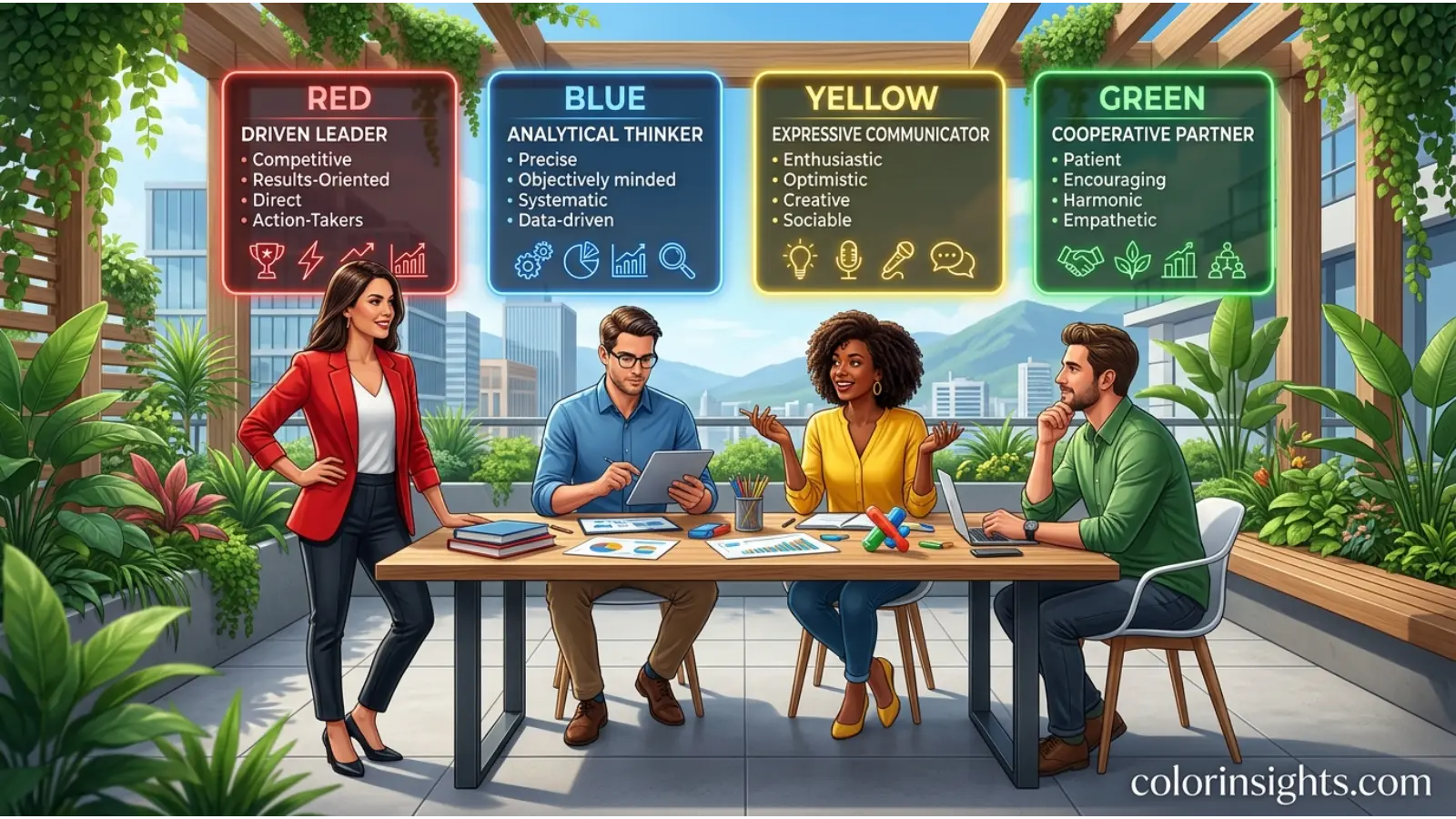
Work Style
Personality colors are frequently used in leadership training and workplace development to encourage effective teamwork.
Examples include:
- Red personalities often enjoy leadership roles and fast-paced environments.
- Blue personalities typically value organization, reliability, and long-term planning.
- Green personalities often excel in supportive or collaborative roles.
- Yellow personalities may thrive in creative industries that reward innovation and brainstorming.
Successful teams usually benefit from a balance of different working styles rather than one dominant personality color.
Relationships
Color symbolism is also applied to communication and interpersonal relationships.
- Red personalities often express affection through action and enthusiasm.
- Blue personalities value loyalty, trust, and emotional security.
- Green personalities prioritize harmony and long-term commitment.
- Yellow personalities enjoy humor, spontaneity, and shared experiences.
Healthy relationships depend on communication, respect, and shared values rather than color preferences alone.
Emotional Tendencies
Color preferences sometimes reflect temporary emotional states rather than permanent personality characteristics.
For example:
- Choosing blue during stressful periods may reflect a desire for peace and stability.
- Preferring green can symbolize a need for balance and renewal.
- Wearing yellow may express optimism or a desire for positive energy.
- Selecting black may represent sophistication, confidence, or a preference for simplicity.
Because preferences change over time, personality colors should be viewed as flexible symbols rather than fixed identities.
FAQs
What defines personality color meanings?
Personality color meanings are symbolic interpretations that connect different colors with common emotional qualities, behavioral tendencies, and communication styles. They are widely used in color psychology, branding, design, and personal development.
What do personality colors symbolize?
Personality colors symbolize qualities such as confidence, trust, creativity, balance, compassion, optimism, leadership, and emotional expression. The exact meaning depends on the specific color and the context in which it is used.
Why are personality color meanings important?
They help explain how colors influence perception, emotional responses, branding, interior design, fashion, and communication. They also encourage self-reflection and improve understanding of visual symbolism.
Are personality colors scientifically proven?
No. While research shows that colors can influence mood and perception, there is no scientific consensus that a person’s favorite color accurately determines their personality. Personality color systems should be viewed as symbolic tools rather than psychological diagnoses.
Are personality colors warm or cool?
Personality colors include both warm and cool colors. Red, orange, and yellow are generally considered warm colors, while blue, green, and purple are cool colors. Black, white, gray, and brown are usually classified as neutral colors.
What emotions do personality colors represent?
Different colors are associated with different emotions. Red often represents passion and confidence, blue symbolizes calmness and trust, green reflects harmony and growth, yellow conveys optimism, and purple is linked with creativity and imagination.
What is the spiritual meaning of personality colors?
Spiritually, colors often represent qualities such as purity, wisdom, healing, protection, transformation, hope, enlightenment, and renewal. However, these interpretations vary across cultures and religious traditions.
Which colors pair well together?
Popular combinations include:
- Blue and white for a clean, calming appearance.
- Green and brown for a natural look.
- Black and gold for elegance.
- Yellow and gray for modern contrast.
- Red and white for bold visual impact.
The best combination depends on the desired mood and purpose.
What does liking certain colors say about a person?
A preference for certain colors may reflect personal values, emotional needs, or aesthetic preferences. For example, someone who likes blue may appreciate stability, while someone drawn to yellow may enjoy creativity. These are symbolic associations rather than factual personality assessments.
Can personality color preferences change over time?
Yes. People’s favorite colors often change with age, life experiences, cultural influences, personal growth, and emotional circumstances. Color preferences are dynamic rather than permanent.
Conclusion:
Personality color meanings provide a fascinating way to explore the relationship between color symbolism, psychology, culture, and personal expression.
Although favorite colors cannot accurately define someone’s personality, they can offer meaningful insights into emotions, communication styles, and design preferences. From branding and fashion to interior design and spiritual traditions, colors continue to shape how people perceive the world and interact with one another.
By understanding these symbolic meanings while recognizing their cultural and personal variations, you can use color more intentionally in everyday life, creative projects, and professional environments.