The Pride flag is one of the world’s most recognizable symbols of diversity, equality, and LGBTQ+ pride. Rather than representing a single color, it combines multiple colors, each carrying its own unique meaning while contributing to a shared message of inclusion, identity, and hope.
Since the original rainbow Pride flag was created in 1978, its colors have been widely embraced as symbols of community, resilience, and the celebration of human diversity.
Understanding Pride flag color meanings provides valuable insight into the history, psychology, cultural significance, and symbolism behind this iconic design.
Each color represents a distinct value that, together, forms a powerful statement about unity, self-expression, and equal rights.
Quick Answer:
Pride flag colors symbolize diversity, life, healing, sunlight, nature, harmony, and spirit. Collectively, they represent inclusion, equality, resilience, hope, and the celebration of every individual’s authentic identity.
What Does the Pride Flag Colors Symbolize?
The Pride flag symbolizes far more than colorful stripes. It represents the ongoing pursuit of equality, acceptance, visibility, and respect for LGBTQ+ individuals. Every color contributes to a broader message that celebrates human diversity while encouraging people to live openly and authentically.
The traditional rainbow Pride flag is commonly interpreted as representing the following values:
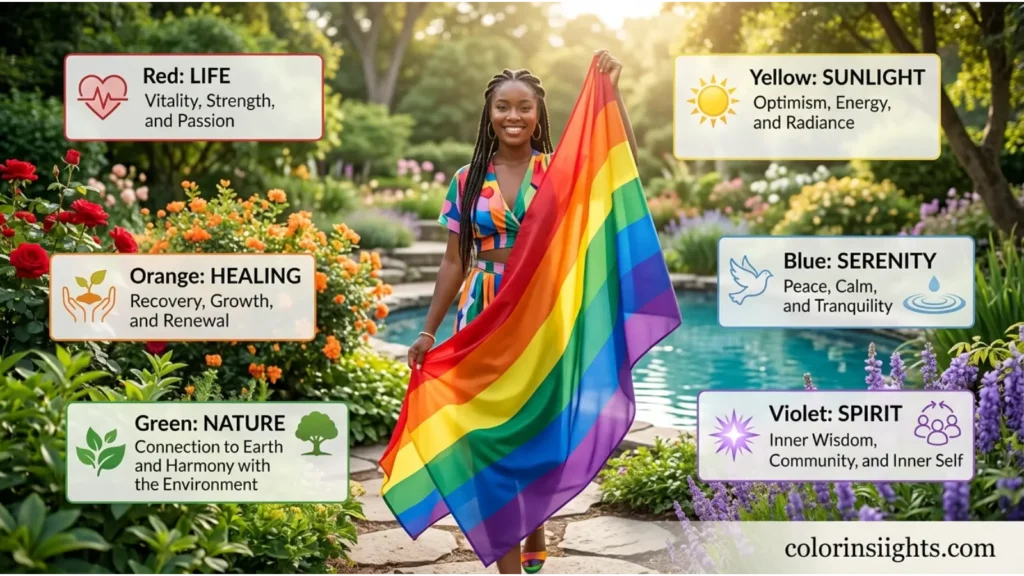
- Red: Life, courage, passion, and the strength to live authentically.
- Orange: Healing, wellness, resilience, and emotional recovery.
- Yellow: Sunlight, optimism, happiness, and positive energy.
- Green: Nature, growth, renewal, and personal development.
- Blue: Harmony, peace, trust, and emotional stability.
- Purple (Violet): Spirit, creativity, dignity, and inner strength.
Together, these colors create a visual expression of unity despite differences. Rather than emphasizing a single identity, the Pride flag recognizes that every person deserves respect regardless of sexual orientation, gender identity, or personal background.
From a color psychology perspective, the rainbow also communicates emotional balance. Warm colors such as red, orange, and yellow evoke passion, optimism, and vitality, while cooler colors like green, blue, and purple convey calmness, stability, wisdom, and spiritual reflection. This balance reinforces the idea that diversity strengthens communities rather than dividing them.
The Pride flag has also become a global symbol of solidarity. During Pride celebrations, awareness campaigns, educational events, and equality movements, its colors serve as a reminder that inclusion benefits society as a whole.
Businesses, schools, nonprofit organizations, and public institutions often display the flag to demonstrate support for diversity and equal opportunity.
Psychological Characteristics of the Pride Flag Colors
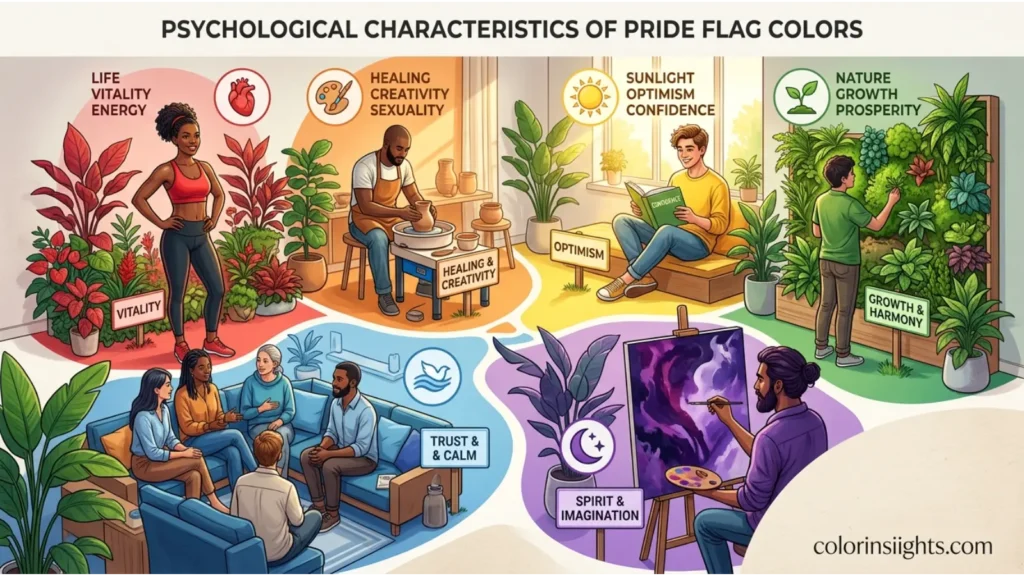
Color psychology suggests that different colors influence emotions, perceptions, and behavior. Because the Pride flag combines several psychologically meaningful colors, it creates a balanced emotional impact that feels energetic, welcoming, and hopeful rather than overwhelming.
Emotional Associations
Each Pride flag color contributes distinct emotional qualities:
- Red inspires courage, determination, vitality, and confidence.
- Orange promotes healing, enthusiasm, warmth, and friendliness.
- Yellow encourages happiness, optimism, creativity, and mental clarity.
- Green represents balance, renewal, health, and personal growth.
- Blue evokes trust, calmness, security, and emotional stability.
- Purple symbolizes imagination, spirituality, dignity, and wisdom.
Psychological Effects
When viewed together, the Pride flag often creates feelings of:
- Inclusion and belonging
- Hope for positive social change
- Emotional encouragement
- Confidence in self-expression
- Acceptance of diversity
- Unity among different communities
The combination of warm and cool colors produces a sense of visual harmony while maintaining energy and optimism.
Positive Emotional Responses
Many people associate the Pride flag with:
- Joy and celebration
- Confidence
- Community support
- Freedom of expression
- Personal authenticity
- Compassion and acceptance
These positive emotions contribute to the flag’s widespread recognition as a symbol of encouragement and solidarity.
Negative Emotional Responses
Although the colors themselves are generally associated with positive emotions, individual reactions may differ based on personal beliefs, cultural background, or previous experiences. In some contexts, the Pride flag may evoke feelings of controversy, social tension, or political disagreement. These responses are shaped by cultural and societal factors rather than by the psychological properties of the colors themselves.
Spiritual Meaning of the Pride Flag Colors
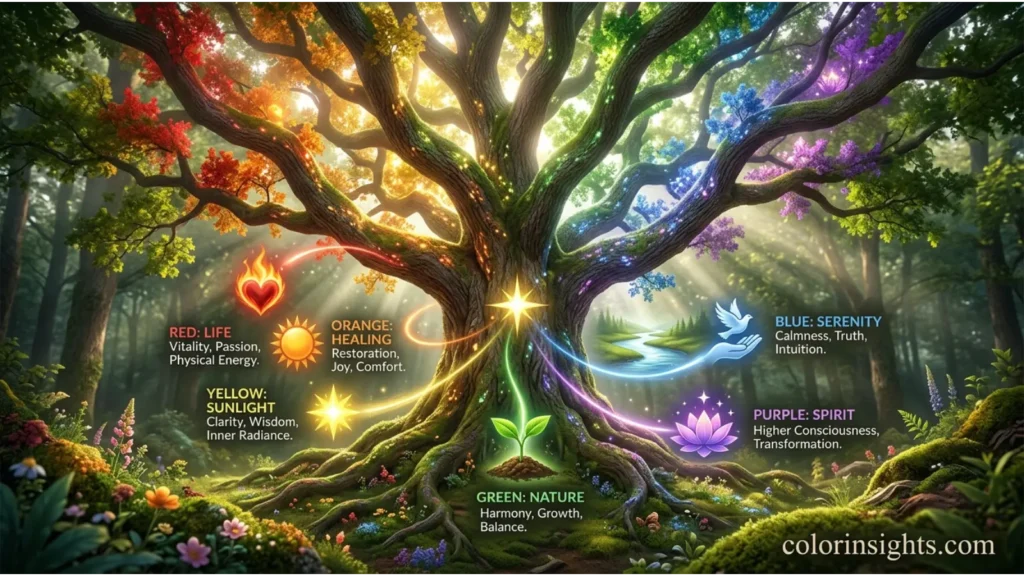
The spiritual meaning of Pride flag colors extends beyond their visual appeal. Collectively, they symbolize the dignity of every individual, the journey toward self-acceptance, and the belief that all people deserve love, respect, and belonging. While the Pride flag is not a religious symbol, many people view its colors as representing universal spiritual values such as hope, compassion, healing, and personal transformation.
Different spiritual traditions may interpret rainbow colors in unique ways, but the Pride flag is most commonly associated with the following themes:
- Holiness: For many, living authentically reflects honesty and integrity, qualities often connected with spiritual wholeness.
- Wisdom: The diverse colors encourage understanding, empathy, and respect for different life experiences.
- Purity: Rather than referring to perfection, purity symbolizes being true to one’s authentic identity without fear or shame.
- Transformation: The rainbow represents personal growth, self-discovery, and the courage to embrace change.
- Healing: Orange and green, in particular, reflect emotional recovery, resilience, and hope after hardship.
- Protection: The flag often serves as a symbol of safety and acceptance in inclusive spaces, reminding people they are valued and respected.
- Power: Red symbolizes courage, determination, and the strength to advocate for equality and justice.
- Enlightenment: Yellow and purple encourage optimism, creativity, wisdom, and a broader understanding of humanity.
- New Beginnings: The rainbow is frequently associated with fresh starts, self-acceptance, and embracing one’s future with confidence.
- Eternity: The continuous spectrum of colors reflects the enduring values of diversity, unity, and the ongoing pursuit of equality.
Although these meanings are widely recognized, spiritual interpretations remain personal and may vary depending on an individual’s beliefs and cultural background.
Positive and Negative Meanings of the Pride Flag Colors
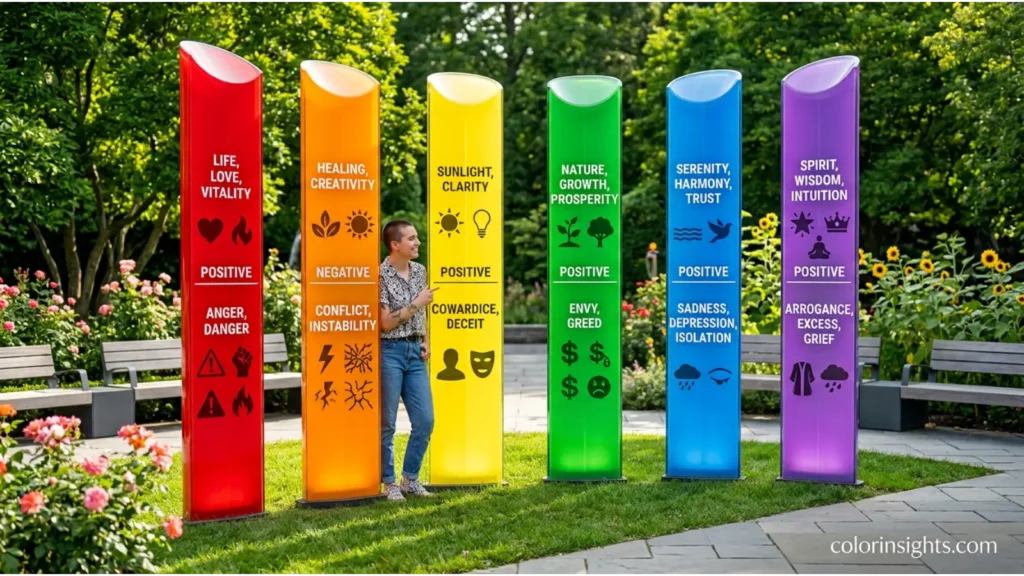
Like most color symbols, the Pride flag carries both positive and complex meanings depending on its context. Its vibrant colors are generally associated with inclusion and hope, but different social, cultural, and historical perspectives can influence how people interpret them.
Positive Meanings
The Pride flag is widely recognized as a symbol of optimism, equality, and community.
- Diversity: The combination of multiple colors celebrates the uniqueness of every individual.
- Hope: The rainbow inspires confidence that societies can become more inclusive and accepting.
- Unity: Despite differences, the colors work together to represent solidarity and mutual respect.
- Authenticity: The flag encourages people to express their true identities openly and honestly.
- Healing: It reflects resilience and recovery from discrimination, exclusion, and personal struggles.
- Acceptance: Pride colors promote empathy, compassion, and equal treatment for all people.
Real-world example:
During Pride Month, cities, schools, and workplaces often display the Pride flag to demonstrate support for inclusive environments where everyone feels welcome.
Negative Meanings
The Pride flag itself is designed to convey positive values, but its public display can sometimes be interpreted differently depending on cultural, political, or personal viewpoints.
- Controversy: In regions where LGBTQ+ rights remain debated, the flag may become a symbol of political disagreement.
- Social Division: Discussions surrounding equality and representation can sometimes create polarization within communities.
- Misunderstanding: Some people incorrectly assume the flag represents only one group, overlooking its broader message of diversity and human dignity.
- Resistance to Change: The flag may challenge long-standing traditions or beliefs, leading to differing opinions about its public use.
Real-world example:
A business displaying the Pride flag may be praised by customers who value inclusivity while also receiving criticism from individuals with different social or cultural perspectives.
These differing interpretations demonstrate that the meaning of the Pride flag is influenced not only by its colors but also by historical, cultural, and societal contexts.
Meanings of the Pride Flag Colors
The meaning of Pride flag colors can vary depending on where and how they are used. While the rainbow is most widely recognized as a symbol of LGBTQ+ pride, equality, and inclusion, its colors also influence design, branding, fashion, and decorative spaces. In each setting, the combination of vibrant hues communicates positivity, creativity, diversity, and openness.
Feng Shui
Although the Pride flag is not a traditional Feng Shui symbol, its rainbow palette reflects the concept of balanced energy because it incorporates multiple colors associated with different natural elements.
- Associated elements: Fire (red), Earth (yellow and orange), Wood (green), Water (blue), and aspects of spiritual energy represented by purple.
- Energy symbolism: The combination encourages harmony, vitality, creativity, emotional balance, and renewal.
- Best rooms: Creative studios, living rooms, children’s play areas, community spaces, and meditation rooms where positive energy and self-expression are encouraged.
- Recommended color combinations: White, natural wood tones, soft gray, and neutral backgrounds help rainbow colors stand out without overwhelming a space.
- Home decorating tips: Use Pride-inspired colors through artwork, cushions, wall décor, or decorative accents instead of covering an entire room with bright rainbow shades. This creates an uplifting atmosphere while maintaining visual balance.
Marketing
Brands often use rainbow-inspired colors during Pride Month to communicate diversity, inclusion, and social responsibility.
- The colorful palette attracts attention and creates a sense of positivity and celebration.
- Consumers frequently associate rainbow branding with openness, equality, creativity, and community support.
- When supported by meaningful actions, Pride-themed campaigns can strengthen customer trust and brand reputation.
- Rainbow colors commonly appear in limited-edition packaging, digital campaigns, social media graphics, and event promotions.
Global brands such as Apple, Google, Microsoft, Levi’s, and Converse have incorporated rainbow-themed campaigns to express support for LGBTQ+ communities, often alongside partnerships, donations, or awareness initiatives.
Design
In design, Pride flag colors create vibrant, energetic, and inclusive visual experiences.
- Interior design: Rainbow accents brighten neutral interiors and encourage creativity.
- Graphic design: Designers use the palette to represent diversity, celebration, and community engagement.
- Web design: Pride colors are frequently featured in banners, illustrations, accessibility campaigns, and awareness pages.
- User experience (UX): Balanced use of rainbow colors helps create welcoming digital environments while maintaining readability.
- Minimalist aesthetics: Designers often combine rainbow accents with white or black backgrounds to achieve a clean yet impactful appearance.
Fashion
The Pride flag has become a meaningful source of inspiration in modern fashion.
- Clothing featuring rainbow colors often symbolizes confidence, authenticity, and support for equality.
- Rainbow apparel is especially popular during Pride Month, festivals, community events, and awareness campaigns.
- Bright accessories such as scarves, sneakers, jewelry, or bags allow people to incorporate Pride colors into everyday outfits.
- Wearing rainbow colors often creates an impression of openness, creativity, friendliness, and self-expression.
One advantage of Pride-inspired fashion is its ability to communicate solidarity and optimism. However, because the colors are bold and highly visible, some people prefer subtle rainbow accents that complement neutral clothing while still expressing support for diversity.
Color Associations Are Not Universal
Although Pride flag colors have widely recognized meanings, their symbolism is not interpreted the same way across every culture or historical period. Personal experiences, religious beliefs, and social traditions all influence how people understand the rainbow palette. As a result, the Pride flag’s message of diversity and inclusion may be embraced, interpreted differently, or debated depending on the cultural context.
Western Cultures
In many Western countries, the Pride flag is primarily associated with LGBTQ+ rights, equality, visibility, and self-expression. It is prominently displayed during Pride Month, equality campaigns, community events, and educational initiatives.
The rainbow has become a symbol of acceptance, solidarity, and the celebration of diversity. Many organizations and businesses also use the flag to demonstrate their commitment to creating inclusive environments.
Eastern Cultures
In Eastern cultures, rainbow colors often carry broader symbolic meanings beyond LGBTQ+ identity. Individual colors may represent prosperity, happiness, balance, spirituality, or harmony with nature.
While awareness of the Pride flag has grown globally, cultural attitudes toward its symbolism vary considerably from one country to another due to differences in social norms, legal recognition, and historical traditions.
Religious Traditions
Many religious traditions recognize the rainbow as a symbol of hope, peace, renewal, or divine promise. These meanings existed long before the creation of the modern Pride flag. Today, some faith communities view the Pride flag as compatible with messages of compassion and human dignity, while others interpret it differently based on their theological perspectives. These diverse viewpoints illustrate how religious beliefs influence color symbolism.
Historical Interpretations
Rainbows have appeared in art, mythology, and folklore for centuries. Ancient civilizations often viewed the rainbow as a bridge between heaven and earth, a sign of good fortune, or a representation of spiritual transformation. The modern Pride flag builds upon this long history by giving rainbow colors a contemporary meaning centered on equality, diversity, and human rights.
Modern Global Interpretations
As LGBTQ+ visibility has expanded worldwide, the Pride flag has become an internationally recognized symbol of inclusion. However, its interpretation still varies across regions. In some countries, it is openly celebrated during public events and cultural festivals, while in others it may remain controversial due to legal, political, or cultural factors. Despite these differences, the flag continues to inspire conversations about respect, equality, and human dignity across diverse societies.
What the Pride Flag Colors Say About Your Personality
Some people feel especially drawn to the vibrant colors of the Pride flag because they appreciate what the rainbow represents—diversity, creativity, optimism, and authenticity. While color psychology suggests that color preferences may reflect certain personality tendencies, there is no scientific evidence that liking specific colors can reliably determine a person’s personality. Individual preferences are shaped by culture, experiences, memories, and personal taste.
Strengths
People who enjoy the symbolism of Pride flag colors are often associated with the following positive qualities:
- Open-minded and accepting of different perspectives.
- Creative thinkers who appreciate artistic expression and innovation.
- Optimistic and hopeful, even during challenging situations.
- Compassionate and empathetic toward others.
- Confident in expressing their values and individuality.
- Adaptable and willing to embrace change and diversity.
For example, someone who enjoys colorful environments may also appreciate collaborative workplaces that encourage creativity and inclusiveness.
Weaknesses
Like everyone else, individuals attracted to bold, colorful symbolism may also experience challenges, such as:
- Becoming emotionally invested in social causes.
- Feeling frustrated when others resist change or diversity.
- Occasionally appearing idealistic or overly optimistic.
- Taking criticism of deeply held values personally.
These characteristics vary widely from person to person and should not be viewed as universal personality traits.
Social Behavior
People who appreciate the Pride flag’s symbolism are often perceived as:
- Friendly and approachable.
- Inclusive of people from different backgrounds.
- Comfortable celebrating individuality.
- Supportive of fairness, respect, and equal opportunities.
Many enjoy participating in community activities, creative events, or volunteer initiatives that promote belonging and social connection.
Work Style
In professional settings, they may value:
- Teamwork and collaboration.
- Creative problem-solving.
- Diverse and inclusive workplaces.
- Open communication and mutual respect.
- Innovation and continuous learning.
They often thrive in environments where different viewpoints are welcomed and employees are encouraged to contribute new ideas.
Relationships
Those who identify with the values represented by Pride flag colors frequently place importance on:
- Honesty and authenticity.
- Mutual respect and acceptance.
- Emotional support during difficult times.
- Equality and healthy communication.
- Trust built through understanding and empathy.
Strong relationships are often based on shared values rather than superficial similarities.
Emotional Tendencies
The rainbow’s blend of warm and cool colors symbolizes emotional balance. People who appreciate its meaning may strive to maintain:
- Hope during uncertainty.
- Emotional resilience after setbacks.
- Compassion toward others.
- Confidence in expressing their true selves.
- A positive outlook while respecting different opinions.
Ultimately, personality is influenced by genetics, upbringing, culture, life experiences, and individual circumstances. Color preferences can offer interesting insights into personal tastes and emotional associations, but they should never be used to define or predict someone’s character with certainty. The Pride flag’s greatest message is not about personality—it is about celebrating diversity, promoting inclusion, and recognizing the value of every individual.
Conclusion:
The Pride flag is much more than a colorful emblem—it is a powerful symbol of diversity, equality, resilience, and hope. Each color carries its own meaning, representing values such as life, healing, optimism, growth, harmony, and spirit. Together, these colors create a universal message that celebrates authenticity, encourages inclusion, and honors the rich diversity of human identity.
From color psychology and spiritual symbolism to design, marketing, fashion, and cultural interpretations, Pride flag colors continue to inspire positive conversations about acceptance and belonging.
While their meanings may vary across cultures, religions, and personal experiences, their core purpose remains the same: to promote respect, visibility, and equal dignity for all people.
Ultimately, the meaning of Pride flag colors extends beyond individual shades. The rainbow reminds us that diversity is a strength, compassion builds stronger communities, and every person deserves the freedom to express their authentic self.
Whether displayed during Pride celebrations or used as a symbol of solidarity throughout the year, the Pride flag continues to represent unity, progress, and the ongoing pursuit of equality.