Period blood can appear in several different shades throughout a menstrual cycle, ranging from bright red to dark brown, pink, orange, or even nearly black.
These color variations are often completely normal and can provide clues about menstrual flow, blood oxidation, hormonal-changes, and overall reproductive health.
Understanding period blood color meanings can help individuals better interpret their menstrual cycles and recognize when a color change may warrant medical attention.
While many people search for the meaning behind different period blood colors, it is important to remember that color alone does not diagnose a medical condition. Instead, it serves as one piece of information about what may be happening inside the body.
Quick Answer:
Period blood color meanings generally relate to the age of the blood, flow rate, hormonal influences, and reproductive health. Bright red blood often indicates fresh blood, while dark brown or black blood usually represents older blood that has taken longer to leave the uterus.
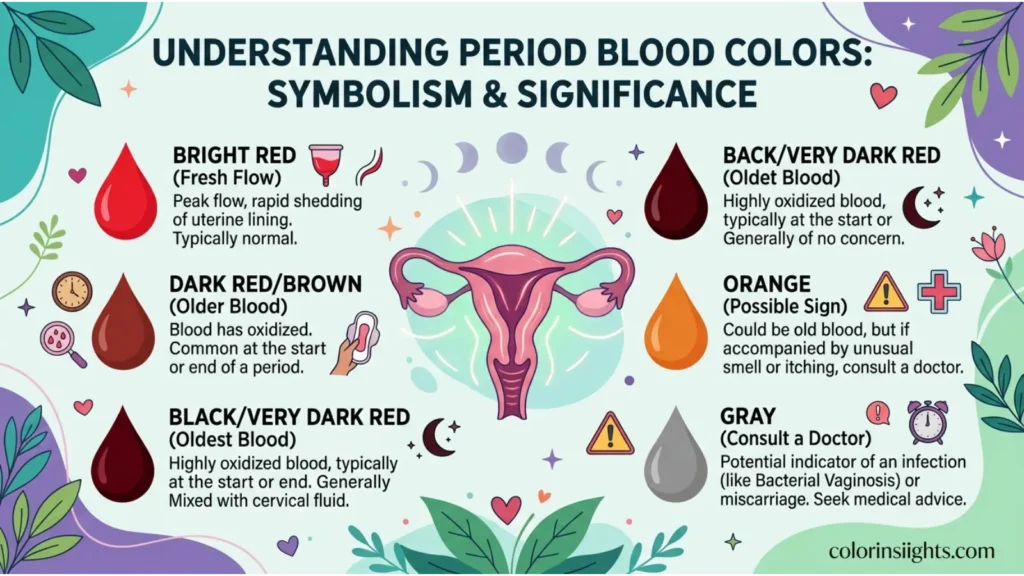
Understanding the Symbolism and Significance of Period Blood Colors
Unlike traditional color psychology, period blood colors are primarily interpreted through medical, biological, cultural, and symbolic perspectives. Different shades can symbolize various stages of the menstrual process, healing, renewal, hormonal shifts, and reproductive health.
Common interpretations include:
- Bright red: Fresh blood and active menstrual flow.
- Dark red: Established menstrual bleeding.
- Brown: Older oxidized blood leaving the body.
- Black: Very old blood that has remained longer in the uterus or vagina.
- Pink: Lighter flow or dilution with cervical fluid.
- Orange: Possible mixture of blood and cervical mucus.
- Gray: May require medical evaluation, especially if accompanied by unusual symptoms.
The symbolism often centers around renewal, fertility, life cycles, transformation, and the body’s natural cleansing process.
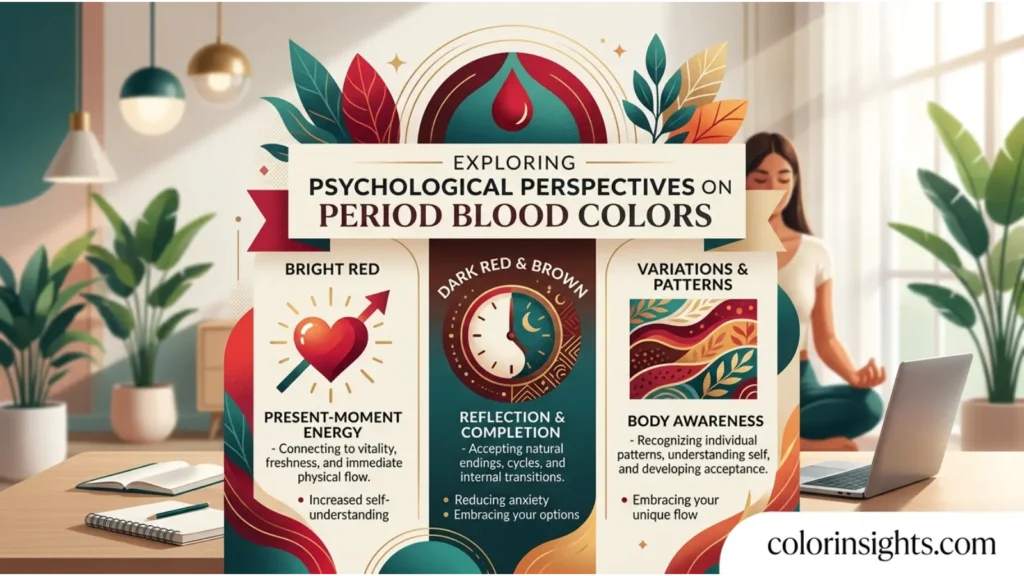
Psychological Perspectives on Period Blood Colors
Although period blood colors are not traditionally studied in color psychology, people often develop emotional reactions and associations with different shades they observe during menstruation.
Emotional Associations
- Bright red may create feelings of normalcy and reassurance.
- Brown blood often causes curiosity but is usually harmless.
- Black blood can trigger concern because of its appearance.
- Pink blood may be associated with light flow or hormonal changes.
- Gray or unusual colors may increase anxiety about health.
Psychological Effects
People frequently use period blood color as a way to assess whether their cycle feels healthy or typical.
Positive Emotional Responses
- Relief when color appears normal.
- Increased body awareness.
- Confidence in understanding menstrual health.
- Feeling connected to natural biological cycles.
Negative Emotional Responses
- Worry about unexpected color changes.
- Fear of illness or hormonal imbalance.
- Confusion due to inconsistent information online.
Impact on Mood and Behavior
- May encourage health monitoring.
- Can lead individuals to track menstrual patterns more carefully.
- Sometimes motivates medical consultation when changes persist.
Typical Reactions
Most people react differently based on their menstrual history, cultural background, education, and previous health experiences.

Spiritual Interpretations of Period Blood Colors
Throughout history, menstruation has carried spiritual symbolism in many cultures. Different period blood colors are sometimes viewed as representations of transformation, renewal, and feminine energy.
Common Spiritual Themes
- Transformation: The menstrual cycle reflects continuous change and renewal.
- Healing: Menstruation is often seen as the body’s natural cleansing process.
- Protection: Some traditions view menstrual blood as spiritually powerful.
- Wisdom: Menstrual cycles can symbolize self-awareness and life experience.
- Power: Menstruation is frequently associated with feminine strength.
- New Beginnings: Each cycle represents renewal and preparation for a new reproductive phase.
- Purification: Many spiritual interpretations view menstruation as releasing what is no longer needed.
- Enlightenment: Some traditions encourage deeper connection with bodily rhythms.
- Eternity: Menstrual cycles symbolize recurring natural patterns.
- Holiness: Certain ancient cultures regarded menstrual cycles as sacred.
These interpretations vary widely and should be understood as cultural and spiritual beliefs rather than scientific conclusions.
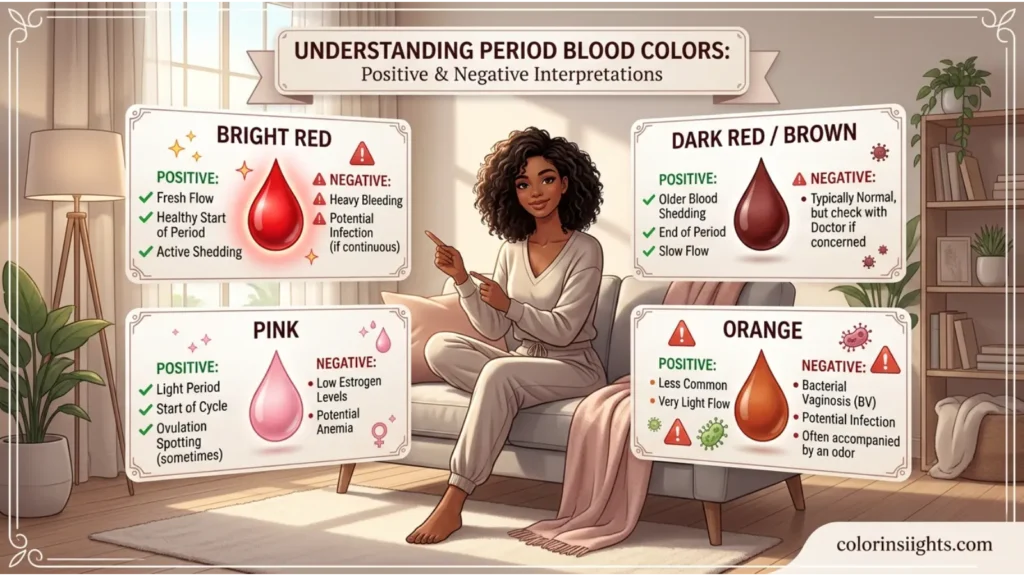
Positive and Negative Interpretations of Period Blood Colors
Positive Meanings
Renewal
Menstruation represents the completion of one reproductive cycle and the beginning of another.
Fertility Awareness
Blood color changes can provide insight into reproductive health.
Transformation
The menstrual cycle symbolizes constant biological renewal.
Balance
Consistent color patterns may indicate stable hormonal functioning.
Self-Awareness
Tracking period blood colors helps many individuals better understand their bodies.
Healing
Menstruation is part of the body’s natural reproductive process.
Strength
The menstrual cycle demonstrates the complexity and resilience of the human body.
Growth
Changes in cycle patterns can encourage greater health awareness.
Negative Meanings
Concern About Health
Unexpected colors may cause anxiety.
Example:
Gray discharge mixed with blood may prompt a medical evaluation.
Uncertainty
Irregular color changes can create confusion.
Example:
Black blood appearing unexpectedly may raise questions about its cause.
Hormonal Imbalance Concerns
Some colors may lead individuals to wonder about hormonal health.
Example:
Repeated pink periods may encourage hormone testing.
Fear of Infection
Orange or gray blood sometimes causes concern if accompanied by odor or discomfort.
Stress
Changes in menstrual appearance can increase health-related stress.
Misinterpretation
Many harmless color changes are mistakenly viewed as dangerous.
Emotional Worry
People often associate darker colors with illness, even when oxidation is the actual cause.
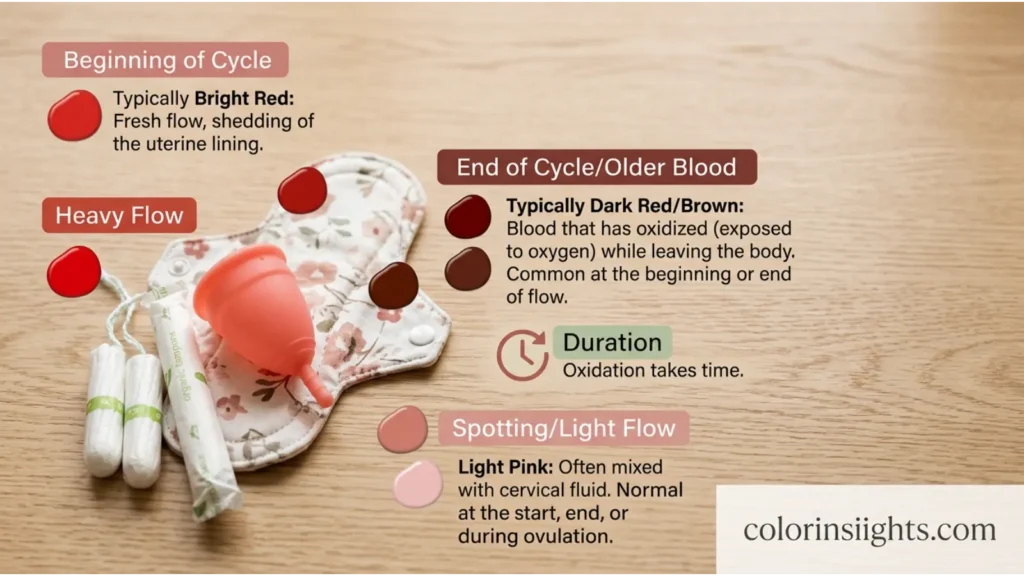
Interpreting Different Period Blood Colors in Various Contexts
The meaning of period blood color often depends on timing, menstrual flow, age, hormones, medications, and overall health.
Traditional Energy and Feng Shui Perspectives
While Feng Shui does not specifically analyze period blood colors, menstrual cycles are often connected to concepts of life energy and balance.
Associated Element
- Water element is most commonly associated with bodily flow and renewal.
Energy Symbolism
- Renewal
- Circulation
- Transformation
Best Rooms
- Bathrooms and wellness spaces focused on self-care.
Recommended Color Combinations
- Soft reds
- Earth tones
- Neutral colors
Home Decorating Tips
- Create calm, nurturing spaces that support relaxation during menstruation.
Medical Communication and Health Education
Healthcare professionals use blood color as one indicator when discussing menstrual health.
Health Psychology
- Helps monitor menstrual patterns.
- Supports reproductive health awareness.
- Encourages early identification of unusual symptoms.
Consumer Health Education
Educational resources often explain:
- Fresh versus oxidized blood.
- Hormonal influences.
- Menstrual cycle stages.
- When to seek medical advice.
Design and Educational Materials
Health organizations use diagrams showing various period blood colors to improve menstrual literacy.
Applications include:
- Medical infographics.
- Educational websites.
- Women’s health resources.
- Reproductive health guides.
- School health programs.
Cultural and Lifestyle Perspectives
Different cultures interpret menstrual blood in unique ways.
Some view menstruation as:
- A symbol of fertility.
- A rite of passage.
- A source of feminine power.
- A natural biological function.
Others may attach social or religious significance to menstrual cycles.

Color Meanings Differ Across Cultures
Western Cultures
In many Western societies, period blood colors are primarily interpreted through a medical lens. Bright red blood is often viewed as normal, while unusual colors may prompt health concerns.
Eastern Cultures
Some Eastern traditions connect menstruation with energy balance, vitality, and overall well-being. Menstrual changes may be interpreted alongside broader health concepts.
Religious Traditions
Various religions have historically assigned symbolic meanings to menstruation, ranging from purification rituals to sacred feminine symbolism.
Historical Interpretations
Ancient cultures often viewed menstrual blood as powerful, mystical, or connected to fertility and creation.
Modern Global Interpretations
Today, menstrual health education increasingly emphasizes scientific understanding while acknowledging cultural beliefs and traditions.

What Period Blood Colors May Suggest About You
It is important to understand that period blood colors do not determine personality traits. However, individuals who carefully monitor menstrual changes often share certain behavioral characteristics.
Common Strengths
- Health awareness.
- Attention to detail.
- Curiosity about wellness.
- Proactive healthcare habits.
Possible Weaknesses
- Overanalyzing minor changes.
- Increased health anxiety.
- Excessive self-monitoring.
Social Behavior
People who track menstrual health may be more open to discussing wellness and reproductive education.
Work Style
Often organized and data-oriented, especially when maintaining cycle tracking records.
Relationships
May prioritize communication about health and self-care needs.
Emotional Tendencies
Can become concerned when unexpected changes occur, particularly without reliable information.
Remember that menstrual observations reveal health patterns—not personality traits.
FAQs
What defines period blood color?
Period blood color refers to the visible shade of menstrual blood, which can range from bright red to dark brown, black, pink, orange, or gray.
What do period blood colors symbolize?
They often indicate factors such as blood age, flow speed, oxidation, hormonal influences, and reproductive health patterns.
Why are period blood colors important?
They can provide useful information about menstrual health and help identify changes that may require medical attention.
Is bright red period blood normal?
Yes. Bright red blood usually indicates fresh blood and active menstrual flow.
What does dark brown period blood mean?
Brown blood often represents older blood that has oxidized before leaving the body.
What does black period blood mean?
Black blood is typically very old blood that has remained in the uterus or vagina longer before being expelled.
What does pink period blood indicate?
Pink blood may result from lighter menstrual flow, lower estrogen levels, or blood mixed with cervical fluid.
What does orange period blood mean?
Orange blood can occur when menstrual blood mixes with cervical mucus. If accompanied by unusual odor or discomfort, medical evaluation may be appropriate.
What does gray period blood mean?
Gray blood or discharge can sometimes be associated with infection and should be discussed with a healthcare professional.
Which colors are considered normal during a period?
Bright red, dark red, brown, and sometimes black blood can all be normal depending on the timing within the menstrual cycle.
What does tracking period blood color reveal?
Tracking can help identify menstrual patterns, hormonal changes, and unusual symptoms over time.
When should I see a doctor about period blood color?
Seek medical advice if unusual colors persist or occur with symptoms such as severe pain, fever, strong odor, dizziness, or heavy bleeding.
Conclusion:
Understanding period blood color meanings can provide valuable insight into menstrual health, reproductive wellness, and natural cycle variations.
Bright red, dark red, brown, pink, orange, black, and gray blood each have potential explanations related to blood age, flow, hormones, and overall health.
While many color changes are completely normal, persistent unusual colors or accompanying symptoms should be evaluated by a healthcare professional.
By tracking menstrual patterns and staying informed, individuals can develop greater awareness of their bodies and make informed health decisions.